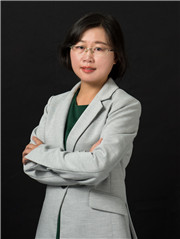
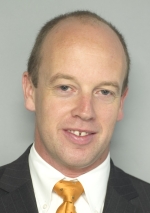
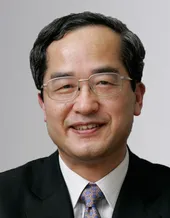
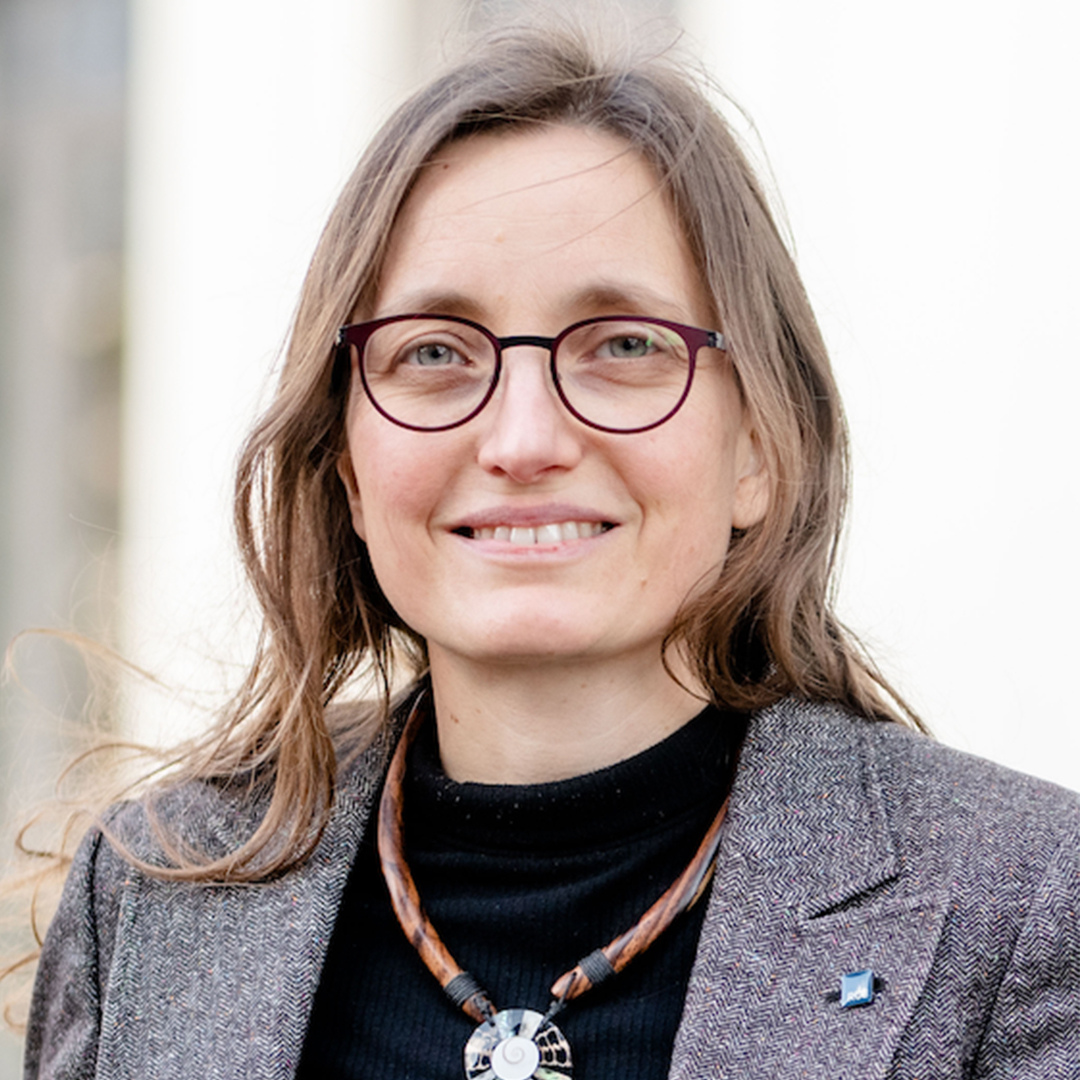
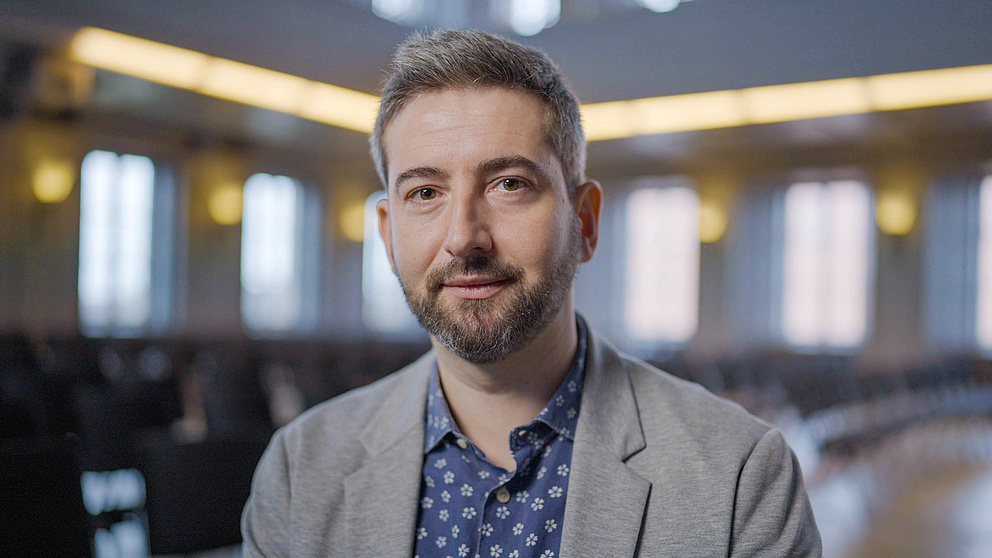
Özüm Asirim is a Researcher at the Technical University of Munich (TUM) under the Associate Professorship of Computational Photonics led by Prof. Christian Jirauschek. Her work focuses on computational photonics , quantum optics , and nonlinear optical phenomena , particularly in micro-resonators and semiconductor devices. Education: Ph.D. in Electrical Engineering from Middle East Technical University (Ankara, Turkey). Research spans optical parametric amplification , Fourier domain mode-locked lasers , self-phase modulation , and machine learning applications in photonics . Her studies include optimizing gain factors, enhancing harmonic generation, and modeling supercontinuum sources via carrier injection. Recent publications (2019–2023) highlight interdisciplinary approaches, merging photonics with computational finance and nonlinear dynamics . She contributes to EU Project QOMBS and teaches courses like Python for Engineering Data Analysis and Quantum Engineering and Machine Learning seminars. Collaborations include Prof. Christian Jirauschek (TUM), Prof. Mustafa Kuzuoğlu (Middle East Technical University), and teams in computational photonics and quantum optics. Her work impacts semiconductor physics , laser technology , and adaptive optical systems .
Prof. Dr.-Ing. Andreas Thiede is a faculty member at the University of Paderborn , affiliated with the Faculty of Electrical Engineering, Computer Science and Mathematics and the Institute of Electrical Engineering and Information Technology . He serves as director of the High-frequency electronics (HFE) research group. Research Interests: High-frequency electronics and optoelectronics Quantum dots and exciton qubits Nonlinear photonics and ultrafast control Semiconductor device engineering Key Projects: Participates in TRR 142: Tailor-Made Nonlinear Photonics , focusing on functional structures for quantum and ultrafast systems. Teaching Roles: Analog CMOS circuits (does not apply) Analog CMOS ICs (cancelled) Contact Details: Email: andreas.thiede@uni-paderborn.de Phone: +49 5251 60-3040 Office: Pohlweg 47-49, 33098 Paderborn Space: P1.402.1
Associate Professor Hu Yunfei is affiliated with the School of New Materials and New Energy at Shenzhen University of Technology , where she leads the New Energy Systems and Smart Microgrids Laboratory . She is a member of the China Renewable Energy Society and Guangdong Solar Energy Association . PhD in Materials Processing Engineering (2005), South China University of Technology Bachelor of Engineering (2000), South China University of Technology Her research focuses on new energy systems , solar-storage direct-flexible systems , and high-efficiency photovoltaic devices , including perovskite solar cells , tandem solar cells , and transparent conductive oxides . Her work spans fundamental materials science and applied energy systems. The 15 most recent publications highlight her expertise in polycrystalline silicon thin films , transparent conductive oxides , perovskite solar cells , and optoelectronic materials . These works reflect trends in improving solar cell efficiency, stability, and manufacturing scalability. She has led projects such as the development of consumer solar power optimizers , optical performance testing for bifacial solar panels , and industrial collaborations on silicon ribbon substrates . Her projects are funded by institutions like the Norwegian Science Foundation and National Natural Science Foundation of China . At Shenzhen University of Technology, she oversees the New Energy Systems and Smart Microgrids Laboratory , integrating advanced materials and system design for renewable energy applications.
Prof. Dr. Uli Lemmer is a Professor at the Department of Electrical Engineering and Information Technology (ETIT) at the Karlsruhe Institute of Technology (KIT). His research focuses on optoelectronics, thermoelectric materials, and printed electronics, with a strong emphasis on energy harvesting, nanotechnology, and photonics. He leads the Lichttechnisches Institut (LTI) and is affiliated with the Institute of Applied Physics. His work spans innovations in laser systems, flexible electronics, and bio-inspired materials. Office: Building 30.34, Room 223; Phone: +49 721 608-42530; Email: uli.lemmer@kit.edu. Research interests include the development of advanced materials for solar cells, thermoelectric generators, and sensor technologies. He pioneers methods like aerosol-jet printing and inkjet printing for scalable production of electronic devices. His group explores biomimetic structures (e.g., snake scale nanopores) and terahertz systems, pushing boundaries in both fundamental science and applied engineering. Recent publications highlight breakthroughs in printed thermoelectric modules, perovskite-based photovoltaics, and high-frequency antennas. His work integrates cutting-edge fabrication techniques with material science to address challenges in renewable energy, sensor networks, and flexible electronics. Prof. Lemmer collaborates internationally on projects like EU-funded energy initiatives and partners with industry for technology transfer. His lab specializes in additive manufacturing, optical systems, and nanoscale device engineering, aiming to bridge the gap between academic research and industrial applications.
Dr. Frank Hennrich is a Project Leader at the Institute of Nanotechnology (INT), Karlsruhe Institute of Technology (KIT), Germany, within the Research Unit for Physical Chemistry of Nanoscale Systems. His research focuses on the synthesis, separation, and functionalization of carbon nanotubes and related nanomaterials. His primary research interests include nanomaterials, particularly carbon nanotubes and fullerenes, with an emphasis on their physical chemistry, spectroscopic characterization, and optoelectronic properties. His work spans synthesis, separation techniques, defect engineering, and applications in photonics and electronics. Recent publications highlight investigations into electroluminescence from quantum-defect-engineered nanotubes, ion mobility of metalated complexes and superatoms, and advanced separation methods for nanotubes. The trend in his recent publications shows a strong focus on the fundamental physical and chemical properties of low-dimensional carbon materials. His work integrates advanced spectroscopic and separation techniques such as trapped ion mobility spectrometry, Raman spectroscopy, and dielectrophoresis to understand and manipulate nanotube chirality, electronic type, and defect states. There is a clear trajectory toward optoelectronic applications, particularly in quantum light sources and integrated photonic devices operating in the telecom band. Dr. Hennrich has not been mentioned to have received any specific scientific awards in the provided text. He has collaborated extensively with leading researchers such as R. Krupke, M. M. Kappes, P. Weis, and others across numerous publications, indicating a strong network in the nanomaterials research community. While no specific grants are listed, his sustained publication record in high-impact journals suggests ongoing research funding. He has contributed significantly to the development of methods for sorting and functionalizing carbon nanotubes, which are foundational for their technological applications. His research is conducted within the Institute of Nanotechnology at KIT, a prominent institution for nanomaterials research, where he leads a group focused on the physical chemistry of nanoscale systems, particularly carbon-based nanostructures.
Yasuhiko Arakawa is a Professor at the Research Center for Advanced Science and Technology and Director of the Institute for Nano Quantum Information Electronics at the University of Tokyo. He holds the Hans Fischer Senior Fellowship at the TUM Institute for Advanced Study (TUM-IAS) since 2008, hosted by Gerhard Abstreiter, with a focus on Nano Photonics. His academic journey includes B.S., M.S., and Ph.D. degrees in Electrical Engineering from the University of Tokyo (1975–1980). Dr. Arakawa’s research has revolutionized semiconductor quantum dot lasers, including their theoretical prediction and high-performance demonstration. His contributions also include advancements in single photon emitters at telecom wavelengths and high-temperature semiconductor devices. He has led national projects for METI and MEXT and organized major conferences like the 1998 IEEE Semiconductor Laser Conference and the 2005 International Quantum Electronics Conference. His work spans photonics, nanotechnology, and optoelectronics, with notable publications in Applied Physics Letters , Physical Review B , and IEEE Photonics Technology Letters . Awards include the Fujiwara Prize (2007), IEEE William Streifer Award (2004), and IBM Science Award. Arakawa’s affiliations include leadership roles in quantum information science and collaborations with institutions like TUM-IAS. His labs and research groups focus on nanophotonics, semiconductor nanostructures, and quantum device engineering, advancing fields from optical communications to quantum computing.
Professor Jana Zaumseil is a distinguished academic at Heidelberg University, holding the position of Professor for Applied Physical Chemistry at the Faculty of Chemistry and Earth Sciences since 2014. She also maintains a co-opted position with the Faculty of Physics and Astronomy since 2016. Currently serving as Executive Director of the Institute for Physical Chemistry and Spokesperson for the DFG Research Training Group GRK 2948, she leads the Zaumseil research group (also known as the Nanomaterials for Optoelectronics group) at Heidelberg University's Institute for Physical Chemistry. Her educational background includes a PhD in Physics from the University of Cambridge (2003-2007) with a Gates Cambridge Trust Scholarship, and a Diplom (equivalent to M.Sc.) in Chemistry from the University of Leipzig (1997-2022). Prior to her position at Heidelberg, she served as Professor for Nanoelectronics at Friedrich-Alexander-Universität Erlangen-Nürnberg (2009-2014), and completed postdoctoral work at Argonne National Laboratory (2007-2009) following an internship at Bell Laboratories (2002-2003). Zaumseil's research program focuses on the optical and electronic properties of carbon-based nanomaterials, particularly single-walled carbon nanotubes (SWCNTs) and organic semiconductors. Her group specializes in processing, functionalization, characterization and application of these unconventional semiconductors for optoelectronic devices and sensors. They investigate charge transport and light-matter interaction using a wide range of experimental techniques including synthesis, optical spectroscopy, atomic force microscopy, device fabrication, and electrical/optical device characterization. Their work bridges fundamental understanding with potential applications in sensing, imaging, circuits, and energy conversion. Analysis of her recent publications reveals a strong trend toward defect engineering in carbon nanotubes, particularly creating and optimizing luminescent sp 3 defects for near-infrared applications. Her research increasingly integrates fundamental studies of charge transport with practical device applications, especially in neuromorphic computing, biosensors, and thermoelectrics. The interdisciplinary nature of her work is evident in the combination of chemistry, physics, and materials science approaches across her publication record. Dan Maydan Prize for Nanoscience and Nanotechnology (2024) Jahrespreis der Universität Heidelberg (2023) ERC Consolidator Grant (2019) ERC Starting Grant (2012) Alfried-Krupp-Award for Young University Professors (2010) Professor Zaumseil has secured substantial research funding including multiple ERC grants and leads several major collaborative projects such as the ERC Advanced Grant SCALE-NT, Collaborative Research Center SFB 1249, Cluster of Excellence 3D Matter Made to Order, and Research Training Group GRK 2948. She has mentored numerous doctoral and master's students, with her group recently receiving recognition including a Student Poster Presentation Award for Niklas Herrmann. As Dean of the Faculty of Chemistry and Earth Science (2019-2021) and current Vice Dean (2021-), she has played significant leadership roles within the university structure. The Zaumseil research group operates within Heidelberg University's Institute for Physical Chemistry, utilizing advanced facilities for nanomaterial synthesis, optical spectroscopy, and device characterization. The group participates in several major collaborative initiatives including the Cluster of Excellence 3D Matter Made to Order and the Collaborative Research Center SFB 1249, reflecting its integration within Heidelberg's broader research ecosystem focused on molecular systems and materials science.
Dr. Emmanouil Dimakis is a Researcher and Group Leader in the Spectroscopy department at the Helmholtz-Zentrum Dresden-Rossendorf (HZDR). His research focuses on semiconductor nanowires, plasmonics, and optoelectronics, with emphasis on strain engineering, heterostructure design, and advanced spectroscopic techniques such as THz and infrared nanospectroscopy. His work explores electronic and optical properties of nanomaterials, including III-V semiconductor systems, InGaN/GaN quantum wells, and core-shell nanostructures. Key themes include understanding strain effects on material performance, developing high-electron-mobility nanostructures, and optimizing optoelectronic devices for near-infrared applications. Dimakis' publications highlight innovations in nanowire growth methodologies, nonlinear plasmonic responses, and time-resolved analysis of carrier dynamics under extreme conditions. His group employs cutting-edge techniques like probe-corrected HRSTEM and THz pump-probe spectroscopy to uncover fundamental material behaviors. Despite no listed awards or grants in the provided text, his contributions to nanomaterials research and spectroscopic characterization are evident through his prolific publication record spanning over two decades. His research group at HZDR continues to advance the frontiers of semiconductor physics and nanotechnology.
Prof. Inga Fischer is a Professor and Head of the Department of Experimental Physics and Functional Materials at BTU Cottbus-Senftenberg since August 2018. Previously, she held roles including private lecturer (2017), habilitation in semiconductor and nanoelectronics (2016), and senior research roles at the University of Stuttgart (2010–2018). Her research focuses on semiconductor materials, optoelectronic devices (e.g., Ge-based photodiodes, tunnel junctions), plasmonics, and nanoelectronics. She has led projects at Siemens (2008–2010) in mathematical engineering and industrial research management. Fischer earned her PhD from the University of Karlsruhe and Cologne, with postdoctoral work at Cologne’s Institute for Theoretical Physics. She oversees a team including Dr. Markus Ratzke, M.Sc. researchers, and collaborators like Dr. Fritz Berkmann. Her work integrates theoretical and experimental approaches, emphasizing functional materials and device engineering. Research Interests Germanium-based optoelectronics and plasmonics Advanced semiconductor materials (SiGeSn, nanohole arrays) Tunneling field-effect transistors and low-power devices Spin injection and magnetism in semiconductors Integrated optical sensors and transceivers Lab & Team Her team at BTU Cottbus-Senftenberg focuses on experimental physics and functional materials, with expertise in molecular beam epitaxy, device fabrication, and characterization. The group collaborates on projects involving nanoelectronics, optoelectronics, and silicon photonics.
Maurits Haverkort is a Professor at the Institute for Theoretical Physics, Heidelberg University (Germany). His research focuses on quantum many-body systems , strongly correlated electrons , and X-ray spectroscopy of complex materials under strong fields. University of Cologne (PhD in Physics, 2005) University of Groningen (M.Sc. in Physics, 2002) Research Interests : He investigates orbital and magnetic properties in heavy fermion systems , actinide materials , and correlated oxides using resonant inelastic X-ray scattering (RIXS) , ARPES , and computational tools like Quanty . His work spans crystal field theory , spin-orbit coupling , and ultrafast electron dynamics . Scientific Awards & Activities : 2018 – Editorial Board Member, Physical Review Letters 2017 – Beam Time Allocation Panel, ESRF Grenoble 2016–2018 – Swedish Research Council Panel NT-4 2012–2016 – Scientific Selection Panel, Helmholtz-Zentrum Berlin Recent Publications highlight 5f electron counting , photon-modulated bonding , and precision neutrino mass experiments , reflecting his expertise in quantum materials and advanced spectroscopy .
Prof. Dr. Marialore Sulpizi is a Professor of Theoretical Physics of Electrified Liquid-Solid Interfaces at Ruhr-University Bochum, Germany, and a core member of the RESOLV Cluster of Excellence. Previously, she served as Junior Professor (2010–2017) and Adjunct Professor (2017–2021) at Johannes Gutenberg University Mainz. Her research focuses on molecular-scale understanding of electrified solid-liquid interfaces using ab initio and atomistic simulations, addressing phenomena like charge/mass transport in energy conversion and biomembrane systems. She holds a Laurea (M.Sc.) in Theoretical Physics from Università di Roma La Sapienza (1997) and a PhD in Condensed Matter Theory from SISSA (2001), followed by postdoctoral work at EPFL/ETHZ (Switzerland) and the University of Cambridge (UK). Research interests span interfacial electrochemistry, nanomaterials, and environmental interfaces. She explores how interfacial structure influences reactivity in systems like platinum electrodes, gold nanoparticles, and silicate surfaces. Key contributions include modeling electrolyte double layers, nanoparticle growth mechanisms, and surface acidity effects. Publications (2021–2025) highlight advancements in interfacial dynamics, ionic liquid confinement, and biomolecular solvation. Her work bridges fundamental physics with applied challenges in energy storage and biointerfaces. Collaborations with experimental groups enable validation of simulation predictions. Current projects investigate non-equilibrium interface behavior and solvent roles in chemical reactions.
Joan Daniel Prades Garcia is a Full Professor (W3) at the Institute of Semiconductor Technology, Faculty of Electrical Engineering, Information Technology, Physics, Technische Universität Braunschweig, Germany. He previously held a Full Professorship (2019–2024) and an Associate Professorship (2014–2019) at Universitat de Barcelona, Spain, and founded two start-ups, including ColorSensing SL (since 2018). His research bridges semiconductor technology and quantum metrology, focusing on ubiquitous sensor systems using nanowires and quantum effects for environmental monitoring. Education: PhD in Electronic Engineering (2009, Universitat de Barcelona); Master in University Teaching (2011); Master in Nanoscience and Nanotechnology (2007) His research exploits quantum-scale changes in nanoscale materials under environmental stimuli to develop scalable, transportable sensors. Key projects include ultra-low-power gas sensors, self-heated nanowires, and GaN micro-LED integration for distributed sensing networks. His work has been recognized with prestigious awards, including the Alexander von Humboldt Professorship (2024), ERC Starting Grant ('BetterSense', 2014), ERC Proof-of-Concept grants ('GasApp', 2016; 'Stick-n-Sense', 2020), ICREA Academia Award (2018), and Eurosensors Fellow (2017). He has coordinated over 47 projects and acquired €11.1 million in funding, including €4.8 million internationally. He leads a team at TU Braunschweig, collaborating on semiconductor quantum systems and nanoscale metrology to address air pollution, a critical global health challenge. His scientific record includes over 115 refereed journal articles, 9 patents (2 licensed), and an h-index of 42.
Prof. Dr. Norbert Bernhard is a faculty member at Anhalt University of Applied Sciences , specifically within the Department of Electrical, Mechanical and Industrial Engineering . His primary academic role involves teaching and research in Photovoltaics Engineering Science program (Master of Science) and advising on degree programs. Research Interests: His work focuses on photovoltaic technologies , including plasma texturing of silicon wafers black silicon optoelectronics solar concentrator thermal management advanced solar module design He has led projects like StrukturSolar on next-generation solar cell structuring and contributed to industrial-scale photovoltaic production research. Publications Trends: His recent work (2016-2019) emphasizes materials optimization for solar cells, industrial engineering applications in photovoltaics, and applied semiconductor physics . Key themes include plasma processing, surface engineering, and system design for photovoltaic efficiency. Contact: Email: Norbert.Bernhard@hs-anhalt.de Office: Building 01 (Rotes Gebäude), Room 224-8, Köthen Campus
Prof. Dr. Martin Hofmann is Chairholder of Photonics and Terahertz Technology at Ruhr University Bochum (RUB), part of the Faculty of Electrical Engineering and Information Technology. He leads research in optical materials, semiconductor lasers, and THz technology. His academic journey includes a doctorate (1994) and habilitation (2000) from Philipps University of Marburg, followed by roles as Scientific Assistant and Head of the Optoelectronic Devices and Materials Group before assuming his current position in 2007. Research Interests: Focuses on THz radiation sources , semiconductor laser characterization , and biomedical optical applications . His work bridges fundamental physics with applied technologies like compact THz systems and photonics for industrial and medical use. Publications: Recent work emphasizes THz generation using VCSELs, mode-locked lasers, and holographic measurement techniques. Key themes include coherent THz systems, dispersive optics, and miniaturized photonic components. Affiliations: Active in RUB’s Photonics and Terahertz Technology department, contributing to projects like TopING doctoral program and Spin-off promotions. Lab activities involve developing compact THz instruments and advanced laser systems.
Frank Würthner is a Professor at Julius-Maximilians-Universität Würzburg, Germany, where he leads the Chair of Organic Chemistry II and directs the Center for Nanosystems Chemistry (CNC). His research focuses on designing functional dyes and developing supramolecular methodologies for creating advanced organic nanomaterials with applications in optoelectronics, photovoltaics, photocatalysis, and biomedical systems. Research interests span: Supramolecular engineering of π-conjugated systems Functional dye chemistry and self-assembly Nanoscale architectures for energy conversion Photocatalytic water splitting systems Organic electronic and photonic materials Host-guest systems for photophysical modulation Recent publications (2019-2025) demonstrate strong focus on exciton engineering, carbon nanomaterials development, supramolecular polymerization control, and advanced optoelectronic materials. Key trends include systematic exploration of dye aggregates, nanographene systems, energy transfer mechanisms, and applications in light-emitting devices and solar energy conversion. Major scientific recognition includes: ERC Advanced Grant (awarded twice) Leads the Würthner Group with extensive research facilities for synthesis, spectroscopy, microscopy, and device fabrication. The group collaborates internationally through initiatives like the International Research Training Group 2991 with IISER Thiruvananthapuram on supramolecular functional materials.