Santeri Porrasmaa is a Doctoral Researcher at Aalto University's Department of Electronics and Nanoengineering. He works within the Marko Kosunen Group , focusing on analog and microwave integrated circuit design. Research interests include automated design methodologies for analog circuits Development of voltage-to-time converters Electromagnetic simulation environments for microwave circuits Quantum-efficient photodetectors for optical flux measurement Recent publication trends show expertise in: Design automation frameworks for analog circuits Injection locking techniques for energy-efficient oscillators Electromagnetic simulation optimization Quantum metrology applications
Dr. Vennapusa Sivaranjana Reddy is an Associate Professor in the Department of Chemistry at the School of Chemistry, Indian Institute of Science Education and Research Thiruvananthapuram (IISER TVM). With a career spanning theoretical and computational chemistry, her research focuses on ultrafast excited-state intramolecular proton transfer (ESIPT), intersystem crossing (ISC), and triplet state formation in organic molecules. She leads a dynamic research group investigating these phenomena through quantum molecular simulations and computational techniques. Education: M.Sc. and Ph.D. from the University of Hyderabad (2003-2010); B.Sc. from Government Arts College, Kadapa (2000-2003). Professional Experience: Associate Professor (2022–present) and Assistant Professor (2013–2022) at IISER TVM; postdoctoral fellowships at Nagoya University (Japan), Heidelberg University (Germany), and CSIR-HRDG/SERB-funded projects. Her research group explores ESIPT mechanisms in 5- and 6-membered proton transfer cycles, ultrafast ISC pathways in naphthalene and pyrene derivatives, and triplet formation in ESIPT tautomers. The 15 most recent articles highlight her expertise in designing optoelectronic materials, fluorescent probes for H2S detection, and computational modeling of spin-vibronic dynamics. She has secured significant grants from CSIR and SERB and collaborates with institutions across India and abroad. Her students have received prestigious PMRF fellowships and presented award-winning work at international conferences. Scientific Awards: Early Career Research Award (SERB, 2016), Alexander von Humboldt Postdoctoral Fellowship, GATE-2005 (All India Rank 6), UGC-CSIR qualification, and merit scholarship during M.Sc. Dr. Reddy’s group utilizes advanced computational tools like GAUSSIAN 09, TURBOMOLE 7.4, and MCTDH for electronic structure calculations and quantum nuclear dynamics. She mentors Ph.D. students and alumni, including those now at institutions like the University of Vienna and Ludwig-Maximilians-Universität München. Her teaching portfolio includes courses in physical chemistry, quantum chemistry, and computational methods.
Yuanchang Xie serves as Professor in Civil and Environmental Engineering at UMass Lowell's Francis College of Engineering, where he leads research in the Center for Smart Cyber-Physical Systems. His work integrates computational methods with transportation infrastructure analysis, focusing on safety-critical applications through federal partnerships. Dr. Xie earned his Ph.D. in Civil Engineering from Texas A&M University (2007), preceded by M.S. and B.S. degrees in Transportation Engineering from Southeast University, China (2003, 2000). His academic foundation supports interdisciplinary research bridging civil engineering and cyber-physical systems. Research centers on traffic safety, intelligent transportation systems, and logistics optimization. He pioneers AI-driven approaches for crash prediction, connected vehicle operations, and infrastructure monitoring, emphasizing real-world implementation through partnerships with USDOT and state agencies. Current work explores multimodal data fusion for safety analytics in mixed-autonomy environments. Recent publications (2024-2025) reveal accelerating focus on deep learning applications: crosswalk detection via drone imagery, trajectory prediction in mixed traffic, and real-time work zone safety monitoring. This evolution demonstrates strategic alignment with emerging transportation technologies while maintaining core safety objectives. No scientific awards were explicitly documented in source materials. Dr. Xie has secured continuous funding as Principal Investigator through NSF, USDOT, DOE, and USDA programs. Key projects include Connected Vehicles: Toward the Understanding of "Firm Science" (NSF), Center of Multi-Scale Sensing Technologies (USDOT), and nuclear evacuation modeling for rural communities (USDA). His grants consistently address infrastructure resilience through cyber-physical integration. He directs research activities within UMass Lowell's Center for Smart Cyber-Physical Systems, which develops sensor networks and computational models for transportation infrastructure monitoring. The center's work on drone-based inspection systems and emergency response logistics demonstrates practical applications of his theoretical frameworks.
Barrett G. Potter, Jr. holds dual appointments as Professor of Materials Science and Engineering and Professor of Optical Sciences at the University of Arizona, where he has served since 2006. He currently acts as Associate Department Head for Materials Science and Engineering (2015–present) and previously held positions at Sandia National Laboratories as Technical Manager and Principal Member of the Technical Staff. His academic credentials include: PhD in Materials Science and Engineering, University of Florida (1991) MS in Materials Science and Engineering, University of Florida (1987) BS in Ceramic Engineering, New York State College of Ceramics at Alfred University (1985) Dr. Potter's research centers on advanced optical and electronic materials , with emphases on glass/ceramic systems for integrated photonics , photo-mediated 3D structure patterning , photovoltaic reliability , and energy materials degradation . His work bridges optically driven molecular assembly, nanocomposite optoelectronics, waveguide devices, and real-time 3D printing process control. His scientific recognition includes: Fellow of the American Ceramic Society Editor of the Journal of Non-Crystalline Solids Dr. Potter maintains leadership roles in the American Ceramic Society and Materials Research Society. His scholarly output comprises 100+ refereed publications, 10 book chapters, 100+ presentations (20 invited), and 2 patents, reflecting sustained contributions to materials science and optical engineering.
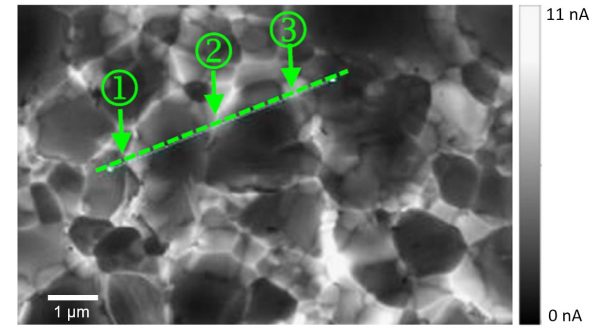
Heayoung Yoon serves as an Associate Professor in the Electrical & Computer Engineering department and Adjunct Associate Professor in Materials Science & Engineering at the University of Utah's College of Engineering. Her research focuses on advanced fabrication and nanoscale characterization of optoelectronic materials and devices, with particular expertise in engineering micro/nanostructures of semiconductor materials to enhance functionality and stability in optoelectronic devices including translucent solar cells and radiation-hard systems. Dr. Yoon earned her BS in Physics with a Computer Science minor from Chungnam National University in South Korea, an MS in Physics from Pohang University of Science and Technology, and a PhD in Electrical Engineering from The Pennsylvania State University. Her academic journey includes positions at Samsung, Penn State University, and NIST where she conducted research on molecular junction devices, pillar array solar cells, and near-field optoelectronic imaging techniques. Her research interests span multiple cutting-edge areas in energy technology and materials science. Dr. Yoon leads investigations into radial junction solar cells that decouple light absorption from carrier collection, thin-film solar cells with enhanced efficiency through microstructural optimization, translucent solar cells for diverse applications like skylights and self-powered facades, multi-probe microscopy techniques for nanoscale characterization, and molecular junction devices for advanced optoelectronics. Her work bridges fundamental research with practical applications to address global sustainability challenges. Analysis of Dr. Yoon's 15 most recent publications reveals a strong focus on solar cell technology and nanoscale characterization. Her research consistently explores patterned back contacts, micro/nanostructured solar cells, and perovskite materials, with particular attention to grain boundaries, surface potential variations, and carrier dynamics at the nanoscale. The publications demonstrate interdisciplinary approaches combining electron microscopy, optical spectroscopy, and device engineering to advance photovoltaic technologies. Outstanding Teaching Award (2024, ECE Department) Chair's Award (2022, ECE Department) CAREER Award (2021, National Science Foundation) Dr. Yoon actively mentors students through thesis research and undergraduate research projects, and leads the Yoon Research Group which develops in-situ, local measurement techniques using electron beams and focused light sources. Her lab focuses on elucidating structure-property relationships in micro/nanomaterials and devices, with applications in energy, optoelectronics, and chemical and biomedical fields. The group leverages cross-disciplinary collaborations to advance energy technologies, particularly in creating exploratory optoelectronic systems that address emerging global challenges in sustainability.
Dr. Tyler J. Grassman is an Associate Professor at The Ohio State University in the Departments of Materials Science and Engineering and Electrical and Computer Engineering. His research focuses on materials development and integration for electronic and photonic applications, particularly in photovoltaics and clean energy technologies. Joint appointment in Materials Science & Engineering and Electrical & Computer Engineering Research areas: epitaxy, heteroepitaxy, defect engineering, electron microscopy, computational materials science His recent work involves characterizing defects in III-V/Si heterostructures and optimizing metamorphic tunnel junctions for solar cells. Dr. Grassman received the NSF CAREER Award in 2021 for his research on dislocation-induced electronic states in III-V semiconductors. Scientific Awards: NSF CAREER Award (2021) He advises graduate students in Materials Science and Engineering and Electrical and Computer Engineering, including Marzieh Baan, Lauren Kaliszewski, and Tal Kasher. His laboratory at Fontana Laboratories (4012) uses advanced microscopy and computational modeling for materials discovery.
Zachary Hudson is a Professor in the Department of Chemistry at the University of British Columbia . He received his B.Sc. and Ph.D. from Queen’s University and completed postdoctoral fellowships at the University of Bristol and the University of California, Santa Barbara . His research focuses on the synthesis of luminescent materials for optoelectronics , bioimaging , and organic photocatalysis , bridging organic , inorganic , and polymer chemistry .
Zhao Zhigang is an Associate Professor at the School of New Materials and New Energy, Shenzhen University of Technology, where he has been employed since May 2017. Previously, he served as a Lecturer at the School of Optoelectronic Engineering, Shenzhen University (2013-2017) and completed postdoctoral research at Shenzhen University (2010-2012) after earning his PhD from Huazhong University of Science and Technology. His academic journey began with undergraduate and master's studies at PLA Ordnance Engineering College (now Army Engineering University). His educational background includes: PhD in Optical Engineering, Huazhong University of Science and Technology (2005-2010) Master's in Optical Engineering, PLA Ordnance Engineering College (2002-2005) Bachelor's in Military Optoelectronic Engineering, PLA Ordnance Engineering College (1995-1999) Zhao's research focuses on hyperspectral imaging systems and machine learning applications for material classification. His work emphasizes embedded image data acquisition and processing using ARM and FPGA platforms, with significant contributions to micro-hyperspectral imaging technology. His research spans three primary areas: hyperspectral image processing on ARM/FPGA systems, machine learning applications in spectral analysis, and embedded AI implementations on FPGA/Zynq platforms. This interdisciplinary work bridges optical engineering, computer vision, and hardware design. Analysis of his recent publications reveals a strong emphasis on hyperspectral data compression techniques , machine learning applications for spectral analysis , and embedded system implementations . His work demonstrates a consistent focus on practical applications of hyperspectral imaging in fields ranging from food quality assessment to battery health monitoring, with increasing incorporation of deep learning techniques in recent years. His scientific recognition includes: Multiple teaching awards at Shenzhen University of Technology (2019-2024) Shenzhen City high-level professional talent designation (2016) Numerous national competition awards as student supervisor (2016-2023) Outstanding Paper Award at Shenzhen Optical Society (2010) Zhao has secured substantial research funding as Principal Investigator, including horizontal projects (2023-2024), Shenzhen Postdoctoral Research Funding (2019-2020), and Shenzhen Basic Research Projects. He has successfully guided students in academic competitions, resulting in five national first prizes. His research group maintains strong industry connections through multiple school-enterprise cooperation projects focused on practical applications of hyperspectral imaging technology. His laboratory work centers on FPGA-based embedded systems for hyperspectral imaging, with recent projects developing micro-hyperspectral spectrometers for UAV platforms, real-time video processing systems, and specialized hardware for spectral data acquisition and compression. These efforts demonstrate a clear trajectory from fundamental optical engineering toward practical applications of machine learning in spectral analysis.
Stefano Curtarolo is the Edmund T. Pratt Jr. School Distinguished Professor of Mechanical Engineering and Materials Science at Duke University’s Pratt School of Engineering. He also holds professorships in the Department of Physics and Electrical and Computer Engineering, and serves as Director of the Center for Extreme Materials (2025–present). Education: M.S. in Physics, University of Padua (1995, 1998) M.S. in Physics, Pennsylvania State University (1999) Sc.D. in Physics, Massachusetts Institute of Technology (2003) Research Interests: Curtarolo’s work bridges Materials Science , Physics , and Artificial Intelligence , focusing on Autonomous Materials Design , High-Entropy Disordered Systems , and Materials for Extreme Environments . His methodologies integrate Quantum Mechanics , Machine Learning , and High-Throughput Computing . Recent Research Trends: His 2024–2025 publications highlight advancements in High-Entropy Ceramics , including Soliquidy (a geometric descriptor for disorder), Dual-Phase Ceramic Synthesis , and Machine Learning Interatomic Potentials . These works emphasize disorder engineering , plasticity enhancement , and AI-driven material discovery for Aerospace and Deep Space Exploration applications. Scientific Awards: European Academy of Sciences (2024) Clarivate Highly Cited Researcher (2021) Friedrich Wilhelm Bessel Research Award (2016) DOD MURI Awards (2013, 2015) NSF CAREER (2008) ONR Young Investigator (2008) PECASE (2007) Grants & Leadership: Current projects include DETER (2024–2027, Missouri S&T) and Transition States Algorithms (2024–2027, ONR). He co-leads NRT-HDR (2020–2026, NSF). Labs & Teams: Curtarolo directs the Center for Extreme Materials and leads the AFLOW consortium , a global materials design ecosystem. His lab combines machine learning , quantum simulations , and experimental validation for multiscale materials discovery .
Jean-Daniel Penot is a Researcher at CESI's Research and Innovation Department , with expertise in additive manufacturing, materials science, and industrial integration. His work bridges advanced manufacturing technologies with environmental sustainability and educational innovation. Doctorate in Materials Physics (2010) Engineering Degree in Physics (2007) Research Master in Optoelectronics (2007) Penot's research spans Additive Manufacturing and its applications in automotive, nuclear, and construction sectors. He focuses on Laser-Material Interaction , Machine Learning for process optimization, and Sustainable Engineering through life cycle assessments and geopolymer applications. His recent publications emphasize BIM , AM Modular Plants , and Defect Analysis in 3D-printed metals. Penot leads France Additive initiatives and contributes to International Standards as a board member. Penot supervises PhD students including Maryam Houhou and Amal Khabouchi , with a focus on Industrial Security and Energy Transitions . His projects integrate Thermal Comfort , Ultrasonic Inspection , and Quality Assurance in additive manufacturing systems.
Professor Gang-Ding Peng is a leading academic in photonics and optical communications at the School of Electrical Engineering and Telecommunications , University of New South Wales (UNSW). With over three decades of experience, his research focuses on silica and polymer optical fibers, fiber lasers, sensors, and photonic signal processing. Education: B.Sc. in Physics (1982, Fudan University), M.Sc. in Applied Physics (1984), Ph.D. in Electronic Engineering (1987, both Shanghai Jiao Tong University) Career: Lecturer at Shanghai Jiao Tong (1987-1988), Postdoctoral Fellow at Australian National University (1988-1991), UNSW Faculty since 1991, Queen Elizabeth II Fellow (1992-1996) Research Interests: Specialized in specialty optical fibers, nonlinear optics, and photonic devices. His work spans: Silica and polymer fiber amplifiers/lasers Electro-optic and liquid-crystal-doped fibers Multi-core fiber Bragg grating systems Photonic crystal fiber sensing 3D-printed optical components Quantum and neuromorphic photonic applications Scientific Awards: Queen Elizabeth II Fellowship (1992-1996) Fellow and Life Member of OSA & SPIE Supervision: Active mentor in Bi/Er co-doped fibers, 3D-printed optical fibers, and fiber sensing technologies.
Vivian E Ferry is an Associate Professor in the Department of Chemical Engineering and Materials Science at the University of Minnesota's College of Science and Engineering. Her research focuses on advanced materials for energy applications, particularly in solar energy conversion and nanophotonic phenomena. She maintains an active research program with numerous ongoing projects and substantial publication output spanning over 15 years. Her research interests center on Solar Energy , Photovoltaics , Plasmonics , and Nanomaterials , with particular expertise in quantum dots, thin film technology, and metamaterials. Dr. Ferry's work bridges fundamental materials science with practical applications in renewable energy technologies, exploring light-matter interactions at the nanoscale to enhance solar energy harvesting and conversion efficiency. Analysis of her recent publications (2023-2025) reveals a strong focus on chiral optical phenomena, luminescent solar concentrators, metal-insulator transitions in oxide materials, and machine learning applications for spectroscopic analysis. Her work demonstrates a consistent trajectory toward increasingly sophisticated nanoscale optical engineering with practical applications in sustainable energy systems. Dr. Ferry has secured significant research funding from diverse sources including the National Science Foundation, Microsoft Corporation, and industry partners like First Solar. Her current projects include: OLED Cavity Tuning in Commercial Devices for Display Applications (2023-2025) Chiroptical properties of patterned nanocrystal solids (2021-2026) IRG-2: Mesoscale Network Materials (2020-2026) Modeling CdTe solar cells (2021-2022) She actively collaborates with researchers across disciplines, as evidenced by her participation in multi-investigator projects and numerous co-authored publications. Her research group produces both fundamental scientific insights and practical technological advancements in materials for renewable energy applications.
Dr. Soufiane Krik is a postdoctoral researcher at the Free University of Bolzano , affiliated with the Faculty of Engineering . His work focuses on sensing technologies , particularly developing flexible and sustainable electronic components via advanced printing methods. His research bridges materials science , nanotechnology , and green electronics . Education: Ph.D. in Physics, University of Ferrara (2021) M.Sc. in Physics and New Technologies, University of Casablanca (Physics Department) Dr. Krik's research spans chemiresistive gas sensors , Density Functional Theory (DFT) simulations , and biodegradable substrates for flexible electronics. Recent work explores Agave silk fibers , cellulose-based thermal sensors , and transient zinc sensors for biomedical applications. His publications (2018–2025) highlight expertise in metal oxide sensors , quantum dot functionalization , and environmentally friendly materials . He investigates oxygen vacancy dynamics , conjugated polymers , and biomaterial integration for next-generation sensors.
Lei Xu is an Associate Professor at the Department of Engineering, School of Science & Technology, Nottingham Trent University. He leads research in the Advanced Optics and Photonics Group (www.aoplab.com) and serves as Associate Editor for Nonlinear Optics in Frontiers in Photonics . PhD in Optics (2014), Nankai University, China Postdoctoral experience at Australian National University, University of New South Wales His research spans multiple areas of nanophotonics and meta-devices, including: Energy harvesting via resonant meta-optical systems (solar cell enhancement, infrared imaging) Flat optical devices using metasurfaces for advanced nanotechnology Bio-photonics applications in diagnostics and wearable sensors Tunable meta-devices for precision light manipulation Recent publications focus on high-Q resonators, quasi-BIC states, and nonlinear frequency generation in dielectric platforms. He contributes to editorial boards of journals like ACS Nano and Nano Letters .
Anna Fontcuberta i Morral is a Full Professor and President at École Polytechnique Fédérale de Lausanne (EPFL), holding appointments in the Laboratory of Semiconductor Materials (LMSC) within the School of Engineering, as well as in the EDMX teaching unit. She maintains active research leadership while serving in administrative roles at the highest level of the institution. Her educational background includes: PhD in Materials Science, École Polytechnique (1998-2001) Diplôme d'Etudes Approfondis in Materials Science at Université Paris XI (1997-1998) BA in Physics at Universitat de Barcelona (1993-1997) Postdoctoral Scholar at California Institute of Technology under Professor Harry A. Atwater (2001-2002) Professor Fontcuberta i Morral's research program focuses on semiconductor nanostructures, particularly nanowires, with applications spanning fundamental physics to technological implementations. Her work bridges materials science, quantum physics, and device engineering, with significant contributions to understanding growth mechanisms, structural properties, and electronic characteristics of various semiconductor systems. She has pioneered research on nanowire-based solar cells that can potentially exceed traditional efficiency limits, as well as quantum phenomena in nanowire heterostructures. Analysis of her recent publications reveals a strategic expansion of research scope from fundamental nanowire properties to practical applications in photovoltaics, quantum computing, and optoelectronics. Her 2024-2025 publications demonstrate growing interest in germanium nanowires for quantum processors, zinc phosphide for sustainable photovoltaics, and 2D materials like WSe2, while maintaining strong contributions to the core understanding of III-V semiconductor nanostructures. Scientific recognition includes: Marie Curie Excellence Grant (2005-2010) Research counselor at the Swiss National Science Foundation since 2016 Section Editor and founder of a publications section Professor Fontcuberta i Morral has supervised over 40 PhD students who have gone on to successful careers in academia (including tenure-track positions at TU Delft, ETH Zurich, and University of Basel) and industry (including positions at IBM, Sensirion, and startup companies). Her research has been consistently funded by major agencies including the Swiss National Science Foundation and European programs. She leads the Laboratory of Semiconductor Materials, which focuses on the synthesis, characterization, and application of semiconductor nanostructures for next-generation electronic, photonic, and energy conversion devices.