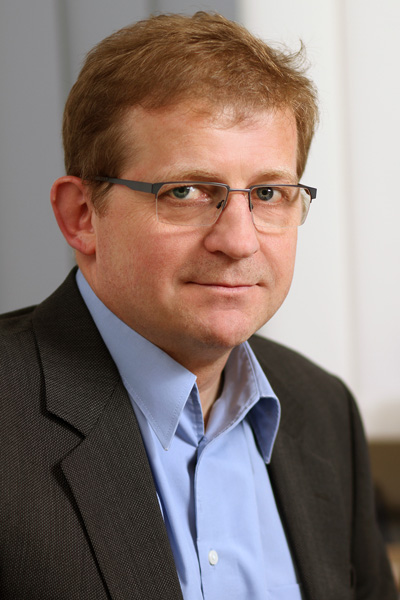
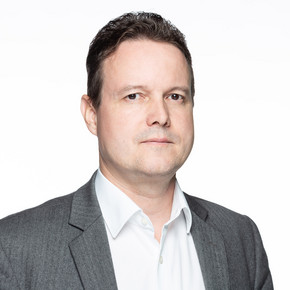
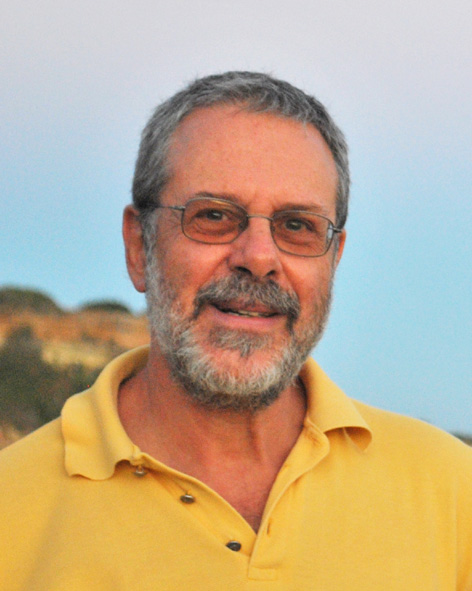
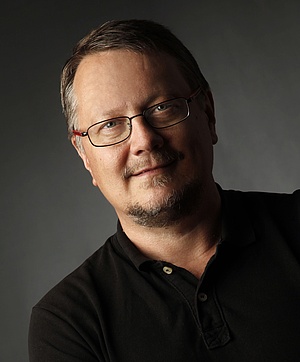
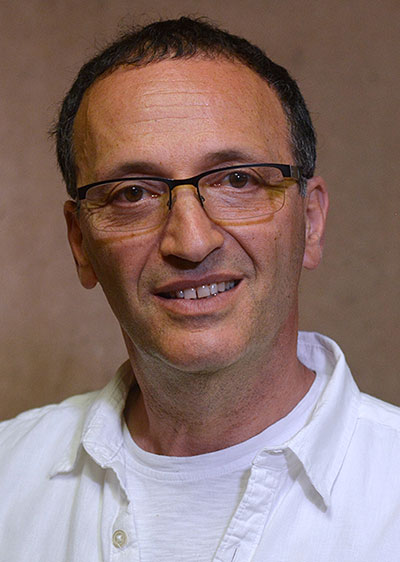
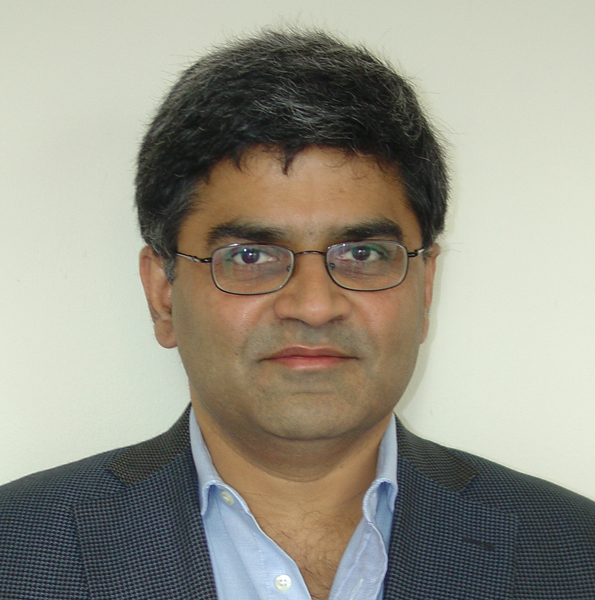
Christoph Koch is a Full Professor in the School of Computer and Communication Sciences at EPFL (Ecole Polytechnique Federale de Lausanne) , Switzerland. He has held academic positions at Cornell University (2007-2010, 2006), Saarland University (2005-2007), and TU Vienna (2001-2005). His research focuses on database systems, logic, programming languages, and data management.
Ian Horrocks is a Professor of Computer Science at the University of Oxford and a Fellow of Oriel College. His research focuses on knowledge representation, description logics, automated reasoning, and semantic web technologies. He has held academic positions at the University of Manchester (2003–2007) and served as Chief Scientist at Cerebra Inc. (2001–2006). Horrocks earned his BSc (1st class), MSc, and PhD in Computer Science from the University of Manchester (1981–1997). His work includes foundational contributions to ontology languages (e.g., OWL) and reasoning systems such as HermiT and ELK. He has supervised over twenty doctoral students and postdoctoral researchers. His honors include Fellowships from the Royal Society (2011), ECCAI (2009), and the British Computer Society (2005). He serves as Editor-in-Chief of the Transactions on Graph Data and Knowledge and leads initiatives in semantic web standards and knowledge graph applications. Key Roles: Editor-in-Chief (Journal of Web Semantics), Co-Chair (W3C OWL Working Group) Grants: EPSRC Senior Research Fellowship (2005), numerous international collaborations Labs: Oxford Semantic Technologies, involvement in projects like RDFox and PAGOdA
Wolfgang Kunz is a Full Professor (C4, W3) and Chair of Electronic Design Automation at the Technische Universität Kaiserslautern since 2001. His academic career spans multiple prestigious institutions, including Goethe-University Frankfurt/Main and the University of Massachusetts, Amherst. He has held leadership roles such as Dean (2005-2007) and Vice-Dean (2007-2009) at TU Kaiserslautern. Habilitation (Dr. rer. nat. habil.), Computer Science, University of Potsdam (1996) Doctoral degree (Dr.-Ing.), Electrical Engineering, University of Hannover (1992) Dipl.-Ing. degree, Karlsruhe Institute of Technology (1989) His research focuses on hardware verification, security, and optimization, particularly in embedded systems and processors. His work on formal verification methods has been commercialized by companies like Synopsys, Mentor Graphics, and Siemens EDA. His 2016-2021 publications address critical security issues such as Spectre/Meltdown and introduce innovative verification frameworks adopted by industry leaders like Infineon and OneSpin Solutions. Scientific awards include the IEEE Fellow (2006), German IT Society Award (2005), and TU Kaiserslautern Distinguished Teaching Award (2016). He has served on editorial boards of major journals and coordinated the Erasmus Mundus European Master Program in Embedded Computing Systems since 2010. Key students: Jörg Bormann, Raik Brinkmann, Tobias Ludwig Collaborations: Siemens EDA, Infineon, AbsInt, Intel SCAP Spin-offs: LUBIS EDA, OneSpin Solutions
Gerald Reiner serves as Head of the Institute for Production Management at the Vienna University of Economics and Business (WU), within the Department of Information Systems and Operations Management. He holds a Magister Degree, doctorate, and Habilitation in Business Administration from WU. His academic career includes positions as full professor in Production Management and Logistics at the University of Neuchatel (Switzerland, 2007-2014) and Universitaet Klagenfurt (Austria, 2014-2018), where he also served as head of the department of Operations, Energy, and Environmental Management. Dr. Reiner has held visiting professorships at Aston Business School (UK), HEC Lausanne (Switzerland), University of Bergamo, and Università Cattolica del Sacro Cuore in Milan (Italy). His research spans several critical areas including Industry 4.0 implementation, integrated capacity and inventory management, humanitarian logistics operations, circular supply chains, and operations management for base of the pyramid contexts. His work particularly focuses on practical applications addressing food waste reduction, sustainable manufacturing, and blockchain technology in supply chains. His publication portfolio demonstrates a clear evolution toward digital transformation in operations, with recent focus on hydrogen production systems, AI integration in manufacturing, and blockchain applications for food supply chain transparency. The research shows increasing emphasis on sustainability integration within traditional operations management frameworks, particularly addressing European manufacturing challenges and food system inefficiencies. Publication Excellence Award 2021 (2023) Researcher of the month (January 2023) Highly Commended paper in the 2017 Emerald Literati Network Awards for Excellence ISIR Service Award (2014) Emerald Outstanding Paper Award (2013) Dr. Reiner coordinates multiple significant international research projects including EU-project 'Keeping Jobs in EU', EU/Ecsel-project 'Power Semiconductor and Electronics Manufacturing 4.0', 'Integrated Development 4.0', and 'Artificial Intelligence in Manufacturing leading to Sustainability and Industry 5.0'. His current projects focus on FOODIS (cross-border ecosystem for innovation in food supply chains), Circular Design implementation, and blockchain applications for banana supply chains. He actively supervises research teams working on food waste reduction, sustainable packaging systems, and AI applications in operations management.
Manolis G.H. Katevenis is a Professor at the Department of Computer Science, University of Crete, and Deputy Director and Head of the Computer Architecture and VLSI Systems (CARV) Laboratory at the Institute of Computer Science (ICS), Foundation for Research & Technology - Hellas (FORTH). He co-founded the European Research Center on Computer Architecture (EuReCCA) and is a founding partner of the European Network of Excellence on High-Performance and Embedded Architecture and Compilation (HiPEAC). PhD in Computer Science from University of California, Berkeley (1983) Co-founder of EuReCCA (2011) Contributed to RISC architecture (1980-1983), interconnection networks (1985-2011), and parallel computing (1993-2010) His research spans Scalable Multicore Systems , Interconnection Network Architecture , Packet Switch Design , Computer Architecture , and VLSI Systems . He has made foundational contributions to per-flow queueing, backpressure mechanisms, and wormhole IP over ATM, with applications in internet routers, data centers, and supercomputers. His publications focus on high-radix crossbar switches, flow control algorithms, and explicit interprocessor communication. Notable scientific awards include: ACM Doctoral Dissertation Award (1984) David J. Sakrison Memorial Prize (1983) IBM PhD Fellowship (1981-1983) Greek State Fellowship (1973-1978) He has supervised 40 graduate theses and participated in 22 R&D projects totaling €9M, including HiPEAC (coordinator of interconnection networks), SARC (FPGA prototype design), and ENCORE (cache-optimized remote DMA). His work has received over 2000 citations, with an h-index of 23.
Jürgen Teich is a Professor at the Department of Computer Science of Friedrich-Alexander University Erlangen-Nuremberg since 2003, holding the Chair for Hardware/Software Co-Design. He has held academic positions at ETH Zurich (Lecturer, 1995-1998), University of Paderborn (Full Professor in Computer Engineering, 1998-2002), and UC Berkeley (Postdoctoral Fellow, 1994). Current coordinator of DFG-funded Collaborative Research Center 89 'Invasive Computing' (2010-present) Former coordinator of DFG Priority Program 1148 'Reconfigurable Computing Systems' (2003-2009) Senior IEEE Member and author of two Springer textbooks on Co-Design (2007, 2010) Research Interests : Embedded systems and hardware/software co-design Massively parallel computing architectures Design automation and optimization techniques Reconfigurable computing systems Scientific Recognition : 5+ Best Paper Awards (2002-2010) HiPEAC Paper Awards at DAC and FCCM (2009-2010) Elected reviewer for DFG (2004-2008, 2007-2011) Prof. Teich supervises over 30 PhD students and participates in interdisciplinary DFG projects and industrial collaborations. He has served on multiple program committees of leading conferences in computer architecture and embedded systems.
M. Anton Ertl is an Associate Professor at TU Wien's Faculty of Informatics, Department of Compilers and Languages. His roles include teaching courses such as 'Compilers,' 'Efficient Programs,' and 'Stack-based languages.' He specializes in compiler back-ends, Forth, interpreters, programming languages, operating systems, and computer architectures. Ertl's research focuses on optimizing interpreters, compiler design, and hardware security, particularly addressing vulnerabilities like Spectre. His research interests span interpreter performance, compiler optimization, and Forth language evolution. Recent work includes exploring hardware-based Spectre mitigation, decompilers for Gforth, and stack-based language efficiency. He actively contributes to the EuroForth conferences as an editor and presenter. Ertl supervises students on topics like compiler construction, reverse engineering, and interpreter optimization. His academic contributions include over 50 publications, with a focus on virtual machine performance, compiler back-ends, and Forth-related advancements. He is a key figure in the Gforth project and regularly teaches advanced courses on programming languages and computer systems.
Dr. Vincenzo De Maio is a PostDoc Researcher at the Department of Computational Sustainability, Faculty of Informatics, Technische Universität Wien. His research spans quantum computing, edge computing, distributed systems, and sustainable computing, with a focus on hybrid quantum-classical systems and edge AI applications. Current projects: HPQC (2023–2025), ThEMIS FWF (2024–2027), TRITON FWF (2023–2027) Previous projects: RUCON (2016–2023), SWAIN (2021–2024) His research explores the integration of quantum computing with classical systems, particularly in software engineering, workflow decomposition, and hyperparameter optimization. He also works on edge computing for smart cities, environmental monitoring, and traffic safety applications. Recent publications analyze quantum compilation bottlenecks, hybrid quantum-classical workflow orchestration, and quantum neural network optimization. He supervises master's theses on topics like quantum edge benchmarking and hyperparameter tuning. Key collaborations with Prof. Ivona Brandic and others Active in IEEE/ACM conferences and Springer publications
Stefan Rass is a Professor at the Institute of Networks and Security within the Faculty of Engineering & Natural Sciences at Johannes Kepler University Linz (JKU), where he leads the LIT Secure and Correct Systems Lab. As Principal Investigator for FFG-funded projects including reSilienz (digital supply chain resilience, 2023–2025) and ITPUK (AI signature verification, 2022–2024), he bridges theoretical game theory with practical cybersecurity solutions for critical infrastructures and robotics systems. His research spans game-theoretic security models (patrolling games, defense-in-depth strategies), quantum cryptography (QKD network architectures), and cyber deception frameworks like Honeyquest for measuring honeypot effectiveness. Recent work addresses robotics security benchmarking (RobotPerf), cryptographic instruction chaining for control flow protection, and risk assessment methodologies for interdependent infrastructures. His mathematical decision-making approach integrates bounded rationality and stochastic modeling to solve real-world security challenges. Professor Rass actively shapes the field through program committee roles (ARES 2023), peer reviews, and invited talks on security transparency. His current projects focus on cost-benefit-aware monitoring for cyber-physical systems and quantum key distribution standardization, reflecting Austria’s strategic priorities in digital resilience. The LIT Secure and Correct Systems Lab under his direction develops foundational theories while deploying tools for industrial applications, particularly in critical infrastructure protection and secure robotics workflows.
Franz Wotawa is a Professor of Software Engineering at Graz University of Technology. He holds a M.Sc. (1994) and PhD (1996) from Vienna University of Technology. He has served as head of the Institute for Software Technology from 2003–2009 and since 2020. His research focuses on model-based reasoning, software testing, autonomous systems, and diagnosis, with over 390 peer-reviewed publications. He founded Softnet Austria (2006) to bridge research and industry. He leads the Christian Doppler Laboratory for Quality Assurance Methodologies for Autonomous Cyber-Physical Systems since 2017 and has supervised 90+ master and 36+ PhD students. His awards include the 2016 Lifetime Achievement Award from the International Diagnosis Community. He is a member of Academia Europaea, IEEE, and AAAI. **Education**: M.Sc. in Computer Science, Vienna University of Technology, 1994 PhD, Vienna University of Technology, 1996 **Research Interests**: Model-based reasoning, qualitative reasoning, theorem proving, mobile robotics, verification/validation, software testing/debugging, AI, and autonomous systems. **Notable Projects**: A-IQ Ready (2022–2026): Quantum sensing for autonomous systems. ALFA (2024–2027): AI for smart diagnosis in building automation. Bilateral AI (2024–2029): Combining symbolic and sub-symbolic AI. VARCOS (2025–2028): Vehicle-road cooperative systems for autonomous driving. **Awards & Memberships**: Lifetime Achievement Award (2016, International Diagnosis Community) Senior Member, AAAI Member of Academia Europaea, IEEE, ACM, and Austrian Computer Society **Labs/Teams**: Christian Doppler Laboratory for Quality Assurance Methodologies (since 2017). Active in Cluster of Excellence “Bilateral AI” at TU Graz.
Jürgen Cito is an Associate Professor in the Department of Software Engineering at the Faculty of Informatics, TU Wien, where he leads research in probabilistic programming, security, and configuration management. His work is supported by major grants from the Austrian Science Fund (FWF), European Commission, and Meta Platforms, Inc., with active projects spanning 2022-2027. His research focuses on the intersection of software engineering and machine learning, particularly in static analysis of probabilistic programs, AI-driven penetration testing, and infrastructure security. Key contributions include identifying secret exposure in configuration files, grammar inference for ad hoc parsers, and performance prediction from source code, often combining empirical studies with tool development. Analysis of his 15 most recent publications (2020-2024) reveals three dominant trends: (1) Security vulnerabilities in configuration management systems, especially secret leakage in dotfiles; (2) Application of large language models to offensive security testing; and (3) Machine learning techniques for performance prediction and AutoML optimization in software contexts. Cito has supervised 22 Master's students on cutting-edge topics including AI security, infrastructure as code, and program analysis. His current research portfolio includes: Types4Strings (FWF, 2024-2027): Type systems for string processing Cloud Open Source Research Mobility Network (EU, 2023-2026): Open-source cloud infrastructure Software Assistants for Probabilistic Programming (Meta, 2022-2026): AI tools for probabilistic code He is embedded in TU Wien's Institute of Software Technology and Interactive Systems (E194), collaborating on cross-institutional projects focused on software security and developer tooling, with particular emphasis on empirical validation of security practices and configuration management systems.
Prof. Sandford Bessler is affiliated with the Technische Universität Wien's Faculty of Informatics, specifically within the Compilers and Languages department. His research focuses 75% on Information Systems Engineering and 25% on Logic and Computation. He teaches courses such as Bachelor Thesis for Informatics and Business Informatics . His work emphasizes smart grids, electric vehicle management, scheduling algorithms, and distributed systems. Research interests include optimizing energy networks, resilience in power grids, and integrating renewable energy systems. He has contributed to projects like ARTE (2012–2017) , exploring disruption-tolerant vehicle-infrastructure communication. Supervised theses include Electric vehicles recharge scheduling with time windows and A service overlay network for telematic applications . Key projects involve improving grid resilience through demand-side management and collaborative frameworks. He collaborates with industry and academia on smart grid technologies and electric vehicle infrastructure.
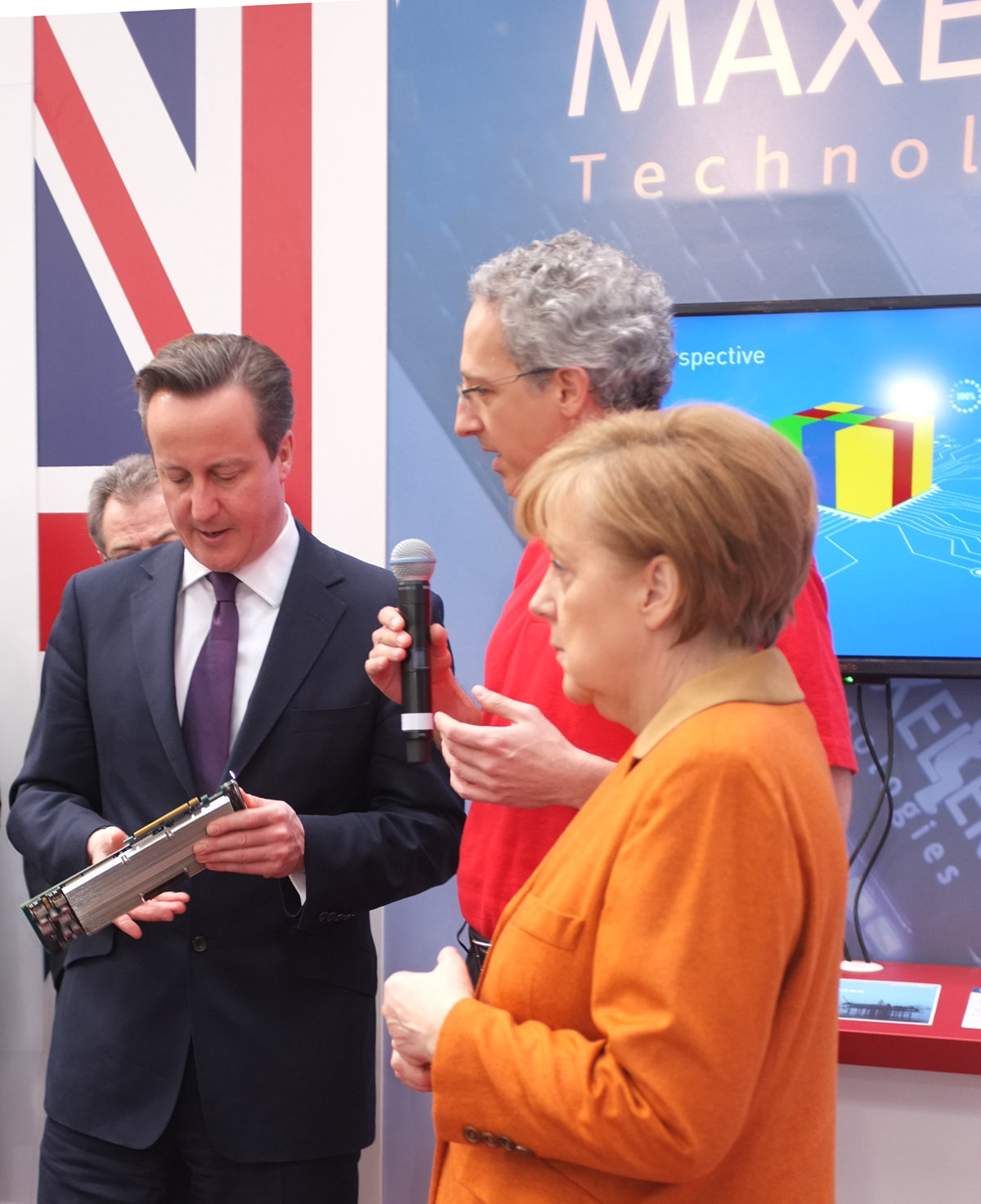
Oskar Mencer is a Professor in the Department of Computing at Imperial College London , where he has been a member of academic staff since 2000. He was also a Consulting Professor at Center for Computational Earth and Environmental Science , Stanford University (2009-2010). His research focuses on Multiscale Dataflow Computing , exploring the interaction of hardware and software systems through domain-specific representations, parallel programming, VLSI design, and compiler methodologies. He has contributed to fields including high-performance computing, FPGA optimization, and computational finance. Dr. Mencer's work has been recognized with a Special Award from Com.sult (2012), Imperial College Research Excellence Award (2007), and a Top EPSRC Advanced Fellowship (2001). He has received multiple best paper awards, including at ICFPT'08 and ASAP 2008, and his 2000 paper on stream architectures was recognized as historically significant in 2015. His publications demonstrate a strong emphasis on FPGA acceleration , custom architectures , and parallel processing across geophysics, finance, and neuroscience applications. Special Award for Dataflow Innovation (2012) Best Paper Award - ICFPT'08 Best Paper Award - ASAP 2008 He has served on technical committees for conferences such as FPL , DATE , and FPT , and leads the Computer Architecture Research Group (currently inactive).
Alexandru Nicolau is a Distinguished Professor and Chair of the Department of Computer Science at the University of California, Irvine (USA), where he has worked since 1992. He previously held positions as Associate Professor (1988–1992) and Assistant Professor (1984–1988) at UC Irvine and Cornell University, respectively. Education : B.A., Brandeis University (1980) MS (1981), Ph.D. (1984), Yale University Research Interests : A leading expert in parallelizing compilers , high-performance computing , and software-hardware co-design , Nicolau pioneered foundational techniques like Percolation Scheduling and Optimal Loop Parallelization . His work enables efficient exploitation of instruction-level parallelism in general-purpose programs, with applications in embedded systems , matrix algorithms , and GPU-based neural networks . He has also contributed to Electronic Design Automation (EDA) and lightweight synchronization protocols . Scientific Awards : IEEE Fellow (2014) ACM SIGPLAN Most Influential Paper (PLDI 20 years) EDAA/IEEE/ACM DATE Most Influential Paper (10 years) ACM ICS Most Influential Paper (25 years) 4 Best Paper awards (VLSI design 2003, ISHPC 2005, CASES 2008, IJCNN 2009) Advising & Grants : He has mentored notable scholars now at Stanford, McGill, and Google, and secured over $20M in funding from NSF , DARPA , and industry leaders like IBM and Intel . His professional service includes chairing ACM ICS’09 and PPOPP’13, and serving on steering committees for LCPC and ICS. Labs & Collaborations : His techniques have been adopted by IBM Watson, Siemens Munich, Fujitsu Labs Japan, and the open-source GCC compiler.
Dr. Keshav Pingali is the W.A. 'Tex' Moncrief Chair of Computing and Professor of Computer Science at The University of Texas at Austin, where he also directs the Center for Grid and Distributed Computing at the Oden Institute. Previously, he held the India Chair of Computer Science at Cornell University (2003–2006) and served as a professor in Computer Science and Electrical Engineering at Cornell (1999–2006). He completed his B.Tech. at IIT Kanpur (1978), followed by S.M., E.E., and Sc.D. degrees from MIT (1983, 1986). Research Interests: Focuses on programming languages, compilers, and runtime systems for parallel computing, with emphasis on optimizing irregular applications in domains like graphics and data mining. His work addresses challenges in high-performance computing and multicore processor programming methodologies. Awards & Honors: ACM SIGPLAN Programming Languages Achievement Award (2024) ACM/IEEE CS Ken Kennedy Award (2023) IEEE Charles Babbage Award (2023) Foreign Member of Academia Europaea (2020) Fellow of ACM (2012), AAAS (2010), and IEEE (2010) NSF Presidential Young Investigator Award (1989–1994) President’s Gold Medal, IIT Kanpur (1978) Professional Activities: Keynote speaker at major conferences like ACM PACT (2018), HPCA/PPoPP/CGO (2016), and HIPEAC (2012). Served as editor-in-chief of ACM TOPLAS (2007–2010) and on NSF advisory committees. Currently teaches courses on compiler optimization and performance programming.