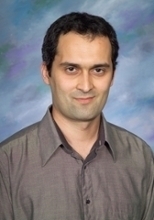
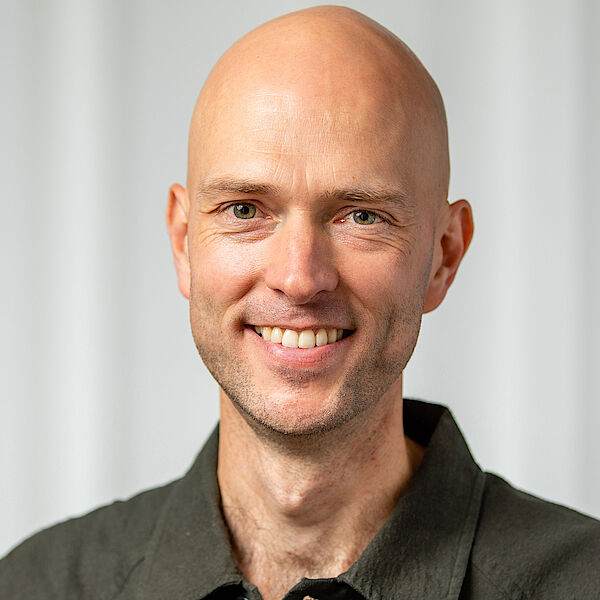
Antti Ritari is a Postdoctoral Researcher at Aalto University's Department of Energy and Mechanical Engineering. His research specializes in optimization techniques for sustainable marine energy systems, with a focus on battery-electric vessels, hybrid power systems, and zero-emission shipping solutions. He actively collaborates on projects such as the DAZE-EVET initiative, which targets data-driven approaches to reduce maritime emissions. Research Focus: Ritari's work integrates convex optimization with naval engineering challenges. Key areas include: Design optimization for marine powertrains and energy storage Thermal management and battery systems for ships Trajectory planning and control of hybrid-electric vessels Lifecycle analysis of retrofits and alternative fuels Recent Publications: His 2022-2024 outputs demonstrate consistent focus on marine energy optimization, with methodologies spanning geometric programming, multiperiod modeling, and supervisory control systems. Thematic analysis shows 80% of works directly address decarbonization of maritime transport. Project Involvement: DAZE-EVET: Data Analytics for Zero Emission Marine (2023-2026): Developing analytics frameworks for emission reduction in marine operations.
Jonathan Balkind is an Assistant Professor in the Department of Computer Science at the University of California, Santa Barbara (UCSB). His research focuses on the intersection of computer architecture, programming languages, and operating systems, with an emphasis on pragmatic system design and open-source hardware. He leads the ArchLab at UCSB and is affiliated with the OpenPiton project, an open-source manycore research framework. Education includes a PhD and MA in Computer Science from Princeton University (adviser: Prof. David Wentzlaff), an MSci in Computing Science from the University of Glasgow (advisers: Prof. Joseph Sventek and Dr. John O'Donnell), and exchange studies at UCSB. His work has been supported by awards such as the NSF Early CAREER Award (2023) and the Open Hardware Trailblazer Fellowship (2022). Research interests span heterogeneous computing, cache-coherent systems, FPGA integration, and domain-specific architectures. Notable projects include the 25-core Piton chip, the CIFER SoC with embedded FPGA, and the DECADES manycore processor. Recent publications address fused-kernel operating systems (Stramash), control logic synthesis, and hyperloop data-center architectures. His awards reflect contributions to open-source hardware and academic mentorship, including Siebel Scholarship (2018), Gordon Y.S. Wu Fellowship (2013–2017), and multiple teaching/research recognitions. He actively collaborates with industry (e.g., Microsoft Research, ARM) and advises on open-source projects.
William Heath is a Professor and Head of the School of Computer Science and Engineering at Bangor University. He holds the position of Chair of the UKACC from 2024 to 2027. His research focuses on feedback control theory, particularly addressing actuator nonlinearities such as saturation, rate constraints, backlash, and hysteresis. He employs multiplier theory within absolute stability frameworks to analyze model predictive control and antiwindup strategies. His research interests include nonlinear control systems design, stability criteria for Lur’e systems, and discrete-time extensions of classical control methodologies. He has contributed to foundational work on O’Shea-Zames-Falb multipliers and their applications in robust control. Key collaborations involve international researchers in control systems and applications, though specific partnerships are not detailed. His work bridges theoretical advancements with practical implementations, such as in biomedical BCIs and industrial systems like wind turbines and diesel engines. No awards or grants are explicitly listed, but his extensive publication record (105+ outputs) reflects sustained academic engagement. As Head of School, he leads a team advancing interdisciplinary research in computer science and engineering.
Prof. Ömer Ilday is a distinguished physicist holding dual appointments at Ruhr University Bochum in the Faculty of Electrical Engineering and Information Technology and the Faculty of Physics and Astronomy since July 2023. Awarded Germany's most prestigious research prize—the Alexander von Humboldt Professorship in May 2024—he leads cutting-edge research in ultrafast laser technology and laser-matter interactions. His work bridges photonics, plasma research, materials science, and manufacturing engineering. His research focuses on ultrafast laser development and laser-matter interactions , with transformative applications in precision machining, laser surgery, nanostructuring, and material property modification. Recent work explores self-organization of laser light, burst-mode laser systems, and nonlinear laser lithography for 3D material sculpting. His publications reveal strong trends in GHz-repetition-rate pulse bursts, ablation efficiency optimization, and feedback-controlled pattern formation. Alexander von Humboldt Professorship (2024, €5M) ERC Advanced Grant (2022) ERC Consolidator Grant (2014, first to Turkey) Marie Curie International Reintegration Grant Outstanding Young Scientist Award (Turkish Academy of Sciences, 2006) Elected Member: Academia Europaea, Turkish Academy of Sciences Ilday directs the Ultrafast Optics & Lasers Laboratory (UFOLAB) at Bilkent University and founded Turkey's first laser company. At RUB, he is establishing the Center for Complex Laser-Matter Interactions as an interdisciplinary hub for photonics, plasma research, and materials science. His strategic vision includes developing startup ventures from research outputs while advancing fundamental understanding of dissipative self-assembly phenomena from quantum dots to biological systems.
Subhadip Chakrabarti is a Lecturer in Economics at Queen's Business School, Queen's University Belfast. He holds a PhD from Virginia Polytechnic and State University (USA). His research focuses on microeconomic theory, game theory, operations research, and telecommunications policy. He teaches game theory and introductory macroeconomics, and serves as Examination Officer for Economics Programmes. Research Interests: Dr. Chakrabarti explores networks, industrial organisation, cooperative/non-cooperative game theory, and policy-related issues in telecommunications. His work integrates theoretical frameworks with practical applications in strategic decision-making and market structures. Teaching: He contributes to foundational courses in economics, emphasizing analytical rigor and real-world relevance. Professional Activities: As Examination Officer, he oversees academic standards and assessment processes in the Economics Department.
Carlos A. Ocampo Martínez is an Associate Professor in the Department of Automatic Control (ESAII) at the Universitat Politècnica de Catalunya (UPC), BarcelonaTech, Spain. He is affiliated with the Institut de Robòtica i Informàtica Industrial, CSIC-UPC, a joint research center between UPC and the Spanish National Research Council. He has been with UPC since 2011 and served as Deputy Director of IRI from 2014 to 2018. Education: PhD in Control Engineering, Universitat Politècnica de Catalunya, 2007 MSc in Industrial Automation, National University of Colombia, 2003 BSc in Electronics Engineering, National University of Colombia, 2001 His research is centered on model predictive control (MPC) , particularly constrained and distributed MPC, with applications in energy, water, and smart manufacturing. He investigates large-scale systems management, partitioning strategies, and non-centralized control architectures. His work integrates IoT frameworks for smart industrial systems. Key domains include renewable hydrogen production, fuel cell vehicles, microalgae bioreactors, and solar thermal plants. The recent publications reflect a strong trend in applying control theory to sustainable energy systems and environmental management. There is a clear focus on integrating game theory, population dynamics, and optimization into MPC frameworks for distributed and coalitional control. Applications span hydrogen infrastructure, solar energy, water irrigation, and transportation electrification, demonstrating interdisciplinary impact. Scientific Awards: Juan de la Cierva Research Fellow Dr. Ocampo-Martínez actively supervises PhD students and leads research projects such as MASHED , which focuses on digitalized energy systems with hybrid storage. He has advised students on topics including alkaline electrolyzers, hydrogen production control, and alcohol steam reformers. His grant involvement emphasizes renewable integration, smart grids, and sustainable transport. He collaborates with researchers across Europe and contributes to high-impact journals and IFAC conferences. He is a key member of the Automatic Control research group at ESAII and contributes to the strategic direction of the Institut de Robòtica i Informàtica Industrial. His team integrates control theory, optimization, and real-world industrial applications, particularly in energy and water systems.
Hossam H. H. Mousa is a Doctoral Researcher at Aalto University's Department of Electrical Engineering and Automation, School of Electrical Engineering. He also serves as an Assistant Lecturer at South Valley University's Department of Electrical Engineering since 2020. B.Sc. in Electrical Engineering (2017), South Valley University M.Sc. in Electrical Power and Machines Engineering (2020), South Valley University His research focuses on electrical power engineering, including maximum power point tracking (MPPT) for renewable energy, power systems analysis, energy management, and machine learning applications in grid optimization. He has published extensively on topics like hosting capacity estimation, unbalanced microgrids, and hydrogen storage integration. The 15 most recent articles emphasize modern power systems optimization through machine learning (2025), smart inverter applications in renewable integration (2025), and hydrogen storage's role in cold climate energy management (2025). Earlier works include best practice studies on capacitor allocation (2024) and photovoltaic system controls (2024), earning him the 2024 Best Paper Award in the International Journal of Electrical Power & Energy Systems. Best Paper Award (2024), International Journal of Electrical Power & Energy Systems His scholarly activities span energy conversion, microgrid stability, and applied machine learning, contributing to sustainable energy transition solutions. He has collaborated on international research books addressing distribution network hosting capacity (2025) and future energy systems challenges.
Samuel Thibault is a Professor at University of Bordeaux, affiliated with Laboratoire Bordelais de Recherche en Informatique (LaBRI) and Inria Bordeaux -- Sud-Ouest. He is a member of the SATANAS team at LaBRI (theme: High Performance Runtime Systems for Parallel Architectures) and the STORM research team at Inria Bordeaux (previously RunTime). His work bridges academic research and practical implementation of high-performance computing systems. Thibault's research focuses on task-based runtime systems, particularly StarPU, for heterogeneous and parallel computing architectures. His work addresses critical challenges in scheduling algorithms, memory management under constraints, data locality optimization, and performance modeling for complex NUMA architectures. He has made significant contributions to the field of parallel computing through the development and analysis of runtime systems that efficiently manage tasks across diverse hardware resources including CPUs, GPUs, and other accelerators. His research has practical applications in scientific computing, deep learning inference, and large-scale simulations requiring extreme computing power. His recent publication trends show a strong emphasis on optimizing task-based runtime systems for heterogeneous architectures with particular attention to memory constraints and data locality. There's a clear progression toward applying these techniques to deep learning inference workloads, as evidenced by his StarONNX project. His work consistently addresses the challenge of balancing throughput and latency in complex computing environments, with increasing focus on recursive task graphs and dynamic adaptation strategies. Thibault is actively involved in European research initiatives including TEXTAROSSA (focusing on exascale technologies) and EXA2PRO (high development productivity on heterogeneous systems). His work has been published consistently in top-tier conferences and journals in parallel and distributed computing. As part of the STORM team at Inria Bordeaux, Thibault contributes to advancing the state of the art in runtime systems for high-performance computing. His team's work on StarPU has become a reference implementation in the field, enabling researchers and practitioners to develop applications that can efficiently utilize heterogeneous computing resources without needing to manage the complexity of different hardware architectures directly.
Fred Schauer is an Associate Professor in the Department of Aeronautics and Astronautics at the Air Force Institute of Technology (AFIT), part of Air University at Wright-Patterson Air Force Base, Ohio. He is a leading researcher in propulsion systems, particularly in the development and analysis of detonation-based engines such as pulsed and rotating detonation engines. His work integrates experimental testing, thermodynamic modeling, and advanced diagnostics to advance aerospace propulsion technologies. His educational background includes: BS in Mechanical Engineering, University of Dayton, 1993 Ph.D. in Mechanical Engineering, University of Illinois at Urbana-Champaign, 1998 Air War College, 2008 Dr. Schauer's research focuses on energy, propulsion, and power, with special emphasis on novel thermodynamic cycles, detonation dynamics, laser diagnostics, and flame-turbulence interactions. His work has significantly contributed to understanding and optimizing rotating and pulsed detonation engines, including performance scaling, nozzle integration, and fuel injection strategies. He has explored both conventional and bio-derived fuels to enhance efficiency and sustainability in small-scale propulsion systems. The 15 most recent publications reflect a strong trend toward experimental validation of rotating detonation engines, thermodynamic modeling, and performance optimization. These works span high-speed propulsion, combustion stability, and integration with turbines and ejectors. Keywords across these articles include aerospace engineering, propulsion, combustion, and mechanical systems, with subfields such as rotating detonation, pulsed detonation, nozzle dynamics, fuel efficiency, and thermodynamic modeling. His scientific achievements have been widely recognized: AFRL Commander’s Cup and Innovation Award Two-time winner of the AFRL Science & Technology Achievement Award ASME Airbreathing Propulsion Award Finalist for the Collier Trophy Finalist for Aviation Laureate AFRL Fellow Air Force Scientist of the Year AIAA Engineer of the Year Dr. Schauer has served as a research advisor for numerous M.S. and Ph.D. students and maintains active collaborations with AFRL, NASA, DOE, and academic institutions. His research group has published extensively and led major projects, including the AFRL in-house detonation propulsion research program from 1997 to 2019. He previously led the Propulsion and Power Advanced Concepts Group, which operated the Detonation Engine Research Facility and the Small Engine Research Laboratory, driving innovation in next-generation propulsion systems. His research labs and teams include the Detonation Engine Research Facility and the Small Engine Research Laboratory, where experimental and computational studies on advanced propulsion concepts are conducted. These facilities support high-pressure, high-speed combustion research and enable the development of practical applications for military and aerospace platforms.
Cristina L. Garafola is a Senior Policy Researcher at the RAND Corporation and Professor of Policy Analysis at the RAND School of Public Policy. Her work focuses on China’s rise and its implications for global security, particularly military strategy and U.S.-China relations. She served in the Office of the Secretary of Defense (2017-2019), analyzing defense strategies, and has held roles at the U.S. Department of the Treasury, Center for Strategic and International Studies, and U.S. Department of State. Education: M.A. in China Studies (Johns Hopkins SAIS), Graduate Certificate (Hopkins-Nanjing Center), B.A. in International Relations and Chinese (Hamilton College). Fluent in Mandarin with field experience in China, Myanmar, and Japan. Research interests include PLA modernization, gray zone tactics, Indo-Pacific strategy, and geopolitical competition. Co-authored 70 Years of the People’s Liberation Army Air Force (2021), with publications in Asian Security , Journal of Strategic Studies , and War on the Rocks . Recent work examines PLA approaches to low-Earth orbit warfare, U.S. ally perceptions of China, and escalation risks in Indo-Pacific military activities. Her analyses bridge defense policy, strategic competition, and operational realities.
Joe Charles Campbell is the Lucien Carr III Professor of Electrical and Computer Engineering at the University of Virginia. Previously, he held the Cockrell Family Regents Chair in Engineering at the University of Texas at Austin (1989–2006). His research focuses on optoelectronic devices, particularly high-performance photodetectors for fiber optics communications, including avalanche photodiodes (APDs), Si-based optoelectronics, and mid-infrared detection technologies. He has authored over 400 journal articles and 400 conference presentations, with notable contributions to low-noise avalanche photodiodes and material innovations like AlInAsSb alloys. His work emphasizes high-speed, low-noise, and radiation-tolerant photodetection systems. Education: B.S. Physics (University of Texas at Austin, 1969), M.S. and Ph.D. Physics (University of Illinois at Urbana-Champaign, 1971 and 1973). Postdoctoral research at University of Illinois (1973–1974). Early career included roles at Texas Instruments (integrated optics) and AT&T Bell Labs (optoelectronic devices). Research Highlights : Development of AlInAsSb-based APDs for single-photon counting and mid-infrared detection. Advances in high-power, high-linearity photodiodes and flip-chip bonded designs for thermal dissipation. Pioneering work in staircase avalanche photodiodes with optimized excess noise characteristics. Awards & Recognition : Member of the National Academy of Engineering (2002). Lucien Carr III Professorship (University of Virginia). Labs & Teams : Leads the Photonic Devices Group at UVA, focusing on optoelectronic materials and device fabrication. Collaborates on radiation-tolerant photodetectors and integrated photonic platforms.
Daler N. Rakhmatov is an Associate Professor in the Electrical and Computer Engineering Department at the University of Victoria . His research focuses on energy-efficient computing architectures for biomedical imaging applications, including ultrasound systems and embedded systems optimization. He is also involved in hardware/software co-design and battery management systems. Education: Bachelor of Science (BSc) in Engineering, University of Rochester Master of Science (MSc) in Engineering, University of Arizona Doctor of Philosophy (PhD) in Engineering, University of Arizona Professional Engineer (PEng) designation Research Interests: Rakhmatov's work emphasizes four core areas: 1. Low-complexity biomedical ultrasound imaging techniques for energy efficiency. 2. Configurable hardware/software architectures for computation-intensive tasks. 3. Analytical models for battery dynamics in embedded systems. 4. Model-driven configuration algorithms for energy-constrained applications. Teaching: Rakhmatov teaches courses such as ECE 242 (Discrete Structures) , ECE 355 (Microprocessor Systems) , and advanced topics like ECE 568 (System-on-Chip Engineering) . Students & Alumni: Rakhmatov supervises PhD and MASc/MEng students in biomedical imaging and embedded systems. Notable alumni include: - Hamad Alrimeih (PhD, Cryptographic Hardware Acceleration) - Mohammed Albulayli (PhD, Ultrasound Imaging Reconstruction) - Solmaz Khezerloo (MASc, Gradient-Driven Beamforming) Labs & Collaborations: His research integrates with the University of Victoria's biomedical engineering and embedded systems communities. He is a member of the Cadence University Program .
J.A. La Poutré is a Full Professor at Delft University of Technology and a Scientific Staff Member at CWI (Centrum Wiskunde & Informatica) in the Intelligent and Autonomous Systems group. He holds part-time positions and is involved in research on multi-agent systems and computational intelligence for smart energy systems, with a focus on market-based optimization and fairness in network congestion management. PhD in computer science (Utrecht University, 1991) MSc in mathematics (TU Eindhoven, 1986) His research spans algorithm design, game theory, and reinforcement learning applied to energy systems, particularly smart grids and market mechanisms. Recent publications address cybersecurity threats in power networks, auction-based energy trading, and AI integration in media sectors. The 2019–2025 publications highlight his work in combining game theory with smart grid optimization , covering topics such as topology attacks , demand-side bidding , and fair congestion management . Papers frequently involve reinforcement learning , metaheuristics , and market mechanisms . Scientific Awards : Best paper award at GECCO-2015 KNAW fellow (Utrecht University, 1991–1997) He has led funded projects like Computational Capacity Planning in Electricity Networks (STW program) and co-chairs the Commit2Data Energy division. La Poutré also serves as Vice President of ERCIM (European Research Consortium for Informatics and Mathematics).
Ole Madsen is a Professor at the Department of Materials and Production within The Faculty of Engineering and Science at Aalborg University . His research focuses on Robotics and Automation , particularly in 5G Smart Production , AI for Manufacturing , and Industry 4.0 applications. He also holds a part-time position at Adding Robotics , applying his expertise in robot integration for industrial and healthcare settings. Research Interests : Robotics, Automation, AI, Sensor Systems, Modular Manufacturing, Welding Technology, Digital Twins, Human-Centered Robotics, Industry 4.0 His work spans 35+ years with over 205 publications , emphasizing smart production systems and robot-assisted processes . Key contributions include Swarm Production Architectures , 5G-Enabled Robotics , and Human-Robot Collaboration frameworks. He has supervised 10 PhD students and led major projects like RAU (Robot-Assisted Ultrasound) and GINP: Robotics & AI Innovation Network . Scientific Awards : SCAP2020 Best Presentation Award (2020) Ole's 31 projects include AP2030: Aseptic Factory 2030 (pharma production), AddSmart (robotics R&D), and 5G-Enabled Autonomous Systems . His 127 press/media mentions highlight advancements in robotic welding , industrial metaverse , and swarm production . He maintains an ORCID: 0000-0003-2133-2541 with extensive publication records across Swarm Robotics , Modular Manufacturing , and AI-Driven Production .
Emmanuel Baccelli is a Professor for "Open and Secure IoT Ecosystem" at Freie Universität Berlin since September 2019, holding a joint position with Inria and the Einstein Center Digital Future (ECDF). He is also a scientific researcher at Inria since 2007 and co-founder/coordinator of the RIOT open source operating system for IoT devices since 2013. His research focuses on the intersection of low-power protocols, deeply embedded open source software, and security in the Internet of Things (IoT) ecosystem. Baccelli emphasizes the critical trade-off between energy efficiency and security in IoT systems, advocating for privacy-by-design principles and open specifications. His work addresses how users can maintain control over their systems and data in an increasingly connected world. Baccelli's publications demonstrate a clear progression toward secure, efficient IoT systems with recent work focusing on secure firmware updates, TinyML deployment, and privacy-preserving protocols. His research spans from foundational networking protocols to practical implementations for constrained devices, with a consistent emphasis on open source solutions and security-by-design. Baccelli completed his PhD in 2006 at École Polytechnique in Paris on "Routing and Mobility in Large Packet-Based Networks" and received his habilitation from Université Pierre et Marie Curie in 2012. He previously served as a Guest Professor at Freie Universität Berlin in 2013-2014 with a DAAD Grant. His professional activities include significant contributions to IETF standards, particularly RFCs related to routing protocols for low-power networks. Baccelli's research has practical applications across multiple domains including healthcare, smart agriculture, and industrial IoT systems, where security and energy efficiency are paramount concerns.