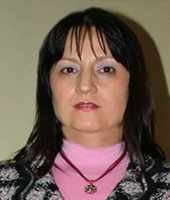
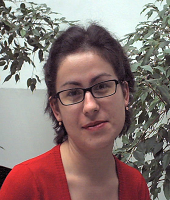
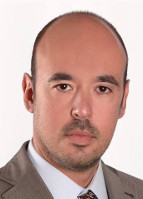
Răzvan Sandu ENOIU is a Professor at the Department of Motor Performance, Faculty of Physical Education and Mountain Sports, Transilvania University of Brașov. His work focuses on sport training methodologies, physical education innovation, and the integration of technology in athletic performance analysis. He is affiliated with the university’s research initiatives and has contributed to interdisciplinary studies bridging sports science with educational technology. Research Interests: Sport training programming and periodization Applications of wearable sensors and modern technology in sports Optimization of athletic performance through data-driven approaches Impact of extracurricular activities on motor skills development His publications explore topics such as Alpine skiing performance analysis, vital sign monitoring in athletics, and the sociological effects of technology during the pandemic. Recent work includes advancements in javelin throwing biomechanics and balance training methodologies using Bosu balls. Professor ENOIU collaborates with international journals and contributes to conferences on sports science and child development.
Elena Niculina Dragoi is a Lecturer at the Faculty of Chemical Engineering and Environmental Protection 'Cristofor Simionescu' at Gheorghe Asachi Technical University in Iasi, Romania. Her academic work integrates Artificial Intelligence and Machine Learning tools for solving complex problems in Chemical Engineering and Environmental Protection . With over 30 published papers and six active research projects, her contributions span process optimization, nanomaterials, and sustainable technologies. Teaches Applied Informatics (Years 1 & 4) and Artificial Intelligence at the Faculty of Chemical Engineering Contributes to Programming Engineering at the Faculty of Computer Science, University 'Alexandru Ioan Cuza' Engaged in interdisciplinary courses at the Faculty of Automatic Control and Computer Engineering Research Interests : Elena's work focuses on modelling and optimization (90% emphasis) of chemical processes using AI methodologies, with cross-disciplinary applications in environmental engineering (70%) and chemical engineering (95%). Her recent publications highlight innovations in: 3D-printed nanocomposite adsorbents for pollutant removal Metaheuristic optimization algorithms for industrial processes Hydrogen generation via nanocatalysts Electrochemical biosensors for environmental and health monitoring AI-driven wastewater treatment systems Green chemistry applications in pharmaceutical and dye removal
Prof. Ovidiu Cârjă is a Professor of Mathematical Analysis at the Faculty of Mathematics, University of Iasi, Romania. He holds a PhD from the same university (1984) and has held academic positions since 1981, progressing from Assistant Professor (1984) to his current role. His research focuses on controllability, viability theory, and Hamilton-Jacobi-Bellman equations, with significant contributions to differential inclusions and nonlinear analysis. Education: B.Sc. Mathematics, University of Iasi (1976) M.Phil. Mathematics, University of Iasi (1977) Ph.D. Mathematics, University of Iasi (1984) Research Interests: Optimal control and time-optimal control problems Viability and invariance for differential inclusions Hamilton-Jacobi-Bellman equations Nonlinear functional analysis and semilinear systems Awards and Fellowships: Romanian Academy 'Simion Stoilow' Award (1991) Fulbright Award (UCLA, 1993–1994) NATO Fellowship (CMAF Lisbon, 1998–2002) Invited Professorships at University of Perpignan and Tor Vergata Rome Professional Activities: Editor of the Applied Analysis and Differential Equations (World Scientific, 2007) Co-author of influential books on nonlinear analysis and viability theory
Jean-Pierre Magnot serves as an Associate Researcher at LAREMA (Laboratoire Angevin de Recherche en Mathématiques), University of Angers, France, while concurrently holding a High-School Teacher position at Lycée Jeanne d'Arc, Clermont-Ferrand, France. He maintains additional affiliation with the Lepage Research Institute in Slovakia. His research integrates three core domains: Infinite dimensional geometry (focusing on diffeological structures, vector pseudobundles, and Grassmannians), Mathematical physics (specializing in Kadomtsev-Petviashvili hierarchies and pseudo-differential operators), and Decision science (developing geometric frameworks for pairwise comparison matrices and inconsistency reduction). This interdisciplinary approach frequently bridges gauge theory concepts with decision-making algorithms, exemplified by Yang-Mills formulations applied to ranking problems. Recent publications (2024-2025) reveal a cohesive trajectory where diffeological methods unify mathematical physics and decision theory. Key trends include the geometrization of pairwise comparisons through quantum gravity analogies, well-posedness analysis of generalized KP systems, and optimization frameworks for infinite-dimensional spaces. His work demonstrates consistent application of abstract geometric constructs to both theoretical physics and practical decision systems. No scientific awards were documented in the provided sources. Information regarding students advised, doctoral supervision, or research grant acquisitions was not present in the source material. Magnot actively collaborates with international institutions including the Union of Czech Mathematicians and Physicists, University of Prešov (Slovakia), Eötvös Loránd University (Hungary), Italian Society for General Relativity and Gravitation, Transilvania University of Brasov (Romania), VŠB-TU Ostrava (Czech Republic), and Lodz University of Technology (Poland). These partnerships span mathematical physics, differential geometry, and decision science applications.
Luminița-Maria BRENCI is an Associate Professor at the Department of Wood Processing and Design of Wood Products, Faculty of Furniture Design and Wood Engineering, Technical University of Brasov (UNITBV). Her research focuses on innovative materials, lignocellulosic panels, thermal/acoustic insulation, and wood surface quality. She is affiliated with the university's address: St. Universității, No 1, Braşov, Romania, located in Building L, Room LIII6. Contact details include phone number 0372 910037 and email brenlu@unitbv.ro. Her research interests emphasize advanced materials and processes for sustainable wood-based products, including eco-composites and waste utilization. Recent studies include thermal conductivity analysis of wood-ABS composites, surface quality of beech milling, and cultural heritage-inspired furniture design through CNC routing. Publications span 2014–2024, covering topics like particleboard optimization from sunflower seed husks and eco-composites for building insulation. No scientific awards are explicitly listed, but her work aligns with environmental and materials engineering advancements. Advising and grants details are not provided in the text. She contributes to the university’s interdisciplinary research in wood engineering and sustainable design.
Andreea ISBASOIU is an Assistant Professor at the Department of Psychology and Education Sciences, affiliated with the Faculty of Psychology and Education Sciences at the Technical University of Brasov. Her research focuses on mental health interventions, particularly exploring how online therapy compares to traditional face-to-face therapy, and developing programs to mitigate anxiety-depressive symptoms. She investigates self-enhancement strategies to improve treatment adherence in digital interventions. Education details are not explicitly provided in the text, but her academic role suggests advanced training in clinical psychology or related fields. Research interests include transdiagnostic interventions, cognitive-behavioral therapy delivery methods, and the psychological dynamics of self-structures as risk/protective factors. Publications highlight her work on internet-based interventions for LGBTQ+ populations, online therapy efficacy in anxiety/depression, and randomized controlled trials evaluating treatment adherence strategies. No awards or grants are listed, though her active publication record indicates research involvement. Contact information includes her institutional email and campus location at Nicolae Bălcescu 56, Brașov.
Praveen Agarwal is a Professor of Mathematics at the Department of Mathematics, International College of Engineering, located near Kanota, Agra Road, Jaipur-303012, Rajasthan, India. He also maintains a significant affiliation with the Lepage Research Institute in Slovakia. His academic profile demonstrates a strong international presence with collaborations spanning multiple continents. Dr. Agarwal's research expertise centers on Special functions , Fractional calculus , and Mathematical Physics . His work in fractional calculus represents cutting-edge contributions to this specialized mathematical field, developing theoretical frameworks with applications across diverse scientific disciplines. His research in special functions has led to numerous extensions and generalizations of classical mathematical constructs, creating innovative tools for solving complex differential equations. In mathematical physics, he applies rigorous analytical techniques to model physical phenomena, particularly those involving wave propagation, diffusion processes, and energy systems. Analysis of Dr. Agarwal's extensive publication record reveals a sophisticated approach to fractional-order differential equations with applications spanning viscoelastic wave behavior, neural networks, energy storage systems, and biomedical engineering. He frequently develops novel mathematical methods, including specialized integral transforms and polynomial-based solution techniques, to address complex nonlinear systems. His research consistently bridges pure mathematical theory with practical engineering applications, particularly in areas requiring precise modeling of memory effects and non-local phenomena. The interdisciplinary nature of his work is evident in publications addressing both theoretical mathematics and practical engineering challenges. Dr. Agarwal maintains active research collaborations with prestigious institutions worldwide, including The Union of Czech Mathematicians and Physicists, University of Prešov in Prešov, Eötvös Loránd University, Italian Society for General Relativity and Gravitation, Transilvania University of Brasov, VŠB-TU Ostrava, and Lodz University of Technology. These international partnerships reflect the global recognition of his contributions to mathematical sciences and demonstrate his ability to work across disciplinary boundaries to solve complex problems.
Andang Sunarto is an Associate Professor affiliated with the State Islamic Institute (IAIN) Bengkulu, Indonesia and the Lepage Research Institute, Slovakia . His work bridges Numerical Analysis , Computational Mathematics , and Algorithm Design with applications in Robotics , Image Processing , and Sharia-Compliant Systems . Research Focus: Fractional Calculus, Nonlinear PDEs, GPU-Accelerated Algorithms Collaborations: International institutions including Union of Czech Mathematicians and Physicists and University of Prešov His recent publications (2021–2025) emphasize Iterative Methods for solving Time-Fractional Diffusion Equations and Porous Medium Models . He also explores Digital Islamic Education and Halal Tourism Development . Despite no listed awards, his work spans diverse domains like Mobile Banking Evaluation , Environmental Pollution Analysis , and Ethnobotanical Applications . Andang actively designs EdTech tools (e.g., Wordwall-based modules) and contributes to computational methods in Climate Modeling and Nonlinear Diffusion .
Prof. Adrian Filipescu is a full professor and PhD supervisor at the Department of Automation and Electrical Engineering, Dunărea de Jos University of Galati. He holds a PhD in Control Systems (1993) and has over 40 years of academic and research experience. His expertise spans numerical calculus, adaptive control, robotics, and Industry 4.0/5.0 applications. He has authored 12 books and over 110 indexed articles with an h-index of 11 (SCOPUS), and his work earned two UEFISCDI awards (2014, 2019). Education: Engineer diploma in Automatic Control (Polytechnic University of Bucharest, 1981) and PhD in Control Systems (Dunărea de Jos University, 1993). His research focuses on mechatronics systems integration, robotic control, digital twins, and industrial automation. Notable contributions include developing a mechatronics line with integrated autonomous robots, wheelchair systems for disabled users, and multidirectional autonomous vehicles. Research Themes: Digital twin frameworks, IoT-cloud robotics control, Industry 4.0/5.0 systems, inverse kinematics modeling, and autonomous robotic navigation. His recent work emphasizes cloud-based remote control, HIL simulation, and SCADA integration. Awards: Recipient of the 2014 and 2019 UEFISCDI 'Award for Research Results' for highly commended papers. He has led 10+ research projects, endowing labs with advanced robotic infrastructure and PLC-controlled systems. Advising & Grants: Supervised 7 completed PhD theses (including 1 international co-supervision). Projects focused on robotic-assisted manufacturing, autonomous systems, and mechatronics line optimization. Current lab facilities include mobile robots, industrial manipulators, and PLC-based control systems. Labs/Teams: Director of a research lab developing Industry 5.0-ready systems, including robotic assistants for elderly/disabled users and flexible assembly/disassembly technologies. Collaborations include NATO internships at Politecnico di Torino (Italy), INPG Grenoble (France), and ISR Coimbra (Portugal).
Stavros Vologiannidis serves as an Assistant Professor in the Department of Informatics, Computer and Telecommunications Engineering at the International University of Greece. His academic career spans both teaching and research in control theory, robotics, and machine learning applications. Previously, he was associated with the Mathematics Department at Aristotle University of Thessaloniki where he completed his education and conducted postdoctoral research. Education: B.Sc. in Mathematics from Aristotle University of Thessaloniki (1997) Ph.D. in Control Theory from Aristotle University of Thessaloniki (2005) with dissertation titled 'ALGEBRAIC-POLYONYMICAL COMPUTING METHODS IN CONTROL THEORY' Dr. Vologiannidis' research focuses on Classical and Intelligent Control Theory, Robotics, and Machine Learning, with particular expertise in polynomial matrices and automatic control systems. His work bridges theoretical mathematics with practical engineering applications, especially in educational robotics and industrial control systems. He has developed several educational platforms including EUROPA, a ROS-based educational robot for teaching sensor integration and data acquisition. His publication record shows a clear evolution from theoretical control systems research toward applied machine learning and educational technology. Recent work demonstrates increasing focus on practical applications of AI in education, urban feature recognition, industrial monitoring, and robotics education across multiple educational levels from middle school through university. His research combines mathematical rigor with real-world implementation. Scientific Recognition: Excellence Scholarship in the 'Excellence Scholarships 2010' program of the Research Committee Total citations exceeding 250 with Scopus H-index of 9 Dr. Vologiannidis has secured numerous research grants and led multiple projects including 'Rapid Earthquake Damage Assessment Consortium – REDACt', 'Predictive Maintenance 4.0', and 'Development of computational methods for optimization of eigenvalue assignment problems'. He has collaborated extensively with institutions across Europe including UTIA Foundation in Prague and has participated in EU-funded projects like GALENOS and GN4-1 GÉANT Research and Education Networking. His laboratory work centers around the EUROPA educational robotics platform and the StreetScouting urban feature detection system, both of which integrate hardware, software, and educational applications. These projects demonstrate his commitment to translating theoretical research into practical educational and industrial tools.
Professor Andriy Volodymyrovych Karpenko is a Doctor of Economic Sciences and Professor at the Department of Economics and Customs within the Faculty of Business Technologies and Economics at National University 'Zaporizhzhia Polytechnic'. With over 14 years of academic experience since 2010, he has established himself as a prominent scholar in innovation economics, human capital development, and customs policy. Faculty of Business Technologies and Economics, National University 'Zaporizhzhia Polytechnic' Department of Economics and Customs Director of the Public Organization 'Zaporizhzhia Cluster Engineering - Automation - Mechanical Engineering' since 2020 Deputy Editor-in-Chief of the electronic periodical 'Management and Business' Member of multiple editorial boards of economic journals Professor Karpenko's research interests span innovations and innovation ecosystems, national and regional economy, economics and enterprise management, human capital and human development, and customs affairs. His work demonstrates a consistent focus on Ukraine's economic development through innovation, human capital investment, and cluster-based economic strategies, with particular emphasis on the impact of digital transformation and global challenges on Ukraine's economic landscape. His extensive publication record includes 354 scientific works, with 30 published internationally (7 in Scopus and Web of Science-indexed journals), 94 in Ukrainian professional periodicals, 27 in monographs (including one sole-authored monograph), and 203 conference theses. Recent publications (2020-2024) reveal a strong focus on Ukraine's economic resilience during wartime, cluster development strategies, human capital measurement, and innovation ecosystem management. Letter of thanks from Zaporizhzhia Regional State Administration (2012) Honorary certificates from Zaporizhzhia National Technical University (2013, 2015, 2018) Letter of thanks from Ministry of Education and Science of Ukraine (2020) Letters of thanks and Certificate of Honor from Zaporizhzhia Regional authorities and Ministry of Education (2023) Professor Karpenko actively participates in advising and grant activities, having led multiple research projects since 2014. He currently serves as the responsible executor of research topics at the Department of Economics and Customs at National University 'Zaporizhzhia Polytechnic', focusing on sustainable development of business ecosystems. His work with the Zaporizhzhia Cluster 'IAM' demonstrates strong engagement with practical applications of his research in regional economic development. His academic leadership extends to various councils and government structures, including the Coordination Council for SME Development of Zaporizhzhia City Council and the Council of Entrepreneurs of Zaporizhzhia Region, where he contributes expertise on economic policy and business development strategies.
Prof. Victor Grigoras is a faculty member at the Technical University of Iași, holding the rank of Professor. He specializes in electrical engineering and computer science, focusing on signal processing, parallel architectures, and nonlinear dynamics in power systems. His research interests include smart grid technologies, renewable energy integration, and data-driven methodologies for grid optimization. He teaches courses such as 'Semnale, Circuite și Sisteme' and 'Algoritmi și Structuri Paralele de Calcul.' His research spans over 15 recent articles (2021–2025), emphasizing advancements in smart grid automation, machine learning applications in voltage quality analysis, and optimal power flow solutions for renewable integration. Notable trends include SCADA system improvements, energy storage strategies for prosumer grids, and IoT-based energy management. His work addresses challenges in grid reliability, power quality, and future urban grid resilience under high EV adoption scenarios. Prof. Grigoras has contributed to frameworks for electric vehicle charging station placement, hydropower plant optimization via data mining, and demand response mechanisms using smart metering. His methodologies often combine clustering techniques with fuzzy logic or metaheuristic algorithms to solve complex grid problems.
Dr. Aurelian Catalin GALCA is a Senior Researcher I at the National Institute of Materials Physics (NIMP) in Magurele, Romania, where he works in the Laboratory of Complex Heterostructures and Multifunctional Materials (HeCoMat). He serves as NIMP's responsible for international collaborations with the Agence universitaire de la Francophonie (AUF) since 2016, managing administrative procedures and educational, training, and research activities for foreign PhD students and postdocs. Dr. GALCA's educational background includes: PhD in Physics from the University of Twente, Netherlands (2006) Master's degree in Solid State Physics from the University of Bucharest, Romania (2002) Bachelor's degree in Physics from the University of Bucharest, Romania (2002) Dr. GALCA's research focuses on the non-destructive characterization of nanoscaled materials using advanced techniques including spectroscopic ellipsometry, X-ray diffraction, UV-Vis and infrared spectroscopy, and Raman spectroscopy. His work also encompasses the preparation of dielectric/semiconductor/metallic thin films by physical vapor deposition methods and the development and testing of optoelectronic devices . His expertise spans materials science, nanotechnology, photovoltaics, and magnetooptics, with particular emphasis on thin film characterization and engineering for solar cell applications, memory devices, and other electronic applications. Analysis of Dr. GALCA's recent publications reveals a strong focus on advanced materials for energy applications , particularly photovoltaics and energy storage. His work spans thin film solar cells (CZTS, CBTS), perovskite solar cells, supercapacitors, and magnetocaloric materials. A common thread is the precise engineering of material properties through composition control, phase transitions, and surface morphology optimization. His research increasingly incorporates computational methods to complement experimental findings, demonstrating an interdisciplinary approach to materials science. Dr. GALCA has received notable recognition for his work, including: RADU GRIGOROVICI prize awarded by the Romanian Academy in 2011 for contributions to the optical characterization of oxide systems As a research leader, Dr. GALCA has coordinated three national projects, two of which as Principal Investigator, including the "Science and engineering of kesterites for the next generation of solar cells" project. He has also contributed to economic projects with CyberSwarm Inc. and Honeywell Romania. His expertise is sought after as a scientific reviewer for top journals including Scientific Reports, ACS Applied Materials & Interfaces, and Applied Surface Science, and as an Expert Evaluator for the European Commission (H2020), ANR (France), CNR (Italy), and Romanian funding agencies. Dr. GALCA leads research activities at the Laboratory of Complex Heterostructures and Multifunctional Materials (HeCoMat) at NIMP, where his team focuses on the characterization and development of advanced materials for optoelectronic applications. The laboratory is equipped with state-of-the-art instrumentation for thin film deposition and characterization, supporting research in photovoltaics, memory devices, and other electronic applications. Dr. GALCA's team collaborates extensively with international partners, reflecting his role as NIMP's responsible for AUF collaborations.
Leonard Gabriel MITU is a Lecturer at the Department of Product Design, Mechatronics and Environment , part of the Faculty of Product Design and Environment at the Technical University of Brașov. His research focuses on biomaterials, mechatronic systems, and advanced manufacturing techniques. He is particularly active in developing biocomposite materials for orthopedic prosthetics and exploring applications in MEMS (Microelectromechanical Systems). His work integrates interdisciplinary approaches, combining materials science, mechanical engineering, and biomedical applications. Dr. MITU’s research interests include the characterization of biomaterials like hydroxyapatite and polymers (e.g., PLA), optimization of composite reinforcement using glass and carbon fibers, and the development of lightweight prosthetic solutions. He has contributed to studies on manufacturing processes such as photolithography for MEMS and microfabrication techniques. His recent work emphasizes nano and micro-scale manufacturing methods in mechanical engineering, alongside systemic analysis of material behavior in medical devices. His publications span over 20 years, with a focus on biomaterials, composite testing methods, and biomedical applications. Notable contributions include studies on hybrid biocomposites for orthopedics and vibration analysis in renewable energy systems. He has collaborated on projects funded by institutional grants and maintains an active research profile in biomaterials and mechatronics. His address is located at Building C, Room CI 14, 1 Universității Str, Brașov, Romania.
Laura Bini is an Assistant Professor of Financial Accounting at the University of Florence, School of Economics and Management. She teaches courses in business administration, accounting, financial statement analysis, and business planning at both undergraduate and graduate levels. Education: PhD in Financial Accounting, Università degli Studi di Firenze (2010) Visiting Student, Manchester Business School (2009) Her research focuses on corporate disclosure, international accounting, financial statement analysis, disclosure quality, impression management, and non-financial information . She investigates how firms communicate performance metrics across Europe and the drivers behind disclosure practices, particularly in relation to regulatory and cultural differences. The recent articles reflect a consistent research trajectory centered on transparency, harmonization, and the informational value of financial and non-financial reporting. Her work spans disciplinary areas such as accounting, corporate governance, financial communication, and sustainability reporting, with strong emphasis on European contexts and cross-country comparisons. Scientific Awards and Grants: Research grant from the Institute of Chartered Accountants of Scotland (ICAS) for the project 'The informational capacity of financial performance indicators in European annual reports' Research grant (2010–2011) for the project 'The disclosure of performance indicators in European annual reports: a comparison between Anglo-Saxon and Continental countries' Laura Bini has been actively involved in funded research projects related to disclosure practices and performance indicators. While no formal advising of students is mentioned, her academic contributions include publications in journals such as Advances in Accounting , Journal of Management and Governance , and Journal of Intellectual Capital , as well as a published book. She does not appear to lead any named labs or research teams, but her work contributes significantly to the field of accounting transparency and international comparability.