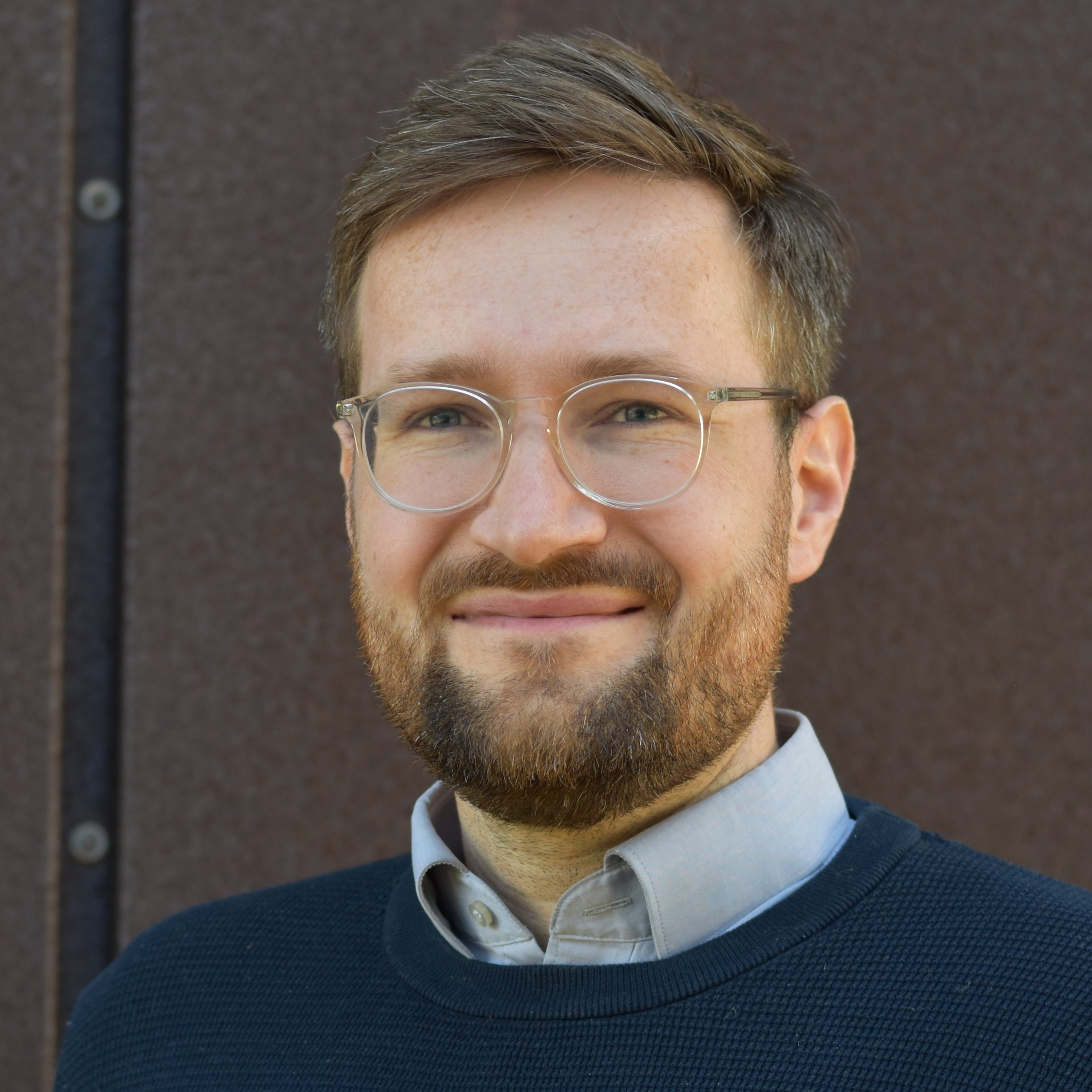
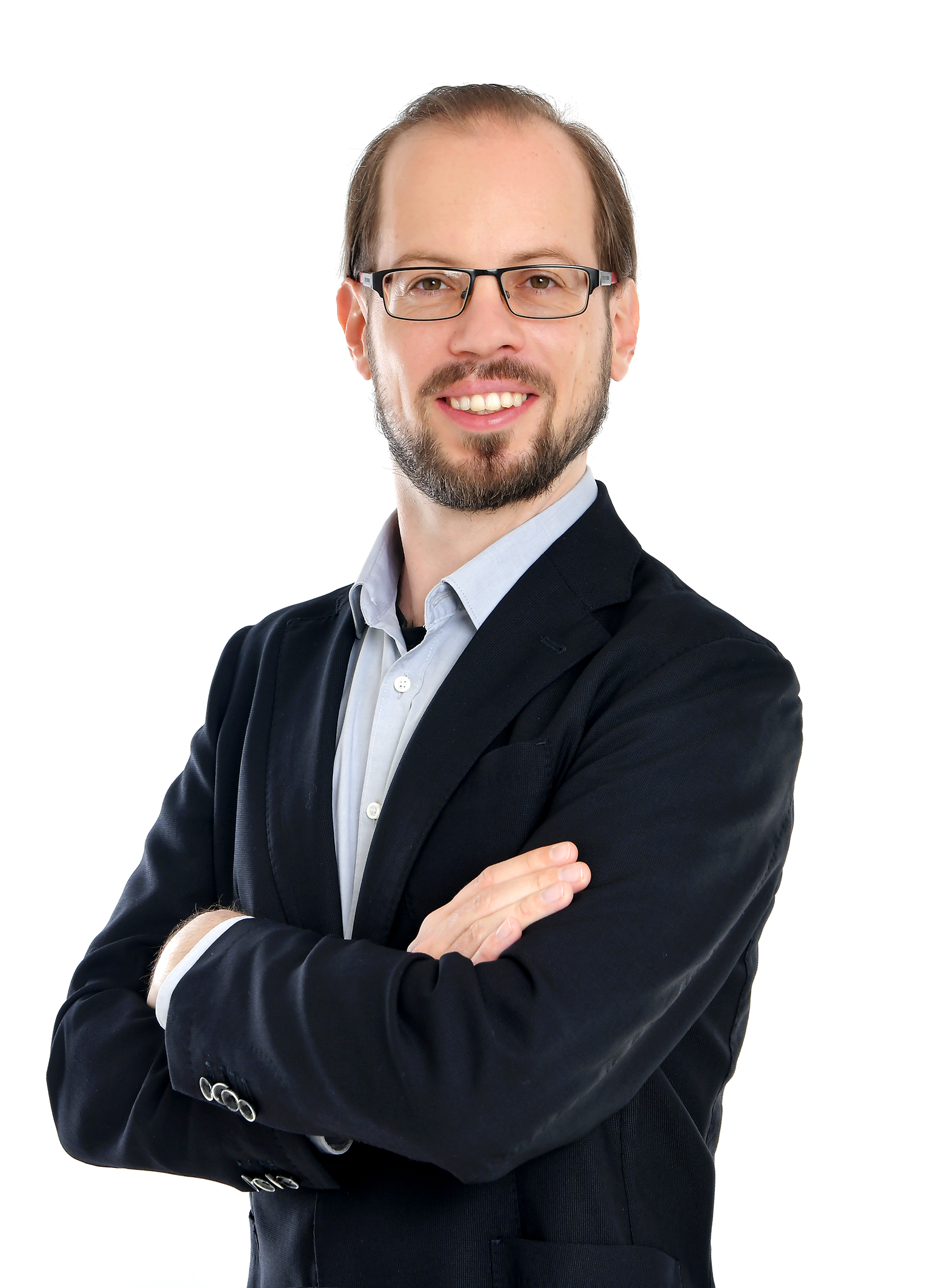
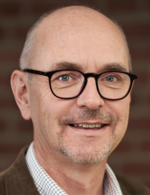
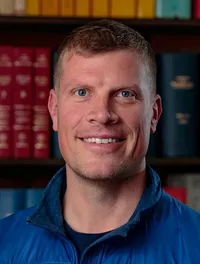
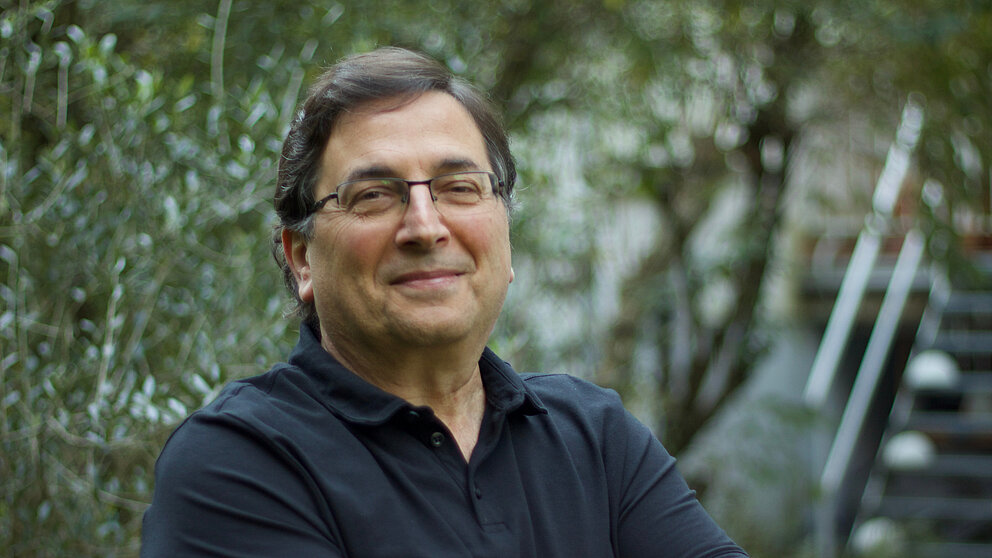
Lars Rohwedder is an Associate Professor in the Algorithms Group at the University of Southern Denmark (SDU) in Odense. He previously held positions as an Assistant Professor at Maastricht University (Netherlands) and postdoc researcher at EPFL, Lausanne (Switzerland). He earned his Ph.D. in Computer Science from CAU Kiel (Germany), advised by Klaus Jansen, and is a recipient of the 2019 PhD of the year award from Förderverein der TF of Kiel University. His research focuses on algorithms for combinatorial optimization, including approximation algorithms, online algorithms, parameterized algorithms, and integer programming. He has contributed to solving scheduling problems, resource allocation, and optimization under uncertainty. Rohwedder has served on program committees for conferences like MAPSP, SODA, STACS, and ICALP. He is funded by NWO's Open Competition M1 project on quasi-polynomial time algorithms. His teaching includes courses on advanced algorithms, operations management, and optimization at SDU and Maastricht University. Key achievements include a quasi-polynomial approximation for the restricted assignment problem, FPT algorithms for scheduling, and contributions to the Submodular Santa Claus problem. His work bridges theoretical foundations and practical applications, with a focus on algorithmic efficiency and robustness.
Matthias Feurer is a Thomas Bayes Fellow and interim professor at the Chair of Statistical Learning and Data Science, funded by the Munich Center for Machine Learning (MCML) at Ludwig Maximilian University of Munich. He is a member of the Department of Statistics at LMU Munich, working under Prof. Dr. Bernd Bischl. His academic background includes: PhD in Computer Science from Albert-Ludwigs-Universität Freiburg, supervised by Prof. Dr. Frank Hutter M.Sc. in Computer Science from the University of Freiburg B.Sc. in Computer Science and Media from the Media University Stuttgart Feurer's research focuses on simplifying machine learning usage through Automated Machine Learning (AutoML). His work encompasses hyperparameter optimization, meta-learning, and model selection, with increasing emphasis on multi-objective AutoML that considers factors beyond predictive performance such as interpretability, deployability, and fairness. He actively develops open-source tools to advance the field. His recent publications demonstrate a strong trajectory in practical AutoML systems, with growing attention to tabular machine learning, foundation models integration, and addressing real-world constraints in optimization. His work consistently bridges theoretical advances with practical implementations through several widely-used open-source projects. Notable achievements include: 1st place in the warmstarting-friendly leaderboard of the BBO NeurIPS challenge Winner of the 2nd AutoML challenge Winner of the kdnuggets blog contest on AutoML Feurer is actively mentoring and teaching, having advertised PhD positions focused on AutoML, optimization, and benchmarking. He co-founded the Open Machine Learning Foundation supporting OpenML.org. His upcoming move to TU Dortmund as an assistant professor in AutoML and Optimization signals continued growth in his academic career while maintaining his research focus on making machine learning more accessible and rigorous.
Prof. Dr. Markus Zimmermann leads the Chair of Product Development and Lightweight Design at the Technical University of Munich (TUM). With a background in mechanical engineering from TU Berlin and the University of Michigan, and a doctorate from MIT on solid-state singularities, he bridges academic rigor with industrial application. His career spans 12 years at BMW focusing on vehicle development before transitioning to academia. Specializes in solution space engineering for robust design Expert in additive manufacturing and systems engineering Develops methodologies for managing design complexity and uncertainty His research focuses on multidisciplinary design optimization and lightweight structures , particularly in robotics and automotive systems . His team applies digital twin frameworks and attribute dependency graphs to enhance design processes. Recent publications emphasize topology optimization in robotic systems and thermal management for medical X-ray sources. Key trends in his 2024-2025 publications include: Topological optimization for additive manufacturing and robotics Application of solution spaces to manage design uncertainty Development of compact X-ray systems for medical therapy Integration of digital twin technologies in industrial contexts
Prof. Dr. Michael Ulbrich is a full professor and Chair of Mathematical Optimization at the Technical University of Munich (TUM), within the School of Computation, Information and Technology. He has held this position since 2006 and previously served as Dean of Studies (2007–2010) and Vice Dean of the Faculty of Mathematics (2012–2015). His research focuses on nonlinear optimization, optimal control, and numerical analysis, with applications in fluid dynamics, shape optimization, and PDE-constrained systems. He leads projects in the DFG SPP 1962 and IGDK 1754, and has received prestigious awards including the Howard Rosenbrock Prize (2015) and the Doctoral Award from the TUM Association of Friends (1996). Ulbrich is Editor-in-Chief of Optimization and Engineering and contributes to multiple journals. His work bridges theoretical foundations and practical applications, including CO2 sequestration, fluid-structure interaction, and distributed optimization algorithms. Education: PhD (1996), Habilitation (2002) in Mathematics at TUM. Research stays at Rice University (USA) under DFG funding. Research Areas: Semismooth Newton methods, PDE-constrained optimization, optimal control of Navier-Stokes equations, and distributed parameter systems. Awards: Rosenbrock Prize, Teaching Excellence Awards, and recognition for doctoral work. Leadership Roles: Department Head of Mathematics (2022–), Member of TUM Senate (2019–2022), and Co-Chair of GAMM 2018. Ulbrich has authored influential textbooks like Semismooth Newton Methods for Variational Inequalities and Nichtlineare Optimierung . His recent projects include OptiGeoS (2024–2026) and collaborations on nonsmooth optimization and stochastic algorithms. His academic contributions span over 100 publications, emphasizing both algorithmic innovation and rigorous mathematical analysis.
Dr. Vincent Fortuin is a tenure-track Assistant Professor at the Technical University of Munich (TUM) and a research group leader at Helmholtz AI in Munich. He leads the Efficient Learning and Probabilistic Inference for Science (ELPIS) group and holds multiple prestigious fellowships including the Branco Weiss Fellowship. His academic affiliations include the TUM School of Computation, Information and Technology, the Konrad Zuse School of Excellence in Reliable AI, and the Munich Center for Machine Learning. Dr. Fortuin earned his BSc in Molecular Life Sciences from the University of Hamburg (2012-2015), followed by an MSc in Computational Biology and Bioinformatics from ETH Zürich (2015-2017), where he received the ETH Excellence Scholarship and the Willi Studer Prize. He completed his PhD in Machine Learning at ETH Zürich (2017-2021) under the supervision of Gunnar Rätsch and Andreas Krause, supported by a Swiss Data Science Center PhD Fellowship. Prior to joining TUM, he was a Research Fellow at St. John's College, University of Cambridge (2022-2023). His research focuses on the intersection of Bayesian statistics and deep learning, specifically developing methods for more robust, data-efficient AI systems with reliable uncertainty estimates. His work addresses critical limitations in standard deep learning approaches, particularly their tendency to be overconfident in predictions and require large datasets for training. He investigates better priors and more efficient inference techniques for Bayesian deep learning, deep generative modeling, meta-learning, and PAC-Bayesian theory, with applications in scientific and biomedical domains. Dr. Fortuin's recent publications demonstrate a consistent focus on improving uncertainty quantification in deep learning systems, with increasing emphasis on practical applications in scientific contexts. His work spans from theoretical foundations of Bayesian deep learning to practical implementations in protein design, materials science, and medical applications. A notable trend is his exploration of how to make Bayesian methods more scalable and applicable to modern large-scale AI systems while maintaining theoretical guarantees. Branco Weiss Fellowship (2023) St John's College Research Fellowship (2022) Swiss National Science Foundation Postdoc.Mobility Fellowship (2022) Swiss Data Science Center PhD Fellowship (2018) ETH Excellence Scholarship (2015) Willi Studer Award (2018) Dr. Fortuin actively supervises PhD and Master's students through his ELPIS research group at Helmholtz AI. He serves as a regular reviewer and area chair for major machine learning conferences and is an action editor for TMLR. He co-organizes the Symposium on Advances in Approximate Bayesian Inference (AABI) and the ICBINB initiative, demonstrating his commitment to advancing the field through community building. His research group receives funding from multiple sources including Helmholtz AI, the Branco Weiss Fellowship, and collaborations with international institutions. Dr. Fortuin leads the Efficient Learning and Probabilistic Inference for Science (ELPIS) group at Helmholtz AI, which focuses on fundamental machine learning research motivated by real-world scientific problems. The group collaborates extensively with researchers across Helmholtz centers and international institutions, particularly in biomedical applications where reliable uncertainty estimates are crucial.
Anders Rantzer is a Professor of Automatic Control at the Department of Control Engineering, Faculty of Engineering, Lund University, Sweden. He has held visiting positions at Caltech (2004–2005) and the University of Minnesota (2015–2016) as the Taylor Family Distinguished Visiting Professor. His academic journey began with a PhD from KTH Stockholm in 1991, followed by a postdoc at the Institute for Mathematics and its Applications (IMA), University of Minnesota. His research interests center on modeling, analysis, and synthesis of control systems , with a strong focus on scalability, adaptation, and applications in energy networks . He is particularly known for foundational work in positive systems and integral quadratic constraints (IQCs) . These theoretical frameworks are critical in analyzing stability and robustness of large-scale interconnected systems. His work bridges mathematical rigor with practical engineering applications, especially in sustainable energy and networked systems. The recent publications and lecture materials reflect a consistent trajectory in scalable and robust control, optimization, and distributed systems. Themes such as large-scale convex optimization , nonlinear and stochastic control , and network dynamics dominate his scholarly output, indicating a sustained commitment to advancing control theory for complex, real-world systems. Scientific honors include: Fellow of IEEE Member of the Royal Swedish Academy of Engineering Sciences (IVA) Chairman of the Swedish Scientific Council for Natural and Engineering Sciences Chairman of the Royal Physiographic Society of Lund Rantzer has supervised numerous students and contributed extensively to academic leadership and education. He has been involved in major national and international research initiatives such as WASP (Wallenberg AI, Autonomous Systems and Software Program) and ELLIIT. His work includes developing educational tools and courses in control, optimization, and machine learning. He leads and contributes to research projects on autonomous systems, cloud control, and smart energy networks. He is affiliated with the Control Lab at LTH and participates in collaborative efforts such as the Nordic University Hub on Industrial Internet of Things (HI2OT). His work integrates theoretical advances with practical implementations in robotics, biomedical systems, and industrial automation.
Michael Muehlebach leads the independent Learning and Dynamical Systems research group at the Max Planck Institute for Intelligent Systems in Tuebingen, Germany. His interdisciplinary work bridges machine learning, dynamical systems theory, and control engineering to develop algorithms for cyber-physical systems with theoretical guarantees and practical implementations. Dr. Muehlebach received his B.Sc. and M.Sc. in Mechanical Engineering from ETH Zurich in 2010 and 2013, specializing in robotics and control systems. He completed his Ph.D. at ETH's Institute for Dynamic Systems and Control under Prof. R. D'Andrea in 2018, followed by postdoctoral research with Prof. Michael I. Jordan at UC Berkeley. His research focuses on constrained optimization, reinforcement learning, and control theory with applications in robotics. He pioneered approaches that express constraints in terms of velocities rather than positions, enabling more efficient optimization algorithms. His work spans theoretical foundations to physical implementations, including the One-Wheel Cubli balancing robot and electromagnetic navigation systems. Recent publications reveal a strong trend toward physics-informed machine learning, particularly for robotics applications requiring real-time performance and safety guarantees. Dr. Muehlebach has received numerous prestigious awards: Outstanding D-MAVT Bachelor Award Willi-Studer prize for best Master's degree ETH Medal and HILTI prize for doctoral thesis Branco Weiss Fellowship (2018) Emmy Noether Fellowship (2020) Amazon Fellowship (2024) He actively mentors doctoral researchers including Hao Ma, Melis Ilayda Bal, and Onno Eberhard, with research supported by multiple grants. His group maintains strong collaborations with Bernhard Schölkopf's Empirical Inference group at the Max Planck Institute. The Learning and Dynamical Systems group develops innovative hardware and software platforms, including Floaty (a wind-harnessing flying robot), advanced electromagnetic navigation systems, and data-efficient learning methods for robotic table tennis. Their approach combines rigorous theoretical analysis with practical validation on physical systems, emphasizing the integration of known physical structure into machine learning algorithms to improve sample efficiency and ensure generalization.
Thomas S. Lontzek is Professor of Economics at RWTH Aachen University, holding the Chair of Computational Economics within the School of Business and Economics since October 2016. His research develops numerical methods for economic decision-making with focus on climate change and environmental risks. His educational background includes economics studies at Maastricht University and UC San Diego (1999-2003), followed by PhD from University of Kiel (2009). Prior positions include Assistant/Senior Assistant at University of Zurich (2010-2016) and visiting scholar at Stanford's Hoover Institution (2012). Lontzek's research spans Economic Growth, Quantitative Macroeconomics, Resource and Energy Economics, Computational Economics, Climate Risk Management, and Decision Making under Uncertainty. His work emphasizes unconventional methods for analyzing economic processes through multidimensional, nonlinear stochastic optimization while incorporating ethical principles into economic analysis for sustainability challenges. His publication record reveals a consistent focus on climate economics, particularly the social cost of carbon, climate tipping points, and integrated assessment modeling. These works demonstrate how accounting for economic and climate risks, especially potential tipping points, necessitates more aggressive climate policies than traditional models suggest, often requiring sophisticated computational techniques to handle high-dimensional uncertainty. 2021 Erik Kempe Award for work on calculating an optimal CO2 tax Lontzek actively mentors students through research seminars and teaching, emphasizing methodological diversity and interdisciplinary approaches. He leads the Global Challenges Research Seminar through the Global Challenges Lab, providing students with opportunities to conduct innovative research using quantitative decision-making techniques for sustainable development challenges. His teaching portfolio for Summer Semester 2025 includes Quantitative Macroeconomics, Sustainable Finance, and specialized research seminars. He heads the Chair of Computational Economics, which includes scientific staff members Dr. Marco Thalhammer, Dr. Yifan Zhao, and Philipp Olivier, M.Sc., working collaboratively on climate economics and computational methods. The chair's research bridges theoretical economic modeling with practical policy applications, developing dynamic stochastic integrated assessment models capable of handling complex climate-economy interactions under uncertainty.
Michael Mühlebach is a Research Group Leader at the Max Planck Institute for Intelligent Systems in Tübingen, Germany, leading the independent Learning and Dynamical Systems group. His academic journey began at ETH Zurich where he earned his B.Sc. (2010) and M.Sc. (2013) in mechanical engineering, specializing in robotics, systems, and control. He completed his Ph.D. at ETH Zurich in 2018 under Prof. R. D'Andrea, followed by postdoctoral research at UC Berkeley with Prof. Michael I. Jordan. Dr. Mühlebach's research spans machine learning, dynamical systems, control theory, and optimization . His work bridges theoretical foundations with practical applications in robotics, developing methods that incorporate physical constraints and system dynamics into learning frameworks. His group focuses on online learning, physics-informed machine learning, and large-scale optimization for cyber-physical systems, with applications in electromagnetic navigation, robotic table tennis, and energy-efficient flight systems like the shape-changing robot Floaty . His publication record shows a strong focus on constrained optimization, with recent work exploring decision-dependent stochastic optimization, nonlinear feedback, and the theoretical foundations of reinforcement learning. His research integrates perspectives from control theory, dynamical systems, and optimization to develop algorithms with strong theoretical guarantees and practical performance. Outstanding D-MAVT Bachelor Award Willi-Studer prize for best Master's degree ETH Medal and HILTI prize for doctoral thesis Branco Weiss Fellow (2018) Emmy Noether Fellowship (2020) Amazon Fellowship (2024) Dr. Mühlebach actively mentors doctoral researchers and is seeking talented students for PhD and Master's projects. His research group has received funding from multiple prestigious fellowships and maintains collaborations across institutions including ETH Zurich, UC Berkeley, and various Max Planck research units. The group's work spans theoretical developments to practical implementations on robotic systems, demonstrating strong connections between mathematical theory and physical realization.
Prof. Mathias Drton holds the Chair of Mathematical Statistics at the Technical University of Munich (TUM), within the Department of Mathematics and School of Computation, Information and Technology. His research focuses on graphical models, algebraic statistics, causal inference, and multivariate data analysis. He has authored numerous publications in top-tier journals and conferences, including work on conditional independence, sparse factor analysis, and causal discovery in linear models. Drton has supervised a large number of theses, mentoring students in areas like high-dimensional statistics, graphical models, and causal inference. He is actively involved in teaching advanced courses such as 'Graphical Models in Statistics' and 'Fundamentals of Mathematical Statistics.' His academic contributions span theoretical developments in statistical methodology and computational tools, including R packages like SEMID and symRC . Drton collaborates internationally, contributing to projects like the TUM-ICL Mathematical Sciences Hub and Exzellenzcluster MCQST. His work bridges algebraic methods with statistical challenges, addressing identifiability in latent variable models and robust graphical modeling under non-Gaussian assumptions. Recent research emphasizes causal structure learning under partial homoscedasticity, distribution-free independence tests, and multi-domain causal representation learning. Drton’s lab actively explores applications in genomics, epidemiology, and machine learning, leveraging both theoretical rigor and practical computational methods.
Hector Geffner is an Alexander von Humboldt Professor at RWTH Aachen University, leading the Chair of Machine Learning and Reasoning. He specializes in automated planning, machine learning, and reasoning, with a focus on representation learning for acting and planning. His work bridges symbolic and model-based AI, emphasizing general policies and subgoal decomposition. Education & Background : PhD from UCLA (1989), prior roles at IBM Watson Research Center and Universidad Simón Bolívar. Former ICREA researcher and professor at Universitat Pompeu Fabra (2001–2022). Research Interests : Classical and probabilistic planning, reinforcement learning, knowledge representation, and applications in robotics. His ERC-funded RLeap project explores learning generalized policies and symbolic representations for effective decision-making. Teaching : Courses include 'Actions and Planning in AI' and 'Social and Technological Change', emphasizing interdisciplinary AI applications. Awards & Recognition : Alexander von Humboldt Professorship (2023), AAAI/EurAI Fellowships, and editor of influential works on Judea Pearl’s contributions to AI. Grants & Projects : Advanced ERC grant (2020–2025), Humboldt Foundation support, and RWTH funding for research on planning and reasoning. Labs & Teams : Heads the Chair of Machine Learning and Reasoning at RWTH, focusing on interdisciplinary research in AI, robotics, and planning algorithms.
Prof. Dr.-Ing. Christoph Stiller is a full professor at the Karlsruher Institut für Technologie (KIT) and serves as the director of the Institute of Measurement and Control Technology (Institut für Mess- und Regelungstechnik, MRT). His work focuses on autonomous driving, sensor fusion, probabilistic estimation, HD mapping, motion planning, and intelligent transportation systems. Education: Details on his academic degrees are not provided in the text, but he holds the title of Dr.-Ing. indicating a doctoral degree in engineering. Research Interests: Prof. Stiller's research spans a wide array of topics critical to the development of autonomous vehicles. His work includes: Sensor Fusion: Integrating data from LiDAR, cameras, and radar to create robust perception systems. HD Mapping & Localization: Developing high-definition maps and precise localization techniques for urban and highway environments. Motion Planning & Decision Making: Creating algorithms for safe and efficient trajectory planning under uncertainty. Machine Learning & AI: Applying deep learning and reinforcement learning to perception, prediction, and control tasks. Publication Trends: His recent publications (2023–2025) emphasize robust traffic light detection, image stitching for panoramic views, motion prediction using redundancy reduction, and safety-enhanced model predictive control. The work increasingly integrates learning-based methods with classical control and estimation theory. Scientific Awards: No specific awards are listed in the provided text. Teaching & Supervision: Prof. Stiller teaches foundational and advanced courses in measurement and control systems, probabilistic estimation, and autonomous driving. He holds regular office hours during both summer and winter semesters and is actively involved in advising students and researchers. Labs & Teams: He leads the Institute of Measurement and Control Technology (MRT) at KIT, which is engaged in cutting-edge research in autonomous systems. The institute collaborates with industry and academia on large-scale projects such as UNICARagil and various European initiatives.
Prof. Dr. Andreas Peichl is a leading academic in Economics, holding a Professorship in Macroeconomics and Public Finance at the Faculty of Economics, Ludwig Maximilian University of Munich. He is Head of the ifo Center for Macroeconomics and Surveys, and previously led the Research Group “International Distribution and Redistribution” at ZEW, Mannheim. His expertise spans macroeconomic policy, tax systems, income inequality, and public finance. Peichl’s work bridges theoretical frameworks with empirical analysis, focusing on policy implications for redistribution, fiscal sustainability, and labor markets. Education: PhD in Public Economics, University of Cologne Professorial appointments at LMU Munich (since 2013) and University of Mannheim (2008–2013) Research Interests: Peichl’s research emphasizes the interplay between tax policies, income distribution, and macroeconomic stability. Key themes include: Optimal design of tax systems to reduce inequality while maintaining economic efficiency Impact of fiscal policies on labor markets and household behavior Analysis of redistributive effects of social welfare programs Global and regional economic inequality dynamics His recent work explores post-pandemic policy responses, energy security challenges, and the political economy of taxation. Grants & Advising: Peichl has led numerous interdisciplinary projects funded by institutions like the EU, DFG, and ifo Institute. He advises policymakers on tax reforms, fiscal consolidation, and social security systems. Notable collaborations include the ECONtribute and EconPol initiatives. Labs/Teams: Directs the ifo Center for Macroeconomics and Surveys, fostering collaboration between economists, policymakers, and data scientists. The center produces real-time analyses of economic trends and policy impacts.
Thomas Rüde is Universitätsprofessor for Hydrogeology at RWTH Aachen University , Germany, where he leads the Hydrogeology group within the Faculty of Georesources and Materials Engineering. Holding the chair since 2005, he also serves as Managing Director of the Vereinigung Aachener Geowissenschaftler e.V. and has previously been Vice-President (2008-2014) and Executive Council member (2000-2008) of the International Mine Water Association (IMWA). Education 2004 – Privatdozent (Dr. rer. nat. habil.), University of Munich 1995 – Dr. rer. nat., University of Karlsruhe 1991 – Diplom-Geologe, University of Karlsruhe Research focus Professor Rüde’s work centres on understanding and modelling flow and reactive transport in complex aquifer systems . Key themes include: Contaminant hydrogeology – behaviour of geogenic arsenic and uranium in groundwater Groundwater protection and remediation – risk assessment and mitigation strategies Mine-water management – acid mine drainage, dewatering-well clogging, post-mining landscapes Tracer and hydraulic testing – field experiments to quantify subsurface heterogeneity Numerical modelling – high-performance simulation of multi-aquifer systems and karst His research spans Europe (Germany, Austria, Netherlands), Latin America (Mexico, Indonesia) and South-East Asia, frequently in close collaboration with local universities and industry partners. Publication trends Since 2010, Rüde has published extensively on geogenic contamination (As, U, F) in sedimentary and volcanic aquifers, mine-water impacts , and karst hydraulics . Recent work (2022-24) highlights advanced environmental tracers (gadolinium), transboundary groundwater issues, and the sustainable management of post-mining landscapes under climate change. Numerical models range from site-scale dewatering optimisation to catchment-scale coupled flow-transport simulations. Scientific awards & recognition Best Teaching Award 2010 – RWTH Aachen University Best Teaching Award 2012 – RWTH Aachen University Best Teaching Award 2014 – RWTH Aachen University Supervision & academic service Since 1998 he has taught hydrogeology through lectures, seminars, laboratory and field courses, and computer-based modelling labs. To date he has supervised: 13 PhD candidates 34 Diploma students 57 MSc students 63 BSc students He is Chairman of the Study Commission for the BSc programme in Georesources Management at RWTH Aachen, ensuring curriculum development and quality assurance. Laboratory & field infrastructure His group operates modern hydrochemical laboratories for trace-element analyses and maintains field stations for tracer experiments in Germany, Mexico and Indonesia. High-performance computing resources (in collaboration with the Jülich Supercomputing Centre) enable large-scale groundwater modelling and Monte-Carlo uncertainty assessments.
Dr. Jing Wang is a Professor in the Department of Bioinformatics at Southern Medical University's School of Medicine, with extensive research at the intersection of artificial intelligence and biomedical applications. Her work demonstrates strong cross-disciplinary collaboration across medical institutions, engineering departments, and computer science research groups. Her primary research interests include Artificial Intelligence in Healthcare , Biomedical Engineering , and Traditional Chinese Medicine Informatics , with recent publications showing particular expertise in medical imaging analysis, diagnostic assistance systems, and clinical decision support. Her work spans both theoretical algorithm development and practical clinical implementations. Analysis of her 15 most recent publications (2025-2026) reveals a strong trend toward clinically applicable AI systems, with approximately 60% of publications focused on medical diagnostics and treatment support systems. The remaining publications demonstrate expertise in industrial applications of computer vision and fundamental AI research. Her work shows consistent collaboration with both domestic Chinese institutions and international research groups. Notable scientific contributions include: Development of 'Tianyi', a traditional Chinese medicine language model for clinical practice Innovations in bionic soft robotics for rehabilitation assistance Novel approaches to medical image analysis for cancer diagnostics Her research program appears well-funded with consistent publication output across high-impact journals in biomedical engineering, AI, and medical informatics. Current work suggests strong emphasis on translating AI research into clinical practice, particularly in diagnostic support systems and rehabilitation technology.