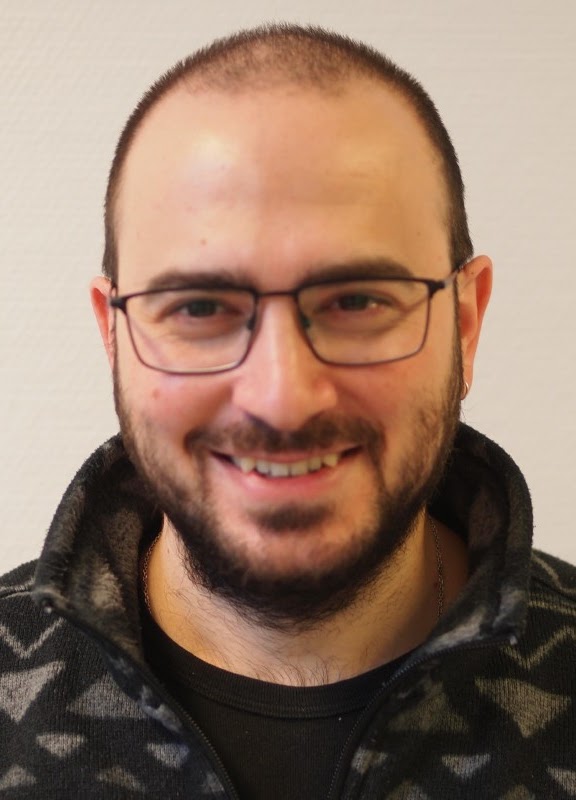
Trine Krogh Boomsma is a Professor in the Department of Insurance and Economics at the University of Copenhagen's Department of Mathematical Sciences. Her research focuses on optimization under uncertainty with significant applications in energy systems, particularly electricity markets, renewable energy investments, and power system planning. PhD in Mathematics-Economics, Aarhus University (2003-2007) Visiting PhD at University of Duisburg-Essen (2004) Academic career includes positions at Risø National Laboratory for Renewable Energy and Imperial College London Her work spans stochastic programming, real options analysis, and dynamic programming to address energy sector challenges. Key areas include support schemes for renewables, market risk modeling, and operational optimization of hybrid conventional-renewable systems. Recent research explores policy impacts on investment decisions and advanced scenario generation techniques. Major publications (2012-2020) cover renewable energy policy frameworks, power plant valuation models, and sequential market bidding strategies. These works emphasize electricity market dynamics, investment risk quantification, and robust planning under uncertainty. She teaches linear programming, integer programming, and stochastic programming applications in operational analysis, contributing to energy economics education at the department.
Bissan Ghaddar is a Professor in the Department of Technology, Management and Economics at Technical University of Denmark (DTU). Her work focuses on robust optimization, edge computing, and sustainable energy systems, contributing to UN Sustainable Development Goals related to affordable and clean energy. She supervises PhD projects on sector coupling in energy models and quantum computations for power systems. Her research interests include optimizing energy consumption in electric vehicle routing and application placement in edge computing under uncertainty. She has published influential papers in journals like Transportation Research Part C and Omega , addressing latency and efficiency challenges in dynamic systems. Current projects include modeling large-scale sectoral energy systems using smart-linking approaches (2024–2027) and secure power system operation leveraging quantum computations (2021–ongoing). She collaborates internationally with experts in operations research and telecommunications.
Giovanni Pantuso is an Associate Professor at the Department of Mathematical Sciences, University of Copenhagen, specializing in stochastic programming and optimization under uncertainty . His work bridges mathematical methods with practical applications in transportation, logistics, and production planning. Education : PhD in Operations Analysis from the Norwegian University of Science and Technology (Feb 2014) Research Focus : Developing mathematical frameworks for decision-making under risk, with applications to maritime fleet renewal, car-sharing systems, and ride-sharing logistics. Teaching : Courses in Advanced Operations Research: Stochastic Programming, Risk Optimization, and Introduction to Numerical Analysis. His methodological contributions include novel algorithms for stochastic programming and decomposition methods, while applied work spans electric car-sharing systems, first-mile transportation challenges, and production planning under uncertainty. Current research explores dynamic fleet management and cost-service tradeoffs in shared mobility.
Pooya Davari is a Professor and Head of the Section for Applied Power Electronic Systems at Aalborg University , Denmark. He leads the EMI/EMC in Power Electronics Research Group and serves as Vice Chair of the Energy Efficiency Mission. His research focuses on electromagnetic interference (EMI) and harmonic mitigation in power electronic systems, with over 200 publications and significant contributions to renewable energy integration. Education: B.Sc. and M.Sc. in Electronic Engineering (2004, 2008), Ph.D. in Power Electronics from Queensland University of Technology (2013) Prior Roles: Lecturer at QUT (2013–2014), Postdoc at AAU (2014) Research Interests: Harmonic and EMI analysis in grid-tied converters High power density converter design Signal processing for converter modeling Reliability of power electronic systems Article Trends: Recent work emphasizes EMI/EMC in renewable energy systems, wide bandgap semiconductors (SiC/GaN), and reliability modeling for EVs and hydrogen production via electrolysis. Sub-fields include converter topologies, grid integration challenges, and AI-driven diagnostics. Scientific Awards: Equinor 2022 Prize (Denmark’s oldest engineering award) IEEE EMC Society Young Professional Award (2020) World’s Top 2% Highly Cited Scientist (Stanford, 2021–2025) Multiple best paper awards (IEEE, Applied Sciences, etc.) Grants & Editorial Roles: Recipient of grants from Innovation Fund Denmark (Supra-EMC project), Horizon Europe (SOLARIS), and industry partnerships. Serves as Area Editor for IEEE Transactions on Transportation Electrification , Associate Editor for IEEE Transactions on Power Electronics , and Editor-in-Chief of Circuit World Journal (2020–2025). Labs & Standards: Coordinator of the EMC Laboratory at Aalborg University. Member of IEC standardization Working Groups 6 and 8 (TC77A), focusing on EMC strategies for power grids.
Professor Christian Schultz (b. 1957) is affiliated with the Department of Economics at the University of Copenhagen under the Faculty of Social Sciences. His work spans political economy, competition economics, industrial organization, and market regulation, focusing on implications of imperfect information in economic and political systems. PhD (University of Copenhagen, 1989) Current: Professor of Economics (1995–present) Past: Director of Centre for Industrial Economics (2000–2008), Head of Department (2010–2023) His research examines how information asymmetries affect political campaigns, market collusion, and public policy effectiveness. Key contributions include work on price transparency, electoral polarization, and arms-length delegation of public services. Recent publications (2014–2024) focus on price transparency, healthcare economics, technology transfer, and market dynamics. Awards include the 2003 Invisible Hand Award for outstanding teaching. Supervised 7 PhD students and 100+ master's students. Leadership roles: Chairman of Danish Competition Council (2012–present), Chairman of Danmarks Nationalbank’s Board of Directors (2018–present). Editorial and advisory roles include membership in European Science Foundation panels and evaluation committees across Scandinavia.
Mogens Fosgerau is a Professor at the Department of Economics, University of Copenhagen, with a research focus on discrete choice theory, rational inattention, transportation and urban economics, congestion modeling, and entropy-based frameworks. He has held an ERC Advanced Grant (2017-2023) and completed a Grand Solutions project for the Innovation Fund Denmark (2016-20). Education: Mathematical Economics (Aarhus University, 1990), PhD in Mathematics (University College London, 1992). Current affiliations: Department of Economics (University of Copenhagen), Faculty of Social Sciences. Former roles: Guest Professor at DTU (2022-2023), member of the Commission for Green Transition of Passenger Cars (2019-2021). His research explores the intersection of information theory and discrete choice models, addressing complex substitution patterns and endogeneity issues through generalized entropy frameworks. He applies these models to transportation planning, urban economics, and climate policy analysis. Recent publications focus on perturbed utility models, inverse product differentiation logit, and rational inattention in spatial choice contexts. His work bridges theoretical econometrics with practical transport and environmental policy challenges. Awards: Recipient of the 2021 Transportation Science Meritorious Service Award. Former Editor-in-Chief of Economics of Transportation (2012-2020). Advising and Grants: Leads research projects funded by the European Research Council and Innovation Fund Denmark. Has participated in policy committees including the Danish Environmental Economic Council (2019-2025) and the Committee on Public Transport Mobility (2023-24).
Georgios Arvanitidis is an Associate Professor at the Technical University of Denmark (DTU) in the Department of Applied Mathematics and Computer Science, specifically within the Section for Cognitive Systems (CogSys). He has established himself as a leading researcher in geometric machine learning, focusing on the application of differential geometry principles to enhance machine learning models. His work bridges theoretical mathematics with practical applications in artificial intelligence, with particular emphasis on understanding the geometric structure of data manifolds and latent spaces. Dr. Arvanitidis completed his educational journey with a Bachelor's degree from the Department of Informatics at the Aristotle University of Thessaloniki, followed by a Master's degree in Computer Science from Saarland University supported by the Max Planck Institute for Informatics. He earned his PhD at DTU's Cognitive Systems section under the supervision of Søren Hauberg, with additional research experience at Philipp Hennig's Probabilistic Numerics group. Prior to his current position as associate professor, he was a PostDoc at the Max Planck Institute for Intelligent Systems working with Bernhard Schölkopf. Dr. Arvanitidis's research primarily focuses on differential geometry in machine learning , where he explores how geometric structures can enhance representation learning and statistical modeling. His work in generative models investigates how learning the geometry of data manifolds can improve deep learning architectures. In the domain of deep learning theory , he examines why deep learning models generalize effectively on unseen data, with particular attention to the curvature properties of loss landscapes. His research in approximate Bayesian inference applies geometric principles to improve uncertainty quantification in neural networks. Through his innovative approaches, Dr. Arvanitidis has established himself as a leading researcher in geometric machine learning, contributing to both theoretical foundations and practical applications across various domains including robotics and life sciences. The publication trends of Dr. Arvanitidis reveal a consistent and evolving focus on geometric approaches to machine learning problems. His recent work (2023-2025) demonstrates increasing sophistication in applying Riemannian geometry to deep learning architectures, with particular emphasis on latent space geometry, optimization on manifolds, and geometric interpretations of neural network behavior. A notable pattern is the progression from foundational work on geometric representations to more applied research in areas like robotics and causal inference. His publications span top-tier conferences including NeurIPS, ICML, ICLR, and AISTATS, reflecting the high impact of his research. The interdisciplinary nature of his work is evident in collaborations across mathematics, computer science, and robotics domains, with recent papers addressing challenges in multimodal sampling, safety guarantees for dynamical systems, and counterfactual explanations. Dr. Arvanitidis has received several notable scientific awards and recognitions: Sapere Aude starting grant from the Independent Research Fund Denmark (DFF) GADL funding i-Rase, Pathfinder, and EIC (European Innovation Council) funding Best reviewer award for NeurIPS 2019 Best reviewer award for NeurIPS 2018 Best student paper award at Robotics: Science and Systems (R:SS) 2021 Dr. Arvanitidis actively mentors PhD students and researchers, currently supervising Alejandro Valverde, Johanna Gegenfurtner, and Albert Kjøller Jacobsen. He has previously co-supervised Alison Pouplin's PhD and worked with research assistant Georgios Pantis. His group receives substantial funding through multiple prestigious grants including the Sapere Aude starting grant from the Independent Research Fund Denmark, as well as European Innovation Council funding. He has been instrumental in creating opportunities for students interested in geometric machine learning, offering BSc and MSc thesis projects focused on generative models, deep learning theory, and optimization techniques. Dr. Arvanitidis also contributes significantly to the academic community as a reviewer for top conferences including ICLR and TMLR, and as an area chair for NeurIPS, ICML, AISTATS, and UAI. He co-organized the Machine Learning Summer School 2020 in Tübingen, further demonstrating his commitment to education and community building. Dr. Arvanitidis leads a vibrant research group focused on geometric machine learning within the Cognitive Systems section at DTU. His team includes multiple PhD students working on cutting-edge research at the intersection of differential geometry and artificial intelligence. The group has developed notable software tools, including the "geometric_ml" GitHub repository with over 70 stars, which contains implementations for applying Riemannian geometry in machine learning. His research has practical applications in robotics, where geometric approaches enable more robust motion planning, as evidenced by his work on "Reactive Motion Generation on Learned Riemannian Manifolds" which received a best student paper award. Additionally, his methodologies have found applications in life sciences, as mentioned in his 2022 AISTATS paper. The collaborative nature of his work is evident through extensive partnerships with researchers at institutions including the Max Planck Institute for Intelligent Systems, University of Cambridge, and various European universities. His recent news items indicate active engagement with the academic community through talks, conference presentations, and ongoing supervision of new PhD students joining his group.
Mogens Fosgerau is a Professor in the Department of Technology, Management and Economics at the Technical University of Denmark (DTU), where he conducts research in transport policy and transportation science. His work spans econometrics, travel behavior modeling, and transport economics, contributing to sustainable urban mobility and policy design. Institution: Technical University of Denmark Department: Department of Technology, Management and Economics Email: mogens.fosgerau@econ.ku.dk ORCID: https://orcid.org/0000-0002-6452-5215 His research focuses on discrete choice modeling, travel time valuation, scheduling preferences, and congestion pricing. He develops theoretical and empirical models to understand how individuals make travel decisions under uncertainty and how these behaviors affect urban transport systems. His work integrates economic theory with data-driven methods, often using large-scale datasets and advanced econometric techniques. The recent trend in his publications highlights innovations in perturbed utility models for route choice, stochastic traffic assignment, and the analysis of induced demand for cycling. His research bridges transportation science, behavioral economics, and operations research, with applications in urban planning and policy evaluation. Scientific awards received include: The International Choice Modeling Conference (ICMC) award for Most Innovative Application (2022) Best Overall Paper Award, ITEA Conference (2015) Best Paper Awards from BIVEC-GIVET (2007), Kuhmo-Nectar (2008) Hedorfs Fonds Pris for Transportforskning (2011) Mogens Fosgerau has supervised PhD students such as Fentie Abegaz and has been involved in multiple externally funded research projects, including URBAN (Innovation Fund Denmark), IRUC (Danish Council for Strategic Research), and Horizon 2020 initiatives. He has also served on review panels, including for the Norwegian Research Council, and contributed to peer review and editorial duties. He is actively engaged in research networks and has presented his work at international conferences. His projects often involve interdisciplinary collaboration with researchers in economics, engineering, and urban planning.
Athanasios Kolios serves as Professor and Head of the Structural Integrity and Loads Assessment section within the Department of Wind and Energy Systems at the Technical University of Denmark (DTU). His work focuses on advancing wind energy technology through structural analysis, materials science, and system optimization for both onshore and offshore applications. His primary research domains include wind turbine structural integrity, offshore wind farm layout optimization, and structural health monitoring systems. He investigates critical challenges in operation and maintenance strategies, techno-economic metrics for wind projects, and materials behavior under dynamic loading conditions. His fingerprint analysis reveals dominant expertise in Wind Turbine Engineering (100%), Offshore Wind Turbines Engineering (45%), and Offshore Wind Farms Engineering (36%). Recent publications demonstrate strong emphasis on data-driven approaches for wind energy systems, including structural optimization algorithms, virtual sensing techniques, and techno-economic assessments of offshore projects. His work consistently bridges theoretical engineering principles with practical industry applications, particularly in Brazilian and European offshore wind contexts. Scientific Awards: No scientific awards were documented in the provided information Professor Kolios actively supervises five PhD candidates across major research initiatives while mentoring Master's students in structural wind energy applications. His research portfolio includes six significant projects addressing critical industry needs: PhD Supervision: Chopard (anomaly interpretation), Piovesan (risk-based technology qualification), Yildirim (floating turbine uncertainty), Rodrigues Faria (autonomous operation), Al-Hagri (offshore structure maintenance) Master's Supervision: Rushil S. Mahajan (monopile buckling analysis) Current Projects: Decision support systems, life cycle cost modeling, floating wind turbine modeling, autonomous operation frameworks, sustainable offshore structure design As section head at DTU Wind and Energy Systems, he leads an internationally collaborative research group focused on structural integrity assessment, load prediction methodologies, and materials innovation for next-generation wind turbines. The team maintains strong industry partnerships and contributes to global wind energy standards development through participation in initiatives like ISSC.
Peyman Afzali Gorouh is a Postdoctoral Researcher in the Applied Power Electronic Systems group within the Faculty of Engineering and Science at Aalborg University, Denmark. His research focuses on developing innovative models for energy communities, smart grids, and renewable energy integration. Dr. Afzali's research interests span power engineering, smart grid technologies, renewable energy systems, and energy communities. His work particularly emphasizes prosumer economics, peer-to-peer energy trading, risk modeling in power systems, and energy democracy frameworks. He has developed novel approaches for optimizing energy communities while considering socio-economic-environmental factors, demand response, and uncertainty management. His recent publications (2020-2024) demonstrate a consistent focus on energy community modeling, with particular emphasis on peer-to-peer trading mechanisms, risk-constrained optimization, and multi-objective planning. His work bridges technical power system challenges with socio-economic considerations, creating integrated models that address both engineering and human aspects of modern energy systems. Dr. Afzali maintains an active research profile with numerous publications in high-impact journals including IEEE Transactions on Engineering Management, Energy and Buildings, Applied Sciences, and Sustainable Cities and Society. His research shows strong international collaboration, particularly with researchers from Iranian institutions.
Alvaro Torralba is an Associate Professor in the Department of Computer Science at Aalborg University, Denmark, affiliated with the Technical Faculty of IT and Design. His research focuses on symbolic search, heuristic functions, and planning algorithms within artificial intelligence and machine learning. Notable projects include the ConAn initiative exploring contrastive analysis for state-space exploration. He has contributed extensively to classical planning, probabilistic planning, and automated planning competitions, earning awards such as the First Prize in the Agile Track of the 10th International Planning Competition (IPC’23). His work often bridges theoretical advancements with practical applications, including game-based network update synthesis and believable non-player character development. Research outputs include over 60 publications since 2011, with a focus on optimizing search algorithms and enhancing planning efficiency through techniques like operator-potential heuristics and bidirectional search strategies. His scientific contributions span algorithmic innovation, verification methodologies, and large-scale abstraction evaluation. Collaborations and datasets include foundational work on PDDL generators and pattern databases, with open-access resources available via Zenodo. As a program committee member and award-winning researcher, Torralba actively contributes to advancing the frontiers of AI planning and decision-making systems.
Torben Juul Andersen is a Professor at Copenhagen Business School's Department of International Economics, Government and Business. His work focuses on strategic risk leadership, global uncertainty management, and adaptive organizational frameworks. He has published over 200 works including books like Business and Policy Challenges of Global Uncertainty (2025) and frequently contributes to media discussions on risk governance. Research Interests: Strategic Risk Management Leadership in Crisis Environments Global Economic Policy Resilient Organizational Design Interactive Information Processing Systems Sustainable Corporate Strategy Recent Work Trends: His 2023-2025 publications emphasize frontline empowerment, decentralized control systems, and frameworks for managing strategic uncertainty. Articles like Drop kontrollen (2025) advocate for leadership models that reduce hierarchical control to improve adaptive capacity. Grants & Activities: Organized the 2021 ACM Collective Intelligence Conference and delivered over 10 keynotes on topics like 'Dynamic Adaptation Through Interactive Information Processing' (2024) and 'Sustainable Global Practices' (2024). Active in Danish media commentary on risk management and economic policy. Labs/Teams: Leads CBS's Strategic Responsiveness Research Group focusing on enterprise risk governance and adaptive strategy-making processes. Collaborates with World Scientific and other academic publishers on edited volumes addressing global business challenges.
Carsten Sørensen is the Head of Department at the Department of Finance, Copenhagen Business School (CBS), and holds a Cand.Scient.Oecon and Ph.D. His research focuses on dynamic asset allocation, portfolio theory, term structure of interest rates, derivatives, and commodity derivatives. He has contributed extensively to understanding strategic investment decisions under uncertainty, particularly in volatile financial markets. He has authored or co-authored over 29 publications, including seminal works on stochastic income modeling, interest rate dynamics, and commodity futures analysis. His work frequently explores the intersection of theoretical finance and practical investment strategies, emphasizing real-world applications of academic insights. Current Roles: Head of Department (Department of Finance), Director of Danish Finance Institute (2019–present) Outside Activities: Academic Committee Member for Danish FSA (2011–present), Teacher at Danish Society of Actuaries (2019) Key Contributions: Pioneered research on mean-reverting returns and inflation uncertainty in asset allocation models His research trends emphasize quantitative methods to address market complexities, with a focus on stochastic processes and dynamic optimization. He has consistently challenged conventional investment recommendations through rigorous empirical analysis. Awards: None explicitly listed Grants: No specific grants mentioned He is actively involved in academic leadership, directing interdisciplinary research initiatives at CBS and advising regulatory bodies on financial education standards.
Kevin Schewior is a Researcher at the University of Southern Denmark (SDU), affiliated with the Faculty of Engineering and the Department of Mathematics and Computer Science. His work focuses on algorithms, operations research, and theoretical computer science, with particular emphasis on optimization, online algorithms, and stochastic processes. He has published extensively in top-tier venues, contributing to areas such as scheduling, mechanism design, and combinatorial optimization. His research addresses challenges in decision-making under uncertainty, resource allocation, and algorithmic game theory. Despite no explicitly listed awards, his prolific publication record underscores his scholarly contributions. He has no listed advisees or students in the provided texts.
Yushuai Li is an Assistant Professor in the Department of Computer Science at Aalborg University. His research focuses on digital twin technologies, energy internet systems, distributed optimization, and cyber-physical security for energy networks. Institution: Aalborg University, Denmark Academic Rank: Assistant Professor Email: yushuaili@ieee.org, yusli@cs.aau.dk Research Interests: Li's work bridges artificial intelligence with energy systems, emphasizing: Digital Twin for Energy and Transportation Integration Reinforcement Learning in Power Trading Distributed Control for Microgrids Privacy-Preserving Energy Dispatch Autonomous Driving-Energy System Coupling Scientific Contributions: His recent publications address critical challenges in energy internet resilience, including: Distributed control under stealthy attacks Noise-resilient microgrid operations Multi-timescale optimization algorithms Event-triggered control strategies Secure peer-to-peer energy trading Honors & Awards: Recipient of multiple prestigious awards, including: Best Paper Awards (MPCE, ICCSIE, IEEE EI2) Excellent Young Expert Award (MPCE, 2023) National Natural Science Prizes (CAA 2022-2023) Highly Cited Papers (8 ESI Highly Cited, 2 ESI Hot Papers) H-index 24 with 2500+ Google Scholar Citations Academic Leadership: Serves as Associate Editor for four IEEE journals and chairs sessions at leading conferences like IEEE SmartGridComm, ISIE, and IEEE EI2. His 70+ publications span top venues including IEEE Transactions on Cybernetics, Smart Grid, and ACM SIGMOD.