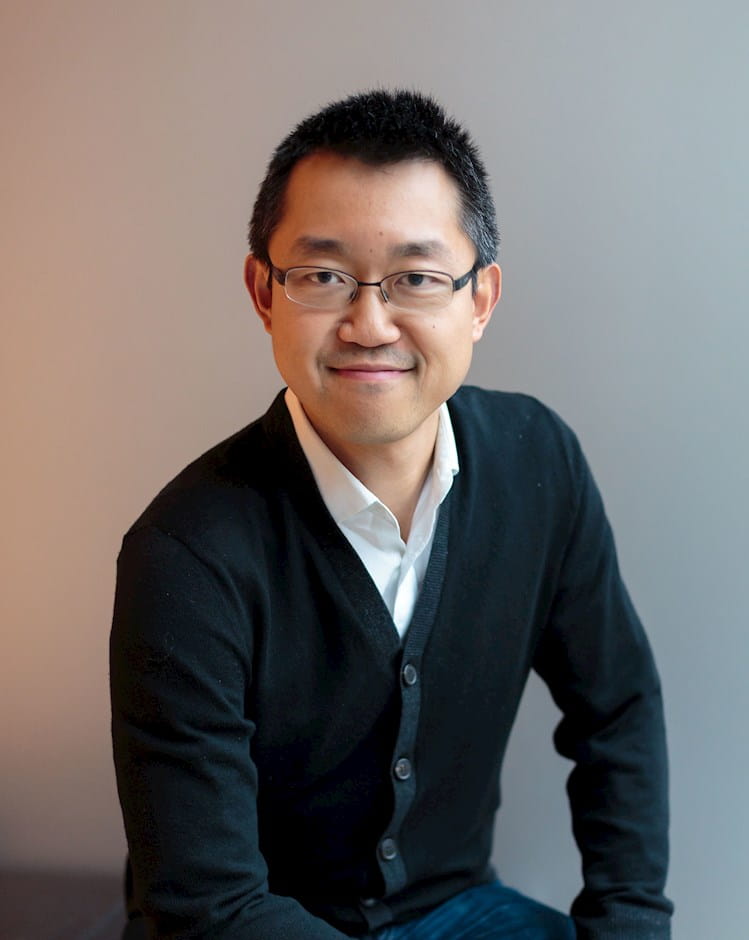
Sergio Bermudo Navarrete is a Professor at the Department of Economics, Quantitative Methods and Economic History, Universidad Pablo de Olavide. His research spans combinatorics, graph theory, and operator theory. Education: PhD in Mathematics (2003, University of Seville) with thesis on functional models of operators in Hilbert spaces. Research Interests: Focus on graph theory, domination problems, topological indices, and operator theory. Publication Trends: Recent work includes vertex-degree-based indices for oriented graphs, domination parameters in product graphs, and differential analysis of line graphs. Keywords span Computer Science , Mathematical Chemistry , and Operations Research . Collaborations: Frequent co-authors: José María Sigarreta Almira, José Manuel Rodríguez García, Juan Alberto Rodríguez-Velazquez. Contact: Email sbernav@upo.es .
Nicolò Cesa-Bianchi is a Professor of Computer Science at the University of Milan, where he serves as head of the Computer Science programs. He is also associated with the Department of Electronics, Information and Bioengineering (DEIB) at Politecnico di Milano. Cesa-Bianchi holds significant leadership roles including Board member, Fellow and co-director of the Milan unit of the European Laboratory for Learning and Intelligent Systems (ELLIS), and membership in the prestigious Accademia Nazionale dei Lincei. He is also involved with The European Lighthouse on Secure and Safe AI (ELSA), The European Lighthouse of AI for Sustainability (ELIAS), and The FAIR foundation. Professor Cesa-Bianchi's research focuses on the theoretical foundations of machine learning, with special emphasis on sequential decision making and online learning algorithms. His work spans multiple areas including multi-armed bandit problems, regret analysis, prediction with expert advice, and learning on graphs. He has made significant contributions to understanding the theoretical limits of learning algorithms and developing efficient methods for various learning scenarios. His research has important applications in online markets, social networks, and bioinformatics. His monographs 'Prediction, Learning, and Games' and 'Regret Analysis of Stochastic and Nonstochastic Multi-armed Bandit Problems' are considered seminal works in the field. His recent publications demonstrate continued leadership in advancing the theoretical understanding of machine learning, with 2024-2025 papers covering cooperative online learning, multitask learning, fair trade mechanisms, and refined analyses of bandit algorithms. The research shows increasing focus on practical economic applications while maintaining strong theoretical foundations. Google Research Award Xerox Foundation UAC Award Member of the Accademia Nazionale dei Lincei ELLIS Fellow Cesa-Bianchi has been deeply involved in academic service, having served as action editor for the Machine Learning Journal, IEEE Transactions on Information Theory, and the Journal of Machine Learning Research. He currently serves as associate editor for the Journal of Information and Inference and TheoretiCS. He has held leadership positions including President of the Association for Computational Learning and member of the steering committee for the EC-funded Network of Excellence PASCAL2. He was program chair of the 13th Annual Conference on Computational Learning Theory and the 13th International Conference on Algorithmic Learning Theory. He leads the Laboratory for AI and Learning Algorithms (ALGA) at the University of Milan, which focuses on theoretical and applied research in machine learning. His international collaborations are extensive, with visiting positions at UC Santa Cruz, Graz Technical University, Ecole Normale Supérieure in Paris, Google, and Microsoft Research. As an educator, he teaches advanced courses including Reinforcement Learning and Statistical Methods for Machine Learning, and has supervised numerous students through the years.
Carlos Alvarez Martinez is a faculty member at the Universitat Politècnica de Catalunya (UPC), affiliated with the Department of Computer Architecture at the Barcelona School of Informatics (FIB). He is a key member of the Programming Models (PM) research group and collaborates closely with the Barcelona Supercomputing Center (BSC). His research focuses on high-performance computing, FPGA acceleration, task-based programming models like OmpSs, and hardware-software co-design for heterogeneous systems. His research interests center on advancing parallel computing through innovative programming models and hardware acceleration. He investigates efficient task scheduling, resource management in multicore and FPGA-based systems, and runtime support for dataflow models. His work enables high-performance execution of complex applications in domains such as scientific computing and cyber-physical systems. He actively contributes to European initiatives like TEXTAROSSA and AXIOM, aiming to develop next-generation exascale supercomputing technologies. The trend in his recent publications shows a strong focus on leveraging FPGAs for HPC, optimizing SpMV operations, improving task scheduling with hardware support, and developing frameworks for multi-FPGA clusters. His work consistently bridges theoretical models with practical implementations, emphasizing performance, scalability, and energy efficiency in heterogeneous computing environments. Scientific Awards: Premi UPC al Compromís Social 2019 Premi Disseny per al Reciclatge 2013 Alvarez Martinez has advised or collaborated with several doctoral students, including Jaume Bosch, Xubin Tan, and Fahimeh Yazdanpanah. He has been involved in numerous competitive R&D projects, often related to high-performance computing and parallel programming models. His work includes significant contributions to educational innovation, particularly in active learning methodologies and formative assessment using interactive systems. He leads and participates in research labs and teams focused on programming models and computer architecture, notably the PM group at UPC/BSC. These teams develop runtime systems, compilers, and hardware accelerators to push the boundaries of parallel computing efficiency and programmability.
Bryon Aragam is an Associate Professor of Econometrics and Statistics and Robert H. Topel Faculty Scholar at the University of Chicago Booth School of Business. His research focuses on the intersection of causality, statistical machine learning, and probabilistic modeling, with particular emphasis on applications to artificial intelligence systems including large language models like ChatGPT and generative models like DALL-E. Dr. Aragam completed his PhD in Statistics and a Masters in Applied Mathematics at UCLA, where he was an NSF graduate research fellow. Prior to joining the University of Chicago, he was a project scientist and postdoctoral researcher in the Machine Learning Department at Carnegie Mellon University. Research Focus: Causal structure learning in probabilistic generative models Key Areas: Causal machine learning, deep generative models, latent variable models, statistical learning theory Applications: AI interpretability, ethics, and fairness in artificial intelligence systems Teaching: Business Statistics, Econometrics and Statistics Colloquium His recent publications demonstrate a strong theoretical foundation combined with practical applications, particularly in understanding and improving AI systems. His work spans causal discovery, graphical models, deep learning, and latent variable modeling, with particular attention to the theoretical properties of these methods and their applications to real-world AI challenges. The research shows a progression toward increasingly complex problems in causal representation learning and AI interpretability. Scientific Awards: Robert H. Topel Faculty Scholar NSF Graduate Research Fellow Dr. Aragam's work has been published in top statistics and machine learning venues including the Annals of Statistics, Neural Information Processing Systems (NeurIPS), the International Conference on Machine Learning (ICML), and the Journal of Machine Learning Research (JMLR). His research group publishes broadly across both statistical and machine learning communities, demonstrating the interdisciplinary nature of his work at the intersection of statistics, machine learning, and causal inference. As a data science consultant for technology and marketing firms, Dr. Aragam has applied his expertise to problems in survey design, customer retention, logistics, and ranking, bridging the gap between theoretical research and practical applications.
Michalis Vazirgiannis is a Professor at LIX, École Polytechnique (France) leading the Data Science and Mining (DaSciM) group. With academic backgrounds in Physics (Athens University), AI (Heriot-Watt University), and Informatics (Athens University), he has conducted research at Fraunhofer, Max Planck MPI, and INRIA/FUTURS while teaching at institutions across Greece, France, China, and Spain. His research spans Machine/Deep Learning for Graphs (GNNs, graph kernels, embeddings) Text Mining & NLP (Graph-of-Words, biomedical text analysis) Combinatorial Optimization for pandemic forecasting and energy systems Event/Anomaly Detection in time series and sensory data Industrial collaborations with Airbus, Google, Tencent, and BNP . He has supervised 29 completed PhD theses, published over 250 papers, and received prestigious awards including Marie Curie and Tencent Rhino-Bird Fellowships. His team leads the ANR-HELAS Chair (2020-2025) focusing on heterogeneous data deep learning.
Albert Atserias is a Professor in the Department of Computer Science at the Universitat Politècnica de Catalunya (UPC), affiliated with the Faculty of Informatics of Barcelona (FIB) and the ALBCOM research group (Algorithms, Bioinformatics, Complexity, and Formal Methods). He is also associated with the Institut de Matemàtiques de la UPC-BarcelonaTech. His research is central to theoretical computer science, with a strong emphasis on logic and complexity. Atserias's research interests span Computational Complexity, Logic in Computer Science, Finite Model Theory, Proof Complexity, and Constraint Satisfaction Problems . His work explores the fundamental limits of computation, the expressive power of logical languages over finite structures, and the complexity of proving mathematical statements. He investigates the algebraic and combinatorial properties of proof systems, the limits of efficient algorithms for constraint solving, and the theoretical foundations of databases. His research often bridges logic, algebra, and combinatorics to provide deep insights into computational phenomena. The trends in his recent publications show a sustained focus on the logical and algebraic underpinnings of computational problems. Key themes include the consistency and complexity of database queries , the power and limitations of proof systems (like resolution and sum-of-squares), and the expressive power of homomorphism counts in graph theory. His work on the hardness of automating resolution and the development of circular proof systems are particularly significant contributions to proof complexity. The 2024 PODS Best Paper Award for work on relational consistency underscores the impact and timeliness of his research. Among his notable scientific awards are the prestigious ICREA Acadèmia , the PODS 2024 Best Paper Award , the Premi Extraordinari de Doctorat (Extraordinary Doctoral Prize), and the Kleene Award for Best Student Paper . These accolades reflect both the excellence of his early work and his continued leadership in the field. Atserias has been a principal investigator on numerous competitive research projects, including funding from the European Research Council (ERC) and the Spanish Ministry of Science. He has advised doctoral students, such as Toni Hakoniemi, whose thesis on proof complexity he supervised. His extensive collaborative network includes leading researchers like Phokion Kolaitis, Anuj Dawar, and Victor Dalmau. He has also served on the scientific committees of major conferences, contributing to the academic community. He is a core member of the ALBCOM research group , a leading team at UPC focused on theoretical aspects of computer science, which provides a vibrant environment for research in algorithms, complexity, and formal methods. His work is also connected to the broader Institut de Matemàtiques de la UPC, fostering interdisciplinary collaboration between computer science and mathematics.
Carles Padro Laimon is a Professor at the Universitat Politècnica de Catalunya (UPC), affiliated with the Department of Mathematics and the School of Telecommunications Engineering. He is a leading researcher in cryptography and information security, focusing on secret sharing schemes, combinatorial structures, and cryptographic protocols. His work integrates discrete mathematics, coding theory, and algorithmic design to address security challenges in digital systems. Padro leads the MAK Research Group (Mathematics Applied to Cryptography) and the ISG-MAK Information Security Group. He has been involved in numerous competitive research projects, including initiatives on post-quantum cryptography and secure multi-user systems. His contributions span over 211 documented activities, including articles, theses, and conference participations. His research interests include the theoretical foundations of cryptography, with a focus on optimizing secret sharing schemes, analyzing matroid-based structures, and developing secure communication protocols. He has collaborated extensively with institutions like the UPC and European research networks, contributing to both academic and practical advancements in cybersecurity. Padro holds a PhD in Mathematics from UPC and has supervised doctoral theses and mentored researchers in his field. His work frequently appears in top journals like IEEE Transactions on Information Theory, Designs, Codes and Cryptography, and SIAM Journal on Discrete Mathematics.
Yuan Zhong is an Associate Professor of Operations Management at the University of Chicago Booth School of Business . He previously held positions as an Assistant Professor at Columbia University’s Department of Industrial Engineering and Operations Research and was a Postdoctoral Scholar at UC Berkeley’s Computer Science Department. Education: PhD in Operations Research, MIT (2012) MA in Mathematics, Caltech (2008) BA in Mathematics, University of Cambridge (2006) His research focuses on applied probability and stochastic system design , with applications in cloud computing , supply chain management , and e-commerce logistics . Recent work explores multi-period production systems and dynamic resource allocation in data centers and healthcare operations . Recent publications analyze cloud value chains , sparse graph design for delivery networks, and process flexibility in manufacturing. He has contributed to journals like Operations Research , Annals of Applied Probability , and Stochastic Systems . Scientific Awards: 2012 Kenneth C. Sevcik Outstanding Student Paper Award Best Student Paper Award at ACM Sigmetrics (2012) He teaches courses in business process fundamentals and queueing theory , with a future schedule including Operations Management: Business Process Fundamentals (2025–2026). No explicit student advising list was provided.
Jordi Guitart Fernández is a Professor at the Department of Computer Architecture, Barcelona School of Informatics (FIB), Universitat Politècnica de Catalunya (UPC). He is also affiliated with the Barcelona Supercomputing Center (BSC-CNS), a leading national supercomputing facility. He leads the CROMAI research group, focusing on Computing Resources Orchestration and Management for AI. His work bridges high-performance computing, cloud systems, and artificial intelligence. Research Interests: Cloud Computing and Edge Computing Green and Energy-Efficient Computing Containerization and Virtualization for HPC Resource Orchestration and Management Autonomic and Self-Adaptive Systems Machine Learning Workflow Management AI-Driven System Optimization His recent publications reveal a strong focus on intelligent management of computing resources across cloud, edge, and HPC environments using machine learning and agent-based frameworks. He investigates performance, efficiency, and reliability in containerized AI and HPC workloads, particularly within Kubernetes and distributed infrastructures. His work increasingly integrates human-in-the-loop and trustworthiness aspects into AI systems. Scientific Awards: CLOUD Conference 2025 Best Paper Award VISIGRAPP 2025 Best Student Paper Award Premi Extraordinari de Doctorat 2025 - Àmbit d'Enginyeria de les TIC Test of Time Award Honorable Mention (e-Energy) Reconeixement als Mèrits Docents d'Especial Qualitat Top reviewers for Polytechnic University of Catalonia (Computer Science) - September 2017 Advising and Grants: He has advised doctoral students, including Peini Liu. He leads and participates in numerous competitive R+D+i projects, such as CROMAI and DALEST, funded by national and European programs like HORIZON 2020 and the Spanish State Research Plans. His work is supported by grants focused on knowledge generation and industrial leadership in computing technologies. Labs and Teams: He is the leader of the CROMAI - Computing Resources Orchestration and Management for AI research group at UPC. He also collaborates closely with the Barcelona Supercomputing Center (BSC-CNS), contributing to large-scale computing initiatives and strategic research agendas in Europe.
Miguel Ángel Sotelo Vázquez is a full Professor at the University of Alcalá, leading the INVETT Research Group (Intelligent Vehicles and Traffic Technologies). He holds the Department of Automatic Control and specializes in autonomous systems, particularly in path planning, sensor fusion, and human-vehicle interaction. His research integrates machine learning, robotics, and control theory to address challenges in intelligent transportation systems. He earned his Ph.D. in 2001 with a thesis on autonomous vehicle navigation in partially known environments. His work emphasizes real-world deployment, explainable AI, and safety-critical systems. Recent projects focus on lane change prediction, pedestrian behavior modeling, and cybersecurity for autonomous systems. Key contributions include neuro-symbolic frameworks for decision-making, real-time multi-physics field reconstruction, and cross-cultural studies of pedestrian interactions. He collaborates internationally on urban mobility resilience and hydrogen refueling infrastructure. Research Highlights : Development of knowledge graph-based prediction architectures Experimental validation of human-vehicle interaction in VR environments Creation of the SCOUT trajectory prediction framework
Jorge Garcia Vidal is a Professor in the Department of Computer Architecture at the School of Computer Science, Universitat Politècnica de Catalunya (UPC). He is a key member of the CNDS - Computer Networks and Distributed Systems research group, with a sustained record of research activity from the late 1980s to the present, including publications projected into 2025. His work bridges theoretical network performance analysis and applied IoT systems, particularly in environmental monitoring. His research interests center on Computer Networks , Internet of Things (IoT) , Sensor Networks , and Data Quality in IoT . He has made significant contributions to ATM network performance, medium access control, and traffic modeling. More recently, his focus has shifted to air quality monitoring using low-cost sensor networks, employing techniques in Graph Signal Processing , Machine Learning , and Anomaly Detection to improve data reliability and estimate pollutants like black carbon. The recent article trends show a strong emphasis on developing data-driven frameworks, virtual sensors, and robust models for environmental IoT platforms. His work integrates advanced signal processing and machine learning to address the challenges of heterogeneous, low-cost sensor data in urban settings. His scientific achievements have been recognized with awards including the Premio Extraordinario de Doctorado and the Premio Mejor Tesis Doctoral . He has advised several doctoral students, including Pau Ferrer-Cid, David Fusté Vilella, Steluta Iordache, and Julian David Morillo Pozo. He is actively involved in numerous competitive and non-competitive R&D projects, such as those related to digital twins, IoT platforms for smart cities, and nature-based urban solutions, often funded by state and regional programs. He collaborates extensively within UPC and with external partners. His research is conducted primarily within the CNDS research group at UPC, a collaborative environment focused on computer networks and distributed systems, with connections to broader initiatives in smart cities and environmental monitoring.
Gagandeep Singh is a tenure-track Assistant Professor in the Department of Computer Science at the University of Illinois at Urbana-Champaign (UIUC). His work focuses on creating intelligent computing systems with formal guarantees about behavior and safety, integrating Machine Learning, Formal Methods, and Systems research. Affiliation: University of Illinois at Urbana-Champaign; VMware Research Research Interests: Formal Methods, Machine Learning, Artificial Intelligence, Programming Languages, Neural Network Verification, Automatic Differentiation His research emphasizes scalable verification techniques for neural networks, abstract interpretation, and systems integration. Recent work trends include applying formal methods to ensure safety in deep learning models and optimizing numerical analysis through domain decomposition and convex hull approximations. He contributes to academic communities as a committee member in conferences like POPL, VMCAI, PLDI, and SAS, while authoring key publications in top venues such as POPL, PLDI, OOPSLA, and SAS.
Guillem Perarnau is an Associate Professor in the Department of Applied Mathematics at Universitat Politècnica de Catalunya (UPC), affiliated with CRM, IMTech, and BGSMath. He holds a PhD from UPC (advised by Oriol Serra) and was a CARP Postdoc Fellow at McGill University (2013–2015). From 2016 to 2019, he was a Lecturer at the University of Birmingham. His research focuses on Probabilistic and Extremal Combinatorics, Random Combinatorial Structures, and Discrete Stochastic Processes. Education: Bachelor, Master, and PhD in Mathematics at UPC. His academic journey includes postdoctoral research at McGill University and a Lecturer role at the University of Birmingham. Research interests include Percolation Theory, Random Graphs, Stochastic Processes, and Algorithmic Combinatorics. His recent work explores topics like percolation on dense graphs, random walk mixing times, and synchronization in automata. He is co-PI of the COCOA grant and coordinates the Spanish Discrete and Algorithmic Mathematics Network. He participates in the RandNET MSCA Exchange Programme. Key contributions include studies on giant components in directed graphs, phase transitions in Glauber dynamics, and extremal problems in graph colorings. His publications span top journals like Annals of Applied Probability , SIAM Journal on Discrete Mathematics , and Random Structures & Algorithms .
Maria José Serna Iglesias is a Full Professor at the Departament de Ciències de la Computació of the Universitat Politècnica de Catalunya (UPC), Barcelona Tech . She leads the research group ALBCOM (Algorithmics, Bioinformatics, Complexity and Formal Methods) and coordinates doctoral programs in Computing. Her research focuses on algorithmics, computational complexity, social network analysis, and game theory. She actively participates in conferences such as SEA 2023-2025 , CIAC , and Algorithmic Decision Theory . Teaching includes advanced algorithmics courses for undergraduate and master’s programs. Current projects include the MOTION initiative (PID2020-112581GB-C21) on large-scale data processing. Past projects involve EU initiatives like WISEBED and DELIS . Her work bridges theoretical computer science with applications in networks and social systems, emphasizing algorithmic solutions for complex problems.
Sergi Abadal Cavalle is a distinguished Professor in the Department of Computer Architecture at the Universitat Politècnica de Catalunya (UPC), affiliated with the Escola Tècnica Superior d'Enginyeria de Telecomunicació de Barcelona (ETSETB). He leads a dynamic research group focused on revolutionary computing architectures through wireless chip-scale networks and quantum interconnects. His work is supported by prestigious grants including an ERC Starting Grant and an ERC Proof of Concept Grant. Education: PhD in Computer Architecture, Universitat Politècnica de Catalunya (2016) MSc in Telecommunication Engineering, UPC (2011) BSc in Telecommunication Engineering, UPC (2010) Sergi's research focuses on overcoming the limitations of traditional wired interconnects in computing systems by pioneering wireless communication at the chip and package level. His work spans terahertz communications, graphene-based antennas, reconfigurable metasurfaces, and quantum-coherent networks. He has led major EU projects such as WINC, EWiC, QUADRATURE, and WiPLASH, aiming to revolutionize classical and quantum computing architectures. His research integrates electromagnetics, materials science, and computer architecture to enable ultra-fast, scalable, and energy-efficient systems. His recent publications demonstrate a strong trend toward integrating wireless technologies within computing systems, particularly using novel materials like graphene and software-defined metasurfaces. The articles highlight advancements in on-chip wireless communication, channel modeling, and the application of these technologies in 6G and quantum computing. His work bridges theoretical modeling with experimental validation and practical emulation. Scientific Awards: ERC Starting Grant (2022) ERC Proof of Concept Grant (2024) ACM NanoCom Outstanding Milestone Award (2022) NanoComNet Young Investigator Award (2019) UPC Outstanding Thesis Award (2016) IN-NOVA Award to Best Master Thesis (2021) IBM Award to Best Academic Record (2021) Medal from Real Academia de la Ingeniería (2024) IEEE Senior Member (2025) Sergi actively mentors a large group of PhD and Master's students, many of whom have received awards for their thesis work. He leads the N3Cat research group and collaborates with institutions such as IBM Research, NEC Labs Europe, RWTH Aachen, EPFL, University of Nottingham, and Intel Labs. His lab is at the forefront of experimental validation of wireless interconnects and quantum architectures, with ongoing projects focusing on emulation and commercialization of chiplet communication technologies.