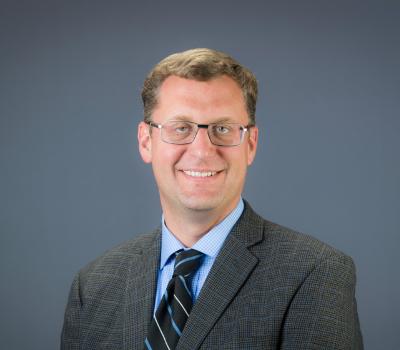
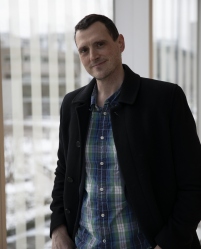
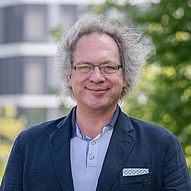
Kari M. Koskinen is a University Lecturer at Aalto University's Department of Information and Service Management. His research focuses on cybersecurity, digital ecosystems, and technology management with applications in healthcare, agriculture, and smart cities. He frequently collaborates with scholars like Hadi Ghanbari and Sonja Hyrynsalmi on topics ranging from ransomware mitigation to sustainable mobility solutions. His work emphasizes real-world case studies, such as analyzing the Vastaamo psychotherapy clinic data breach and examining supply chain attacks in manufacturing. Key contributions include frameworks for cloud-based integration platforms, risk management in digital ecosystems, and the socio-technical implications of autonomous vehicles. Koskinen also explores visibility labor in NFT markets and how digital platforms address development challenges in the Global South. His teaching cases, published in the Journal of Information Technology Teaching Cases, bridge theoretical concepts with practical cybersecurity scenarios.
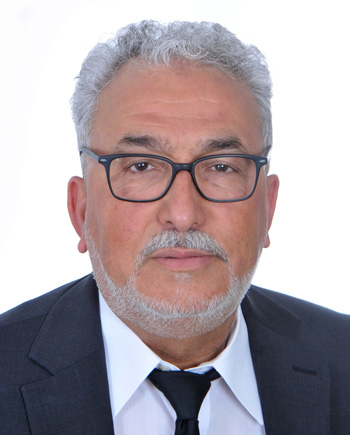
Dr. Abubakar Bello is a Senior Lecturer in Criminal Justice and Program Leader at Edge Hill University's School of Law, Policing, and Criminal Justice. Previously, he held roles at Western Sydney University, including Academic Program Advisor and Lecturer in Cyber Security and Behaviour. He holds a PhD in Cyber Criminology, an MBA in Business Law and Technology, and degrees in Computer Science. His research focuses on interdisciplinary approaches to cyber security risks, threat intelligence models, and behavioral aspects of cyber crime. Education: PhD (Cyber Criminology, Murdoch University), MBA (Business Law & Tech, Western Sydney University), MSc & BSc (Computer Science, University of Wolverhampton). Research Interests: Combating cyber crime through AI and machine learning, secure systems design, and behavioral cybersecurity. Key areas include ransomware defenses, social engineering, and cybersecurity frameworks for diverse populations. Grants & Projects: Awarded funding for initiatives such as 'Social Engineered Payment Diversion Fraud' (NSW Cyber Security Network), 'Brain-Inspired Algorithm for Network Anomaly Detection' (DST Group), and 'Cyber Security Awareness Framework' (ECR Grant). Awards: 'Award for Teaching and Learning Contributing to Public Good.' Active in professional networks like the International Centre on Racism and Centre for Applied Criminal Justice Research. Labs & Collaboration: Engages in cyber investigations, forensics, and community outreach through initiatives like Western Cyber Aid. Serves as a consultant for corporate espionage cases and a speaker on ransomware and AI in law enforcement.
Michael Scott is a Professor in the Department of Civil and Construction Engineering at Oregon State University, part of the College of Engineering. He holds a Ph.D. in Structural Engineering from the University of California, Berkeley (2004), an M.S. from the same institution (1999), and a B.S. in Civil Engineering from North Carolina State University (1998). His research focuses on nonlinear structural analysis, dynamics, numerical methods, and software design, particularly in the context of bridges and fluid-structure interactions. He has developed widely used tools like OpenSees and contributed to multi-hazard resilience frameworks for infrastructure. Key research areas include tsunami impacts on coastal bridges, GPU-accelerated analysis, and machine learning applications for structural simulation. His work emphasizes sensitivity analysis and software reliability, with notable contributions to OpenSees and PFEM methodologies. He has been recognized with the 2019 Celebrate Excellence Awards for Online Teaching. His research also addresses bridge loading from truck platooning, seismic sensitivity, and ponding effects on structural steel roofs. Educations: Ph.D., Structural Engineering, UC Berkeley (2004) M.S., Structural Engineering, UC Berkeley (1999) B.S., Civil Engineering, NC State University (1998) Awards: 2019 Celebrate Excellence Awards, Online Teaching Award Key Contributions: Development of OpenSees software framework Pioneering work in PFEM for fluid-structure interaction Multi-hazard engineering for tsunami resilience
Abdeldjelil Belarbi is the Hugh Roy and Lillie Cranz Cullen Distinguished Professor of Civil and Environmental Engineering at the University of Houston’s Cullen College of Engineering. He holds fellowships from the American Concrete Institute (ACI), Structural Engineering Institute (SEI), American Society of Civil Engineers (ASCE), and other leading organizations. His academic career spans over three decades, including roles as Department Chair (2009–2013) and faculty positions at the University of Missouri-Rolla (now Missouri S&T), where he contributed to research centers like the Intelligent Systems Center and Materials Research Graduate Center. Belarbi’s education includes a Ph.D. (1991) and M.S. (1986) in Civil/Structural Engineering from the University of Houston, and a B.S. (1983) from the University of Sciences and Technology of Oran, Algeria. His research focuses on sustainable infrastructure, corrosion-resistant materials, FRP-reinforced concrete, and seismic resilience. He has pioneered studies on prestressed concrete girders, bridge pile repair, and shape memory alloy confinement for columns. His 150+ publications emphasize FRP applications, structural durability, and innovative repair techniques. Awards include the Cullen Distinguished Professorship and recognition as a Fellow in multiple engineering societies. Belarbi has advised numerous students and led interdisciplinary projects on infrastructure sustainability and advanced materials. Awards: Cullen Distinguished Professorship, ACI Fellow, ASCE Fellow, IIFC Fellow Key Research: FRP-reinforced concrete, corrosion-resistant steels, bridge retrofitting, shape memory alloys Leadership: Department Chair (UH), Dean’s Teaching Scholar (MU-Rolla)
Dr. Zoe Li is an Associate Professor in the Department of Civil Engineering at McMaster University, with an additional role as an Associate Member in the Department of Computing and Software. She specializes in developing modeling and decision-support tools to address challenges in water resources management, environmental systems analysis, and climate change impacts. Her research focuses on hydrological modeling, probabilistic forecasting, risk analysis, and environmental systems optimization. She holds a B.Eng. from China and M.A.Sc./Ph.D. degrees from the University of Regina. Her work spans interdisciplinary collaborations, including studies on dam safety under climate change, wastewater treatment plant optimization, and AI-driven environmental monitoring. She has been actively involved in projects such as CityDNA, a digital tool to model urban environments for decision-making during crises like the pandemic. Dr. Li teaches courses in environmental systems engineering and principles of environmental engineering, emphasizing uncertainty quantification and sustainable practices. Her research publications (15+ recent articles) address topics like machine learning applications in environmental systems, climate change impacts on water resources, and infrastructure resilience. She advises graduate students in environmental engineering and systems optimization. Notable grants include funding from Roche Canada for pandemic-related urban modeling. Her work is frequently published in high-impact journals like Journal of Environmental Management and Water Resources Research .
Pavlos S. Georgilakis is a Professor at the School of Electrical and Computer Engineering, National Technical University of Athens (NTUA), specializing in modern techniques for power system analysis, optimization, and renewable energy integration. He holds a Diploma (1990) and PhD (2000) in Electrical Engineering from NTUA. His career includes roles as Lecturer (2009) and Associate Professor (2018–2023) at NTUA, and Assistant Professor at the Technical University of Crete (2004–2009). Research focuses on power transmission/distribution systems, transformer design, and applying AI/optimization for grid efficiency. He led 10 research projects, including Horizon 2020 initiatives SHAR-Q, WiseGRID, and NobelGrid. He authored 3 books and over 230 publications (SCOPUS citations: >5,500). Editor of IET Smart Grid, Energies, and Electricity journals; senior IEEE member. He supervised 4 doctoral, 9 master’s, and 76 diploma theses. Awards include the 2013 Best Reviewer Award from Electric Power Systems Research. Active in energy storage, smart grids, and decentralized energy resource integration.
Marco Toffolon is a Full Professor at the University of Trento's Department of Civil, Environmental and Mechanical Engineering, where he leads the Physical Limnology Laboratory. He serves as Deputy Director for International Relations and previously directed the Environmental Engineering programs. His research spans ecohydraulics, sediment transport, lake hydrodynamics, and environmental modeling. He investigates physical limnology, tidal morphodynamics, and stratified flows using analytical and numerical approaches. His work integrates field measurements with machine learning for water quality prediction and climate impact assessment. His publications focus on lake dynamics, river morphodynamics, and sustainable water management, with recent emphasis on climate-driven changes in alpine systems. Research demonstrates strong interdisciplinary linkages between hydraulics, ecology, and climate science. Awards: 2016 Coastal Engineering Journal Award 2013 Enrico Marchi Lecture invitation He leads international collaborations with institutions like EPFL and Sun Yat-sen University, and organizes conferences including the Physical Processes in Natural Waters workshop series.
Professor David Wagg is a Professor of Nonlinear Dynamics and Departmental Director of Research and Innovation at the School of Mechanical, Aerospace and Civil Engineering, University of Sheffield. His research focuses on nonlinear structural dynamics, digital twins, vibration suppression, and real-time hybrid testing. He holds a BEng and PhD from University College London and previously served as a Professor at the University of Bristol (2008–2013). Notable awards include the EPSRC Advanced Research Fellowship (2004–2009). Education: BEng and PhD in Nonlinear Dynamics from University College London. Research Interests: Digital twins for dynamics applications, nonlinear structural dynamics, vibration control, real-time hybrid testing, and identification methods for nonlinear dynamics. His work emphasizes applying nonlinear models and control strategies to engineering challenges like wind turbines and large civil infrastructure. Grants & Leadership: Co-Investigator for EPSRC grants on CITCoM and Digitwin, coordinator of the Marie Curie ETN DyVirt, and PI for the EPSRC programme on Engineering Nonlinearity (2012–2017). He co-authored Nonlinear Vibration with Control (2015) and edited books on structural dynamics. Lab/Teams: Involved in the Laboratory for Verification and Validation (LVV) and leads research groups focused on digital twin applications, inerter-based systems, and structural health monitoring.
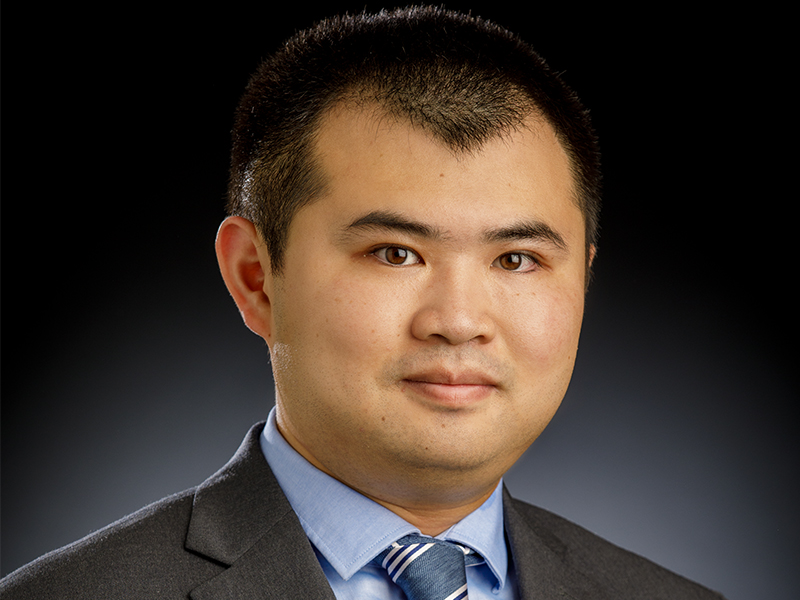
Dr. Chenang Liu is an Associate Professor in the Department of Industrial Engineering & Management at Oklahoma State University's College of Engineering, Architecture and Technology (CEAT). Their research focuses on smart manufacturing systems, real-time quality monitoring, and machine learning applications in manufacturing and healthcare. Ph.D., Industrial and Systems Engineering, Virginia Tech, 2019 M.S., Statistics, Virginia Tech, 2017 B.S., Mathematics (Statistics track), Zhejiang University, China, 2014 B.S., Environmental and Resource Sciences, Zhejiang University, China, 2014 Research Interests: Dr. Liu develops advanced sensing and data analytics methodologies for smart manufacturing, statistical frameworks for real-time quality control, and mathematical models integrating machine learning with healthcare applications. Their work bridges industrial engineering principles with cutting-edge data science techniques. Publication Trends: Recent articles demonstrate expertise in diabetic retinopathy prediction via interpretable AI, supply chain coordination mechanisms, EHR analytics for disease progression modeling, and combinatorial optimization algorithms. Key themes include healthcare data science, resilient manufacturing systems, and stochastic resource allocation. Scientific Recognition: Featured Article in ISE Magazine, IISE, 2019 Gilbreth Memorial Fellowship, IISE, 2018-2019 Best Poster Award, INFORMS Annual Meeting, 2018 Best Student Paper Finalist, IISE Annual Conference, 2018 Best Paper Awards at INFORMS (2017) and IISE (2017)
Lisa Yan serves as a Teaching Professor in the Department of Electrical Engineering and Computer Sciences at the University of California, Berkeley, appointed in Spring 2022. She teaches core computer science education courses including CS 195 (Social Implications of Computer Technology), CS H195 (Honors variant), CS 294-189 (Teaching Process Design), and CS 375 (Teaching Techniques), holding regular office hours in Soda Hall for student engagement. Her academic credentials include: PhD in Electrical Engineering from Stanford University (2019) MS in Electrical Engineering from Stanford University (2015) BS in Electrical Engineering and Computer Science from UC Berkeley (2013) Dr. Yan's research centers on data-driven analysis of student learning in large-scale computer science courses, with significant contributions to computing ethics pedagogy and teaching assistant development programs. Her work develops innovative methodologies for assessing student earnestness in interactive lectures, creating flexible learning extensions, and designing integrity-focused assessments. Earlier research focused on software-defined networking and network switch performance optimization, demonstrating technical depth before her pivot to educational innovation. Current projects emphasize scalable teaching techniques and mastery learning frameworks that address challenges in modern CS education. Analysis of her 14 publications (2013-2024) reveals a strategic shift from computer networking (pre-2018) to computer science education research (2018-present). Recent work (2020-2024) dominates in venues like SIGCSE, featuring tools such as Otter-Grader for Jupyter notebook grading and the Earnest Insight Toolkit for lecture participation analysis. This evolution highlights her commitment to solving practical educational challenges through data analysis and tool development, particularly for large undergraduate courses. She received recognition through: The Faculty Award for Outstanding Mentorship of GSIs (2024) Lisa actively mentors Graduate Student Instructors and collaborates with educational technology initiatives. Her research team includes dedicated support staff like Taylor Kaserman (taylor.kase@berkeley.edu), reflecting structured collaboration in developing teaching innovations. She contributes to curriculum design committees within EECS, focusing on assessment integrity and scalable pedagogical methods for growing student populations. Her work operates through the EECS department's educational infrastructure, utilizing Soda Hall resources for both teaching coordination and research development, with strong connections to Berkeley's broader computing education ecosystem.
Haochen Li is an Assistant Professor in the Department of Civil and Environmental Engineering at the University of Tennessee, Knoxville, within the College of Engineering. He leads the multidisciplinary Water Infrastructure Laboratory (Ψ Lab), which focuses on advancing urban water infrastructure through high-fidelity computational fluid dynamics (CFD), physical modeling, and physics-informed machine learning (ML). Education: PhD in Environmental Engineering, University of Florida, 2019 MS in Mechanical Engineering, University of Florida, 2019 MS in Civil Engineering, University of Florida, 2015 BS in Coastal Engineering, Hohai University, 2013 His research centers on environmental fluid dynamics , particularly multiphase and multiphysics flows in urban water systems. He investigates turbulence, particulate matter transport, pathogen fate, and chemical dynamics using advanced CFD simulations, volumetric particle image velocimetry (PIV), and AI-driven models. His lab develops open-source tools like InterAdsFoam for adsorption systems and integrates ML with CFD to optimize infrastructure design, retrofit, and regulatory frameworks. The recent publications reflect a strong trend toward hybrid CFD-ML frameworks for water infrastructure, with applications in clarifier design, stormwater basin optimization, and real-time sensing. His work emphasizes model validation, scalability, and practical deployment, including web-based tools for engineers. Scientific Awards: Rudolph Hering Medal, ASCE, 2023 Editor choice, Journal of Environmental Engineering ASCE, 2021 Editor choice, Journal of Environmental Engineering ASCE, 2020 Graduate School Fellowship, University of Florida, 2015 Academic Achievement Award, University of Florida, 2013 Haochen Li actively advises researchers and students in his lab, including Kai Liu, Mohamed Shatarah, and Ahmed Abdelmeguid. His team works on AI-empowered reactive flows, physics-informed ML, and CFD applications in energy and environmental systems. He has served as a reviewer for top journals and is a member of the ASCE/EWRI Computational Fluid Dynamics Committee. His lab is equipped with state-of-the-art HPC platforms and physical modeling facilities for experimental validation.
Jason Hein is an Associate Professor in the Department of Chemistry at the University of British Columbia's Faculty of Science. His research focuses on the development of automated reaction analysis technology and self-driving laboratories that integrate robotics with synthetic organic chemistry. Dr. Hein leads the Hein Lab, which pioneers innovative solutions for mechanistic organic chemistry, catalytic reaction mechanisms, and chemical manufacturing processes. His research interests center on creating modular robotic tools and integrated analytical hardware for automated reaction profiling, with applications in pharmaceutical manufacturing, battery materials processing, and sustainable chemistry. The lab's work combines advanced robotics, artificial intelligence, and process analytical technology to develop self-optimizing chemical systems that accelerate discovery and improve manufacturing efficiency. Analysis of Hein's recent publications reveals a strong focus on AI-driven laboratory automation, with particular emphasis on crystallization optimization for battery materials, computer vision for process monitoring, and interoperable software systems for self-driving laboratories. His work bridges fundamental mechanistic understanding with practical industrial applications, particularly in lithium extraction from waste brines and pharmaceutical process development. NSERC Postdoctoral Fellowship Dr. Hein's research program includes significant grant funding supporting the development of self-driving laboratory technologies and their application to challenging chemical problems. His lab actively collaborates with industry partners in pharmaceuticals and clean energy sectors to translate fundamental insights into deployable technologies. Current projects focus on battery-grade lithium carbonate production, continuous manufacturing processes, and AI-optimized chemical synthesis. The Hein Lab operates as a multidisciplinary research environment combining expertise in organic chemistry, robotics engineering, computer science, and data analytics to create the next generation of autonomous chemical discovery systems.
Benjamin Recht is a Professor in the Department of Electrical Engineering and Computer Sciences and Department of Statistics at the University of California, Berkeley. Previously, he was an Assistant Professor in the Department of Computer Sciences at the University of Wisconsin-Madison. Recht received his BS in mathematics from the University of Chicago and his MS and PhD from the MIT Media Laboratory, followed by a postdoctoral fellowship at Caltech's Center for the Mathematics of Information. His research interests span Machine Learning, Optimization, Control Theory, and Statistics , with a focus on both theoretical foundations and practical applications. Recht's work addresses fundamental questions in reproducibility, generalization, and robustness of machine learning systems, while also developing novel methods for control, computer vision, and data analysis. Recht's recent publications reveal a strong focus on reproducibility in machine learning , with papers like "The Mechanics of Frictionless Reproducibility" (2024), alongside continued contributions to statistical learning theory ("Interpolating Classifiers Make Few Mistakes", 2023) and computer vision ("Plenoxels", 2022; "K-planes", 2023). His work increasingly addresses societal implications of AI , including papers on systemic harm detection and post-deployment evaluation. NSF Career Award Alfred P. Sloan Research Fellowship 2012 SIAM/MOS Lagrange Prize in Continuous Optimization Presidential Early Career Award for Scientists and Engineers 2014 Jamon Prize 2015 William O. Baker Award for Initiatives in Research 2017 and 2020 NeurIPS Test of Time Awards Recht has advised numerous PhD students who have gone on to faculty positions at top universities and research roles at leading technology companies. His work on optimization algorithms has been widely influential, including the development of methods like HOGWILD! for parallel stochastic gradient descent. He co-founded the Conference on Learning for Decision and Control and has served on editorial boards for the Journal of Machine Learning Research and Mathematical Programming. His research group spans both theoretical and applied work, with connections to healthcare (adaptive medication tapering), computer vision (radiance fields), and social impact (systemic harm detection in deployed systems).
Sarah Hernandez is an Associate Professor in the Civil Engineering Department at the University of Arkansas , specializing in transportation systems engineering. Her research focuses on advanced data collection and analysis for freight planning, and she teaches graduate courses in transportation planning and data analysis. Ph.D. in Civil and Environmental Engineering, University of California, Irvine M.S. in Civil Engineering, University of California, Irvine B.S. in Civil Engineering, University of Florida Her research integrates Intelligent Transportation Systems (ITS) technologies to address freight data gaps, including: Development of tools for freight performance measures Fusion of GPS, WIM, and lock performance data Weather impact on freight traffic Lidar-based truck classification Key trends in her publications include: Advancing sensor technologies for freight analytics Improving long-range infrastructure planning Addressing data gaps in commercial vehicle operations Enhancing freight network efficiency through modeling Scientific awards: Private Sector Applicability Award, TRB Intermodal Freight Committee (2018) As founder of the Freight Transportation Data Research Lab , she leads initiatives on unbiased freight planning and workforce diversity. Her outreach includes mentoring middle and elementary school STEM programs.
Christian Wolff is a University Professor and Chair of Media Informatics at the Institute for Information and Media, Language and Culture at the University of Regensburg. Since April 2022, he has served as the founding Dean of the Faculty of Computer Science and Data Science, while maintaining secondary membership in the Faculty of Languages, Literature and Cultural Studies (SLK). His academic career spans over three decades with significant contributions to multiple disciplines at the intersection of computer science and humanities. Wolff's research interests center around multimedia and multimodal information systems, electronic publishing, and text technology, particularly text mining. His work bridges computer science with digital humanities, legal informatics, and social media analysis. Recent publications demonstrate a strong focus on large language models, sentiment analysis applications across various domains, legal technology innovations, and virtual reality research for cognitive studies. His interdisciplinary approach has produced significant contributions in both technical and humanities domains. His recent publication trends reveal a strategic shift toward applied AI research, particularly in legal technology (LegalTech), social media analysis, and sentiment analysis using large language models. The publications show increasing collaboration across disciplines, connecting computer science with law, political science, literature, and psychology. His work on the digital basis document for legal proceedings represents a major practical application of his research in the German justice system. East Bavarian Cultural Prize Doctoral Award of the University of Regensburg Wolff has led numerous interdisciplinary research projects connecting computer science with humanities and legal studies. His leadership extends to institutional roles including Dean of Research, Vice Dean, and Dean of Faculty positions. He has been instrumental in establishing the new Faculty of Computer Science and Data Science at the University of Regensburg, demonstrating significant impact on institutional development and research infrastructure. Wolff directs research initiatives focused on text technology, digital humanities, and legal informatics. His work with the INDIGO - Internet and Digitization Eastern Bavaria initiative and the TRIO project demonstrates commitment to regional technology transfer and innovation. The interdisciplinary nature of his research groups connects computer scientists with legal scholars, linguists, and social scientists to address complex digital transformation challenges.