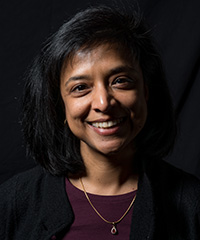
Sandhya Dwarkadas is a Visiting Research Professor of Computer Science at the University of Rochester's Hajim School of Engineering & Applied Sciences. She holds a PhD from Rice University and has been recognized with an NSF Postdoctoral Fellowship and an NSF CAREER award. Her work focuses on parallel/distributed computing, architecture, and compiler-runtime integration. Education: PhD, Rice University Research Interests: Parallel and distributed computing Computer architecture and networks Compiler/Runtime/Architecture integration Software distributed shared memory Performance evaluation and simulation methodologies Awards: NSF Postdoctoral Fellowship NSF CAREER Award Projects & Contributions: Co-led the Cashmere and InterWeave distributed sharing projects, and leads the ARCH project (focusing on compiler/runtime/architecture integration for high-performance computing). Active in parallel applications development and uniprocessor/multiprocessor architecture analysis. Labs/Teams: ARCH Project leadership, collaborating on runtime systems and architecture optimization.
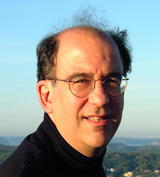
Benjamin F. Goldberg is an Associate Professor in the Computer Science Department at New York University (NYU), affiliated with the College of Arts and Science. His research focuses on compiler design, programming languages, and their verification, with notable contributions to compiler optimizations and validation frameworks like TVOC. He holds a Ph.D. in Computer Science from Yale University (1988), an M.S./M.Phil. from Yale (1984), and a B.A. in Mathematical Sciences from Williams College (1982). Education: Ph.D., Computer Science, Yale University, 1988 M.S./M.Phil., Computer Science, Yale University, 1984 B.A., Mathematical Sciences, Williams College, 1982 His research interests include compiler verification, compiler optimizations, and functional programming. He has developed the Trimaran compiler research infrastructure for instruction-level parallel architectures and pioneered work in translation validation (TVOC framework). Recent projects involve data-driven stroke rehabilitation using AI and wearable sensors, as well as climate modeling collaborations with the M2LInES initiative. Grants and Collaborations: NIH Grant R01 LM013316 (Stroke Rehabilitation) NSF Grant IIS 2404476 (Data-Driven Medicine) Climate Modeling: Part of the M2LInES international project Labs/Teams: Collaborates with the Mobilis Lab at NYU School of Medicine and the NYU Courant Institute. Active in interdisciplinary projects merging AI, healthcare, and environmental science.
Frank Bellosa is a Professor and head of the Operating Systems Group at the Karlsruhe Institute of Technology (KIT). Previously, he held roles at the University of Erlangen, including Assistant Professor and researcher in the Operating Systems Department. He earned his PhD from the University of Erlangen in 1998, focusing on memory-conscious scheduling in multiprocessor systems. His research interests center on energy-aware systems, including OS-directed power management, thermal management in distributed systems, and flexible operating system architectures. Key projects include Event-Driven Clock Scaling (Process Cruise Control) and Energy-Aware Memory Management. He has advised numerous students on topics like temperature-aware scheduling and power management for embedded systems. Bellosa's publications span dynamic thermal management, cooperative I/O, and energy-efficient file systems. His work emphasizes reducing energy consumption while maintaining performance through innovative OS mechanisms. He has contributed to international conferences and workshops, including EuroSys and USENIX, and serves on program committees for major systems conferences. Current roles include leading the Operating Systems Group at KIT and contributing to initiatives like the Disruptive Memory Systems workshop. His research bridges hardware and software, addressing challenges in modern computing systems' efficiency and scalability.
Dr. Gunter Bolch was a Professor and former head of the Performance Modelling and Process Control research group at the Department of Computer Science 4 (Distributed Systems and Operating Systems) of Friedrich-Alexander-Universität Erlangen-Nürnberg. He held positions such as Akademischer Direktor and was a Visiting Professor at institutions like the Catholic University of Rio de Janeiro. His work focused on performance modeling using queueing networks, stochastic Petri nets, and Markov chains, with applications in telecommunications and operating systems. Education: Studied Telecommunication at Technical Universities of Karlsruhe and Berlin (Ph.D. 1973). Retired in 2006 but remained active in research and academia until his passing in 2008. Research interests spanned performance evaluation, process control, and analytical methods for computer systems. He authored/co-authored 7 books and over 130 publications, including influential works on queueing networks and MOSEL modeling language. Key contributions include the PEPSY and MOSEL tools for performance analysis. Collaborated internationally on conferences like ASMTA and ESS. His work integrated theoretical models with practical applications, impacting both academia and industry.
Dr. Greg Byrd is a Professor in the Department of Electrical and Computer Engineering at North Carolina State University and serves as the Executive Director of the IBM Quantum Innovation Center at NC State. He is also Vice Chair of the IEEE-CS Quantum Technical Community (QTC). His research focuses on quantum computing, computer architecture, and high-performance parallel systems, particularly addressing communication overhead reduction in distributed systems. Education: Ph.D. in Electrical Engineering, Stanford University (1998) Master's in Electrical Engineering, Stanford University (1985) Bachelor's in Computer Engineering, Clemson University (1984) His research interests span Quantum Information Science , Superconducting Quantum Computers , and Computer Architecture . He has led initiatives like the IEEE International Conference on Quantum Computing and Engineering and contributed to quantum network testbeds and hybrid quantum-classical systems. His work bridges theoretical advancements with practical implementations, including educational tools for quantum computing. Recent Article Trends: Dr. Byrd's publications emphasize quantum circuit optimization, quantum internet protocols, and wildlife conservation applications of quantum algorithms. He also explores cache coherence mechanisms and lock-free architectures in classical systems. Awards & Honors: 2022 IEEE Computer Society Distinguished Contributor 2016 IEEE Computer Society Golden Core Award 2011–2012 Teaching Excellence Awards (William F. Lane, COE, NC State) He has advised students in quantum and parallel computing domains and contributed to grants such as the $25M NSF Quantum Leap Challenge Institute. His leadership roles in the IEEE and IBM collaborations highlight his impact on both academia and industry.
Allan Gottlieb is a Professor of Computer Science at the Courant Institute of New York University, where he led the NYU Ultracomputer Project. His research focuses on parallel computing, computer architecture, operating systems, and distributed systems. He holds a Ph.D. in Mathematics from Brandeis University (1973), with earlier degrees from Brandeis (M.A., 1968) and MIT (B.S., 1967). He was elected an ACM Fellow in 2005 for contributions to parallel computing and computer architecture. His work includes pioneering combining switch designs for parallel systems and developing the Symunix operating system. He has authored a seminal textbook on highly parallel computing and contributed to projects like the NECI LAMP cluster architecture. Teaching includes courses on computer systems organization and operating systems, with active involvement in academic leadership and research projects. Personal interests extend to free software advocacy and a 50-year puzzle column.
Björn B. Brandenburg is a tenured faculty member at the Max Planck Institute for Software Systems (MPI-SWS), where he leads the Real-Time Systems Group. His role is equivalent to an associate professorship in the US system, and he is deeply engaged in both theoretical and practical aspects of real-time computing. Max Planck Institute for Software Systems (MPI-SWS), Kaiserslautern, Germany PhD, University of North Carolina at Chapel Hill (2006–2011) MSc, Technische Universität Berlin (TU Berlin, 2003–2006) His research centers on real-time systems , operating systems , and embedded systems , with a focus on combining formal analysis methods and systems building to create robust, analyzable, and efficient systems. He is particularly interested in work that bridges theory and practice, such as formally verified schedulability analysis and dynamic model extraction from real systems. The 15 most recent publications reflect a strong trend toward mechanized verification (especially using Coq/Rocq in the PROSA project) and real-world applicability (e.g., Linux, ROS 2). Key themes include response-time analysis, scheduling theory, model extraction, and formal foundations for real-time principles. The work spans from abstract theoretical frameworks to concrete tools like LiME and LITMUS-RT. His scientific recognition includes: ERC Starting Grant (TOROS, 2018) ACM SIGBED Early Career Award (2018, inaugural) Multiple Best/Outstanding Paper Awards at RTSS, RTAS, ECRTS, EMSOFT Fulbright and Klaus Murmann Fellowships ACM Future of Computing Academy (2017, inaugural class) Distinguished Dissertation Awards (EDAA, CGS/ProQuest, UNC) He has advised numerous PhD and master’s students, many of whom have secured academic positions or industry research roles. He has received significant research funding, including the ERC Starting Grant and bilateral ANR-DFG grants. His leadership extends to organizing major conferences (e.g., PC Chair of RTSS 2025, ECRTS 2021) and editorial roles (LITES, former associate editor for ACM TECS). He actively contributes to the open-source research ecosystem through tools like PROSA, LiME, LITMUS-RT, and SchedCAT. He leads the Real-Time Systems Group at MPI-SWS, which focuses on the PROSA and LiME projects. The group brings together systems hackers and formal provers to advance the state of the art in analyzable real-time systems. He collaborates with institutions such as INRIA, ONERA, and TU Braunschweig through funded projects.
Goran Lj. Djordjevic is a Professor at the Department of Electronics, Faculty of Electronic Engineering, University of Nis, Serbia. Appointed full professor in 2009 after progressive promotions from assistant professor (1999) to associate professor (2004), he represents a cornerstone of the institution where he completed all academic degrees. His three-decade career exemplifies deep institutional commitment and scholarly excellence in electronic engineering. His academic foundation was built entirely at the University of Nis: Diploma Engineer in Electronics (1989) Master of Science in Electronics (1994) Doctor of Philosophy in Electronics (1998) Professor Djordjevic's research forms three interconnected pillars: Networks-on-Chip (NoC) innovation with breakthroughs in deflection routing and port allocation; UWB localization systems solving multipath challenges in complex indoor environments through multi-algorithm fusion; and error control coding for storage systems with applications in optical media. His work consistently bridges theoretical rigor and practical implementation, evidenced by 22 impact-factor journal publications spanning VLSI design, wireless communications, and parallel computing. Analysis of his publication timeline reveals strategic evolution: recent work (2021-2022) focuses on real-world NoC optimization and robust indoor positioning, mid-career research (2015-2005) established CDMA bus architectures and fault-tolerance frameworks, while foundational contributions (2001, 1996) in constraint coding and task scheduling underpin his later breakthroughs. This trajectory demonstrates exceptional continuity in advancing communication reliability across hardware and software domains. Scientific recognition includes: No formal awards documented in source materials Regarding academic mentorship, while specific students aren't listed, his sustained research output implies active graduate supervision. Project funding shows zero current national grants, though international collaborations remain unspecified. His 22 impact-factor publications across IEEE, Elsevier, and Springer journals demonstrate consistent productivity through completed research initiatives, with recent work indicating ongoing laboratory activity in wireless and NoC domains.
Kunle Olukotun is the Cadence Design Systems Professor of Electrical Engineering and Computer Science at Stanford University, where he has been a faculty member since 1991. He is a pioneer in multicore processor design, leading the Stanford Hydra CMP project and founding Afara Websystems (acquired by Sun Microsystems), which developed the Niagara processor. Currently, he co-leads SambaNova Systems as Chief Technologist and directs the Pervasive Parallelism Lab (PPL), focusing on domain-specific languages (DSLs) and machine learning infrastructure. Education: PhD in Computer Engineering from the University of Michigan (1991). Research interests include parallel computing architectures, transactional memory, and scalable systems. Awards include ACM Fellow, IEEE Fellow, and the Harry H. Goode Memorial Award. Key projects include the Hydra chip multiprocessor, Transactional Coherence and Consistency (TCC), and modern initiatives in dataflow architectures and AI acceleration. His work spans over 100 publications, emphasizing compiler design, hardware-software co-design, and high-performance computing. Current roles: Director of PPL and DAWN Lab, advisor to multiple students, and leader in industry collaborations like SambaNova’s dataflow accelerators. His research bridges academic innovation with commercial impact, addressing challenges in parallelism and scalable systems.
Yi Wang is a Professor of Embedded Systems at the Department of Information Technology, Uppsala University , Sweden. He leads research in real-time and embedded systems with a focus on modeling, analysis, and implementation of safety-critical applications. He is affiliated with the Embedded Systems Group and serves as a Principal Investigator (PI) in major research centers such as UPMARC and projects like CUSTOMER (ERC Advanced Grant), CoDeR-MP, and CERTAINTY. Research Interests: Yi Wang’s work centers on Embedded Systems Design, Real-Time Scheduling, Multicore Programming, and Model-Checking of Real-Time Systems . His research addresses fundamental challenges in timing predictability, schedulability analysis, and the verification of complex real-time systems. He has made significant contributions to the digraph real-time task model, mixed-criticality systems, and timing analysis of ROS 2 systems. His work bridges theory and practice, often resulting in deployable tools and formal methods for industrial applications. Recent Research Trends: His most recent publications (2023–2025) focus on optimizing real-time performance in ROS 2, managing parallel task graphs with resource contention, improving GPU-based inference on embedded platforms, and enhancing timing predictability in multithreaded executors. These works reflect a strong trend toward applying formal real-time theory to modern robotics, AI integration, and multicore embedded architectures. Scientific Tools and Leadership: He is a key contributor to foundational tools in real-time systems: UPPAAL – Model checking for timed automata TIMES – Schedulability analysis and code generation CATS – Compositional analysis of timed systems TIMES-Pro – Based on the digraph real-time task model Advising and Research Funding: Yi Wang has supervised numerous PhD students and postdocs. He has led or participated in multiple large-scale funded projects supported by the Swedish Research Council (VR), the Swedish Foundation for Strategic Research (SSF), and the European Commission (FP7, ERC). These include UPMARC (10-year Linnaeus center), CoDeR-MP (with ABB and SAAB), SAVE++ (with VOLVO), and CREDO. Laboratories and Research Groups: He is a core member of the Embedded Systems Group at Uppsala University and leads research within the UPMARC center, which focuses on programming models and analysis techniques for multicore architectures. His lab develops formal methods and tools to ensure correctness and timing guarantees in embedded and cyber-physical systems.
Sartaj K. Sahni is Professor and Chair of the Department of Computer and Information Sciences and Engineering at the University of Florida. He is a Fellow of IEEE, ACM, and AAAS, a member of the European Academy of Sciences, and a Fellow of the Minnesota Supercomputer Institute. His education includes: B.Tech. in Electrical Engineering from Indian Institute of Technology, Kanpur M.S. and Ph.D. in Computer Science from Cornell University Dr. Sahni's research revolutionized computational complexity theory through his pioneering work on NP-hard problems, expanding beyond NP-complete to optimization challenges in network flows, game theory, and ECAD. He established foundational frameworks for approximation algorithms – proving NP-hardness of approximation problems and developing fully polynomial time approximation schemes – alongside breakthroughs in multiprocessor scheduling models and parallel computing architectures like mesh/hypercube routing algorithms. His contributions to bit-permute-complement permutations and RAR/RAW operations remain standard classroom material worldwide. His scientific awards include: W. Wallace McDowell Award (2003) for contributions to the theory of NP-hard and NP-complete problems Taylor L. Booth Award (1997) for contributions to computer science education in data structures, algorithms, and parallel algorithms Dr. Sahni has mentored over thirty PhD students, with many accomplishments stemming from these collaborations. His editorial leadership spans co-editorship of the Journal of Parallel and Distributed Computing and managing editorship of the International Journal of Foundations of Computer Science, plus editorial roles for Computer Systems: Science and Engineering and Parallel Processing Letters. He actively shapes academic discourse as a frequent program chair, general chair, and keynote speaker at major conferences.
Ayşe Yılmazer Metin is an Assistant Professor in the Department of Computer Engineering at Istanbul Technical University's Faculty of Computer and Informatics. Her research focuses on computer architecture, GPU computing, and hardware security, with significant contributions to parallel processing systems and cryptographic implementations. Her educational background includes: PhD from Northeastern University (2010-2013) Degree from University of Rhode Island (2004-2007) Licence from Hacettepe University, Department of Computer Engineering (1991-1998) Dr. Yılmazer Metin's research interests center around GPU architecture and parallel computing systems. Her work addresses critical challenges in synchronization mechanisms for multi-GPU systems, power and energy measurement of embedded GPUs, and efficient implementations of cryptographic algorithms on specialized hardware. She has developed novel approaches to scope promotion in GPU environments, which significantly reduce communication overhead in multiprocessor systems. Her recent work has expanded into healthcare applications, developing privacy-preserving systems for real-time ECG monitoring and exploring homomorphic encryption techniques for secure computation. Her publication record shows a clear trajectory from fundamental GPU architecture research toward security applications and healthcare technology. Early work focused on GPU synchronization and memory management, while more recent publications demonstrate applications in secure medical systems and homomorphic encryption. This evolution reflects a strategic expansion of her core expertise in computer architecture into security-critical domains where hardware-level optimizations can provide significant advantages. Dr. Yılmazer Metin has served as Principal Investigator on multiple research projects: "Time-Critical Job Management in Multi-CPU + Multi-GPU Distributed Heterogeneous Systems" (2018-2019) "A Single-Processor GPU Architecture for More Efficient Graph Algorithms" (2018-2021) "Programmable Synchronization Architecture" (2018-2022) Her laboratory work focuses on GPU architecture and hardware security, with particular emphasis on developing efficient implementations of cryptographic algorithms on GPU platforms and optimizing graph neural network inference on heterogeneous computing systems.
Dr. Arindam Mukherjee serves as an Associate Professor in the Department of Electrical and Computer Engineering at the University of North Carolina at Charlotte, College of Engineering. His office is located in EPIC 2336, and he can be reached at amukherj@charlotte.edu or by phone at 704-687-8417. His educational qualifications are as follows: Ph.D. from the University of California at Santa Barbara (2002) M.S. from the University of California at Santa Barbara (2000) B.Tech. from Jadavpur University, India (1996) Dr. Mukherjee's research spans Smart System Architectures, Internet of Things (IoT), and Fog Computing. He investigates cooperative and autonomous mobile systems, real-time system software, and database management for Big Data. His work includes scheduling algorithms for IoT systems and the integration of edge, fog, and cloud computing paradigms for real-time applications in the Big-Squared Data space. His publication record from 2003 to 2018 shows an evolution from VLSI design and bioinformatics to contemporary IoT and fog computing. Early work focused on logic synthesis, biochip testing, and FPGA-based bioinformatics implementations, while recent contributions address power management in heterogeneous processors, energy-efficient communications for smart buildings, and the synergistic integration of edge, fog, and cloud computing for real-time IoT data processing. No scientific awards are mentioned in the provided text. There is no information available regarding students advised or research grants. Similarly, no specific research labs or collaborative teams are described in the source material.
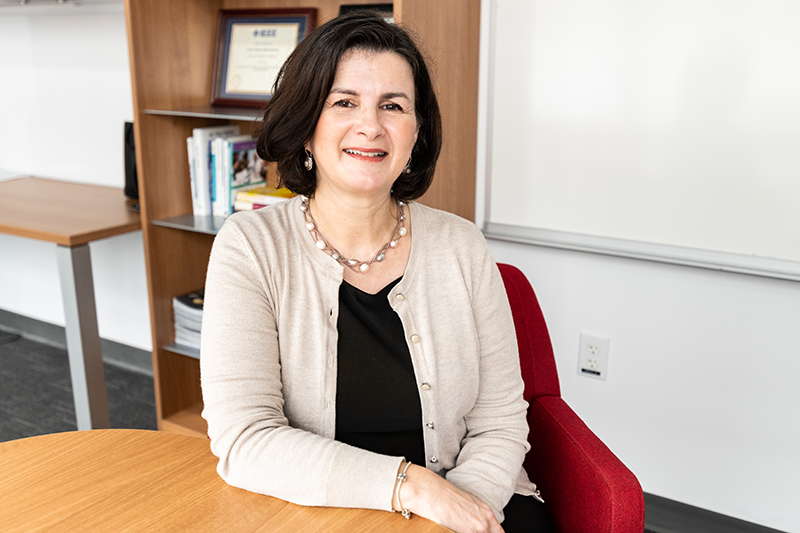
Diana Marculescu is Department Chair, Cockrell Family Chair for Engineering Leadership #5, and Professor, Motorola Regents Chair in Electrical and Computer Engineering #2 at the University of Texas at Austin. She previously served as the David Edward Schramm Professor at Carnegie Mellon University, where she was Founding Director of the College of Engineering Center for Faculty Success (2015-2019) and Associate Department Head for Academic Affairs (2014-2018). Her educational background includes: Dipl.Ing. degree in computer science from Polytechnic University of Bucharest, Romania (1991) Ph.D. degree in computer engineering from University of Southern California, Los Angeles (1998) Dr. Marculescu's research bridges hardware design and machine learning, focusing on energy- and reliability-aware computing, hardware-aware machine learning, and computing for sustainability. She leads the EnyAC (ENergY Aware Computing) research group and founded the iMAGiNE Consortium for industry-university collaboration in engineering intelligent machines from cloud to edge. Her work addresses the critical need for efficient AI systems across diverse hardware platforms. Analysis of her recent publications reveals a strong trend toward hardware-efficient machine learning, with emphasis on neural architecture search, model compression, and energy-aware deep learning systems. Her research tackles the fundamental challenge of co-designing machine learning models and hardware to achieve optimal performance and efficiency. Dr. Marculescu has received numerous prestigious awards: National Science Foundation Faculty Career Award (2000-2004) ACM SIGDA Technical Leadership Award (2003) Carnegie Institute of Technology George Tallman Ladd Research Award (2004) IEEE Circuits and Systems Society Distinguished Lecturer (2004-2005) Australian Research Council Future Fellowship (2013-2017) Marie R. Pistilli Women in EDA Achievement Award (2014) Barbara Lazarus Award from Carnegie Mellon University (2018) Fellow of ACM, IEEE, and AAAS Dr. Marculescu has advised more than a dozen doctoral students, 35+ master students, and more than two dozen undergraduates. Her research has been supported by significant grants including the NSF Career Award and Australian Research Council Future Fellowship. She has served as Technical Program Chair and General Chair for multiple major conferences including ACM/IEEE International Symposium on Low Power Electronics and Design, IEEE/ACM International Symposium on Networks-on-Chip, and IEEE/ACM International Conference on Computer-Aided Design. She leads the EnyAC research group which focuses on sustainable computing and computing for sustainability, and founded the iMAGiNE Consortium to foster industry-university collaboration in engineering intelligent machines from cloud to edge.
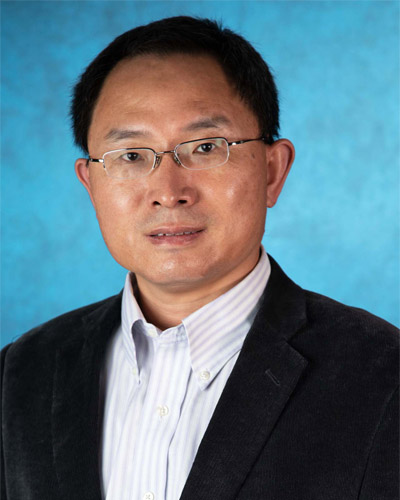
Dakai Zhu is a Professor, Assistant Department Chair, and Graduate Advisor of Record for PhD programs in the Department of Computer Science at the University of Texas at San Antonio (UTSA). He holds the Kay and Steve Robbins Faculty Teaching Fellowship Award in Computer Science, reflecting his commitment to education and research excellence. His research focuses on dependable and low-power computing, IoT innovations, real-time embedded systems, and cloud computing performance management. Education: Ph.D. in Computer Science, University of Pittsburgh M.E. in Computer Science and Technology, Tsinghua University B.E. in Computer Science and Technology, Xi'an Jiaotong University Dr. Zhu's work emphasizes sustainable computing frameworks for AI-driven healthcare applications, energy-efficient fault-tolerant systems, and privacy-preserving IoT solutions. His recent research includes real-time health monitoring using wearable sensors (e.g., PPG-based heart rate analysis), cybersecurity for cyber-physical systems, and optimization of embedded systems for assistive technologies like power wheelchair control. He also investigates scheduling algorithms for multiprocessor systems and cloud resource management to enhance reliability and energy efficiency. His publications span topics from AI-enabled health frameworks to fault-tolerant scheduling strategies, showcasing a blend of theoretical rigor and practical applications. Awards highlight his contributions to teaching and interdisciplinary research bridging computer science with healthcare and embedded systems.