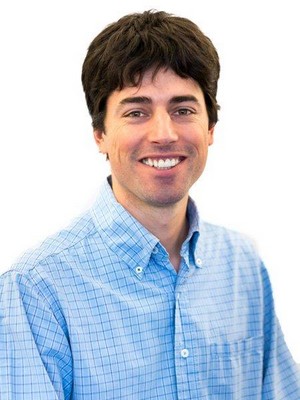
Charlotte Bunne is an Assistant Professor at École Polytechnique Fédérale de Lausanne (EPFL) with dual affiliations in the School of Computer and Communication Sciences (IC) and the School of Life Sciences (SV). She leads the Prof. Bunne Group at the Artificial Intelligence in Molecular Medicine (AIMM) unit and is a member of the Swiss Institute for Experimental Cancer Research (ISREC). PhD in Computer Science, ETH Zurich Postdoctoral work at Genentech and Stanford University Her research integrates machine learning with large-scale biomedical data to advance personalized medicine , focusing on optimal transport and generative AI for biomedical discovery. Recent publications highlight applications in single-cell omics , spatial proteomics , and chemical reaction modeling . Scientific awards : Fellow of the German National Academic Foundation Recipient of the ETH Medal Best paper awards She has contributed to teaching courses on foundation models, generative AI, and biomedical applications at EPFL's interdepartmental teaching units (SIN-ENS, SSC-ENS, SSV-ENS). Her interdisciplinary work bridges computer science , biomedical research , and computational biology .
Daniel Alexander Florez Orrego is a Senior Researcher at the Industrial Process and Energy Systems Engineering (IPESE) laboratory within the School of Engineering at École Polytechnique Fédérale de Lausanne (EPFL) in Switzerland. He also holds a Lecturer position at the School of Management (SGM-ENS). His research focuses on energy systems optimization, industrial decarbonization, and sustainable process engineering with particular expertise in exergy analysis and heat integration. Dr. Florez Orrego earned his Mechanical Engineering degree as valedictorian from the National University of Colombia (2011), followed by a Master's (2014) and Doctorate with honors (2018) in Mechanical Engineering with emphasis on Energy and Fluids from the University of São Paulo, Brazil. His academic journey reflects a strong foundation in thermodynamics and energy systems engineering. His research interests center on exergy and energy integration of industrial processes, with specific focus on decarbonization pathways for hard-to-abate sectors including aluminum production, cement manufacturing, and chemical industries. He specializes in thermodynamic optimization, process integration, and the application of high-temperature heat pumps for industrial decarbonization. His work bridges theoretical thermodynamics with practical industrial applications, emphasizing technical, economic, and environmental analyses of energy conversion systems. Dr. Florez Orrego's publication record demonstrates consistent contributions to industrial decarbonization research, with recent work focusing on circular economy approaches, carbon management strategies, and integration of renewable energy into industrial processes. His research spans multiple sectors including aluminum, glass, cement, and chemical manufacturing, with particular emphasis on process integration techniques that reduce energy consumption and emissions. ABCM Embraer Award 2019 for Best Research Thesis in Mechanical Engineering Honorable Mention in the Outstanding Thesis USP Award 2020 Best technical article at the ECOS Conference 2016 As an advisor, Dr. Florez Orrego supervises PhD candidates like Baibhav Vibhu while collaborating on multiple research projects funded by prestigious organizations including the Swiss Federal Office of Energy via IEA Annex 58, Aditya Birla Group (Novelis), ANP & CENPES (Brazil), and MinCiencias (Colombia). His current projects focus on decarbonization of aluminum production, high-temperature heat pump integration, and industrial process optimization for net-zero emissions. He leads research within the IPESE laboratory at EPFL's Energypolis campus in Valais, collaborating with the NetZeroLab Valais initiative that brings together Novelis Sierre, HES-SO, and local energy distributor Oiken. His work bridges academic research with industrial application, particularly in the context of Swiss industrial decarbonization efforts.
Felix Rafael Segundo Sevilla is a Senior Lecturer at the School of Engineering, Zurich University of Applied Sciences (ZHAW), specializing in the IEFE Electric Power Systems and Smart Grids department. His work focuses on power systems dynamics, big data analytics, and renewable energy integration. Education: PhD in Electrical Engineering (Imperial College London, 2012), MSc in Automatic Control (Universidad Autónoma de Nuevo León, 2007), BSc in Electrical Engineering (Instituto Tecnológico de Morelia, 2004) Research Interests: Power systems dynamics, renewable energy integration, big data analytics, and grid stability. He leads projects on inertia quantification, low-inertia system control, and cross-border energy scenarios like Europe-North Africa HVDC interconnections. Recent Publications emphasize machine learning for grid security, wide-area damping controllers, and EV fast-charging grid stability. His work bridges power electronics , renewable energy , and data-driven grid management . Scientific Awards: IEEE Senior Member (2019) Working Group Recognition for Outstanding Technical Report (IEEE PES, 2024) Projects & Networks: Deputy/Co-Project Leader for stability assessments, Chair of IEEE WG on Big Data for Transmission Systems, and Vice-Chair of Swiss IEEE PES Chapter. Affiliated with SCCER-FURIES and Swiss Wind Energy Network.
Prof. Dr. Wolfgang Tress is a faculty member at the ZHAW Zurich University of Applied Sciences , affiliated with the School of Engineering . He leads the Novel Semiconductor Devices Team, focusing on Organic Electronics and Photovoltaics. His research spans perovskite solar cells, device physics, optoelectronic characterization, and mixed ionic-electronic conductors. PhD in Physics from Technical University of Dresden (2012) Master in Electrical Engineering from University of Ulm (2007) His research explores critical aspects of perovskite materials, including device stability, ionic conductivity, and efficiency optimization through advanced modeling and experimental techniques. Key projects involve correlative optoelectronics, interface tailoring, and lead-free perovskite development. Recent publications highlight trends in machine learning applications for perovskite stability analysis, ion migration dynamics, and multifunctional material design. He has authored over 20 peer-reviewed articles in journals like Advanced Energy Materials , Nature Energy , and Science . 2023 : Web of Science Highly Cited Researcher 2019 : ERC Starting Grant 2019 : SPS Award in Applied Physics 2016 : Zeno Karl Schindler Award As project leader, he drives initiatives in perovskite-on-silicon tandem cells, defect engineering, and laboratory digitization. His work combines experimental fabrication with computational modeling to address photovoltaic reliability challenges.
Thomas Ankenbrand is a Professor and Head of the Competence Center Investments at the Institute for Financial Services Zug (IFZ) within the Business unit of Lucerne University of Applied Sciences and Arts. He holds a Master's degree from the University of St. Gallen and a PhD in Financial Markets as a Complex System from the University of Lausanne. Prior to academia, he founded multiple companies and served as CEO/board member in the financial sector. His research explores the intersection of finance and emerging technologies, with core interests in: Artificial Intelligence : Applications in compliance, financial advice, and predictive modeling Decentralized Finance : Blockchain infrastructure, crypto assets, and token economies Quantum Computing : Financial modeling, optimization, and quantum machine learning Agent-Based Modeling : Simulation of market liquidity and investor behavior Publication analysis reveals strong thematic consistency in FinTech innovation, with recent work emphasizing: AI-driven financial services, quantum computing applications, crypto asset ecosystems, and regulatory frameworks for decentralized technologies. His studies frequently examine Swiss and Liechtenstein financial markets. He leads 16+ research initiatives including: Quantum Advantage in Finance Data-Driven Banking Swiss Asset Management Study Risks on Blockchains Confidential Computing Future of Investment Advisory As Head of Competence Center Investments, he oversees research teams focusing on investment technologies and financial innovation.
Stefan Amstutz serves as a Senior Researcher at the iHomeLab within the Institute of Electrical Engineering at Lucerne University of Applied Sciences and Arts (HSLU), School of Engineering and Architecture. His work integrates artificial intelligence with building automation, rehabilitation systems, and home care technologies through innovative digital twin platforms and explainable AI frameworks. His academic credentials include: Doctorat d'Automatique from Université de Haute-Alsace Master of Science in Engineering (MSE) specializing in Mechatronics and Automation from University of Applied Sciences Northwestern Switzerland Bachelor of Science in System Engineering specializing in Industrial Automation from University of Applied Sciences Northwestern Switzerland CAS in DevOps Leadership and Agile Methods from HSLU CAS in Cloud and Platform Manager from HSLU Dr. Amstutz's research centers on two interconnected pillars: Digital Twin Architectures for intelligent building systems, utilizing hybrid modeling and time series forecasting to enable real-time optimization of energy and operational performance; and Trustworthy AI Systems incorporating human-in-the-loop mechanisms for explainable decision-making in critical applications like VR telerehabilitation and home care monitoring. His methodology emphasizes user-centered design and safety-critical validation. Analysis of his publication trajectory reveals a strategic evolution from foundational control engineering in photovoltaic manufacturing (2014-2018) toward cutting-edge AI applications in building automation and healthcare (2019-2025). Recent work demonstrates increasing focus on explainability, anomaly detection, and human-AI collaboration, particularly in the RecoveryFun and CleverGuard projects. As lead researcher for HSLU's strategic initiatives including AI in Buildings (open-source digital twin platform), RecoveryFun (VR telerehabilitation decision support), and CleverGuard (long-term home care anomaly detection), he secures project funding through applied research grants targeting real-world implementation. His professional skills integrate Agile methodology, DevOps transformation, and cloud-native architecture with core competencies in reinforcement learning and statistical modeling. Dr. Amstutz operates within the iHomeLab research ecosystem, which specializes in intelligent home technologies through interdisciplinary collaboration between electrical engineering, computer science, and healthcare domains. The lab's infrastructure supports full-stack development of AI-powered services for real-time simulation, prediction, and optimization in building environments.
Dr. Xiang Kong is a Researcher affiliated with the Department of Materials at ETH Zurich, specifically within the Professorship for Soft Materials. His work focuses on fluid dynamics in porous media, geothermal energy systems, and carbon capture and storage (CCS). He leads experimental and numerical studies to understand subsurface processes, including fluid-rock interactions, CO2 sequestration, and fracture permeability evolution under thermal and mechanical stresses. His research integrates advanced computational methods like lattice-Boltzmann simulations and machine learning to address challenges in energy and environmental engineering. Key areas of investigation include optimizing CO2 storage in salt caverns, enhancing geothermal energy extraction through phase-transition fracturing, and modeling mineral precipitation dynamics during geothermal reinjection. Dr. Kong collaborates on projects such as ZoDrEx, aiming to improve zonal isolation and drilling techniques in enhanced geothermal systems (EGS). His experimental methods involve hydraulic tomography, laser-induced fluorescence (LIF), and 3D-printed fractured media to study solute transport and flow path evolution. Notable contributions include developing novel tracers (e.g., DNA-labeled nanoparticles) for subsurface monitoring and advancing physics-informed machine learning models for direct inversion of subsurface flow systems. His work bridges fundamental materials science with applied geoscience, addressing critical global challenges in energy transition and climate mitigation.
Dr. Toni Kraft is a researcher at the Swiss Seismological Service (SED) within ETH Zurich's Department of Earth and Planetary Sciences. His work focuses on induced seismicity monitoring in geothermal projects, microseismic analysis, and tectonic dynamics in alpine regions. He contributes to Switzerland's national seismic monitoring infrastructure and collaborates on international projects like GEOBEST, developing tools for optimizing microseismic networks and analyzing fault reactivation mechanisms. Key research interests include geothermal energy-related seismic risks, climate change impacts on mountain belt seismicity, and innovative applications of machine learning in seismic data analysis. His expertise spans from theoretical fault mechanics to practical monitoring protocols for urban geothermal developments. Dr. Kraft has published extensively on induced seismicity patterns in Swiss geothermal sites (Basel, St. Gallen), microearthquake sequence analysis, and meteorological influences on seismic activity. His work integrates field observations with computational models to improve hazard assessment frameworks.
Prof. Timo Kehrer is a Professor and Head of the Software Engineering Group (SEG) at the Institute of Computer Science, University of Bern. He also serves as Deputy Director of Studies, overseeing academic programs in software engineering. His research focuses on variability modeling, model-based systems engineering, simulation-based testing of autonomous systems, and empirical studies in software development practices. Key areas include software product lines, cyber-physical systems, and the application of formal methods in industrial contexts. Notable contributions include work on Community-driven variability management in open-source software, Automated testing tools like ScoutSL and TEASER , Simulation-based frameworks for self-driving cars (e.g., Sensodat datasets), and Empirical analyses of GitHub Actions workflows and merge conflict resolution. His research bridges theory and practice, addressing challenges in software sustainability, AI-driven development, and the integration of formal verification tools like TLA+. He actively participates in conferences such as VaMoS (Variability Modelling) and contributes to open-source projects in model-driven engineering. Prof. Kehrer collaborates with industry partners to advance tools for model repositories, vulnerability detection (e.g., VUDENC ), and semantic analysis of software changes. His work emphasizes reproducibility, tool support for developers, and educational initiatives to modernize software engineering curricula.
Prof. Bernd Gärtner is a Lecturer at the Department of Computer Science of ETH Zürich. His research focuses on algorithms, computational geometry, optimization, and theoretical computer science. He has contributed significantly to the study of unique sink orientations, combinatorial algorithms, and algorithm design. Gärtner teaches courses such as 'Algorithms, Probability, and Computing' and 'Geometry: Combinatorics and Algorithms,' reflecting his expertise in foundational computer science topics. His work bridges discrete mathematics and algorithmic theory, addressing challenges in linear programming, combinatorial optimization, and geometric algorithms. His recent research explores the realizability of structures in unique sink orientations, optimization techniques for symbolic visibility, and the analysis of opinion dynamics in networks. He has published extensively on topics including ARRIVAL game complexity, sampling algorithms, and high-dimensional learning models. His contributions also extend to the development of efficient algorithms for geometric problems and the study of cellular automata systems. Teaching: Courses include Algorithms, Probability, and Computing (252-0209-00L), Linear Algebra (401-0131-00L), and Geometry: Combinatorics and Algorithms. Research Interests: Algorithms, computational geometry, optimization, combinatorics, and theoretical computer science. Labs/Teams: Affiliated with the Institute of Theoretical Computer Science at ETH Zürich.
Dr. Robert Baines holds the Professorship for Robotic Systems at ETH Zürich, leading research in adaptive morphogenetic robots, soft robotics, and amphibious robotic systems. His work emphasizes material science integration, reconfigurable mechanisms, and environmental adaptability. Key research areas include morphing limb design, tensegrity robots, and reproducible soft robotics methodologies. His research focuses on developing robots capable of evolving on demand through modular architecture and self-reconfiguration, with applications in multi-environment navigation. He has pioneered studies on inflatable actuators, tensile jamming fibers, and bio-inspired designs for amphibious locomotion. Baines also advocates for standardized testing protocols in soft robotics to ensure reproducibility and cross-laboratory collaboration. Notable contributions include the RoboWrangler rope-based grasping system and the amphibious robotic turtle demonstrating aquatic-to-terrestrial transitions. His work bridges mechanical engineering, materials science, and artificial intelligence to create robust, context-aware robotic systems. Current projects explore variable stiffness mechanisms, multi-modal sensing, and energy-efficient morphing systems. Baines collaborates with industry partners to translate theoretical advancements into deployable robotic solutions for challenging environments.
Prof. Torsten Hoefler is a Full Professor at the Department of Computer Science, ETH Zürich. His research focuses on High-Performance Computing (HPC), parallel systems, networking, and AI-infrastructure. He leads projects on scalable interconnects, network topology design, and cloud computing benchmarks like SeBS. His work bridges theoretical foundations with practical implementations in distributed systems. Research Interests : High-Performance Computing & Networking Parallel Algorithms & Architectures AI Infrastructure & Distributed Systems Chiplet Interconnects & Topology Optimization Key Contributions : Developed tools like ATLAHS (AI/HPC network simulation) Advanced RDMA-based communication protocols (SDR-RDMA) Benchmarks for serverless computing (SeBS-Flow) His recent articles (2025) emphasize adaptive networks, low-precision AI models, and energy-efficient HPC systems. He also explores ethical computing and sustainability in supercomputing through initiatives like Core Hours & Carbon Credits.
Robin Zbinden is a Researcher at the École Polytechnique Fédérale de Lausanne (EPFL) , affiliated with the School of Architecture, Civil and Environmental Engineering (ENAC) . He is part of the Laboratoire de science computationnelle pour l'environnement et l'observation de la Terre (ECEO) , focusing on computational methods for environmental and Earth observation challenges. His work bridges machine learning, remote sensing, and ecological modeling to address climate-driven environmental questions. He is also a doctoral student in the Programme doctoral en informatique et communications at EPFL, specializing in data-driven approaches for species distribution and environmental systems. Research interests include species distribution modeling (SDM), multi-modal data fusion, and algorithmic solutions for imbalanced ecological datasets. His work emphasizes adaptive machine learning frameworks like MaskSDM , integrating climate, satellite, and field data to predict species responses to environmental changes. Applications span biodiversity conservation, climate impact assessments, and sustainable food systems. His lab’s computational methods prioritize explainability and scalability, addressing gaps in ecological modeling robustness and generalization. Notable contributions include foundational work on MaskSDM (2025), which enhances SDM flexibility through Shapley values, and studies on monarch butterfly migration under climate shifts. His 2024 research on pseudo-absence selection for deep learning models and 2023 exploration of neural networks in SDM highlight methodological innovations. Recent projects address food environment metrics via sales logs and carbon footprint perception studies (2019). Collaborations span environmental policy, geospatial analysis, and interdisciplinary sustainability challenges. Lab affiliations include the ECEO team at EPFL Valais Wallis, where he develops computational tools for environmental observation. His research narrative combines technical algorithm design with ecological applications, aiming to bridge data science and real-world conservation needs.
Roman Bachmann is a Researcher at the École Polytechnique Fédérale de Lausanne (EPFL), affiliated with the Visual Intelligence and Learning Lab (VILAB) within the School of Computer and Communication Sciences (IC). He holds a doctoral status as an Assistant-doctorant in the Programme doctoral en informatique et communications. His research focuses on advanced computer vision, machine learning, and AI-driven multimodal systems, with contributions to generative models, vision-language integration, and 3D scanning technologies. Key research interests include visual personalization (ViPer), multimodal learning (4M series), and scalable vision pipelines (Omnidata). His work bridges theoretical advancements with practical applications in embodied AI, robotics, and creative technologies. He is actively involved in the VILAB, contributing to projects that address challenges in cross-modal understanding and adaptive systems. Roman’s publications reflect a strong emphasis on innovation in AI, with recent work exploring flexible tokenization (Flextok) and task-agnostic vision models (4M-21). His research has implications for robotics, generative AI, and data-driven decision-making in complex environments.
Blaise Melly is a Professor of Econometrics and Head of the Department of Economics at the University of Bern. He also serves as an Associate Editor of the Journal of Business and Economic Statistics . His research focuses on econometric methods, labor economics, and empirical microeconomics, with a strong emphasis on quantile regression techniques and their applications in policy analysis. Key research interests include panel data analysis, counterfactual analysis, treatment effects, and wage gap studies. He has developed influential Stata modules (e.g., QRPROCESS) and contributed to software tools for quantile regression. His work addresses issues like public vs. private sector wage gaps, informal labor markets, and policy evaluation using advanced statistical methodologies. Melly’s articles span methodological advancements (e.g., fast algorithms for quantile processes) and applied analyses (e.g., gender wage gaps, public sector wage dynamics). He actively contributes to the academic community through editorial roles and software development.