Julie Delon is a faculty member at Université Paris-Cité , France, recognized internationally for her expertise in optimal transport theory and its applications to Gaussian mixture models . In March 2024 she delivered an invited workshop presentation at Humboldt-University of Berlin on “Optimal Transport with Invariances between Gaussian Mixture Models,” outlining novel theoretical contributions and practical algorithms for computing Wasserstein and Gromov-Wasserstein distances between GMMs. Her research spans the mathematical foundations of OT, including barycenters, geodesic spaces, and invariant transport plans, and extends to concrete applications such as texture synthesis , color transfer , and evaluation metrics for generative models (FID) . The work integrates rigorous theory with efficient computational schemes, offering new tools for machine-learning practitioners and probabilistic modelers.
Massimiliano Pontil is a Professor at University College London's Department of Computer Science within the Faculty of Mathematical & Physical Sciences, with additional affiliation at the Italian Institute of Technology in Genoa. He leads cutting-edge research at the intersection of machine learning and dynamical systems theory. His research focuses on developing theoretical frameworks for learning transfer operators of stochastic dynamical systems using kernel methods. Pontil's work provides rigorous spectral learning bounds and addresses representation learning challenges in modeling time-evolving phenomena. His research spans both theoretical foundations and practical applications in data-driven science and engineering. Pontil's recent publications reveal a strong emphasis on Koopman operator theory, with particular attention to spectral analysis, error bounds, and efficient algorithms for large-scale dynamical systems. His work connects kernel methods with dynamical systems theory to create mathematically grounded approaches for forecasting and understanding temporal phenomena. His scientific contributions include multiple publications in top-tier venues including NeurIPS and ICLR, with recent work on invariant representations, long-term forecasting, and randomized algorithms for operator regression. Pontil collaborates extensively with researchers including Vladimir Kostic, Karim Lounici, and Pietro Novelli, leading a productive research group in this specialized area of machine learning theory.
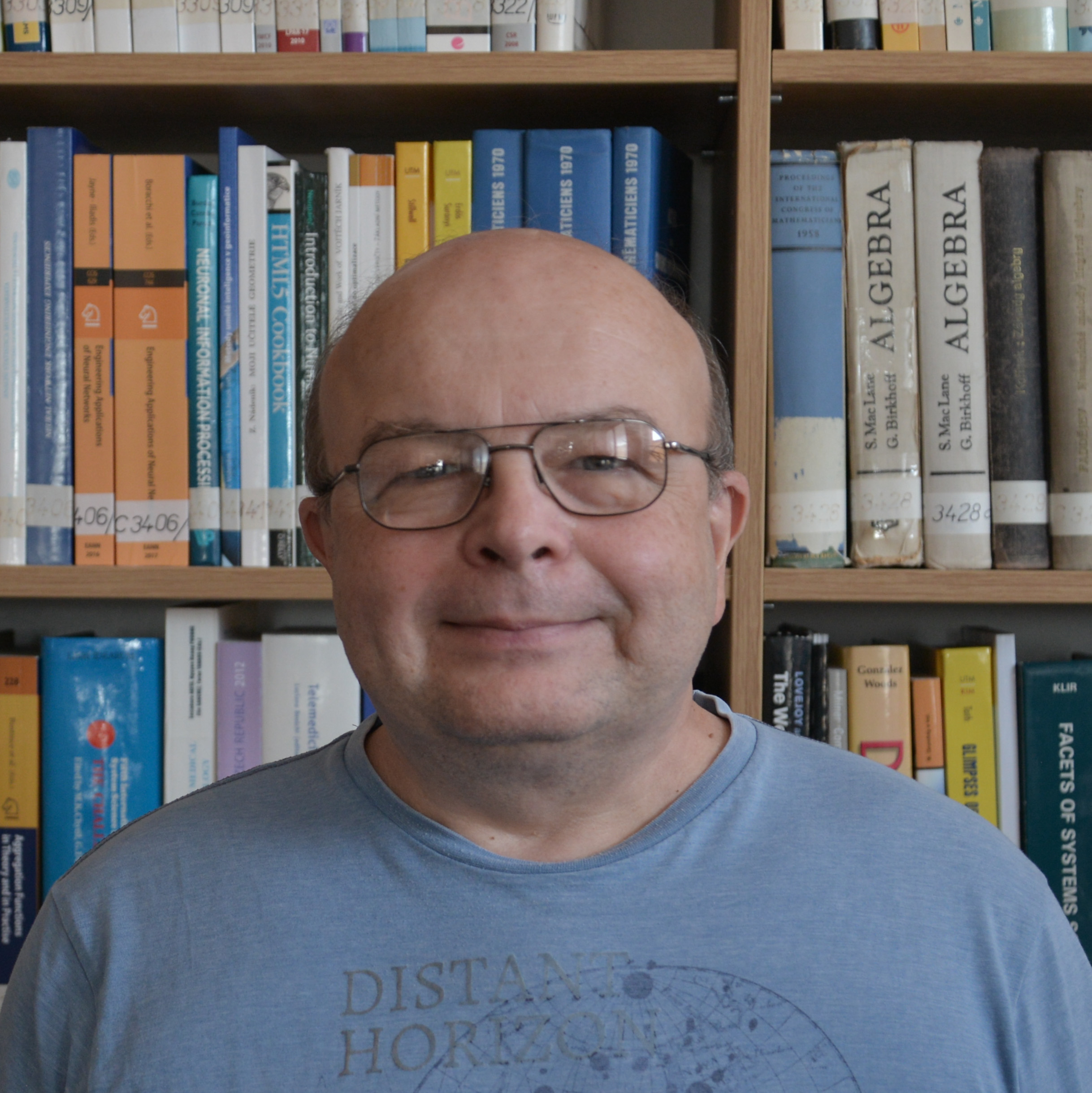
Jiří Šíma is a senior scientist at the Department of Theoretical Computer Science, Institute of Computer Science, Czech Academy of Sciences. He holds the academic title of Research Professor (DrSc.) and has been a key researcher at ICS CAS since 1994. He has also served as head of the department (2010–2012, 2021–2023) and has held external lecturing positions at Charles University, Masaryk University, and Czech Technical University. His educational achievements include a CSc. (Ph.D.) in 1993, an Associate Professor qualification (doc.) and RNDr. in 2000, and a DrSc. in 2009 from the Slovak University of Technology. These qualifications reflect his deep expertise in theoretical computer science and neural networks. Šíma's research focuses on the theoretical foundations of neural computation, including the computational power of analog and spiking neural networks, energy complexity in deep learning models, formal language recognition by neural automata, and complexity theory. His work bridges theoretical computer science and artificial intelligence, with a strong emphasis on mathematical rigor and computational models. The 15 most recent publications highlight a consistent trend in analyzing the computational capabilities and energy efficiency of neural networks. His recent work (2020–2024) centers on energy complexity in fully-connected and convolutional networks, while earlier work explores analog neuron hierarchies, hitting sets for branching programs, and the limitations of spiking neurons. The research spans subfields such as formal languages, computational complexity, dynamical systems, and neurocomputing, demonstrating a cohesive and long-term research trajectory in theoretical machine learning. Best ICS Paper Award (2024) Best ICS Paper Award (2021) Second/Third Best ICS Paper Award (2019) Best ICS Paper Award (2018) Otto Wichterle Award (2003) Award of the CAS for young scientists (1998) Šíma has been principal investigator on multiple Czech Science Foundation grants, including LEDNeCo (2025–2027), AppNeCo (2022–2024), and FoNeCo (2019–2021). He has also served on grant evaluation panels and scientific councils, including at the Czech Science Foundation and Charles University. Although no formal students are listed, he has collaborated extensively with researchers such as J. Cabessa, P. Vidnerová, S. Žák, and P. Orponen. He is actively involved in the academic community, serving on program committees for major conferences such as ICANN, ICONIP, SOFSEM, and MFCS. His work is primarily conducted within the Department of Theoretical Computer Science at ICS CAS, a leading research group in theoretical computer science in the Czech Republic.
Nathanaël Fijalkow is a Researcher at CNRS in LaBRI (Bordeaux) and a Research Fellow at The Alan Turing Institute in London. His primary research fields include games , machine learning , automata theory , and dynamical systems , with a focus on synthesizing programs from logical specifications and probabilistic models. Research Interests span program synthesis (programming by example), controller synthesis (temporal logic specifications), games on graphs (parity/mean payoff games), probabilistic automata (bounded ambiguity), and invariants for linear dynamical systems. He bridges formal methods with machine learning through projects like DeepSynth . Scientific Contributions include: Undecidability results for probabilistic automata Advances in parity game algorithms (quasi-polynomial lower bounds) Foundations of probabilistic modal logics Efficient synthesis techniques using SMT solvers and distributional learning Supervision involves guiding postdocs and PhD students such as Guillaume Lagarde, Antonio Casares, and Pierre Ohlmann. He has secured grants like the Momentum DeepSynth project (2019-2021) , aiming to merge formal methods with ML for program synthesis.
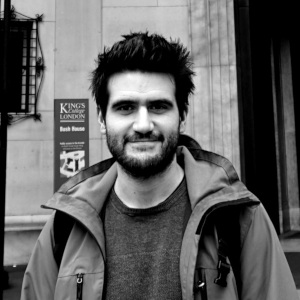
Martim Brandão is a Lecturer (Assistant Professor) in Robotics and Autonomous Systems at King’s College London, where he leads the Responsible Robotics and AI (RRAI) Lab and serves as Co-Director of the UKRI Centre for Doctoral Training in Safe and Trusted AI. His research focuses on ethical, explainable, and safe AI and robotics, with applications in human-robot interaction, motion planning, fairness, and societal impact. His research interests include: Explainable AI and Motion Planning Fairness and Bias in AI Systems Human-Robot Interaction and Social Robotics Adversarial Robustness in Robotics Value Alignment and Ethical AI Inclusive and Participatory Robotics Design His recent publications (2023–2025) reflect a strong trend toward socially responsible robotics, focusing on fairness in navigation, explainability of planning failures, worker-centered agricultural robotics, environmental justice in drone delivery, and the dangers of bias in drowsiness detection and LLM-driven robots. His work emphasizes user understanding, societal impact, and ethical safeguards in autonomous systems. He has advised and collaborated with numerous students and researchers across diverse topics in robotics and AI. He is actively involved in shaping responsible robotics through: Leadership in the RRAI Lab Co-directing a national CDT in Safe and Trusted AI Developing fairness-aware algorithms Advocating for inclusive and ethical design practices His lab and research group focus on: Responsible Robotics and AI Explainability in Multi-Agent Planning Fairness in Coverage and Navigation Human-Centered Evaluation of AI Systems
Gyunam Park is a Research Group Lead and Process and Data Scientist at Fraunhofer FIT and a Scientific Assistant at the Chair of Process and Data Science at RWTH Aachen University, a leading institution in computer science and engineering. He is actively involved in both research and teaching, contributing to the advancement of process mining, data science, and artificial intelligence. His work bridges academic research and industrial applications, particularly in SAP ERP systems and digital twins of organizations. Research Interests: Gyunam Park’s research focuses on Action-Oriented Process Mining (AOPM) , Object-Centric Process Analysis , and Responsible Machine Learning . He aims to transform process mining insights into actionable management decisions, ensuring transparency, fairness, and compliance. His work enables organizations to monitor operational constraints, generate corrective actions, and assess their impact using data-driven methods. Publication Trends: His recent publications emphasize object-centric approaches to process mining, predictive monitoring, constraint checking, and integration with AI planning. There is a strong trend toward preserving structural information in event logs, improving machine learning performance, and applying these techniques to real-world systems like SAP ERP and after-sales service processes. Scientific Awards: No awards are explicitly mentioned in the provided text. Advising and Grants: While no formal students are listed, Gyunam Park leads research projects and collaborates with industry partners such as Samsung Electronics and SAP. His projects involve root cause analysis, resource optimization, and educational data mining. He has developed open-source tools like ProAct and OCPA , indicating active grant or institutional support for software development and research dissemination. Labs and Teams: He is a core member of the Process and Data Science (PADS) group led by Prof. Wil van der Aalst at RWTH Aachen University and leads a research group at Fraunhofer FIT. These teams focus on cutting-edge research in process mining, data science, and AI, with strong industry collaborations and regular contributions to top conferences and journals.
Philip Nakashima is an Associate Professor in the Department of Materials Science & Engineering within the Faculty of Engineering at Monash University. He is an active researcher with a PhD in Physics from the University of Western Australia (2002) and has over 25 years of experience in advanced transmission electron microscopy (TEM) and quantitative convergent-beam electron diffraction (QCBED). He is currently accepting PhD students and is involved in cutting-edge research in materials characterization and quantum information technology. His research focuses on the development and application of advanced electron microscopy techniques to study the structure, bonding, and properties of materials such as metals, alloys, ceramics, and nanostructures. Key areas include quantitative CBED, electron crystallography, digital image restoration, noise quantification, and multi-parameter optimization. He has made seminal contributions to understanding chemical bonding in aluminum and has extensive experience in high-performance computing for materials analysis. His most recent publications demonstrate a strong trend toward integrating machine learning with materials design, particularly for magnesium alloys, while maintaining core expertise in electron diffraction and microscopy. He continues to publish in high-impact journals such as Science , Physical Review Letters , and Acta Materialia . Philip Nakashima has received several prestigious awards for his research excellence: John Sanders Medal (2012) : Awarded by the Australian Microscopy and Microanalysis Society for excellence in electron microscopy techniques. Barry Inglis Medal (2011) : Awarded by Australia’s National Measurement Institute for outstanding achievement in measurement research. The Cowley-Moodie Award (2006) : Recognizing research excellence in electron microscopy in the physical sciences. He has been a visiting researcher at the ARC Future Fellowship (2012–2016) and is currently an Associate Investigator in the Quantum Information Technology project (2023–2027). He teaches advanced crystallography to undergraduate and postgraduate students and has been invited to lecture at international schools on electron and quantum crystallography. His research involves collaboration with leading scientists in Australia and internationally, and he leads work on advanced microscopy for materials engineering applications.
Bernard Haasdonk is a Professor at the University of Stuttgart, affiliated with the Institute of Applied Analysis and Numerical Simulation (IANS), part of the Faculty of Mathematics and Computer Science. His research focuses on model reduction techniques for parametrized partial differential equations (PDEs), kernel-based methods, numerical analysis, and machine learning applications in scientific computing. He leads a research group in numerical mathematics and has contributed to software tools like RBMatlab and KerMor. Affiliations: Institute of Applied Analysis and Numerical Simulation, University of Stuttgart Roles: Academic Researcher, Software Developer, Grant Principal Investigator His work bridges numerical simulation, machine learning, and reduced basis methods, addressing challenges in optimal control, fluid dynamics, and biomechanics. Haasdonk has held multiple funded projects, including those on kernel methods for model reduction and certified RB-ML-ROM surrogate models. Research Interests: Model reduction for PDEs, kernel methods, greedy algorithms, numerical analysis, optimal control, and applications in fluid dynamics and porous media. He emphasizes structure-preserving methods for Hamiltonian systems and data-driven approaches for surrogate modeling. Publications: Over 200 articles in journals like SIAM, BIT Numerical Mathematics, and Physica D, focusing on convergence analysis, kernel-based approximation, and reduced-order modeling. Recent trends include adaptive greedy algorithms, symplectic model reduction, and energy-conserving surrogates. Awards: IEEE PerCom 2017 Best Paper Award, Teaching Excellence Awards (2012-2017), and early-career research grants. Grants: DFG-funded projects on model reduction, SimTech Cluster contributions, and collaborations on fuel cells and biomechanics. Teams: Leads the Numerical Mathematics Research Group at IANS, collaborating with interdisciplinary teams on projects like MORCOS (Model Order Reduction of Coupled Systems) and KerMor (Kernel Methods for Model Reduction).
Sascha L. Schmidt is a Professor and Chairholder at WHU – Otto Beisheim School of Management, where he leads the Center for Sports and Management (CSM). He is also the Academic Director of the European Sports Business Program and holds affiliations with the Massachusetts Institute of Technology (MIT) and Harvard Business School. His work bridges academic research and practical application in sports and management. WHU – Otto Beisheim School of Management, Chair for Sports and Management Academic Director, European Sports Business Program Lecturer, MIT Sports Entrepreneurship Bootcamp Member, Digital Initiative, Harvard Business School Schmidt’s research centers on the future of sports, with a focus on digital transformation, technology adoption, fan engagement, and strategic innovation in professional sports. His interdisciplinary work integrates insights from economics, psychology, and management to understand how emerging technologies are reshaping the sports industry. He has led multiple Delphi studies forecasting the future of football, winter sports, and sports sponsorship. His recent publications span topics including the metaverse in football, digital transformation in national associations, and eSports strategy. These works, published in journals like Technological Forecasting and Social Change and MIT Sloan Management Review , reflect a strong trend toward technology-driven change and data-informed decision-making in sports. His research often employs foresight methodologies and behavioral insights. Schmidt has made significant contributions beyond traditional academia. He is the editor of 21st Century Sports and developed an online course with MIT xPRO. He also contributes regular columns to Focus and Manager Magazin , translating academic insights for a broader audience. Editor, 21th Century Sports: How Technologies Will Change Sports in The Digital Age Co-developer, MIT xPRO course: Transformational Technologies: Applied Lessons from Sports Author of multiple WHU CSM Delphi studies and industry reports Schmidt advises on strategic initiatives and has collaborated with major sports organizations. His work with Harvard Business School on case studies—such as Bayern Munich in China and TSG Hoffenheim’s analytics revolution—highlights his impact on teaching and real-world strategy. He is actively involved in research funding and collaborative projects, though specific grants are not detailed. He leads the Center for Sports and Management at WHU, which serves as a hub for research, industry collaboration, and executive education in sports business. The center produces influential studies and fosters innovation in sports management practices.
Dr. Yana Boeva is a Junior Research Group Leader at the University of Stuttgart , affiliated with both the Institute for Social Sciences and the Cluster of Excellence IntCDC . Her work bridges Science and Technology Studies (STS) with Computational Design , focusing on critical examinations of digital infrastructure, human-computer interaction, and sustainability in architectural contexts. Research Interests: Algorithmic entanglements in design and construction Participatory technology production Digital fabrication and material practice Epistemic cultures of computational design Socio-political implications of Building Information Modeling (BIM) Her recent publications analyze timber construction innovation trajectories , platformization in urban environments , and ghost labor in automation . She co-edited the volume Algorithmic Regimes (2024), which investigates algorithmic knowledge production across societal domains. Scientific Awards: Recipient of the DigitalFUTURES Young Award for critical computational design research Dr. Boeva teaches courses on Algorithmic Sociology and Digital Sustainability at the MA and BA levels. Her work has been supported by projects under the Excellence Cluster IntCDC and BBSR Innovationsprogramm Zukunft Bau .
Charles L. A. Clarke is a Professor at the University of Waterloo, Canada, with a focus on Information Retrieval and Large Language Model evaluation . He actively contributes to research in search algorithms, human-computer interaction, and computational linguistics. Recent Research Trends : His work examines LLM limitations in relevance assessment, adversarial robustness in legal domains, and hybrid human-AI evaluation frameworks. Workshop Leadership : Co-organizer of the Search Futures Workshop (ECIR 2024/2025) and LLM4Eval@SIGIR. Collaborations : Works with researchers from NII, Microsoft, and ACM SIGIR on testbed development and evaluation methodologies. Key Article Trends : His 2024-2025 publications analyze LLM vulnerabilities, develop evidence retrieval systems, and create metrics for human-AI alignment in generative applications. Subfields include adversarial attacks, prompt sensitivity, and semantic graph frameworks. Scientific Contributions : Focuses on bridging algorithmic performance with human judgment validity, emphasizing ethical AI deployment and robust information access systems.
Muhammad Awais Bin Altaf is a researcher specializing in biomedical engineering, machine learning, and wearable technology. His work focuses on low-power embedded systems for neurological and cardiovascular monitoring, including EEG processors for seizure detection and PPG-based blood pressure classification. He has collaborated extensively with co-authors like Wala Saadeh and Jerald Yoo on IEEE journals and conferences. His research interests include Biomedical signal processing Wearable health devices Machine learning for medical diagnostics Energy-efficient hardware design Neurological disorder detection Embedded systems for clinical applications Recent publications highlight trends in shallow neural networks, autoencoders, and hardware acceleration for real-time health monitoring. Key subfields span seizure prediction, stress detection, and impedance-adaptive sensors. Collaborations include institutions in Germany, Finland, and Pakistan. His work often integrates open-source toolflows and industry-standard chip design techniques, emphasizing practical implementations for wearable environments. Contributions to HDR imaging algorithms and biomedical SoCs demonstrate interdisciplinary expertise in signal processing and healthcare technology.
Eric Leclercq is a researcher at the University of Burgundy, affiliated with the LE2I Lab in Dijon, France. His work spans database systems, social network analysis, and biomedical data integration. He has contributed extensively to polystore systems, tensor decompositions, and category theory applications in data modeling. Fields of Interest : Database Systems, Data Mining, Social Network Analysis, Big Data Analytics, Semantic Web Leclercq's recent research focuses on formal frameworks for data lakes using category theory, multi-level tensor decomposition for social network stratification, and schema migration in multi-model systems. He has published in venues like CAiSE, IDEAS, and RCIS. His collaborations include Annabelle Gillet, Marinette Savonnet, and Nadine Cullot. Notable works include Lambda+ architecture for data processing, polarization analysis in social networks, and tools for tweet collection and biomedical data integration.
Abdelkader Hameurlain is an active academic researcher specializing in database systems, data management, and cloud computing with a prolific publication record spanning over three decades (1990-2025). He has authored or co-authored more than 170 publications and serves as an editor for the prestigious 'Transactions on Large-Scale Data- and Knowledge-Centered Systems' series published by Springer as part of the Lecture Notes in Computer Science. His research interests focus on database systems, data management, cloud computing, query optimization, data replication, and big data analytics. Hameurlain has made significant contributions to multi-tenant database management systems, SLA-aware query optimization, data replication strategies in cloud environments, and knowledge-based systems. His work bridges theoretical foundations with practical applications in large-scale data processing environments. Analysis of his recent publications (2021-2025) reveals a continued focus on cloud database performance optimization, with particular emphasis on multi-tenant systems, SLA compliance, and cost-effective resource allocation. His research demonstrates a consistent trajectory from traditional database systems toward cloud-native and distributed data management solutions, reflecting the evolving landscape of data-intensive computing. Hameurlain has established long-term collaborations with prominent researchers including Franck Morvan (63 joint publications), Roland R. Wagner (50 joint publications), Josef Küng (40 joint publications), and A Min Tjoa (26 joint publications), indicating his central position in the database research community. As an editor of the Transactions on Large-Scale Data- and Knowledge-Centered Systems series, he has played a significant role in shaping research directions in data management through numerous special issues covering database technologies, big data analytics, cloud computing, and knowledge systems. His editorial work spans multiple volumes from TLS-DCS XIII (2014) through TLS-DCS LVI (2024), demonstrating sustained leadership in the field.
Petter Falkman is a researcher at Chalmers University of Technology, specializing in robotics, industrial automation, and control systems. His work bridges theoretical advancements with practical applications in manufacturing, leveraging technologies like digital twins, eye tracking, and virtual reality. Key Research Areas: Robotics, Industrial Automation, Control Systems, Digital Twins, Human-Computer Interaction, Machine Learning. Collaborations: Frequently works with Bengt Lennartson, Kristofer Bengtsson, Martin Dahl, and colleagues across institutions. Publication Trends: Recent articles focus on gaze-based human intention prediction, ROS2 control architectures, and compositional automated planning. His work integrates machine learning with industrial control systems, emphasizing event-driven design and virtual commissioning. Methodologies: Develops frameworks like EPypes for data pipelines, contributes to STEP AP214 model generation, and explores energy optimization in multi-robot systems.