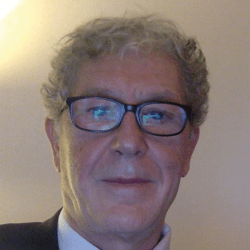
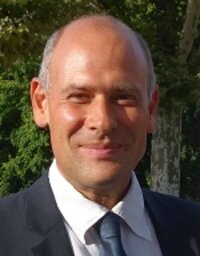
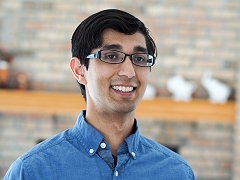
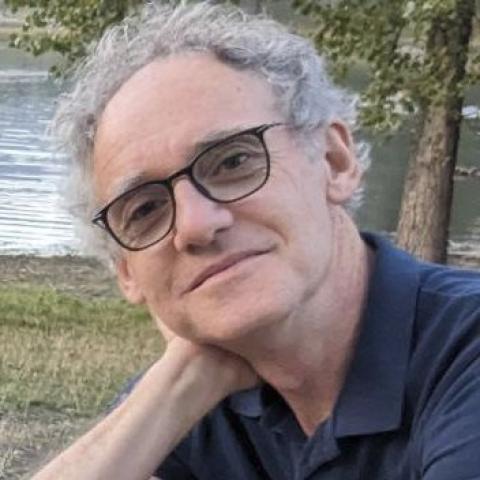
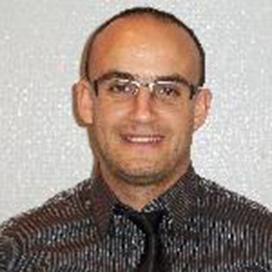
François Goulette is a Professor and Deputy Director of the Computer Science and Systems Engineering Unit (U2IS) at ENSTA Paris, part of Institut Polytechnique de Paris. His research focuses on 3D point cloud processing, LiDAR perception, and autonomous systems within the Robotics Center (CAOR). His primary research interests lie in 3D point cloud processing , LiDAR perception , and autonomous systems . His work spans fundamental algorithm development to practical applications in autonomous driving, cultural heritage digitization, and robotics. He has made significant contributions to domain generalization of LiDAR perception, semantic segmentation of 3D point clouds, and point cloud registration techniques. The analysis of his recent publications reveals a strong focus on domain generalization for LiDAR perception systems, with multiple papers addressing challenges in 3D semantic segmentation across different environments. His work combines multi-scale architectures , unsupervised learning , and dataset creation to advance the state-of-the-art in autonomous systems perception. The research spans both theoretical algorithm development and practical applications in urban environments. François Goulette leads research activities within the Robotics Center (CAOR) at ENSTA Paris. His team develops advanced techniques for 3D environment understanding, with applications in autonomous vehicles, cultural heritage preservation, and industrial robotics. The research combines computer vision, machine learning, and robotics to solve challenging problems in 3D perception and scene understanding.
Olivier ALLIX is a Professor at the Laboratoire de Mécanique et Technologie (LMT) at École Normale Supérieure de Cachan (ENS-Cachan). His research focuses on computational mechanics, including multiscale modeling of composite materials, structural failure analysis, and non-intrusive coupling strategies. He has held leadership roles such as Head of LMT-Cachan and Vice-president of the International Association for Computational Mechanics (IACM). Expertise: Computational structural mechanics, material failure, inverse problems, and multiscale approaches. Editorial Roles: Associate editor of multiple journals including Computational Mechanics and Computer Methods in Applied Mechanics and Engineering . Awards: IACM Fellow, Euromech Fellow, and recipient of the Gay-Lussac Humboldt Prize (2019). His work integrates experimental mechanics with computational methods, emphasizing big data applications and model validation. He has organized major conferences like the World Congress on Computational Mechanics and co-led international research initiatives such as the IRTG ‘Virtual Material and Structures’ with Hannover University. Teaching includes advanced courses on structural dynamics, composite materials, and computational mechanics at the Master’s level. His research group collaborates with industries like Safran, IFPEN, and DGA on projects involving fatigue analysis, mooring systems, and composite testing.
LIN Yaochen is a Lecturer affiliated with the University of Strasbourg, France. He is a member of the MATISEN Team (Materials for information technology, sensors, and energy conversion) at ICube laboratory, where he contributes to research and teaching in materials science and optoelectronics. Role: Lecturer Research Focus: Photovoltaic materials, liquid crystal devices, nanomaterials for energy conversion Teaching: Involved in multiple Master's programs including Micro/Nano-Electronics, Condensed Matter and Nanophysics, and Materials Science Research Interests LIN's work centers on photovoltaic spatial light modulators , self-powered smart windows , and liquid crystal-nanoparticle composites . His research explores material selection, processing techniques, and device optimization to enhance performance in energy conversion and optical modulation. Key areas include: Material synthesis (e.g., TiO2/MWCNT nanohybrids) Charge transport in liquid crystals Dielectric properties of nanocolloids Smart glass technology Atomic-scale modeling of materials Scientific Awards No specific awards mentioned in available texts. Advising & Collaborations Supervises Master's level internships Active in interdisciplinary projects with physics and engineering departments Focuses on material innovation for optoelectronic devices
Paolo Samorì is a Professor at the University of Strasbourg and holds multiple leadership roles, including Deputy Director of the Institute of Supramolecular Science and Engineering (ISIS) and Director of the Nanochemistry Laboratory . He received his Laurea (Master's) in Industrial Chemistry from the University of Bologna (1995) and PhD in Chemistry from Humboldt University of Berlin (2000) under Prof. J.P. Rabe. His research focuses on nanochemistry, supramolecular science, materials chemistry, and scanning probe microscopies , with a strong emphasis on graphene, 2D materials, and hybrid nanomaterials for optoelectronics, energy, and sensing applications. His recent publications (470+ total) highlight advancements in: Crystal engineering of organic and inorganic materials Thermoelectric and supercapacitor systems using MOFs and MXenes Neuromorphic devices leveraging biopolymer hydrogels and optoionic effects Photodetection and photothermal conversion in 2D heterostructures Sensing technologies including SERS, SEIRAS, and electrolyte-gated transistors Samorì has received numerous scientific awards , including ERC grants, CNRS Silver Medal, and multiple international prizes. He serves as Associate Editor of ACS Nano and holds advisory roles for journals like Advanced Materials and Chemical Communications. His affiliations include the Royal Society of Chemistry , European Academy of Sciences , and German National Academy of Sciences and Engineering .
Inès Miloud serves as an ATER (temporary teaching and research assistant) in Automatic Control and Systems at the University Institute of Technology (IUT) of the University of Poitiers, France. She is actively affiliated with the LIAS laboratory, which maintains dual sites at ENSIP in Poitiers and ISAE-ENSMA in Chasseneuil, focusing on sensor applications and control engineering within industrial contexts. Her research spans Automatic Control, Systems Engineering, and Electrical Engineering with specialized expertise in induction motor dynamics, real-time estimation algorithms, and sensor-based control systems. She employs advanced methodologies including Extended Kalman Filters, parameter identification techniques, and Marquardt optimization algorithms to address challenges in motor control performance and system reliability. Recent publications demonstrate her focus on practical industrial implementations, particularly in automated tuning of estimation algorithms and comparative analysis of parameter identification methods for squirrel cage induction motors. Her work bridges theoretical control systems with real-world motor drive applications, emphasizing sensor fusion and computational efficiency. As a core member of the Automatic Control Team within LIAS, Dr. Miloud collaborates on interdisciplinary projects involving sensor networks and real-time control systems, contributing to the laboratory's mission of advancing engineering solutions through applied research.
Tej Chajed is an Assistant Professor in the Department of Computer Sciences at the University of Wisconsin-Madison, focusing on formal verification of systems software. His research bridges theoretical foundations and practical implementations to ensure software correctness in concurrent and crash-safe systems. Research interests include formal verification, concurrency, crash safety, and programming languages, particularly using Coq, Perennial, and Goose frameworks. He has contributed to systems like DaisyNFS, a verified file system with sequential reasoning, and Verus, a foundation for systems verification. His work appears in top venues like SOSP, OSDI, and PLDI. 2025: Dafny PC Member 2024: PLDI Committee Member, CoqPL Co-chair 2023: CoqPL Co-chair, POPL Program Committee He actively mentors students and develops tools for systems verification education, including extensive Coq-based course materials.
Samir Ouchani is a Research Director at the CESI LINEACT laboratory (Aix-en-Provence, France), affiliated with the CESI Engineering School. He holds a PhD in Computer Science from Concordia University (2013) and an HDR (Accreditation to Supervise Research) from CNAM Paris (2022). His research focuses on securing cyber-physical systems (CPS) through formal methods, blockchain, and AI-driven approaches. Key roles include leading projects on resilient CPS architectures, IoT security, and federated learning in industrial contexts. Education: 2022: HDR in Security and Reliability of Smart CPS (CNAM Paris) 2013: PhD in Computer Science (Concordia University, Montreal) 2006: Master in Computer Science (Lorraine University, France) 1997: Engineering Degree in Computer Science (Djillali Liabess University, Algeria) Research Interests: His work emphasizes secure CPS design, including cryptographic protocols for IoT, formal verification frameworks, and AI applications for intrusion detection. He explores blockchain for smart cities, federated learning in distributed systems, and resilience engineering for autonomous vehicles. Recent projects include developing PUF-based authentication protocols and digital twin architectures for resource-constrained systems. Advising & Collaborations: Supervised PhD theses on IoT security (Fahem Zerrouki), smart city formal verification (Walid Miloud Dahmane), and federated learning in industrial CPS (Souhila Bedra Guendouzi). Collaborates with institutions like Blida University (Algeria) and HESAM University. Active in conferences such as CRISIS, ICFNDS, and IEEE WETICE. Labs & Teams: Leads the Engineering and Numerical Tools research team at CESI LINEACT, focusing on model-based design, CPS simulation, and cybersecurity tool development. Engaged in EU-funded projects on Industry 4.0 and smart infrastructure security.
Alex 'Sandy' Pentland is a Professor of Media Arts and Sciences at the MIT Media Lab, where he helped create and direct both the MIT Media Lab and Media Lab Asia in India. He also serves as a HAI Fellow at Stanford University. Pentland is one of the most-cited computational scientists globally and was named by Forbes as one of the '7 most powerful data scientists in the world.' Pentland's educational background includes undergraduate studies at the University of Michigan and a Ph.D. in artificial intelligence and psychology from MIT. His research spans computational social science, organizational engineering, wearable computing (including Google Glass), image understanding, and modern biometrics. His recent publications reveal a strong focus on the intersection of AI and social systems, with emphasis on human-AI coevolution, data ethics, network science, and the societal implications of digital technologies. His work increasingly addresses critical issues in data privacy, tokenized asset networks, and the social contract in the age of big data, demonstrating his continued leadership in shaping how society understands and manages digital transformation. MIT's Toshiba endowed chair Election to the U.S. Academy of Engineering McKinsey Award from Harvard Business Review 40th Anniversary of the Internet from DARPA Brandeis Award for work in privacy Pentland has advised over 80 PhD students, with nearly half now tenured faculty at leading institutions, a quarter leading industry research groups, and the remainder founding their own companies. His research has attracted significant funding, evidenced by projects like the DARPA Network Challenge where his team won by applying data-driven approaches to crowd coordination. His work on 'reality mining' has led to practical applications in call centers, mental health services, and urban planning. As director of the Human Dynamics group at MIT, Pentland has pioneered sociometric sensors and reality mining techniques. His lab has incubated numerous companies including Ginger.io (mental health services), CogitoCorp.com (AI coaching), Wise Systems (delivery optimization), Sila Money (financial technology), and several others focused on data privacy and AI applications across various sectors.
Jean-Marie Bonnin is a Researcher at IMT Atlantique , affiliated with the Network Systems, Cyber Security and Digital Law department. His work spans autonomous industrial vehicles, vehicular networks, and cooperative systems, with a focus on energy management, task allocation, and safety protocols. IMT Atlantique, Rennes Campus Research in Industry 4.0 and Smart Mobility Research Interests : Autonomous Industrial Vehicle Fleets Fuzzy Logic for Multi-Agent Systems V2X Communication Protocols Scientific Contributions include: Modeling energy consumption in extreme-edge IoT nodes Decentralized task allocation for autonomous vehicles Collision avoidance in industrial environments
Benoît Lemaire is a permanent Lecturer at the University of Grenoble Alpes, affiliated with the Laboratoire de Psychologie et NeuroCognition (LPNC) and the CoMMet team (Consciousness, Memory and MetaCognition). His academic career spans computational cognitive modeling, with a focus on working memory, eye movement research, and educational technology applications. PhD in Computer Science/AI, Université Paris-Sud (1989-1992) Postdoctoral Research: University of Pittsburgh (1993), Swedish Institute of Computer Science (1994) Academic Roles: Maître de conférences (1996-), transitioning through Laboratoire des Sciences de l'Éducation (1994-1996), Laboratoire Leibniz (2004-2006), TIMC (2006-2010), and LPNC (2010-). Lemaire’s research integrates computational modeling with empirical studies across multiple domains: Working Memory : Time-based decay, interference effects, semantic compression, and attentional refreshing mechanisms. Eye Movements : Information search in texts, reading strategies, and visual-semantic integration. Educational Applications : Text assessment, metaphor comprehension, and adaptive learning systems. Inductive Learning : MDL-based models for concept learning and lexical knowledge acquisition. His recent publications (2021–2025) emphasize computational models of mental arithmetic, semantic knowledge impacts on memory, and similarity-based compression techniques. All work aligns with cognitive science and AI methodologies. Current affiliations include: Laboratoire de Psychologie et NeuroCognition (LPNC) – 2010- CoMMet team (Consciousness, Memory and MetaCognition) University of Grenoble Alpes – Permanent Lecturer
Toufik AZIB is a Full Professor and scientific coordinator of the ECMS (Energy and Conception of Mechatronic Systems) research theme at ESTACA Engineering School in France. He leads a team of 6 teacher-researchers and 13 PhD students, focusing on optimal design of power electronics and energy management for hybrid power systems. His work bridges academic research and industrial applications in sustainable mobility, with strong collaborations across Europe and Algeria. Dr. AZIB received his Electrotechnical Engineering Diploma from the University of Setif, Algeria in 2006, followed by an M.Sc. in Electrical Engineering from ENSEM-INPL, France in 2007. He earned his Ph.D. in electrical engineering from the University of Paris South XI in 2010 and completed his HDR (Habilitation à Diriger des Recherches) from the University of Paris Saclay in 2021. His academic journey reflects a strong foundation in both theoretical and applied electrical engineering. His research focuses on the modeling, control, and optimal design of embedded energy systems under multi-physical constraints (electrical, thermal, electromagnetic compatibility, volume, reliability). He specializes in energy management strategies for hybrid systems combining fuel cells, batteries, and ultracapacitors, with applications in electric vehicles and the 'more electric aircraft.' His work integrates numerical and experimental approaches to develop methodologies for pre-dimensioning and real-time energy management, addressing challenges in sustainable transportation. Analysis of Dr. AZIB's recent publications reveals a strong trend toward multidisciplinary design optimization for automotive applications, particularly electronic throttle systems. His research increasingly incorporates knowledge management techniques and addresses reliability considerations in hybrid power source design. There's a clear progression from fundamental energy management strategies to sophisticated eco-driving solutions for electric vehicles, reflecting the evolving demands of sustainable mobility. Best Paper Award for 'Structure and Control Strategy for a Parallel Hybrid Fuel Cell/Supercapacitors Power Source' at IEEE VPPC'09 Dr. AZIB has supervised numerous PhD and Master's students across multiple institutions in France, Algeria, and Colombia. He leads significant research projects including MIMe (Module d'Intégration et de simulation Mécatronique), ECOS Nord (Eco-driving strategies for electric motorcycle), and AmCoAIR (improving air quality in vehicle cabins), securing funding from national and international sources. His work demonstrates strong industry collaboration with partners like Valeo, PSA, and Renault. As experimental platforms coordinator since 2012, Dr. AZIB oversees 10 specialized experimental facilities at ESTACA's S2ET-Paris Saclay research pole, including those for autonomous electric vehicles, drones, electric machines, and power modulators. His team regularly develops proof-of-concept demonstrators to validate research findings, such as the Formula Student electric vehicle and the 'Electric Appeal' streamliner project, demonstrating practical applications of their theoretical work.
Jens Dittmer is a Professor at Le Mans University, affiliated with the Institute of Molecules and Materials of Le Mans (IMMM). His research focuses on advanced solid-state NMR techniques for studying paramagnetic systems, ion conductors, hybrid perovskites, and polymer degradation. Key projects include developing NMR methods for paramagnetic materials, analyzing lithium garnets for battery applications, and collaborating with Pratt Institute on art conservation using NMR. Primary Affiliation: Institute of Molecules and Materials of Le Mans (IMMM), Le Mans University Research Highlights: Paramagnetic Solid-State NMR, Ion Mobility in Garnets, Hybrid Perovskite Photovoltaics, Polymer Degradation in Art Conservation His work bridges fundamental NMR physics with applied material science, particularly in energy and cultural heritage sectors. Collaborations span international institutions including University of Rennes, ParisTech, and Pratt Institute. Current projects emphasize sustainable material design and non-invasive analytical techniques.
Frédéric JEAN is a Professor and Director of the Unité de Mathématiques Appliquées (UMA) at ENSTA Paris. His expertise lies in nonlinear control theory and geometric control, with applications in neurophysiology modeling. He holds an HDR (Habilitation à Diriger des Recherches) and advises doctoral students across multiple domains. Research Interests: Frédéric’s research focuses on geometric control theory, sub-Riemannian geometry, optimal control, and nonholonomic systems. His work bridges theoretical advancements with practical applications in neurophysiology and aerospace engineering. Recent studies include trajectory planning for planetary landings and robust control strategies under uncertainty. Teaching: He teaches courses on applied differential geometry, dynamical systems analysis, and control systems at ENSTA Paris. Publications: His recent work emphasizes sub-Riemannian geometry, stochastic control, and aerospace applications. Key trends include optimal control in constrained systems and geometric approaches to robotic and biological movement. Students: Co-supervised over 10 doctoral theses, including those by Clara Leparoux (2023), Meryem Kafnemer (2022), and Sofya Maslovskaya (2018). Labs/Teams: Active within the Optimization and Commande team at UMA, contributing to interdisciplinary research in control systems and applied mathematics.
Zeina ELRAWASHDEH is a Researcher Lecturer at the Institut Catholique d'Arts et Métiers (ICAM), based at the Grand Paris Sud campus. Her research focuses on Measurements and Controls, with a particular emphasis on fiber-optic sensors, multi-agent systems, and IoT integration for smart infrastructure. She collaborates with prestigious research laboratories globally to develop innovative solutions in energy optimization, smart cities, and precision engineering. Her expertise spans applied research in fiber-optic displacement sensors, algorithm optimization for sensor performance, and user-centric building automation systems. Zeina’s work bridges theoretical advancements with practical applications in manufacturing, energy, and urban systems. She actively contributes to international academic discourse through peer-reviewed publications and participates in ICAM’s strong industry partnerships for applied research outcomes. Zeina’s research portfolio demonstrates a trajectory toward integrating AI and IoT with traditional engineering challenges, addressing technical gaps in sensor networks, multi-agent coordination, and precision machining. Her recent work highlights advancements in smart city infrastructure and energy-efficient building systems. While no awards are explicitly mentioned, her involvement in ICAM’s research initiatives underscores her commitment to impactful, industry-relevant science. Collaborations with global companies and academic institutions position her at the forefront of applied engineering research.
Denis Duhamel is a Professor and researcher at the Navier Laboratory, affiliated with École des Ponts ParisTech. He teaches mechanics courses at École nationale des ponts et chaussées and previously lectured at École Polytechnique. He earned his doctorate from École des Ponts ParisTech (1994) and research accreditation from University of Marne la Vallée (1998). His research focuses on structural acoustics, railway dynamics, tire-road noise, and numerical modeling of vibrations using Wave Finite Element (WFE) methods. Key areas include railway track dynamics, vibration control, and acoustic barrier performance. Notable projects involve dynamic analysis of periodic structures like railway tracks and metamaterials. Recent publications (2020–2025) emphasize wave-based methods for periodic structures, nonlinear foundation modeling, and in-situ measurements of acoustic barriers. His work bridges theoretical models with practical applications in transportation and structural engineering. Lab affiliations include the Navier Laboratory, a leading center for mechanics and materials research. He collaborates on projects like DEUFRABASE for pavement noise evaluation and ODSurf for optimized road surface design.