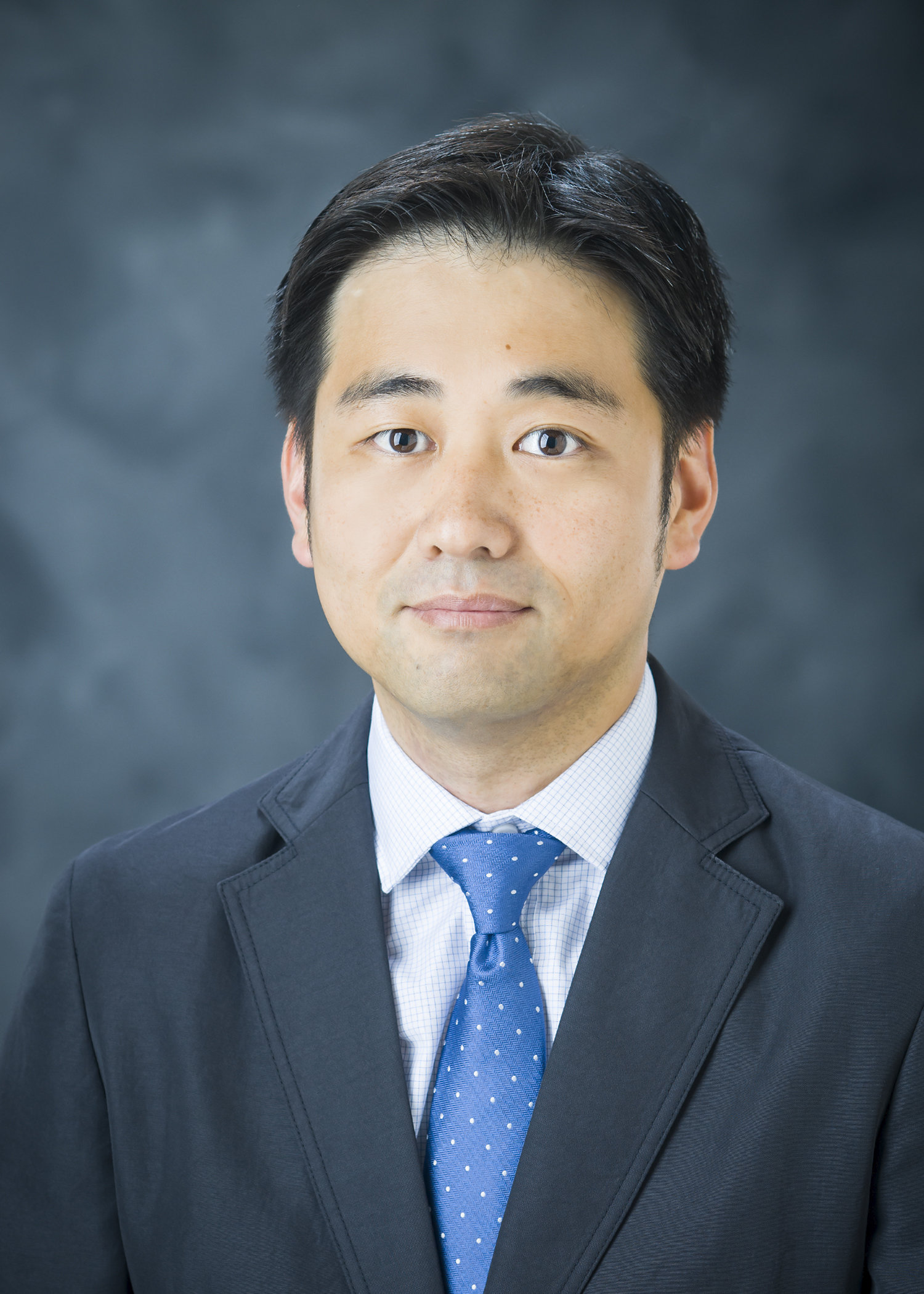
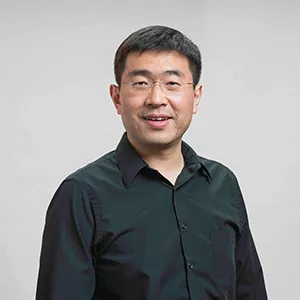
Dr. Seong Yun is an Associate Professor in the Department of Agricultural Economics at Mississippi State University. His work focuses on resource and environmental economics, particularly in coupled ecological-economics systems across agriculture, fishery, forestry, and water sectors. He specializes in bioeconomic modeling, applied econometrics, and numerical methods in economics. Purdue University: Ph.D. in Agricultural Economics University at Buffalo: M.A. in Mathematics Seoul National University: M.A. and B.A. in Economics Dr. Yun's research spans sustainability analysis, ecosystem-based management, natural capital valuation, and climate change impact assessment. His methodological focus includes spatial econometrics and numerical optimization for policy evaluation. Recent publications highlight his work on hemp production economics, climate risk adaptation, invasive species control, and air pollution effects. He employs spatial panel models and bioeconomic frameworks to address environmental challenges. Graduate Students: Jessica Browne, Shelby Brewer Extension Publications: Economic impacts of bacterial beach closures on Mississippi Gulf Coast
Russ Noorossana is an Assistant Professor at the University of Central Oklahoma (UCO), specializing in Information Systems and Operations Management. He holds a Ph.D. from the University of Louisiana at Lafayette and has extensive experience in analytical problem-solving, data analysis, and Lean Six Sigma methodologies across diverse industries like healthcare, manufacturing, and petrochemicals. He has received notable awards including the Excellence in Teaching Award (2017-19) and Best Researcher Award (2011-14) from Iran University of Science and Technology. His research focuses on Supply Chain Quality Management, applications of Lean Six Sigma, and advanced quality improvement techniques. He has published extensively in journals like Quality and Reliability Engineering International and Journal of Quality Technology , with recent work emphasizing statistical process monitoring, multivariate analysis, and healthcare quality outcomes. His work integrates methods like wavelet transforms, fuzzy logic, and risk-adjusted models to address complex industrial and healthcare challenges. Prof. Noorossana serves as an Associate Editor for the Journal of Quality Technology and Quantitative Management and has held leadership roles in international conferences such as the 18th International Industrial Engineering Conference. His professional certifications include Six Sigma Black Belt and Quality Engineer from the American Society for Quality.
Kyriakos Mouratidis is a Professor of Computer Science at Singapore Management University's School of Computing and Information Systems. His research focuses on spatial and spatiotemporal databases, particularly continuous query processing, preference-based queries, and optimization in road networks. He develops algorithms for nearest neighbor monitoring, spatial cloaking, and top-k query processing under capacity constraints. Recent work integrates skyline queries with top-k methods to handle preference-based queries with controllable output size. Dr. Mouratidis has received the Distinguished Associate Editor Award (SIGMOD 2024), Lee Kong Chian Research Fellowship, and serves as Associate Editor for GeoInformatica and SIGMOD Record. He directs the MAIS program and teaches data management courses.
Shayan Ghajar is an Assistant Professor in the Department of Crop and Soil Science at Oregon State University's College of Agricultural Sciences. His work focuses on organic and sustainable pasture management for grazing systems in Oregon. PhD in Crop and Soil Environmental Sciences (Virginia Tech) MS in Rangeland Ecosystem Science (Colorado State University) Ghajar integrates remote and proximal sensing technologies with agronomic practices to optimize warm-season grazing options and support organic livestock producers. His research spans agrivoltaic systems, equine nutrition, and rangeland ethics under uncertainty. Recent publications highlight his contributions to agrivoltaic pasture systems, equine metabolic health, and AI applications in forage prediction. He develops digital tools like the Oregon Pasture (m)App for field monitoring. As an extension specialist, Ghajar collaborates with the Center for Small Farms & Community Food Systems, creating resources for pasture revitalization and organic agriculture programming.
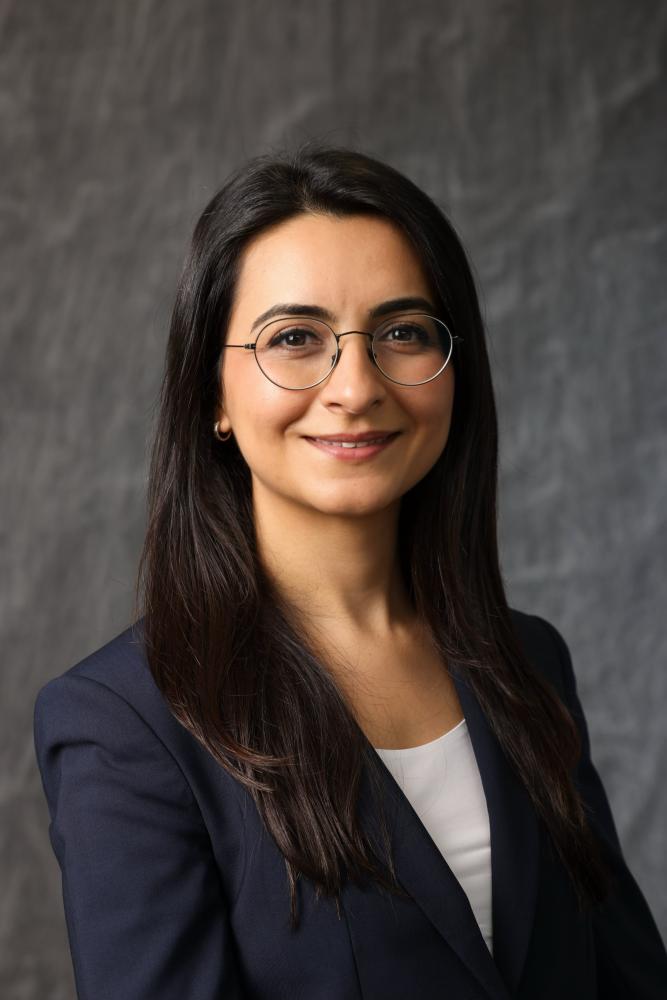
Bahar Cavdar is an Assistant Professor in the Department of Industrial and Systems Engineering at Rensselaer Polytechnic Institute (RPI), specializing in operations research applications for complex logistical systems. Her work bridges theoretical optimization with real-world infrastructure challenges, particularly in time-sensitive environments requiring rapid decision-making. Her academic credentials include: Ph.D. in Industrial and Systems Engineering from Georgia Institute of Technology M.S. in Operations Research from Georgia Institute of Technology B.S. in Industrial Engineering from Middle East Technical University Dr. Cavdar's research centers on Supply Chain Management and Logistics, with deep expertise in stochastic optimization for dynamic systems. She develops mathematical models addressing multi-trip vehicle routing under uncertainty, capacity allocation with customer time preferences, and infrastructure network restoration. Her methodological approach integrates queueing theory, game theory, and heuristic algorithms to solve problems where timing constraints critically impact system performance. Analysis of her 2022-2025 publications reveals three dominant thematic trajectories: (1) Infrastructure resilience in power grids and disaster response through crew routing and network fortification; (2) Behavioral operations examining word-of-mouth dynamics and wage theft in labor markets; and (3) Time-sensitive logistics optimization for delivery systems and predictive maintenance. These intersect at the nexus of computational operations research and practical implementation challenges. No scientific awards were documented in the provided materials. Dr. Cavdar mentors graduate researchers in industrial engineering with focus areas spanning infrastructure restoration algorithms and behavioral supply chain models. While specific grant details remain unspecified, her publication topics indicate sustained funding for projects involving network optimization under uncertainty, disaster response logistics, and human-centric operations management. She teaches specialized courses including ISYE 4960: Game Theory and Applications in Supply Chain Management.
Michael Alexander-Ramos is an Associate Professor-Educator in the Department of Mechanical and Materials Engineering at the University of Cincinnati. His primary role involves teaching and research in multidisciplinary design optimization and automotive systems design. He holds a Ph.D. from the University of Michigan (2011) and B.S. from the University of Cincinnati (2006). Education: Ph.D. Mechanical Engineering, University of Michigan, 2011 M.S. Mechanical Engineering, University of Michigan, 2008 B.S. Mechanical Engineering, University of Cincinnati, 2006 His research focuses on multidisciplinary design modeling and optimization , including decomposition-based system design optimization, reliability-based design, and automotive systems design for electric/hybrid-electric vehicles. His work integrates control co-design with dynamic systems, emphasizing robustness and stochastic considerations. Recent publications emphasize reliability-based MDSDO , hybrid-electric vehicle powertrain optimization , and decomposition algorithms for interconnected systems . His research has been supported by grants such as the MME Industry 4.0/5.0 Institute (2023), focusing on dynamic system design for digital twin applications. Grants & Roles: Principal Investigator (PI) for MME Industry 4.0/5.0 Institute Grant (2023-2023) He is affiliated with the University of Cincinnati’s College of Engineering and collaborates on projects involving reduced-order modeling, surrogate modeling, and design under policy considerations.
Matthew Stuber is the Pratt & Whitney Associate Professor in Advanced Systems Engineering and Director of Graduate Studies at the Department of Chemical & Biomolecular Engineering, University of Connecticut. He holds a PhD from MIT (2013) and BChE from the University of Minnesota (2007). His research focuses on optimization theory, process systems engineering, renewable energy, and desalination technologies. He co-founded WaterFX, a water-tech startup addressing solar-driven desalination challenges. His work spans applications in energy, water, healthcare, and agriculture, emphasizing systems-level solutions to complex problems. Education: PhD, Chemical Engineering, Massachusetts Institute of Technology (2013) BChE, Chemical Engineering, University of Minnesota – Twin Cities (2007) Research interests include global optimization software, process design under uncertainty, and renewable energy integration. His lab, the Process Systems Optimization Research Group ( http://psor.uconn.edu/ ), develops novel methods for industrial and environmental systems. Notable awards include the 2018 AIChE CAST Division Award and 2012 Journal of Global Optimization Best Paper Award. His articles highlight advancements in neural network optimization, tumor therapy design, and solar thermal systems. Grants and collaborations address interdisciplinary challenges in sustainability and healthcare. He actively advises on graduate studies and promotes innovation through academic-industry partnerships.
Professor Xinan Yang is a faculty member at the University of Essex, affiliated with the School of Mathematics, Statistics and Actuarial Science. He holds a PhD in Optimization from the University of Edinburgh (2011), an MSc in Operational Research (with distinction) from the same university (2007), and a BSc in Applied Mathematics from Fudan University (2006). His research focuses on optimization, logistics, and operations research, with applications in energy systems, drone/robot-assisted delivery, and stochastic programming. Prior to Essex, he worked as a Senior Research Associate at Lancaster University Management School. Research interests include combinatorial optimization, metaheuristic algorithms, and their applications in transportation, energy management, and healthcare logistics. His recent work explores AI-driven solutions for surgery scheduling and dynamic routing in last-mile delivery systems. He also contributes to energy systems modeling, particularly in integrating renewable energy sources. Publications highlight advancements in collaborative caching, container terminal operations, and volcano eruption algorithms for optimization. His academic support hours follow an open-door policy, and he is based at STEM 5.17 on the Colchester Campus.
Justin Jia is an Associate Professor at the University of Tennessee, Knoxville's Haslam College of Business, holding dual fellowships as the Wyatt Family Faculty Research Fellow and Alan R. Whitman Faculty Fellow. He is affiliated with the Department of Business Analytics & Statistics and previously served at Purdue University before joining Haslam in 2017. Dr. Jia earned his Ph.D. in Supply Chain Management from Penn State University. His research focuses on prescriptive analytics, healthcare supply chain optimization, e-operations, and inventory management. Notable contributions include work on mitigating drug shortages through contractual frameworks and dynamic sourcing strategies under uncertainty. His scientific honors include prestigious fellowships supporting his research endeavors. While specific advising and grant details are not provided, his work spans key journals like Management Science and Production and Operations Management . His articles collectively address critical issues in supply chain resilience, healthcare policy, and platform economics, demonstrating cross-disciplinary impact.
Apostolos Burnetas is a Professor of Stochastic Operations Research in the Department of Mathematics at the National and Kapodistrian University of Athens (UOA). He holds a Diploma in Electrical Engineering from the National Technical University of Athens (1986), an MBA (1992), and a Ph.D. in Operations Research (1993) from Rutgers University’s Graduate School of Management. Prior to his current position, he served as an Assistant and Associate Professor at Case Western Reserve University (1994–2004). At UOA, he has held roles as Associate Professor (2003–2012) and full Professor (2012–present). He has also served as Vice-Director and Director of the UOA-Ioannina University joint Biostatistics graduate program (2008–2014). His research focuses on Operations Research, Adaptive Optimization, Stochastic Modeling, and their applications in production/service systems. Notable areas include strategic customer behavior in queueing systems, dynamic pricing, inventory management, and supply chain coordination. He has authored over 60 peer-reviewed articles in journals like Management Science and Operations Research , and organized international conferences in stochastic modeling. His teaching spans Operations Research, Probability, and Stochastic Processes, with graduate courses in Linear Models and Queueing Theory. Burnetas has supervised over 30 master’s theses at UOA and 9 doctoral theses (7 at Case Western Reserve, 2 at UOA). His work emphasizes practical applications, such as optimizing service systems and addressing information asymmetries in supply chains.
Conjoint Associate Professor Roslyn Hickson serves as Science Leader for Emerging Infectious Diseases through a joint appointment between James Cook University and CSIRO. She holds affiliations with the Australian Institute of Tropical Health and Medicine (AITHM), Centre for Tropical Biosecurity (CTB), Centre for Tropical Environmental and Sustainability Science (TESS), WHO Collaborating Centre for Vector Borne Diseases, and previously with the University of Melbourne's School of Mathematics and Statistics. PhD in Engineering (Heat/Mass Transfer), UNSW Canberra 2010 Research Fellow, National Centre for Epidemiology and Population Health (ANU) Postdoctoral Research Fellow, University of Newcastle (2011-2014) Research Scientist, IBM Research Australia (2014-2018) Research Fellow, Australian Centre of Research Excellence in Malaria Elimination (University of Melbourne, 2018) Her research program focuses on mathematical modeling of infectious disease transmission with emphasis on emerging pathogens, zoonotic spillover events, and vector-borne diseases through One Health and biosecurity frameworks. She develops quantitative tools for risk assessment, surveillance optimization, and policy evaluation across Australian, Southeast Asian, and Pacific Island contexts. Current projects integrate ecological niche modeling, behavioral epidemiology, and multi-scale transmission dynamics to address challenges in pandemic preparedness and tropical disease control. Analysis of her 28 publications reveals consistent focus on mathematical frameworks applicable to real-world health security challenges. Her work spans influenza, dengue, malaria (particularly Plasmodium vivax), Japanese encephalitis, and bat-borne pathogens, with increasing emphasis on model reproducibility and policy translation since the COVID-19 pandemic. Key methodological contributions include multiscale modeling approaches, behavior-disease interaction frameworks, and spillover risk prediction systems. Victorian Young Tall Poppy Science Award (2018) ITS Award for Excellence in Research and Development (2020) Ria de Groot Prize for best female postgraduate student (2010) Two-time EmTech Asia Innovators Under 35 Finalist (2016, 2017) Corporate Social Responsibility Award (2017) As primary advisor for five doctoral candidates and multiple honours students, she supervises research on bat-pathogen ecology, feral pig zoonoses, and wildlife disease dynamics. Her committee service includes PREZODE international working group, Biosecurity Commons Advisory Panel, and editorial roles for BMC Infectious Diseases. Current research integrates ecological modeling with public health decision support systems through partnerships with WHO, CSIRO, and regional health authorities across the Indo-Pacific.
Max Nendel is an Associate Professor in the Department of Statistics and Actuarial Science at the University of Waterloo. He holds a PhD in Mathematics from the University of Konstanz (2017), advised by Robert Denk and Michael Kupper. Prior to his current role, he was a junior professor at Bielefeld University’s Center for Mathematical Economics, where he was a Principal Investigator in the Collaborative Research Center 1283 and the Research Training Group 2865. His research focuses on model uncertainty in economics, finance, and actuarial science, emphasizing valuation of financial/insurance products under uncertainty using nonlinear partial differential equations. He also explores mathematical aspects of regulatory policy, risk measures, and mean field games. His work bridges theoretical analysis and practical applications in quantitative finance and risk management. Nendel’s recent research trends include advancing viscosity solution techniques for abstract Cauchy problems, optimal control under Lévy processes, and mean field game equilibria. He has contributed to foundational topics like convex semigroups, operator theory in mixed topologies, and risk aggregation under dependence uncertainty. He has held research roles in Germany and Canada, with a strong record of interdisciplinary collaborations. His work is supported by grants from major research councils, reflecting his expertise in both pure and applied mathematics.
Dr. John Friedlan is an Associate Professor of Accounting at Ontario Tech University’s Faculty of Business and Information Technology, where he also serves as Program Director, Commerce. With over 20 years of experience, he has taught at York University’s Schulich School of Business and holds a PhD from the University of Washington. His research focuses on critical analysis of financial reporting, managerial accounting, and the integration of business analytics into decision-making. Dr. Friedlan has been recognized for his teaching excellence, including the Educator of the Year Award (1992) and the Seymour Schulich Award for Teaching Excellence (2000). His educational background includes a Bachelor of Science from McGill University, an MBA from York University, and a PhD from the University of Washington. Prior to academia, he worked at Nabisco Brands and served on the Board of Examiners at the Canadian Institute of Chartered Accountants, qualifying as a Chartered Accountant in 1980. Dr. Friedlan’s research explores topics such as supply chain resilience, risk-averse decision-making, and disruption management. His work bridges theoretical frameworks with practical applications, leveraging computational methods in operations research and analytics. Recent articles address challenges in electric vehicle infrastructure planning, supply chain recovery strategies, and environmental disclosure practices. He actively contributes to practitioner journals like CGA Magazine and CA Magazine , emphasizing real-world relevance. His scientific contributions include over 15 peer-reviewed articles, with a focus on optimizing complex systems under uncertainty. Beyond research, Dr. Friedlan advocates for experiential learning, integrating industry partnerships to prepare students for data-driven business environments.
Fernando Alarid-Escudero, PhD, is an Assistant Professor of Health Policy at Stanford University School of Medicine. He previously served as an Assistant Professor at CIDE Región Centro, Aguascalientes, Mexico (2018–2022). His research focuses on developing statistical and decision-analytic models to inform optimal public health policies for prevention, control, and treatment of diseases, including cancer and infectious diseases. He is a member of the Cancer Intervention and Surveillance Modeling Network (CISNET) and co-founder of the Stanford-CIDE Coronavirus Simulation Modeling (SC-COSMO) workgroup, Decision Analysis in R for Technologies in Health (DARTH), and the Collaborative Network on Value of Information (ConVOI). These initiatives aim to create open-source tools for decision analysis and quantifying the value of future research. Education: PhD in Health Decision Sciences, University of Minnesota School of Public Health BSc in Biomedical Engineering, Metropolitan Autonomous University (UAM-I), Mexico Master’s in Economics, CIDE, Mexico Research Interests: Dr. Alarid-Escudero’s work bridges decision science and healthcare policy. He specializes in microsimulation models to assess cancer control interventions, cost-effectiveness analyses of screening and treatment strategies, and quantifying decision uncertainty. His recent studies address issues such as Helicobacter pylori seroprevalence disparities, HIV prevention adherence, and optimizing colorectal cancer screening policies under CMS guidelines. He also explores how household transmission dynamics affect epidemic models and evaluates interventions for incarcerated populations. Scientific Awards: Rosenkranz Prize (2025): Recognizes his work on colorectal cancer and antimicrobial resistance in Mexico. Advising & Grants: While no formal advisees are listed, his collaborative workgroups like DARTH and ConVOI reflect a commitment to mentoring researchers in decision modeling. His research has been supported by the National Cancer Institute (NCI) through CISNET and other initiatives. He has contributed to policy-relevant studies funded by governmental and institutional grants, including analyses of dementia care interventions and antibiotic prophylaxis guidelines. Labs & Teams: Active in interdisciplinary groups: Stanford Health Policy CISNET (NCI-sponsored cancer modeling consortium) SC-COSMO (pandemic modeling in Mexico) DARTH (open-source decision analysis tools) ConVOI (value of information analysis networks)
Carl D. Laird is the John E. Swearingen Professor and Department Head of Chemical Engineering at Carnegie Mellon University. He leads an internationally recognized research program in process systems engineering, known for high-performance computing techniques in large-scale nonlinear optimization, parallel scientific computing, and open-source software development. Education: Ph.D. in Chemical Engineering, Carnegie Mellon University (2006) B.S. in Chemical Engineering, University of Alberta (2000) Research Focus: His work solves problems in non-traditional domains including public health, homeland security, critical infrastructure, and energy systems through advanced optimization methodologies. Current research integrates machine learning with optimization for improved decision-making in complex systems. Publication Trends: Recent work focuses on mathematical optimization frameworks, decomposition methods for large-scale problems, integration of machine learning surrogates, and applications in energy systems and chemical manufacturing. Research demonstrates consistent innovation in computational methods for engineering challenges. Awards and Honors: Steven J. Fenves Award for Systems Research INFORMS Computing Society Prize CAST Division Outstanding Young Researcher Award NSF CAREER Award Montague Center Teaching Excellence Award Wilkinson Prize for Numerical Software (for IPOPT development) Leadership and Funding: As director of the Center for Advanced Process Decision-Making, he oversees collaborative research with industry partners. His research has been supported by NSF, DOE, and industrial consortia.