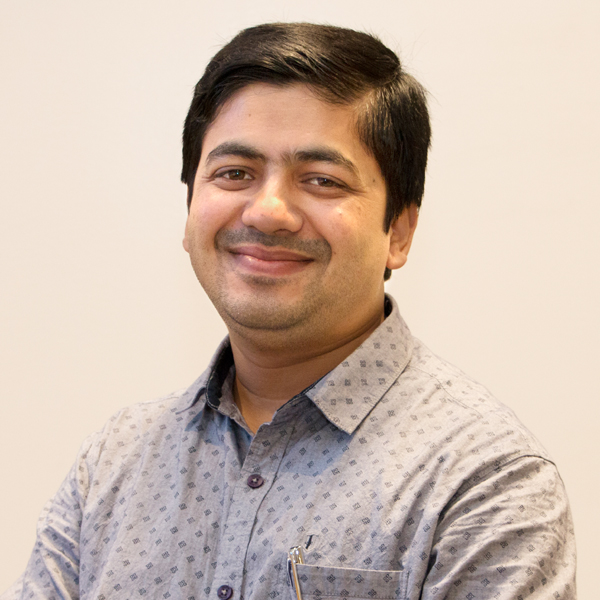
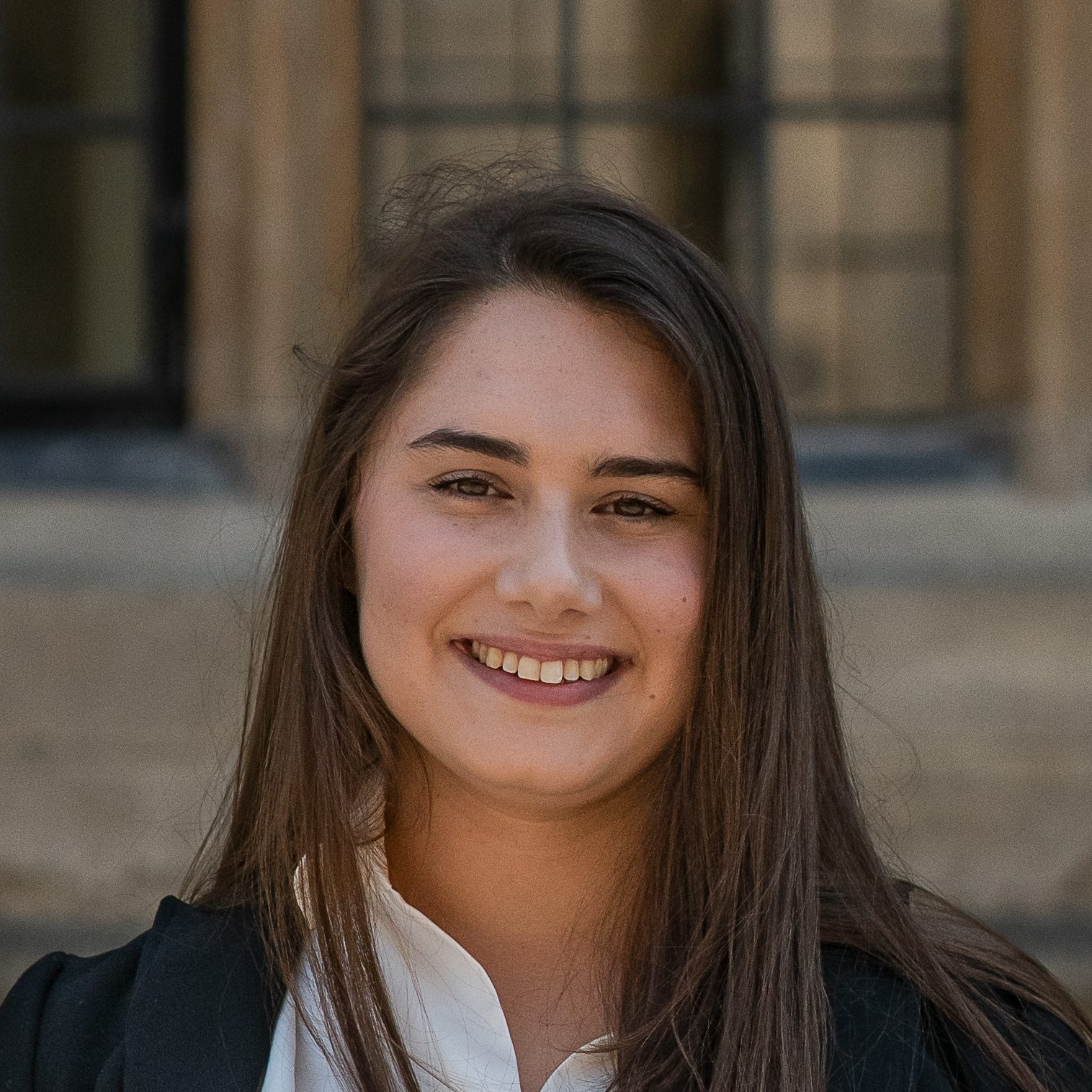
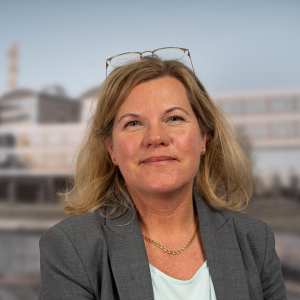
Mikael Johansson is a Professor at Kungliga Tekniska Högskolan (KTH), specializing in Control Technology . He teaches and coordinates courses such as Distributed Optimization (FEL3311) and various advanced-level degree projects in computer science, electrical engineering, and systems engineering. His research spans Control Systems , Machine Learning , and Optimization , with a focus on asynchronous algorithms, federated learning, and applications in energy systems and construction. His work includes 15 recent publications on topics like neural networks, distributed optimization, and battery technology. Notable areas of contribution are in asynchronous learning, federated learning with privacy constraints, and quasi-Newton methods for optimization. His research bridges theoretical advancements with practical applications in urban design, healthcare, and autonomous systems.
Mikael Gidlund is a Full Professor of Computer Engineering at Mid Sweden University in Sundsvall and holds an adjunct professorship at Beijing Jiaotong University, China. He serves as head of the Computer Engineering subject and program manager for the international MSc program in Computer Engineering. His academic journey includes a Ph.D. in Electrical Engineering from Mid Sweden University (2005), followed by roles at ABB Corporate Research (2008-2014) where he led wireless technologies research. Dr. Gidlund's research spans Wireless Communication, Industrial IoT, 5G/6G Networks, and Network Security . His group focuses on AI/ML for beyond-5G wireless communication, time-critical industrial applications, and IoT security. Current research themes include Future Wireless Networks (5G/6G) using AI/ML, Time-and mission-critical wireless communication, Industrial IoT, and IoT Security. His work demonstrates strong interdisciplinary connections between wireless systems, industrial automation, and security. His publication portfolio includes over 200 scientific articles and 20+ patents. Recent publications show a clear trend toward AI/ML integration in wireless systems, NOMA techniques, RIS technologies, and security solutions for industrial applications. The research output demonstrates strong international collaboration across six continents. Best Paper Award at IEEE International Conference on Industrial IT (2014) Co-author of IEEE Sweden VT-COM-IT Joint Chapter Best Student Journal Paper Award (2022) Dr. Gidlund actively mentors 6 current PhD students and has supervised 16 former PhD students who now hold positions at institutions including Ericsson, Lund University, Aalborg University, and Mid Sweden University. His research is supported by multiple active projects including IRS TransTech, NIIT, ENSURE 6G, and TRUST. He collaborates with institutions worldwide including City University of Hong Kong, Iowa State University, Kyung Hee University, and KTH Royal Institute of Technology. His research group maintains strong industry connections through projects with ABB, Ericsson, and other industrial partners, focusing on practical implementations of wireless technologies for industrial automation and critical infrastructure.
Johan Liu is a Full Professor in Electronics Production at Chalmers University of Technology, Sweden, and leads the Electronics Materials and Systems Laboratory within the Department of Microtechnology and Nanoscience. He is a member of the Royal Swedish Academy of Engineering Sciences and an IEEE Fellow, with over 500 publications and 75 patents in nanoelectronics and thermal management. Education: Master's and Ph.D. in Materials Science from the Royal Institute of Technology (KTH), Sweden His research focuses on graphene-based thermal interface materials, carbon nanotubes for 3D integration, and advanced packaging solutions. Recent work includes laser-induced graphene films, nano-soldering techniques, and biomedical nanoscaffolds. His publications span high-impact journals like Nature Communications , Advanced Materials , and IEEE Transactions , with recent trends emphasizing thermal conductivity enhancement, composite materials, and nanofluids. Johan has received prestigious awards including the IEEE Exceptional Technical Achievement Award and IEEE CPMT Best Paper Award. He has secured funding from the National Science Foundation (NSF), Swedish Board for Strategic Research (SSF), Vinnova, and EU Horizon 2020 programs. His lab specializes in scalable graphene synthesis, CNT array engineering, and reliability testing of nanomaterials in electronics.
Neda Haj Hosseini is a Senior Lecturer and Associate Professor in Biomedical Engineering at Linköping University's Department of Biomedical Engineering (IMT) . She contributes to teaching courses like TBMT56 - Medical Technology and TBME08 - Biomedical Modeling and Simulation , while leading research initiatives in AI-driven cancer diagnostics and biomedical optics. Research Focus: Development of AI methods for cancer diagnostics, optical coherence tomography (OCT) applications, and fluorescence spectroscopy in surgical guidance Affiliations: Center for Medical Image Science and Visualization (CMIV) , Analytic Imaging Diagnostic Arena (AIDA) , Swedish Medical Technology Association Recent Research Trends demonstrate expertise in applying deep learning to: Pediatric brain tumor classification using multimodal imaging Optical biopsy techniques for intraoperative decision support Automated biomarker quantification in histopathology Medical imaging data integrity and algorithm validation Scientific Awards include grants from: Joanna Cocozza Foundation (2022) Swedish Childhood Cancer Foundation (2024) Academic Leadership involves mentoring students in projects such as: "Multiple Instance Attention-based Learning for Brain Tumor Classification" "Vision Transformers for Multiclass Brain Tumor Tissue Classification" "Reaction-diffusion Models for Image-driven Tumor Simulation"
Sigrid Källblad Nordin is an Associate Professor at KTH Royal Institute of Technology, affiliated with the Department of Mathematics (Division of Probability, Mathematical Physics, and Statistics). Her research focuses on Mathematical Finance, Probability Theory, and Stochastic Analysis, with an emphasis on measure-valued processes, martingale optimal transport, and model uncertainty. She holds a DPhil from the University of Oxford (2014). Her work bridges theoretical advancements in stochastic control, optimization, and financial applications. Recent research includes Bayesian optimal adaptive control, robust option pricing, and dynamically consistent investment strategies under uncertainty. She teaches courses such as Financial Mathematics and Financial Derivatives, and supervises PhD students Linn Engström and Chaorui Wang. Publications span journals like Annals of Applied Probability , Finance and Stochastics , and SIAM Journal on Control and Optimization , reflecting contributions to optimal transport, stochastic processes, and financial modeling. She is currently hiring a new PhD student and welcomes inquiries about master thesis supervision.
Maricela De la Torre Castro is a Professor of Natural Resource Management at Stockholm University , affiliated with the Department of Physical Geography . Her research focuses on coastal and ocean governance through a social-ecological systems lens, emphasizing gender dynamics , seagrass conservation , and climate change adaptation in tropical coastal communities. BSc in Oceanology (Universidad Autonoma de Baja California) MSc, PhD, and Docent in Natural Resource Management (Stockholm University) Her work examines seagrass ecosystem services , small-scale fisheries governance , and gendered impacts of marine protected areas . Recent studies analyze: 2025: Habitat loss risks from seaweed cultivation 2024: Gender-poverty dynamics in Zanzibar MPAs 2022: Adaptive capacity differences between genders 2021: Blue Justice frameworks for fisheries governance Active projects include SEAgender (Swedish Research Council) analyzing gendered effects of MPAs . She supervises PhD candidates in tropical marine systems and has extensive experience with EU Erasmus programs and UNDP collaborations . Research emphasizes hybrid methods , cultural value mapping , and interdisciplinary monitoring of coastal initiatives.
Nikolaos Kolomvakis is a researcher in the Division of Communication Systems at KTH Royal Institute of Technology in Sweden. He is also a visiting researcher at Ericsson AB in Stockholm. Previously, from 2017 to 2023, he held positions as Systems Engineer and Senior Researcher at Ericsson. His research focuses on wireless communications and signal processing, particularly on developing baseband physical-layer algorithms for distributed/cell-free massive MIMO, holographic MIMO, and large intelligent surfaces. Education: Ph.D. in wireless communications from Chalmers University of Technology , supervised by Prof. Mats Viberg with co-supervision from Prof. Thomas Eriksson and Prof. Michail Matthaiou M.Sc. in information technology & electrical engineering from ETH Zurich (2012) Research Interests: Wireless communications Signal processing Distributed/cell-free massive MIMO Holographic MIMO Large intelligent surfaces Publications: Recent work includes analyzing nonlinear distortion in large arrays and active reconfigurable intelligent surfaces (2025) Exploring spatial frequencies in near-field communications (2025) Investigating 6G performance through gigantic MIMO (2025)
Simon Harvey is a Professor in Energy Engineering at Chalmers University of Technology, Sweden. With a background in Mechanical Engineering and over two decades of academic leadership, he focuses on industrial energy systems optimization and sustainable process integration. PhD from Thayer School of Engineering, Dartmouth College (1994) Assistant Professor at Chalmers (1997-2011) Full Professor since 2011 His research spans : Energy efficiency in chemical processes Biomass-based industrial energy systems Biorefinery techno-economics Climate impact assessment methodologies Energy market scenario modeling Recent publications demonstrate expertise in carbon capture integration, heat recovery optimization, and biomass utilization for negative emission technologies. Collaborative work emphasizes cross-sectoral energy synergies and uncertainty analysis in industrial retrofits. Key trends include: Decarbonization of pulp/refinery operations Hybrid electric/steam generation systems Excess heat valorization in district heating Process flexibility under uncertain parameters
Christian Smith is an Associate Professor and Lecturer at the Department of Robotics, Perception and Learning at Kungliga Tekniska Högskolan (KTH Royal Institute of Technology). His research focuses on robotics and applications in human-centered environments like home environments, small workshops, and healthcare facilities, including the development of new robotic systems for research. Teaching Roles: Course Coordinator/Teacher/Examiner for courses such as Introduction to Robotics (DD2410), Research Project in Robotics (DD2411), and Java Programming for Python Programmers (DD1380) Research Themes: Human-Robot Interaction, Behavior Trees, Exoskeletons, Intent Recognition, and Multimodal Perception Awards: No specific scientific awards mentioned in the provided text His KTH profile highlights work on adaptive robotics systems and formalized control strategies. The research portfolio spans from theoretical studies on behavior tree programming to applied work in assistive technologies and teleoperation systems.
Tobias Oechtering is a Professor at the Division of Information Science and Engineering within the School of Electrical Engineering and Computer Science at KTH Royal Institute of Technology. His research focuses on information theory, privacy-preserving technologies, statistical signal processing, machine learning, and smart grid systems. He has held academic positions at KTH since 2008, advancing from Post-Doctoral Researcher to Assistant Professor (2010–2013), Associate Professor (2013–2018), and Professor (2018-present). He has supervised over 20 PhD students and contributed to numerous postdoctoral programs. Research Interests: - Network information theory and physical-layer security - Privacy mechanisms with provable guarantees - Distributed statistical inference and sensor calibration - Reinforcement learning and privacy-aware machine learning - Smart grid privacy and energy management - Wireless communication algorithms and signal processing - Networked control systems and stability analysis He currently supervises 7 PhD students and hosts 3 postdocs. His work has led to over 150 peer-reviewed publications, with recent contributions in privacy-preserving smart grid strategies, adversarial inference control, and information-theoretic security. He has served as editor for IEEE Transactions on Information Forensics and Security and held leadership roles in KTH's Digitalisation Research Platform.
Monowar Bhuyan is an Associate Professor in the Department of Computing Science at Umeå University, Sweden, leading the Cyber Analytics and Learning Group within ADSLab. He holds a Ph.D. in Computer Science from Tezpur University and has held academic positions at Assam Kaziranga University and Umeå University. His research focuses on machine learning, anomaly detection, edge AI, and distributed systems security. He has secured over 35 MSEK in grants from WASP, STINT, and EU Horizon programs. Education Ph.D. in Computer Science and Engineering, Tezpur University (2014) M.Tech. in Information Technology, Tezpur University (2009) B.E. in Computer Science and Engineering, IETE (2007) Research Interests Distributed/Federated/Responsible Machine Learning Cybersecurity and Anomaly Detection in Edge Clouds AI for DDoS Defense and Cyber Resilience Edge AI and Serverless Computing Recent Contributions His recent work addresses secure federated learning, DDoS attack detection in cloud-edge systems, and responsible AI. Key publications include novel frameworks for VSI-DDoS detection and federated learning optimizations. Awards & Grants Best Paper Awards at ICONIP 2023 and ACM ICACCI 2012 WASP NEST Grant (AIR2 Project, 5 MSEK) EU Horizon Europe Grant (SovereignEdge.Cognit, 8.27 MSEK) Lab & Collaborations He leads the Cyber Analytics and Learning Group (ADSlab), collaborating with institutions like KTH, Linköping University, and Nara Institute of Science and Technology (NAIST). The lab focuses on AI-driven security solutions for distributed systems.
Powder Metallurgy (MH2100) and has expertise in computational materials science. His research emphasizes predictive modeling of material behavior, including precipitation kinetics, sintering processes, and coating interactions. Notable areas include phase field modeling of discontinuous precipitation, spinodal decomposition in Fe-Cr alloys, and high-entropy alloy design. His studies bridge experimental data with computational tools like the YAPFI phase-field framework. Key themes in his publications span cemented carbides, Co-based entropic alloys, and tool wear mechanisms. He combines CALPHAD thermodynamic modeling with first-principles calculations to address challenges in materials processing and corrosion resistance. His work often addresses industrial applications, such as optimizing machining tools and additive-manufactured superalloys.
Anna Gautier is an Assistant Professor in the Department of Computer Science at Chalmers University of Technology, affiliated with the Division of Data Science and AI. Previously, she was a Digital Futures Postdoctoral Fellow at KTH Royal Institute of Technology (2023–2025), focusing on mechanism design for multi-robot systems. Her research emphasizes planning under uncertainty, multi-agent systems, and human-robot interaction. She holds a PhD from the University of Oxford (2023), an MSc from the London School of Economics, and dual undergraduate degrees from Washington University in St. Louis. Education Background: PhD in Computer Science, University of Oxford (2023) MSc in Applied Mathematics, London School of Economics BA in Mathematics and BS in Computer Science, Washington University in St. Louis Research Interests: Dr. Gautier explores planning algorithms for multi-agent systems, particularly in uncertain environments. She designs mechanisms to coordinate robots and humans, leveraging game theory and formal methods. Her work addresses challenges like resource allocation, risk-aware decision-making, and trust in autonomous systems. Recent projects include contingency planning for autonomous vehicles and auction-based resource distribution. Professional Activities: She co-chairs the ECAI 2025 Demonstration Track and teaches the course Safe Robot Planning and Control at KTH. Her projects include collaborations with WASP-Nest (PerCorSo) and TECoSA on trustworthy autonomy. She actively publishes in top venues like AAMAS and AAAI. Labs and Teams: Affiliated with Chalmers' Data Science and AI division, she leads research in multi-agent systems and human-AI collaboration.
Stefan Hallström is an Associate Professor in Lightweight Structures at KTH Royal Institute of Technology's Aeronautical and Vehicle Engineering School, affiliated with the MATERIAL AND STRUCTURAL MECHANICS department. He specializes in composite materials, structural mechanics, and lightweight design, focusing on aerospace and automotive applications. His research explores advanced composites, sandwich structures, and material behavior under various loading conditions. Hallström teaches courses including Lightweight Design (SD2432), Lightweight Structures and FEM (SD2411), and supervises degree projects in Lightweight Structures and Solid Mechanics. He has published extensively on topics like 3D-woven composites, damage tolerance, and mechanical reinforcement strategies, with over 90 peer-reviewed articles. His work emphasizes material characterization, finite element modeling, and practical applications in structural engineering. Key research trends include optimizing composite joint performance using metal inserts, analyzing moisture effects on composite laminates, and developing frameworks for modeling 3D textile architectures. His contributions address challenges in aerospace materials, energy absorption in beams, and improving simulation accuracy for molded composites. Hallström collaborates on projects involving novel instrumented test rigs for polymer composites and advanced manufacturing techniques for structural reliability. His expertise bridges theoretical mechanics with practical engineering solutions, influencing both academic research and industrial applications.
Sophie Isaksson Hallstedt is a Full Professor at Chalmers University of Technology, conducting research in Sustainable Product Development (SPD) with a focus on strategic sustainability integration in product innovation. She holds appointments at both Chalmers and Blekinge Institute of Technology, and serves on international Design Society committees. Key Research Areas: Strategic socio-ecological sustainability, digital decision support tools, circular value chains, and sustainability in emerging technologies. Notable Projects: SUSTAIN (aerospace sustainability), Circular Design Nexus (user behavior analysis), and Digital Materials Ecosystems. Awards & Recognition: Featured in Royal Swedish Academy of Engineering Sciences (IVA) 100-list (2020, 2023). Publications: Over 80 peer-reviewed works demonstrating methods for sustainability maturity assessment, impact evaluation, and progress visualization. Teaching & Education: Developed master's programs and PhD courses in sustainability-driven product development. Collaborates extensively with industry partners like GKN Aerospace and VINNOVA. Current work examines predictive models for user behavior and sustainability implications of additive manufacturing.