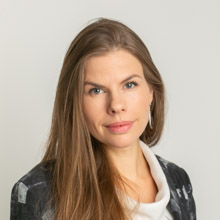
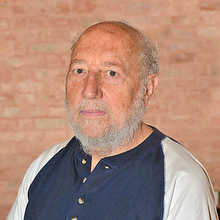
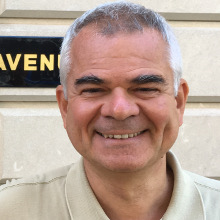
Giusy Macrina is a Researcher at the Department of Mechanical, Energy and Management Engineering (University of Calabria, Italy). Her work focuses on Operations Research and Machine Learning applications to complex logistics and transportation problems. Specializes in Vehicle Routing Problems with drones and crowd-shipping Develops hybrid algorithms combining mathematical optimization and artificial intelligence Active in green logistics and sustainable transport systems Collaborates with international institutions like Amazon Her research spans smart mobility , energy-efficient delivery systems , and IoT localization challenges . Recent publications demonstrate her focus on integrating machine learning into traditional optimization problems . She teaches courses in Management Engineering , including Methods and Tools for Engineering and Production Management and Control at the graduate level. Her work addresses both static and dynamic optimization challenges in logistics and energy systems.
Marco Locatelli is a Full Professor in the Department of Computer Engineering at the University of Parma, Italy. His research focuses on Global Optimization , Operations Research , and Computational Mathematics , with applications in Robotics and Optimization Algorithms . Education: Ph.D. in Computational Mathematics and Operations Research (University of Milano/Napoli, 1997); Laurea in Computer Science (University of Milano, 1992). Positions: Post-Doc (University of Trier, Firenze); Assistant/Associate Professor (University of Torino); Full Professor (University of Parma since 2010). His research spans Global Optimization over intervals, multistart algorithms, concave optimization, packing problems, and convex underestimators. Recent work includes Multi-Agent Pathfinding and Speed Planning with energy/time optimization, leveraging Machine Learning and Dynamic Programming . He has received distinguished accolades, including the Europt Fellow (2018), Best Paper in the Journal of Global Optimization (2016), and co-authored a SIAM-published book on Global Optimization (2013). He serves on editorial boards of top-tier journals like Computational Optimization and Applications and Operations Research Letters . Scientific Awards: Al Zimmermann's Programming Contest Winner (Circle Packing) AIRO Award for Daniele Depetrini's Master Thesis (2007) Chairman's Recognition of Outstanding Paper (2009 IEEE Congress) Europt Fellow (2018) His teaching includes Operations Research and Algorithms for Decision Support across multiple Italian universities (Torino, Parma, Firenze). He has contributed to Research Projects like MoSPRAS, MOST, and COSO, addressing real-world optimization challenges in healthcare, robotics, and transportation.
Giovanna Guerrini is an Associate Professor in the Department of Informatics, Bioengineering, Robotics, and Systems Engineering (DIBRIS) at the University of Genoa, Italy. She is actively involved in research, teaching, and academic service, with leadership roles in major conferences such as EDBT (Executive Board Member and Treasurer), SOFSEM (Track Chair), and UMAP (Workshop Chair). Her research interests include: Data Management Large Scale and Semantic Data Management Approximate and Adaptive Query Processing Linked Data and Ontology Matching Graph Matching and Geospatial Ontologies Spatio-Temporal Data and Location Inference Computer Science Education and Computational Thinking Her recent publications show a growing focus on computer science education, particularly in using gamified and extended reality environments, Sonic Pi for teaching concurrency, and AI-driven tools for enhancing computational thinking. This reflects a shift toward pedagogical innovation and student-centered learning methodologies. She has been recognized through active participation in top-tier program committees (SIGMOD, ISWC, ICDE) and organizing key workshops and schools (EDBT School 2017, APCSE at UMAP). No formal scientific awards are listed in the provided text. She advises multiple PhD students, both current and past, and contributes to academic grants and collaborative projects, particularly in database education and data science initiatives. She is affiliated with research groups including the DaMA Research Group, Data Science and Engineering Research Program, Big Data Interest Group UniGe, and CINI Big Data Research Lab.
Alessandro Tasora is a Full Professor at the University of Parma in the Department of Industrial Engineering and Department of Engineering and Architecture . He directs the Digital Dynamics Lab and serves as Scientific Director of the Smart Production Lab 4.0 . His work spans theoretical mechanics, robotics, and high-performance computing. Director, Digital Dynamics Lab (2019–present) Scientific Director, Smart Production Lab 4.0 (2017–present) National Scientific Qualification for Full Professor (2016) Honorary Associate, University of Wisconsin-Madison (2009–present) Research focuses on non-smooth multibody dynamics , GPU-accelerated simulation , and industrial robotics . He developed the Chrono::Engine software for multibody physics and HyperOCTANT for NLCP problems. His work addresses granular flows in nuclear reactors, vehicle mobility on deformable terrain, and historical structural analysis. Key article trends include GPU-based HPC for large-scale simulations, cone complementarity in contact dynamics, and isogeometric beam formulations for flexible bodies. Collaborations with Argonne National Laboratory and Fraunhofer ITWM highlight his international impact. Top-SNIP Paper (2017) International CAE Conference Poster Award (2015) Best Paper, Asian Conference on Multibody Dynamics (2010) TOP4 Paper, RAAD Robotics Workshop (2011) He has supervised over 40 theses in automation, tribology, and robotics. Grants include FFABR-MIUR , US Army RIF , and CNR projects . Projects involve seismic protection, autonomous AGVs, and Industry 4.0 consulting.
Fabio Bozzoli is an Associate Professor at the Department of Industrial Systems and Technologies within the Faculty of Engineering at the University of Parma . He earned his PhD in Industrial Engineering in 2005 and has been a researcher and academic since then. Graduated summa cum laude in Mechanical Engineering (University of Parma, 2001) PhD in Industrial Engineering (University of Parma, 2005) His research spans Heat Transfer , Applied Physics , and Energy Efficiency , with a focus on inverse heat conduction problems and data processing techniques for estimating convective heat transfer coefficients. Recent publications highlight innovations in Thermal Management for electric vehicle batteries and optimization of tubular heat exchangers, particularly for the Food Industry . His work combines numerical and experimental approaches to address industrial challenges. Teaching includes courses on Applied Thermo-Fluid Dynamics , Energy Efficiency , and Heat Transfer Applications for Mechanical Engineering students, alongside interdisciplinary collaborations with Architecture programs. Office hours are held every Tuesday from 14:30 to 18:30.
Emma Perracchione is an Associate Professor in the Department of Mathematical Sciences "G.L. Lagrange" (DISMA) at Politecnico di Torino, where she conducts research at the intersection of approximation theory, machine learning, and scientific computing. Her work focuses on kernel-based methods, inverse problems, and applications in space weather and solar physics. She is actively involved in teaching and research leadership, including PhD supervision and national projects. PhD in Mathematics, University of Turin (2017, cum laude) M.Sc. and B.Sc. in Mathematics, University of Turin (2013, 2011) Her research interests center on approximation theory and its applications, particularly greedy methods and two-layered kernel machines used for feature reduction in geomagnetic storm forecasting and optimal sampling for solar nanosatellites. These efforts contribute significantly to advancements in inverse problems and scientific computing . Her expertise spans machine learning , imaging , and data-driven modeling , with applications in climate action and space weather. The most recent publications highlight a strong trend in developing and analyzing variably scaled kernels , feature selection via greedy algorithms, and machine learning applications in solar and astrophysical contexts. These works integrate numerical analysis with real-world data from solar wind and imaging instruments, demonstrating a blend of theoretical rigor and practical relevance. Scientific awards received include: GNCS Young Researchers Funding (2020) GNCS Young Researchers Funding (2016) "Luciana Picco Botta" Study Award (2015) COST Short Term Scientific Mission (STSM) grant (2015) Emma Perracchione supervises PhD student Matteo Trombini in the Mathematical Sciences program (40th cycle, 2025–ongoing) and leads the PRIN-funded project GOSSIP – Greedy Optimal Sampling for Solar Inverse Problems (2025–2027). She has taught various courses including Linear Algebra and Geometry , Numerical Methods and Scientific Computing , and advanced topics on Kernels for Machine Learning in aerospace, automotive, and computer science engineering programs. She is a member of the Space Weather Italian Community (SWICo) and the National Scientific Computing Group (GNCS-INdAM) , and serves as Guest Editor for Dolomites Research Notes on Approximation . She has also participated in organizing major conferences such as DWCAA24 and GIMC-SIMAI Young.
Paolo Tilli is a Full Professor in the Department of Mathematical Sciences "G. L. Lagrange" (DISMA) at Politecnico di Torino, Italy. He is actively involved in research, teaching, and doctoral supervision, with a strong presence in mathematical analysis and its applications. His research focuses on calculus of variations , partial differential equations , shape optimization , and phase space analysis with applications to quantum mechanics. He is a member of the Analysis and Quantum Theory research group at DISMA, and his work spans theoretical analysis of singular models, spectral theory, and nonlinear dynamics on networks and metric graphs. The recent publications of Paolo Tilli reveal a consistent and high-impact research trajectory in nonlinear PDEs , time-frequency analysis , and quantum graphs . His work frequently appears in top journals such as Inventiones Mathematicae and Advances in Mathematics , with a focus on Faber-Krahn inequalities, localization operators, and ground states in nonlinear Schrödinger equations. These contributions reflect deep analytical techniques and interdisciplinary relevance, particularly in mathematical physics and signal processing. He has supervised PhD students including Federico Riccardi and has been a long-standing member of doctoral college committees for the PhD programs in Mathematical Sciences at Politecnico di Torino and the University of Turin. His teaching includes core courses such as Metodi Variazionali e Applicazioni and Analisi Matematica II across various engineering and mathematics programs. His research groups include: Analysis and Quantum Theory Group (DISMA)
Inga Jonaityte serves as a Researcher and Lecturer in Behavioral Economics at Ca' Foscari University of Venice's Department of Management within the Venice School of Management. She maintains dual affiliations with the Department of Philosophy and Cultural Heritage and three research institutes: Digital and Cultural Heritage, Complexity, and Innovation Management, operating from the San Giobbe campus. Her academic foundation includes a PhD in Management (2014) from Ca' Foscari with a research residency at Princeton University's Psychology Department. Earlier qualifications comprise a Second Level International Master in Finance and Economics (Honors) from Ca' Foscari, dual Honors B.Sc. degrees in Economics and Finance from the University of Illinois at Chicago, and two Honors Associate of Art degrees (Art and Business Administration) from Harry S Truman College after eight years of U.S. academic and professional experience. Dr. Jonaityte's research synthesizes behavioral economics and psychology to investigate decision-making under risk , organizational plasticity , and strategic adaptation in dynamic environments. She pioneers experimental-computational methodologies examining how cognitive processes shape economic outcomes, with applications spanning financial behavior, organizational resilience, and social attitudes through laboratory and field experiments. Her publication trajectory reveals consistent focus on cognitive mechanisms in economic contexts , evolving from foundational work on financial decision architecture (2013-2016) to contemporary cross-cultural examinations of social attitudes (2023) and organizational cognition (2020). Current research priorities center on behavioral solutions for financial inclusion crises through the MUR-funded I.COPE.BEST project. As a core member of the Center for Experimental Research in Management and Economics (CERME), she directs laboratory operations including experimental design consultation, subject pool management, and data analysis support. Her grant leadership includes coordinating the "Beyond the MiFID" initiative for cognitively optimized financial assessment frameworks and serving as Lead Developer for the pandemic-era financial inclusion project I.COPE.BEST (MUR, 2023-2025).
Roberto Amadini is an Associate Professor in the Department of Computer Science and Engineering at the University of Bologna. His work focuses on constraint programming, algorithm selection, and string constraint solving, with applications in cloud-edge computing and IoT systems. He leads research in deploying microservices over hybrid infrastructures and optimizing solver portfolios for constraint satisfaction problems. Research interests include advanced constraint solving techniques, formal methods for software analysis, and energy-efficient resource allocation. Amadini’s contributions span the design of frameworks like FREEDA and SUNNY-as2, which enhance deployment resilience and algorithm selection efficiency. His work bridges theoretical foundations with practical implementations in programming languages and verification tools. Recent publications explore sustainable cloud-edge applications, failure-resilient systems, and dynamic symbolic execution. He actively contributes to open-source projects like JSetL and participates in international solver challenges. No awards are explicitly listed in the provided materials. Amadini’s research group addresses cutting-edge challenges in distributed computing and constraint-based methodologies. Ongoing projects focus on optimizing solver portfolios for real-world computational tasks and advancing string analysis techniques in programming paradigms.
Karl Tuyls is a Professor of Computer Science at the University of Liverpool's School of Electrical Engineering, Electronics and Computer Science, with additional research affiliation at DeepMind. His work bridges theoretical game theory and practical multi-agent reinforcement learning systems. His research focuses on cooperative multi-agent systems, where he pioneers value decomposition techniques and emergent communication protocols. Key contributions include frameworks for handling team reward structures, analyzing inequity aversion in social dilemmas, and developing differentiable game mechanics that separate potential and Hamiltonian game dynamics. Analysis of his 2017-2019 publications reveals dominant trends in cooperative multi-agent reinforcement learning, particularly value decomposition architectures and emergent communication systems. These works span artificial intelligence, game theory, and behavioral economics, with specific focus on fair reward allocation, relational inductive biases in deep learning, and open-source framework development for experimental validation. Professor Tuyls leads collaborative research between the University of Liverpool and DeepMind, directing projects on multi-agent coordination and social dilemma modeling through frameworks like OpenSpiel that enable reproducible experimentation in complex game-theoretic scenarios.
Elio Canestrelli is a Senior Researcher in the Department of Economics at Ca' Foscari University of Venice, specializing in mathematical methods applied to economics, actuarial science, and financial sciences (SSD SECS-S/06). His academic career spans over four decades with continuous research contributions from 1973 through 2019. Canestrelli's research focuses on the intersection of financial mathematics, stochastic programming, and portfolio optimization. His work demonstrates a consistent trajectory exploring quantitative approaches to financial decision-making, with particular emphasis on risk management, tracking error models, and multistage stochastic optimization problems. His research methodology often combines theoretical mathematical frameworks with practical applications in financial markets and port management systems. Analysis of his publication history reveals a dual research focus: financial mathematics (particularly portfolio optimization under uncertainty) and urban/port traffic management systems. His work on downside risk protection, volatility modeling, and ship traffic optimization in Venice demonstrates applied research addressing both theoretical financial problems and practical urban challenges. The chronological progression shows an evolution from foundational work in stochastic processes to sophisticated multistage optimization models. Canestrelli has served on the editorial board of Mathematical Methods in Economics and Finance , contributing to academic discourse in quantitative finance. His collaborative work spans multiple institutions and demonstrates interdisciplinary approaches to complex decision problems. His research includes significant contributions to Venice port management systems, particularly through the development of the MANTA project (Modello di Analisi del Traffico Acqueo), which applied GIS technology to water traffic analysis in Venice's historic city center. This work represents the practical application of his mathematical expertise to local urban challenges.
Fausto Corradin is a Research Fellow at the Department of Economics, Ca' Foscari University of Venice, specializing in quantitative finance and econometrics. His work focuses on dimensionality reduction techniques in forecasting with large panels of economic data, risk analysis, and financial modeling. His research interests center on Econometrics , Quantitative Finance , and Risk Analysis , with particular expertise in truncated normal distributions, factor models, and utility theory. Corradin's work bridges theoretical financial mathematics with practical applications in economic forecasting and portfolio management. His recent publications reveal strong trends in economic instability analysis (particularly during the pandemic), robust forecasting models , and advanced risk measurement techniques . The research demonstrates sophisticated mathematical approaches to financial problems, with frequent collaborations with Domenico Sartore and other economists at Ca' Foscari. Corradin maintains active involvement with GRETA Associati, a Research Centre in Econometrics and Finance in Venice, where he develops mathematical models for investments and performance attributions.
Marta Lazzaretti is a Research Fellow at the Department of Mathematics (DIMA) of the University of Genoa. Her work focuses on inverse problems in imaging, numerical analysis, and optimization algorithms in non-standard functional spaces. Affiliation: Department of Mathematics, University of Genoa Academic Rank: Research Fellow Research Interests: Specializing in regularization techniques and numerical optimization, her research spans: Off-the-grid methods for Poisson inverse problems Banach space formulations for geophysical data inversion Stochastic gradient descent in variable exponent Lebesgue spaces Dual descent regularization algorithms Publication Trends: Recent work emphasizes non-Hilbertian optimization frameworks (2023-2025), combining stochastic methods with deterministic regularization for imaging and subsoil inversion applications. Collaborations include Claudio Estatico, Luca Calatroni, and Giuseppe Rodriguez.
Alberto Sorrentino serves as an Associate Professor in the Department of Mathematics at the University of Genoa, actively teaching Mathematical Methods for Bioengineering, Numerical Calculation, and Reverse Problems courses for Mathematics and Bioengineering degree programs through the 2025-2026 academic year. His research specializes in Numerical Analysis and Inverse Problems , developing computational frameworks for Medical Imaging and Neuroscience applications. Key contributions include probabilistic source localization tools for M/EEG, validation methodologies for electrical source imaging, and Bayesian approaches to neuroimaging inverse problems under extreme conditions like space environments. Recent publications (2023-2024) reveal a consistent focus on uncertainty quantification in brain imaging, advanced EEG analysis pipelines for space medicine, and optimization of regularization techniques for MEG connectivity. His work bridges computational mathematics with biomedical challenges through interdisciplinary collaboration. Information regarding academic advising, research grants, laboratory facilities, or team structures is not documented in the available materials.
Giuseppe Maria Coclite is a Full Professor (MAT/05 Mathematical Analysis) at Politecnico di Bari, Italy, affiliated with the Department of Mechanics, Mathematics & Management. He serves as the Coordinator of the Division of Mathematics. His research focuses on mathematical modeling of nonlinear phenomena, with expertise in partial differential equations, conservation laws, nonlocal dynamics, and wave propagation. Contact: giuseppemaria.coclite@poliba.it | +39 080 596 3653. His primary research domains include theoretical and applied analysis of PDEs, specializing in hyperbolic conservation laws, vanishing viscosity methods, nonlocal operators, and asymptotic behavior of solutions. Recent investigations explore fractional conservation laws, junction dynamics in networked systems, and stability analysis for high-order equations like Kuramoto-Sivashinsky and Camassa-Holm variants. Publications (2019–2025) predominantly analyze nonlinear PDEs across applied mathematics, fluid dynamics, and control theory. Dominant themes include: (i) well-posedness of conservation laws with singular limits, (ii) wave propagation in complex media (granular materials, optics), (iii) numerical techniques for peridynamics, and (iv) solutions for integrable systems (KdV-type equations). Trends show increasing focus on multi-scale modeling, network dynamics, and fractional calculus. No scientific awards, students, or laboratory affiliations are documented in the provided materials.