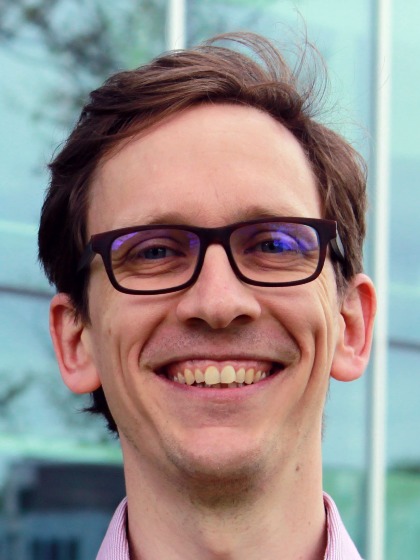
Jop Briët is a Researcher at the Department of Algorithms and Complexity at Centrum Wiskunde & Informatica (CWI) in the Netherlands. His work focuses on theoretical computer science, quantum information theory, combinatorics, and tensor analysis. He has held grants including the Veni Innovational Research Grant from NWO and a Rubicon fellowship. He has authored over 50 publications in leading venues, exploring topics such as Grothendieck inequalities, quantum computing, and additive combinatorics. His research interests span the interplay between combinatorics and computational complexity, with particular emphasis on tensor analysis, probabilistic methods, and algorithm design. Recent work includes studies on Szemerédi’s theorem with random differences and the application of quantum query algorithms to entanglement-based problems. Awards: Outstanding paper award TQC (2020), Andreas Bonn medal (2013), Stieltjesprijs (2011). Professional Activities: Editor for ERCIM News, Board Member of Koninklijk Wiskundig Genootschap, and frequent invited speaker at workshops on quantum computing and combinatorics. Grants: Veni Grant (2014), Rubicon Fellowship (2012). Current teaching includes courses on Additive Combinatorics and Quantum Information Processing, reflecting his commitment to bridging foundational theory with advanced applications in computing and mathematics.
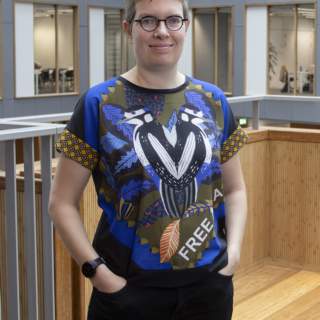
Ross J. Kang is a Canadian mathematician currently serving as an Associate Professor at the Korteweg–de Vries Institute for Mathematics within the Faculty of Science at the University of Amsterdam since 2022. He is an active member of the Discrete Mathematics and Quantum Information group and the NETWORKS consortium. Previously, he held positions as Assistant/Associate Professor at Radboud University Nijmegen (2014-2022), Assistant Professor at Utrecht University (2013), and Researcher at Centrum Wiskunde & Informatica (2012-2013). His academic journey includes postdoctoral positions at Durham University (2010-2012) and McGill University (2008-2010), where he was advised by Bruce Reed and Louigi Addario-Berry. DPhil in Mathematics, University of Oxford (2008) - Thesis: 'Improper colourings of graphs', advised by Colin McDiarmid BSc (Hons) in Mathematics and Computer Science, University of Victoria (2003) - Governor General's Silver Academic Medal recipient Ross J. Kang's research focuses on probabilistic and extremal combinatorics, random discrete structures, graph coloring, geometric graphs, and algorithms. His work bridges theoretical mathematics with practical applications, exploring fundamental questions in discrete mathematics. He has made significant contributions to understanding graph coloring problems, particularly in the contexts of list coloring, distance coloring, and strong coloring. His research often employs probabilistic methods to establish bounds and structural properties in graph theory. Kang's work on the hard-core model, local occupancy method, and triangle-free graphs has advanced our understanding of the interplay between local constraints and global structure in discrete systems. Analysis of his recent publications reveals a strong emphasis on graph coloring problems, particularly list coloring variants and their extensions. His work frequently explores the relationship between graph structure (such as degree constraints, girth, or forbidden subgraphs) and coloring properties. A notable trend is his development and application of the local occupancy method to establish improved bounds for chromatic numbers in various graph classes. His research also demonstrates a consistent interest in extremal problems, seeking optimal configurations under specific constraints, particularly in the context of triangle-free graphs and geometric representations. NWO Open Competition M-1 grant entitled 'Asymptotic triangle-free structure (3Free)', 2022-2026 NWO Vidi grant entitled 'On the edge: theory and techniques at the frontiers of edge-colouring', 2017-2023 NWO Veni grant entitled 'Generalised colouring for random graph models', 2012-2015 Van Gogh travel grants (2020-2021 with Marthe Bonamy; 2016-2017 with Louis Esperet) Governor General's Silver Academic Medal (2003) Ross J. Kang has successfully supervised multiple PhD students including Eoin Hurley (defending May 2025), Stijn Cambie (defended April 2022), and François Pirot (winner of 2020 prix Charles Delorme). His research is supported by significant grants from the Netherlands Organisation for Scientific Research (NWO), including the prestigious Open Competition M-1 grant. Kang is actively involved in the academic community through his editorial role at Combinatorial Theory, co-organization of conferences like the Dutch Days of Combinatorics, and leadership in initiatives such as Innovations in Graph Theory, a diamond open access journal he helped launch in August 2023. As a member of the Discrete Mathematics and Quantum Information group at the University of Amsterdam and the NETWORKS consortium, Kang collaborates with researchers across various institutions. He has established strong international connections through his Van Gogh travel grants and participation in collaborative projects like the Sparse (Graphs) Coalition sessions. His research group focuses on theoretical aspects of discrete mathematics with connections to quantum information science, and he maintains active collaborations with researchers across Europe and North America.
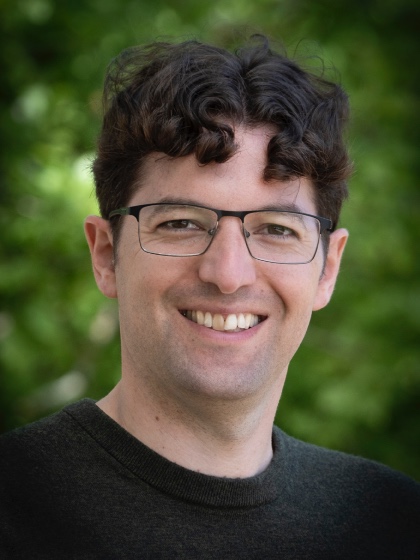
Tom Verhoeff is an Assistant Professor at the Faculty of Mathematics and Computing Science of Eindhoven University of Technology (TU/e) , working within the Software Engineering & Technology group. His research focuses on Model-Driven Engineering (MDE) , Domain-Specific Languages (DSLs) , and the intersection of mathematics, computing, and the arts . He teaches courses in data analytics, programming, algorithms, theoretical computer science , and logic . Verhoeff earned both his MSc and PhD in Technical Science (Mathematics and Computer Science) from TU/e. He is actively involved in promoting mathematics and informatics through initiatives like the annual Bridges conference , and serves as board member and treasurer of the Dutch Mathematics Olympiad , as well as chair of the Koos Verhoeff MathArt foundation . He has also held roles as guest lecturer in Lithuania and Finals Director for the ACM International Collegiate Programming Contest . Research Interests: Verhoeff’s work spans Model-Driven Engineering , domain-specific language development , and 3D geometric modeling . His scholarship often explores symmetry, recursion, and mathematical visualization , particularly through computational art and algorithmic puzzles . Recent publications highlight 3D rotation methods , knot theory , and mathematical art using lattice paths and geometric transformations . Scientific Awards: ACM ICPC European Founders Award (2004) IOI Distinguished Service Award (2007) Second Place in the 2022 Wolfram Computational Art Contest Notable Collaborations and Affiliations: He is affiliated with the Esprit Working Group on Asynchronous Circuit Design (ACiD-WG) , WIRE (TUE Mathematics Alumni) , ACM (Senior Member) , CSTA , IEEE Computer Society , and Royal Dutch Mathematical Society (KWG) .
Gilles Bonnet is an Assistant Professor at the Bernoulli Institute for Mathematics, Computer Science and Artificial Intelligence within the University of Groningen , Netherlands. He is also affiliated with the Groningen Cognitive Systems and Materials Center (CogniGron) . His academic journey includes a PhD from University of Osnabrück (2016) under Prof. Matthias Reitzner, followed by a postdoc at Ruhr University Bochum (2016-2021) . Research Interests: His work bridges Probability Theory and Convex Geometry , focusing on high-dimensional stochastic structures. Key areas include random polytopes , Poisson hyperplane tessellations , and geometric inequalities . He has explored phase transitions in random polytopes and combinatorial diameter bounds. Scientific Contributions: Co-organized the Workshop On Randomness and Discrete Structures (2025) and the Spring School and Workshop on Polytopes (2019). His 2016 paper on Poisson tessellation earned a best poster award at the 18th Stochastic Geometry workshop. Awards: Best poster award (2016) Teaching: Delivers courses on Probability and Measure , Random Geometry , and Stochastic Processes at the University of Groningen and Ruhr University Bochum.
Prof. Peter van der Heijden is a Professor of Statistics for the Social and Behavioural Sciences at Utrecht University's Department of Methodology and Statistics. He also holds a professorship in Social Statistics at the University of Southampton. His roles include chairing the Ethical Review Board and the Committee for Policy on Integrity at Utrecht's Faculty of Social and Behavioural Sciences. He chairs the Advisory Council on Methodology and Quality of Statistics Netherlands and serves on the Executive Board of the European Statistical Advisory Committee (ESAC). Since 2017, he has led Utrecht's Applied Data Science focus area, focusing on human-centered AI and data-driven solutions. His research emphasizes population size estimation, fraud detection, and categorical data analysis, with applications for Dutch ministries and international bodies like the UN. He has pioneered methods for estimating human trafficking victims and optimizing healthcare treatments using multilevel models and neural networks. Key projects include the AI for Health initiative with Utrecht Medical Center and Wageningen University. His work bridges statistical rigor with societal impact, addressing challenges in criminal justice, public health, and policy-making through innovative methodologies. Universities: Utrecht University (Primary), University of Southampton Key Committees: European Statistical Advisory Committee, UN Human Trafficking Monitoring Research Themes: Multiple Systems Estimation, Data Science for Social Issues Research interests span statistical methods for complex societal problems, including: Register linkage and fraud detection Machine learning applications in healthcare Human trafficking prevalence estimation His publications (2019-2023) highlight advancements in multilevel modeling, randomized response techniques, and AI-driven clinical data classification. He has advised on policy frameworks for official statistics and contributed to global initiatives like the UN Sustainable Development Goals (Target 16.2). Grants and collaborations include projects with Dutch ministries, the EU, and international organizations. Current initiatives involve optimizing Hepatitis C treatment networks and improving criminal recidivism prediction models. His leadership in interdisciplinary teams ensures methodological innovation addresses real-world challenges.
Dr. Carlo Cavicchia is an Assistant Professor of Statistics at the Econometric Institute, Erasmus School of Economics, Erasmus University Rotterdam. He holds a PhD in Methodological Statistics from La Sapienza University of Rome and has held roles such as Research Fellow at UnitelmaSapienza University and Consultant for NGOs in Zanzibar. His research focuses on latent variable models, composite indicators, and unsupervised classification, with applications in environmental policy, sports analytics, and teacher job satisfaction. Cavicchia teaches statistics and data science courses at undergraduate and graduate levels and actively contributes to academic communities through journal reviewing, conference organizing, and editorial roles. Education: PhD in Methodological Statistics (La Sapienza University of Rome, 2020) MSc in Statistics and Decision Sciences (La Sapienza University of Rome, 2016) BSc in Statistics (La Sapienza University of Rome, 2013) Dutch University Teaching Qualification (BKO, 2022) Research Interests: Cavicchia’s work emphasizes hierarchical models, non-parametric statistics, and data science applications. He develops methodologies for composite indicators, including ultrametric Gaussian mixture models and disjoint principal component analysis. His research bridges theoretical advancements with real-world problems, such as waste management in Italian municipalities and ranking European football teams using composite metrics. Grants & Awards: 2024: IFCS Chikio Hayashi Award 2023: ESE Starter Grant (€300,000) 2017: Research Grant for Junior Researchers (€1,270) 2016: PhD Scholarship, La Sapienza University Academic Engagement: Cavicchia serves as IASC Data Analysis Competition Officer (2023–2025), co-edits the ISI Magazine , and organizes conferences like DSSV 2020 and DSSV-ECDA 2021. He is an elected member of the International Statistical Institute and contributes to SVQS’s Sustainability initiatives. Labs & Teams: He co-organizes the Econometrics internal seminars at Erasmus University and collaborates with researchers at University of Naples Federico II on hierarchical models and convex clustering.
Nikhil Bansal holds the prestigious Patrick C. Fischer Professorship of Theoretical Computer Science in the Department of Computer Science & Engineering at the University of Michigan's College of Engineering. His research program has established him as a leading figure in theoretical computer science, with significant contributions to algorithm design and analysis, particularly in discrete optimization problems. Bansal's research focuses on theoretical computer science with emphasis on design and analysis of algorithms for discrete optimization problems. His work spans multiple areas including discrepancy theory, approximation algorithms, randomized algorithms, combinatorial optimization, complexity theory, machine learning theory, and probability. He has made significant contributions to understanding the limits of approximation algorithms and developing novel techniques for combinatorial optimization problems. Analysis of Bansal's recent publications reveals a strong focus on discrepancy theory, online algorithms, and combinatorial optimization. His work often bridges theoretical computer science with discrete mathematics and probability theory. A recurring theme across his publications is the development of novel algorithmic techniques for solving NP-hard problems with provable guarantees. His research has evolved from foundational work in approximation algorithms to more recent contributions in quantum computing complexity and stochastic optimization. Patrick C. Fischer Professor of Theoretical Computer Science Bansal has advised numerous PhD students including Marek Elias, Shashwat Garg, and Greg Koumoutsous, as well as mentoring several postdoctoral researchers. He has served on editorial boards for top journals including Journal of the ACM, Theory of Computing, and Stochastic Models, and has been active on program committees for major conferences such as STOC, FOCS, SODA, and ICALP, including serving as chair for ICALP 2021. Bansal has organized multiple academic workshops including the STOC 2020 Workshop on Recent Advances in Discrepancy and Applications, several SDP Days at CWI Amsterdam, and the Semester on Bridging Continuous and Discrete Optimization at UC Berkeley in Fall 2017.
Dr. Johan van Rooij is an Assistant Professor in the Algorithms and Complexity group at Utrecht University , Faculty of Science. His work focuses on algorithm design, computational complexity, and data science applications. Specializes in exact algorithms for NP-hard graph problems Active in parameterized complexity and treewidth-based techniques Contributes to applied data science through transportation optimization and railway inspection projects Research trends show consistent contributions to: Exponential time algorithms for graph problems Treewidth and branch decomposition optimization Data science applications in public mobility Scientific Recognition: 2018: Hendrik Lorentz Prize (Dutch Data Science Prizes) 2022: Finalist for Prize for OR for the Common Good
Dirk Thierens is an Associate Professor in the Department of Computer Science at Utrecht University's Faculty of Science, specializing in Intelligent Systems within AI & Data Science. His academic career spans over 25 years, with continuous publications from 1996 through 2025, demonstrating sustained research activity and leadership in his field. He maintains an active research program with numerous collaborations, most notably with Peter A.N. Bosman, indicating a long-standing productive research partnership. Thierens' research focuses on evolutionary computation, particularly model-based evolutionary algorithms, genetic algorithms, and optimization techniques. His work has evolved from foundational genetic algorithm research in the late 1990s and early 2000s to more specialized model-based approaches in recent years, including significant contributions to Gene-pool Optimal Mixing Evolutionary Algorithms (GOMEA). His expertise spans single-objective and multi-objective optimization, permutation problems, mixed-integer problems, and real-valued optimization. In recent years, his research has expanded into applications in machine learning, particularly semi-supervised learning and neural network optimization. His publication record shows a consistent output of high-quality research, with numerous papers in top conferences like GECCO and journals in evolutionary computation. His most recent work (2023-2025) demonstrates continued innovation in synthetic data generation, neural network combination techniques, and parameterless evolutionary algorithms. The breadth of his work spans theoretical algorithm development, benchmarking methodologies, and practical applications in healthcare and other domains. While no specific scientific awards are mentioned in the available information, his extensive publication record, tutorial contributions at major conferences, and sustained research productivity over multiple decades indicate recognition within the evolutionary computation community. His tutorial work at GECCO conferences suggests he is considered an authority on model-based evolutionary algorithms. Thierens maintains an active research laboratory focused on evolutionary algorithms and their applications, with recent work exploring the intersection of evolutionary computation and deep learning. His research continues to advance both theoretical understanding and practical applications of optimization techniques in complex problem domains.
Rianne de Heide is an Assistant Professor in the Statistics group (STAT) within the Department of Applied Mathematics at the University of Twente's Faculty of Electrical Engineering, Mathematics and Computer Science. She maintains collaborative arrangements with LUXs Data Science in Leiden, CWI, and VU Mathematics in Amsterdam as a guest researcher while working partly remotely during her family's relocation. Her academic journey includes a previous position as Assistant Professor at Vrije Universiteit Amsterdam. PhD Dissertation: 'Bayesian Learning: Challenges, Limitations and Pragmatics' (2020) MSc Thesis: 'The Safe-Bayesian Lasso' (2016) De Heide's research spans multiple interconnected domains within statistics and machine learning, with particular emphasis on developing mathematically rigorous frameworks that remain accessible to diverse audiences. Her work bridges theoretical foundations with practical applications, focusing on hypothesis testing with e-values, Bayesian learning methodologies, and best-arm identification problems in multi-armed bandit settings. She demonstrates exceptional interdisciplinary range, connecting statistical theory with philosophical inquiry and even theological discussions as evidenced by her publications on biblical authorship verification and mathematical beauty. Analysis of her publication trajectory reveals a clear evolution toward developing anytime-valid statistical methods, particularly through e-values and e-processes for multiple testing scenarios. Her recent work shows increasing focus on foundational questions in statistical inference while maintaining strong connections to practical machine learning applications. The 2024 'Safe Testing' paper in the Journal of the Royal Statistical Society represents a significant contribution that generated a formal discussion meeting. VENI project 'E-values for Multiple Testing' NWO M2 grant of €742,708 with Jelle Goeman (funding 2 PhD students and a scientific programmer) 2025 Bernoulli Society New Researcher Award De Heide actively supervises research through her VENI project and the NWO M2 grant, while also contributing to broader academic service through the 'Kindness and Excellence in Academia' initiative she co-founded. This initiative addresses critical cultural issues in academic environments through opinion pieces, resources, and community building around compassionate academic practices. She has organized specialized events like the E-Day meet-up for e-value researchers at CWI in Amsterdam, demonstrating leadership in her niche research community. Her research activities are centered around the Statistics group at the University of Twente, with significant external collaborations through the E-mailing list for e-value researchers and partnerships with institutions including CWI, VU Amsterdam, and Leiden's LUXs Data Science. The interdisciplinary nature of her work creates connections across mathematics, computer science, philosophy, and even religious studies.
Gaurav Rattan is an Assistant Professor in the Department of Applied Mathematics at the University of Twente's Faculty of Electrical Engineering, Mathematics and Computer Science (EEMCS), where he joined in May 2024. His research focuses on the mathematical foundations of machine learning on graphs and discrete structures, with particular emphasis on theoretical aspects of graph neural networks. University of Twente, Department of Applied Mathematics (May 2024-present) TU Darmstadt, Postdoctoral Researcher in Pascal Schweitzer's group RWTH Aachen, DFG Eigene Stelle Researcher in Martin Grohe's group Dr. Rattan completed his PhD at IMSc Chennai under V. Arvind and earned his B. Tech. from IIT Bombay, establishing a strong foundation in theoretical computer science and mathematics. His research spans graph theory, algorithms, and machine learning on graphs, with specific expertise in graph isomorphism, graph homomorphisms, and the theoretical underpinnings of graph neural networks. He applies mathematical techniques from logic and algebra to develop theory-driven approaches for graph learning systems, with practical applications in optimization, bioinformatics, and databases. Dr. Rattan's publication record reveals a consistent focus on the intersection of theoretical computer science and machine learning. His recent work explores Weisfeiler-Leman algorithms, symmetry breaking techniques, and parameterized complexity of graph problems, demonstrating how classical graph algorithms connect with modern graph learning methodologies. His research provides crucial theoretical foundations for understanding the capabilities and limitations of graph neural networks. Active in the academic community, Dr. Rattan regularly presents at conferences including the Netherlands Mathematical Congress, SIGAlgo, LOGAMS, and specialized workshops on graph learning. Recent presentations include "From Graph Homomorphisms Densities to Graph Learning" at the Graph Learning Workshop at NITMB Chicago and "Color Refinement: One Algorithm, Many Facets" at SIGAlgo 2024.
Tom van Woensel is a Full Professor of Freight Transport and Logistics at Eindhoven University of Technology (Netherlands), affiliated with the School of Industrial Engineering and Innovation Sciences and the Department of Operations Planning Accounting & Control. He also holds roles as Academic Director of the Global Supply Chain Management program at Antwerp Management School and Director of the European Supply Chain Forum. His research focuses on freight transport, logistics systems, and operations research methodologies, with contributions to over 150 peer-reviewed publications in journals like Transportation Science and European Journal of Operational Research . Education: BSc/MSc in Applied Economic Sciences (Econometrics), University of Antwerp (Belgium) PhD: Queueing Theoretical Approaches for Traffic Flow Networks, University of Antwerp Research Interests: Optimization of transport and logistics networks using integer programming, metaheuristics, and reinforcement learning Urban freight systems, last-mile delivery, and sustainable logistics Supply chain resilience, collaboration in logistics networks, and industry-academia partnerships Applications of AI in solving stochastic transportation problems Awards and Recognition: Outstanding Professor in Supply Chain & Logistics (2021) European Journal of Operational Research Best Review Paper (2016) INFORMS Senior Member (2024) Collaborations and Projects: Leads initiatives like SYNERCIZE (zero-emission construction logistics) and Circulaire stromen (circular logistics) Editorial roles at Transportation Science , OR Spectrum , and Urban Science Active in industry partnerships through the European Supply Chain Forum (75+ multinationals) Labs/Teams: EAISI Mobility (Eindhoven AI Systems Institute) CIRRELT (Montreal, Canada) collaborating member
Prof. Ward Romeijnders is a Full Professor in the Department of Operations Management & Operations Research at the University of Groningen. He holds leadership roles in academic organizations such as Secretary of the Stochastic Programming Society (COSP), Associate Editor of Mathematical Methods of Operations Research, and Board member of LNMB. His research focuses on stochastic programming, optimization under uncertainty, and applications in energy, logistics, healthcare, and finance. He has led projects like the NWO VIDI grant 'Discrete Decision Making under Uncertainty' (2023-2027) and previously the NWO VENI project on planning under uncertainty. Education: Doctorate in Operations Research (details unspecified). Research Interests: Stochastic optimization, risk-averse decision-making, integer programming, and applications in societal challenges. Recent publications span algorithmic advancements in Benders decomposition, robust optimization, and error-bound theories. He has received multiple awards, including the Gijs de Leve Prize (2015-2017) and Willem R. van Zwet Award (2016). As a teacher, he instructs advanced courses on stochastic programming and optimization under uncertainty. Grants: NWO VENI (2017-2020), NWO VIDI (2023-2027). Editorial Roles: Mathematical Methods of Operations Research, Euro WG on Stochastic Optimization.
Wouter M. Koolen-Wijkstra is a Professor of Mathematical Machine Learning at the University of Twente (Statistics group) and a Scientific Staff Member at Centrum Wiskunde & Informatica (CWI), Amsterdam, in the Machine Learning department. His research bridges theoretical machine learning, game theory, and statistics, with active projects on multi-armed bandits, online learning, and safe inference methodologies. He co-leads INRIA-CWI associate teams (6PAC and 4TUNE) and is an ELLIS Scholar. His work emphasizes provable guarantees in learning algorithms, including: Regret minimization under risk-averse scenarios Multi-scale adaptation in online decision-making Game-theoretic equilibria computation Anytime-valid statistical inference via e-processes Recent publications demonstrate a focus on robust learning frameworks , particularly in bandit problems, hypothesis testing, and Nash equilibrium characterization, often leveraging information-theoretic and optimization principles. Awards include: Veni Grant (2015) for 'Learning at the Intrinsic Task Pace' QUT Vice-Chancellor's Fellowship (2013) for multitask learning Rubicon Grant (2010) for game-theoretic online learning ELLIS Scholar recognition He teaches graduate courses on Machine Learning Theory and Graphical Models at CWI. Current grants include collaborations with INRIA (4TUNE and 6PAC teams) and industry partnerships (e.g., PPS Booking.COM).
R.L. Lagendijk serves as a Professor within the Faculty of Electrical Engineering, Mathematics and Computer Science at Delft University of Technology, specializing in Cyber Security research. His academic profile demonstrates sustained leadership in privacy-enhancing technologies and cryptographic systems development across diverse application domains. His core research spans Cyber Security, Cryptography, and Privacy-Preserving Computation with specialized expertise in Differential Privacy and Algorithmic Security. Lagendijk pioneers practical implementations for sensitive data protection in supply chain logistics, healthcare diagnostics, and blockchain infrastructure, consistently bridging theoretical cryptography with real-world security challenges through innovative protocol design. Analysis of his publication trajectory since 2020 reveals concentrated advancement in differential privacy applications, particularly for trajectory data obfuscation in supply chains and bin-packing optimization in logistics. His work increasingly integrates blockchain security with AI ethics frameworks, demonstrating evolving focus toward human-centric privacy solutions in emerging technologies. His distinguished career includes recognition through significant professional honors: NAE Fellow (2023) Professor Lagendijk has guided 44 students through academic supervision while actively leading European research initiatives including H2020 IRIS, SPECIES, and SESAME projects. His editorial contributions to IEEE Transactions on Information Forensics and Security underscore his influence in shaping cryptographic standards. As a core member of TU Delft's Cyber Security research group, he drives collaborative innovation in privacy-preserving computation through both theoretical exploration and industry-engaged solutions development, maintaining active participation in national and international cybersecurity discourse.