- Game theory
- Optimal order
- Mathematical modeling
- +۷ مورد دیگر
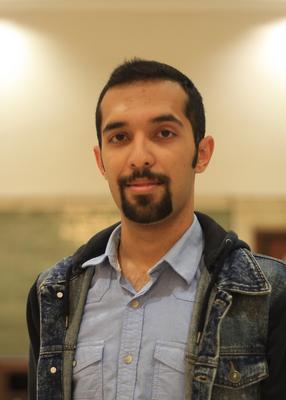
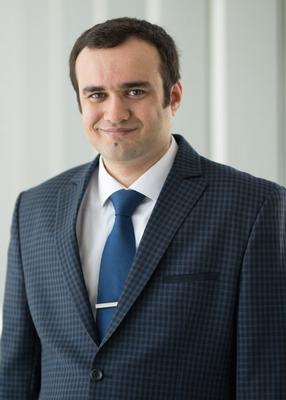
Amir Ardestani-Jaafari is an Associate Professor at the Faculty of Management, University of British Columbia, specializing in operations research and optimization under uncertainty. His research bridges theoretical advances in robust optimization with practical applications in healthcare operations and supply chain management. His educational background includes: Ph.D. in Management Science from HEC Montreal (2012-2016) under Erick Delage Postdoctoral fellowship at McGill University (2019-2021) M.Sc. and B.Sc. in Industrial Engineering from Tehran Polytechnic Ardestani-Jaafari's research focuses on developing advanced optimization techniques for decision-making under uncertainty, with particular emphasis on healthcare operations. His work combines mathematical modeling, simulation, and algorithm development to address complex operational challenges where traditional optimization methods fail. He has made significant contributions to robust optimization frameworks that can handle unpredictable scenarios in facility location, resource allocation, and appointment scheduling systems. His recent work demonstrates strong trends in applying optimization techniques to healthcare delivery systems, particularly in home healthcare facility location and telemedicine appointment optimization, showing how mathematical approaches can improve healthcare access and equity. Notable awards include: Principal's Research Chair in Data-Driven Operations Management (2023-2028) Multiple Golden Apple teaching awards recognizing his dedication to student learning Finalist for educational resource excellence award (2025) GERAD's Best Thesis award (2017) Ardestani-Jaafari has supervised 13 graduate and undergraduate students across various research projects. He is actively involved with the UBC Optimization Center (COCANA), Materials and Manufacturing Research Institute (MMRI), and GERAD Research Center, where he collaborates on interdisciplinary projects addressing real-world operational challenges. His current research explores how robust optimization can protect networks against unpredictable events, from forest fires threatening transportation networks to hospitals planning optimal routes for home healthcare delivery.