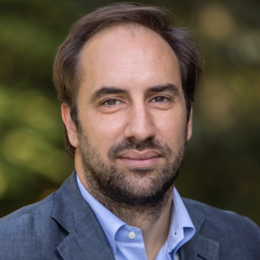
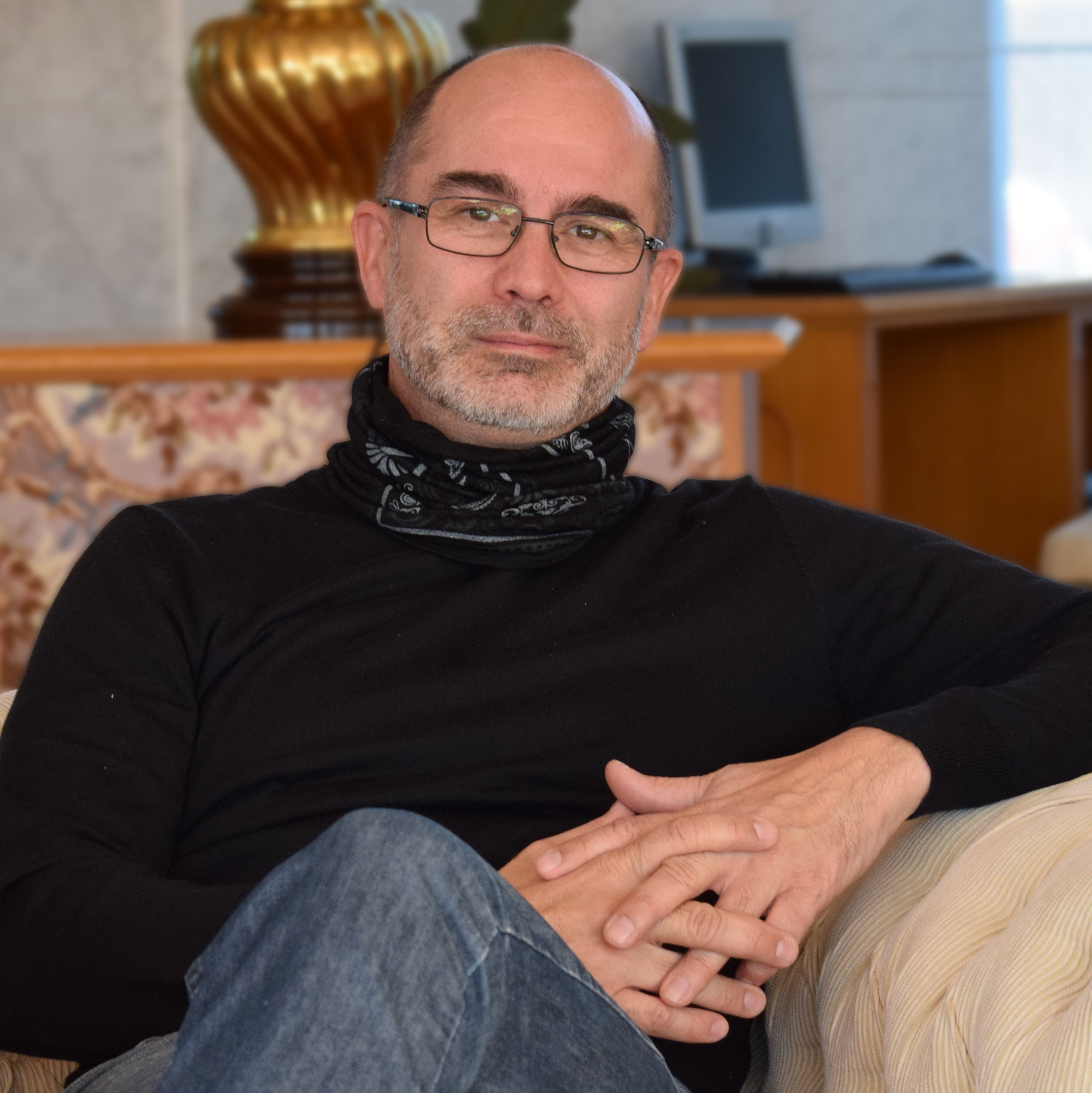
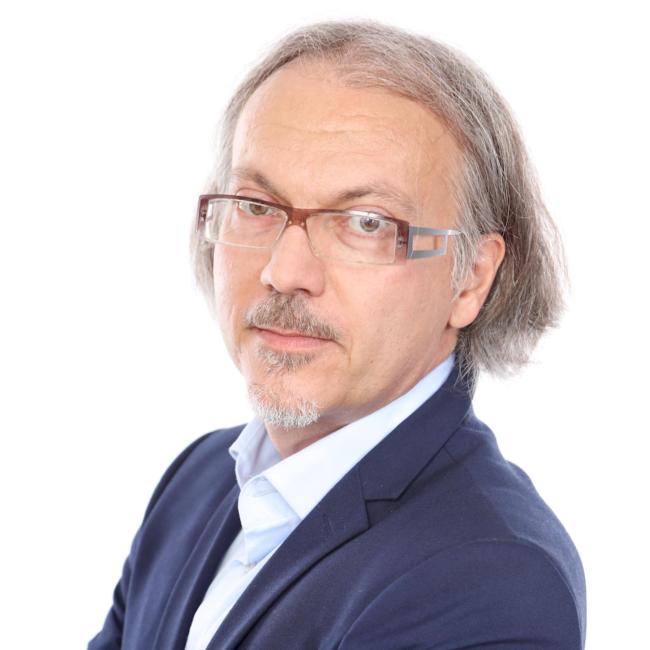
Stefano Bonetti is an Associate Professor in the Department of Physics at Stockholm University , leading the Ultrafast Condensed Matter Dynamics Group . His research focuses on manipulating quantum materials using terahertz (THz) and near-infrared laser fields to study spin dynamics and ultrafast phenomena at nanoscale and femtosecond timescales. PhD in Materials Physics (KTH Royal Institute of Technology, Sweden) MSc in Engineering Physics (KTH) BSc in Technical Physics (Politecnico di Milano, Italy) Recent research efforts involve time-resolved X-ray microscopy to visualize spin currents and magnetization dynamics, leveraging facilities like free-electron lasers. His work bridges experimental physics and applied materials science, aiming to enhance energy efficiency in data storage technologies by understanding ultrafast spin-lattice interactions . Key scientific awards and grants: ERC Starting Grant (2017-2021) Wallenberg Academy Fellow (2018-2023) VR's free grant (2019-2023) International Career Grant (COFUND) (2015-2019) He has contributed to developing THz-based techniques for magnetic control and authored foundational work on spin-wave solitons and nonlinear magnetoelastic coupling . His group collaborates internationally, utilizing advanced synchrotron and free-electron laser facilities.
Gerardo Schneider is a Full Professor in Computer Science at the University of Gothenburg, Sweden, and holds a joint appointment at Chalmers University of Technology. He serves as Head of the Data Science and Artificial Intelligence (DSAI) Division and has previously led the Formal Methods Division and acted as Director of Graduate Studies. University of Gothenburg: 2009–present Chalmers University of Technology: 2009–present Uppsala University: 2002–2003 University of Oslo: 2005–2009 His research focuses on formal methods for software engineering, including contract specification and analysis , privacy policy formalization , model checking , and runtime verification . He works on verification of real-time systems, embedded systems (e.g., smart Java cards), and blockchain-based smart contracts. Key projects include: X-LEGAL (2020–2023): Smart Legal Contracts (Swedish Research Council) PolUser (2016–2019): User-Controlled Privacy Policies (Swedish Research Council) ARVI (2014–2018): Runtime Verification Beyond Monitoring (ICT COST Action) ReMU (2013–2017): Reliable Multilingual Digital Communication (Swedish Research Council) He has supervised numerous PhD and Master’s students in formal methods, blockchain security, and privacy compliance. His tools include SPeeDI (Polygonal Hybrid Systems Verification), CLAN (Contract Normative Conflict Detection), and AnaCon (Controlled Natural Language Analysis).
Damir Isovic is an Associate Professor and Vice-Chancellor for Internationalization at Mälardalen University's Academy of Innovation, Design and Technology. Previously, he served as Dean of the School of Innovation, Design and Engineering. His roles include leadership in academic administration and participation in national boards. He holds a PhD and has extensive international teaching experience. Research focuses on real-time systems, embedded systems design, and scheduling algorithms. Notable contributions include seminal work in real-time scheduling recognized by the IEEE Technical Community on Real-Time Systems. He has organized major conferences and delivered keynotes globally. His publications emphasize hybrid scheduling approaches, real-time operating systems (RTOS), media processing in resource-constrained systems, and MPEG standards. Recent work integrates memetic algorithms with fuzzy controllers and explores multi-core scheduling fairness. His research bridges theoretical scheduling models with practical embedded system implementations. No scientific awards explicitly listed in the text. Advising activities include supervising PhD students, though specific names are not provided. Lab affiliations include the Division of Networked and Embedded Systems, where he develops frameworks like GENESIS for embedded system engineering. His work emphasizes cross-disciplinary collaboration and industry partnerships in education and technology development.
Andreas J. Kassler is a Full Professor of Computer Science at Karlstad University, Sweden, where he has been since 2005. He co-chairs the Distributed Systems and Communication (DISCO) group and focuses on networking, cloud computing, and wireless networks. His research includes software-defined networking, future internet architectures, and network optimization. He has authored/co-authored over 130 peer-reviewed publications, holds 6 patents, and serves on editorial boards of journals like Journal of Internet Engineering . Education : Ph.D. in Computer Science, Universität Ulm (2002) Docent (Habilitation), Karlstad University (2007) M.Sc. in Mathematics/Computer Science, Universität Augsburg (1995) Research Interests : Software Defined Networking (SDN) Programmable Dataplanes Wireless Mesh Networks Time-Sensitive Networking (TSN) Edge Computing Machine Learning for Network Optimization Recent Directions : His work spans TSN scheduling, hybrid P4 solutions for 5G, and explainable AI in energy communities. He explores network resilience, latency optimization, and multi-objective control in microgrids. Service Contributions : Track co-chair for VTC 2015 General chair for Wired/Wireless Internet Communications (WWIC) 2013 Editor-in-Chief of IARIA Journal on Advances in Internet Technology Labs/Teams : Leads DISCO group at Karlstad University. Collaborates with global teams on projects like mmWave backhaul networks and SDN-enabled industrial control systems.
Dr. Gabriel Sandblom is a Senior Lecturer and Senior Physician at the Karolinska Institutet's Department of Clinical Science and Education, Södersjukhuset. His research group focuses on improving outcomes in gallstone surgery, abdominal wall surgery, and acute pancreatitis through population-based studies and clinical trials. He leads projects on gallstone disease management , hernia repair techniques , and quality of life assessments post-surgery. The group's recent publications (2025-2016) span topics such as laparoscopic cholecystectomy optimization , hernia repair complications , and acute surgical care . Articles emphasize comparative surgical techniques (ultrasonic vs electrocautery), patient safety , and long-term functional outcomes after procedures like diastasis recti repair . Studies often use Swedish national registries to analyze trends in acute cholecystitis and colorectal surgery . Key collaborators include Drs. Enochsson, Österberg, and Ali . His work addresses weekend surgery outcomes , retained gallstones , and ERAS protocols in gastrointestinal surgery. The group also explores interprofessional teamwork and surgical training innovations like virtual simulators.
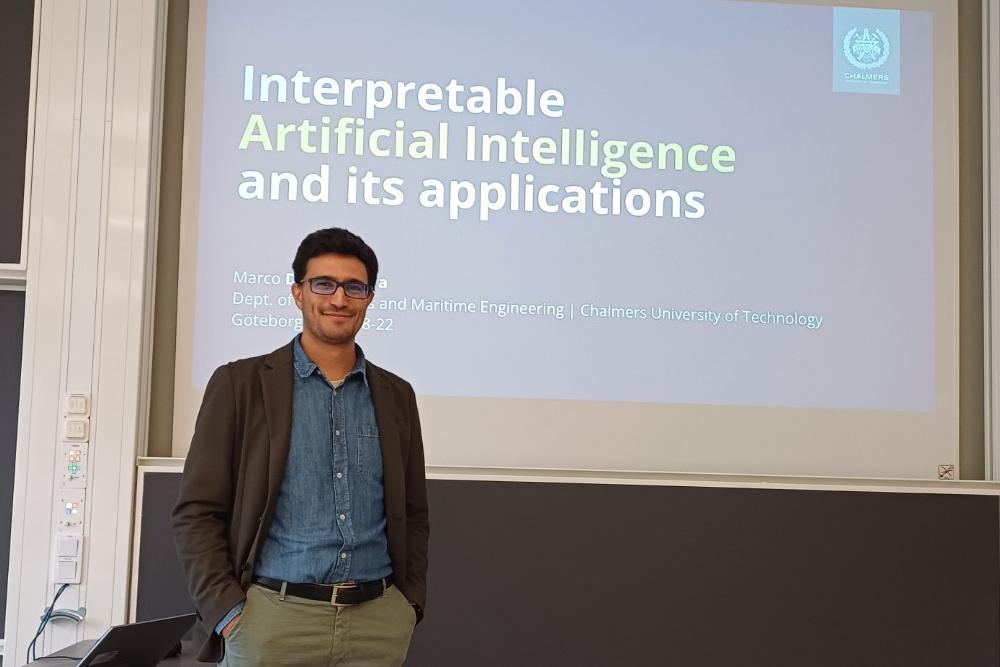
Marco L. Della Vedova is a Senior Lecturer in Applied Artificial Intelligence at Chalmers University of Technology, Sweden. He works in the Vehicle Engineering and Autonomous Systems division within the Department of Mechanics and Maritime Sciences, as part of Prof. Mattias Wahde's research group. Since 2025, he has served as Director of the Data Science and AI master's programme (MPDSC) at Chalmers, where he teaches courses including Introduction to Artificial Intelligence and Digitalization in Sports. Dr. Della Vedova earned his academic foundation at the University of Pavia, Italy, where he completed his BSc (2006), MSc (2009), and PhD (2013) in Computer Engineering. His doctoral research focused on "Real-Time Physical Systems and Electric Load Scheduling" under Prof. Tullio Facchinetti. During his PhD studies, he spent a year at U.C. Berkeley hosted by Prof. Francesco Borrelli at the Model Based Predictive and Distributed Control Lab. His research spans multiple AI domains with a strong emphasis on interpretability. Dr. Della Vedova develops interpretable methods for conversational AI, naturalness evaluation of forests using canopy height models, and geospatial applications. His work bridges theoretical AI with practical societal benefits, particularly in environmental monitoring, transportation systems, and orienteering. He has previously contributed to cloud computing, hate speech detection, and cyber-physical energy systems, demonstrating his interdisciplinary approach to AI research. Dr. Della Vedova's publication record reveals a consistent trajectory of impactful research across multiple domains of artificial intelligence. His recent work shows a strong focus on interpretability in AI systems, with significant contributions to natural language processing, geospatial analysis, and causal inference. The research demonstrates both theoretical depth and practical applications, particularly in environmental monitoring and social media analysis. His methodology often combines traditional machine learning approaches with novel interpretability techniques, creating bridges between complex AI systems and human understanding. Dr. Della Vedova has received several prestigious recognitions for his work: Best PhD thesis award from the Order of the Engineers of Bergamo (2013) Italian champion of Il Cervellone (2012) Top Italian performer in IEEEXtreme 6.0 programming competition (148th overall globally, 2012) Premio Arturo Schena award from Fondazione Credito Valtellinese (2010) With over 50 students supervised through bachelor's and master's theses, Dr. Della Vedova has established himself as a dedicated mentor in the AI community. His current PhD students include Minerva Suvanto working on interpretable NLP and Vivien Lacorre developing AI for railway infrastructure inspection. His supervision spans diverse topics from forest naturalness evaluation to hate speech detection and transportation optimization. Beyond formal supervision, he actively contributes to educational initiatives including serving as Director of Chalmers' Data Science and AI master's program and developing innovative teaching methods that connect theoretical concepts with real-world applications. Dr. Della Vedova is deeply embedded in both academic and professional communities. He leads the Applied Artificial Intelligence research group at Chalmers while maintaining strong connections with European research networks through projects like the ERASMUS+ EUrienteering initiative. His interdisciplinary approach is reflected in collaborations across computer science, environmental science, and social sciences. Notably, he applies his AI expertise to orienteering both as a researcher developing localization methods and as a licensed Event Advisor for the International Orienteering Federation, demonstrating how his professional and personal interests converge in innovative ways.
Mattias Roupé is an Associate Professor, Head of Department, and Research Area Leader at the Department of Construction Management and Engineering at Chalmers University of Technology. His research focuses on digital construction processes, including Building Information Modelling (BIM), Total BIM, Virtual Reality (VR), and digital twins. He holds a Ph.D. in Virtual Reality for decision-making in urban planning and building design. His work combines technical advancements in visualization and computational methods with human-centric aspects like perception and decision-making in design collaboration. Education: Ph.D. in Virtual Reality applications for urban planning and building design. Research interests span model-based construction processes, data-driven design, and immersive technologies for user involvement in healthcare and infrastructure projects. Notable projects include the Total BIM initiative, exploring integrated digital workflows, and the Digital Twin Cities Centre, advancing smart city technologies. His publications emphasize VR integration, BIM adoption challenges, and collaborative design tools. He leads several research grants funded by organizations like SBUF and Formas, focusing on construction innovation. Key contributions include frameworks for BIM-based scheduling, VR in healthcare facility design, and BIM-GIS integration for railway infrastructure. His work bridges technical and human factors to enhance construction efficiency and sustainability.
Valery Chernoray is a Research Professor at the Division of Fluid Dynamics, Chalmers University of Technology. Since 1996, he has specialized in experimental fluid dynamics with extensive expertise in modern flow analysis and measurement techniques. He currently leads the Chalmers Laboratory of Fluid and Thermal Science, a university-wide research infrastructure facility that provides equal access to flow, temperature, and motion measurement capabilities for researchers across all engineering disciplines at Chalmers. Professor Chernoray's research encompasses several key areas in fluid dynamics: Experimental validation of computational models using Particle Image Velocimetry (PIV) Turbomachinery aerodynamics, particularly turbine rear structures and outlet guide vanes Bearing lubrication systems and multiphase flow in mechanical components Active flow control applications for automotive and marine systems Wind engineering for urban and marine environments Heat transfer analysis in complex engineering systems His recent publications (2022-2024) reveal a strong emphasis on experimental validation of computational models, with particular focus on lubrication systems in bearings and gearboxes, turbine aerodynamics, and active flow control. His work consistently bridges theoretical fluid dynamics with practical engineering applications, demonstrating expertise in both fundamental research and industrial problem-solving. As head of the Chalmers Laboratory of Fluid and Thermal Science, Professor Chernoray oversees comprehensive experimental facilities supporting research across multiple engineering disciplines. The laboratory provides critical infrastructure for experimental work in air, water, and solid object measurements, serving as a hub for interdisciplinary collaboration at Chalmers University.
Yacine Atif is a Professor of Information Technology at the University of Skövde, affiliated with the School of Informatics and Department of Information Technology. He maintains an active research profile with numerous publications spanning from 2002 to the present, demonstrating sustained academic contribution in his field. His research interests focus on Internet of Things (IoT), Cybersecurity, Cyber-Physical Systems, Digital Transformation, Cloud Computing, and Educational Technologies. Professor Atif's work bridges theoretical research with practical applications, particularly in smart city technologies, critical infrastructure protection, and educational innovations. His research has evolved from early work in e-commerce trust (2002) to contemporary work on metaverse learning experiences (2023) and vehicle collision prediction (2025). Analysis of his recent publications (2018-2025) reveals a strong focus on cybersecurity applications for cyber-physical systems, particularly in critical infrastructure protection. His work demonstrates a progression from foundational IoT concepts toward sophisticated integration of machine learning and cognitive approaches in security analysis. The research portfolio shows consistent collaboration with both academic and industry partners across multiple countries. Professor Atif leads or contributes to significant research projects including the ongoing 'Intelligent Driver Support Systems and Safety Enhancement' (I2Connect) project (2023-2026) focused on developing next-generation Advanced Driver Assistance Systems for trucks, and previously led the 'Infrastructure Resilience – ELVIRA' project (2017-2020) which developed time-based infrastructure dependency analysis for power-grid risk assessment. His teaching responsibilities include multiple courses at both bachelor's and master's levels, with course credits ranging from 3 to 7.5 credits across various technology domains. His office is located in room PA420K at the University of Skövde, and he can be contacted at yacine.atif@his.se or by phone at 0500-448312.
Greta Lindwall is a Lecturer at the Royal Institute of Technology (KTH), specializing in materials science and additive manufacturing. She teaches courses such as Metallic Materials, Powder Metallurgy, and Materials in Design and Product Development. Her roles include examiner, course coordinator, and teacher for several advanced programs. Her research focuses on solidification processes in additive manufacturing, particularly using high-energy X-ray techniques and synchrotron imaging to study material behavior during electron beam and laser powder bed fusion. She has contributed to understanding microstructural evolution in steels, grain refinement mechanisms, and process optimization for materials like tool steels and stainless steel. Her work integrates experimental methods with computational modeling, including CALPHAD-based approaches for phase equilibria and microstructural prediction. Key research areas include real-time tracking of solidification, smoke mechanisms in electron beam processes, and the development of novel alloys for AM applications. Lindwall collaborates with initiatives like the LIGHTer Academy and has published extensively on topics such as phase transformations, material properties under AM conditions, and process monitoring technologies. Her contributions bridge fundamental materials science with advanced manufacturing techniques, aiming to improve material performance and process reliability.
Nacira Agram is an Associate Professor at Kungliga Tekniska Högskolan (KTH), specializing in stochastic analysis, mean-field processes, and mathematical finance. She contributes to education through roles as Examiner and Teacher in advanced financial mathematics courses. Research Focus: Her work centers on stochastic differential equations with applications to financial markets, energy systems, and population modeling. Key areas include conditional McKean–Vlasov jump diffusions, singular control of stochastic Volterra equations, and deep learning applications in stochastic modeling. Publications: Recent research explores mean-field control, optimal stopping, and SPDEs with space interactions, emphasizing advanced mathematical techniques for financial and ecological systems. Teaching: Currently involved in courses like Financial Derivatives and Martingales and Stochastic Integrals , where she serves as course responsible and examiner.
Andreas Johnsson is an Adjunct Senior Lecturer at the Department of Information Technology , Uppsala University, Sweden. His research spans Machine Learning , Network Performance , and IoT Security in the context of 5G/6G Networks and Edge Computing . Research interests include federated learning, transfer learning, and network optimization techniques. His recent work (2024-2021) focuses on self-regulated learning models for 6G, multi-objective neural architecture search, IoT intrusion detection generalizability, and delay prediction in heterogeneous networks. He has co-authored over 15 publications in high-impact venues like IEEE Transactions on Machine Learning in Communications and Networking and IEEE NOMS . Andreas actively collaborates with researchers such as Jalil Taghia, Farnaz Moradi, and Hannes Larsson. His contributions extend to change detection algorithms, policy adaptation frameworks, and feature selection methodologies in dynamic network environments. No formal scientific awards or student advisement details are currently documented.
Martin Stridh is an Associate Professor and Senior Lecturer at the Department of Biomedical Engineering, Lund University, specializing in biomedical signal processing and data-driven diagnostics. He teaches courses in biomedical engineering, signal processing, e-health, and machine learning for healthcare applications. His research focuses on leveraging signal processing and machine learning to improve diagnostics and treatment outcome prediction in cardiac and eye-tracking data. Notable projects include AI-based ECG screening, artifact-free ECG analysis, and event detection in cardiac signals. Recent publications highlight advancements in atrial fibrillation detection using ECG data, with an emphasis on reducing false alarms and improving accuracy. His work often involves collaboration with clinical and engineering teams, particularly in the MY-ATRIA network. Top 10 cited paper 2006-2008 in Medical Engineering and Physics Best teacher 2001 by the Computer Science program Svenska Cardiologföreningens och Knolls Competition Abstract Prize 1999 As founder of Cardiolund AB, he applies his research to automated ECG analysis for arrhythmia screening and patient prioritization. He supervises PhD students, including Ricardo Salinas Martinez, and contributes to cross-disciplinary workshops like Engineering Health Crossroads.
Torbjörn Thiringer is a Professor in Electrical Engineering at Chalmers University of Technology. His research focuses on electrical systems for wind turbines and electric vehicles, with particular emphasis on system-level analysis and component-level studies of electrical machines, power electronics, and battery systems. Key research areas: Wind turbine systems, Electric vehicle drives, Battery degradation, Power electronics optimization Recent work explores graphene-based thermal management, fuel cell hybrid vehicles, and direct current building distribution efficiency His publications demonstrate interdisciplinary engagement with topics spanning: Finite element analysis of motor designs Life cycle assessment of energy systems Thermal modeling of SiC inverters Wave energy converter optimization Core loss measurement techniques Hydrogen fuel cell integration Professor Thiringer's collaborations span multiple institutions and industry partners, focusing on both theoretical modeling and practical implementation of advanced energy systems.
Fang Liu is an Assistant Professor at Chalmers University of Technology, Department of Materials and Manufacturing. Her research focuses on uncovering the physical and chemical mechanisms in material systems such as high-temperature alloys, polymer composites, and semiconductors, using advanced microscopy and spectroscopy techniques. Specializes in structural battery composites, creep behavior, and high-temperature corrosion Collaborates with industry partners and theoretical researchers Develops reliable prediction tools for material performance Research Trends (2023–2025): Structural battery composites with carbon fibers and hybrid electrolytes Microstructural analysis via atom probe tomography and focused ion beam High-temperature oxidation and corrosion resistance Mechanical-electrochemical coupling in multifunctional materials Key Collaborations : Leif Asp (Chalmers), Johanna Xu (Chalmers), Marcus Johansen (Chalmers) Industry partners: Office of Naval Research, VINNOVA, Wallenberg AI Program