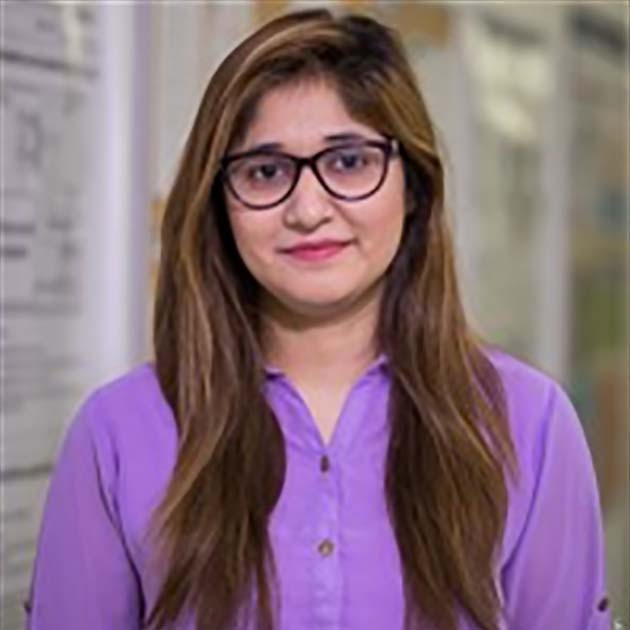
Maria Mushtaq is an Associate Professor at Telecom Paris , affiliated with the Information Processing and Communication Laboratory (LTCI) and the Secure and Safe Hardware (SSH) Lab . She received her PhD in Information Security from the University of South Brittany, France (2019) and completed 2 years of postdoctoral research at LIRMM, University of Montpellier under the CNRS excellence post-doc grant. Research Focus: Microarchitectural vulnerability assessment, runtime mitigation against side/covert-channel attacks, cryptanalysis, OS-based security primitives, and hardware-software interface security Technical Expertise: Cache timing attacks, transient execution attacks (Spectre/Meltdown), Hardware Performance Counter analysis, gem5 simulation Her recent work involves RISC-V security analysis using gem5 simulations and machine learning for attack detection. She serves as Guest Editor for the Journal of Applied Sciences special issue on Side Channel Attacks in Embedded Systems and has been on the Program Committee for the European Test Symposium (2020-2021). 2021 HiPEAC Collaboration Grant recipient Organized IP Paris Winter School on Microarchitectural Security (2022) Active in international conferences as panelist and keynote speaker
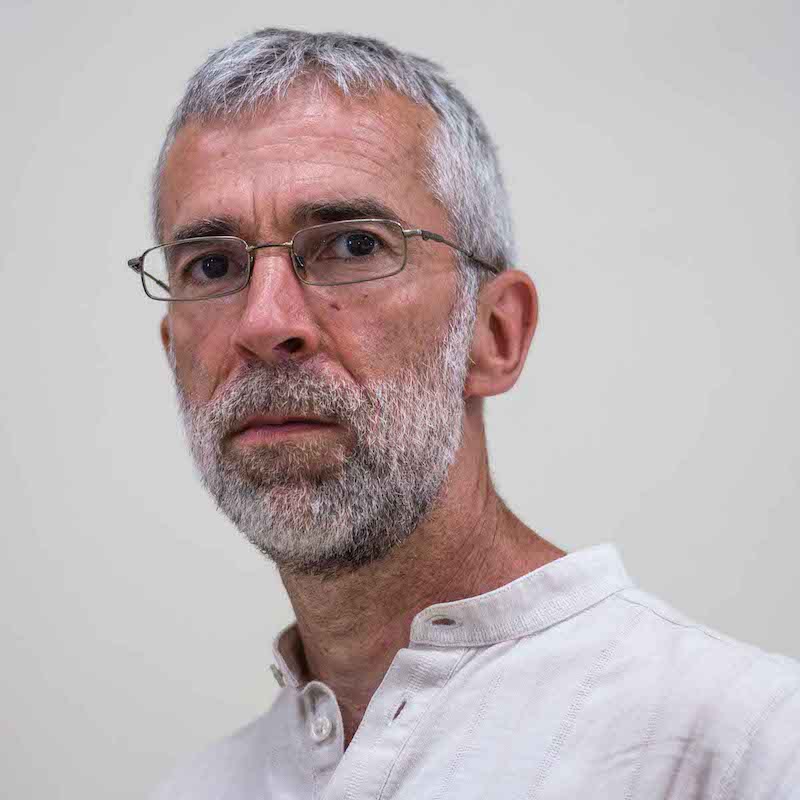
Karim ZKIK is an Associate Professor of Cyber Security and Information Systems at ESAIP Graduate School of Engineering, Angers, France. Previously, he served as an Assistant Professor at the International University of Rabat (UIR), Morocco. His roles include Educational Manager of the Cyber Security track, Head of the Cybersecurity Innovation Hub, and committee member for ABET certification and curriculum design. He actively contributes to academic service, organizing conferences such as the International Conference on Cryptology, Coding Theory, and Cyber Security (I4CS 2022), and serves as a Guest Editor for Computers and Industrial Engineering . His research focuses on cybersecurity for connected systems, blockchain technologies, AI-driven security solutions, and cyber resilience in industrial control systems. Recent work explores integrating blockchain and machine learning for threat detection, secure IoT networks, and supply chain resilience. Key contributions include frameworks for cyber resilience in retail and airlines, blockchain-based crowdfunding security, and SDN-based attack mitigation. ZKIK holds a Habilitation (2024) and PhD in Cyber Security from Université d’Angers and Mohamed V University, Rabat. He holds over 20 certifications from EC-Council, IBM, and Cisco. His work bridges theoretical research and industry applications, addressing challenges in smart environments, industrial systems, and sustainable supply chains.
Vincent Roca is a permanent researcher at Inria , a French national research institute for digital science and technology. Since 2019, he leads the Privatics research team focusing on privacy, previously part of the Planete team (2000-2012) for Internet protocols and applications. His work spans Privacy in smartphones, IoT, and web browsers Design of the ROBERT and CLEA protocols for the French TousAntiCovid app Standardization in IETF working groups, notably on FEC and network coding Co-author of Inria's cybersecurity white book (2019) Instructor of the popular Privacy in the digital world MOOC (14,006 participants) Research Interests include privacy risks in digital technologies, robust content distribution via FLUTE/ALC transport protocols and LDPC-Staircase FEC codes, and network coding for scalable services. His articles focus on privacy in LoRaWAN, contact tracing protocols, GDPR compliance, and FEC optimization. Scientific Awards include the Third Applied Research Price from FIEEC (2014) Knight Medal of the French Order of Merit (2020) Students supervised include PhD candidates in privacy-preserving IoT, secure authentication, and alumni like Samuel Pelissier (LoRaWAN privacy) and Michael Toth (GDPR compliance). Software Contributions include openfec.org (AL-FEC codes) and FLUTE/ALC implementations .
Emilie Carretier is a Professor at Aix-Marseille University (AMU) , affiliated with the Procédés Membranaires research team. Her work focuses on membrane separation technologies, particularly for industrial applications in pharmaceuticals, water treatment, and nuclear waste management. Research Interests : Membrane processes (pervaporation, reverse osmosis), solvent regeneration, radioactive effluent treatment, catalyst recovery, and industrial sustainability. Publications highlight advancements in ceramic membranes, VOC removal, and membrane aging studies, with applications in pharmaceuticals, microelectronics, and nuclear industries. Laboratory : Active within the M2P2 research center, specializing in membrane process innovation for complex industrial matrices.
Mehdi Khamassi is a Research Director at the French National Center for Scientific Research (CNRS), assigned to the Institute of Intelligent Systems and Robotics (ISIR) at Sorbonne University in Paris, France. He holds an engineering background in computer science (specializing in AI and statistical modeling) from the National School of Computer Science for Industry and Business (2003), a Cogmaster in cognitive science from Pierre and Marie Curie University (2003), and a PhD in cognitive neuroscience from UPMC/Collège de France (2007). Recruited by CNRS in 2010, he co-organizes the Symposium of Biology of Decision-Making (SBDM) and co-directs the modeling major for the Cogmaster program. His research integrates computational modeling , neuroscience experiments , and robotic systems to study decision-making and learning mechanisms. Key interests include: Reinforcement learning in biological and artificial systems Role of social/non-social rewards in adaptive behavior Ethical implications of autonomous decision-making in AI Neuro-robotic models of hippocampal-prefrontal interactions Recent publications (2023-2025) demonstrate strong focus on reinforcement learning paradigms, AI alignment with human values, neurorobotics, and computational neuroscience. Work frequently bridges machine learning theory with empirical validation in biological systems or robotic platforms. He leads research within the ACIDE team at ISIR, exploring adaptive coordination of learning strategies in brains and robots. Current collaborations include NTUA (Greece), University of Oxford, and University of Trento.
Inbar Fijalkow is a Full Professor at the National School of Electronics and Computer Science (ENSEA) within CY Cergy Paris University. She is a member of the ETIS Research Unit (UMR 8051), focusing on signal processing for wireless communications, optimization, and machine learning applications. Her research bridges theoretical advancements with practical implementation in emerging communication systems. Education & Career: PhD in Signal Processing from TelecomParisTech (1993) Postdoctoral Fellow at Cornell University (1994–1995) Professor at ENSEA since 1999 Former Head of ETIS Research Unit (2004–2013) Research Interests: Signal processing for wireless communications Optimization techniques in massive MIMO and NOMA systems Machine learning applications in communication systems Nonlinear effects mitigation in high-power amplifiers Community & Awards: Member of CoNRS Section 7 (National Committee for Scientific Research) Chevalier de l’Ordre National du Mérite (2015) Founder of the CY Alliance Women in Science Prize (2017) Recent Projects: Active in ANR-funded initiatives (e.g., EcoBioH2, AI4code) and EU projects (e.g., PERSEUS). Her work emphasizes sustainability and AI-driven communication systems. Teaching: Teaches signal processing and wireless communications at ENSEA. Supervises PhD students and master’s theses in communication systems and signal processing.
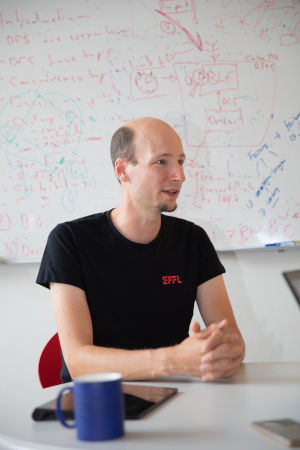
Mathias Payer is an associate professor at EPFL's School of Computer and Communication Sciences (IC), leading the HexHive research group since 2018. He focuses on strengthening software and system security through fuzzing, vulnerability mitigation, and compiler-based approaches. His work includes open-source prototypes and contributions to embedded systems, IoT security, and trusted execution environments. Education: PhD in Computer Science (Dr. sc. ETH) from ETH Zurich (2012), postdoctoral researcher at UC Berkeley (2012–2014), and assistant professor at Purdue University (2014–2018). Tenured at EPFL since 2021. Research Interests: Fuzzing frameworks, memory safety, vulnerability analysis, compiler optimizations for security, and firmware security. Projects include Enclosure , HexType , and DP3T (decentralized contact tracing). Awards: Multiple best/distinguished paper awards at top venues (e.g., Usenix Security, NDSS, RAID). Co-founded the EPFL polygl0ts and Purdue b01lers CTF teams to foster cybersecurity innovation. Labs/Teams: HexHive group, CTF initiatives, and collaborations with industry (e.g., Intel SGX, Android security).
Olivier ALLIX is a Professor at the Laboratoire de Mécanique et Technologie (LMT) at École Normale Supérieure de Cachan (ENS-Cachan). His research focuses on computational mechanics, including multiscale modeling of composite materials, structural failure analysis, and non-intrusive coupling strategies. He has held leadership roles such as Head of LMT-Cachan and Vice-president of the International Association for Computational Mechanics (IACM). Expertise: Computational structural mechanics, material failure, inverse problems, and multiscale approaches. Editorial Roles: Associate editor of multiple journals including Computational Mechanics and Computer Methods in Applied Mechanics and Engineering . Awards: IACM Fellow, Euromech Fellow, and recipient of the Gay-Lussac Humboldt Prize (2019). His work integrates experimental mechanics with computational methods, emphasizing big data applications and model validation. He has organized major conferences like the World Congress on Computational Mechanics and co-led international research initiatives such as the IRTG ‘Virtual Material and Structures’ with Hannover University. Teaching includes advanced courses on structural dynamics, composite materials, and computational mechanics at the Master’s level. His research group collaborates with industries like Safran, IFPEN, and DGA on projects involving fatigue analysis, mooring systems, and composite testing.
LIN Yaochen is a Lecturer affiliated with the University of Strasbourg, France. He is a member of the MATISEN Team (Materials for information technology, sensors, and energy conversion) at ICube laboratory, where he contributes to research and teaching in materials science and optoelectronics. Role: Lecturer Research Focus: Photovoltaic materials, liquid crystal devices, nanomaterials for energy conversion Teaching: Involved in multiple Master's programs including Micro/Nano-Electronics, Condensed Matter and Nanophysics, and Materials Science Research Interests LIN's work centers on photovoltaic spatial light modulators , self-powered smart windows , and liquid crystal-nanoparticle composites . His research explores material selection, processing techniques, and device optimization to enhance performance in energy conversion and optical modulation. Key areas include: Material synthesis (e.g., TiO2/MWCNT nanohybrids) Charge transport in liquid crystals Dielectric properties of nanocolloids Smart glass technology Atomic-scale modeling of materials Scientific Awards No specific awards mentioned in available texts. Advising & Collaborations Supervises Master's level internships Active in interdisciplinary projects with physics and engineering departments Focuses on material innovation for optoelectronic devices
Paolo Samorì is a Professor at the University of Strasbourg and holds multiple leadership roles, including Deputy Director of the Institute of Supramolecular Science and Engineering (ISIS) and Director of the Nanochemistry Laboratory . He received his Laurea (Master's) in Industrial Chemistry from the University of Bologna (1995) and PhD in Chemistry from Humboldt University of Berlin (2000) under Prof. J.P. Rabe. His research focuses on nanochemistry, supramolecular science, materials chemistry, and scanning probe microscopies , with a strong emphasis on graphene, 2D materials, and hybrid nanomaterials for optoelectronics, energy, and sensing applications. His recent publications (470+ total) highlight advancements in: Crystal engineering of organic and inorganic materials Thermoelectric and supercapacitor systems using MOFs and MXenes Neuromorphic devices leveraging biopolymer hydrogels and optoionic effects Photodetection and photothermal conversion in 2D heterostructures Sensing technologies including SERS, SEIRAS, and electrolyte-gated transistors Samorì has received numerous scientific awards , including ERC grants, CNRS Silver Medal, and multiple international prizes. He serves as Associate Editor of ACS Nano and holds advisory roles for journals like Advanced Materials and Chemical Communications. His affiliations include the Royal Society of Chemistry , European Academy of Sciences , and German National Academy of Sciences and Engineering .
Tej Chajed is an Assistant Professor in the Department of Computer Sciences at the University of Wisconsin-Madison, focusing on formal verification of systems software. His research bridges theoretical foundations and practical implementations to ensure software correctness in concurrent and crash-safe systems. Research interests include formal verification, concurrency, crash safety, and programming languages, particularly using Coq, Perennial, and Goose frameworks. He has contributed to systems like DaisyNFS, a verified file system with sequential reasoning, and Verus, a foundation for systems verification. His work appears in top venues like SOSP, OSDI, and PLDI. 2025: Dafny PC Member 2024: PLDI Committee Member, CoqPL Co-chair 2023: CoqPL Co-chair, POPL Program Committee He actively mentors students and develops tools for systems verification education, including extensive Coq-based course materials.
Samir Ouchani is a Research Director at the CESI LINEACT laboratory (Aix-en-Provence, France), affiliated with the CESI Engineering School. He holds a PhD in Computer Science from Concordia University (2013) and an HDR (Accreditation to Supervise Research) from CNAM Paris (2022). His research focuses on securing cyber-physical systems (CPS) through formal methods, blockchain, and AI-driven approaches. Key roles include leading projects on resilient CPS architectures, IoT security, and federated learning in industrial contexts. Education: 2022: HDR in Security and Reliability of Smart CPS (CNAM Paris) 2013: PhD in Computer Science (Concordia University, Montreal) 2006: Master in Computer Science (Lorraine University, France) 1997: Engineering Degree in Computer Science (Djillali Liabess University, Algeria) Research Interests: His work emphasizes secure CPS design, including cryptographic protocols for IoT, formal verification frameworks, and AI applications for intrusion detection. He explores blockchain for smart cities, federated learning in distributed systems, and resilience engineering for autonomous vehicles. Recent projects include developing PUF-based authentication protocols and digital twin architectures for resource-constrained systems. Advising & Collaborations: Supervised PhD theses on IoT security (Fahem Zerrouki), smart city formal verification (Walid Miloud Dahmane), and federated learning in industrial CPS (Souhila Bedra Guendouzi). Collaborates with institutions like Blida University (Algeria) and HESAM University. Active in conferences such as CRISIS, ICFNDS, and IEEE WETICE. Labs & Teams: Leads the Engineering and Numerical Tools research team at CESI LINEACT, focusing on model-based design, CPS simulation, and cybersecurity tool development. Engaged in EU-funded projects on Industry 4.0 and smart infrastructure security.
Benoît Lemaire is a permanent Lecturer at the University of Grenoble Alpes, affiliated with the Laboratoire de Psychologie et NeuroCognition (LPNC) and the CoMMet team (Consciousness, Memory and MetaCognition). His academic career spans computational cognitive modeling, with a focus on working memory, eye movement research, and educational technology applications. PhD in Computer Science/AI, Université Paris-Sud (1989-1992) Postdoctoral Research: University of Pittsburgh (1993), Swedish Institute of Computer Science (1994) Academic Roles: Maître de conférences (1996-), transitioning through Laboratoire des Sciences de l'Éducation (1994-1996), Laboratoire Leibniz (2004-2006), TIMC (2006-2010), and LPNC (2010-). Lemaire’s research integrates computational modeling with empirical studies across multiple domains: Working Memory : Time-based decay, interference effects, semantic compression, and attentional refreshing mechanisms. Eye Movements : Information search in texts, reading strategies, and visual-semantic integration. Educational Applications : Text assessment, metaphor comprehension, and adaptive learning systems. Inductive Learning : MDL-based models for concept learning and lexical knowledge acquisition. His recent publications (2021–2025) emphasize computational models of mental arithmetic, semantic knowledge impacts on memory, and similarity-based compression techniques. All work aligns with cognitive science and AI methodologies. Current affiliations include: Laboratoire de Psychologie et NeuroCognition (LPNC) – 2010- CoMMet team (Consciousness, Memory and MetaCognition) University of Grenoble Alpes – Permanent Lecturer
Toufik AZIB is a Full Professor and scientific coordinator of the ECMS (Energy and Conception of Mechatronic Systems) research theme at ESTACA Engineering School in France. He leads a team of 6 teacher-researchers and 13 PhD students, focusing on optimal design of power electronics and energy management for hybrid power systems. His work bridges academic research and industrial applications in sustainable mobility, with strong collaborations across Europe and Algeria. Dr. AZIB received his Electrotechnical Engineering Diploma from the University of Setif, Algeria in 2006, followed by an M.Sc. in Electrical Engineering from ENSEM-INPL, France in 2007. He earned his Ph.D. in electrical engineering from the University of Paris South XI in 2010 and completed his HDR (Habilitation à Diriger des Recherches) from the University of Paris Saclay in 2021. His academic journey reflects a strong foundation in both theoretical and applied electrical engineering. His research focuses on the modeling, control, and optimal design of embedded energy systems under multi-physical constraints (electrical, thermal, electromagnetic compatibility, volume, reliability). He specializes in energy management strategies for hybrid systems combining fuel cells, batteries, and ultracapacitors, with applications in electric vehicles and the 'more electric aircraft.' His work integrates numerical and experimental approaches to develop methodologies for pre-dimensioning and real-time energy management, addressing challenges in sustainable transportation. Analysis of Dr. AZIB's recent publications reveals a strong trend toward multidisciplinary design optimization for automotive applications, particularly electronic throttle systems. His research increasingly incorporates knowledge management techniques and addresses reliability considerations in hybrid power source design. There's a clear progression from fundamental energy management strategies to sophisticated eco-driving solutions for electric vehicles, reflecting the evolving demands of sustainable mobility. Best Paper Award for 'Structure and Control Strategy for a Parallel Hybrid Fuel Cell/Supercapacitors Power Source' at IEEE VPPC'09 Dr. AZIB has supervised numerous PhD and Master's students across multiple institutions in France, Algeria, and Colombia. He leads significant research projects including MIMe (Module d'Intégration et de simulation Mécatronique), ECOS Nord (Eco-driving strategies for electric motorcycle), and AmCoAIR (improving air quality in vehicle cabins), securing funding from national and international sources. His work demonstrates strong industry collaboration with partners like Valeo, PSA, and Renault. As experimental platforms coordinator since 2012, Dr. AZIB oversees 10 specialized experimental facilities at ESTACA's S2ET-Paris Saclay research pole, including those for autonomous electric vehicles, drones, electric machines, and power modulators. His team regularly develops proof-of-concept demonstrators to validate research findings, such as the Formula Student electric vehicle and the 'Electric Appeal' streamliner project, demonstrating practical applications of their theoretical work.
Jens Dittmer is a Professor at Le Mans University, affiliated with the Institute of Molecules and Materials of Le Mans (IMMM). His research focuses on advanced solid-state NMR techniques for studying paramagnetic systems, ion conductors, hybrid perovskites, and polymer degradation. Key projects include developing NMR methods for paramagnetic materials, analyzing lithium garnets for battery applications, and collaborating with Pratt Institute on art conservation using NMR. Primary Affiliation: Institute of Molecules and Materials of Le Mans (IMMM), Le Mans University Research Highlights: Paramagnetic Solid-State NMR, Ion Mobility in Garnets, Hybrid Perovskite Photovoltaics, Polymer Degradation in Art Conservation His work bridges fundamental NMR physics with applied material science, particularly in energy and cultural heritage sectors. Collaborations span international institutions including University of Rennes, ParisTech, and Pratt Institute. Current projects emphasize sustainable material design and non-invasive analytical techniques.