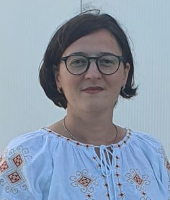
Oana AMĂRICĂI-BONCALO is a Professor at the Computer and Information Technology Department of University Politehnica Timisoara. She holds a Dr. Habil. Eng. degree and has served as Assistant Professor, Lecturer, and Associate Professor since 2009. Her research focuses on reconfigurable systems, system reliability, embedded systems, and forward error correction with FPGA applications. Education: Engineering Degree (2006) and PhD in Computer Engineering (2009), both from University Politehnica Timisoara. She was an invited researcher at University College Cork (2012) and University of Cergy-Pontoise (2016). Since 2017, she has been an Editor for Microprocessor and Microsystems (Elsevier). Research projects include GEMSCLAIM (green energy management in mobile systems). She supervises PhD student Andrei-Bogdan MIHĂILESCU. Recent publications emphasize LDPC decoding architectures, FPGA-based solutions, and reliability assessment in quantum circuits. Notable contributions include innovations in layered decoding algorithms, memory optimization for LDPC decoders, and one-hot data representation techniques. Her work intersects VLSI design, digital signal processing, and embedded systems reliability. Event organization includes a 2024 workshop on audio-video technical solutions and participation in IEEE symposiums. She contributes to academic events like the Mobile Applications Student Contest (SCMUPT).
Lorand Szabo is a Full Professor at the Department of Electrical Machines and Drives , Faculty of Electrical Engineering , Technical University of Cluj-Napoca , Romania. He has been affiliated with this institution since 1990, transitioning from Research and Design Engineer to Lecturer (1999), Associate Professor (2007), and Full Professor (current). He also served as an Invited Professor at Pannon University (Hungary, 2007-2008) and University of Pavia (Italy, 2015). Teaching : Special Electrical Machines (1985-present), Electrical Machines and Drives (1996-present), Computer Aided Design of Electromechanical Systems (2009-present). Supervision : Ph.D. supervisor since 2007 for 8 students (6 completed). Research Focus : Linear and variable reluctance electrical machines, fault-tolerant designs, bearing fault detection in motors, and condition monitoring. His work extends to automotive applications (electric vehicles, hybrid systems), wind energy generators, and sustainable material sourcing for electrical machines. Recent Publications (2023-2025) address critical topics in sustainable mobility, including rare earth material dependency, deep-sea mining for electric technologies, battery management systems, and resource-efficient motor designs. These works reflect his interdisciplinary approach combining electrical machine innovation with environmental and industrial systems thinking. Technical Expertise : Finite element analysis (JMAG, ANSYS Motor-CAD), LabVIEW modeling, fault detection algorithms (wavelet transforms, kurtosis deconvolution), and modular motor construction for automotive and renewable energy applications.
Antonella Elisa Chesca is a Lecturer at the Department of Fundamental, Prophylactic and Clinical Specialties, Faculty of Medicine, Lucian Blaga University of Sibiu. Her research focuses on leveraging MALDI-TOF mass spectrometry and machine learning for rapid diagnosis of acute respiratory infections, including SARS-CoV-2 and non-COVID pathogens. She collaborates with Kazakh institutions on clinical data analysis and algorithm optimization. Education: Not explicitly detailed but implied by academic rank and research output. Research Interests: Host-pathogen interactions, diagnostic technology development, and application of machine learning to mass spectrometry data. Her work emphasizes low-resource clinical settings and cross-geographic data integration. Article Trends: Recent publications highlight MALDI-TOF MS/ML pipelines for ARI differentiation, fungal allergy diagnostics, and standardized laboratory protocols. Keywords span biotechnology, data science, and clinical microbiology, with subfields including host mucosal perturbations and algorithm recalibration. Collaborations: Affiliated with Karaganda Regional Clinical Hospital and Karaganda Medical University in Kazakhstan. Co-authors include international researchers in machine learning and clinical microbiology.
Dana Petcu is a Professor at the Computer Science Department of the Faculty of Mathematics and Computer Science at West University of Timisoara. She serves as Director of both the Institute for Advanced Environmental Research and Institute e-Austria Timisoara. With expertise in distributed and parallel computing, she has published over two hundred papers on Cloud, Grid, Cluster, and HPC computing. She is also the chief editor of the open-access journal Scalable Computing: Practice and Experience (SCPE) and has coordinated multiple European Commission-funded projects. Education: Ms. Degree in Computer Science Ph.D. in Numerical Analysis Dana Petcu's research focuses on distributed and parallel computing systems. Her current interests include Cloud & Grid computing, and HPC & Cluster computing. Previously, she worked on Mathematical software, Numerical methods, and Computer graphics. Her work bridges theoretical foundations with practical implementations, particularly in resource management, scheduling algorithms, and scalable computing architectures. She has developed significant expertise in applying these technologies to scientific computing, data-intensive applications, and multi-cloud environments. Her scholarly output demonstrates consistent focus on cloud and distributed computing evolution. Over the past decade, her research has shifted from foundational grid computing to modern cloud technologies, edge computing, and exascale systems. Key themes include resource management across heterogeneous environments, autonomic systems, security SLAs, and multi-cloud portability. Her work shows increasing interdisciplinary connections, particularly with AI/ML techniques applied to resource optimization and anomaly detection in large-scale systems. Scientific Awards: Maria Sibylla Merian-Award (2005) IBM Faculty Award (2009) MLNR Award "Spiru Haret" (2015) Romanian Academy Award "Gheorghe Cartianu" (2015) Dana Petcu has advised numerous graduate students through various master's programs in Distributed and Parallel Computing. She has secured substantial research funding as coordinator of FP7 projects HOST and SPRERS, and as scientific coordinator of mOSAIC. Her grant portfolio includes multiple European Commission-funded initiatives focused on cloud computing infrastructure, resource management, and multi-cloud environments. She has also contributed to EU Research Activities in Cloud Computing as an editor, demonstrating her leadership in shaping European research agendas in this field. She leads the Computer Science Research Center (CCI) and High Performance Computing Service Center (HPC-UVT) at West University of Timisoara. Her teams develop and maintain significant infrastructure for distributed computing research, including simulation environments like CloudSim and iFogSim. She has established strong connections between academic research and practical applications through Institute e-Austria Timisoara, fostering technology transfer and innovation in cloud computing solutions.
Lőrinc Márton is a Professor of Control Systems at the Sapientia Hungarian University of Transylvania, where he serves as deputy head of the Department of Electrical Engineering and leads the Networked and Autonomous Control Systems research group. He also acts as a PhD supervisor at the Doctoral School of Information Science and Technology, University of Pannonia. Research Interests: Control-oriented modeling of dynamic systems Fault diagnosis in interconnected networks Delay compensation in communication systems Population dynamics and migration modeling Robot swarm coordination Key Contributions: Developed control strategies for chemical reaction networks Created delay-robust algorithms for computer networks Formulated migration cost-based population stabilization methods Contact: martonl@ms.sapientia.ro | Office: 1C Calea Sighisoarei, Corunca, Mures 94305, RO
Lect. dr. Elena-Andreea Florea is a Lecturer at the Faculty of Mathematics, Alexandru Ioan Cuza University of Iași. She holds a PhD in Mathematics (2017) and has held roles including Teaching Assistant (2018-2022) and Research Assistant (2017-2018). Her research focuses on variational analysis, scalar/vector optimization, and set-valued mappings. Education: PhD: "Contributions to the study of some vector optimization problems with variable order structure" (2014-2017) Master's: Mathematics Research (2012-2014) Bachelor's: Mathematics and Computer Science (2009-2012) Research Interests: Optimization theory with variable order structures Set-valued optimization and subdifferential calculus Topological properties in variational analysis Teaching: Mathematical Analysis (Faculty of Physics) Optimization Theory (Faculty of Mathematics) Algorithms and Complexity (Faculty of Mathematics) Grants: Principal Investigator in multiple grants focusing on variational analysis and vector optimization (2013–present) Conferences: Presentations at international conferences on set optimization and variational analysis (2016–2024)
National School of Political Studies and Public AdministrationRomania
Abdul Salam Al-Nuwaisri is an Associate Professor in the Department of Software Engineering at the College of Information Technology, University of Tripoli. His academic role focuses on software engineering education and research. Research Interests include: Software Engineering methodologies Programming languages and systems Technology-driven innovation Algorithm design and optimization
Olena Oleksandrivna Padchenko is a Senior Lecturer at the Department of Transport Technologies within the Transport Faculty of Zaporizhzhia Polytechnic National University. She has been actively contributing to the academic community since 2001, following her graduation with honors from Zaporizhia State Technical University. Her academic career has been dedicated to advancing knowledge in transport systems, particularly focusing on industrial applications within metallurgical enterprises and broader transportation infrastructure. Dr. Padchenko's research interests center around industrial transport systems, transport efficiency optimization, and transport ecology. Her work demonstrates a strong practical orientation with significant applications in metallurgical production environments. She has developed expertise in micrologistics systems, railway transportation scheduling, and the optimization of material handling processes within industrial settings. Her research consistently addresses real-world challenges faced by Ukrainian industrial enterprises, particularly in the metallurgical sector. Analysis of her publication record reveals a consistent research trajectory focused on transport optimization within industrial contexts, particularly metallurgical enterprises. Her work spans from fundamental studies of transport infrastructure's economic impact to highly specific operational improvements in metal product loading and railway transportation scheduling. The publications show increasing sophistication in methodology while maintaining practical relevance to industry needs. Her research demonstrates strong collaboration patterns, particularly with S.M. Turpak and G.O. Lebid, suggesting well-established research partnerships. Honorary certificate from the Zhovtnevyi District Administration of Zaporizhzhia (2012) Dr. Padchenko has actively participated in numerous academic conferences, including the 'Week of Science' series at Zaporizhzhia Polytechnic National University and international transport technology conferences. Her conference presentations consistently address practical transport optimization problems in metallurgical production, demonstrating her commitment to bridging academic research with industrial applications. She teaches courses in Transport Management, Industrial Transport, and Transport in the Production Process of Enterprises, preparing the next generation of transport specialists.
Mihai Mocanu is a Lecturer at the University of Craiova, affiliated with the Faculty of Automatic Control, Computers and Electronics. His work spans machine learning, educational data mining, and medical imaging technologies. Research Interests: He focuses on developing interpretable machine learning models, particularly using decision trees for educational data mining and GIS analysis. His work also includes designing e-learning systems with personalized recommendation workflows and enhancing engagement through data-driven approaches. Notable Contributions: Mihai has pioneered segmentation techniques for 3D medical imaging, created adaptive learning systems with stacked models, and explored social network impact on education. His research integrates pedagogical agents and usability evaluation frameworks in e-learning platforms.
Cristian Mihaescu is a Lecturer at the Department of Computer Science and Engineering (DCTI), University of Craiova, within the Faculty of Automatic Control, Computers and Electronics. He is actively involved in teaching and research related to machine learning, distributed systems, and educational data mining. Teaching: Data Structures and Algorithms, Parallel and Distributed Algorithms, Machine Learning, Distributed Systems Engineering Research Focus: Machine learning applications in education, social network analysis, and compiler optimization Technological Interests: Microservices, data mining, and intelligent system design
Prof. Dr. Ing. Alexandru Isar is a Full Professor at the Department of Communications, Faculty of Electronics and Telecommunications, Politehnica University of Timișoara. He holds academic ranks since 1990 (Adjunct Professor), 1995 (Associate Professor), and 1999 (Full Professor). His research focuses on signal processing, wavelet analysis, and medical imaging. He has advised 5 Ph.D. students and currently supervises 2 doctoral candidates. Isar has published extensively in IEEE journals and authored books on time-frequency representations and network security. **Education**: Ph.D. in Engineering (1993), supervised by Prof. Eugen Pop. Completed postdoctoral research at Telecom Bretagne, France (2003). **Grants**: European Space Agency-funded projects (2013-2017) and national grants (IDEI 2009-2011). **Research Directions**: Introduced time-frequency representations and wavelet theory applications. **Notable Contributions**: Inventions in ultrasonic control systems (1987), development of the Hyperanalytic Wavelet Transform (2008), and SAR/SONAR image denoising algorithms. **Administrative Roles**: Deputy Dean (2001-2004), Department Director (2012-2020). **Collaborations**: European Space Agency projects, international conferences (Brest, Bordeaux), and peer reviews for IEEE journals. His work bridges theoretical signal processing with practical applications in healthcare and telecommunications.
Corina Botoca is an Associate Professor at the Politehnica University of Timișoara, Faculty of Electronics and Telecommunications. She joined the university in 1988 as an assistant, progressing to works manager (1996–2006), and has held her current position since 2006. Her research focuses on neural networks applied to signal processing, telecommunications, and medical diagnostics, with notable contributions in nonlinear systems and image analysis. She has authored/co-authored books on neural networks and signal processing techniques, and her work includes pioneering studies on prostate cancer prediction using neural networks (accuracy exceeding 95%). Botoca has received the ETC Excellence Award in 2004 and 2006. She serves on multiple academic committees, including quality assurance and accreditation, and has led significant grants such as the PN II bilateral project on facial expression recognition (2009–2010). Her teaching innovations include courses on cellular neural networks and data communications. She has established research labs like B712 (Data Communications) and B219 (Selected Topics on Communications Networks), advancing interdisciplinary research in medical imaging and telecommunications. Her publications span over three decades, with key articles in IEEE and WSEAS journals. Notable works include 'Nonlinear complex channel equalization using a radial basis function neural network' (2004) and 'Cellular neural network processing of CEUS examination' (2016). Botoca’s administrative roles include membership in the Department Council and leadership in quality assurance initiatives, reflecting her dual commitment to research and institutional governance.
Sorin Anagoste is a Professor and Vice Dean for Academic Affairs at FABIZ, part of the Bucharest University of Economic Studies. His primary affiliation is with the Bucharest Business School (BBS), where he contributes to academic leadership and faculty governance. He holds a PhD and focuses on interdisciplinary research at the intersection of business strategy, technology, and innovation. His academic career spans over two decades, with a strong emphasis on advancing education and research in digital transformation, artificial intelligence, and entrepreneurship. Prior roles include leadership in mergers and acquisitions studies, transformational leadership research, and Lean Six Sigma methodologies. Research Interests: Artificial Intelligence applications in business decision-making Digital transformation strategies Entrepreneurship dynamics across generations Impact of AI on political and economic systems Knowledge dynamics in organizational contexts Recent work emphasizes the societal implications of AI, including election influence via LLMs, post-pandemic consumer behavior, and Romania's economic interdependencies through Leontief matrix analysis. He has authored over 35 articles on topics ranging from robotic process automation to sustainable development. Professional Activities: Academic leadership in business education reform Consultancy on digital strategy for enterprises Founder of BBS's strategic frameworks for chatbot implementation
Gheorghe Asachi Technical University of IasiRomania
Prof. Donciu Codrin is a full professor at the Department of Electric Power Engineering, Technical University of Iasi. His research spans interdisciplinary fields including signal processing, image processing, earthquake early warning systems, and textile engineering. He leads projects on seismic response analysis using uniaxial shaking tables, non-invasive eye safety systems (e.g., Opto-Guard), and ESD-protective textiles. His work integrates hardware design (e.g., electrodynamic actuators) with advanced algorithm development for applications like video-based distance measurement and apparel sizing estimation. Research projects include: Signal Processing : OFDM modulation, DFT/FFT algorithms, and seismic waveform analysis Computer Vision : Pattern recognition, 3D reconstruction, and human-centric interface design Structural Engineering : Earthquake simulation platforms and early warning system validation Textile Innovation : Conductive fabric development for ESD protection and functional garments Recent publications focus on seismic wave analysis (2023–2025), optoelectronic safety systems (2022), and ultrasonic sensing technologies (2020–2021). His work bridges theoretical signal processing with real-world applications in disaster preparedness and ergonomic design.
Ioana Mădălina PETRE is a Lecturer at the Department of Engineering and Industrial Management within the Faculty of Technological Engineering and Industrial Management at the University of Technical Education in Brașov (UNITBV). Her research focuses on industrial engineering, human resources management, and the application of pneumatic muscles in rehabilitation equipment and precise positioning systems. She has conducted experimental studies on cutting parameters' influence on machining efficiency, biomechanical analyses of exercise techniques, and the integration of Industry 4.0 principles in sustainable manufacturing. Her work spans diverse fields including e-learning systems, smart horticulture frameworks, and material surface engineering. Notable contributions include developing rehabilitation equipment inspired by biomimetic principles and analyzing the impact of e-learning platforms during crises. She has published extensively in peer-reviewed journals, with a focus on interdisciplinary applications of engineering and technology in education, healthcare, and manufacturing. Her research trends highlight a strong emphasis on practical industrial solutions, sustainable technologies, and the intersection of biomechanics with engineering design. While no specific grants or awards are listed, her publications indicate active participation in collaborative research projects with colleagues from various disciplines. Dr. PETRE’s research group likely engages in experimental setups involving advanced manufacturing processes, robotic systems for rehabilitation, and data-driven analyses of industrial and educational systems. Her work reflects a commitment to bridging theoretical engineering principles with real-world applications in healthcare, education, and sustainable production.