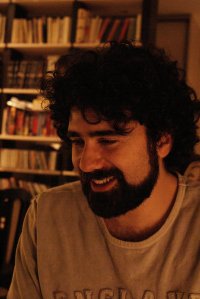
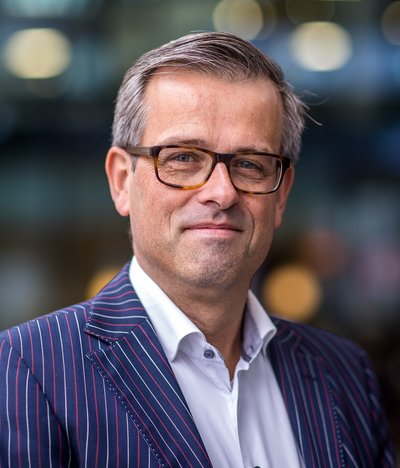
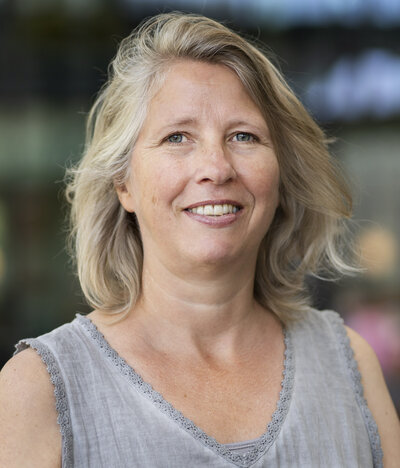
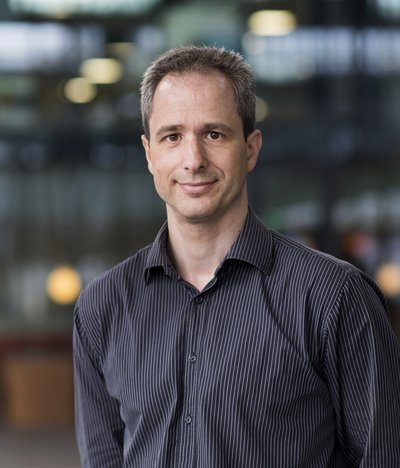
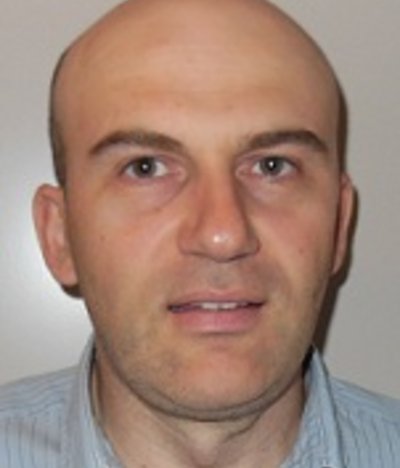
Prof. dr. Albert Salah (Utrecht University) serves as Professor of Social and Affective Computing in the Department of Information and Computing Sciences. His research spans computer vision, machine learning, and computational social science with applications in behavioral analysis, mental health, migration studies, and animal welfare. He leads the AI and Animal Welfare Lab and contributes to the Utrecht Platform for Applied Data Science. Chair: Social and Affective Computing Editorial Roles: Associate Editor for Pattern Recognition and International Journal on Human-Computer Studies Leadership: IEEE FG Steering Committee, ACM ICMI Steering Committee Research focuses on: Human behavior analysis at individual, group, and societal scales Multimodal interaction modeling Mobile phone data applications for migration and mobility Computer vision for animal pain detection Ethical AI in asylum procedures Key scientific activities include: Co-organizing 11th International Symposium on Brain and Cognitive Science (2025) Workshops at ACM ICMI 2025 and IEEE FG conferences Founding Dutch chapter of IEEE Biometrics Council His work appears in journals like: Science Advances IEEE Transactions on Affective Computing EPJ Data Science Image and Vision Computing
Letao Li is a Researcher in the Pharmacy department at Erasmus MC, specializing in clinical pharmacology with focus on pharmacokinetics and pharmacodynamics in vulnerable patient populations. Affiliated with Rotterdam-based research teams, Li's work bridges pharmaceutical sciences and critical care medicine. Research interests center on drug behavior in inflammatory conditions, particularly examining how biomarkers like C-reactive protein alter pharmacokinetics in sepsis, pre-eclampsia, and pediatric oncology. Key themes include protein binding dynamics, glucocorticoid therapy optimization, and precision dosing for antibiotics in critically ill patients. Recent publications reveal strong emphasis on translating pharmacokinetic findings into clinical practice, with trends showing increasing focus on model-informed precision dosing (MIPD) frameworks. The work consistently addresses therapeutic challenges in high-risk groups including neonates, pregnant women, and sepsis patients. Key research areas: Pharmacokinetic alterations during inflammation Dexamethasone/betamethasone optimization in special populations Temocillin protein binding in critical illness Biomarker-guided dosing strategies Li's collaborative network spans multiple European institutions with significant work in pediatric oncology pharmacology and critical care pharmacotherapy. Current research appears focused on implementing precision dosing algorithms for vulnerable populations through model-informed approaches.
Dr. ir. Janneke Bolt is a Researcher at the Department of Information and Computing Sciences , Faculty of Science , Utrecht University . Her work focuses on Bayesian networks , probabilistic graphical models , and independence relations in Artificial Intelligence and Data Science . She has published extensively on topics such as probabilistic independence , loopy propagation , and sensitivity functions . Her recent research includes self-adhesivity in lattices of abstract conditional independence models and Bayesian network applications in medicine . Collaborators include L.C. van der Gaag and S. Renooij . Research Areas: Bayesian Networks Probabilistic Inference Independence Relations Machine Learning Uncertainty Quantification Medical AI Recent Publications (2025-2014): Self-adhesivity in Lattices (2025) Bayesian Networks in Medicine (2024) Semi-Graphoid Rule Generalizations (2023) Lattice-Based Independence Representations (2020) Multi-Dimensional Bayesian Classifier Tuning (2016) Collaborations: L.C. van der Gaag S. Renooij J. de Bock A. Hommersom
Sophie Bots is an Assistant Professor at Utrecht University , affiliated with the Faculty of Science and the Pharmacoepidemiology & Clinical Pharmacology department. Her research focuses on methodological challenges in using observational real-world data for pharmacoepidemiology, particularly in cardiovascular medication safety and sex differences. Areas of Expertise: Epidemiology, Real World Evidence, Methods and Statistics, Cardiovascular Diseases, Gender-Specific Research Research Themes: Data Science, Cohort Studies, Vaccine Safety (e.g., COVID-19), Adverse Drug Reactions Recent publications highlight her work on self-controlled designs for vaccine safety analysis, sex differences in medication outcomes, and leveraging clinical care data for cardiovascular research. She collaborates across European institutions and contributes to methodological frameworks in observational studies. Her 2025 Pharmacoepidemiology and Drug Safety article introduces core concepts in self-controlled designs, while her 2022 Open Heart study explores statin efficacy in women. Current projects include optimizing coronary imaging decisions through machine learning and analyzing baseline risk impacts in diabetes patients. Although no specific scientific awards are listed in the provided texts, her work has been widely shared on academic platforms like Mendeley and social media. She has not been mentioned to have formal advisees or part-time status.
Dr. Matthieu Brinkhuis is an Associate Professor at the Faculty of Science , Utrecht University , with a focus on Software Technology for Learning and Teaching . He serves as Director of Education for the Department of Information and Computing Sciences and is a Senior Fellow at the Center for Academic Teaching and Learning. His work bridges Learning Analytics , Computational Psychometrics , and Human-Centered AI . Research Themes : AI Labs, Governing the Digital Society, Human-Centered Artificial Intelligence Technical Expertise : Data Science, Learning Analytics, Adaptive Learning Systems, Process Mining His scholarly output includes pioneering methods like the Urning Algorithm for dynamic ability tracking and Federated Learning Analytics balancing privacy and performance. He leads the Utrecht Platform for Applied Data Science and contributes to Higher Education Research through large-scale online learning systems. Notable collaborations include projects on Privacy in SMEs , E-Assessment Validation , and Cognitive Diagnostic Models for actionable educational feedback. His work has been published in venues such as the British Journal of Mathematical and Statistical Psychology and Frontiers in Education .
Eduardo Calò is a PhD Candidate in Natural Language Processing (NLP) at the Department of Information and Computing Sciences , Utrecht University, under Prof. Kees van Deemter. He works on the Interactive Natural Language Technology for Explainable Artificial Intelligence (NL4XAI) project, funded by EU Horizon 2020 under a Marie Sklodowska-Curie grant. Research Focus: Logic-to-text generation, formula simplification, and explainable AI Projects: LoLa system development, GECko+ error correction tool Expertise: Computational linguistics, hybrid symbolic-neural approaches, multilingual NLP His work spans four key areas: (1) translating logical formulae into natural language with hybrid methods, (2) evaluating text quality through faithfulness and fluency metrics, (3) simplifying first-order logic expressions, and (4) developing writing assistance tools. He seeks to bridge symbolic logic with neural language models while addressing cross-linguistic challenges. Recent publications demonstrate technical depth in formula minimization using QBF solvers, UX optimization for NLP interfaces, and discourse-level error correction systems. Collaborations include Albert Gatt, Jordi Levy, and Kees van Deemter across multiple EU-funded initiatives.
S. Fazi is a researcher at the Department of Technology, Policy and Management , Delft University of Technology. Her work focuses on transport logistics , operations research , and container shipping , with particular attention to offshore wind energy , multimodal networks , and freight transportation . Transport & Logistics network design Operations Research for optimization Offshore wind farm logistics Recent research trends include multimodal hub location problems , container drayage optimization , and collaborative air cargo frameworks . She has contributed to offshore wind turbine substructure installation strategies and dry-port logistics through data-driven models and decision support systems. Scientific awards : NWA - ORC 2022 - Onderzoek op Routes door Consortia (2023) Open Education Stimulation Fund 2022 (2023) Her work spans freight network design , maritime container stowage , and resource sharing in wind energy maintenance , often involving large-scale optimization algorithms and collaborative frameworks.
Dr. Michiel Schaeffer is a Researcher at the Environmental Sciences Department within the Faculty of Geosciences at Utrecht University . He specializes in climate change mitigation, adaptation economics, and policy analysis, with a focus on global warming limits (1.5°C/2°C), carbon budgets, and climate-vegetation interactions. Research Interests His work spans climate science , integrated assessment modeling , and climate policy , addressing topics like: Climate-vegetation feedbacks Adaptation costs in developing countries Greenhouse gas emission accounting Climate-resilient agriculture Temperature target governance Recent studies analyze crop suitability under climate change and climate adaptation in East Africa , while earlier work explored sea-level rise projections and land-use impacts on climate models. Scientific Network Collaborates with institutions like Climate Analytics and International Institute for Applied Systems Analysis (IIASA) Works with researchers: William Hare , Carl-Friedrich Schleussner , Malte Meinshausen
Giel Stoepker is an external PhD candidate at the Montaigne Centre for the Rule of Law and Administration of Justice and the Faculty of Law, Economics and Governance at Utrecht University since January 2022. He works as a judicial auditor-researcher at the academic office of the Central Appeals Tribunal (main position) and serves on multiple objections committees for municipalities and social chambers. Born: 1993 Supervisors: Professor Philip Langbroek and Professor Elaine Mak Research Focus: His doctoral research examines the organization of administrative justice and collaboration between judicial lawyers and administrative judges, addressing how judicial lawyers can enhance rule-of-law compliance, efficiency, and effectiveness in administrative justice. Article Trends: His work emphasizes procedural innovations in administrative law, judicial collaboration models, problem-solving approaches in adjudication, and the intersection of legal practice with data science. Key themes include rule-of-law compliance, judicial professionalization, and citizen-government interactions. Secondary Activities: Member of Breda, Waalwijk, and Baanbrekers Objections Committees Persistent annotator at the jurisprudence journal JB Lecturer at Arnhem and Nijmegen University of Applied Sciences
Jacob Seifert is a postdoctoral researcher in the Nanophotonics group at Utrecht University's Faculty of Science. He completed his Ph.D. in 2024 with a thesis titled "Differentiable Modeling for Computational Imaging." His research focuses on advanced metrology for logic semiconductor circuits through wavefront shaping, in collaboration with industrial partners, with the aim of developing highly precise nanoscale overlay (OVL) and alignment metrology techniques. He is based at the Leonard S. Ornstein Laboratory in Utrecht. Dr. Seifert's research interests center on computational imaging techniques, particularly ptychography, which reconstructs high-resolution images from diffraction patterns. His work bridges theoretical optics, computational physics, and practical applications in semiconductor metrology. He has developed expertise in noise modeling, automatic differentiation for optimization, and machine learning integration to improve imaging results. His technical skills include programming in Python, C++, Mathematica, and Matlab, along with data visualization and computational modeling. Analysis of Dr. Seifert's publication record reveals a strong progression from fundamental algorithm development to practical applications. His work demonstrates increasing sophistication in handling noise, optimizing illumination, and applying machine learning techniques to computational imaging problems. Recent publications show growing collaboration with industrial partners, highlighting the practical relevance of his research to semiconductor manufacturing processes. Dr. Seifert has not been mentioned as receiving any specific scientific awards in the available information. While no formal students are listed in the provided information, Dr. Seifert has collaborated extensively with researchers including Allard Mosk (his primary collaborator), Yiyi Shao, Sander Weerdenburg, and others in the Nanophotonics group. His research has been supported through academic-industrial partnerships focused on semiconductor metrology applications. Dr. Seifert is part of the Nanophotonics research group at Utrecht University, which focuses on advanced optical techniques for imaging and measurement at the nanoscale. His work integrates computational methods with optical physics to solve challenging problems in semiconductor manufacturing and nanoscale characterization, particularly in the area of extreme ultraviolet (EUV) imaging which is critical for next-generation chip fabrication.
Bart Smolders is a Full Professor and Chair of the Electromagnetics (EM) group at Eindhoven University of Technology (TU/e), where he leads the Future Chips Flagship program. His expertise spans antenna systems, microwave engineering, and advanced wireless communication technologies (5G/6G and beyond). Department: Electrical Engineering Key Groups: Center for Wireless Technology Eindhoven, EM Antenna Systems Lab, EAISI High Tech Systems Research focuses on integrated antenna systems , including phased-arrays and focal-plane arrays for next-generation wireless networks. He actively coordinates European projects like SILIKA and MYWAVE, addressing challenges in millimeter-wave communications, massive MIMO systems, and software-defined antennas. His work emphasizes reducing antenna array complexity while maintaining performance metrics like directivity and sidelobe levels. Notable contributions include error modeling for antenna measurements using circular statistics (improving phase uncertainty calculations) and methodologies for sub-THz antenna design (analyzing AiP/AoC systems for small-form-factor applications vs. lens antennas for high-gain scenarios). His team also explores calibration techniques for measurement accuracy in emerging frequency ranges. He co-founded the Dutch 6G Flagship program (FNS-6G) and leads AntenneX, a startup providing over-the-air testing facilities for 5G/6G and radar applications. His leadership extends to educational programs as former director of EE department education (2010-2015) and current dean roles.
Marcel Roeloffzen is a Lecturer at Eindhoven University of Technology , affiliated with the Mathematics and Computer Science department and the Applied Geometric Algorithms group. His research focuses on computational geometry, dynamic graph algorithms, and data structure optimization. Education: Master's thesis on imprecise point sets (2009) His work spans geometric algorithms for point set analysis (e.g., line segment stabbers for clusters) and graph coloring under dynamic changes. Recent articles address visibility queries in polygons and Fréchet distance metrics for uncertain curves. Notable trends include dynamic optimization in graph algorithms and spatial data analysis for robust geometric representations. He teaches courses like Advanced Algorithms and Data Structures at TU/e.
Judith Keijsper is a Lecturer at the Department of Mathematics and Computer Science at Eindhoven University of Technology (TU/e) , where she has been affiliated since 2000. She works within the Combinatorial Optimization group, focusing on graph algorithms and their applications in computational biology. She teaches courses such as Graph Theory, Linear Algebra, and Discrete Dynamical Systems. Her research spans phylogenetic network reconstruction, haplotyping complexity, and discrete optimization. Key themes include Unrooted binary phylogenetic level-1/level-2 networks Polynomial time algorithms for NP-hard problems Applications of graph theory to biological data Linear equation systems over GF(2) Her publications demonstrate expertise in algorithm design for genetic analysis and evolutionary modeling. No scientific awards are explicitly mentioned in the provided texts.
Martijn van Beurden is a Full Professor in the Electromagnetics group at Eindhoven University of Technology's Department of Electrical Engineering. His research focuses on computational electromagnetics for high-tech systems, particularly inverse scattering problems and electromagnetic field optimization. Key affiliations: Electromagnetic and Multi-Physics Modeling and Computation Lab, Center for Wireless Technology Eindhoven, EAISI Foundational Research Interests : Specializes in numerical methods for electromagnetic wave analysis, design, and detection. Areas include inverse scattering, integral equations, nonlinear optimization, and modeling of stochastic/uncertain electromagnetic fields. Current projects address periodic structures, antenna design, and soft X-ray metrology. Scientific Awards : C.I.V.I. prize for Electrical Engineering (MSc thesis, 1997) ASML prize for best PhD thesis in applied research (2004) Advising & Collaborations : Collaborates with researchers like Stefan Eijsvogel, Roeland Dilz, and Radovan Bojanic on computational electromagnetics projects.
Vojkan Vidojkovic is an Associate Professor in the IC design group within the Electrical Engineering department at Eindhoven University of Technology (TU/e). With extensive experience bridging academia and industry, he contributes significantly to RF and mm-wave research and education at TU/e. Education: MSc degree from University of Nis, Serbia (1999) PhD degree from Eindhoven University of Technology, Netherlands (2007) Professor Vidojkovic's research focuses on RF integrated circuits and systems for wireless communications across multiple generations (2G through 5G and mm-wave). His work spans satellite communications, radar sensing technology, and next-generation wireless systems. He combines theoretical expertise with practical industry experience to develop power-efficient RF solutions for inter-satellite links, automotive radar, and communication systems. His recent publications demonstrate expertise in RF beamforming transmitters, low-power radar architectures, and mm-wave systems for communications and sensing. These works showcase advancements in efficiency, compactness, and performance for next-generation wireless applications. Scientific Recognition: TPC member of International Solid-State Circuit Conference (ISSCC) 2015-2016 Author of 3 books Holder of 5 patents Author of 3 journal papers, 3 invited papers, and 22 conference papers Professor Vidojkovic has successfully led multidisciplinary teams in both academic and industrial settings. His career path has interwoven scientific research with practical industry applications, resulting in multiple generations of transceivers that progressed from concept to high-volume production for leading phone manufacturers. He currently teaches courses including Electronic and Photonic Components, Components in Wireless Technologies, Fundamentals of Electronics, Advanced CMOS Design, and RF Transceivers 2: Design. Research Groups: RF Sensing & Communication Lab Integrated Circuits Group Center for Wireless Technology Eindhoven