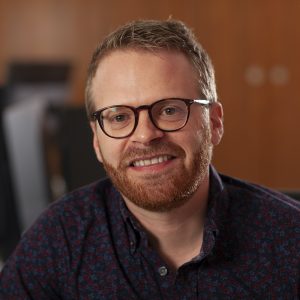
Daniel Stilck França is an Associate Professor at the Department of Mathematical Sciences within the Faculty of Natural and Life Sciences at the University of Copenhagen . He is affiliated with the QMATH Centre for Quantum Mathematics and related research networks. His research focuses on quantum information and computation , particularly on noise characterization in quantum systems, its impact on computational tasks, and quantum-inspired convex optimization algorithms. Recent work explores tensor networks and quantum error mitigation limitations. Key publications (2023-2025) address topics like Pauli channel estimation, Hamiltonian parameter learning, and quantum simulator scalability. His work has been featured in Nature Communications , Nature Physics , and ACM/IEEE conferences.
Yassine Ghannane is a Research Fellow at the Department of Computer Science , University of Copenhagen , specializing in Algorithms and Complexity . University: University of Copenhagen Department: Department of Computer Science Research Focus: Theoretical computer science, permutation-based evolutionary algorithms, computational complexity His recent work includes runtime analysis and theory development for permutation-based evolutionary algorithms, as well as module-based neural network mapping heuristics. Publications span 2022–2024 with interdisciplinary applications in machine learning and optimization. Contact: yagh@di.ku.dk | Office: Universitetsparken 1, 2100 København Ø, Denmark
Christian Igel is a Professor at the Department of Computer Science, University of Copenhagen, and serves as director of the SCIENCE AI Centre . He is also a co-lead of the Pioneer Centre for Artificial Intelligence in Denmark. His academic journey includes a Doctoral degree from Bielefeld University (2002) and a Habilitation degree from Ruhr-University Bochum (2010). Igel is a Juniorprofessor (2002–2010) and has held editorial roles at journals like KI - Künstliche Intelligenz and Artificial Intelligence Journal . Doctoral degree: Faculty of Technology, Bielefeld University, Germany (2002) Habilitation degree: Department of Electrical Engineering and Information Sciences, Ruhr-University Bochum, Germany (2010) His research spans Machine Learning , focusing on Support Vector Machines , Evolution Strategies , Reinforcement Learning , Deep Neural Networks , and PAC-Bayesian Analysis . He applies these methods to Environmental Monitoring , Medical Diagnostics , and Climate Research . Recent publications highlight work on adversarial machine learning , environmentally sustainable AI , and tree resource mapping using deep learning. His scientific awards include being a ELLIS Fellow . Igel’s software tools like Shark , woody , and Multi-Planar UNet are widely used in research and industry. Notable grants and collaborations involve projects with European Lab for Learning and Intelligent Systems (ELLIS) , SCIENCE AI Centre , and international teams in Denmark , Germany , and France . His lab leadership emphasizes open-source frameworks and reproducible research. Editorial Roles: German Journal on Artificial Intelligence , Evolutionary Computation Journal , Artificial Intelligence Journal Software Projects: Shark , woody , Multi-Planar UNet , U-Time Collaborations: SCIENCE AI Centre , Pioneer Centre for Artificial Intelligence , European Lab for Learning and Intelligent Systems
Francisco Camara Pereira is a Professor and Head of Section at the Department of Technology, Management and Economics at the Technical University of Denmark (DTU). His research focuses on Intelligent Transportation Systems, Machine Learning, and Data-Driven Decision-Making in transportation contexts. He actively contributes to advancing transportation science through interdisciplinary approaches combining simulation, optimization, and AI techniques. His work addresses challenges in public transport analysis, charging infrastructure planning, and multimodal demand prediction. Recent projects include developing graph-based optimization methods for electric vehicle networks and causal discovery frameworks for transportation systems. He supervises multiple PhD students in areas like federated learning for cyclist safety, causal graph neural networks, and socially aware AI models. Key contributions include publications on smart card data analysis for travel surveys, stochastic infrastructure expansion models, and transfer learning for bike-share systems. His research aligns with UN Sustainable Development Goals related to sustainable cities and innovation. Dr. Pereira collaborates internationally on transportation policy and infrastructure projects. His lab focuses on translating theoretical advancements into practical solutions for urban mobility challenges.
Qiongxiu Li is a Tenure-Track Assistant Professor in the Cyber Security group at Aalborg University's Copenhagen campus, part of the Technical Faculty of IT and Design. Her research focuses on cybersecurity, distributed optimization, privacy/security, and federated learning. She has authored/co-authored 38 papers in top-tier venues including IEEE Transactions on Information Forensics and Security, ICLR, and EUSIPCO. Education: PhD in Privacy and Security from Aalborg University (2018-2021). Notable achievements include winning the EUSIPCO 2020 3MT Contest and co-delivering a tutorial on privacy-preserving distributed optimization at EUSIPCO 2024. She actively reviews for conferences like NeurIPS, ICLR, and journals such as TPAMI and TIFS. Research Themes: Privacy-preserving distributed algorithms, federated learning security, differential privacy, and adversarial machine learning. Recent Trends: Focus on securing AI systems (e.g., LLM vulnerabilities, federated clustering privacy), quantization for privacy, and theoretical bounds in decentralized learning. Awards: 2020 EUSIPCO 3MT Winner (outstanding finalist in EURASIP's annual doctoral research competition). Grants/Projects: Co-PI of the AI:SECURITY project (2025-2029) addressing AI security threats like phishing and malicious actors. Labs/Teams: Leads the Cyber Security group at Aalborg's Copenhagen campus, focusing on theoretical and applied research in secure distributed systems.
Erwin Schoof is an Associate Professor at the Department of Biotechnology and Biomedicine , Technical University of Denmark. He leads the Cell Diversity Lab and focuses on advancing proteomics and mass spectrometry technologies. Expertise in single-cell proteomics , stem cell niches , and bioinformatics . Active in myelofibrosis and leukemia research , with applications in UN Sustainable Development Goals . Research Trends from 2025–2024 include: Machine learning-driven peptide sequencing (InstaNovo, InstaNexus). Single-cell resolution tools for mapping hematopoietic stem cells and tumor microenvironments . Biomarker discovery in chronic diseases and respiratory conditions . Supervision : Mentors multiple PhD students on single-cell proteomics , omics data analysis , and biotherapeutic production . Labs & Collaborations : Collaborates with international teams on plasma proteomics , 3D bioengineering , and advanced mass spectrometry workflows .
Ankit Kariryaa is a Tenure Track Assistant Professor at the Department of Computer Science and Department of Geosciences and Natural Resource Management , University of Copenhagen. His work bridges Machine Learning and Environmental Informatics , focusing on remote sensing, geospatial analysis, and ecological modeling. University of Copenhagen, Denmark Machine Learning Section, Department of Computer Science Geography, Land, Environment and Society, Department of Geosciences Kariryaa specializes in applying deep learning and computer vision to environmental challenges. His research includes: Automated tree detection and biomass estimation via satellite imagery Multi-modal geospatial representation learning Monitoring farmland tree decline and carbon sequestration potential Agroforestry system mapping using AI Developing AI tools for climate policy and sustainability Recent work trends show a focus on quantum-inspired machine learning , environmental monitoring , and cross-cultural AI applications . His 15 most recent publications span topics in remote sensing , ecological modeling , and AI ethics , with methods ranging from neural networks to tensor-based learning. He collaborates across disciplines, notably with researchers in ecology , climate science , and quantum computing . His outreach includes seminars on AI in agroforestry and ecosystem management , while his team contributes to global tree resource databases like TreeSense.
Andrea Burattin is an Associate Professor at the Department of Applied Mathematics and Computer Science, Technical University of Denmark. His work bridges formal methods and practical process analysis, focusing on process mining, business process management, and hybrid modeling techniques. He actively contributes to research in healthcare process optimization, streaming data analysis, and system verification through Petri nets and CCS transformations. UN Sustainable Development Goals: Poverty eradication, environmental protection, and prosperity for all (via process optimization) Active projects: Immersive Process Mining (2024-2027), Usability and Understandability of Hybrid Process Models (2018-2021) His research explores large language model integration with process mining, proposing frameworks like Tiramisù for multi-faceted process visualization and PN2CCS for formal model translation. Recent work emphasizes real-time monitoring, conformance checking, and IoT-driven process analytics. Key trends in his publications include: 1) Streaming process mining pipelines (2022-2025); 2) LLM-plan generation frameworks (2024); 3) Formal verification techniques (Petri nets, CCS); 4) Healthcare process modeling (2019-2023); 5) Behavioral pattern analysis in process compliance. Scientific Awards Best Demo Award (2022, 2016) Best Process Mining Dissertation Award (2014) Best Workshop Paper (EDBA and PODS4H, 2023) As advisor, he supervises PhD projects on process mining and hybrid modeling. His editorial roles include Information Systems reviewer (2024-2025) and past editor for Engineering Applications of AI (2022-2023). Collaborations span Denmark, Italy, and the Netherlands.
Sebastian Risi is a Professor at the IT University of Copenhagen , where he directs the Creative AI Lab and co-directs the Robotics, Evolution and Art Lab (REAL) . His work bridges computational evolution, deep learning, and collective intelligence for applications in robotics, art, and video game design. His research focuses on self-organizing AI systems that grow or assemble through local interactions, inspired by biological development. Key areas include neuroevolution , neural cellular automata , and generative modeling , with applications in adaptive robotics, game content creation, and damage-resilient AI. Recent publications highlight trends in self-assembling neural architectures (NDPs) and 3D functional machine generation (Minecraft experiments). Awards include ERC Consolidator Grant (2022), Best Paper at FDG’21 , and Google Faculty Award (2019). Scientific Awards : ERC Consolidator Grant (GROW-AI), Best Paper FDG’21, Runner-Up IEEE Games’20, GECCO 2017 Competition Winner, Sapere Aude Grant, Amazon/Google Faculty Awards He advises on projects like GROW-AI (EU-funded), AI-TESTER (game testing), and C2SIM (military systems). Media coverage includes Science , Wired , and Popular Science .
Zhiru Sun is an Associate Professor at the University of Southern Denmark, affiliated with the Department of Design, Media and Educational Science. Their research focuses on the intersection of education, humanities, and data science, with expertise in Learning Analytics (LA), Digital Humanities (DH), and AI applications in education and humanities. Sun holds a Ph.D. in Educational Technology from The Ohio State University (2011–2015), alongside advanced degrees in Applied Statistics and Cultural Foundations of Technology. Key research interests include student motivation and performance analysis, historical data mining in DH, and human-centered AI in education. They have received notable awards such as the Outstanding Proposal Award (2021) and the Loadman Outstanding Dissertation Award (2016). Sun leads projects like 'Empowering Humanities Education with Deep Learning' and 'Flipped Classroom Design for Self-Regulation.' Their work spans collaborative learning algorithms, flipped classroom efficacy, and generative AI policy analysis in education. Educations: Ph.D. in Educational Technology, M.Sc. in Applied Statistics, and M.Sc. in Cultural Foundations (all from The Ohio State University) Key Projects: FREI: The Danish Family Revolution, DH Visualization Tools Teaching: Courses include Digital Humanities, Data Science, and Web-mediated Communication Recent publications address learner empowerment in online environments, negotiation skills in collaborative games, and group formation algorithms for optimal learning outcomes.
Philip Bille is a Professor and Head of the Algorithms, Logic and Graphs section at the Department of Applied Mathematics and Computer Science, Technical University of Denmark (DTU), College of Engineering. His research centers on the design and analysis of efficient algorithms, particularly for string processing, compressed data, and data structures. His research interests lie at the intersection of theoretical computer science and practical applications. He focuses on algorithms , data structures , string indexing , pattern matching , and compressed computation . His work enables efficient querying and processing of large-scale, repetitive data, with applications in bioinformatics, intrusion detection, and green computing. The recent publications reflect a strong trend in developing space-efficient and fast algorithms for modern computational challenges. Key themes include compressed data structures , sliding window indexing , finite automata compression , and energy-aware matrix operations . These works demonstrate expertise in balancing theoretical rigor with practical performance. Philip Bille actively supervises multiple PhD students and leads several research projects. He contributes to advancing sustainable computing aligned with UN SDGs. His work integrates algorithmic theory with real-world efficiency. Supervises PhD projects on hierarchical compression, adaptive computation, and vector processor algorithms. Involved in research on green computing, compressed formats, and efficient data models. He is affiliated with the Algorithms, Logic and Graphs group at DTU, a hub for theoretical and applied algorithmic research. The team explores fundamental problems in data representation and processing, pushing the boundaries of what is computationally feasible in terms of time and space.
Serge Belongie is a Professor at the Department of Computer Science (DIKU) at the University of Copenhagen, where he holds dual affiliations with the Pioneer AI research section and the Image Analysis, Computational Modelling, and Geometry section. His academic position places him at the forefront of interdisciplinary research connecting computer vision with language models, geospatial analysis, and cultural understanding. Professor Belongie's research program encompasses several critical domains in modern artificial intelligence: Advanced computer vision and image analysis techniques Vision-language model integration and multimodal systems 3D point cloud processing and semantic segmentation Geospatial representation learning for environmental applications Fine-grained object recognition and detection Cultural context understanding in AI systems His recent publication record reveals a sophisticated trajectory toward developing precise control mechanisms for vision-language models, with applications spanning forensic analysis, cultural heritage preservation, and social media understanding. The research demonstrates increasing sophistication in handling cultural context and enabling fine-grained manipulation of visual content through natural language interfaces. Professor Belongie maintains an active research group producing significant scholarly output, with over 280 research publications documented in his academic profile. His work is supported by research funding that enables cutting-edge exploration in multimodal AI systems with practical societal impact. He plays a key role in the Pioneer AI center at the University of Copenhagen, which focuses on advancing artificial intelligence through interdisciplinary collaboration and innovative research approaches that bridge theoretical computer science with real-world applications.
Melih Kandemir is an Associate Professor at the Department of Mathematics and Computer Science, Southern Denmark University. He also serves as Research Group Leader at the Bosch Center for Artificial Intelligence (2018–2021) and held a previous role as Assistant Professor at Ozyegin University (2017–2018). His research focuses on machine learning, Bayesian methods, reinforcement learning, and uncertainty quantification. **Education**: PhD in Computer Science from Aalto University (2013), specializing in 'Learning Mental States from Biosignals'. **Research Interests**: Machine Learning, Bayesian Inference, Reinforcement Learning, Deep Neural Networks, Stochastic Processes. His work emphasizes theoretical foundations and practical applications in domains like medical imaging, control systems, and robotics. **Awards**: Two Best Paper Awards (2017). **Grants & Projects**: Includes the Carlsberg Young Researcher Fellowship (2022–2026), Novo Nordisk Foundation grants (2021–2024), and DFF-funded research on PAC-Bayesian reinforcement learning (2025–2027). **Labs/Teams**: Leads research on Bayesian deep learning and reinforcement learning within the Bosch Center for AI and SDU's interdisciplinary groups.
Navid Bayati is an Associate Professor at the University of Southern Denmark, affiliated with the Institute of Mechanical and Electrical Engineering and the Centre for Industrial Electronics. He leads the Control and Protection of Smart Grids (CAP-SG) group and focuses on renewable/hybrid power systems, microgrid protection, and grid code compliance. Education: Ph.D. in Power Systems & Microgrid Protection (2020, Aalborg University); M.Sc. in Power Systems (2017, Amirkabir University of Technology) His research spans renewable energy integration , transient analysis , grid interconnection , and digital twin applications . Recent work includes machine learning for carbon emission prediction, fault localization in DC microgrids, and supercapacitor resilience in hybrid systems. Collaborations include projects like IEA Wind Task 50 and RePoSys , addressing grid renovation, life cycle assessment, and digital twin resilience. His teaching portfolio covers power electronics , energy management , and microgrid control .
Yanbo Wang is an Associate Professor and Vice Head of the Wind Power Research Programme at AAU Energy, part of Aalborg University's Faculty of Engineering and Science. He leads research in Electric Power Systems and Microgrids, focusing on intelligent energy systems and flexible markets. His work emphasizes stability analysis, control strategies for hybrid AC/DC systems, and renewable energy integration. He supervises multiple PhD projects on topics like multi-port energy routers and wind power converter optimization. Research interests include power electronics, microgrid stability, and energy storage systems. Key projects include the EU-funded 'S3SF: Smart Energy Solutions for Sustainable Future' and machine learning-based control strategies for multi-energy systems. He has authored over 176 publications, with recent work on DC microgrid reliability, converter design, and offshore wind energy systems. His team collaborates internationally to advance grid-friendly technologies and smart energy solutions. Notable contributions include advanced control schemes for retired batteries in DC microgrids and stability assessment methodologies for offshore wind inverters. He advises on six PhD projects and maintains a lab focused on renewable energy systems and power electronics innovation.