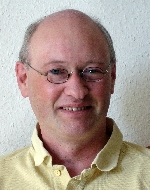
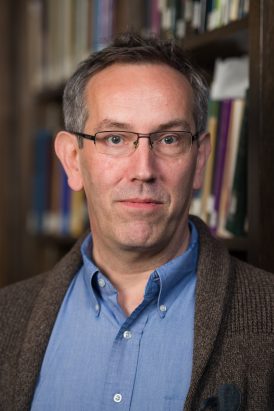
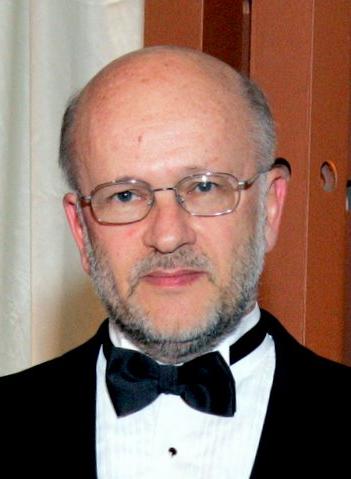
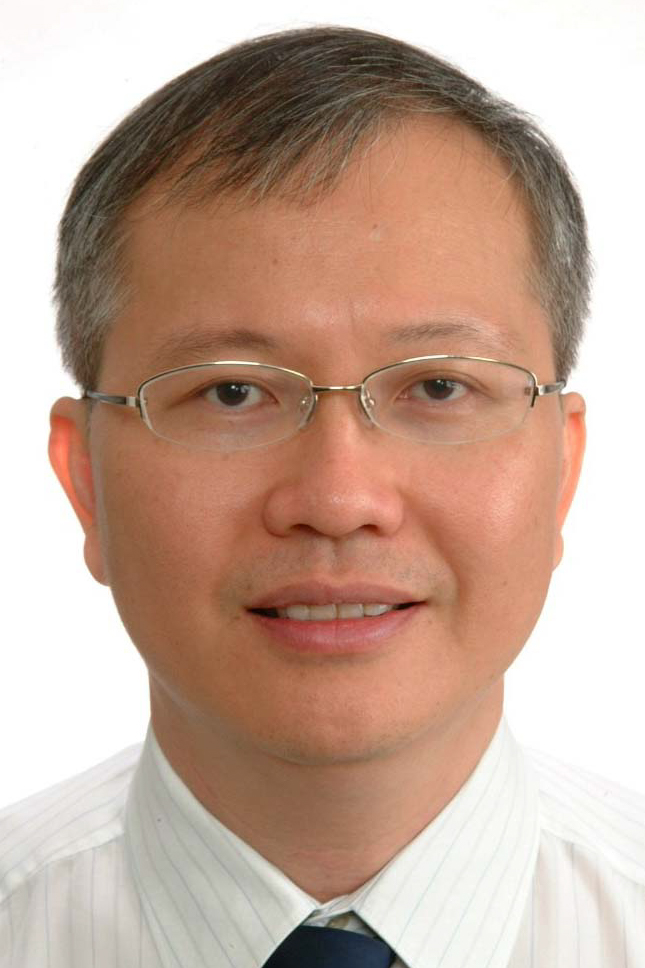
Francisco Manuel Bernal Martínez is an Associate Professor in the Department of Mathematics at Carlos III University of Madrid. His research focuses on numerical methods, partial differential equations, and computational mathematics, with applications in industrial engineering and materials science. He leads projects such as 'Financiación adicional 5º año (2022)' and collaborates on initiatives like 'Clustering Automático de Comportamientos de Invertebrados en Libertad mediante Imagen 3D.' His work emphasizes domain decomposition algorithms, radial basis functions, and stochastic control problems. He has advised at least one PhD thesis and holds grants from regional and national funding bodies. Key research interests include meshless methods, probabilistic domain decomposition, and uncertainty quantification in energy systems. Recent publications highlight advancements in hybrid algorithms for large-scale PDEs and volatility modeling. Bernal Martínez actively participates in academic networks and has presented at international conferences on computational methods and industrial mathematics.
Vinkle Srivastav is a Research Scientist (Chargé de recherche R&D) at the CAMMA group, a collaborative research team between IHU Strasbourg and the University of Strasbourg, where he focuses on advancing surgical data science through novel computer vision and machine learning approaches. His work bridges the gap between clinical practice and artificial intelligence, developing methods for surgical video analysis, 3D medical imaging, and surgical workflow understanding. Education PhD in Computer Science (2018-2021) from University of Strasbourg, France. Thesis: "Unsupervised Domain Adaptation Approaches for Person Localization in the Operating Rooms." Master of Science in Computer Science (2014-2017) from Indian Institute of Technology, Delhi, India. Thesis: "Computerized evaluation of neurosurgery skills using image processing and computer vision techniques." Bachelor of Technology in Electronics and Communication (2007-2011) from Punjab Technical University, Jalandhar, India. Research Interests Vinkle's research spans surgical data science, with particular focus on multi-modal learning approaches for surgical computer vision. His work addresses fundamental challenges in medical AI including domain adaptation, self-supervised learning, and privacy preservation in clinical environments. He develops methods for 3D medical image analysis, multi-view human pose estimation in operating rooms, and surgical activity recognition. His recent work emphasizes multi-modal pretraining frameworks that leverage both visual and textual information to improve surgical workflow understanding. He also investigates scientific simulation techniques, particularly for therapeutic ultrasound applications, where physics-aware deep learning models can accelerate computational processes while maintaining accuracy. Publication Trends Vinkle's recent publications demonstrate a strong trajectory toward multi-modal surgical AI systems that integrate vision, language, and physics-based modeling. His work increasingly focuses on few-shot and zero-shot adaptation techniques to address the data scarcity problem in surgical AI. The publications reveal a progression from basic pose estimation to holistic surgical scene understanding, incorporating team communication analysis and surgical safety protocols. Scientific Awards IPCAI 2024 Best paper award (co-author) IPCAI 2019 Runner-up award in the bench-to-bedside category (co-author) Joint winner for the best paper award in the machine learning for CAI track, IPCAI 2025 Advising and Grants Vinkle actively mentors multiple PhD students and research interns at various levels, supervising thesis work on topics including large-scale multi-modality learning, holistic surgical scene analysis, and self-supervised video representation learning. He serves as Co-PI on two ITI-HealthTech projects: one focused on multi-modality learning for 3D medical imaging (2023), and another on physics-aware deep-learning approaches for therapeutic ultrasound simulation (2024). Laboratories and Teams Vinkle is a key member of the CAMMA research group at IHU Strasbourg, a collaborative team focused on computer-assisted medical modeling and analytics. He co-organizes the Surgical Data Science Summer School, an interdisciplinary program that brings together clinicians and computer scientists to develop AI-driven solutions with clinical impact. His work involves close collaboration with surgical teams at University Hospitals of Strasbourg and international partners including Johns Hopkins University and Technical University of Munich.
Volkert Paulsen is a Senior Lecturer at the Institute of Mathematical Stochastics at the University of Münster. His career spans institutions including the University of Kiel, where he completed his Habilitation (2000), Dissertation (1994), and Diplomarbeit (1989). He has taught extensively in Financial Mathematics , Stochastic Analysis , and Mathematical Statistics , supervising over 50 Bachelor, Master, and Diploma theses on topics such as risk modeling, portfolio optimization, and derivative valuation. Research Interests: Paulsen's work focuses on Financial Mathematics (continuous-time models, American options, unit-linked insurance), Stochastic Analysis (optimal stopping, martingale methods), and Risk Modeling (credit risk, extreme value statistics). His publications include foundational studies on nonlinear observation costs in optimal stopping problems and stochastic approaches to portfolio management. Scientific Contributions: His research spans journal articles in Stochastic Processes and their Applications and Journal of Applied Probability , with recent seminar topics covering Lévy Processes , Copula Modeling , and Stochastic Volatility . He employs R for statistical applications and integrates mathematical theory with practical finance and insurance contexts. Contact: Email: Volkert.Paulsen@uni-muenster.de Room: 130.010, Orléans-Ring 10, 48149 Münster Phone: +49 251 83-33771
Juuso Välimäki serves as Professor and Head of the Department of Economics at Aalto University, a position held since joining the institution in 2002. He concurrently holds a Visiting Professorship at Yale University and previously taught at Northwestern University and the University of Southampton. His editorial leadership includes serving as main editor of the Journal of European Economic Association until 2018 and managing editor of the Review of Economic Studies (2003-2007). He earned his PhD from the University of Pennsylvania, establishing his academic foundation before transitioning to European institutions. His career trajectory reflects consistent advancement within theoretical economics. Välimäki specializes in microeconomic theory with concentrated expertise in dynamic incentive problems and mechanism design . His research examines strategic interactions in evolving environments, addressing challenges like information asymmetry, time-inconsistent preferences, and learning dynamics. This work bridges abstract theoretical frameworks with practical applications in contract design and institutional optimization. His publication record reveals a coherent research trajectory focused on dynamic aspects of economic mechanisms. Recent contributions emphasize temporal dimensions in incentive design, particularly how agents adapt behavior under evolving information structures. The body of work demonstrates methodological rigor in stochastic modeling and equilibrium analysis within sequential decision contexts. His distinguished honors include: Election as Fellow of the Econometric Society (2008) Membership in the Finnish Academy of Arts and Sciences Ongoing service on the Econometric Society Council Välimäki maintains active scholarly engagement through editorial board memberships across multiple journals. While specific grant details are unmentioned, his sustained publication output and leadership roles indicate continuous research funding support. His departmental leadership at Aalto demonstrates institutional impact beyond pure research contributions.
Peter Tankov is a Professor of Quantitative Finance at ENSAE (the French national school for statistics and economic administration), part of the Institute Polytechnique de Paris. He is also a researcher at CREST and member of the FIME Laboratory. His academic career includes previous positions at Paris-Cité University and Ecole Polytechnique. Dr. Tankov specializes in applied probability and stochastic processes, with current research interests spanning quantitative finance, energy finance, green finance, sustainable finance, and mean field games applications to economics. His work bridges mathematical rigor with practical financial applications, particularly in the context of climate change and environmental transition. His research output shows a clear trend toward climate-related finance, with recent publications focusing on carbon pricing, transition risk modeling, energy market dynamics, and sustainable investment strategies. The articles demonstrate a strong interdisciplinary approach combining mathematical finance, game theory, and climate science to address pressing environmental finance challenges. 2016 Best Young Researcher in Finance award of the Europlace Institute of Finance 2024 Louis Bachelier award of London Mathematical Society, Natixis Foundation and SMAI Professor Tankov serves as scientific director of the Green and Sustainable Finance program at Louis Bachelier Institute and is a member of editorial boards for top quantitative finance journals including Mathematical Finance and Finance and Stochastics. He is currently guest editing a Special Issue on Climate and Nature Risk in Mathematical Finance. His teaching includes courses on green finance, energy risk management, and financial derivatives.
Robert V. Kohn is the Silver Professor of Mathematics at New York University, affiliated with the Courant Institute of Mathematical Sciences (CIMS). He holds academic positions within the Department of Mathematics at the College of Arts & Science and the Graduate School of Arts & Science. His research focuses on nonlinear partial differential equations (PDEs), calculus of variations, and their applications to materials science, thin elastic sheets, and machine learning. Education: Ph.D. in Mathematics from Princeton University (1979), M.Sc. from the University of Warwick (1975), and A.B. from Harvard University (1974). Research interests span elastic energy-driven pattern formation (e.g., wrinkling, folding), PDEs in machine learning (e.g., prediction with expert advice), and continuum mechanics. Recent work includes variational analysis of thin film mechanics and PDE-based approaches for binary sequence prediction. His articles explore topics ranging from metamaterials to stochastic growth models. Notable themes in his publications include energy minimization in materials, optimal control analogies in learning algorithms, and mathematical modeling of physical phenomena. While no formal awards are listed, his contributions to PDE theory and applied mathematics are widely recognized. Advising and grants details are not explicitly documented here.
Mine Çağlar is a Professor in the Department of Mathematics at Koç University, specializing in probability theory and stochastic processes with applications in mathematical finance and risk analysis. Her work addresses fundamental problems in Markov additive processes, Lévy processes, and Brownian motion, contributing to both theoretical advances and practical financial modeling. Her academic credentials include: PhD in Statistics and Operations Research from Princeton University (1997) Master’s in Industrial Engineering from Bilkent University (1991) B.A. in Industrial Engineering from Middle East Technical University (1989) Professor Çağlar’s research centers on extreme event analysis in stochastic processes, particularly maximum drawdown, maximum loss, and optimal stopping problems. She investigates path properties of spectrally negative Lévy processes and develops mathematical frameworks for degenerate market models. Her work bridges abstract probability theory with real-world financial applications, including risk management and hedging strategies. Recent publications demonstrate sustained innovation in stochastic analysis, with a focus on long-time behavior of complex processes and boundary-crossing phenomena. Analysis of her 15 most recent publications (2018–2024) reveals a cohesive research trajectory emphasizing Markov additive processes (40% of articles), Lévy process extremes (30%), and financial applications (20%). Key methodological trends include path decomposition techniques, Monge-Ampère equations on Wiener space, and stochastic flow modeling. Her work increasingly integrates fluid dynamics concepts like Çinlar models for turbulence simulation, reflecting interdisciplinary expansion into applied mathematics. Her scholarly recognition includes: Hayri Körezlioğlu Research Award (2013) Parlar Foundation Research Incentive Award (2005)
Mathias Beiglböck is a full Professor at the Department of Mathematics within the Faculty of Mathematics at the University of Vienna. His research spans multiple areas of mathematical analysis with a strong focus on probability theory and its applications to finance and other fields. With over 60 publications spanning from 2009 to 2024, Beiglböck has established himself as a leading researcher in his field. Beiglböck's primary research interests center around optimal transport theory, martingale theory, and their applications to mathematical finance. His work explores the deep connections between probability theory and financial mathematics, particularly in areas such as option pricing, risk management, and stochastic processes. His research also extends to epidemiological modeling, as evidenced by his contributions to SARS-CoV-2 research during the pandemic. Analysis of his recent publications (2022-2024) reveals a strong focus on advancing the theoretical foundations of optimal transport and martingale theory while finding novel applications in finance and data science. His work often bridges pure mathematical theory with practical applications, particularly in financial modeling and risk assessment. The high citation counts across his publications (some exceeding 100 citations) indicate significant impact in his field. Beiglböck has collaborated extensively with researchers across Europe, particularly with scholars from France, Austria, and the UK. His work on the COVID-19 pandemic demonstrates his ability to apply mathematical expertise to pressing real-world problems, contributing to public health policy through rigorous quantitative analysis.
Tilman Börgers is the Samuel Zell Professor of the Economics of Risk at the Department of Economics, University of Michigan. His research focuses on mechanism design, game theory, and economic decision-making. He is affiliated with Lorch Hall, Ann Arbor, and can be reached at tborgers@umich.edu. Current Position: Professor of Economics Institution: University of Michigan Department: Department of Economics His research interests include mechanism design, information aggregation, and theoretical foundations of economic behavior. Recent work explores topics such as undominated mechanisms, diversity in decision-making, and algebraic closure in economic models. Selected papers include contributions to the Review of Economic Design and journals like Journal of Economic Theory . His book An Introduction to the Theory of Mechanism Design (Oxford University Press) is a key reference in the field. Teaching materials include notes on microeconomic theory, game theory, and general equilibrium theory. No awards or grants are explicitly listed in the provided content.
Fang Kong is an Assistant Professor in the Department of Statistics and Data Science at the Southern University of Science and Technology (SUSTech). He earned his PhD in Computer Science from Shanghai Jiao Tong University under the supervision of Prof. Shuai Li and received his Bachelor's degree in Software Engineering from Shandong University. Education: PhD in Computer Science, Shanghai Jiao Tong University (2020-2024) Bachelor's Degree in Software Engineering, Shandong University (2016-2020) Dr. Kong is broadly interested in developing theoretically guaranteed algorithms for sequential decision-making problems, with particular focus on multi-armed bandits and reinforcement learning, as well as their applications in online experimentation and recommendation systems. His research spans theoretical foundations of bandit algorithms, matching markets, influence maximization, and online learning under various feedback structures. He has made significant contributions to the understanding of best-of-both-worlds algorithms that perform well in both stochastic and adversarial environments. His publication record shows a strong trajectory of high-impact work in top-tier conferences including NeurIPS, ICML, ICLR, AAAI, WWW, and AAMAS. His research demonstrates expertise in theoretical machine learning with a focus on bandit algorithms, particularly in matching markets and sequential decision-making problems. His work often bridges theoretical guarantees with practical applications in recommendation systems and online experimentation. Scientific Awards: CCF Doctoral Dissertation Award in Agent and Multi-Agent Systems (2025) Baidu Scholarship (2024) National Scholarship for PhD students (2023, 2022) AAMAS Student Scholarship (2023) Microsoft Research Asia Excellence Award (2022) Dr. Kong actively mentors students at various levels, including PhD and Master's students at SUSTech, visiting students from other institutions, and undergraduate researchers. He serves as a reviewer for top machine learning conferences (ICLR, NeurIPS, ICML, WWW) and journals (IEEE PAMI, TMLR). His teaching includes graduate Machine Learning and undergraduate Artificial Intelligence courses at SUSTech.
Alexander Shapiro is the A. Russell Chandler III Chair and Professor at the H. Milton Stewart School of Industrial and Systems Engineering , Georgia Institute of Technology. His work bridges optimization and statistics, focusing on stochastic programming, risk analysis, and simulation-based optimization. He has received numerous accolades, including the Khachiyan Prize (2013) , Dantzig Prize (2018) , and John von Neumann Theory Prize (2021) . Education: Ph.D. in Applied Mathematics-Statistics (Ben-Gurion University, 1981), M.Sc. in Mathematics (Moscow University, 1971) His research explores stochastic programming , risk-averse optimization , and multivariate statistical analysis , with recent work on distributionally robust control, Bayesian stochastic methods, and convex multistage optimization. Publications highlight theoretical advancements and computational frameworks for uncertainty modeling. Recent articles focus on asymptotics (2025), duality in MDPs (2023-2024), and statistical inference (2014-2024). These span stochastic control , robustness , and time consistency , reflecting his expertise in bridging probability theory with large-scale optimization. Scientific awards : Khachiyan Prize of INFORMS (2013) Dantzig Prize (2018) John von Neumann Theory Prize (2021) Election to National Academy of Engineering (2020) Dr. Shapiro has served as Area Editor (Optimization) for the Operations Research Journal and Editor-in-Chief of Mathematical Programming, Series A , demonstrating sustained leadership in his field.
Professor Goran Peskir holds the Chair in Probability at the School of Mathematics, The University of Manchester. His research focuses on stochastic calculus, optimal stopping, and free boundary problems with applications in financial mathematics and economics. He completed his DrScient, PhD, MSc, and BSc qualifications, and his work bridges theoretical probability with practical applications in finance and stochastic processes. Research interests include Brownian motion, Markov processes, stochastic control, and the mathematical foundations of financial models. His recent publications emphasize real-time detection of drifts in stochastic processes and optimal stopping theory. Over 18 supervised works reflect his mentorship in advanced probability topics. His research has been published in leading journals such as Annals of Applied Probability and SIAM Journal on Control and Optimization . No scientific awards are explicitly listed, but his contributions to probability theory are recognized through his extensive publication record and editorial roles. He is affiliated with research groups in Industrial and Applied Mathematics, Mathematical Finance, and Probability and Stochastic Analysis.
Paul Peter Hager serves as an Assistant Professor in the Department of Statistics and Operations Research at the University of Vienna, where he teaches courses including Linear Algebra and Applied Optimization. Previously, he held a junior research group leader position at Technische Universität Berlin. His research centers on: Mathematical Finance Machine Learning Stochastic Control Mean-Field Games Fractional Processes Gaussian Multiplicative Chaos Volatility Modeling Hager pioneers applications of rough path signatures in financial mathematics, developing novel frameworks for stochastic control and calibration problems. His work bridges theoretical probability with practical machine learning implementations, particularly in volatility modeling using fractional processes and log-correlated fields. Recent publications reveal a dominant trend in signature-based methods for optimal stopping and mean-field games, with significant contributions to fractional Brownian motion theory. His collaborative work with leading researchers like Peter Friz and Christian Bayer consistently targets high-impact journals in applied probability and financial mathematics. Dr. Hager maintains active research collaborations and has delivered invited talks at institutions including KAUST, focusing on computational implementations of signature methods in finance.
Chew Ek Peng is an Associate Professor and Deputy Head at the Institute of Operations Research and Analytics (IORA), part of the National University of Singapore’s Smart Nation Research Cluster. His research focuses on optimizing port logistics, maritime transportation systems, and inventory management through advanced simulation techniques and data-driven methodologies. His work spans critical areas such as automated port operations, simulation-optimization frameworks, and stochastic systems analysis. Notably, he develops solutions for challenges like AGV scheduling, container relocation problems, and intermodal terminal design. His research integrates machine learning (e.g., hybrid neural networks) with traditional operations research methods. Recent publications highlight contributions to electric vehicle sustainability in carsharing systems, multi-agent reinforcement learning for AGV recharging, and facility location under random utility models. His work emphasizes practical applications in smart logistics, disaster response optimization, and supply chain resilience. Chew Ek Peng collaborates on projects like digital twin validation frameworks and modular simulation pipelines for residential energy modeling. His research has been applied to real-world scenarios such as Singapore’s construction demand forecasting and pandemic impact analyses using modified SEIR models.
David B. Brown is the Snow Family Business Distinguished Professor in Decision Sciences and Faculty Director of the Center for Energy, Development and Global Environment (EDGE) at Duke University's Fuqua School of Business. He holds a Ph.D. from MIT (2006). His research focuses on algorithm design for decision problems under uncertainty, with applications in energy systems, sustainability, and stochastic modeling. Key contributions include dynamic resource allocation frameworks, stochastic dynamic programming relaxations, and robust optimization techniques. Professor Brown leads the GRACE project (funded by the Department of Energy, 2020–2025), exploring risk-aware grid management for clean energy systems. His work bridges theoretical advancements with practical applications in energy transition, climate mitigation, and mathematical optimization. He has received recognition including the Snow Family Distinguished Professorship (2024). Recent publications emphasize dynamic frameworks for integrated energy systems, fluid policies in resource allocation, and sequential decision-making under uncertainty. His research also addresses pricing strategies in shared resource networks and asymptotic optimization techniques. Education: Ph.D., Massachusetts Institute of Technology (2006) Grants: DOE-funded GRACE Project, Duke EDGE Faculty Seed Grant (2024) Affiliations: Center for Energy, Development and Global Environment (EDGE)