Swiss Federal Institute of Technology in LausanneSwitzerland
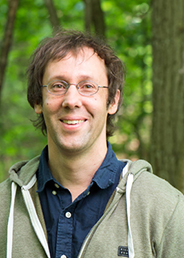
Timm Faulwasser is a Lecturer at École Polytechnique Fédérale de Lausanne (EPFL), affiliated with the EDEE-ENS unit under the VPA-AVP-DLE administrative structure. He teaches the doctoral course Optimal Control for Dynamic Systems , focusing on theoretical foundations, numerical implementation, and practical applications. Research Interests: His work spans Optimal Control Dynamic Systems Control Theory Applied Mathematics Systems Engineering Automation Robotics Students: Milosavljevic Predrag Singhal Martand de Avila Ferreira Tafarel Teaching: Course: Optimal Control for Dynamic Systems - An introduction to optimal control theory, numerical methods, and application-oriented problem formulation.
Swiss Federal Institute of Technology in LausanneSwitzerland
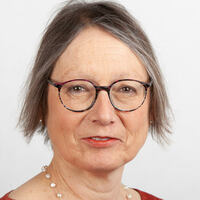
Tyler Summers is a Lecturer in the EDRS - Teaching unit at EPFL (Swiss Federal Institute of Technology in Lausanne). His primary role involves teaching graduate-level courses in dynamic programming and optimal control, focusing on stochastic control theory and its engineering applications.
Swiss Federal Institute of Technology in LausanneSwitzerland
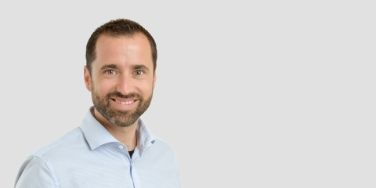
Eric Pierre Bouillet is a Lecturer at École Polytechnique Fédérale de Lausanne (EPFL), affiliated with the School of Computer and Communication Sciences (IC) and the School of Engineering (STI) . He also serves as the Head of Engineering at the Swiss Data Science Center (SDSC), a national R&D center co-hosted by EPFL and ETH Zurich. Bouillet earned his PhD in Electrical Engineering from Columbia University in 1999. Research Interests : Data Science, Electrical Engineering, Optical Networking, Network Optimization, and Stream Processing, with applications in telecommunications, intelligent transport systems, and aircraft reliability control systems. Teaching : Courses on large-scale data science, Python for data engineering, and real-world data analytics pipelines. Previous Roles : IBM Research (2004–2016), Tellium (optical mesh networks), and Lucent Technologies (network optimization). Labs/Teams : Swiss Data Science Center (SDSC), EPFL’s Data Science Teaching programs.
David Preinerstorfer is a Professor of Statistics and Econometrics at the Vienna University of Economics and Business (WU) and Director of the Swiss Institute for Empirical Economic Research (SEW-HSG) at the University of St.Gallen. His research focuses on the statistical foundations of algorithmic decision making, particularly in dynamic economic systems and uncertain environments. Director, SEW-HSG (2024–2025) Associate Professor, University of St.Gallen (2021–2024) Assistant Professor, Université libre de Bruxelles (2017–2021) PhD in Statistics and Operations Research, University of Vienna (2011–2015) His work integrates reinforcement learning, optimal control, stochastic programming, and optimization to develop robust and scalable algorithmic solutions. Key research areas include high-dimensional inference, moment-based methods, and optimal policy learning with distributional targets. Recent publications focus on moment-dependent phase transitions, power enhancements for testing moment equalities, and regularization in policy learning. He has contributed to journals like Econometrica and Econometric Theory . Scientific Awards Econometric Theory Multa Scripsit Award (2024) Tjalling C. Koopmans Econometric Theory Prize (2024) Adolphe Wetrems Prize (2022) Advanced ARC Grant (2018) University of Vienna Publication Awards (2016) He collaborates with institutions such as Universitat Pompeu Fabra, TU Graz, and Erasmus University Rotterdam. His research emphasizes both theoretical and practical advancements in data-driven decision making.
Prof. Dr. Ulrich Alois Weidmann is Vice President for Infrastructure and a full Professor at ETH Zürich, affiliated with the Department of Civil, Environmental and Geomatic Engineering and the Institute for Transport Planning and Systems. His office is located at OCT H 59, Binzmühlestrasse 130, 8092 Zürich, Switzerland. Contact is available via phone (+41 44 632 05 91 or +41 44 633 61 14) and email at weidmann@sl.ethz.ch. His research focuses on developing efficient, safe, and environmentally sustainable mobility systems, with emphasis on: Passenger Transportation : System design, urban interactions, and multimodal mobility Freight Transportation : Logistics optimization, capacity management, and sustainable supply chains Production Processes : Operational stability, safety analysis, and pedestrian flow dynamics Additional interests include transport policy, infrastructure financing, and innovation management. Weidmann's scholarly work demonstrates strong focus on transportation optimization, infrastructure resilience, and sustainable mobility solutions. Recent publications explore railway efficiency, pedestrian planning, pandemic-era transport, and comparative analyses of emerging transport technologies.
Swiss Federal Institute of Technology in LausanneSwitzerland
François Gallaire is an Associate Professor at École Polytechnique Fédérale de Lausanne (EPFL), where he leads the Laboratory of Fluid Mechanics and Instabilities (LFMI) within the School of Engineering and the Institute of Mechanical Engineering. He also serves as an Associate Professor in the Teaching Department (SGM) and as a PhD program committee member for the Doctoral Program Mechanics. His office is located in Building MED, room 2 2926, at EPFL's Station 9 campus in Lausanne, Switzerland. Gallaire earned his engineering degree from Ecole Polytechnique in 1998 and a master's in Liquids Physics from Université Pierre et Marie Curie in 1999. He completed his PhD in 2002 at LadHyX on swirling flow instabilities and vortex breakdown. After six years at the Mathematics department of Université de Nice, he joined EPFL in 2009, founding the Fluid Mechanics and Instabilities Lab (LFMI). He became an associate professor in 2016 and served as teaching department director from 2018 to 2023. His research focuses on instability theory, free interface phenomena and microfluidics, with emphasis on fundamental descriptions of fluid behavior. Gallaire's work spans multiple domains including droplet dynamics, sloshing phenomena, fluid-solid interactions, thin film flows, and vortex breakdown. His laboratory investigates both theoretical aspects and practical applications of fluid mechanics, with particular interest in microfluidic systems and industrial applications. Gallaire's publication record shows a consistent focus on fluid instabilities across various configurations. His recent work demonstrates increasing sophistication in analyzing complex fluid phenomena, particularly in confined geometries and multiphase systems. The research shows strong theoretical foundations combined with experimental validation, with applications ranging from fundamental fluid physics to industrial processes and biomedical engineering. Fellow of the American Physical Society (2019) Gallaire has supervised numerous PhD students, both current and past, reflecting his commitment to academic mentoring. His teaching portfolio includes advanced courses in compressible-fluid dynamics, finite element method, hydrodynamics, and instability. He has established the LFMI as a prominent research group in fluid mechanics, with particular expertise in instability phenomena and microfluidic applications. The laboratory maintains strong collaborations with other research groups internationally and has secured funding for various research projects exploring fundamental fluid dynamics questions.
Swiss Federal Institute of Technology in LausanneSwitzerland
Prof. Bryan Alexander Ford is an Associate Professor at École Polytechnique Fédérale de Lausanne (EPFL), where he leads the Decentralized and Distributed Systems (DEDIS) lab within the School of Computer and Communication Sciences, Department of Computer Science. He also holds teaching positions in SIN (Systems and Networking) and SSC (Security and Software Composition) at EPFL, and serves on the Open Science Strategic Committee. His academic journey includes faculty positions at Yale University following his Ph.D. at MIT. Dr. Ford's research spans multiple domains with a primary focus on building secure decentralized systems. His work encompasses privacy and anonymous communication systems like Dissent, systems security, blockchain technology, and novel approaches to operating systems for deterministic parallel computing such as Determinator. He has made seminal contributions to parsing theory through his development of Parsing Expression Grammars (PEGs) and packrat parsing algorithms, which provide linear-time parsing with backtracking capabilities. His research also extends to networking protocols including the Unmanaged Internet Architecture and Structured Stream Transport, as well as virtualization technologies like VX32. Ford's publication record demonstrates a remarkable evolution from foundational work in parsing and programming languages to cutting-edge research in decentralized systems and security. His early career focused on operating systems theory, parsing algorithms, and language design, culminating in influential papers on packrat parsing and PEGs. More recently, his work has shifted toward practical decentralized systems, blockchain technology, and security architectures, while maintaining connections to programming language theory through projects like Matchertext and MinML. This trajectory reflects both continuity in his interest in system architecture and a strategic pivot toward emerging challenges in decentralized computing. As an educator and mentor, Ford advises multiple PhD students at EPFL through the EDIC program and welcomes prospective students and researchers to join his lab. His teaching includes courses on decentralized systems engineering and technologies for democratic society, reflecting his commitment to both technical rigor and societal impact of computing technologies.
Swiss Federal Institute of Technology in LausanneSwitzerland
Gil Regev is a Lecturer at the Laboratory for Applied Software Engineering ( SSC-ENS ), part of the School of Computer and Communication Sciences ( IC ) at École Polytechnique Fédérale de Lausanne ( EPFL ). He serves as Mobility Delegate for IC-GE and has been affiliated with EPFL since 1997 after 9 years at Logitech. His academic work spans Requirements Engineering Business Process Modeling Enterprise Architecture Systems Thinking His research explores the intersection of organizational self-understanding and information systems design. Key trends in his work include Systemic approaches to service design Integration of appreciation and homeostasis in business processes Declarative specification methods Value network modeling Primitive obsession in software engineering Contextual requirements elicitation He has contributed to methodological frameworks like SEAM and practical tools for Service lifecycle management Business-IT alignment Flexible process modeling Regulation-based requirements Genomic data structure optimization Collaborative concept mapping
Laurent Lehmann is a Full Professor at the University of Lausanne, holding a position in the Department of Ecology and Evolution within the Faculty of Biology and Medicine. He has served as director of the master's program 'Behaviour, Economics, and Evolution' since 2015. Previously, he was an Assistant Professor at the University of Lausanne (2011-2015) and the University of Neuchâtel (2009-2011). His academic journey includes postdoctoral research at Stanford University with Prof. Marc Feldman, Cambridge University with Dr. François Balloux, and the University of Helsinki with Prof. Hanna Kokko. Lehmann's research focuses on mathematical and simulation models to study the evolution of social behaviors, including cooperation, altruism, and learning. His work spans three primary areas: individual decision processes, life-history evolution, and the transition to large-scale human societies. His theoretical approach addresses fundamental questions about how social behaviors evolve through natural selection, with particular attention to the roles of kinship, spatial structure, and cultural transmission. Analysis of his recent publications reveals a strong emphasis on mathematical modeling of social evolution, with recurring themes including Hamilton's rule, kin selection, cultural transmission, and evolutionary game theory. His work bridges theoretical biology with anthropological questions about human social evolution, particularly examining how large-scale cooperation emerged in human societies. Recent papers demonstrate increasing integration of cultural evolution with traditional population genetic approaches. As an academic mentor, Lehmann has supervised doctoral students including Fumagalli E. (2014), with research focusing on information sharing and social network dynamics. His work has received funding from major research agencies including ERC and SNSF Starting Grants, as noted on his departmental profile. Lehmann leads a research group within the Department of Ecology and Evolution that develops mathematical models to understand social behavior evolution. His group collaborates across disciplinary boundaries, connecting evolutionary theory with economics, anthropology, and cognitive science to address fundamental questions about human sociality and cooperation.
Western Switzerland University of Applied SciencesSwitzerland
Michal Dabros is an Associate Professor at the ChemTech - Institute of Chemical Technologies within HES-SO (University of Applied Sciences and Arts Western Switzerland) . His work spans chemical and bioprocess engineering, focusing on thermal safety, process analytical technology (PAT), and sustainable chemistry solutions. Education : MSc HES-SO in Life Sciences, BA HES-SO in Architecture Research Interests : Process monitoring, bioplastic development, nanoparticle synthesis, and reactor design for industrial applications. Recent Research Trends include continuous flow reactors for heterogeneous reactions, waste valorization via bio-cementation, and automation in bioprocesses. His publications emphasize sustainability, safety, and digital advancements in chemical engineering. Project Leadership involves international collaborations such as bio-cementation for construction materials and automated hydroponic systems in Haiti. He also contributed to remote laboratory platforms and thermal safety modeling.
Western Switzerland University of Applied SciencesSwitzerland
Jean Hennebert is an Ordinary Professor at the Haute école d'ingénierie et d'architecture de Fribourg (HES-SO) and serves as the Institute Head for iCoSys (Institute of Complex Systems). His research spans multiple domains including Machine Learning , Deep Learning , Artificial Intelligence , and Data Science , with applications in smart building systems , medical diagnostics , and document image analysis . PhD , Master in Architecture (HES-SO) BSc in Computer Science (HES-SO) His academic contributions focus on adaptive document image binarization (YinYang, ZigZag algorithms), time series generation (diffusion models), and smart building data platforms (BBData v2.0). His work integrates ML engineering with practical implementations in energy efficiency and medical device monitoring (e.g., contact lens sensor analytics for glaucoma detection). Key projects include the iCoSys Institute infrastructure for urban data analysis , radon concentration monitoring systems , and industrial process monitoring architectures . Publications demonstrate technical expertise in transformer-free models (SLANet-1M), recurrent neural networks , and low-cost sensor networks with active learning.
Prof. Dr. Juliane Hollender serves as Senior Scientist and Group Leader of the 'Contaminant fate processes' research group at Eawag (Swiss Federal Institute of Aquatic Science and Technology) in the Department of Environmental Chemistry. She is also an Adjunct Professor in the Department of Environmental Systems Science at ETH Zurich since 2010 and has been lecturing there since 2007. Previously, she was an Adjunct Professor for Environmental Hygiene & Ecological Chemistry at Technical University of Aachen (2006-2014) and held a Group Leader & Lecturer position at the same university from 1994-2005. Dr. Hollender completed her PhD studies in Environmental Engineering at Technical University of Berlin (1991-1994) and earned her Diploma in Chemistry from University of Bonn & Freiburg i.Br. with specialization in biochemistry (1984-1990). Her research focuses on the fate of organic contaminants in natural and engineered environments, organic trace analytics using LC-HRMS/MS for identification of transformation products, bioaccumulation and biological transformation of organic compounds in aquatic organisms, and linking exposure with effects of organic pollutants. She is an expert in computational methods, biological degradation, bioaccumulation, groundwater analysis, and mass spectrometry. Her recent publications demonstrate a strong emphasis on non-target and suspect screening methodologies, bioaccumulation studies, and the development of analytical approaches for identifying emerging contaminants in water systems. Her work bridges analytical chemistry with environmental risk assessment, particularly focusing on pharmaceuticals, pesticides, and other micropollutants in aquatic environments. Dr. Hollender leads the research group 'Contaminant fate processes' at Eawag, which includes PhD students, postdoctoral researchers, and technicians working on various aspects of environmental contaminant analysis and fate. Her team is involved in major projects including PARC (assessment of risks from chemicals), advancing bioaccumulation science, and PFAS studies during wastewater treatment.
Western Switzerland University of Applied SciencesSwitzerland
Hannes Freiße is an Assistant Professor at the Geneva School of Landscape, Engineering and Architecture (HES-SO), specializing in Mechanical Engineering . His research focuses on Additive Manufacturing , Laser Machining , Welding , and Surface Treatment technologies. Education: BSc HES-SO in Mechanical Engineering from Geneva School of Landscape, Engineering and Architecture Key Competencies: Additive Manufacturing, Laser Machining, Industrial Welding, Quality Control, Surface Treatment Recent research highlights include: 2025: Development of a deep-learning segmentation model for automated detection of surface porosity defects in laser-deposited bronze coatings 2024: 3D COMSOL Multiphysics simulation of bimetallic alloy cooling processes tracking solidification dynamics and residual stresses 2024: Comparative studies on laser cladding techniques for tribological applications and bronze-on-steel deposition His work addresses critical challenges in metallurgical bonding , wear resistance , and process optimization across multiple manufacturing domains.
Prof. Dr. Stefan Schmid serves as Professor and Head of the Spinal Movement Biomechanics Group at Bern University of Applied Sciences' School of Health Professions. He is also Deputy Head of Research at the Division of Physiotherapy and a Privatdozent at the University of Basel. PhD in Biomechanics (ETH Zurich, 2016) Habilitation in Experimental Medicine (University of Basel, 2021) His research focuses on spinal biomechanics, musculoskeletal modeling, and movement analysis, particularly for: Low back pain mechanisms Scoliosis treatment optimization Workplace ergonomics Machine learning applications in biomechanics Recent publications emphasize: Spinal movement pattern quantification Pain-related fear analysis Computational spine modeling Wearable sensor validation He leads multiple funded projects including: ScolioGroMod (SNSF-funded spinal growth modeling) LBPredict (AI-based lifting risk assessment) International collaborations with Harvard Medical School and Polytechnique Montréal
University of Applied Sciences and Arts of Southern SwitzerlandSwitzerland
Jenny Marcionetti is a Full Professor in Psychology of Education and Career Guidance at the University of Applied Sciences and Arts of Southern Switzerland (SUPSI), specifically within the Department of Education and Learning and the Competence Centre for Innovation and Research on Education Systems (CIRSE). Born in Faido on December 30, 1982, she holds a PhD in Psychology from the University of Lausanne (2017) and a background in social psychology from the Institut des Sciences Sociales et Politiques in Lausanne. Her research focuses on the intersection of educational psychology, positive psychology, and career development. Key areas include: Character strengths interventions for promoting socio-emotional competences and well-being in children Career adaptability and sustainable career development in adolescents and young adults Teacher training for career guidance Apprentices' well-being and perceptions of decent work Development and validation of psychological assessment tools Her recent publications (2023-2025) show a strong emphasis on translating psychological theory into practical educational applications, particularly in the Ticino school system. She has developed several assessment instruments including the Career Imagination Scale and has conducted intervention studies on character strengths in schools. Professor Marcionetti is actively involved in research projects addressing contemporary educational challenges: NEFELE Erasmus+ project on enhancing teachers' abilities to support adolescents' career development Studies on the risk of burnout and dropout in healthcare and education Research on working conditions and well-being for teachers Character strengths-based interventions in Ticino schools Her methodological expertise spans research design, statistical analysis, and qualitative methods, allowing her to approach complex educational questions from multiple perspectives. Her work demonstrates a strong commitment to bridging research and practice in educational settings.