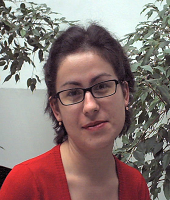
Elena Niculina Dragoi is a Lecturer at the Faculty of Chemical Engineering and Environmental Protection 'Cristofor Simionescu' at Gheorghe Asachi Technical University in Iasi, Romania. Her academic work integrates Artificial Intelligence and Machine Learning tools for solving complex problems in Chemical Engineering and Environmental Protection . With over 30 published papers and six active research projects, her contributions span process optimization, nanomaterials, and sustainable technologies. Teaches Applied Informatics (Years 1 & 4) and Artificial Intelligence at the Faculty of Chemical Engineering Contributes to Programming Engineering at the Faculty of Computer Science, University 'Alexandru Ioan Cuza' Engaged in interdisciplinary courses at the Faculty of Automatic Control and Computer Engineering Research Interests : Elena's work focuses on modelling and optimization (90% emphasis) of chemical processes using AI methodologies, with cross-disciplinary applications in environmental engineering (70%) and chemical engineering (95%). Her recent publications highlight innovations in: 3D-printed nanocomposite adsorbents for pollutant removal Metaheuristic optimization algorithms for industrial processes Hydrogen generation via nanocatalysts Electrochemical biosensors for environmental and health monitoring AI-driven wastewater treatment systems Green chemistry applications in pharmaceutical and dye removal
Prof. Ovidiu Cârjă is a Professor of Mathematical Analysis at the Faculty of Mathematics, University of Iasi, Romania. He holds a PhD from the same university (1984) and has held academic positions since 1981, progressing from Assistant Professor (1984) to his current role. His research focuses on controllability, viability theory, and Hamilton-Jacobi-Bellman equations, with significant contributions to differential inclusions and nonlinear analysis. Education: B.Sc. Mathematics, University of Iasi (1976) M.Phil. Mathematics, University of Iasi (1977) Ph.D. Mathematics, University of Iasi (1984) Research Interests: Optimal control and time-optimal control problems Viability and invariance for differential inclusions Hamilton-Jacobi-Bellman equations Nonlinear functional analysis and semilinear systems Awards and Fellowships: Romanian Academy 'Simion Stoilow' Award (1991) Fulbright Award (UCLA, 1993–1994) NATO Fellowship (CMAF Lisbon, 1998–2002) Invited Professorships at University of Perpignan and Tor Vergata Rome Professional Activities: Editor of the Applied Analysis and Differential Equations (World Scientific, 2007) Co-author of influential books on nonlinear analysis and viability theory
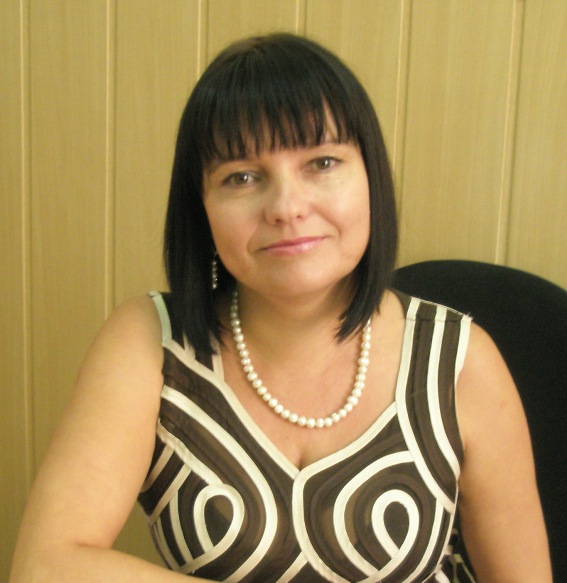
Andreea ISBASOIU is an Assistant Professor at the Department of Psychology and Education Sciences, affiliated with the Faculty of Psychology and Education Sciences at the Technical University of Brasov. Her research focuses on mental health interventions, particularly exploring how online therapy compares to traditional face-to-face therapy, and developing programs to mitigate anxiety-depressive symptoms. She investigates self-enhancement strategies to improve treatment adherence in digital interventions. Education details are not explicitly provided in the text, but her academic role suggests advanced training in clinical psychology or related fields. Research interests include transdiagnostic interventions, cognitive-behavioral therapy delivery methods, and the psychological dynamics of self-structures as risk/protective factors. Publications highlight her work on internet-based interventions for LGBTQ+ populations, online therapy efficacy in anxiety/depression, and randomized controlled trials evaluating treatment adherence strategies. No awards or grants are listed, though her active publication record indicates research involvement. Contact information includes her institutional email and campus location at Nicolae Bălcescu 56, Brașov.
Praveen Agarwal is a Professor of Mathematics at the Department of Mathematics, International College of Engineering, located near Kanota, Agra Road, Jaipur-303012, Rajasthan, India. He also maintains a significant affiliation with the Lepage Research Institute in Slovakia. His academic profile demonstrates a strong international presence with collaborations spanning multiple continents. Dr. Agarwal's research expertise centers on Special functions , Fractional calculus , and Mathematical Physics . His work in fractional calculus represents cutting-edge contributions to this specialized mathematical field, developing theoretical frameworks with applications across diverse scientific disciplines. His research in special functions has led to numerous extensions and generalizations of classical mathematical constructs, creating innovative tools for solving complex differential equations. In mathematical physics, he applies rigorous analytical techniques to model physical phenomena, particularly those involving wave propagation, diffusion processes, and energy systems. Analysis of Dr. Agarwal's extensive publication record reveals a sophisticated approach to fractional-order differential equations with applications spanning viscoelastic wave behavior, neural networks, energy storage systems, and biomedical engineering. He frequently develops novel mathematical methods, including specialized integral transforms and polynomial-based solution techniques, to address complex nonlinear systems. His research consistently bridges pure mathematical theory with practical engineering applications, particularly in areas requiring precise modeling of memory effects and non-local phenomena. The interdisciplinary nature of his work is evident in publications addressing both theoretical mathematics and practical engineering challenges. Dr. Agarwal maintains active research collaborations with prestigious institutions worldwide, including The Union of Czech Mathematicians and Physicists, University of Prešov in Prešov, Eötvös Loránd University, Italian Society for General Relativity and Gravitation, Transilvania University of Brasov, VŠB-TU Ostrava, and Lodz University of Technology. These international partnerships reflect the global recognition of his contributions to mathematical sciences and demonstrate his ability to work across disciplinary boundaries to solve complex problems.
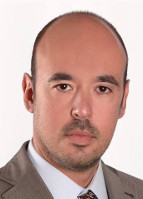
Prof. Adrian Filipescu is a full professor and PhD supervisor at the Department of Automation and Electrical Engineering, Dunărea de Jos University of Galati. He holds a PhD in Control Systems (1993) and has over 40 years of academic and research experience. His expertise spans numerical calculus, adaptive control, robotics, and Industry 4.0/5.0 applications. He has authored 12 books and over 110 indexed articles with an h-index of 11 (SCOPUS), and his work earned two UEFISCDI awards (2014, 2019). Education: Engineer diploma in Automatic Control (Polytechnic University of Bucharest, 1981) and PhD in Control Systems (Dunărea de Jos University, 1993). His research focuses on mechatronics systems integration, robotic control, digital twins, and industrial automation. Notable contributions include developing a mechatronics line with integrated autonomous robots, wheelchair systems for disabled users, and multidirectional autonomous vehicles. Research Themes: Digital twin frameworks, IoT-cloud robotics control, Industry 4.0/5.0 systems, inverse kinematics modeling, and autonomous robotic navigation. His recent work emphasizes cloud-based remote control, HIL simulation, and SCADA integration. Awards: Recipient of the 2014 and 2019 UEFISCDI 'Award for Research Results' for highly commended papers. He has led 10+ research projects, endowing labs with advanced robotic infrastructure and PLC-controlled systems. Advising & Grants: Supervised 7 completed PhD theses (including 1 international co-supervision). Projects focused on robotic-assisted manufacturing, autonomous systems, and mechatronics line optimization. Current lab facilities include mobile robots, industrial manipulators, and PLC-based control systems. Labs/Teams: Director of a research lab developing Industry 5.0-ready systems, including robotic assistants for elderly/disabled users and flexible assembly/disassembly technologies. Collaborations include NATO internships at Politecnico di Torino (Italy), INPG Grenoble (France), and ISR Coimbra (Portugal).
Stavros Vologiannidis serves as an Assistant Professor in the Department of Informatics, Computer and Telecommunications Engineering at the International University of Greece. His academic career spans both teaching and research in control theory, robotics, and machine learning applications. Previously, he was associated with the Mathematics Department at Aristotle University of Thessaloniki where he completed his education and conducted postdoctoral research. Education: B.Sc. in Mathematics from Aristotle University of Thessaloniki (1997) Ph.D. in Control Theory from Aristotle University of Thessaloniki (2005) with dissertation titled 'ALGEBRAIC-POLYONYMICAL COMPUTING METHODS IN CONTROL THEORY' Dr. Vologiannidis' research focuses on Classical and Intelligent Control Theory, Robotics, and Machine Learning, with particular expertise in polynomial matrices and automatic control systems. His work bridges theoretical mathematics with practical engineering applications, especially in educational robotics and industrial control systems. He has developed several educational platforms including EUROPA, a ROS-based educational robot for teaching sensor integration and data acquisition. His publication record shows a clear evolution from theoretical control systems research toward applied machine learning and educational technology. Recent work demonstrates increasing focus on practical applications of AI in education, urban feature recognition, industrial monitoring, and robotics education across multiple educational levels from middle school through university. His research combines mathematical rigor with real-world implementation. Scientific Recognition: Excellence Scholarship in the 'Excellence Scholarships 2010' program of the Research Committee Total citations exceeding 250 with Scopus H-index of 9 Dr. Vologiannidis has secured numerous research grants and led multiple projects including 'Rapid Earthquake Damage Assessment Consortium – REDACt', 'Predictive Maintenance 4.0', and 'Development of computational methods for optimization of eigenvalue assignment problems'. He has collaborated extensively with institutions across Europe including UTIA Foundation in Prague and has participated in EU-funded projects like GALENOS and GN4-1 GÉANT Research and Education Networking. His laboratory work centers around the EUROPA educational robotics platform and the StreetScouting urban feature detection system, both of which integrate hardware, software, and educational applications. These projects demonstrate his commitment to translating theoretical research into practical educational and industrial tools.
Dr. Aurelian Catalin GALCA is a Senior Researcher I at the National Institute of Materials Physics (NIMP) in Magurele, Romania, where he works in the Laboratory of Complex Heterostructures and Multifunctional Materials (HeCoMat). He serves as NIMP's responsible for international collaborations with the Agence universitaire de la Francophonie (AUF) since 2016, managing administrative procedures and educational, training, and research activities for foreign PhD students and postdocs. Dr. GALCA's educational background includes: PhD in Physics from the University of Twente, Netherlands (2006) Master's degree in Solid State Physics from the University of Bucharest, Romania (2002) Bachelor's degree in Physics from the University of Bucharest, Romania (2002) Dr. GALCA's research focuses on the non-destructive characterization of nanoscaled materials using advanced techniques including spectroscopic ellipsometry, X-ray diffraction, UV-Vis and infrared spectroscopy, and Raman spectroscopy. His work also encompasses the preparation of dielectric/semiconductor/metallic thin films by physical vapor deposition methods and the development and testing of optoelectronic devices . His expertise spans materials science, nanotechnology, photovoltaics, and magnetooptics, with particular emphasis on thin film characterization and engineering for solar cell applications, memory devices, and other electronic applications. Analysis of Dr. GALCA's recent publications reveals a strong focus on advanced materials for energy applications , particularly photovoltaics and energy storage. His work spans thin film solar cells (CZTS, CBTS), perovskite solar cells, supercapacitors, and magnetocaloric materials. A common thread is the precise engineering of material properties through composition control, phase transitions, and surface morphology optimization. His research increasingly incorporates computational methods to complement experimental findings, demonstrating an interdisciplinary approach to materials science. Dr. GALCA has received notable recognition for his work, including: RADU GRIGOROVICI prize awarded by the Romanian Academy in 2011 for contributions to the optical characterization of oxide systems As a research leader, Dr. GALCA has coordinated three national projects, two of which as Principal Investigator, including the "Science and engineering of kesterites for the next generation of solar cells" project. He has also contributed to economic projects with CyberSwarm Inc. and Honeywell Romania. His expertise is sought after as a scientific reviewer for top journals including Scientific Reports, ACS Applied Materials & Interfaces, and Applied Surface Science, and as an Expert Evaluator for the European Commission (H2020), ANR (France), CNR (Italy), and Romanian funding agencies. Dr. GALCA leads research activities at the Laboratory of Complex Heterostructures and Multifunctional Materials (HeCoMat) at NIMP, where his team focuses on the characterization and development of advanced materials for optoelectronic applications. The laboratory is equipped with state-of-the-art instrumentation for thin film deposition and characterization, supporting research in photovoltaics, memory devices, and other electronic applications. Dr. GALCA's team collaborates extensively with international partners, reflecting his role as NIMP's responsible for AUF collaborations.
Claudia Steluta Martis is an Associate Professor at the Department of Electrical Machines, Marketing & Management , Technical University of Cluj-Napoca, Romania. Her expertise spans electrical machine design, electromagnetic compatibility, and motor control systems. Date of birth: 19 August 1967, Măcin, Tulcea, Romania Education Industrial High School, Măcin (1981-1985) Technical University of Cluj-Napoca, Electrical Engineering (1985-1990) Research interests focus on design and modeling of electrical machines , particularly doubly-salient permanent magnet motors and electric traction drives. She has contributed to electronically commutated small motor development and electromagnetic compatibility in electromechanical systems. Research projects include National Science Foundation collaborations on doubly-salient motor design, bilateral programs with Italy (University of Cassino), and grants from Romania's National Education Ministry for energy-efficient drives and real-time control systems. Professional experience includes engineering roles at SINTEROM SA and Dania Comprod SRL (1990-1996), followed by academic positions. International mobility includes Erasmus-Socrates stays at Helsinki University of Technology (1999) and University of Cassino (2000).
Professor Hakim Al-Samoui is a distinguished faculty member in the Department of Civil Engineering at the Faculty of Engineering, University of Tripoli. He has served at the university since 2003, obtaining the rank of Professor in 2005 and receiving a promotion to job grade 16 in 2022 (effective from January 1, 2017). His academic career spans over three decades with significant contributions to concrete technology research and education. Bachelor's degree from University of Tripoli (1988) Master's degree from University of Gdansk, Poland (1990) PhD from University of Gdansk, Poland (1996) Worked at University of Gdansk (1996-2002) Professor Al-Samoui specializes in concrete technology with particular expertise in two-stage concrete pouring, concrete durability, fabric formwork, concrete recycling, pozzolanic materials, and concrete mix design. His research bridges theoretical advancements with practical applications in construction engineering. He has published over eighty research papers in distinguished journals and presented at numerous international conferences worldwide, establishing himself as a leading expert in specialized concrete technologies. His recent publications demonstrate a clear trajectory toward sustainable construction materials, advanced concrete technologies, and computational approaches to material science. The research spans traditional concrete innovations while increasingly focusing on eco-friendly alternatives, waste material utilization, and cutting-edge technologies like 3D printing and machine learning applications in construction materials. Scientific Recognition: Fellowship from American Concrete Institute (2020) - first Libyan to receive this honor Active member of American Concrete Institute committees since approximately 1999 External evaluator for leading journals including Construction and Building Materials, American Concrete Institute publications, and American Society of Civil Engineering journals Professor Al-Samoui has supervised six Master's theses at University of Tripoli and served as advisor for graduate students from Gdansk Technical University (Poland), Tehran University (Iran), and Dublin Institute of Technology (Ireland). He has also acted as an external examiner for numerous Master's and PhD theses across multiple universities in Libya, Lebanon, Iraq, and India. His extensive international collaborations include research visits to Columbia University, University of South Carolina, Munich University, and Gdansk University of Technology. Through his active participation in international conferences across more than 20 countries and his role on scientific committees, Professor Al-Samoui maintains a robust research network that spans the global concrete technology community. His recent activities in 2023-2024 demonstrate continued research productivity and academic engagement.
Natalia Alekseevna Evseeva serves as an Associate Professor at the Department of Automobiles, Heat Engines and Hybrid Power Plants within the Faculty of Transport at Zaporizhzhia Polytechnic National University. She has been active at the institution since 2001 and holds the academic title of Candidate of Technical Sciences. She also holds the prestigious position of Vice-Academician of the Academy of Technical Sciences of Ukraine. Her educational foundation includes a degree from Zaporizhia Industrial Institute (1993) with a specialty in 'Metallurgy of non-ferrous metals' and qualification as a 'metallurgical engineer'. She further solidified her academic credentials by defending her Candidate's thesis in 2015 titled 'Improving the mechanical and operational properties of special-purpose chromium-nickel-manganese steel'. Dr. Evseeva's research portfolio demonstrates significant expertise in internal combustion engines, heat engineering, and automotive systems. Her work particularly emphasizes engine cooling systems, thermal management, fuel injection technology, and alternative fuel systems. She has published 22 scientific papers, including a textbook and a patent, with her most recent publications appearing in 2025. Her scholarly contributions show a consistent progression toward more sophisticated modeling techniques and innovative solutions for engine performance optimization, particularly in the areas of electric pump integration for cooling systems and advanced fuel injection technologies. Certificate from the Department of Education and Science of Zaporizhzhia City Council (November 2023) Certificate from Oleksandrivska District Administration of Zaporizhzhia City Council (December 2019) Honorary Certificate from ZNTU (May 2016) Honorary Certificate from the Department of Education and Science of Zaporizhzhia Regional State Administration (2015) Honorary Certificate from Zhovtneva District Administration (2006) Dr. Evseeva actively contributes to academic governance as a member of the scientific and methodological council of the Faculty of Transport and the labor conference. She serves as the guarantor of the bachelor's educational program 'Internal Combustion Engines'. Her professional development includes internships at PJSC 'Zaporizhabraziv' (2020) and recent training in academic integrity (2025) and educational leadership (2025), reflecting her commitment to both research excellence and educational innovation.
Călin-Adrian POPA is a Full Professor at the Department of Computer and Software Engineering, Politehnica University of Timişoara. He holds a Ph.D. in Computer Science and Information Technology (2015) from Politehnica University Timişoara, and additional degrees in Mathematics from West University of Timişoara (B.Sc. 2013, M.Sc. 2015). His research focuses on artificial intelligence, machine learning, and neural networks, with specializations in complex-valued systems (octonion, quaternion, Clifford algebra), stability analysis, and synchronization of neural networks. He has been awarded the 'Profesor Bologna' Distinction (2017). Research interests include: Advanced neural network architectures Deep learning for computer vision Fractional-order systems Nonlinear dynamics and control Applications in robotics and astrophysics His publications span 2014–2025, emphasizing theoretical contributions to neural networks and practical applications in computer vision and robotics. He supervises a large cohort of PhD students in AI-related fields.
Anatoly Petrovych Zabolotny is an Associate Professor and Head of the Trade Union of the Faculty of Electrical Engineering at Zaporizhzhia Polytechnic National University. He holds the academic title of Associate Professor and the academic degree of Candidate of Technical Sciences. His educational background includes a diploma with honors from Zaporizhia Machine-Building Institute named after V.Ya. Chubar (1978), where he specialized in Electrical Machines as an electromechanical engineer, and further education from Zaporizhzhia State Engineering Academy in Finance (2000), where he obtained the qualification of Economist. Dr. Zabolotny's scientific interests focus on mathematical modeling of energy exchange processes in the formation of optimal power supply systems containing conversion equipment. His main disciplines taught include Modeling of power supply systems, Basics of energy conservation, Energy saving in technological installations and buildings, and Energy market infrastructure. His research primarily centers on electrical engineering and power systems, with work spanning from fundamental electrical drive systems to practical applications in energy conservation and power system design, particularly emphasizing mathematical modeling approaches for system optimization. Honorary Certificate of the Ministry of Education and Science of Ukraine (2008) Gratitude of the Department of Vocational and Technical Education of the Ministry of Education and Science of Ukraine (2008) Gratitude of the National Ecological and Naturalistic Center for Student Youth of the Ministry of Education and Science of Ukraine (2009) Dr. Zabolotny has been active at the university since 1980, contributing significantly to both academic instruction and faculty administration. He is fluent in Ukrainian and English, facilitating international academic communication and collaboration.
Cristina Anca DANCIU is a researcher specializing in food technology, agricultural engineering, and sustainability. Her work focuses on optimizing food production processes, reducing food waste, and enhancing the quality of agricultural products. She has extensively studied grain processing, wheat quality management, and the sustainable use of agricultural by-products. Her research also explores consumer behavior in food systems and traditional farming practices, including pastoralism and medicinal plant utilization in Romania. Her contributions include advancements in dough maturation techniques for bakery products, innovative methods for wheat milling optimization, and studies on the socio-cultural dimensions of food waste. She has published widely on topics such as circular economy approaches in food systems, quality control in flour manufacturing, and educational strategies in gastronomy. Her articles frequently emphasize interdisciplinary solutions, combining technological innovation with environmental and social sciences to address challenges in food production and waste reduction. Her work highlights the importance of integrating traditional knowledge with modern practices to achieve sustainable outcomes in agriculture and food systems.
Cristina Stângaciu is a Lecturer at the Department of Computer and Information Technology, Politehnica University of Timisoara. Her research focuses on embedded systems, real-time systems, IoT, and energy-efficient computing. She has contributed to mixed criticality task scheduling and wireless sensor networks. PhD in Real-Time Systems (2015) Scientific Secretary of Department Involvement in projects: Bright Cityscapes - Synthia, CloudPUTing, TEEFIOS Her research interests span real-time task scheduling, embedded operating systems, and smart sensing systems. Recent work explores IoT security and multicore scheduling techniques. Key article trends include real-time scheduling frameworks, IoT protocol optimization, and energy-efficient embedded systems. Topics like lightweight cryptography and CAN FD improvements are prominent in her 2024-2025 publications. Merit Diplomas (2021, 2022) Merit Awards 2025 As advisor to PhD students, she contributes to advancements in real-time systems through grants and collaborative projects like SCMUPT 2025. Her work integrates practical and theoretical aspects of sensor networks and cloud platforms.
Olena Oleksandrivna Ostrohlyad serves as an Associate Professor at the Department of Transport Technologies, Zaporizhia National Technical University (also known as Zaporizhia Polytechnic University). She has been contributing to the university since 2020, specializing in transport logistics systems with a focus on metallurgical enterprises and international road transportation operations. Her academic background includes: Graduated with honors from Zaporizhia National Technical University, Faculty of Transport (2011) Specialty: "Organization of transportation and management in transport (automobile)" Qualification: "Master in organization of transportation and management in transport (automobile), transport engineer" Defended her Candidate's thesis (equivalent to Ph.D.) in 2019 at Dnipro National University of Railway Transport Dr. Ostrohlyad's research focuses on optimizing transport and warehouse logistics systems in industrial settings, particularly metallurgical enterprises. Her work addresses challenges such as cargo freezing in winter conditions, temperature control in rail transportation, and improving operational efficiency through simulation modeling. She has developed specialized approaches for handling bulk materials and analyzing freight flow patterns under variable external conditions. Analysis of her publication record reveals a consistent focus on practical applications of logistics principles in the metallurgical industry, with particular emphasis on integrated solutions that consider environmental factors. Her research spans multiple transportation modes including road and rail, demonstrating progression from theoretical models to practical implementations that enhance transport system resilience. Dr. Ostrohlyad teaches several key courses including Road transport companies, Organization and management of road freight transportation, Organization and management of railway transportation, and Teaching practice. Her practical experience complements her academic work, providing students with real-world insights into transportation management challenges in industrial contexts.