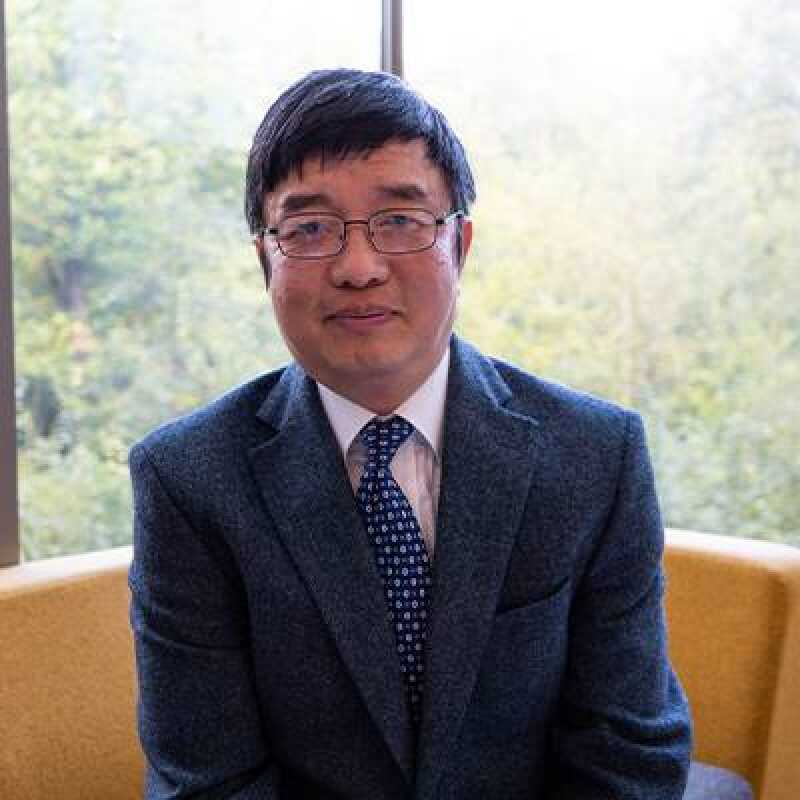
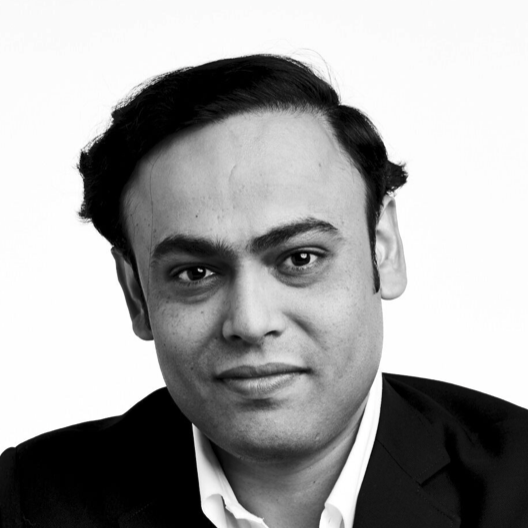
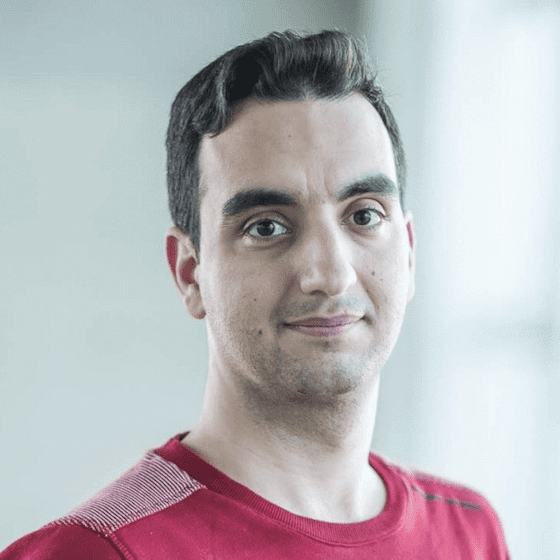
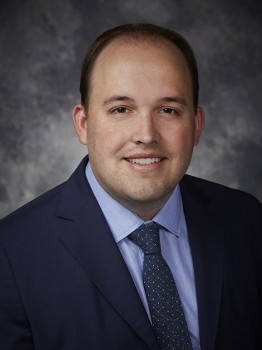
Peng Shige is a Professor of 1st class at the School of Mathematics, Shandong University, China. He has held the Distinguished Professor title under the Ministry of Education (Cheung Kong Scholarship) since 1999. His academic journey includes degrees from Shandong University (Physics diploma, 1971-1974), Paris-IX (1985), and Aix-Marseille University (PhD 1986, Habilitation 1992). Research focuses on nonlinear expectations, stochastic calculus, partial differential equations, and financial mathematics. Key contributions include foundational work on backward stochastic differential equations (BSDEs), the g-expectation framework, and the G-expectation theory extending probability axioms to nonlinear settings. These innovations have advanced stochastic control, financial risk modeling, and differential games. Honors include the 2020 Future Science Award, 2011 Princeton Global Scholar, and 2005 Chinese Academy of Sciences Academician status. He delivered a plenary lecture at the 2010 International Congress of Mathematicians. Peng's work integrates theoretical breakthroughs with applied domains like financial engineering. His research has been widely cited (~8k citations) and shaped modern stochastic analysis methodologies.
Professor Shaomin Wu is a faculty member at the University of Kent's Kent Business School, where he holds the academic rank of Professor of Business/Applied Statistics. He earned an MSc and PhD in applied statistics and has extensive industry experience, including a five-and-a-half-year stint at a global manufacturer in Shanghai before moving to the UK in 2001. He has held roles as a postdoctoral researcher and lecturer before joining Cranfield University and later the University of Kent. His research focuses on recurrent event data analysis, machine learning, and reliability mathematics, with funding from the EPSRC and ESRC. His research projects include managing risk in warranty servicing policies, smart data analytics for local government, and sustainable supply chain demand forecasting. He teaches modules such as risk analysis, reliability engineering, and machine learning. Currently supervising PhD students in time series forecasting, explainable AI, and recurrent event data analysis, he also serves as a co-chair of international conferences, editorial board member, and external examiner for doctoral degrees. Notably, he ranks among the top 2% of global scientists by Stanford University. His work integrates machine learning with business analytics, resilience engineering, and environmental sustainability. Key contributions include IoT-driven resilience methodologies for smart grids and unmanned systems, as well as frameworks for corporate carbon disclosure and maintenance optimization under uncertainty.
Geoff Pleiss is an Assistant Professor in the Department of Statistics at the University of British Columbia (UBC), affiliated with CAIDA's AIM-SI cluster. He is also a Canada CIFAR AI Chair and faculty member at the Vector Institute. His research bridges deep learning and probabilistic modeling, focusing on uncertainty quantification, Bayesian optimization, Gaussian processes, and ensemble methods. Pleiss earned his PhD in Computer Science from Cornell University (2020), followed by a postdoc at Columbia University. He holds multiple awards, including the AISTATS Top Reviewer and NeurIPS recognitions. His work emphasizes scalable algorithms and open-source contributions, such as the GPyTorch library. Pleiss advises students in Computer Science and Statistics, including Donney Fan (PhD), Tim G. Zhou (MSc), and others. He teaches advanced courses like STAT 547U (Deep Learning Theory) and STAT 520P (Bayesian Optimization). Grants include NSERC Discovery and New Frontiers in Research funding. Pleiss collaborates on interdisciplinary projects, such as astrophysical discovery via machine learning, and actively participates in academic service and outreach. Education: PhD in Computer Science, Cornell University (2020) MSc in Computer Science, Cornell University (2018) BSc in Engineering (Computing with Applied Mathematics), Olin College (2013) Key Research Themes: Uncertainty-aware decision-making with neural networks Scalable Gaussian processes and Bayesian optimization Ensemble methods and their theoretical limitations Recent Grants: NSERC Discovery Grant (2024) New Frontiers in Research Fund (2025, co-PI) His publications span foundational theory to applied machine learning, with over 14,500 citations. He actively mentors students through research internships and advises on open-source software development. Pleiss frequently presents at top conferences and collaborates with industry partners like Microsoft and ASAPP.
Hamsa Bastani is an Associate Professor of Operations, Information and Decisions at the Wharton School, University of Pennsylvania, with a secondary appointment in Statistics and Data Science. She co-directs the Wharton Healthcare Analytics Lab and serves as an Associate Editor for Operations Research, M&SOM and OR Letters. Her academic journey began with summa cum laude graduation from Harvard in 2012 with an A.M. in physics and A.B. in physics and mathematics. She completed her PhD in Stanford's Electrical Engineering department under Mohsen Bayati, followed by a Herman Goldstine postdoctoral fellowship at IBM Research. Professor Bastani's research focuses on developing novel machine learning algorithms for data-driven decision-making, with applications spanning healthcare operations, social good, and revenue management. Her work demonstrates particular expertise in sequential decision-making (bandits, reinforcement learning), learning from auxiliary data sources (transfer learning, meta-learning), and designing effective human-AI interfaces (interpretability, fairness). She has made significant contributions to understanding how AI systems affect and augment human behavior, with the goal of designing AI tools that help humans thrive. Her publications reveal a strong trend toward high-impact applications of machine learning in critical societal domains. A significant portion of her recent work focuses on healthcare applications, including optimizing health supply chains in low- and middle-income countries, designing clinical trial protocols, and creating targeted public health interventions. Another major theme examines the complex relationship between humans and AI systems, particularly how AI affects learning outcomes and decision-making processes. Her work frequently bridges theoretical advances with practical implementation, as evidenced by country-scale deployments in Greece and Sierra Leone. Wagner Prize for Excellence in Operations Research Practice (2021) Pierskalla Award for Best Paper in Healthcare (2021, 2019, 2016) Behavioral OM Best Paper Award (2021) Public Sector in OR Best Paper Award (2024) INFORMS Data Mining Best Paper Award (2022) Wharton Teaching Excellence Award (2019, 2020, 2021) Professor Bastani has advised numerous PhD students who have gone on to prominent positions, including Pia Ramchandani (Director of Responsible AI at PwC), Arielle Anderer (Assistant Professor at Cornell Johnson), and Kan Xu (Assistant Professor at ASU Carey). Her research has been supported by collaborations with national governments, including the Greek government where she co-designed Eva, the national-scale reinforcement learning system for targeted COVID-19 testing, and the Government of Sierra Leone where she improved patient access to essential medicines by nearly 20% via decision-aware learning. She has also conducted the first large field study deploying generative AI tutors in high school math classes. She leads the Wharton Healthcare Analytics Lab and serves on the Steering Committee for the Penn Center for Health Incentives and Behavioral Economics and on the statistics advisory committee for the AHA Food is Medicine Initiative. Outside academia, she serves on the Workday AI Advisory Board, demonstrating her commitment to translating academic research into practical applications.
Cathy Wu is an Associate Professor at MIT, with affiliations in the Laboratory for Information and Decision Systems (LIDS), Department of Civil and Environmental Engineering (CEE), and Institute for Data, Systems, and Society (IDSS). Her research group focuses on integrating machine learning with model-based optimization to solve complex problems in transportation systems and cyber-physical systems. Academic Leadership: Class of 1954 Career Development Associate Professor (MIT) Research Grants: NSF CAREER Award, Amazon Robotics, Mathworks, MIT Mobility Initiative, US DOT, Microsoft Research, Cintra, Symbotic Research Interests : Wu's work bridges AI and engineering challenges in transportation. Key areas include: Hybrid ML/Model-based Optimization (large neighborhood search, branch-and-cut) Sustainable Mobility (Project Greenwave, eco-driving) Multi-Agent Coordination (warehouse automation, cooperative driving) Cyber-Professional Systems (generalization in RL, transfer learning) Recent work demonstrates significant advances in eco-driving (11-22% emissions reduction), large-scale multi-agent path finding (1000+ agents), and foundational RL methods for traffic control. Her group has produced 15+ major publications since 2015, with notable media coverage in Science, Wired, and NewScientist. Selected Scientific Awards NSF CAREER Award (2023) Ole Madsen Mentoring Award (2025) IEEE ITSS WiE/YP Fellowship (2024) Harold L. Hazen Teaching Award (2022) Her lab has advised 12+ graduate students and postdocs, including: Vindula Jayawardana (PhD '24, now at Anthropic) Sirui Li (PhD '25, now at Microsoft Research) Yining Ma (Postdoc, active researcher) Zhongxia Yan (PhD '24, now at Anthropic)
Francis Bach is a Professor and researcher at INRIA, leading the SIERRA project-team since 2011, which is part of the Computer Science Department at Ecole Normale Supérieure (ENS) within PSL Research University. His work bridges CNRS, ENS, and INRIA as a joint research effort. Elected to the French Academy of Sciences in 2020, he currently runs the ERC project SEQUOIA following his previous ERC project SIERRA (2009-2014). His research spans statistical machine learning with focus on optimization, sparse methods, kernel-based learning, neural networks, graphical models, and signal processing. Bach completed his Ph.D. in Computer Science at U.C. Berkeley under Professor Michael Jordan, followed by work at Ecole des Mines de Paris and the WILLOW project-team at INRIA/ENS/CNRS (2007-2010). His recent book "Learning Theory from First Principles" was published by MIT Press in December 2024. Bach's publication record shows consistent high-impact contributions across machine learning theory and applications, with recent work focusing on conformal prediction, diffusion models, optimization theory, and learning theory foundations. His research demonstrates strong connections between theoretical guarantees and practical algorithms, with applications spanning generative modeling, robust optimization, and statistical inference. Elected to French Academy of Sciences (2020) ERC project SIERRA (2009-2014) ERC project SEQUOIA (current) Author of "Learning Theory from First Principles" (MIT Press, 2024) Bach actively mentors numerous PhD students and postdocs, with many alumni now holding faculty positions at institutions like EPFL, Ecole Polytechnique, University of Washington, and University of Montreal. His teaching includes advanced courses on learning theory at ENS's Master's programs. He regularly presents tutorials at major conferences including COLT, NeurIPS, and ICML, demonstrating his leadership in the theoretical machine learning community.
Jean-Pierre Fouque is a Professor in the Department of Statistics and Applied Probability (PSTAT) at the University of California, Santa Barbara. His research focuses on stochastic processes, financial mathematics, systemic risk, and reinforcement learning, with a particular emphasis on mean field games and multi-scale stochastic models. He explores applications in portfolio optimization, risk management, and algorithmic finance. His work combines theoretical advancements in stochastic analysis with practical applications in economics and finance. Notable contributions include developing models for systemic risk in financial networks, analyzing reinforcement learning algorithms in mean-field frameworks, and studying stochastic volatility effects in derivatives pricing. Recent research trends include integrating deep learning techniques for systemic risk quantification, advancing multi-scale asymptotic methods for portfolio optimization, and investigating strategic interactions in financial systems using game-theoretic approaches. His publications frequently address topics such as stochastic volatility calibration, optimal investment strategies under uncertainty, and the dynamics of financial markets under stress scenarios. Dr. Fouque has contributed to foundational textbooks and edited volumes on systemic risk and mean field games. His interdisciplinary work bridges probability theory, mathematical finance, and computational methods, impacting both academic research and practical risk management practices.
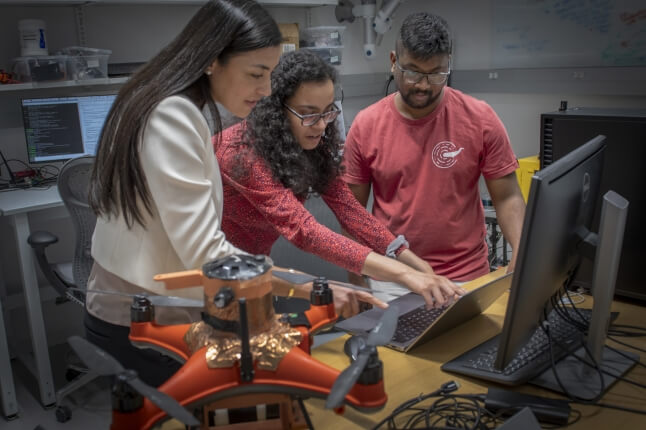
Stephanie Gil is an Assistant Professor of Computer Science at the Harvard John A. Paulson School of Engineering and Applied Sciences. Her research focuses on artificial intelligence, robotics, and distributed systems, particularly addressing challenges in multi-agent coordination, resilience to adversarial attacks, and wireless communication for autonomous systems. She leads the REACT Lab, advancing research in resilient multi-robot networks and cyber-physical systems. Her work integrates machine learning, control theory, and wireless sensing to solve problems such as whale tracking via autonomous robots, proactive multi-robot routing, and decentralized exploration without explicit information exchange. She has received prestigious awards, including the DARPA Young Faculty Award (2024) and the Amazon Research Award (2021). Key research areas include resilient distributed optimization, trust-centered coordination in multi-agent systems, and leveraging wireless signals (e.g., WiFi-CSI) for sensing and bearing estimation. Her contributions span both theoretical frameworks and practical implementations, with a focus on real-world applications like autonomous rideshare routing and environmental monitoring. Dr. Gil’s research also explores trust and cybersecurity in dynamic networks, with publications on crowd vetting, malicious robot detection, and adaptive communication strategies. She collaborates on interdisciplinary projects, such as Project CETI, combining AI and robotics for ecological studies.
Stefano Galelli is a tenured Associate Professor in the School of Civil and Environmental Engineering at Cornell University, where he leads the Critical Infrastructure Systems Lab. He also holds an adjunct position as a Research Scientist at the Lamont-Doherty Earth Observatory, Columbia University. His career spans roles in Singapore, including a Postdoctoral Research Fellow at NUS (2011–2013) and faculty at the Singapore University of Technology and Design (2013–2023). Dr. Galelli earned his B.Sc. (2004), M.Sc. (2007), and Ph.D. (2011) in Environmental and Land Planning Engineering and Information Technology from Politecnico di Milano, Italy. His research focuses on the interactions between critical infrastructure systems and natural environments, emphasizing adaptive management solutions for water-energy systems. Techniques include process-based modeling, climatology, statistical learning, control theory, and optimization. He explores topics like hydro-climatic variability impacts, dam re-operation for environmental flows, and cyber-physical security in infrastructure. His contributions to journals such as Nature Sustainability, Earth’s Future, and Environmental Modelling & Software have earned him multiple awards, including the Early Career Research Excellence Award (2014) and SUTD Excellence in Research Award (2017). He has served as an editor for several journals and is recognized for advancing interdisciplinary approaches to water-energy nexus challenges. Teaching highlights include foundational mathematics courses and advanced topics in data analytics, optimization, and water-energy management. He is developing new courses on data-driven control of coupled human-natural systems and risk management for interconnected systems.
Giancarlo Ferrari Trecate is an Adjunct Professor at the Swiss Federal Institute of Technology Lausanne (EPFL) , affiliated with the School of Engineering and the SCI-STI-GFT department. He is also involved in teaching and research through the STI-SGM and EDRS-ENS programs. Research Interests : Automatic control, state estimation, system identification, machine learning, distributed control, hybrid systems, microgrids, biochemical networks, voltage and frequency stabilization in AC/DC microgrids. Publications Trends : His recent work focuses on integrating Neural ODEs and Hamiltonian structures for stable control systems, regret minimization in distributed control, and robust state estimation under uncertainty. Applications include autonomous mobility-on-demand , power grid optimization , and secure microgrid control against cyber-attacks. Scientific Awards : No specific awards mentioned in the provided data. Teaching & Advising : He supervises PhD students in mechanical engineering and teaches courses on Multivariable control and Networked control systems . His lab, DECODE , specializes in Dependable Control and Decision systems.
Dr James Herbert-Read is an Associate Professor and Whitten Lecturer in Marine Biology at the Department of Zoology, University of Cambridge. He serves as Deputy Head of Department (Postgraduate Education) and leads the Marine Behavioural Ecology Group. His research focuses on understanding how animals, particularly marine organisms, collect and process information from their environments to make behavioral decisions, with emphasis on social interactions, adaptation mechanisms, and ecological constraints. His group employs theoretical frameworks, controlled experiments, and quantitative field studies to investigate behavioral diversity in marine species. Key themes include collective behavior, predator-prey dynamics, camouflage strategies, and the impacts of environmental stressors on animal decision-making. Recent publications highlight work on lionfish vocalization mechanisms, cuttlefish camouflage, citizen science applications in marine research, and behavioral responses to visual and acoustic noise. Scientific awards and affiliations include: Whitten Lecturer in Marine Biology Associate Professor, University of Cambridge He has supervised research projects on topics such as: Social attraction in invasive fish species Evolution of coordinated movement Neurophysiological basis for leadership in shoals Maternal effects on offspring exploration
Saurabh Amin is a Professor in the Department of Civil and Environmental Engineering at the Massachusetts Institute of Technology (MIT), where he also serves as the Edmund K. Turner Professor and Undergraduate Officer. He is a Principal Investigator at the Laboratory of Information and Decision Systems and holds affiliations with the Operations Research Center and the Center for Computational Science and Engineering. His educational background includes: B.Tech. 2002, Indian Institute of Technology (IIT) Roorkee M.S. 2004, University of Texas (UT) Austin Ph.D. 2011, University of California (UC) Berkeley Saurabh Amin's research focuses on the design and control of infrastructure systems using game theory and optimization in networks. His work spans three main areas: resilient network control, information systems and incentive design, and optimal resource allocation in large-scale infrastructure systems. By concentrating on critical infrastructure domains including highway transportation, electric power distribution, and urban water networks, his research develops innovative theory and tools to enhance system performance against both stochastic and adversarial disruptions. His approach involves modeling cyber-physical interactions in infrastructures to assess vulnerabilities, developing detection and response tools for failures at various scales, and designing economic incentive schemes that improve aggregate public good while accounting for dependencies and private information among strategic entities. Amin's work bridges mathematical systems theory with practical civil engineering applications, creating a rigorous theoretical foundation for infrastructure resilience that addresses diverse failure mechanisms from natural disasters to deliberate malicious actions. His recent publications demonstrate a strong focus on decarbonization of energy systems, resilient infrastructure planning under climate uncertainty, optimization methods for complex networked systems, and game-theoretic approaches to sustainable infrastructure management. His work increasingly integrates artificial intelligence and machine learning techniques with traditional control theory to address contemporary challenges in infrastructure resilience and sustainability. The research shows a clear trajectory toward addressing climate change impacts on infrastructure systems while maintaining economic efficiency and operational reliability. Professor Amin has received numerous prestigious awards and honors: Common Ground Excellence in Teaching Award, 2025 HSCC Test-of-Time Award, 2024 MIT CEE, Distinguished Service and Leadership Award, 2023 Samuel M. Seegal Prize (SoE) – inspiring students in pursuing and achieving excellence, 2022 Earll M. Murman for Excellence in Undergraduate Advising, 2022 C3.ai Digital Transformation Institute Research Award, 2020 MIT, Ole Madsen Mentoring Award, 2020 MIT, Energy Initiative Research Award, 2020 National Academy of Engineering, China-America Frontiers of Engineering Symposium speaker, 2019 MIT, Robert N. Noyce Career Development Professor, 2015-2018 Google Faculty Research Award, 2015 National Science Foundation CAREER Award, 2015 Siebel Energy Institute Research Award, 2015 MIT, Solomon Buchsbaum AT&T Research Fund Award, 2012 Professor Amin has been actively involved in significant research projects including the C3.ai DTI project on Causal Reasoning for Real-Time Attack Identification in Cyber-Physical Systems and another on Learning in Routing Games for Sustainable Electromobility. He serves as the chief scientist on multi-institutional NSF grants, including the $9 million Foundations of Resilient Cyber-Physical Systems (CPS) project. His teaching portfolio includes courses such as 1.008 Engineering for a Sustainable World, 1.104 Sensing and Intelligent Systems, 1.020 Engineering Sustainability: Analysis and Design, and 1.208 Resilient Networks. As Undergraduate Officer, he plays a key role in shaping the educational experience for civil and environmental engineering students at MIT. Professor Amin leads the Resilient Infrastructure Networks Lab at MIT, where his team develops theoretical foundations and practical tools for infrastructure resilience. The lab focuses on the intersection of control theory, game theory, and optimization applied to cyber-physical infrastructure systems. Current research directions include pandemic-resilient urban mobility and hurricane-resilient smart grid operations, reflecting the lab's commitment to addressing pressing societal challenges through rigorous systems engineering approaches.
Professor Dawn A. Lott holds the position of Professor of Applied Mathematics at Delaware State University. She obtained her Ph.D. in Engineering Sciences & Applied Mathematics from Northwestern University (1994), M.Sc. from Michigan State University (1989), and B.Sc. from Bucknell University (1987). Her postdoctoral training was at the University of Maryland (1997). Her research focuses on numerical and analytical studies of nonlinear partial differential equations modeling solid/fluid mechanics, biomechanics, and physiology. She also investigates decision-making processes using operations research and machine learning techniques. Key areas of expertise include computational methods, artificial intelligence, and algorithm design. Recent work emphasizes decision-making under uncertainty in IoT-enabled battlefield scenarios. Her publications explore MATLAB/Java comparisons for decision algorithms, graph-based reasoning systems, and SAGE-inspired optimization frameworks. Collaborations with researchers like Raglin and Metu highlight interdisciplinary approaches to military and operational challenges. No specific grants, awards, or student advisories are noted in the provided materials. Her contributions bridge applied mathematics with real-world applications in defense, healthcare, and computational systems.
Soroosh Shafiee is an Assistant Professor in the School of Operations Research and Information Engineering at Cornell University since July 2023. Before joining Cornell, he held postdoctoral positions at the Tepper School of Business (Carnegie Mellon University) and the Automatic Control Laboratory (ETH Zurich). He earned a B.Sc. and M.Sc. in Electrical Engineering from the University of Tehran and a Ph.D. in Operations Research from École Polytechnique Fédérale de Lausanne (EPFL). His research focuses on optimization under uncertainty, robust optimization, optimal transport, and their applications in machine learning and finance. Specific interests include designing algorithms for data-driven optimization, analyzing statistical and computational complexity, and exploring nonconvex optimization structures. Swiss National Science Foundation Early PostDoc Mobility Fellowship (2020) PhD Thesis Distinction Award, EPFL (2020) His work bridges theoretical foundations with practical applications, contributing to areas such as distributionally robust optimization, Wasserstein-based methods, and scalable algorithm development. His research has been published in top venues like Journal of Machine Learning Research and Operations Research .
Dr. Tyler H. Summers is an Assistant Professor of Mechanical Engineering at the University of Texas at Dallas (UTD), with an affiliate appointment in Electrical Engineering. He holds a PhD in Aerospace Engineering from the University of Texas at Austin (2010) and completed a postdoctoral fellowship at ETH Zurich (2011–2015). His research focuses on feedback control and optimization in complex dynamical networks, including electric power grids and distributed robotics. Key contributions include stochastic optimal power flow methods, distributed formation control algorithms, and robust control design under uncertainty. Education: PhD in Aerospace Engineering (University of Texas at Austin, 2010) M.S. in Aerospace Engineering (University of Texas at Austin, 2007) B.S. in Mechanical Engineering (Texas Christian University, 2004) His research interests emphasize theoretical and computational tools for cyber-physical systems, including power networks and robotic teams. Notable achievements include a NSF CAREER Award ($500K) and an Army YIP grant ($350K). He leads the Control, Optimization, and Networks (COIN) Lab, which develops algorithms for robust control and distributed optimization. Recent work addresses challenges in integrating renewable energy into power systems and enabling safe autonomous robotics in uncertain environments. Grants and projects involve collaborations with institutions like the University of Melbourne and the Australian National University. Grants & Awards: NSF CAREER Award (2021) Army Research Office YIP (2017) Air Force Office of Scientific Research (2019) Lab & Team: The COIN Lab focuses on interdisciplinary projects involving students and postdocs in control theory, robotics, and optimization.