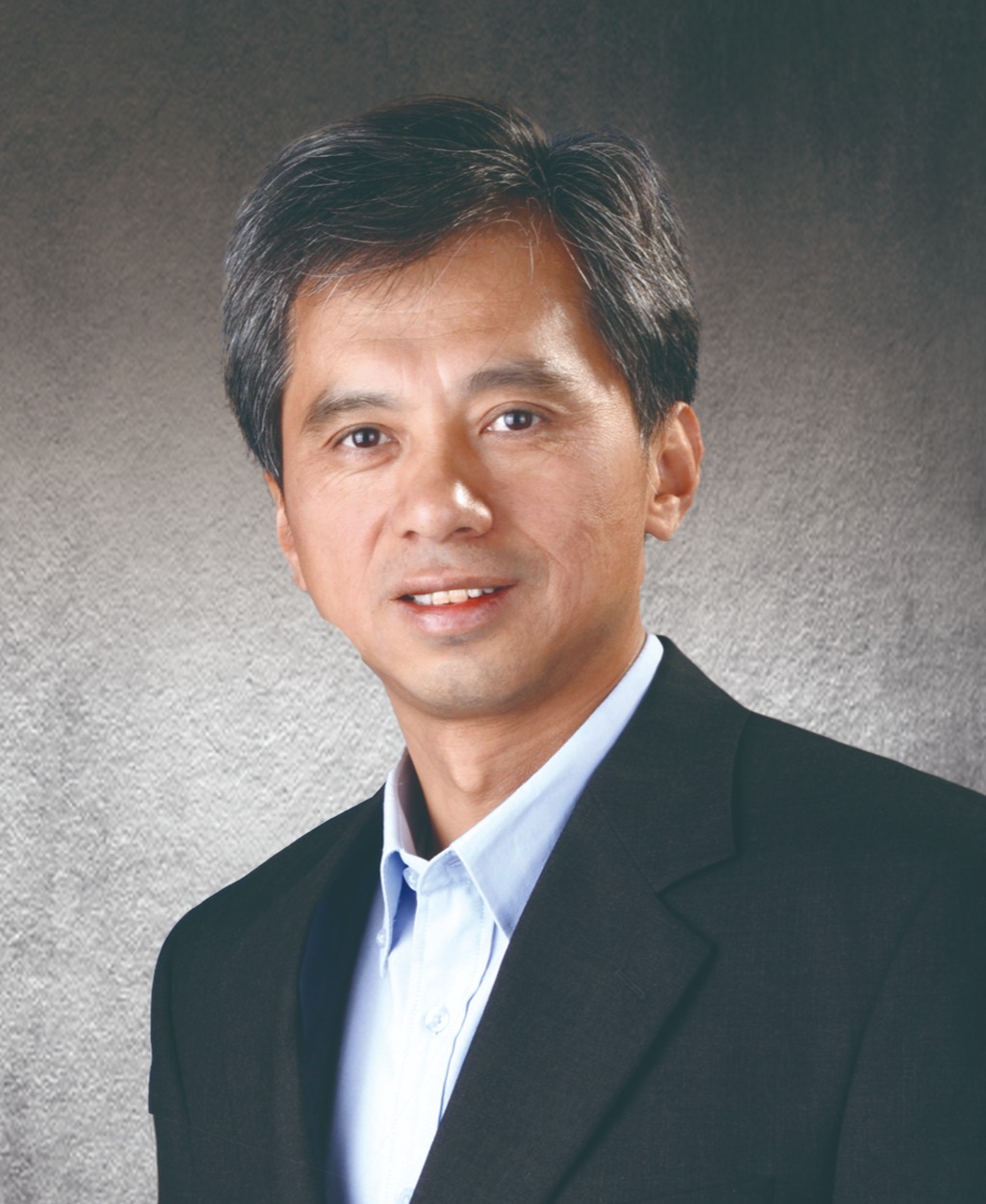
Zhe Dong is an Associate Professor (Researcher) and doctoral supervisor in the Department of Chemistry at the Southern University of Science and Technology . He obtained his B.S. from Peking University (2012), Ph.D. from the University of Chicago (2018), and conducted postdoctoral research under 2021 Nobel laureate David MacMillan at Princeton University (2018–2021). Current focus on photoredox-enabled organoboron chemistry and heterocycle functionalization Developed stereospecific coupling reactions for chiral quaternary carbon synthesis Innovated carbocation-carbanion substitution reactions and bioimaging probes His 15+ publications include Nature , JACS , and Nature Chemistry papers spanning: Photoredox-mediated deoxygenation Pd/NBE cooperative catalysis Protein hydrophobic pocket mapping Natural product total synthesis C-H bond functionalization strategies Scientific Recognition: National Scholarship for Outstanding Self-funded Students (2015) Reaxys PhD Prize Finalist (2017) University of Chicago Best Thesis Award (2018) Overseas High-level Talent Program (2020) Current funding includes Ministry of Science and Technology Key R&D Program (2021–2024) and participation in Peacock Team and Guangchuang Team research consortia.
BAI Yunxia is a Professor and PhD Advisor at the School of Economics & Management, Tongji University, where she chairs the Department of Accounting. Her research focuses on Corporate Finance, Financial Accounting, and Capital Markets, with a particular emphasis on State-Owned Enterprises (SOEs) and government policy impacts. Education: PhD, MA, and BS from Xiamen University (2004, 2001, 1995), Postdoctoral Fellow at Peking University (2009). International Experience: Visiting Scholar at the University of Texas at Arlington (2006). Her work explores corporate governance, earnings management, and maturity mismatch in financial systems. Recent publications analyze risk disclosure in IPO pricing, tax policy implications, and SOE performance under government reforms. BAI Yunxia has secured grants from China’s National Natural Science Foundation and the Education Ministry, including projects on financial system transformation and SOE governance. She serves as reviewer for multiple journals and is an Executive Editor of the China Finance Review. Scientific Awards: Best Doctoral Dissertation (Xiamen University), China Accounting Association Prizes (2008, 2005). Her career bridges academia and industry, with prior roles as an Assistant Engineer at Kaiyuan Group and Visiting Scholar at Cheung Kong Graduate School of Business.
Xiuhao Deng is an Associate Research Fellow and PhD Supervisor at the Institute of Quantum Science and Engineering, Southern University of Science and Technology (SUSTech), with adjunct positions at Pengcheng Lab and Hefei Lab. He obtained his B.S. in Modern Physics from University of Science and Technology of China (USTC) in 2005, followed by an M.S. in Atomic and Molecular Physics from USTC (2009) and a Ph.D. in Physics from University of California, Merced (2015). Research Interests: Driven quantum systems Quantum control theory and open quantum systems Superconducting and spin qubits Quantum error correction Quantum simulation Quantum computing His work focuses on robust quantum gate engineering, scalable quantum control, and error mitigation in multi-qubit systems. Recent publications emphasize geometric correspondence methods, noise resilience, and hardware optimization. Academic Activities: Organized QIP 2020 (international quantum conference) Reviewer for Phys. Rev. X , Phys. Rev. Lett. , and other journals Transferred to Shenzhen International Quantum Academy in 2025 after tenure at SUSTech
Cao Haishan is an Associate Professor at Tsinghua University, affiliated with the Department of Energy and Power Engineering in the School of Mechanical Engineering. His research focuses on cryogenic cooling systems, high heat flux thermal management, and the physics of amorphous ice formation and phase transitions. He leads a research group supported by the National Natural Science Foundation of China and industry partners including Huawei, Midea, and Lenovo. Ph.D., Mechanical Engineering, University of Twente, 2013 M.Sc., Chemical Engineering, Dalian Institute of Chemical Physics, Chinese Academy of Sciences, 2009 B.Sc., Chemical Engineering, Zhejiang University, 2006 Dr. Cao's research spans three major areas: cryogenic cooling (including micro cryocoolers and sorption systems), high heat flux electronic cooling (especially with non-condensable gases), and the formation and transformation of amorphous water ice. His work combines theoretical modeling, computational simulation, and experimental validation, often at micro and nano scales. He applies principles from thermodynamics, fluid dynamics, and materials science to solve engineering challenges in refrigeration and thermal control. The recent publications reflect a strong trend toward interdisciplinary research, integrating machine learning for heat transfer prediction, computational screening of MOFs for cryogenic switches, and fundamental studies of ice nucleation on various substrates. The articles span journals in physics, engineering, materials, and applied thermal sciences, indicating broad impact across multiple domains. Notable scientific awards include: Gustav and Ingrid Klipping Award (2016) Cryogenics Best Paper Award (2017) Annual Teaching Excellence Award, Tsinghua University (2023) Excellent Supervisor Award, Tsinghua University (2024) Multiple First Prize Advisor awards in national student contests on energy saving Dr. Cao has been principal investigator on several grants, including projects funded by the National Natural Science Foundation of China on amorphous ice lifetime and micro-cryocooling for semiconductor chips. He has also led industry-university collaborations with Huawei, Midea, and Lenovo. He advises graduate students and leads a research team focused on next-generation cooling technologies. He serves on editorial boards for Journal of Refrigeration , Vacuum and Cryogenics , and Energies , and has chaired sessions at major international conferences such as ICEC-ICMC and ACTS. His research group operates within the Institute of Thermophysics at Tsinghua University, leveraging facilities in the Lee Shau Kee Science and Technology Building. The team collaborates with national laboratories and international institutions, particularly maintaining ties with the University of Twente. Current efforts are directed toward ultra-low vibration cooling, efficient separation of non-condensable gases, and extending the stability of amorphous ice for cryobiological applications.
Kun An is a Professor at the Department of Traffic Information and Control Engineering within the College of Transportation Engineering at Tongji University. She has previously held academic positions at Monash University (Senior Lecturer, 2018–2019; Lecturer, 2016–2018) and conducted postdoctoral research at the University of Illinois at Urbana-Champaign (2015–2016) and The Hong Kong University of Science and Technology (2014–2015). Her academic journey includes a PhD in Civil Engineering from HKUST (2014) and a Bachelor's degree from Tongji University (2009). PhD: Civil Engineering, The Hong Kong University of Science and Technology (2014) Bachelor's: Transportation Engineering, Tongji University (2009) Dr. An specializes in intelligent transportation systems, focusing on optimizing complex traffic networks, characterizing traveler behavior in stochastic environments, and advancing electric vehicle sharing infrastructure. Her research spans urban transit planning, carsharing logistics, battery electric bus deployment, and real-time traffic signal optimization, with applications to mitigate rail disruptions and enhance multimodal connectivity. Her publications emphasize solving transport challenges through stochastic programming, game theory, and behavioral analysis. Key themes include autonomous vehicle integration, demand uncertainty modeling, and sustainable mobility solutions. Awards include the Hong Kong PhD Fellowship and multiple best paper recognitions. Hong Kong PhD Fellowship (2010–2014) TRBADB30 Best Paper Nomination (2014) Best Paper at 18th Hong Kong Transportation Annual Meeting (Second Author, 2013)
Wang Chun is a tenured Associate Professor in the Department of Management Science and Engineering at the School of Economics and Management, Tsinghua University. He currently serves as Deputy Director of the department and has held academic positions at Tsinghua since 2017. His work bridges stochastic control, reinforcement learning, and machine learning applications in operations management and financial technology. Education: Bachelor's Degree from Tsinghua University (2005) Master's Degree from the University of Wisconsin-Madison (2008) Doctorate in Operations Research from Columbia University (2014) Research Interests: His research focuses on stochastic control and decision-making under uncertainty, particularly in inventory management, revenue management, financial engineering, and sports analysis. He also investigates reinforcement learning algorithms for dynamic optimization and applies machine learning to business data analytics and financial technology. Published Work Trends: Wang’s publications span operations research, financial mathematics, and computational management science. Recent studies address seasonal optimization patterns, robust inventory models, and game-theoretic approaches to sports analytics. His work integrates theoretical advancements in dynamic programming with practical applications in financial engineering and market microstructure. Career History: 2023–Present: Associate Professor, Tsinghua University 2020–2023: Associate Professor, Tsinghua University 2017–2020: Assistant Professor, Tsinghua University Researcher at KCG (New York), leading studies on quantitative investment and asset optimization
Daohong Qiu is an Associate Professor and Master Tutor at the Geotechnical and Structural Engineering Center, School of Civil Engineering, Shandong University. His research focuses on advanced geological prediction in tunnels, surrounding rock stability, structural health monitoring for urban rail transit, and TBM tunneling performance optimization. Position: Associate Professor Affiliation: School of Civil Engineering, Shandong University Email: qiudh@sdu.edu.cn Research Interests: He specializes in geotechnical engineering challenges related to underground construction, including rock burst prediction , disaster control , and machine learning applications in geological modeling. His work emphasizes integrating advanced computational methods like quantum genetic algorithms and RBF neural networks with field data to improve tunnel safety and efficiency. Publication Trends: His recent 2019 studies address subsea tunnel risk assessment , rock burst prediction in underground caverns, and machine learning-driven surrounding rock classification . Earlier works (2014-2015) explore SVM/GA-SVM for geological disaster forecasting, while pre-2010 papers focus on optimization theory and stress field analysis. Patent Contributions: He holds multiple invention patents for geological prediction devices, including three-dimensional geological network modeling , seismic signal detection , and concrete elevation control systems .
Lei Bu is a Professor and Vice Dean at the Software Institute , Nanjing University . He leads research in formal verification, cyber-physical systems, and software engineering, with a focus on bounded model checking and hybrid system analysis. B.Sc. and Ph.D. in Computer Science from Nanjing University (2004, 2010) Visiting student at Carnegie Mellon University and University of Texas at Dallas His research integrates formal methods and machine learning for verifying complex systems like IoT and software with real-time constraints. Key projects include BACH Toolset and BRICK for reachability analysis. Recent publications demonstrate expertise in hybrid system verification , cache side-channel detection , and parallel code analysis frameworks . His work bridges theoretical advancements with practical applications in safety-critical systems. Zhongchuang Software Talent Award (2023) CCF-IEEE CS Young Computer Scientist Award (2022) High-Tech Software Innovation Awards (2019-2023) As Principal Investigator, he leads major projects funded by National Science Foundation of China and Jiangsu Natural Science Foundation (2020-2027). Current tools include BACH for hybrid systems and MLB for Java symbolic execution.
Dr. Li Lei is an Associate Professor and doctoral supervisor in the Department of Materials Science and Engineering at the Southern University of Science and Technology (SUSTech). He holds a BS from the University of Science and Technology of China and a PhD in Chemistry (2016) from the University of Nebraska-Lincoln. From 2016-2020, he conducted postdoctoral research with Prof. Graeme Henkelman at the University of Texas at Austin, where he developed the machine-learning software package PyAMFF. Education : BS (Materials Science, USTC), PhD (Chemistry, UNL) Affiliation : Southern University of Science and Technology, Shenzhen Peacock Plan Category B Talent Research Focus : His work bridges computational method development and catalytic mechanism discovery through: Machine learning algorithms for force field training Long-timescale dynamics simulations of nanomaterials Saddle-point searching methods for reaction pathways Monte Carlo-based catalyst optimization Development of catalytic reaction databases His recent publications in JACS , Nat. Commun. , and ACS Catalysis demonstrate expertise in: Machine learning-enhanced molecular dynamics Electrochemical catalyst design (ORR/OER) in situ reaction mechanism analysis Atomic-scale electrostatic modeling Scientific Contributions : - Led development of PyAMFF machine learning potential framework - Published 27+ SCI papers in top-tier journals - Collaborated with leading computational chemists (Henkelman, Zeng, Francisco) Awards : Shenzhen Peacock Plan Category B Talent Contact : Office: 5th Floor, North Building, College of Engineering, SUSTech Phone: 0755-88015040 Email: lil33@sustech.edu.cn | lei.li@sustech.edu.cn
DAI Jiansheng is a Chair Professor at Southern University of Science and Technology (SUSTech) and Director of the Robotics Research Institute. He is a Fellow of the Royal Academy of Engineering (FREng), Fellow of the Academia Europaea, and holds multiple fellowships including IEEE, ASME, RSA, and IMechE. As Editor-in-Chief of the international journal Robotica, he has established himself as a leading authority in mechanisms and robotics research. His educational background includes a PhD from the University of Salford (1989-1993), a Master's degree from Shanghai Jiao Tong University (1982-1984), and a Bachelor's degree from the same institution (1978-1982). His academic journey has taken him from postdoctoral work at Salford University to research positions at Unilever Liverpool Research Centre before becoming a faculty member at the University of Sunderland and ultimately King's College London, where he served as Reader and then Chair Professor from 2007 until his current position at SUSTech. Professor Dai's research spans theoretical kinematics, screw theory, Lie algebra, and their applications to metamorphic and reconfigurable mechanisms. His pioneering work bridges the gap between versatile but expensive robots and efficient but non-flexible machines. His research interests include origami-inspired robotics, rehabilitation robotics for ankle treatment, soft robotics, and industrial applications in packaging and manufacturing. His theoretical framework has enabled significant advances in reconfigurable parallel mechanisms and metamorphic robotics. His extensive publication record shows a clear progression from fundamental theoretical work on screw algebra and Lie groups to practical applications in rehabilitation, manufacturing, and soft robotics. Recent publications demonstrate increasing focus on soft robotics, variable stiffness actuators, and continuum robots with Shape Memory Alloy applications, while maintaining strong theoretical foundations in screw theory and kinematic analysis of metamorphic mechanisms. ASME Mechanisms and Robotics Award (2015) ASME Machine Design Award (2020) IFToMM Excellence Award (2023) Tianjin Municipal Natural Science First Prize (2021) Crossley Award (2018) AT Yang Award in Theoretical Kinematics (2019) Professor Dai has supervised over 50 PhD students who now hold faculty positions at world-leading universities including University College London, Queen Mary University London, Purdue University, and Wollongong University. His research has been supported by numerous grants enabling the establishment of advanced robotics laboratories and international collaborations. He founded the IEEE Triennial International Conference on Reconfigurable Mechanisms and Robots (ReMAR), creating a major platform for international scholarly exchange in this specialized field. His research group maintains strong industry partnerships with companies including Cambridge Consultants, Goldman Sachs, and Amazon. The Robotics Research Institute he directs at SUSTech serves as a hub for interdisciplinary research, bringing together experts in mechanical engineering, computer science, biomedical engineering, and materials science. The institute focuses on both fundamental theoretical advances in mechanism design and practical applications in healthcare, manufacturing, and service robotics, with particular emphasis on metamorphic and reconfigurable systems that can adapt to multiple tasks.
Dr. Lili Wang serves as an Associate Professor at Southern University of Science and Technology (SUSTech), joining in May 2024 as an independent Principal Investigator and PhD advisor. Her research focuses on theoretical and applied control systems for intelligent sensor networks through interdisciplinary integration of control theory, optimization, and machine learning. Her academic foundation includes: PhD in Engineering and Applied Science from Yale University (2014-2020) Master's in Control Theory and Control Engineering from Zhejiang University (2011-2014) Bachelor's in Automation from Zhejiang University (2007-2011) Dr. Wang's research spans social dynamics , distributed estimation , distributed control , formation control for multi-agent systems , and distributed learning applications . Her work develops novel algorithms for networked control systems with applications in intelligent sensor networks and multi-robot coordination, emphasizing theoretical rigor and practical implementation. Analysis of her publications reveals consistent advancement in distributed observer design, formation control strategies, and consensus algorithms. Key trends include innovative applications of graph theory and spectral methods to multi-agent systems, with growing integration of learning techniques for adaptive control in uncertain environments. Her distinguished recognition includes: IEEE Senior Member (2024) Lillian Gilbreth Fellowships at Purdue University (2023) CPS Rising Star Award (2023) Henry Prentiss Becton Graduate Prize (2019) Zhang Siying Outstanding Paper Award (2012) As a PhD advisor at SUSTech, Dr. Wang mentors graduate researchers in control theory and its applications. She is currently founding COL-LABORATORY, a dedicated research team advancing control systems for intelligent sensor networks through interdisciplinary collaboration, with ongoing projects in distributed learning frameworks and robust multi-agent coordination.
Xuyang Wu serves as Associate Professor at the School of Automation and Intelligent Manufacturing (AiM), Southern University of Science and Technology (SUSTech) in Shenzhen, China. He was promoted from Assistant Professor in June 2025 after joining SUSTech in February 2024, following postdoctoral research at KTH Royal Institute of Technology (2020-2023) and a visiting position at The Chinese University of Hong Kong (2023-2024). His educational background includes: Ph.D. in Communication and Information Systems, University of Chinese Academy of Sciences (2015-2020) B.S. in Applied Mathematics, Northwestern Polytechnical University (2011-2015) Wu's research centers on distributed and large-scale optimization with applications in machine learning and networked systems. His work develops asynchronous algorithms that handle communication delays and coupling constraints, bridging control theory with modern machine learning. Key contributions include barrier function methods for safe resource allocation and delay-agnostic coordinate updates, emphasizing convergence guarantees in decentralized settings. Analysis of his 15 most recent publications (2021-2025) reveals consistent focus on asynchronous distributed optimization across top venues including IEEE Transactions on Automatic Control and ICML. His work demonstrates increasing sophistication in handling non-convex objectives and time-varying networks while maintaining theoretical convergence guarantees, with recent expansion into high-performance decentralized training frameworks. Scientific recognition includes: Best Student Paper Finalist at IEEE International Conference on Control & Automation (2019) While specific advised students and grant details aren't documented in available sources, Wu's publication record indicates active collaboration with researchers at KTH Royal Institute of Technology and The Chinese University of Hong Kong. His work shows clear progression from theoretical foundations toward practical distributed learning applications. Current research focuses on enabling violation-free optimization under constraints and developing communication-efficient decentralized training frameworks for real-world deployment scenarios.
Zheng Xiaochen serves as an Assistant Professor at Southern University of Science and Technology's School of Automation and Intelligent Manufacturing, bringing expertise from his PhD at Madrid's Polytechnic University and postdoctoral research at EPFL's ICT4SM lab. His work bridges academic research with industrial applications through EU-funded projects and global standardization initiatives. His educational foundation includes: PhD in Industrial Engineering, Polytechnic University of Madrid (2019, Cum Laude) Visiting Scholar, Copenhagen Business School (2018) MS in Manufacturing System Information Engineering, Shandong University (2012) BS in Mechanical Design, Shandong University (2009) Research centers on cognitive digital twins and ontology-driven manufacturing systems , with emphasis on translating theoretical frameworks into industrial solutions. His Model Based Systems Engineering approaches enable real-time decision-making in aircraft production and CNC machining, while semantic modeling creates interoperable knowledge bases for zero-defect manufacturing. Current work integrates AI with physical production systems to close the loop between digital models and shop-floor operations. Publication analysis reveals consistent focus on cognitive digital twin applications (43% of recent output), ontology engineering for aerospace (29%), and MBSE frameworks for production scheduling (28%), demonstrating strategic alignment with Industry 4.0 priorities and EU manufacturing initiatives. Key recognitions include: Polytechnic University of Madrid's Outstanding Doctoral Dissertation (Cum Laude) International Journal of Production Research Top Cited Paper Award Funding leadership spans multiple EU Horizon 2020 projects including QU4LITY (H2020 825030), lBOOST 4.0 (780732), and OntoCommons (958371), with direct industry partnerships at Airbus and Siemens. He chairs the Industrial Ontologies Foundry's Product Service System working group while contributing to CEN-CENELEC's Zero-Defect Manufacturing standardization efforts. As director of SUSTech's cognitive manufacturing research unit, he coordinates cross-disciplinary teams developing ontology-based frameworks for digital twin implementations, with active collaborations spanning the EU-China Manufacturing Innovation Platform and Shenzhen's smart manufacturing industrial cluster.
Chen Jian is the Lenovo Chair Professor at the School of Economics and Management, Tsinghua University , and Director of the Ministry of Education Key Research Base for Humanities and Social Sciences . With a career spanning over 30 years at Tsinghua, he has held multiple leadership roles in academic societies, including Vice Presidency in four top-tier Chinese academic societies and editorial positions in over ten international journals. Research Focus: Systems engineering, supply chain optimization, and decision theory Courses Taught: Dynamic systems analysis and control, operations management His scientific contributions include over 200 publications and 50 major projects, with significant impact in operations management, supply chain coordination, and emerging business models. He has trained numerous doctoral students and received prestigious accolades like the National Science Fund for Distinguished Young Scholars and IEEE Fellow status.
Ruixuan Qin serves as Associate Professor in the Department of Chemistry at Xiamen University's College of Chemistry and Chemical Engineering, focusing on advanced catalytic systems for sustainable chemical production since 2022. Education background: PhD in Chemistry, Xiamen University (2013-2019) Bachelor's Degree, Sun Yat-Sen University (2009-2013) His research integrates heterogeneous catalysis with hydrogen science, specializing in parahydrogen-induced polarization techniques, hydrogen isotopic labeling, and separation processes. Work emphasizes fundamental surface mechanisms to enable green chemical synthesis through precise catalyst design. Analysis of 2023-2024 publications reveals dominant themes in palladium-based nanocatalysts for selective hydrogenation, with key innovations in oxygen vacancy engineering, surface ligand control, and atomically dispersed metal systems. Research consistently bridges theoretical modeling with experimental validation to optimize catalyst performance. Based at Xiamen University's National Engineering Laboratory for Green Chemical Productions of Alcohols-Ethers-Esters (NEL-AEE), his work directly supports sustainable industrial chemical processes through fundamental catalytic discoveries.