Hao Liu is a researcher affiliated with institutions like Chinese Academy of Sciences , Beihang University , and Stanford University . His work spans Computer Science , Artificial Intelligence , and Robotics . Key affiliations: National Space Science Center (Beijing), School of Astronautics (Beihang), Key Laboratory of Pervasive Computing (Tsinghua) Research interests include Machine Learning , Image Processing , Graph Neural Networks , and Wireless Communication Optimization His recent publications focus on: Advanced control systems for fuzzy models Medical imaging via hyperspectral analysis Transformer-based approaches in NLP and vision Quantum-safe and edge computing protocols
Daniel J. Abadi is a prominent researcher in database systems at Yale University. With over two decades of impactful research, he has made significant contributions to the fields of distributed databases, transaction processing, and column-oriented database systems. His work bridges theoretical foundations with practical implementations that have influenced both academia and industry. Dr. Abadi's research primarily focuses on database system architecture, with particular emphasis on: Distributed and geo-replicated database systems High-performance transaction processing Column-oriented and analytical database systems Stream processing and real-time analytics Cloud and serverless database technologies Integration of machine learning with database systems His recent work shows a continued focus on addressing scalability challenges in modern database systems, with particular attention to multi-region transaction processing, automated data management, and the integration of machine learning techniques. The trend in his publications indicates a strong emphasis on practical, deployable systems that solve real-world problems faced by industry. Dr. Abadi has been instrumental in several major research initiatives and reports that have shaped the direction of database research, including the Seattle Report and the Cambridge Report on Database Research. Throughout his career, Dr. Abadi has mentored numerous students and collaborated extensively with leading researchers in the field. His work has received significant recognition through widespread citations and adoption of his ideas in both academic and industrial database systems.
Dr. Yu Huang is an Assistant Professor in the Department of Computer Science at Vanderbilt University's School of Engineering, with a secondary appointment in the Department of Teaching and Learning at the Peabody School of Education. She is affiliated with the Institute for Software Integrated Systems, the Frist Center for Autism and Innovation, the Vanderbilt Lab for Immersive AI Translation (VALIANT), and the Vanderbilt LIVE Learning Innovation Incubator. Her academic journey began with a BS in Aerospace Engineering from Harbin Institute of Technology in China (2011), followed by an MS in Computer Engineering from the University of Virginia (2015), and culminated with a PhD in Computer Science and Engineering from the University of Michigan in 2021 under Professor Westley Weimer. Dr. Huang's research bridges human cognition and machine intelligence to enhance software development. Her work spans software, hardware, AI, medical imaging (fMRI/fNIRS), eye tracking, and mobile sensing through collaborations with Security, Education, Psychology, and Neuroscience researchers. She leads the MIND Lab (Mixed INtelligence Development for programming lab), investigating programming expertise formation, code comprehension processes, cognitive error patterns, and diversity in programming communities. Her innovative approach combines empirical human studies with AI model development to create more effective programming tools. Her recent publications reveal a growing emphasis on leveraging human attention data to improve code language models, analyzing cognitive biases in security contexts, and examining social factors in technical communication. The research shows strong interdisciplinary connections between neuroscience, psychology, and software engineering, with increasing applications of LLMs in developer tooling. Dr. Huang's work consistently demonstrates how understanding human cognition can inform better AI systems for programming tasks. Dr. Huang has received numerous prestigious recognitions including the 2025 ICPC Vaclav Rajlich Early Career Achievement Award and three ACM SIGSOFT Distinguished Paper Awards (ICSE 2019, FSE 2023, ICSE 2024). Her lab has earned the Best Presentation Award at GI2024, while her students have received the Richard Bennett/Dorothy Danforth Compton Prize scholarship and the C. F. Chen Best Paper award. She actively mentors a diverse team of graduate students (Yifan Zhang, Zach Karas, Zihan Fang, Yueke Zhang, Jiahao Zhang) and undergraduate researchers, with many former students advancing to top institutions (Stanford, Harvard, Duke, UC Berkeley) and organizations (NASA JPL). Her research is supported by a 4-year NSF grant, GitHub Tech for Social Good funding, and the Provost's Faculty Immersion Vanderbilt Grant, enabling comprehensive studies of human-AI collaboration in software engineering. The MIND Lab maintains a strong collaborative culture, frequently working with Professor Kevin Leach's research group and organizing retreats to locations like Radnor State Park and the Great Smoky Mountains. This environment fosters innovation at the intersection of human cognition and software engineering while supporting the professional development of emerging researchers in the field.
Prof. Dr. Sandra Transchel is a Full Professor of Supply Chain and Operations Management at Kühne Logistics University (KLU) in Hamburg, Germany. She has held this position since 2019, previously serving as Associate Professor (2011-2019) and Dean of Programs (2014-2015). Her academic journey includes appointments as Assistant Professor at Pennsylvania State University (2008-2011) and Visiting Assistant Professor at Tuck School of Business at Dartmouth (2011). Education includes: PhD in Business Administration, University of Mannheim (2008) Diploma in Business Mathematics, Otto-von-Guericke University Magdeburg (2004) Her research integrates supply chain management, inventory control, and revenue management with a strong focus on retail operations optimization and food supply chain sustainability . Key investigations examine perishable inventory systems, demand-supply synchronization, and substitution behavior. Current projects address food waste reduction through contract-based coordination in fresh food supply chains and development of urban food production networks (FabCity). Publications demonstrate consistent focus on inventory optimization under uncertainty, with recent work extending into pandemic impacts on humanitarian logistics and perishable inventory systems with lead-time variability. Research consistently bridges theoretical models with retail/manufacturing applications. Teaching includes Decision Analysis, Inventory and Warehouse Management, and Warehousing and Intralogistics across BSc, MBA, and MSc programs at KLU.
Prof. Karsten Urban is a Full Professor of Numerical Mathematics at the University of Ulm, leading the Institute for Numerical Mathematics. He holds roles such as Dean of Studies in Computational Science and Engineering (CSE) and Deputy Spokesman for the Research Association for Scientific Computing in Baden-Württemberg. He is an active member of prestigious societies including the Deutsche Mathematikervereinigung (DMV) and SIAM. His academic journey includes a PhD from RWTH Aachen (1995), Habilitation (2001), and a full professorship at Ulm since 2005. Research focuses on numerical methods for PDEs, reduced basis techniques, multiscale simulations in fluid mechanics, biomechanics, quantum sciences, and financial mathematics. He has pioneered wavelet-based methods and collaborated with industries on ship propulsion and energy trading models. His work integrates mathematical rigor with real-world applications, emphasizing model reduction and computational efficiency. Editorial Roles: Managing Editor of Advances in Computational Mathematics , Editor of SN Partial Differential Equations and Applications . Awards: Teaching award of Baden-Württemberg (2005), Science-Economy Cooperation Awards (2004, 2008). Administrative Roles: Member of the University Council and ASIIN expert committee. Supervises doctoral students in numerical analysis, quantum simulations, and biomechanics. Active in interdisciplinary projects, including quantum systems (IQST) and fracture healing modeling in collaboration with biomechanics experts. His contributions bridge academia and industry, driving innovation in computational methods.
Giorgio Ferrari is a Full Professor for Mathematical Finance at the Institute for Mathematical Economics (IMW), Faculty of Economics, Bielefeld University. His research bridges stochastic control theory with applications in economics, finance, actuarial science, and epidemiology. Education: B.Sc. and M.Sc. in Physics and Mathematical Physics from the University of Rome La Sapienza, Ph.D. in Mathematics for Economic-Financial Applications (2012). Academic Appointments: Post-Doctoral Researcher (2012–2015), Substitute Full Professor (2015), Junior Professor (W1) (2016–2017), Associate Professor (2017–2023), and Full Professor (2023–present) at Bielefeld University. Research Interests focus on Singular Stochastic Control , Optimal Stopping , and Stochastic Games , with applications to economic policy, financial markets, and epidemic modeling. His work extends to Mean-Field Games for large-scale strategic interactions and Free-Boundary Problems for investment decision-making under uncertainty. Scientific Contributions include groundbreaking publications in Stochastic Processes and their Applications , Mathematical Finance , and SIAM Journal on Control and Optimization . His research projects, such as the DFG SFB 1283 subproject C4 and the Research Training Group 2865 , address uncertainty in dynamic economies through game-theoretic and stochastic frameworks. Notable Awards: AMASES Best Young Researcher Paper (2014), YITP Research Prize (2017), and multiple research fellowships from the University of Padova. Leadership: Director of the Bielefeld Graduate School in Theoretical Sciences (2023–present) and Principal Investigator in major DFG-funded initiatives.
Holger Dette is a Professor and Chair Holder of Stochastics (specializing in Statistics) at the Faculty of Mathematics, Ruhr University Bochum. He leads the prominent Group Dette within the Institute of Statistics, overseeing a team of researchers, doctoral students, and administrative staff including Birgit Tormöhlen as team assistant. His research group is deeply integrated within the university's mathematical ecosystem, collaborating with other research groups across algebra, analysis, numerics, and topology. Dette's research spans mathematical statistics with strong applications in real-world problems. His primary interests include optimal experimental design, time series analysis, functional data, change point problems, nonparametric regression, biostatistics, special functions, goodness-of-fit tests, and random matrices . His work bridges theoretical statistics with practical applications, particularly evident in his collaborations with pharmaceutical giants Novartis and Bayer AG in biostatistics, as well as Quasol, a spin-off company from his statistics institute. His recent publications (2024-2025) reveal a research program increasingly focused on high-dimensional and functional data analysis, privacy-preserving statistics, and novel methodological approaches to longstanding statistical problems. Dette's work shows strong interdisciplinary connections, particularly with biomechanics (analyzing joint angles during fatigue phases) and data science (addressing challenges in the era of big data). His research group is actively involved in multiple DFG-funded projects including the newly established 'Small Data' collaborative research center (Sonderforschungsbereich 1597) and the Spatio-temporal Statistics for the Transition of Energy and Transport (Transregio 391). Dette has received significant recognition including the prestigious Humboldt Research Award . His paper 'With Great Power Come Great Side Channels: Statistical Timing Side-Channel Analyses with Bounded Type-1 Errors' achieved second place at the CSAW'24 Applied Research Competition MENA. His research group has also secured multiple significant funding awards from the German Research Foundation (DFG). As an advisor, Dette supervises numerous doctoral and master's students including Pascal Quanz, Marius Kroll, and Carina Graw. His group offers statistical consulting services for scientists and students across bachelor's, master's, and doctoral phases. The group maintains strong industrial partnerships, particularly in biostatistics applications, demonstrating Dette's commitment to translating theoretical statistics into practical solutions for real-world challenges.
Claire Vernade is a Group Leader at the University of Tübingen within the Cluster of Excellence Machine Learning for Science. She holds an Emmy Noether award (2022) and an ERC Starting Grant (2024) for her projects FoLiReL and ConSequentIAL , focusing on theoretical reinforcement learning and non-stationary environments. Education: PhD from Telecom ParisTech (2017) Post-doctoral researcher at University of Magdeburg (2018) Her research bridges sequential decision making, bandit problems, and reinforcement learning theory. Recent work explores lifelong learning, distributional RL, and game-theoretic approaches to PCA, emphasizing mathematical rigor and algorithmic innovation. Recent publications highlight trends in non-stationary RL , continual learning , and bandit algorithms with complex feedback structures. Key subfields include meta-learning, adaptive control, and theoretical guarantees in dynamic programming. Scientific Awards: Emmy Noether Award (2022) ERC Starting Grant (2024) Outstanding Paper Award & Oral Presentation, ICLR (2021) She mentors PhD and master's students in theoretical machine learning, with current advisees including Nicolas Nguyen, Onno Eberhard, and Ziyad Sheebaelhamd. Her lab actively recruits candidates in bandit algorithms and RL theory through the IMPRS-IS and ELLIS doctoral programs. Claire co-leads diversity initiatives like Tübingen Women in Machine Learning and Women in Learning Theory, advocating for inclusivity in AI research. She has organized workshops at ICML and EWRL, and contributed to union activism in the tech industry.
Professor Dr. Martin Grepl is a faculty member at RWTH Aachen University, where he holds the Lehr- und Forschungsgebiet Optimierung mit partiellen Differentialgleichungen (Teaching and Research Area in Optimization with Partial Differential Equations). He has been affiliated with RWTH Aachen since 2009, first as a Professor (W1) and since 2014 as a Professor (W2). Education: Diplom-Ingenieur (Aerospace Engineering), University of Stuttgart (2000) Master of Science (Mechanical Engineering), MIT (2001) Doctor of Philosophy (Mechanical Engineering), MIT (2005) His research focuses on numerical methods for partial differential equations (PDEs) , particularly model order reduction , reduced basis methods , finite element methods , and optimal control for parametrized PDEs. He also investigates parameter estimation , inverse problems , and control constraints in elliptic and parabolic PDE systems. The scientific awards he has received include the Studienstiftung des deutschen Volkes (1997-2000), a Fellowship from the Dr. Jürgen Ulderup-Stiftung (1998-1999), and the Lehrpreis der Fachschaft Mathematik/Physik/Informatik (2011). His work spans applications in manufacturing , medical physics , and fluid dynamics , as evidenced by his patents and collaborative research. His publications demonstrate expertise in reduced basis methods for nonaffine/nonlinear PDEs , trust region optimization , and error bounds for real-time and many-query scenarios. His collaborations often involve interdisciplinary applications, including thermal conduction , welding processes , and glomerular filtration modeling .
Dr. Kenneth Zick is a Research Professor at the University of Southern California's Information Sciences Institute (USC ISI), where he serves as Research Director of Transformational Computing. His work focuses on game-changing computer architectures, hardware, and systems for solving critical government problems, with expertise in unconventional computing, quantum computing, and bio-inspired systems. Ph.D. in Computer Science & Engineering, University of Michigan-Ann Arbor M.S. in Electrical Engineering, University of Texas at Dallas Bachelor's in Electrical Engineering, University of Michigan-Ann Arbor Dr. Zick's research interests span unconventional computing , bio-inspired systems , Ising machines , quantum annealing , FPGA-based solutions , and neuromorphic computing . His group develops hardware-centric algorithm discovery and Cosm, a heuristic algorithm for sparse Ising optimization. Current projects include superconducting digital architectures, analog-digital hybrid computing, and human-AI co-design for breakthrough hardware. His team leverages advanced facilities such as USC ISI's MOSIS 2.0 and the California DREAMS hub in the DoD Microelectronics Commons, with expertise in high-speed I/O, FPGA prototyping, and radiation-hardened systems. He has received a NASA Fellowship for his Ph.D. work and mentored students like Aditi, who won the USC ECE Outstanding Academic Achievement Award.
Prof. Ulrich W. Thonemann is a Full Professor and Director of the Department of Supply Chain Management & Management Science at the University of Cologne's Faculty of Management, Economics and Social Science. Since 2019, he has served as Dean of the Faculty and President of the University of Cologne Executive School since 2018. His research spans Supply Chain Management Optimization Behavioral Operations Information Systems . His recent work focuses on Incentive systems for forecast sharing Behavioral inventory metrics Contract design for newsvendor problems Demand information sharing Capacity rationing . He has served on the scientific advisory board of Bundesvereinigung Logistik and as Associate Editor for Production and Operations Management . Scientific Awards: Terman Fellow (1999-2000) Anderson Faculty Scholar (1998-2000) Outstanding Academic Achievements at Stanford (1992) Contact: ulrich.thonemann@uni-koeln.de | Research Group Website
Prof. Dr. Martin Luccarelli serves as Professor of Industrial and Material Design and Deputy Head of the Teaching and Research Centre for Interactive Materials (LFZ IMAT) at Reutlingen University's TEXOVERSUM School of Textiles. His expertise bridges sustainable design, material innovation, and user-centered product development. Teaching Areas: Industrial/material design Location: Building 1, Room 116 Research focuses on green design cues , interactive materials , and sustainable product personality , particularly in automotive contexts. Publications highlight interdisciplinary approaches to design education , eco-friendly material perception , and user interface optimization . Key projects include InBiO (bio-based car interiors) and KICKup (AI-driven cellulose cycles). Contact: martin.luccarelli@reutlingen-university.de
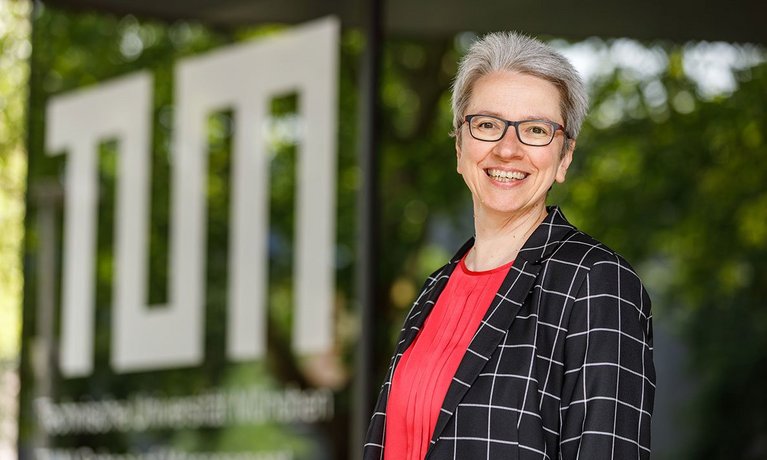
Prof. Dr. Dr. h.c. Gudrun Kiesmüller serves as Full Professor holding the Chair for Operations Management at TUM School of Management, Technical University of Munich, based at Campus Heilbronn since July 2019. She concurrently holds the position of Hedda Andersson Guest Professor at Lund University's Department of Industrial Management & Logistics since January 2021. Previously, she held professorial positions at Otto-von-Guericke-University Magdeburg (2013-2019), Christian-Albrechts-University zu Kiel (2010-2013), and Technical University Eindhoven (2002-2009). Her research program focuses on Operations Management with particular emphasis on the implications of digitization in Industry 4.0, especially in after-sales services. She develops analytical methods to optimize processes across manufacturing and supply chains. Her work spans three interconnected domains: stochastic manufacturing systems design (examining buffer sizing and spare parts planning), safety stock optimization under uncertain demand and supply conditions, and maintenance-reliability integration. She investigates how digitization transforms traditional operations, with growing emphasis on AI applications for supply chain optimization and inventory planning. Prof. Kiesmüller's extensive publication record reveals consistent contributions to operations research methodology with practical business applications. Her work demonstrates increasing integration of data-driven approaches, particularly in the most recent publications which explore AI applications for supply chain optimization. The research shows progression from theoretical inventory models toward more complex, integrated systems that consider multiple uncertainties simultaneously, reflecting the growing complexity of modern supply chains. Her professional recognition includes: 2022 Service Award from the International Society for Inventory Research Multiple Outstanding Reviewer Awards from OR Spectrum (2017, 2020) EURO Best Paper Award (2014) for influential review on lateral transshipments Multiple teaching awards recognizing excellence in both bachelor and master level instruction At TUM, Prof. Kiesmüller teaches a comprehensive curriculum in Operations Management, emphasizing both theoretical foundations and practical applications. Her courses equip students with skills to analyze supply chain planning problems, apply quantitative models, and solve complex operational challenges. She maintains an active research group investigating how digitization transforms operations management practices, particularly in after-sales service contexts where Industry 4.0 technologies enable new optimization possibilities.
Prof. Dr. Jochen Garcke is a faculty member at the Institute for Numerical Simulation, University of Bonn, with a dual affiliation at Fraunhofer SCAI's Department of Numerical Data-Based Prediction. His work bridges numerical simulation and machine learning, focusing on high-dimensional problems, sparse grids, and optimal control. Key research themes: Sparse grids, machine learning for simulations, reinforcement learning, uncertainty quantification Teaching includes courses on Numerical Methods in Science and Technology and Scientific Computing , emphasizing practical machine learning applications. Recent publications explore hybrid models combining data-driven and physics-based approaches in automotive engineering, wind turbines, and geoscientific modeling. His group employs adaptive sparse grids, graph algorithms, and spectral methods to tackle challenges in crash simulations, fluctuating renewable energy systems, and turbulent flow analysis. Collaborations span Fraunhofer SCAI and industry 4.0 initiatives.
Adlen Ksentini is a Professor at EURECOM, a leading graduate school and research center in Sophia Antipolis, France, specializing in digital science and communication systems. His extensive research focuses on next-generation mobile networks (5G/6G), network management, and the integration of artificial intelligence with telecommunications infrastructure. Dr. Ksentini actively contributes to major EU research initiatives including 6G-BRICKS and AC3, serving as a key researcher and project leader in the development of future network architectures. Dr. Ksentini's research interests center around network slicing, intent-based networking, edge computing, and the application of machine learning to network management problems. His work bridges theoretical advancements with practical implementations in 5G/6G systems, with particular emphasis on zero-touch network management, energy efficiency optimization, quality of service assurance, and the integration of large language models with network operations. His research has significantly contributed to the development of O-RAN (Open Radio Access Network) frameworks and the evolution of network automation. His recent publication trends reveal a strategic shift toward AI-native network architectures, with increasing focus on integrating large language models (LLMs) with network management systems. His work demonstrates a clear progression from traditional network management approaches to more autonomous, AI-powered systems capable of intent-based configuration, self-optimization, and predictive maintenance. The publications show strong emphasis on practical implementations within the 6G research ecosystem, addressing critical challenges in network slicing, resource allocation, and energy efficiency. As a research supervisor, Dr. Ksentini mentors several PhD students including Abdelkader Mekrache, Karim Boutiba, Bouziane Brik, and Houda Hafi, who frequently appear as co-authors on his publications. His research is primarily funded through major EU research projects such as 6G-BRICKS (Building Reusable Testbed Infrastructures for Cloud-to-Device Breakthrough Technologies) and AC3 (which focuses on Cloud Edge Continuum). Dr. Ksentini is actively involved with the 6G-BRICKS project consortium and the AC3 project team, where he contributes to developing next-generation network architectures that integrate communication, computing, and sensing capabilities. His work within these projects focuses on creating reusable testbed infrastructures and addressing security and trust management challenges in the cloud-edge continuum.