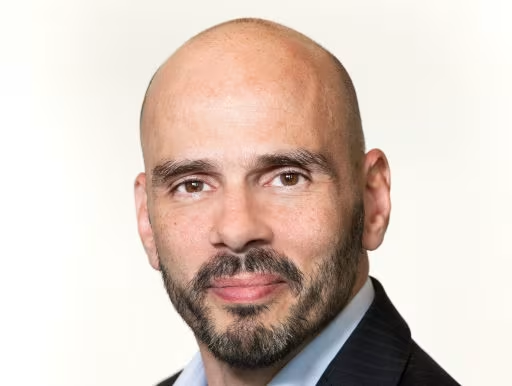
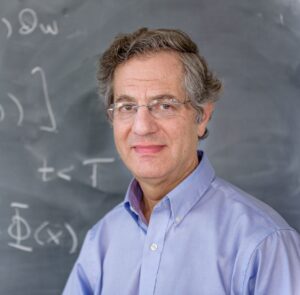
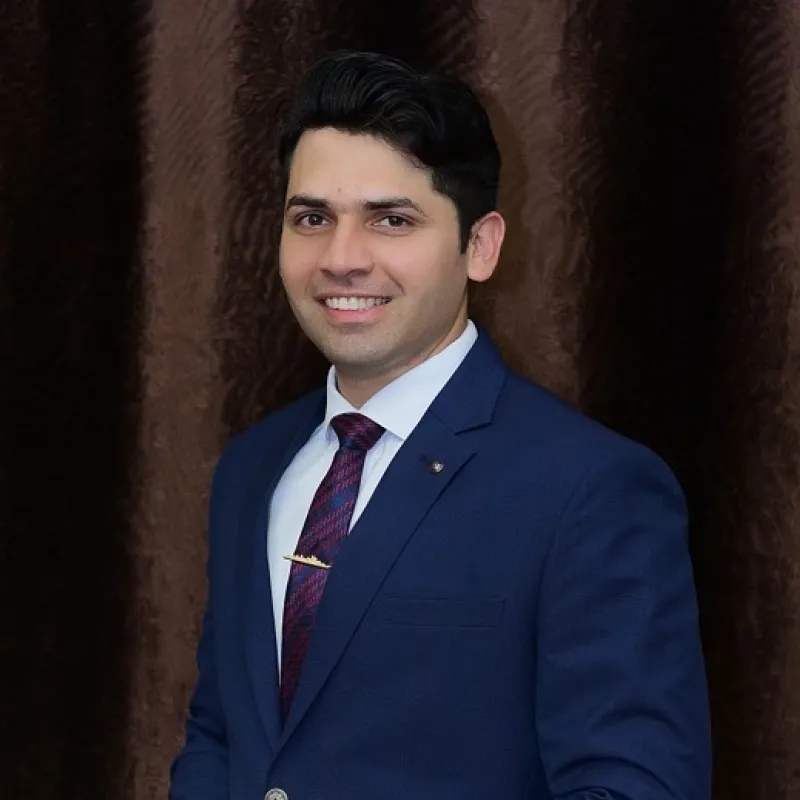
Professor Francisco Gomes is a Professor of Finance at the London Business School , where he has been a faculty member since 2000. His research focuses on capital markets, asset allocation, household finance, and macroeconomics , with a particular emphasis on life-cycle investing, retirement policy, and risk-sharing mechanisms. BA - Universidade Nova de Lisboa MA/PhD - Harvard University His work has been published in top-tier journals like The Journal of Finance , The Review of Financial Studies , and The American Economic Review . Recent publications analyze automation's impact on wealth dispersion, yield-chasing behavior in household investments, and optimal target-date fund strategies for retirement planning. Professor Gomes is a Research Affiliate of the Centre for Economic Policy Research (CEPR) and co-founded the CEPR Network on Household Finance. His research bridges theoretical models with empirical analysis, often incorporating computational methods (e.g., Fortran/Matlab code for life-cycle models).
Juan Yao is a Senior Lecturer at the Finance Discipline, Business School, The University of Sydney. Her research focuses on empirical asset pricing , funds management , foreign exchange markets , and business forecasting . She has contributed to national research projects such as "Strategies and Approaches to Teaching and Learning Cross Cultures" (2007-2009) and is affiliated with the Sydney Environment Institute, China Study Centre, and Australia-China Business Network. Research Interests: Juan’s work explores financial market efficiency, investor behavior, and cross-cultural economic dynamics. Her publications address hedge fund performance, mutual fund strategies, and behavioral anomalies in both Australian and Chinese markets. Publications: Recent articles analyze price bubbles, sentiment analysis, and institutional trading impacts, spanning journals like Journal of Banking & Finance and Pacific-Basin Finance Journal . Grants: She served as Chief Investigator for a national teaching and learning grant (2007-2009) and a 2014 CIPR grant on asset-price bubbles in Australia.
Petter N. Kolm serves as a Clinical Professor of Mathematics and Program Director at New York University, with his office located in Warren Weaver Hall (520). He can be contacted at petter.kolm@nyu.edu or 212-998-4855, and holds an editorial board position at the Journal of Portfolio Management. His academic qualifications include: Doctorate in Mathematics from Yale University M.Phil. in Applied Mathematics from the Royal Institute of Technology in Stockholm M.S. in Mathematics from ETH Zurich Dr. Kolm's research centers on quantitative finance, with primary focus areas including quantitative trading strategies, delegated portfolio management, financial econometrics, risk management, and optimal portfolio strategies. His work integrates advanced mathematical modeling with practical investment applications, bridging theoretical frameworks and real-world market dynamics through rigorous empirical analysis. Analysis of his 15 most recent publications reveals consistent emphasis on portfolio optimization techniques—particularly Bayesian methods and the Black-Litterman model—alongside significant contributions to algorithmic trading systems, factor-based equity portfolio construction, and machine learning applications for financial sentiment analysis. His scholarly output demonstrates evolution from foundational portfolio theory toward contemporary computational finance challenges. As Program Director, Dr. Kolm oversees academic programming and likely mentors graduate students in quantitative finance, though specific advisee details are not documented. His prior industry role at Goldman Sachs Asset Management provided direct experience in developing hedge fund strategies, informing his applied research approach. Dr. Kolm's professional trajectory includes significant industry engagement through his tenure in Goldman Sachs' Quantitative Strategies Group, where he developed quantitative investment systems. His current academic leadership position leverages this practical experience to shape quantitative finance education and research at NYU.
Professor Susan Thorp is a Finance academic at the University of Sydney Business School . With a PhD in Economics from UNSW and prior roles at University of Technology Sydney and the Reserve Bank of Australia, she focuses on household finance , retirement planning , and financial market behavior . BEc (Hons) - University of Sydney Dip. Ed. - University of New England PhD - University of New South Wales Her research interests include: Life-cycle financial decision-making Behavioral influences on savings and investments Superannuation policy and market integration Commodity market dynamics Economic impacts of financial literacy Crises-driven market contagion Recent publications analyze retirement decumulation , financial trust , and commodity-equity market correlations . She leads cross-disciplinary teams applying dynamic programming , econometric modeling , and experimental design to financial challenges. Her grants include ARC Linkage Projects and ASIC commissions for improving financial communication and regulatory frameworks . Media outlets frequently cite her expertise on superannuation policy , market volatility , and retirement savings behavior .
René M. Stulz is the Everett D. Reese Chair of Banking and Monetary Economics at The Ohio State University's Max M. Fisher College of Business , where he also serves as Director of the Dice Center for Research in Financial Economics . He has held academic positions at MIT, University of Chicago, and University of Rochester. Ph.D., Massachusetts Institute of Technology Marvin Bower Fellowship (Harvard Business School) Doctorat Honoris Causa (University of Neuchâtel) Risk Manager of the Year (Global Association of Risk Professionals) His research spans corporate finance , financial institutions , and asset pricing , with recent work on unicorns , cyberattack economic impacts , and banking regulation . His articles show expertise in market volatility , governance , and financial globalization . Stulz has won multiple scientific awards and served as editor of the Journal of Finance and Journal of Financial Economics . He consults for the IMF , World Bank , and major financial institutions , and has testified in federal/state courts .
Ayse Coskun is a Professor in the Electrical and Computer Engineering Department at Boston University's College of Engineering. She serves as Director of the Center for Information and Systems Engineering (CISE) and as interim Associate Dean for Research and Faculty Development. Her research focuses on the intersection of computer systems, energy efficiency, and AI. Dr. Coskun received her PhD from the University of California, San Diego in 2009. Prior to joining academia, she worked at Sun Microsystems (now Oracle). Her research spans energy-efficient computing, cloud computing, high performance computing, computer architecture, and embedded systems, with recent work focusing on AI's impact on data center energy demands. Her publication record shows consistent innovation across multiple domains, with recent work emphasizing AI applications for improving cloud security (through frameworks like DeltaSherlock and Praxi) and transforming data centers into grid-responsive assets (Emerald AI project). Her research bridges theoretical advances with practical applications, resulting in tools adopted by industry partners including IBM. IBM Faculty Award (2020) Ernest S. Kuh Early Career Award (2017) NSF CAREER Award (2012-2017) Multiple best paper and artifact awards at top conferences As an educator, Dr. Coskun teaches courses including EC327 Introduction to Software Engineering, EC535 Introduction to Embedded Systems, and EC713 Advanced Computing Systems and Architecture. She has advised numerous PhD students including Mert Toslali, Anthony Byrne, and Burak Aksar. Her lab maintains strong industry partnerships with IBM, Intel, AMD, and Oracle, and collaborates with academic institutions worldwide including Brown University, MIT, EPFL, and CEA-Tech in France. Dr. Coskun leads the Coskun Lab, which secured a $500K grant from Sandia National Labs for AI-based analytics in high performance computing systems, demonstrating the practical impact of her research on critical computing infrastructure.
Craig A. Bond is a Professor at the RAND School of Public Policy, a Senior Economist at RAND Corporation, and Editor-in-Chief of the RAND Journal of Economics. His work bridges military resource allocation and environmental economics through advanced econometric modeling. Current Roles: Research QA Manager (RAND Arroyo Center), Senior Economist Methodological Expertise: Stochastic dynamic programming, discrete choice modeling, non-market valuation Key Research Themes: Military readiness, coastal resilience, green infrastructure, post-disaster recovery Research Interests: Craig Bond specializes in natural resource economics , environmental economics , and applied welfare economics , with recent work focusing on: Risk modeling for defense acquisitions and personnel strategy Resilience dividend valuation frameworks Green infrastructure cost-benefit analysis Climate adaptation in coastal communities Publication Trends: His 15 most recent works (2017-2025) show interdisciplinary focus across: Military Economics: Recruiting optimization, training requirements, economic multipliers Environmental Policy: Coastal land loss, invasive species impact, water management Resilience Modeling: Disaster recovery frameworks, adaptive systems
Jesper Lund Pedersen is an Associate Professor at the Department of Mathematical Sciences , University of Copenhagen , specializing in applied probability theory with applications in financial mathematics and insurance mathematics . His research spans stochastic processes, optimal stopping time problems, and stochastic control. Education : PhD in Mathematics (2000, Aarhus University) His work addresses: (Nonlinear) optimal stopping time problems Stochastic control and filtering Multidimensional point processes Levy processes in finance Key publications reveal expertise in Bayesian changepoint detection , random drift identification , and mean-variance portfolio optimization , with interdisciplinary applications in neuroscience (V-ATPase dynamics) and epidemiology. Scientific awards : Villum Experiment Grant (2018-2020) Steno Research Fellowship (2002-2005) His research collaborations span Denmark, the UK, Germany, and the USA, focusing on probability theory, financial mathematics, and biomedical applications.
Eugene F. Fama, 2013 Nobel Laureate in Economic Sciences, is the Robert R. McCormick Distinguished Service Professor of Finance at the University of Chicago Booth School of Business. Widely regarded as the "father of modern finance," his work on the efficient markets hypothesis and risk-return relationships has profoundly influenced both academic and investment communities. Bachelor's, Tufts University (1960) MBA and PhD, University of Chicago Graduate School of Business (1964) Fama's research centers on theoretical and empirical finance, focusing on asset pricing models, market efficiency, and portfolio management. His recent publications emphasize factor investing, including the development of five-factor models and the analysis of international market anomalies. Key trends in his scholarship include empirical validation of the Capital Asset Pricing Model (CAPM), international factor analysis, and the distinction between luck and skill in mutual fund performance. His work remains foundational for quantitative finance and investment strategies. Scientific Awards and Fellowships Nobel Prize in Economic Sciences (2013) Deutsche Bank Prize in Financial Economics (2005) Morgan Stanley American Finance Association Award for Excellence in Finance (2007) Onassis Prize in Finance (2009) Chaire Francqui (1982) Nicholas Molodovsky Award from CFA Institute (2006) Fred Arditti Innovation Award (2007) Fellow of the American Finance Association (2001) Fellow of the Econometric Society Fellow of the American Academy of Arts and Sciences Fama serves as Advisory Editor for the Journal of Financial Economics and has mentored numerous PhD students through his academic career. His research continues to shape financial theory and practice, with ongoing analysis of market efficiency and factor-based investing.
Di Bu is an Associate Professor in the Department of Applied Finance at Macquarie University, leading the Macquarie University FinTech and Banking Research Centre. He holds a PhD in Finance from the University of Queensland (2015). His research focuses on FinTech innovations, climate finance, household finance, and behavioral finance, with an emphasis on embedding sustainability into financial systems. He has secured over AUD 4 million in research funding through ARC Linkage and Discovery projects, focusing on AI-driven credit assessments, Open Banking, ESG analytics, and climate resilience. Education PhD in Finance, University of Queensland (2015) Research Interests Di's work explores belief formation in financial decisions, sustainable lending practices, and climate adaptation tools. He pioneers projects such as AI credit scoring systems, behavioral interventions for sustainable investing, and digital platforms for climate resilience. His interdisciplinary approach bridges industry, government, and academia to address financial and environmental challenges. Projects & Funding AUD 4M+ in grants including two ARC Linkage and one ARC Discovery projects Current initiatives: Greenwashing detection, ESG rating divergence analysis, and climate-resilient finance platforms Labs/Teams Director of the FinTech & Banking Research Centre and affiliated with Data Horizons Research Centre and Frontier AI Research Centre at Macquarie University.
Adeel Tariq is a Post-Doctoral Researcher at the Industrial Engineering and Management department of LUT School of Engineering Sciences , Lappeenranta University of Technology, Finland. He completed his Ph.D. (2019) and MBA (2014) at the School of Management , Asian Institute of Technology, Thailand. Research Focus: Technology and innovation management, digital transformation, sustainable development, knowledge management, and leadership studies. Peer Review: Active reviewer for journals including Leadership & Organization Development Journal , Journal of Intellectual Capital , and European Journal of Innovation Management . Collaborations: Regular co-author with Waqas Tariq, Muhammad Saleem Sumbal, and Marko Torkkeli on topics like digital governance, fintech, and SME sustainability.
Dr. Michel Chaaya is a Senior Lecturer in Civil Engineering at the University of Sydney, with expertise in project management, construction engineering, and sustainability. He holds a PhD from the University of Sydney and is a Fellow of the Institution of Engineers Australia and the College of Leadership and Management. His research focuses on innovative project management methodologies, sustainable construction practices, and BIM implementation. Education: BE, ME(Res), PhD in Project Management and IT from the University of Sydney. Research Interests: Enhancing project success through risk management, modular construction, and BIM adoption. He emphasizes communication, sustainability, and community wellbeing in construction projects. Recent projects include studies on net-zero steel production, BIM in SMEs, and NCC 2022 energy requirements. Awards: ARCHIBUS Excellence Awards (2017-2013), Best Residential Development Awards (2009-2010), and Australian Postgraduate Award (1997). Teaching: Courses include Project Planning, Professional Practice in Engineering Management, and Global Project Management. He has supervised over 250 theses since 2003. Industry Roles: Director of Business Development for multiple organizations, specializing in construction, IT systems, and real estate. He advises on complex project delivery and stakeholder management.
Sandra Paterlini is a Full Professor in the Department of Economics and Management at the University of Trento, Italy. She holds academic roles including Co-Chair of the ERCIM Working Group on Optimization Heuristics and Vice-Chair of the IEEE Task Force on Portfolio Optimization. Her career includes visiting positions at institutions such as the University of Minnesota and Ludwig-Maximilians-Universität München. She earned a PhD in Computational Methods for Financial and Economic Decisions from the University of Bergamo, an MSc in Financial Mathematics from the University of Warwick, and a Laurea in Economics from the University of Modena and Reggio E. Her research focuses on quantitative finance, risk management, portfolio optimization, and network analysis, with applications to ESG, systemic risk, and financial stability. Key research contributions include methodologies for sparse graphical modeling, systemic risk analysis, and ESG scoring frameworks. She has received multiple awards for research excellence and serves on editorial boards of journals like Computational Statistics & Data Analysis and Frontiers in Applied Mathematics and Statistics . Her work bridges academia and policy, with contributions to the European Central Bank’s Financial Stability Directorate and involvement in global conferences on computational finance and econometrics.
Dr. XiaoYue Cathy Liu is an Associate Professor in the Department of Civil & Environmental Engineering at the University of Utah. She holds a PhD in Transportation Engineering from the University of Washington and advanced degrees in Transportation Planning and Electronics Engineering. Her research focuses on sustainable transportation systems, shared mobility, public transit optimization, managed lanes, and intelligent transportation systems. She actively serves on committees including the Transportation Research Board's Highway Capacity Quality of Service (HCQS) Committee and chairs its Technology Transfer Subcommittee. She also advises the Utah Model Advisory Committee and previously served on Salt Lake City’s Transportation Advisory Board. Dr. Liu is a licensed professional engineer in Utah. Education: PhD, Transportation Engineering, University of Washington (2013) MA, Transportation Planning & Management, Texas Southern University BS, Electronics & Electrical Engineering, Beijing Jiaotong University Graduate Certificate, Global Trade & Logistics, University of Washington (2011) Research Interests: Electric vehicle infrastructure and charging networks Smart transportation systems and agent-based modeling GIS-based asset management for transportation infrastructure Snowplowing operations optimization and winter maintenance Managed lanes and high-occupancy toll (HOT) lane analysis Public transit equity and accessibility Her recent publications emphasize data-driven approaches to transportation challenges, including EV demand forecasting, drone delivery networks, and resilience in interdependent transit systems. She collaborates on projects addressing Utah’s unique transportation needs, such as optimizing snowplow routes and integrating renewable energy into public transport systems. Professional Contributions: Board member, Utah Model Advisory Committee Former Chair, Salt Lake City Transportation Advisory Board (2013-2016) TRB Managed Lane Committee member TRB Transit Capacity & Quality of Service (TCQS) Committee member (2016-2019) Dr. Liu’s work bridges transportation engineering with computational methods, focusing on equity, sustainability, and operational efficiency. She leads research initiatives involving large-scale modeling, geospatial analytics, and interdisciplinary solutions for modern mobility challenges.
Dr. Shirley Coleman is a distinguished Professor at Newcastle University Business School, specializing in the application of statistical methods to business and industrial problems. With over two decades of academic contributions, she has established herself as a leading expert in statistics, data science, and quality management within industrial contexts. Her research interests span several interconnected domains: Statistics, Data Science, Business Analytics, Quality Management, Six Sigma methodologies, Kansei Engineering (which integrates emotional design with product development), Industrial Statistics, Design of Experiments, Predictive Maintenance, and Customer Lifetime Value analysis. Coleman's work consistently bridges theoretical statistical concepts with practical business applications across diverse sectors including healthcare, manufacturing, facilities management, and digital marketing. Analysis of her recent publications reveals a strong focus on the evolving role of statistics in the digital age, particularly examining how statistical expertise contributes to AI development, Industry 4.0 initiatives, and data-driven business transformation. Her work demonstrates increasing emphasis on customer analytics, predictive maintenance modeling, and the strategic implementation of data science in small and medium enterprises. Coleman's publications frequently address methodological challenges while maintaining strong practical relevance for industry practitioners. Throughout her career, Coleman has been actively involved with the European Network for Business and Industrial Statistics (ENBIS), contributing to the development and dissemination of statistical methods in business contexts. Her collaborative approach is evident in numerous co-authored publications across disciplines, demonstrating her ability to work effectively with researchers from diverse fields including engineering, healthcare, and business management. Her advisory work appears focused on helping organizations implement statistical thinking in business processes, with particular attention to small and medium enterprises seeking to leverage data analytics for competitive advantage. Though specific grant information isn't detailed in the available publications, her extensive industry-focused research suggests significant engagement with practical business problems and industry partnerships. Dr. Coleman has made substantial contributions to the field through her leadership in professional organizations, particularly ENBIS, where she has helped shape the discourse around industrial statistics and their business applications. Her work on Kansei Engineering demonstrates innovative approaches to integrating human factors with statistical methods for product development.