Jun Liu is an Assistant Professor in the Department of Mechanical and Aerospace Engineering at the School of Engineering and Applied Sciences, University at Buffalo. His research focuses on advanced energy materials, nano/micro-mechanics, and self-powered systems, with applications in triboelectric energy harvesting and scanning probe microscopy. Education: PhD, Materials Engineering, University of Alberta (2018) MS, Materials Science, Shanghai University (2015) BE, Materials Science and Engineering, Nanchang University (2012) Research Interests: Development of tribovoltaic and triboelectric systems for self-powered electronics Mechanical energy harvesting via dynamic heterojunctions and Schottky contacts 3D-printed hydrogel structures for energy absorption and flexible electronics Nanoscale characterization using atomic force microscopy Design of nanocomposite sensors and catalytic materials Publication Trends: His work emphasizes triboelectricity, nanoscale energy conversion, and sustainable materials. Recent articles explore bionic tactile sensing, tunable hydrogels, and quantum dynamics in sliding interfaces. Awards: SONY Faculty Innovation Award (2021) Nature Springer MINE Young Scientist Award (2020) International Contest of Applications in Nano/Micro Technology Prize (2013) Laboratory: Advanced Energy Materials and Nanomechanics Lab at University at Buffalo.
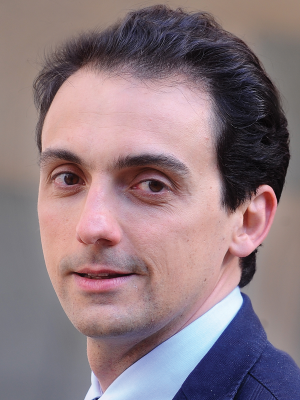
Luca Carloni is a Professor of Computer Science and Department Chair at Columbia University's Columbia Engineering. He leads the System-Level Design Group, focusing on heterogeneous system-on-chip (SoC) architectures, networks-on-chip (NoC), and embedded systems. Carloni holds a Laurea Summa Cum Laude in Electronics Engineering from the University of Bologna and a PhD in Electrical Engineering and Computer Sciences from UC Berkeley. His work emphasizes specialized hardware design, energy-efficient computing, and FPGA-based prototyping. Research interests include system-level design methodologies for SoCs, embedded accelerators, and quantum computing hardware. He has pioneered frameworks like Embedded Scalable Platforms (ESP) and tools like MosaicSim for rapid SoC prototyping. Carloni has received numerous awards, including the NSF CAREER Award (2006), IEEE Fellow (2017), and multiple best paper awards at DATE and CloudCom conferences. He has served on editorial boards of IEEE Transactions on CAD and ACM Transactions on Embedded Computing , and chaired key conferences like EMSOFT and ESWeek. His research addresses challenges in heterogeneous architectures, power management, and the intersection of machine learning with embedded systems. Current projects explore quantum control systems, brain-computer interfaces, and energy-efficient datacenter computing.
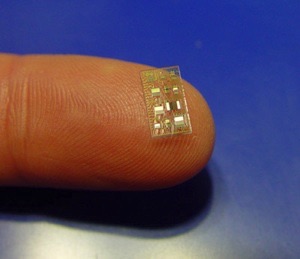
Professor Kourosh Kalantar Zadeh is the Head of School of Chemical and Biomolecular Engineering at the University of Sydney. He also holds adjunct professorships at UNSW and RMIT. His research focuses on sensors, nanotechnology, liquid metals, and medical devices. He has over 500 publications and is a member of prestigious editorial boards. **Awards**: Includes AAAS Fellowship (2021), Robert Boyle Prize (2020), Walter Burfitt Prize (2019), and multiple Clarivate Highly Cited recognitions. His work has been featured in over 350 media outlets, including BBC, Time Magazine, and Nature. **Research**: Innovations include ingestible gas-sensing capsules, smart paints, and liquid metal-based catalysis. Supervises 10 PhD students in areas like functional materials and medical devices. **Grants**: Leads ARC Laureate Fellowship projects on liquid metals and NHMRC grants for gut metabolite sensing. Part of the ARC Centre of Excellence in Future Low-Energy Electronics. **Engagement**: Media engagements highlight breakthroughs in sensors, liquid metals, and environmental technologies. Collaborates across disciplines to translate research into practical applications.
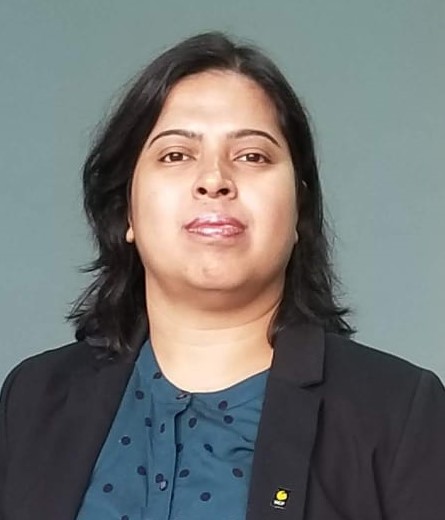
Sonali Das is a Lecturer in the Department of Electrical and Computer Engineering at the University of Central Florida. She earned her Ph.D. in Electrical Engineering from the Indian Institute of Engineering Science and Technology, India, in 2017. Research Interests: Her work focuses on device electronics, RF and microwave MEMS, solar cells, phototransistors, optoelectronic synaptic and neuromorphic devices, and emerging micro-nano fabrication technologies. She investigates light-trapping mechanisms in solar cells, develops biomimetic photovoltaic structures, and explores 2D material-based memristors for neuromorphic computing. Professional Activities: Das has served as a technical reviewer for the UCF Seed Funding Program (2019), instructor for Camp Connect I and II lab tours (2017–2019), and mentor for Camp Connect III programs at UCF (2019). She is an IEEE member. Scientific Awards: GAP Award, UCF Research Foundation and UCF Office of Technology Transfer (2019) Fulbright Bhaskara Advanced Solar Energy (BASE) Fellowship (2015) Teaching: She teaches courses including Semiconductor Devices (EEE 3350), Electronics I and II (EEE 3307/4309), Linear Circuits II (EEL 3123), Electromagnetic Fields (EEL 3470), Signal Analysis & Analog Communication (EEL 3552), Linear Control Systems (EEL 3657), and Digital Systems (EEE 3342).
Cyrus Shafai, Ph.D., P.Eng., is a Professor and Associate Dean (Research/Graduate Programs) in the Department of Electrical and Computer Engineering at the University of Manitoba. He holds degrees from the University of Manitoba (B.Sc., M.Sc.) and the University of Alberta (Ph.D.). His research focuses on MEMS technologies, including actuators, sensors, and microfabrication, with applications in biomedical devices, smart agriculture, and optical systems. He leads the Nano-Systems Fabrication Laboratory, equipped with state-of-the-art MEMS fabrication tools. Shafai's work spans interdisciplinary collaborations, emphasizing adaptive optics, low-voltage actuators, and sensor design. He has published extensively, with recent contributions covering piezoelectric sensors, Lorentz force actuators, and optically transparent antennas. His teaching includes courses on microelectronic fabrication and MEMS design. Current and past students include over 50 researchers in MEMS and related fields. His laboratory develops innovative solutions for energy-efficient actuators, wearable sensors, and high-precision optical systems. Research highlights include low-voltage deformable mirrors and MEMS-based bioelectrical interfaces. Shafai actively mentors graduate and undergraduate students in experimental and computational MEMS research.
Xin Ning is an Assistant Professor in the Department of Aerospace Engineering at the University of Illinois at Urbana-Champaign (UIUC), where he also holds appointments in the Materials Research Laboratory. Previously, he served as an Assistant Professor at Pennsylvania State University from 2018 to 2023. His academic journey includes postdoctoral research at UIUC and California Institute of Technology (Caltech). Educated at Caltech, he earned a Ph.D. in Aeronautics in 2015 and an M.S. in Aeronautics in 2010. His research focuses on soft electronics for aerospace engineering , bio-inspired aerospace structures , in-space manufacturing and assembly , and multifunctional space structures . These interests drive innovations in lightweight, adaptive, and multifunctional materials and systems for aerospace applications. For instance, his work explores bio-inspired cellular materials for aircraft wings and bistable composite booms for deployable structures. He has been recognized with several honors, including the 2022 Young Investigator Award from the Office of Naval Research, 2019 Haythornthwaite Foundation Research Initiation Award, 2015 William F. Ballhaus Prize from Caltech, and the 2012 Dow-Resnick Fellowship. In addition to research, Professor Ning teaches courses such as AE 323: Applied Aerospace Structures and AE 498: Space Structures . While specific grants are not detailed here, his work has been supported through awards like the ONR Young Investigator grant. He collaborates with the Materials Research Laboratory at UIUC and engages in interdisciplinary projects involving soft electronics and bio-inspired engineering.
Rod Beresford is a Professor of Engineering at Brown University's School of Engineering, where he has held several leadership positions including Senior Associate Dean for Academic Programs and Associate Provost for Academic Space. He earned his B.S. (1979) and M.S. (1981) in electrical engineering from Yale University and his Ph.D. (1990) from Columbia University. In 2020/21, he served as an IEEE/AAAS Congressional Fellow working on the Senate Energy and Natural Resources Committee. His research focuses on semiconductor nanostructures, including synthesis, modeling, integration with microelectronics, and applications, with a particular emphasis on molecular beam epitaxy. Beresford has published over 80 scientific papers and has worked on molecular beam epitaxial growth of III-V semiconductors since 1987. His current research emphasizes engineering innovations for decarbonization and electrification of the economy. Professor Beresford's scholarly work spans semiconductor materials and devices, quantum structures, nanomaterials, microfluidics, and biosensing. His recent publications demonstrate a strong focus on quantum dot arrays, nanowire electrical properties, and biosensing applications. The research shows evolution from fundamental semiconductor physics toward practical applications in sensing and energy technologies. His honors and awards include: Tau Beta Pi (1978) Sheffield Fellowship (Yale University, 1980–81) Office of Naval Research Fellowship (Columbia University, 1987–90) Sigma Xi (1991) BBV Foundation Chair (Visiting Professor, Polytechnic University of Madrid, 1996) Institute of Electrical and Electronics Engineers, Senior Member (2002) Professor Beresford has been instrumental in Brown's academic infrastructure development, including facilitating the successful development of the Engineering Research Center, an 80,000-sf lab building completed in October 2017. He has served as Academic Director for the Master of Science in Technology Leadership program and has introduced new courses in VLSI Design and Nanoelectronics. His research has been supported by significant grants including: Nanoelectronics Research Initiative / National Science Foundation: "Direct-Write Synthesis of Graphene Devices" (PI, $400,000) National Science Foundation Materials Research Science and Engineering Center: "Micro- and Nano-Mechanics of Electronic and Structural Materials" (co-PI, $9,360,000) Air Force Office of Scientific Research Multidisciplinary University Research Initiative: "Direct Nanoscale Conversion of Biomolecular Signals into Electronic Information" (co-PI, $5,609,969) Professor Beresford leads a research group focused on semiconductor nanostructures and collaborates extensively with colleagues including Jingming Xu, Eric Chason, Brian Sheldon, Alexander Zaslavsky, and David Paine. His laboratory includes molecular-beam epitaxy systems for advanced materials research.
Dr. Paweł Kwaśnicki is an Assistant Professor at the Department of Analytical and Engineering within the Faculty of Natural and Technical Sciences, John Paul II Catholic University of Lublin. His research focuses on advanced photovoltaic technologies, particularly third-generation solar cells, quantum dots, and transparent conductive oxides. He has contributed to scalable electrodeposition methods for platinum nanoparticles in dye-sensitized solar cells and explored TiO₂-based nanocomposites for energy applications. Research Trends: Specializes in photovoltaic materials (perovskite, TiO₂), thin-film deposition, and circular economy strategies for waste-to-energy systems. Key Collaborations: Works with institutions like Agricultural University of Krakow and ML System S.A. Laboratory. Supervisory Roles: Serves as a PhD thesis supervisor and has guided numerous bachelor's and master's theses on topics ranging from diet impacts to microplastics in food.
Hao Xin is a Professor of Electrical and Computer Engineering and Physics at the University of Arizona, serving as Joint Faculty in the College of Engineering. He holds a Ph.D. in Physics from MIT (2001) and a BS in Physics and Mathematics from the University of Massachusetts, Dartmouth (1995). His research focuses on high-frequency (microwave to THz) technologies, metamaterials, nano-materials, biomedical applications, energy harvesting, and solar cell innovations. Notable contributions include advancements in kesterite and CZTSSe solar cells, antenna design, and THz radiation systems. He has been recognized with awards such as the Arizona Engineering Fellow (2013–2016) and National Research Council Sr. Associate Award (2012). Recent work emphasizes solar cell efficiency improvements, THz applications, and 3D-printed antenna technologies. His publications span over 20 years, reflecting expertise in interdisciplinary areas like metamaterials, energy conversion, and biomedical engineering.
Erik PAM Bakkers is a Professor in the Applied Physics and Science Education department at the Technical University of Eindhoven, where he leads the Advanced Nanomaterials & Devices research group and is affiliated with the Center for Quantum Materials and Technology Eindhoven. He also serves as a part-time professor at Delft Technical University in the Quantum Transport group, maintaining dual academic appointments. His research spans three primary domains: Nanomaterials, with a focus on Majorana particles in collaboration with Delft University, where recent discoveries have opened new frontiers in quantum information processing Light emission from silicon through crystal structure engineering, potentially revolutionizing fiber-optic communications Nanowire applications in solar cells, achieving significant efficiency gains through flexible designs using III/V semiconductor nanowires embedded in PDMS polymer Bakkers' publication record reveals a strong trajectory in quantum technologies and nanomaterials science, with emphasis on Majorana fermions, topological superconductivity, and quantum transport phenomena. His work consistently appears in premier journals including Nature, Science, and Nature Nanotechnology, demonstrating exceptional impact across quantum computing and renewable energy fields. His scientific recognition includes: NWO Vici Award (2010) for "Control of nanomaterials" ERC Consolidator Grant (HELENA, 2013) ERC Advanced Grant (2019) for "New nanomaterial to definitively demonstrate teleportation of Majorana particles" Professor Bakkers has supervised 77 students throughout his career and currently leads the "Enabling Majorana Braiding" project (2018-2028). His research group, established at Eindhoven in 2017, maintains strategic partnerships with industry leaders including IBM, Microsoft, and Philips, bridging fundamental research with practical applications in quantum computing and sustainable energy technologies.
Sylvain G. Cloutier is a Professor in the Department of Electrical Engineering at École de technologie supérieure (ÉTS) in Montreal, Canada, where he holds the Canada Research Chair in Inkjet-Printed Materials and Flexible Hybrid Electronic Devices. He also serves as an Adjunct Assistant Professor in the Department of Electrical and Computer Engineering at the University of Delaware. His research focuses on developing novel nanomaterials and fabrication techniques for printed electronics applications. Cloutier earned his Ph.D. in Engineering from Brown University in 2006, followed by an M.S. in Physics and B.Eng. in Engineering Physics from Université Laval in 2003 and 2001, respectively. He previously held a faculty position at the University of Delaware before joining ÉTS in 2011. His research interests span nanotechnologies, nanomaterials, nanostructures, nanofabrication, optical micro-spectroscopy, and optoelectronic devices including light-emitting diodes and photovoltaic cells. He has pioneered work in inkjet-printed materials and flexible hybrid electronic devices, with applications in solar cells, light-emitting diodes, photodetectors, thermoelectric converters, and sensors. His research integrates photonic processing techniques with printed electronics to create next-generation optoelectronic devices. Analysis of his recent publications reveals a strong focus on printed electronics, particularly using perovskite materials for solar cells, photonic curing techniques for material processing, flexible sensors, and integration of machine learning for device optimization. His work bridges fundamental nanomaterials research with practical applications in renewable energy and sensing technologies. Scientific Awards: Outstanding Thesis Award from Brown University (2006) DARPA Young Faculty Award (2009) Cloutier has supervised over 25 graduate students across various projects related to printed electronics, nanomaterials, and optoelectronic devices. His research has been supported by numerous grants from organizations including NSERC, FRQNT, NSF, and DOE. He regularly serves as an examiner for major research funding agencies in Canada and the United States. He leads the Canada Research Chair in Inkjet-Printed Materials and Flexible Hybrid Electronic Devices, which focuses on developing low-cost hybrid optoelectronic nanomaterials that can be integrated into simple device architectures for various applications. His research team develops new fabrication and characterization tools for studying optoelectronic materials, with emphasis on controlled nano-fabrication, large-scale manufacturing at low cost, and contact-free 3D micro-spectroscopy techniques.
Jie Sun is a Guest Researcher at the Quantum Component Physics department of Chalmers University of Technology, focusing on graphene integration and micro-LED display technologies. Active in semiconductor processing and nanomaterials for optoelectronic applications Specializes in transfer-free graphene synthesis and bump-fabrication methodologies Research Trends: Recent work emphasizes micro-LED fabrication (Au-Au micro-bumps, indium bumps), graphene transparent electrodes , and plasmon-enhanced light extraction . Collaborative projects address quantum dot color conversion and localized surface plasmon resonance in nanorod structures. Projects: Involvement in grants from Formas , ÅForsk , and Carl Tryggers Stiftelse for sustainable wastewater treatment, graphene-based microbial fuel enhancement, and 2D material transfer methods.
Luis Filipe Santos is an Associate Professor at the Department of Chemical Engineering, Instituto Superior Técnico (University of Lisbon), specializing in Physical Chemistry, Materials, and Nanosciences. His research focuses on rare-earth doped glasses, glass ceramics for non-linear optics, and advanced material characterization methods. Research Interests Rare-earth doped glasses for optical applications Medical applications of Raman spectroscopy Materials characterization using vibrational spectroscopy Development of functional materials for optoelectronics Structural analysis of advanced materials Recent Research Trends His work emphasizes optical materials (e.g., glass ceramics with enhanced luminescence), biomedical applications (e.g., drug delivery systems), and advanced characterization techniques such as X-ray scattering and Raman spectroscopy. Recent studies explore ion-exchanged materials, thermoelectric compounds, and polymer-modified conductive films. Grants & Advising He has advised numerous interdisciplinary projects involving material synthesis, optical device development, and biomedical coatings. His research is supported by grants focusing on energy materials, biomaterials, and advanced manufacturing. Labs & Teams He leads the Center for Structural Chemistry (CQC) at IST, collaborating with multidisciplinary teams in photonics, energy materials, and biomedical engineering.
Dr. Rajeev Jindal is a Professor of Practice in the Department of Sustainable Energy Engineering at IIT Kanpur. With over 20 years of experience in the technology industry, he has held leadership roles at C&S Electric Ltd., NTL Electronics, and Moser Baer India Ltd. He earned his PhD in Physics from IIT Delhi and completed post-doctoral research at Université de Nice (France) and Michigan State University. PhD in Physics, IIT Delhi (1998) MSc in Physics (Gold Medalist), IIT Roorkee (1993) BSc (Gold Medalist), Rohilkhand University (1991) His research spans renewable energy systems , flexible electronics , and optical engineering . Recent work focuses on solar power economics, carbon footprint accounting in institutions, and electric vehicle charging infrastructure. Prior publications include sol-gel fiber sensors, organic solar cells, and photonic devices. Recent publications (2023-2025) emphasize solar energy deployment , policy analysis , and sustainable mobility , while earlier works (2002-2015) highlight optical sensor development , sol-gel processing , and photonic device modeling . Scientific Honors: Gold Medalist, IIT Roorkee (MSc Physics) Gold Medalist, Rohilkhand University (BSc) Dr. Jindal led the establishment of IIT Kanpur's Flexible Electronics Center (2014), secured >$20M in government funding, and managed R&D teams that filed 20 patents across solar, LED lighting, and optical fiber technologies.
Monica Morales-Masis is Associate Professor at the University of Twente, Netherlands, leading the M3 Lab within the MESA+ Institute for Nanotechnology. She joined the university in 2018 after serving as team leader of the transparent conductive oxide group at EPFL's Photovoltaics Laboratory from 2013-2018, following her 2012 Physics PhD from Leiden University. Her research pioneers novel thin-film materials with tailored optoelectronic properties, focusing on three interconnected domains: vapor-deposited halide perovskites for solar cells using solvent-free pulsed laser techniques, transparent conducting oxides that overcome the transparency-conductivity trade-off, and p-type transparent conductor discovery to address the critical scarcity of hole-conducting transparent materials. This work directly enables next-generation solar cells, LEDs, and transparent electronics. Recent publications (2020-2023) reveal strong thematic continuity in perovskite deposition science, TCO microstructure-property relationships, and sulfur-doped copper iodide systems. Key trends include solvent-free processing advancements, damage mitigation during electrode deposition, and valence band engineering for p-type materials—collectively advancing efficiency and stability in optoelectronic devices. Her scientific recognition includes: ERC Starting Grant (2019) for CREATE project NWO Start-Up Grant (2019) for BRIDGE project She actively mentors five PhD candidates and two master students while securing diverse funding including ERC, NWO, SOLAR ERA NET, and CETPartnership grants. Her leadership extends to the Young Academy of Europe and extensive outreach promoting STEM diversity in Latin America, including TEDx presentations and student mentorship initiatives. The M3 Lab operates at the materials-device interface within UT's Inorganic Materials Science group, maintaining strong industry ties (e.g., Coherent Inc. collaborations) and international partnerships. Current projects emphasize scalable manufacturing techniques and novel material compositions to bridge fundamental science with commercial photovoltaic applications.