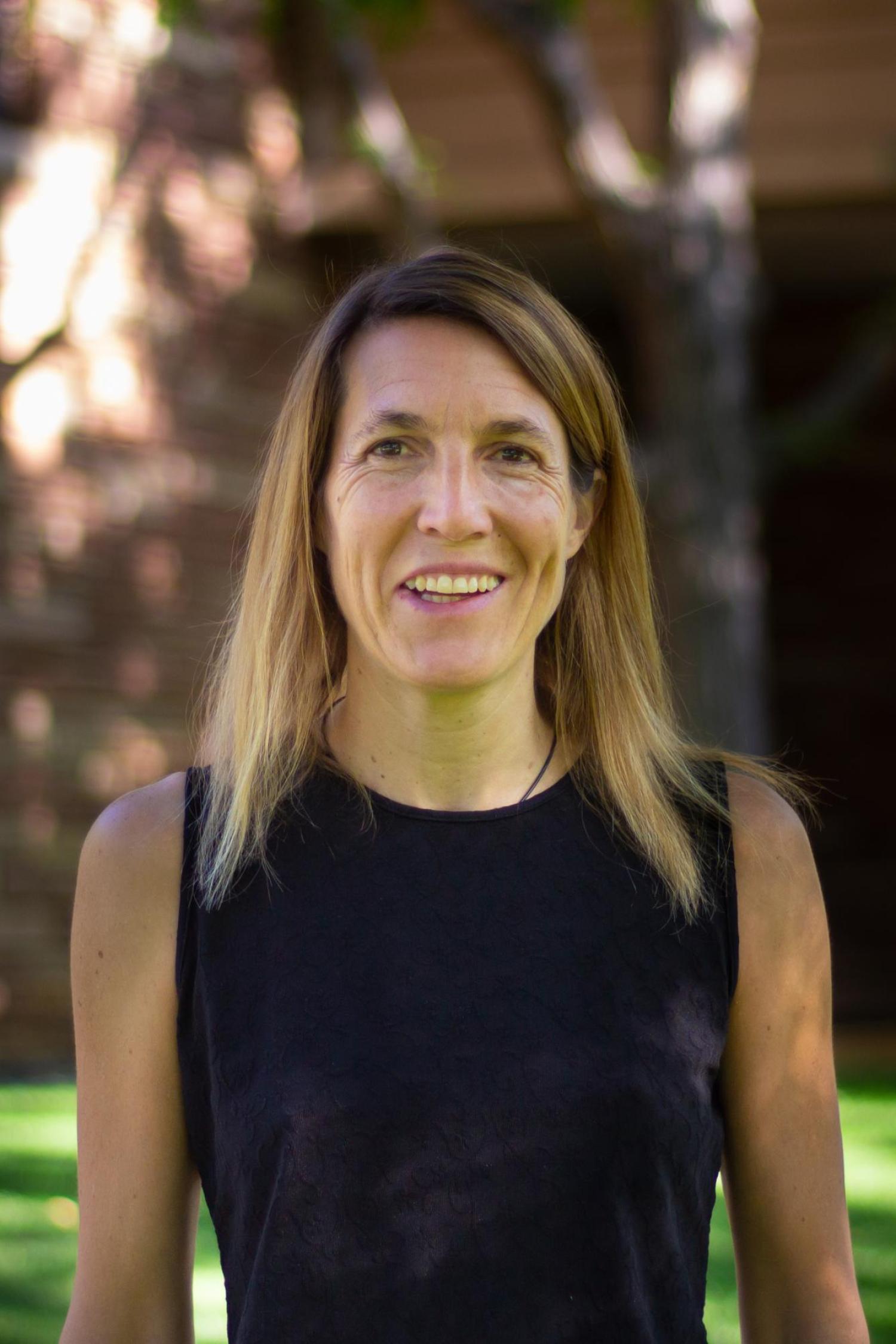
Dr. Florian Wittkämper is a Researcher at the Leibniz Institute of Photonic Technology , specializing in quantum magnetometry and sensor development. His work focuses on advancing optically pumped magnetometers (OPMs), microfabricated alkali vapor cells, and plasmonic coatings for space applications. Current research explores vector magnetometry with strong bias fields Innovations in omnidirectional magnetic field sensitivity Passivated gold mirror integration for improved OPM performance Plasmonic coatings for stray-light reduction in space environments His recent publications demonstrate expertise in addressing heading errors through nonlinear Zeeman effects and light shift compensation, while developing robust materials for quantum sensing systems. Scientific awards and educational background information were not found in the provided texts.
Mark Limes is an Associate Professor in the Bradley Department of Electrical and Computer Engineering at Virginia Tech. His research focuses on quantum sensing, atomic physics, and portable magnetic/inertial sensing systems. He holds a B.S. from Bowling Green State University (2005) and a Ph.D. from the University of Utah (2013). Key research interests include applied quantum mechanics, optoelectronics, and light-matter interactions. His work emphasizes developing high-sensitivity magnetometers and gradiometers for applications in geophysics, biomagnetism, and quantum technologies. Notable projects include femtotesla-scale gradiometer designs and pulsed magnetometer systems for unshielded environments. Publications highlight innovations in atomic magnetometry, including error-correction algorithms, portable sensor development, and advancements in 3He-129Xe comagnetometry. His work bridges theoretical quantum physics with practical engineering solutions for real-world sensing challenges. No scientific awards were explicitly listed in the provided text. No advising/grant details were mentioned, but his research portfolio indicates active involvement in experimental physics and sensor technology.
Jennifer Choy is an Adjunct Professor in the Department of Physics at the University of Wisconsin-Madison . Her research focuses on quantum sensing, nanophotonics, and atomic physics, particularly leveraging nitrogen-vacancy (NV) centers in diamond for applications in timekeeping, magnetometry, and photonic engineering. Research Areas : Quantum Optics, Materials Science, Semiconductor Physics, Atomic Physics Key Contributions : Advancements in diamond-based quantum sensors, metasurface optics, and entangled photon applications Her recent work demonstrates trends in engineering photonic structures for enhanced light extraction, studying depth-dependent properties of color centers, and developing robust quantum devices for dynamic environments. She was awarded the NSF CAREER Award for her project on solid-state quantum navigation and timekeeping. Contact: jennifer.choy@wisc.edu
Aleksandra Sierant is a Research Fellow at the Institute of Photonic Sciences (ICFO), specializing in the Atomic Quantum Optics research group. She holds a PhD in Physics from Jagiellonian University (Poland). Her work focuses on quantum sensing, plasmonics, and cold atom systems, with applications in multiparameter sensing and hybrid quantum systems. Her research explores intersections between surface plasmon polaritons, quantum noise reduction techniques, and precision measurements using alkali-metal vapors and cold atoms. Key contributions include auto-heterodyne photon pair characterization, plasmonic potentials for atomic systems, and novel magnetometry approaches combining DC and RF optical pumping. Publications span 2014–2025, emphasizing quantum optical systems and nanophotonic structures. While no formal awards are listed, her prolific output indicates sustained innovation in quantum technologies. Advising and grants sections remain unpopulated in available records. She is affiliated with ICFO's core research infrastructure, likely contributing to its advanced nanofabrication and cold atom facilities.
Prof. Brian Saam is a full Professor and Department Chair in the Department of Physics and Astronomy at Washington State University (WSU). He holds a Ph.D. in Physics from Princeton University (1995) and a B.S. in Physics and German from the University of Michigan (1989). Prior to joining WSU in 2017, he served as a faculty member at the University of Utah, attaining full professorship in 2008. His research focuses on experimental atomic and condensed-matter physics, particularly spin physics and magnetic resonance in gas-phase and solid-state systems. Key areas include spin-exchange optical pumping (SEOP), hyperpolarized noble gases (e.g., ³He and ¹²⁹Xe), and applications in precision magnetometry, MRI lung imaging, and quantum chaos. He chairs the 2017 Conference on Polarized Noble Gases (PiNG) and leads the Saam Lab at WSU. Education: Ph.D. (Physics), Princeton University, 1995 B.S. (Physics and German), University of Michigan, 1989 Research Interests: Spin-polarized alkali-metal vapors and noble gases Many-body spin physics and chaos in condensed-phase systems MRI applications to lung imaging via helium diffusion Development of hyperpolarized gas techniques Exploration of SEOP relaxation mechanisms Labs/Teams: Director of the Saam Lab, dedicated to advancing experimental atomic and condensed-matter physics research.
Dr. Jeff Martin is a Professor and Canada Research Chair (Tier 1) in Fundamental Symmetries in Subatomic Physics at the University of Winnipeg's Department of Physics. He leads major experiments in neutron physics at TRIUMF (Canada's national laboratory for particle and nuclear physics) and collaborations with institutions in Canada, Japan, and the U.S. His research focuses on parity-violating asymmetries, neutron electric dipole moment (EDM) searches, and ultracold neutron (UCN) physics. He is a key contributor to the TUCAN and Qweak experiments, exploring CP violation and weak interaction effects. Research Interests: Martin's work centers on fundamental symmetries in subatomic physics, including: Neutron EDM measurements to probe physics beyond the Standard Model Parity-violating electron scattering to study nucleon structure Ultra-cold neutron sources and detector technologies Cold neutron experiments at Oak Ridge National Lab and Jefferson Lab Key Projects: Leading the Canadian effort in the TUCAN EDM experiment at TRIUMF, analyzing data from the Qweak experiment measuring the proton's weak charge, and advancing UCN production techniques. His work contributes to understanding CP violation and the matter-antimatter imbalance in the universe. Publications: Over 90 refereed articles in journals like Physical Review C/D , European Physical Journal , and Nuclear Instruments and Methods . Active in international workshops on neutron physics and fundamental symmetries. Grants & Collaborations: Major funding from NSERC and the Canada Research Chairs program. Collaborates with TRIUMF, Jefferson Lab, and institutions globally. Supervises graduate students in experimental particle/nuclear physics. Labs/Teams: Principal investigator for the TUCAN collaboration and key member of the UCNA and Qweak teams. Develops advanced neutron detection systems and magnet technologies for precision experiments.
Svenja Knappe is an Associate Research Professor at the University of Colorado Boulder, affiliated with the Department of Mechanical Engineering and previously serving as an adjunct professor in Psychology and Neuroscience. She leads research in quantum sensor technologies, particularly microfabricated atomic magnetometers for biomedical, aerospace, and industrial applications. Her work includes developing portable magnetoencephalography (MEG) systems using optically pumped magnetometers (OPMs), enabling non-invasive brain imaging and neurological diagnostics. She co-founded FieldLine to commercialize these innovations and collaborates with the National Institute of Standards and Technology (NIST). Education: B.Sc. (1998) and Ph.D. in Physics (2001) from Rheinische Friedrich-Wilhelms-Universität (Germany). Dissertation focused on dark resonance clocks and magnetometers. Research emphasizes miniaturized quantum sensors for applications ranging from CubeSat-based Earth magnetic field mapping to medical devices like fetal magnetocardiography. Her interdisciplinary approach integrates microfabrication, frequency control, and novel packaging techniques. Ongoing projects include the Compact Spaceborne Magnetic Observatory (COSMO) CubeSat mission and magnetic communication systems using atomic magnetometers. Key collaborations involve the CUBit Quantum Initiative (funded through a seed grant for chip-scale atomic clocks) and the HUNTER sterile neutrino search experiment. She holds patents on atomic magnetometer designs and related technologies.
Silvia Conforto is Full Professor of Biomedical Engineering at Roma Tre University, directing the Biomedical Engineering Group. Her research spans signal processing for movement analysis, rehabilitation robotics, and neural interfaces. She leads projects on human-robot collaboration ergonomics and high-density EMG analysis. Recent publications focus on quantitative methods for collaborative robotics safety, prosthetic gait characterization, and quantum-enhanced sensing. Interdisciplinary work bridges biomedical engineering, quantum optics, and ergonomics. Conforto directs the Master in Occupational Health/Safety Risks in Healthcare and leads research on human-robot interaction in industrial settings.
Rasmus Zetter is a Visiting Professor at the Department of Neuroscience and Biomedical Engineering at Aalto University . His research bridges physics , applied mathematics , and biomedical engineering , focusing on electromagnetic coil design, magnetic noise modeling, and neuroimaging technologies. He has contributed to advancing optically pumped magnetometers and optimizing MEG/EEG spatial resolution . Doctorate in Technical Physics , Aalto University (2021) Master's and Bachelor's in Engineering and Technology , Aalto University His recent publications highlight expertise in magnetic field analysis , sensor arrays , and numerical methods for biomedical applications. Collaborations span quantum physics and clinical neuroscience domains. Key contributions include miniature biplanar coils and thermal noise computation frameworks .
Terry Dyer serves as a Research Fellow in the Department of Physics within the University of Strathclyde's Faculty of Science. His work centers on atomic magnetometry and micro-fabricated alkali vapour cells for portable sub-pT magnetic field detection devices targeting medical imaging, geological surveying, security, and inertial sensing applications. Dr. Dyer's research focuses on ultra-sensitive magnetometer development through: Design/fabrication of micro-scale alkali vapour cells Optimization of optical pumping and fluxgate sensor technologies Applications in medical diagnostics and battery cycle analysis His fingerprint reveals dominant expertise in Magnetometer (100%), Magnetic Fields (33%), and Vapor Physics (32%) with significant contributions to Sensor Engineering (26%) and Cavity design. Recent publications (2019-2024) demonstrate consistent innovation in miniaturizing magnetic sensors, enhancing signal-to-noise ratios through digital processing, and developing field-deployable systems for industrial applications like battery monitoring and geological surveying. No scientific awards are documented in available sources. Dr. Dyer actively secures research funding as Principal Investigator for: FLUXOPIA (2024-2027): Innovate UK-funded fluxgate optimization project Battery Analysis Projects (2023-2024): AWE plc-sponsored magnetometer applications Optical Magnetometer Productisation (2025-2026): Prototype development with AWE plc He collaborates extensively with Paul Griffin and Erling Riis across multiple grants. His work operates within Strathclyde's quantum technology ecosystem, evidenced by participation in the 2019 Quantum Technology Showcase and STEMFest, focusing on translating atomic physics research into commercial sensor applications through close industry partnerships.
Dr. Dominic Hunter is a Research Fellow in the Department of Physics within the Faculty of Science at the University of Strathclyde. His research focuses on quantum magnetometry, particularly developing optically pumped magnetometers (OPMs) for geophysical, space weather, and biomedical applications. Education Doctor of Engineering in Applied Photonics Dr. Hunter's research centers on atomic-scale magnetic field sensing using quantum techniques. He specializes in free-induction-decay methods, cesium vapor cell optimization, and miniaturization of quantum magnetometers. His work bridges fundamental atomic physics with practical implementations for GNSS-denied navigation, critical infrastructure monitoring, and medical diagnostics like magnetocardiography. Recent innovations include distributed sensor networks for space weather tracking and portable single-beam systems for clinical applications. His 2023-2024 publications reveal strong trends in quantum sensor miniaturization (67% of works), space weather applications (33%), and biomedical translation (17%). Key advancements involve spin relaxation optimization, microfabricated vapor cells, and zero-field operation techniques across physics, geophysics, and biomedical engineering domains. Research Funding Ultra-stable quantum magnetometry for imaging in Earth-field environments (Principal Investigator, Royal Academy of Engineering, 2024-2026) Quantum Sensing of the Geomagnetic Space Weather Environment (Research Co-investigator, EPSRC, 2023-2026) UK National Quantum Technology Hub in Sensing and Timing (Principal Investigator, 2019-2024) Dr. Hunter actively contributes to the academic community through peer review for Optics Express and conference presentations at SPIE events. He collaborates extensively with the UK National Quantum Technology Hub team including Paul Griffin, Erling Riis, and Stuart Ingleby on quantum sensing projects. Laboratory Affiliations He operates within the University of Strathclyde's quantum sensing ecosystem as part of the UK National Quantum Technology Hub in Sensing and Timing, utilizing specialized laboratories for atomic magnetometer development and testing.
Michael Woodley is a Research Fellow in the Department of Physics at the University of Bath, specializing in nonlinear optical phenomena and photonics. His work bridges theoretical modeling and experimental implementation in advanced optical systems. His educational background includes: Doctor of Engineering in Nonlinear dynamics from National Physical Laboratory, Max-Planck-Institut für die Physik des Lichts, and Heriot-Watt University (2016-2020, awarded April 2021) Master of Science in Theoretical Physics via Natural Sciences from University of Birmingham (2012-2016) Associate Fellow of the Higher Education Academy (awarded July 2024) Woodley's research explores the fundamental interactions of light in microresonator systems, with particular focus on broken symmetry phenomena, Kerr nonlinearities, and counter-propagating light waves. His fingerprint analysis reveals dominant expertise in Resonator Physics (100%), Microresonator Physics (95%), and Broken Symmetry Physics (100%), with significant contributions to Kerr Effect (40%) and Cross-Phase Modulation (21%). His publication record shows a clear trajectory from fundamental research on light-matter interactions toward applied technologies, with recent work developing quantum sensing systems and advanced optical controllers. The citation metrics (41-44 citations for key papers) indicate strong impact in the photonics community, with multiple papers featured in high-impact journals including Nature Communications and Physical Review Letters. His professional recognition includes: Associate Fellow of the Higher Education Academy (July 2024) Woodley maintains active collaborations across the UK research landscape, currently serving as a Visiting Research Fellow at the University of Sussex (from December 2024) and previously as a Visiting Researcher at the University of Cambridge (2024). His work demonstrates strong interdisciplinary connections between theoretical physics, optical engineering, and quantum technology development.