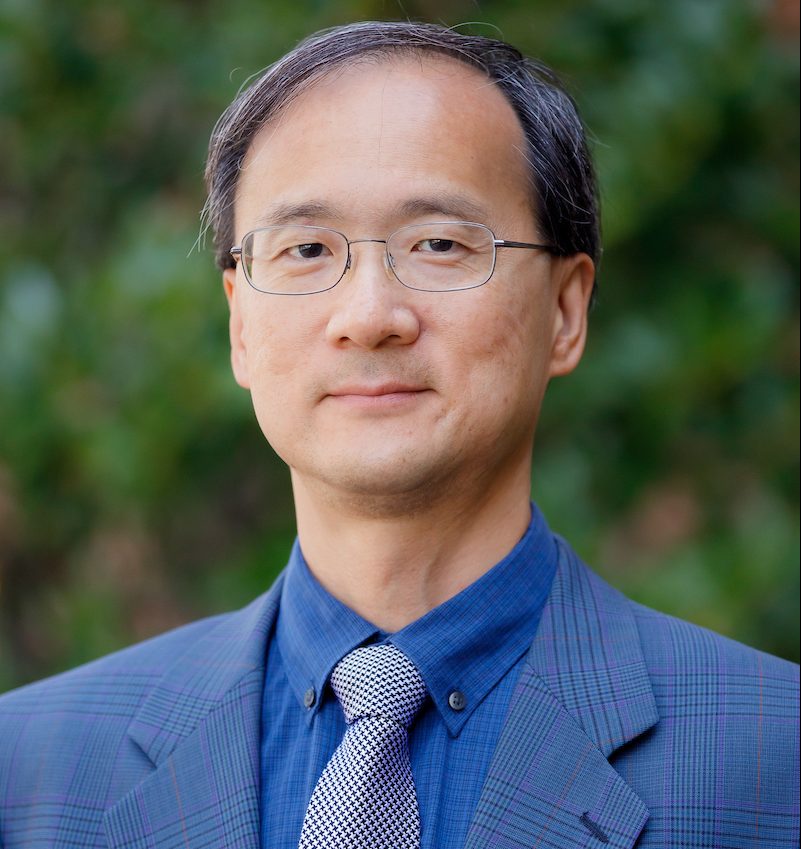
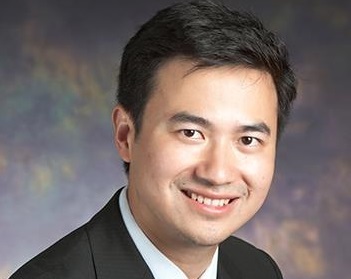
Pavan Turaga is a Professor and Founding Director of The GAME School at Arizona State University (ASU), with a joint appointment in the School of Electrical, Computer and Energy Engineering (ECEE). They lead transdisciplinary research and education initiatives spanning gaming, esports, AI-enabled media creation, computer vision, and geometric modeling. Ph.D., Electrical Engineering, University of Maryland (2009) B.Tech., Electronics and Communication Engineering, IIT Guwahati (2004) Research focuses on integrating geometry and topology with machine learning , enabling advancements in: Computer vision for human activity recognition Generative AI for immersive media Health analytics and wearable rehabilitation systems AI ethics and pandemic prediction Key publications span CVPR (2023 spotlight paper PolyINR ), DLGC workshop (2023 best paper), and ICML (2019 work on GAN priors). Recent work explores LMMs , 3D human modeling , and AI for pandemic preparedness . Scientific accolades include: ASU Founders' Day Research Excellence (2025) NSF CAREER award (2015) CVPR 2023 Spotlight paper 2024 X-Prize (Rainforest Challenge) Directed research for students like Rajhans Singh and Ankita Shukla, securing grants from NSF , DARPA , and industry partners (Adobe, Google ATAP). Founded the Geometric Media Lab , emphasizing interdisciplinary collaborations with mathematicians, health scientists, and media artists.
Maiken H. Mikkelsen is the James N. and Elizabeth H. Barton Associate Professor in the Department of Electrical and Computer Engineering at Duke University, with a joint appointment in the Department of Physics . Her research focuses on quantum nanophotonics , plasmonics , and light-matter interactions in nanoscale materials, aiming to advance optoelectronics, quantum science, and biomedical diagnostics. Education B.S. in Physics, University of Copenhagen (2004) Ph.D. in Physics, University of California, Santa Barbara (2009) Postdoctoral Fellowship, University of California, Berkeley Her work explores nanophotonic engineering for quantum optics , spintronics , and ultrafast optoelectronics , with recent studies on nonlinear metasurfaces and plasmonic enhancement of immunoassays for point-of-care diagnostics. Publications highlight 2D semiconductor emission control , ultrafast single-photon sources , and metasurface-based photodetectors . Scientific Awards Maria Goeppert Mayer Award (2017) NSF CAREER Award (2015) Moore Inventor Fellow (2021) ONR/Air Force/Army Young Investigator Awards (2015-2017) Cottrell Scholar (2016) Stansell Family Distinguished Research Award (2021) She advises graduate students in Duke’s Electrical & Computer Engineering and Physics programs and leads the Mikkelsen Lab , which emphasizes ultrafast spectroscopy and quantum material development . The lab has graduated PhD students like Eunso Shin and Hengming Li (2025).
Nathalie P. de Leon is an Associate Professor of Electrical and Computer Engineering at Princeton University and an Associated Professor of Physics. She is affiliated with the Princeton Plasma Physics Laboratory and co-leads the Co-Design Center for Quantum Advantage (C 2 QA). Her lab focuses on quantum hardware development using color centers in wide bandgap materials and superconducting qubits, with applications in quantum networks and nanoscale sensors. Ph.D., Chemical Physics, Harvard University, 2011 B.S., Chemistry, Stanford University, 2004 Her research spans optical materials , light-matter interactions , and quantum information processing , integrating nanophotonics , surface science , and quantum metrology . Recent publications highlight advances in diamond-based quantum sensors , superconducting circuit engineering , and noise/loss mitigation in quantum systems. Scientific Awards: APS Rolf Landauer and Charles H. Bennett Award in Quantum Computing (2023) DOE Early Career Award (2018) DARPA Young Faculty Award (2018) NSF CAREER Award (2018) Her lab has advised 22 graduate students and collaborates extensively with institutions like Princeton Plasma Physics Laboratory, University of Chicago, UZH, and Brookhaven National Laboratory. Current projects emphasize hybrid quantum devices , telecom band photonics , and many-body quantum physics .
Robert M. Weikle, II is a Professor in the Charles L. Brown Department of Electrical and Computer Engineering at the University of Virginia, with a courtesy appointment in the Department of Physics. He earned his B.S. from Rice University (1986), M.S. (1987), and Ph.D. (1992) in Electrical Engineering from Caltech, followed by postdoctoral work at Chalmers University of Technology (1992). His research focuses on millimeter-wave and terahertz electronics , applied electromagnetics, integrated antennas, low-noise sensors, and heterogeneous integration of compound semiconductors. His work bridges electronics and photonics for spectrum access, with applications in astronomy, spectroscopy, and metrology. He has published extensively on micromachined silicon substrates, superconducting materials, and emerging technologies. Scientific Awards: IEEE Microwave Prize (1993) David A. Harrison III Award (1999) University of Virginia All-University Outstanding Teaching Award (2000) Edlich-Henderson Innovator of the Year (2016) Fulbright Scholar (2001) As Chief Technology Officer and co-founder of Dominion Microprobes, Inc., he commercializes micromachined wafer probes for high-frequency metrology. His lab, located in E220 Thornton Hall and the Jesse W. Beams Physics Building, has produced 15+ recent publications on submillimeter-wave devices, THz probes, and calibration techniques.
Debbie Senesky is an Associate Professor at Stanford University in both the Aeronautics and Astronautics Department and the Electrical Engineering Department, as well as a Senior Fellow at the Precourt Institute for Energy. She serves as the Principal Investigator of the EXtreme Environment Microsystems Laboratory (XLab) and Site Director of nano@stanford. Dr. Senesky received her B.S. in mechanical engineering from the University of Southern California (2001), followed by M.S. (2004) and Ph.D. (2007) degrees in mechanical engineering from the University of California, Berkeley. Prior to joining Stanford, she held positions at GE Sensing (formerly NovaSensor), GE Global Research Center, and Hewlett Packard. Her research focuses on developing nanomaterials and electronic systems capable of operating in extreme environments, including high-temperature conditions for Venus exploration, microgravity synthesis of nanomaterials, and harsh environment electronics. Dr. Senesky's work bridges multiple disciplines, connecting aerospace engineering, electrical engineering, materials science, and space technology to solve challenges in extreme environment applications. Dr. Senesky has made significant contributions to the field of high-temperature electronics, GaN-based sensors, graphene aerogel synthesis in microgravity, and materials for space applications. Her recent publications demonstrate a strong focus on practical applications of these technologies, particularly for space exploration and extreme environment sensing. Presidential Early Career Award for Scientists and Engineers (PECASE), NASA (2025) Emerging Leader Abie Award from AnitaB.org (2018) Early Faculty Career Award from NASA (2012) Gabilan Faculty Fellowship Award (2012) Sloan Ph.D. Fellowship (2004-2006) Dr. Senesky actively advises students at all levels, from undergraduate to postdoctoral researchers, and has established herself as a leader in promoting diversity in STEM through her role as Faculty Advisor for the Stanford Chapter of the National Society of Women Engineers. Her collaborative approach is evident in her numerous interdisciplinary projects and partnerships with NASA, industry, and other research institutions. She directs the EXtreme Environment Microsystems Laboratory (XLab), which focuses on developing technologies for operation in extreme environments including high temperature, radiation, and microgravity conditions. The lab's work has applications for space exploration, particularly for Venus missions, as well as terrestrial applications requiring robust electronics.
Audrey Bowden is an Associate Professor at Vanderbilt University in both the Department of Biomedical Engineering and Department of Electrical and Computer Engineering . She is also the Dorothy J Wingfield Phillips Chancellor Faculty Fellow . Education: PhD in Biomedical Engineering (2007) from Duke University BSE in Electrical Engineering (2001) from Princeton University Research Interests: Bowden's work focuses on biomedical optics and point-of-care diagnostics , with a strong emphasis on addressing healthcare disparities through low-cost technologies. Key areas include: Biomedical Imaging Biophotonics Image Processing Machine Learning in Medical Imaging Optical Coherence Tomography (OCT) Functional Near-Infrared Spectroscopy (fNIRS) Publication Trends: Recent work combines machine learning with endoscopic imaging to differentiate cancer from inflammation, develops low-cost OCT systems for smartphones, and improves fNIRS accessibility for diverse patient populations. Her lab also focuses on 3D reconstruction algorithms for urological applications and specular reflection removal in endoscopic videos. Lab & Clinical Collaborations: The Bowden Biomedical Optics Laboratory (BBOL) collaborates with clinical departments including urology , dermatology , otolaryngology , and women's health . The lab integrates optics , microfluidics , and computer science to create hardware/software tools for resource-constrained environments.
Dr. Joanna Deaton Bertram is an Assistant Professor in the Thomas Lord Department of Mechanical Engineering and Materials Science at Duke University’s Pratt School of Engineering. She concurrently holds an Assistant Professor appointment in Surgery, underscoring her interdisciplinary commitment to advancing medical robotics. Dr. Bertram leads a research laboratory devoted to the design, modeling, and control of robotic systems for surgical and interventional applications, working closely with Duke’s clinical and engineering communities. Education Ph.D. in Robotics, Georgia Institute of Technology, 2024 M.S. in Mechanical Engineering, Georgia Institute of Technology, 2024 B.S. in Biomedical Engineering, Georgia Institute of Technology, 2018 Research Interests Dr. Bertram’s research program is centered on medical robotics , with particular emphasis on continuum robotics and image-guided interventions . Her work integrates novel mechanical design with advanced control algorithms and smart materials to create robotic systems capable of navigating complex anatomical pathways. A hallmark of her approach is the incorporation of real-time fiber-optic shape and force sensing (using Fiber Bragg Grating technology) to provide surgeons with unprecedented feedback during procedures. Application domains include steerable needles for brachytherapy , robotic guidewires for endovascular surgery , and pediatric neuroendoscopy . Publication Themes Across more than fifteen peer-reviewed articles, Dr. Bertram has systematically advanced the state of the art in surgical robotics , fiber-optic sensing , and robotic system modeling . Her 2024 tutorial on Nitinol and Tungsten tendon attachment techniques provides practical guidance for building highly articulated continuum robots, while her 2023 series on the COAST guidewire robot demonstrates model-based design and simultaneous shape/force sensing for large-deflection medical devices. Earlier work explored 3D-printed patient-specific robotic tools and carbon-nanotube flexible sensors, illustrating a trajectory from fundamental sensor research to full robotic system integration. Scientific Recognition & Collaboration Although no major external awards are explicitly listed, Dr. Bertram’s publications in top-tier venues such as IEEE Robotics and Automation Letters , IEEE Transactions on Medical Robotics and Bionics , and IEEE/ASME Transactions on Mechatronics attest to strong peer recognition. She actively invites motivated graduate students, post-docs, and research staff to join her lab, fostering an open and interdisciplinary environment. Advising & Grants Dr. Bertram’s lab is presently recruiting trainees at all levels. While specific funded grants are not enumerated, her dual departmental appointments and extensive publication record suggest active federal or foundation support. Prospective students and collaborators are encouraged to contact her directly at joanna.d.bertram@duke.edu . Laboratory & Teams Dr. Bertram directs a laboratory within Duke University’s Pratt School of Engineering that collaborates closely with clinicians in the School of Medicine. The group focuses on rapid prototyping of medical devices, in-vitro and ex-vivo validation, and translation of robotic technologies to the operating room.
Dr. Patrick Kung serves as Associate Professor and Associate Department Head for Undergraduate Programs in the Department of Electrical and Computer Engineering at the University of Alabama's College of Engineering. His research spans nanotechnology, quantum computing, and terahertz photonics with significant contributions to metamaterials and optical systems. Research Focus: Dr. Kung specializes in terahertz spectroscopy, polarization-sensitive imaging, and nanoscale material engineering. His work integrates machine learning with optical systems for applications in underwater imaging, quantum networking, and biodegradable polymers. Recent projects include $1 million Department of Energy funding for quantum networking research (2024) and development of materials for slowing light propagation. Publication Trends: His recent publications (2022-2025) demonstrate a clear trajectory toward multimodal sensing systems combining terahertz technology, polarization control, and AI-driven image processing. Key themes include underwater object recognition using single-photon LiDAR, compact drone-compatible imaging platforms, and cryogenic photonic components for quantum applications. The work consistently bridges fundamental nanophotonics with practical engineering solutions. Department of Energy Funding ($1 Million for Quantum Networking Research, 2024) Dr. Kung actively mentors students in EPA-funded water disinfection projects using UV-LED technology and collaborates with industry partners through the Southeast Executives-on-Roster program. His laboratory work focuses on nanowire-based thin films and metamaterial absorbers, with applications in environmental monitoring and quantum communication hardware.
Prof. Zheshen Zhang is a Professor in the Department of Electrical and Computer Engineering at the University of Michigan College of Engineering . He leads the Quantum Engineering Lab , focusing on harnessing quantum mechanical resources like entanglement to advance sensing, communication, and computing systems. Academic Rank: Professor Institution: University of Michigan School: College of Engineering Department: Electrical and Computer Engineering Research Interests: His work spans quantum engineering, emphasizing: Quantum computing architectures using continuous-variable cluster states Quantum communication via entanglement-assisted protocols Quantum sensing for precision metrology and dark matter detection Hybrid photonic circuits with Scandium Aluminum Nitride and Silicon Nitride Application of machine learning to quantum information processing Publications Trends: Recent articles highlight: Advances in integrated photonics for scalable quantum devices Development of entanglement-enhanced sensors for covert and precision applications Exploration of exceptional points in optical cavities for metrology Quantum network prototypes enabling open-access quantum computing Machine learning integration with quantum data acquisition
Leila Deravi is an Associate Professor of Chemistry and Chemical Biology at Northeastern University's College of Science, affiliated with the Barnett Institute of Chemical and Biological Analysis and the Institute for Chemical Imaging of Living Systems. Her research focuses on biomaterials design, particularly protein-based systems inspired by biological mechanisms in cephalopods and extracellular matrices. She leads the Biomaterials Design Group, which explores applications ranging from tissue engineering to wearable electronics. Her work integrates bioanalytical chemistry, materials science, and design, with projects including cephalopod pigment studies for sunscreen development and bionic material fabrication using additive manufacturing. She has secured significant grants, including an NSF award and U.S. Army funding, and co-founded Seaspire Skincare, leveraging marine biotechnology. Key Research Themes: Bio-inspired materials, cephalopod pigmentation, biomedical textiles, and sustainable cosmetics Notable Collaborations: Cross-disciplinary projects with engineering, biology, and entrepreneurship Innovation: Development of UV-sensing devices and eco-friendly skincare products Deravi's educational contributions include innovative chemistry courses where students design cosmetics, bridging theory and practical application. Her lab's work frequently appears in media discussions on skincare trends and environmental chemistry advancements.
Dr. Hongli (Julie) Zhu is an Associate Professor in the Department of Mechanical and Industrial Engineering at Northeastern University's College of Engineering. Her research focuses on sustainable energy storage, multifunctional materials, and advanced manufacturing, with emphasis on developing environmentally friendly biomass-derived materials, all solid-state batteries, and flow batteries. She leads the ZHU Lab at Northeastern University, which is dedicated to creating safer, cheaper, and higher performance energy storage solutions while exploring multifunctional materials derived from nature. Dr. Zhu received her PhD from South China University of Technology and Western Michigan University (2004-2009). She conducted postdoctoral research at KTH Royal Institute of Technology in Sweden (2009-2011), focusing on biodegradable and renewable biomaterials from natural wood, followed by additional postdoctoral work at the University of Maryland (2012-2015), where she researched nanocellulose and energy storage. Dr. Zhu's research spans multiple disciplines at the intersection of materials science, energy storage, and sustainable manufacturing. Her work addresses critical challenges in energy storage technology, including developing all solid-state batteries, flow batteries, and high energy density battery systems. She has pioneered research in sustainable biomass-derived materials, particularly investigating cellulose, hemicellulose, and lignin for applications in bendable, implantable, and biocompatible electronics. Her lab also focuses on advanced manufacturing techniques, including high-speed roll-to-roll processing for emerging advanced materials and devices. Analysis of Dr. Zhu's publication record reveals a strong focus on next-generation battery technologies, particularly solid-state systems. Her research demonstrates significant contributions to understanding and improving lithium dendrite suppression, electrode architecture optimization, and interface stabilization in solid-state batteries. She has also made substantial advances in sustainable materials derived from natural resources, developing applications for cellulose nanostructured fibers, paper, and aerogel/hydrogel systems. MRS Communications Early Career Distinguished Presenters and JMR Distinguished Invited Speakers (2024) Selected in Stanford University List of Top 2% Scientists Worldwide (2021-2024) College of Engineering Faculty Fellow (2023) Soren Buus Outstanding Research Award (2022) Women in Materials Science, Advanced Materials (2021 and 2022) Women Scientists at the Forefront of Energy Research, ACS Energy Letters (2020) Innovator of the Year 2013, Maryland Jakob Wallenberg Scholarship, Sweden Dr. Zhu has secured significant research funding from various sources, including the National Science Foundation and Department of Energy. Her current projects include "Uncovering the mechano-electro-chemo mechanism of fresh Li in sulfide based all solid-state batteries through operando studies" (NSF), "Enabling Advanced Electrode Architecture through Printing Technique" (DOE), and "Engineering the Metal Sulfide Interface in All Solid State Batteries through Operando Study" (NSF). She collaborates with industry partners including Rogers Corporation and has developed patented technologies related to sustainable materials and energy storage. Dr. Zhu serves as Codirector of Advanced & Intelligent Manufacturing, Editor of Progress in Materials Science, and on the Editorial Advisory Board of Chemical Society Reviews. The ZHU Lab at Northeastern University is a highly interdisciplinary research group that bridges scales from the nanoscopic to macroscopic and system level. The lab's work has led to numerous patents, including "Natural fiber composites as a low-cost plastic alternative" and "Fire-retardant Nanocellulose Aerogel, and Methods of Preparation and Uses Thereof." The group focuses on making energy storage safer, cheaper, and higher performing while exploring multifunctional materials derived from nature, with particular emphasis on applying high-speed roll-to-roll manufacturing to emerging advanced materials and devices.
Songbin Gong is an Associate Professor in the Department of Electrical and Computer Engineering at the University of Illinois at Urbana Champaign, where he has been a faculty member since August 2013. He was promoted from Assistant Professor to Associate Professor in August 2019 and holds the Intel Alumni Fellowship. His research is centered at the Micro and Nanotechnology Lab, where he leads the Integrated RF Microsystems research group. Professor Gong's research focuses on RF and microwave photonics, microwave acoustics, and Micro-Electro-Mechanical Systems, with particular expertise in lithium niobate-based devices. His work spans the development of acoustic resonators, filters, and transducers operating from VHF to Sub-THz frequencies. Recent publications demonstrate significant advances in high-frequency acoustic devices, including GHz resonators with high electromechanical coupling and low loss characteristics. His research has direct applications in 5G communications, wireless sensing, and imaging systems. Gong has established himself as a leader in the field of RF MEMS and acoustic devices, with numerous high-impact publications in top journals including IEEE Transactions on Microwave Theory and Techniques, Journal of Microelectromechanical Systems, and Optics Express. His work shows a clear progression toward higher frequency operation, improved device performance, and novel integration approaches for next-generation communication systems. Among his notable achievements is the development of thin-film lithium niobate devices that overcome traditional frequency limitations of MEMS resonators, enabling operation beyond 10 GHz. This work addresses critical challenges in 5G and future wireless technologies where conventional approaches face scaling limitations. IEEE Ultrasonics Early Career Investigator Award DARPA Young Faculty Award 2014 NASA Early Career Faculty Award 2017 Intel Alumni Fellow 2017-present Multiple Best Paper Awards at major conferences including International Ultrasonic Symposium and International Microwave Symposium Professor Gong actively mentors graduate and undergraduate students, with several of his PhD students achieving notable success, including Ruochen Lu who joined UT Austin as a tenure-track assistant professor. His research group has secured significant funding from agencies including DARPA and NASA, supporting cutting-edge work in RF microsystems. The group maintains strong industry connections, particularly with Intel, reflecting the practical relevance of their research to commercial communication technologies. The Gong Research Group leverages micro/nano electro mechanical systems (N/MEMS), integrated photonic, and compound semiconductor technologies to develop chip-scale hybrid microsystems for RF communication, sensing, and imaging applications. Their current work focuses on pushing the boundaries of acoustic device performance while maintaining compatibility with standard semiconductor manufacturing processes.
Juan-Pablo Correa-Baena is an Associate Professor at the Georgia Institute of Technology , holding the Goizueta Early Career Faculty Chair in the School of Materials Science and Engineering. He leads the Materials for Solar Energy Harvesting and Conversion research initiative at the Institute for Materials (IMat) and Strategic Energy Institute, aiming to consolidate Georgia Tech's expertise in photovoltaics and interdisciplinary energy research. Education: PhD in Environmental Engineering, University of Connecticut (2014) MS in Environmental Engineering, University of Connecticut (2011) BS in Management and Engineering for Manufacturing, University of Connecticut (2008) His research focuses on the chemistry-structure-property relationships of low-cost semiconductors for optoelectronic applications. Key areas include halide perovskites , nanoscale control , and advanced deposition/characterization techniques . He develops atomic layer deposition and synchrotron-based imaging to address metastable material behavior. Recent publications highlight innovations in dimensional control , machine learning for thermal stability , and flexible photovoltaic devices . His work integrates materials synthesis , quantum phenomena , and industrial scalability . Scientific recognition: Highly Cited Researcher (Web of Science, 2019–2021) Nature Index Leading Early Career Researcher in Materials Science (2019) NSF, DoE, and industry-funded projects Students and team: He advises 14 graduate students and postdocs, including Sanggyun Kim, Diana LaFollette, and Leonardo Josué Lugo Salas, fostering interdisciplinary collaboration through workshops and symposia.
Christopher Goyne is an Associate Professor in the Department of Mechanical and Aerospace Engineering at the University of Virginia (UVA) and Director of the UVA Aerospace Research Laboratory. He holds a B.Eng. (1991) and Ph.D. (1999) in Mechanical Engineering from the University of Queensland, Australia. His research focuses on hypersonic propulsion, scramjet technology, instrumentation development, and advanced manufacturing. He leads the UVA Hypersonics Research Complex and is a key figure in the University Consortium for Applied Hypersonics. Goyne’s work includes contributions to NASA’s Hyper-X Program and the HyShot scramjet flight test program. He is an Associate Fellow of the AIAA and serves on editorial and advisory boards for journals and organizations such as the Shock Waves journal and Virginia’s Aerospace Advisory Council. Education: B.Eng. (Mechanical Engineering, University of Queensland, 1991); Ph.D. (Mechanical Engineering, University of Queensland, 1999). Research Interests: Hypersonics and scramjet propulsion Diagnostic techniques (e.g., laser-based methods, optical emission spectroscopy) Wind tunnel and flight testing Controls and adaptive systems for hypersonic flow paths Advanced manufacturing for aerospace components Awards: Recipient of the 2023 James C. McDaniel Fellow Award and 2022 Outstanding Researcher Award. Holds leadership roles in AIAA committees, including past Chair of the HyTASP Program Committee. Recognized with the Sigma Gamma Tau Outstanding Aerospace Professor Award (2006) and multiple research fellowships. Grants and Projects: Funded by NASA, the Air Force Office of Scientific Research, and industry partners. Leads UVA’s contributions to hypersonic ground and flight testing, including sensor development and combustion efficiency studies. Labs and Teams: Directs the UVA Aerospace Research Laboratory, collaborating on projects such as the UVA Hypersonics Research Complex and the University Consortium for Applied Hypersonics. Advises student chapters of AIAA and Sigma Gamma Tau.
Dr. Penina Axelrad is a University of Colorado Distinguished Professor and Joseph T. Negler Professor of Aerospace Engineering Sciences at the University of Colorado Boulder. She has held academic roles since 1992, serving as Department Chair from 2012–2017. A member of the National Academy of Engineering since 2019, her research focuses on GNSS technology, satellite navigation, and remote sensing applications. She has authored over 223 publications and secured $17.5M in research grants. Education: Ph.D., Aeronautics and Astronautics, Stanford University, 1991 S.M., Aeronautical and Astronautical Engineering, MIT, 1986 S.B., Aeronautical Engineering (Avionics Option), MIT, 1985 Research Interests: Global Navigation Satellite Systems (GNSS), multipath mitigation, GNSS reflectometry, orbital dynamics, and quantum sensing for Earth science. Her work bridges astrodynamics, satellite navigation, and environmental monitoring. Awards: Member, National Academy of Engineering (2019) Women In Aerospace Educator Award (2016) Institute of Navigation Samuel Burka Award (2012) AIAA Summerfield Book Award (2011) Advising & Grants: Advised numerous students (no names listed) and led major grants including NASA Quantum Pathways Institute and Sentinel-6 orbit determination projects. Active in Institute of Navigation leadership roles. Labs/Teams: Colorado Center for Astrodynamics Research (CCAR), Quantum Pathways Institute, and collaborative efforts on CubeSat atomic clock experiments.