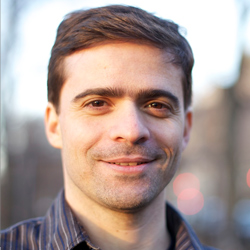
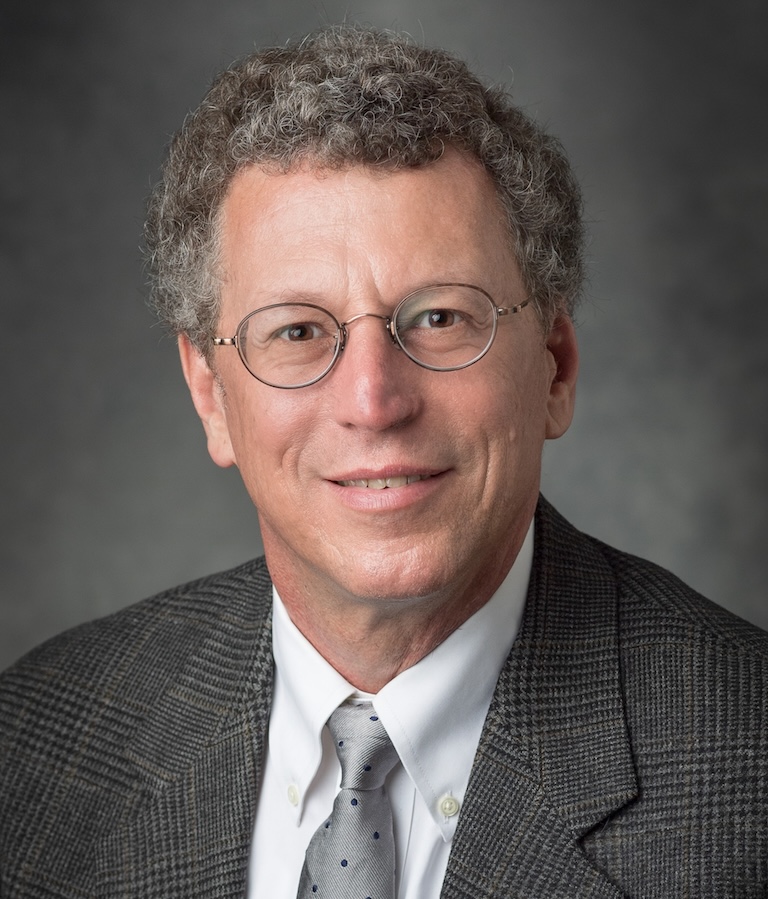
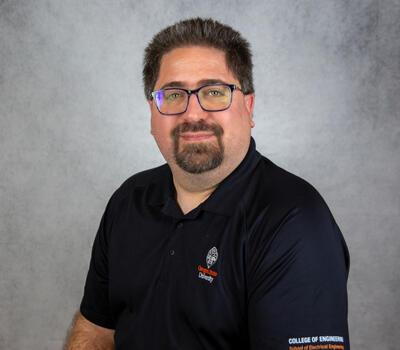
Dr. Anthony Filippi is an Associate Professor and Director of Graduate Programs at Texas A&M University. His research focuses on remote sensing, geographic information systems (GIS), and machine learning applied to aquatic and terrestrial environments. He leads the Fluvial-GEOS Lab, studying riverine/floodplain systems using remote sensing and GIS technologies. Educational Background: Ph.D. in Geography, University of South Carolina (2003) M.S. in Geography, University of South Carolina B.A. in Geography, Kansas State University Research Interests: Imaging spectroscopy, hyperspectral remote sensing of rivers and coastal oceans, GIS-based modeling, data fusion, aquatic optics, and machine learning. His work addresses coastal ocean bathymetry estimation, floodplain dynamics, and applications in environmental monitoring, including hazardous waste site tracking and agricultural studies. Recent Research Trends: Recent publications highlight advancements in UAS-based image analysis, LSTM networks for floodplain classification, and environmental policy impacts on forest resources. His work integrates machine learning with remote sensing to improve ecological and geomorphological understanding. Labs/Teams: Director of the Fluvial-GEOS Lab, focusing on remote sensing and GIS applications in riverine environments.
Yongmin Liu is a Professor in Mechanical and Industrial Engineering and Electrical & Computer Engineering at Northeastern University, and a member of the Cross-College Magnetics Center. He holds a PhD in Applied Science and Technology from UC Berkeley (2009), with earlier degrees from Nanjing University. His research focuses on nano-optics, metamaterials, plasmonics, and their applications in optical devices and systems. His interdisciplinary work bridges engineering, physics, and AI, with notable contributions to metasurface design and optical neural networks. Education: PhD, Applied Science and Technology, UC Berkeley (2009) M.S. and B.S., Physics, Nanjing University (2003, 2000) Research Interests: Nano-optics, nanoscale materials engineering, metamaterials, plasmonics, and applied physics. His group develops novel optical materials and devices for applications like super-resolution imaging, efficient light harvesting, and biomedical detection. Recent projects include AI-driven photonic materials design and meta-optical neural networks. Key Achievements: Recipient of the Søren Buus Outstanding Research Award (2024) NSF CAREER Award (2017) and ONR Young Investigator Award (2016) Elected SPIE Fellow (2023) and Optica Fellow (2023) Lab & Collaborations: Head of the Yongmin Liu Research Group, collaborating with institutions like Georgia Tech and Purdue University. Recent grants include a $1.5M NSF DMREF grant for AI-driven photonic materials and a $468K NSF grant for meta-optical neural networks.
Kevin C. Zhou is an Assistant Professor in the Department of Biomedical Engineering at the University of Michigan. His research focuses on developing high-performance computational optical imaging systems with unprecedented spatiotemporal throughput, integrating advanced optical instrumentation with machine learning-driven algorithms to analyze big data in biology and medicine. His lab specializes in creating imaging systems capable of capturing high-resolution, high-speed, and high-dimensional datasets. Dr. Zhou holds a Ph.D. in Biomedical Engineering from Duke University (NSF GRFP Fellow) and a B.S. in Biomedical Engineering from Yale University (Barry Goldwater Scholar). Prior to joining U-M, he was a Schmidt Science Fellow and postdoctoral researcher at UC Berkeley. Key research areas include: High-throughput microscopy (gigapixel-scale systems) 3D tomographic imaging Light field and Fourier-based imaging modalities Machine learning for image reconstruction and analysis Biomedical applications in cellular/molecular imaging His recent work has advanced technologies like multi-camera array microscopes (MCAM/MCAS) and Fourier light field mesoscopes, achieving video-rate 3D imaging of freely moving organisms. These innovations enable applications in digital cytopathology, behavioral tracking, and high-content biological studies. Notable awards include the NSF Graduate Research Fellowship and Barry Goldwater Scholarship. His research has been featured in top journals and conferences with a focus on advancing optical imaging hardware and computational pipelines.
Dr. Richard Fair is the Lord-Chandran Distinguished Professor of Engineering at Duke University, with a career spanning semiconductor physics, digital microfluidics, and lab-on-a-chip systems. His research group collaborates with faculty across Duke, Harvard, and Stanford in bioengineering, genomics, and environmental science to develop applications-driven microfluidic platforms. Ph.D. in Electrical and Computer Engineering, Duke University (1969) B.S.E.E., Duke University (1964) M.S.E.E., Pennsylvania State University (1966) Research interests focus on electrowetting-based microfluidics for biosensing, diagnostics, and synthetic biology applications. Key innovations include adaptive droplet routing , magnetic bead manipulation , and integrated optical sensors for real-time analyte detection in environmental and medical contexts. Recent publications emphasize deep reinforcement learning for biochip automation, fluorescent nucleosome detection , and inorganic ion analysis in aerosols. Collaborations with institutions like Advanced Liquid Logic and NSF-funded projects highlight his interdisciplinary approach. IEEE Third Millennium Medal (2000) Solid State Science and Technology Award (Electrochemical Society, 2003) Gordon E. Moore Medal (2009) Fellow, IEEE and Electrochemical Society Grants include NSF awards with Nan Jokerst and Krish Chakrabarty for adaptive lab-on-a-chip optical control, DARPA funding for genomic engineering platforms, and collaborations with the Desert Research Institute on airborne particle sensing. His lab develops scalable solutions for environmental monitoring, clinical diagnostics, and synthetic biology applications.
University of Illinois Urbana-ChampaignUnited States
Qing Cao is an Associate Professor of Materials Science and Engineering at the University of Illinois at Urbana-Champaign, with courtesy appointments in Chemistry and Electrical Engineering. He leads the Cao Research Group within the Grainger College of Engineering and serves as Deputy Editor of Science Advances. Dr. Cao received his B.S. in Chemistry from Nanjing University in 2004 and his Ph.D. in Materials Chemistry from the University of Illinois at Urbana-Champaign in 2009. After working for 9 years as a research scientist at IBM Thomas J. Watson Research Center, he returned to UIUC in 2018 as a faculty member. His research focuses on developing functional nanomaterials for unconventional electronic systems, high-performance logic devices, and low-cost energy harvesting. The Cao Research Group specifically works on: nanoelectronic devices based on novel nanomaterials; next-generation memory devices for neuromorphic and in-memory computing; monolithic 3D integration for high performance electronics; high-performance printable electronic materials; and bioelectronics for healthcare applications. His work bridges materials science, chemistry, electrical engineering, and device physics. Analysis of Dr. Cao's recent publications reveals a strong focus on electrochemical memory devices for neuromorphic computing, with significant work on carbon nanotube-based electronics and novel nanomaterials. His 2023 Nature Electronics paper on CMOS-compatible electrochemical synaptic transistors demonstrates his leadership in developing hardware solutions for deep learning acceleration. His research trajectory shows a progression from fundamental carbon nanotube device physics to more applied systems for computing and sensing applications. IBM Pat Goldberg Memorial Best Paper Award (2017) IBM Master Inventor Award (2016) MIT Technology Review TR35 (2016) Forbes '30 Under 30' (2012) and 'Most Influential All-Star Alumni' (2016) Atlantic Council Millennium Fellow (2017) US Frontiers of Engineering by National Academy of Engineering (2016, 2019) 17 IBM Invention Achievement Awards (2011-2018) Dr. Cao has secured significant research funding including NSF grants 1950182 and 2139185. His research group actively recruits graduate students and postdoctoral researchers to work on cutting-edge materials and device projects. His work has resulted in over thirty research papers and fifty patents and patent applications. He teaches graduate courses including MSE 403 (Synthesis of Materials), MSE 460 (Electronic Materials I), and MSE 488 (Optical Materials). The Cao Research Group operates within the University of Illinois' world-class facilities including the Frederick Seitz Materials Research Laboratory and Holonyak Micro and Nanotechnology Laboratory. His research has received support from NSF, DoD, DOE, and industry partners including TSMC. The group's recent $2 million project focuses on developing technology to help mobile devices learn and adapt to their surroundings.
Sergi Colominas Fuster, PhD , is a Full Professor and Coordinator of the Master’s Degree in Analytical Chemistry at the Department of Analytical and Applied Chemistry, IQS School of Engineering, Universitat Ramon Llull. He has been serving in this leadership role since 2021 and was promoted to Full Professor in 2025. His educational background includes a PhD in Chemistry (2006, URL), a Chemical Engineering degree (2001, IQS), and a Degree in Chemistry (1999, URL). Sergi's research is centered on the design, development, and characterization of electrochemical sensors , with a strong emphasis on applications in nuclear fusion technology and bioanalysis . His work focuses on sensors for molten metals and biosensors, particularly for detecting hydrogen and tritium in fusion reactors. He is an active member of the EQBA – Electrochemistry and Bioanalysis Group , which specializes in analytical, electrochemical, spectrometric, and optical techniques. His recent publications (2023–2025) highlight advancements in 3D-printed perovskite-based high-temperature electrochemical sensors for hydrogen monitoring in fusion environments. These works demonstrate innovation in fabrication techniques such as cold isostatic pressing and 3D printing, contributing to safer and more efficient fusion energy systems. Key research projects he is involved in include: EUTECTIC : Industrial production of Li-6 enriched lead-lithium eutectic for nuclear fusion. ECSINFUS : Development of electrochemical sensors for fusion applications. EUROFUSION : Implementation of fusion roadmap activities under Horizon Europe. He has secured research grants from competitive programs such as AGAUR and the European Commission, reflecting his leadership in fusion-related analytical chemistry. His work bridges materials science, electrochemistry, and energy technology. Sergi contributes to multiple academic programs, including the Master’s in Analytical Chemistry, Materials Science and Engineering, Pharmaceutical Chemistry, and the PhD in Chemistry and Chemical Engineering, indicating his broad academic engagement and mentorship.
Oliver S. Cossairt is an Adjunct Associate Professor at Northwestern University's departments of Computer Science and Electrical and Computer Engineering. He leads the Computational Photography Lab , focusing on computational imaging, optics, and display technologies. His work bridges computer vision, graphics, and optical engineering to design novel imaging systems with applications in medical, astronomical, and scientific domains. Education: Ph.D. Computer Science, Columbia University (2011) M.S. Media Arts and Sciences, MIT Media Lab (2003) B.S. Physics, Evergreen State College (2003) Research Interests: Cossairt develops imaging systems that combine optical innovations with computational methods to enhance performance and functionality. Key areas include computational displays, depth sensing, and high-precision 3D imaging. His work emphasizes practical applications like medical imaging, holography, and non-line-of-sight sensing. Awards: NSF CAREER Award (2015–2020) Best Paper Award at ICCP 2011 NSF Graduate Research Fellowship (2008–2011) Teaching & Funding: Taught courses on computational photography and computer vision. Secured grants from NSF, NIH, and industry partners (e.g., Samsung, Omron) for projects like Coherent Computational Imaging and Snapshot 3D Holographic Microscope . Labs & Teams: Directs the Computational Photography Lab, collaborating with institutions like Argonne National Labs and museums for projects in cultural heritage imaging.
Charles A. Bouman is the Showalter Professor of Electrical and Computer Engineering and Biomedical Engineering at Purdue University, with a courtesy appointment in Mathematics. He is a leading researcher in computational imaging, integrating statistical signal processing, physics, and computation for applications in healthcare, scientific, and industrial imaging. Education: B.S.E.E., University of Pennsylvania, 1981 M.S., University of California at Berkeley, 1982 Ph.D. in Electrical Engineering, Princeton University, 1989 His research focuses on computational imaging , including statistical image models, multiscale techniques, tomographic reconstruction, and fast algorithms. Key areas include Model-Based Iterative Reconstruction (MBIR), Plug-and-Play priors, document processing, and multiscale segmentation. His work has led to foundational contributions in total variation regularization and sparse-view reconstruction. The recent publications highlight a strong trend in integrating machine learning with physical models for image reconstruction, particularly through Plug-and-Play methods. His work spans optical tomography, halftoning, image scaling, and document compression, demonstrating consistent innovation in both theory and practical software implementation. Scientific Awards and Honors: Member, National Academy of Inventors Life Fellow, IEEE Fellow, IS&T; Honorary Member (2022); Service Award (2023) Fellow, SPIE and AIMBE IEEE Signal Processing Society Claude Shannon-Harry Nyquist Award (2021) Electronic Imaging Scientist of the Year (2014) SIAM Imaging Science Best Paper Prize (2020) Founder, IS&T Computational Imaging Conference (2003) Co-Founder, IEEE Transactions on Computational Imaging Vice President, IS&T; Former VP of Publications (2000–2004) Bouman has advised numerous graduate students and leads a vibrant research group developing open-source tools like MBIRJAX , SVMBIR , and OpenMBIR . His research has been supported by the National Science Foundation, General Electric, Intel, Xerox, Hewlett-Packard, and the State of Indiana 21st Century Fund. He maintains an active presence through tutorials, conference leadership, and educational resources including video lectures and a textbook on Foundations of Computational Imaging. Labs and Research Teams: His group develops cutting-edge software for tomographic reconstruction, clustering, segmentation, and dynamic sampling. Projects include Gaussian Mixture modeling (GMCluster), Plug-and-Play implementations, Sparse Matrix Transforms, and UAV sensing datasets. The research is highly interdisciplinary, bridging engineering, mathematics, and biomedical applications.
Subir Biswas is a Professor in the Department of Electrical and Computer Engineering (ECE) at Michigan State University (MSU), part of the College of Engineering. His research focuses on wireless networking, low-power protocols, vehicular networks, and health monitoring systems, conducted through the NeEWS laboratory. He holds a Ph.D. from the University of Cambridge and degrees from Jadavpur University. Education: Ph.D., Computer Engineering, University of Cambridge (1994) M.S., Electrical Engineering, Jadavpur University (1989) B.S., Electrical Engineering, Jadavpur University (1987) Professional Experience: Professor, MSU ECE (2011–present) Associate Professor, MSU ECE (2003–2010) Research interests include traffic analysis firewalls, pricing calculus for social wireless networks, low-energy green networking, and ultrasound-based sensor systems . He leads the NeEWS lab, exploring embedded systems and network middleware. His work spans IoT, cybersecurity, and biomedical applications like wearable sensors for autism monitoring and hydration tracking. Publications emphasize innovative protocols (e.g., pulse position coding) and machine learning for network optimization. Collaborations include NSF-funded projects and industry partnerships (e.g., Tellium Optical Systems).
Scott Kerlin is a Senior Lecturer in the Department of Electrical Engineering and Computer Science at Oregon State University's College of Engineering. He holds an M.S. and B.S. in Computer Science from the University of North Dakota. Prior to academia, he worked at the Mayo Clinic on medical software systems and IBM as a build master for enterprise products. His career spans roles including network administrator, lab manager, and Undergraduate Director at UND. Dr. Kerlin's research focuses on bridging industry experience with academic curriculum, particularly in computer science education, project-based learning, and cybersecurity. He emphasizes practical applications of theoretical concepts, such as integrating 3D printing and scanning technologies with security systems for small satellites. His work also explores student efficacy in AI courses and scalable software project management methodologies. He has taught at multiple institutions, including the University of Minnesota and Augsburg University, and held roles at Michigan Tech as Senior Security Engineer. His 2024 Engineering+ Outstanding Teaching Award highlights his commitment to pedagogical innovation. Current projects include in-space 3D printing, solar energy systems, and cryptographic solutions for satellite communications. Key areas of contribution include: 3D printing/Scanning: Material characterization, key replication, and aerospace applications Cybersecurity: Intrusion detection, satellite communications security, and chaotic cryptosystems Educational Innovation: Active learning frameworks, PBL implementation, and student performance modeling His interdisciplinary approach connects computer science fundamentals with real-world engineering challenges, emphasizing sustainability and industry relevance in curricula.
David Schuster is an Associate Professor of Physics at the University of Chicago. His primary research focuses on experimental condensed matter physics, with a particular emphasis on circuit quantum electrodynamics (cQED), superconducting qubits, and quantum information science. He leads the Schuster Lab, which explores quantum systems, hybrid quantum technologies, and topological materials. Education: Ph.D. in Physics from Yale University (2007), advised by Robert Schoelkopf. His doctoral work pioneered advancements in circuit QED, demonstrating strong coupling between superconducting qubits and microwave resonators. Research Interests: The lab investigates superconducting quantum circuits, topological photonics, quantum sensors for dark matter, and scalable quantum computing architectures. Projects include developing fluxonium qubits, autonomous error correction, and hybrid systems involving trapped electrons on helium. Key Contributions: Published in Nature , Science , and Physical Review Letters on topics like topological circuits, photon blockade, and dark matter detection using superconducting cavities. Collaborates with groups at Stanford, Purdue, and other institutions on quantum technologies. Students and Collaborators: Advises numerous graduate and undergraduate students, including prominent alumni who have transitioned to postdocs and industry roles. Lab members present at major conferences like the APS March Meeting. Labs: Schuster Lab at the University of Chicago, with access to state-of-the-art facilities like the Pritzker NanoFabrication Facility. Collaborates with the Awschalom, Cleland, and Houck groups on hybrid quantum systems and materials science.
Cagri A. Savran is a Professor of Mechanical Engineering at Purdue University, with courtesy appointments in Biomedical Engineering and Electrical and Computer Engineering. He holds a B.S. from Purdue University (1998), an M.S. and Ph.D. from MIT (2000 and 2004, respectively). His research focuses on MEMS, nanotechnology, and biosensors, particularly in protein detection, aptamers, and biomedical applications. His work spans fluid mechanics, systems control, and micro/nano fabrication. Education: B.S., Purdue University, 1998 M.S., MIT, 2000 Ph.D., MIT, 2004 Research Interests: Dr. Savran pioneers innovations in bioMEMS and nanoscale biosensing technologies. His lab develops platforms like immunomagnetic diffractometry and microfluidic systems for real-time pathogen detection and clinical diagnostics. Key areas include aptamer-based assays, magnetic nanoparticle integration, and single-molecule studies of DNA packaging motors. Awards: Motorola PhD Fellowship (2001-2004) NSF U.S.-Japan Young Researchers Exchange (2007) #1 News in Analytical Chemistry (2007) #1 News in JACS Weekly (2007) Labs & Teams: The Savran Lab (savranlab.org) integrates engineering and biology to create next-generation biomedical devices. Research emphasizes translating nanotechnology into practical diagnostic tools for healthcare and environmental monitoring.
Stephen Y. Chou is the Joseph C. Elgin Professor of Engineering and Professor of Electrical and Computer Engineering at Princeton University. He is affiliated with the Princeton Materials Institute (PMI) and leads the Nano, Meta, and Bio-Health Laboratory (NMBH Lab), previously known as the Nanostructures Lab. His work spans nanotechnology, bioengineering, and photonics, integrating interdisciplinary approaches to address challenges in health, electronics, and manufacturing. Ph.D., Massachusetts Institute of Technology, 1986 M.A., Physics, State University of New York at Stony Brook, 1982 B.S., Physics, University of Science and Technology of China, 1978 Chou's research focuses on nano-bioengineering for diagnostics and health, nanophotonics (meta-optics and subwavelength elements), and nanofabrication techniques. His work has revolutionized nanoimprint lithography, enabling breakthroughs in semiconductor devices, optical sensors, and biomedical tools. The NMBH Lab's innovations include ultra-sensitive biosensors (D2PA), the iMOST™ diagnostic platform, and foundational contributions to gate-all-around (GAA) transistors for sub-3 nm CMOS technology. His publications reflect advancements in plasmonic biosensors, organic solar cells, nanofluidics, and scalable nanoimprint methods. Key themes include nanoscale light manipulation, low-cost diagnostic systems, and quantum electronic devices. Member, National Academy of Engineering (2007) IEEE Cledo Brunetti Award (2004) IEEE Nanotechnology Pioneer Award (2014) Nanoimprint Pioneer Award (2015) Packard Fellow (1991) Fellow, IEEE (2000) Inductee, New Jersey High Tech Hall of Fame (2004) MIT Technology Review Emerging Technologies (2003, 2007) Chou has founded three companies (Nanonex, NanoOpto, Essenlix) and co-founded BioNano Genomics (NASDAQ: BNGO). His work bridges academic research and industrial impact, with over 700 publications (H-index 97) and 400 patents, influencing global nanotechnology and diagnostics. The NMBH Lab develops transformative technologies in nano-bioengineering, nanophotonics, and nanofabrication, emphasizing practical applications for healthcare and electronics.
Prof. Matt Pritchard is a Professor in Earth & Atmospheric Sciences at Cornell University, based at Snee Hall. His research focuses on volcanology, geodesy, and remote sensing, with a particular emphasis on using satellite data to monitor volcanic activity, deformation, and glacial interactions. He leads studies on global volcanic systems, including Indonesia's Semeru and Raung volcanoes, Chile's Cordón Caulle, and Bolivia's Uturuncu, applying techniques like InSAR, SAR, and thermal imaging. Key research interests include volcanic eruption dynamics, magma-hydrothermal systems, and the integration of multi-sensor datasets. He has contributed to developing tools like Hotspotter for automated volcanic thermal feature detection and has explored planetary volcanism (e.g., Venus). His work bridges geophysics, glaciology, and computational methods, addressing both Earth and extraterrestrial systems. Prof. Pritchard has received recognition such as the William Bowie Lecture (2022, 2023). His projects often involve international collaborations, including the CEOS Volcano Demonstrator initiative and the EarthDEM/ArcitcDEM projects. He also engages in geothermal energy research and seismic monitoring in Ithaca, NY.
State University of New York at BuffaloUnited States
Jun Liu is an Assistant Professor in the Department of Mechanical and Aerospace Engineering at the School of Engineering and Applied Sciences, University at Buffalo. His research focuses on advanced energy materials, nano/micro-mechanics, and self-powered systems, with applications in triboelectric energy harvesting and scanning probe microscopy. Education: PhD, Materials Engineering, University of Alberta (2018) MS, Materials Science, Shanghai University (2015) BE, Materials Science and Engineering, Nanchang University (2012) Research Interests: Development of tribovoltaic and triboelectric systems for self-powered electronics Mechanical energy harvesting via dynamic heterojunctions and Schottky contacts 3D-printed hydrogel structures for energy absorption and flexible electronics Nanoscale characterization using atomic force microscopy Design of nanocomposite sensors and catalytic materials Publication Trends: His work emphasizes triboelectricity, nanoscale energy conversion, and sustainable materials. Recent articles explore bionic tactile sensing, tunable hydrogels, and quantum dynamics in sliding interfaces. Awards: SONY Faculty Innovation Award (2021) Nature Springer MINE Young Scientist Award (2020) International Contest of Applications in Nano/Micro Technology Prize (2013) Laboratory: Advanced Energy Materials and Nanomechanics Lab at University at Buffalo.