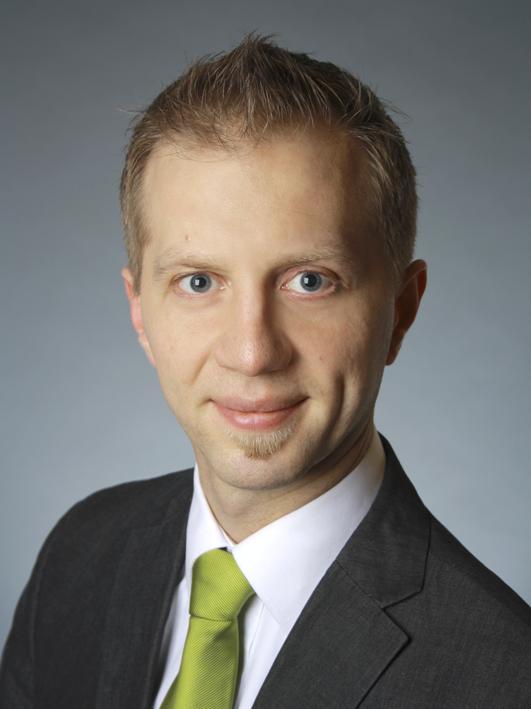
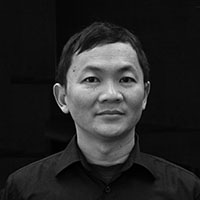
Dr. Dave Rowe is a Senior Research Fellow at the University of Southampton, affiliated with the Optoelectronics Research Centre (ORC). His research focuses on mid-infrared spectroscopy, silicon photonics, and their applications in biomedical engineering and sensing technologies. He has contributed to advancements in therapeutic drug monitoring, point-of-care diagnostics, and machine learning-driven biomarker analysis. Currently supervising PhD students Daniel Owens (PhD Infec Inflamm&Immunity PT) and Nikita Anastasia Sapphire Lack (PhD ORC), his work bridges fundamental photonics research with real-world clinical and industrial applications. Collaborations include projects on mid-infrared photonic devices, terahertz spectroscopy, and integrated circuit design. Contact: D.Rowe@soton.ac.uk.
Fatemeh Ganji is an Assistant Professor in the Department of Electrical & Computer Engineering at Worcester Polytechnic Institute (WPI), with an affiliation to the Cybersecurity program. She holds a Ph.D. in Electrical Engineering from the Technical University of Berlin (2017), where she received the BIMoS Ph.D. Award and was nominated for the ACM Dissertation Award. Prior to WPI, she served as a Post Doctoral Associate at the University of Florida (2018–2020) and at Telecom Innovation Laboratories/Technical University of Berlin (2017–2020). Her research focuses on interdisciplinary approaches in hardware security, combining machine learning and cryptography to design and evaluate security-critical hardware systems. Key areas include physically unclonable functions (PUFs), side-channel analysis, and countermeasures against tampering and counterfeiting. Her work is funded by the European Union (Horizon 2020, FP7), German BMBF, NSF, and NIST. Ganji actively contributes to the academic community as a reviewer for IEEE and ACM journals and serves on technical program committees for CHES, FPL, DATE, and SPACE conferences. Her recent projects include developing AI-driven forensic analysis for PCB tamper detection, secure multiparty computation frameworks for chiplet systems, and open-source tools for implementation security testing. Her awards include the BIMoS Ph.D. Award 2018 and recognition from the Technical University of Berlin for her doctoral work on PUF learnability. She has also pioneered methods to detect recycled integrated circuits and enhance hardware trust through reverse engineering and machine learning.
Professor Chen Xiaodong is a Distinguished University Professor at Nanyang Technological University (NTU), Singapore, holding primary appointment in the School of Materials Science & Engineering with courtesy appointments in the Lee Kong Chian School of Medicine and School of Chemistry, Chemical Engineering and Biotechnology. He serves as Deputy Director of the Institute for Digital Molecular Analytics and Science (IDMxS) and Director of both the Innovative Centre for Flexible Devices (iFlex) and Max Planck-NTU Joint Lab for Artificial Senses. His research spans mechanomaterials science and engineering, flexible electronics, sense digitalization, cyber-human interfaces and systems, and carbon-negative technology. Professor Chen's work focuses on developing methods for controlling materials architecture at 1-100 nm scale to solve fundamental and applied problems in energy, environment, and healthcare. His group integrates expertise from materials science, chemistry, biology, physics, and engineering to create innovative solutions. His scientific contributions have been recognized through numerous prestigious awards including the Singapore President's Science Award, National Research Foundation Investigatorship and Fellowship, Friedrich Wilhelm Bessel Research Award, Dan Maydan Prize in Nanoscience and Nanotechnology, and election to multiple national academies including Singapore National Academy of Science, Academy of Engineering Singapore, and German National Academy of Sciences Leopoldina. Professor Chen serves as Editor-in-Chief of ACS Nano and sits on editorial boards of numerous prestigious journals including Advanced Materials, Chemical Reviews, and Matter. He has mentored numerous PhD students and research fellows who have gone on to faculty positions at institutions worldwide. His laboratory develops cutting-edge technologies in flexible electronics, bio-inspired materials, and nano-bio interfaces, with strong industry collaborations and translational research focus.
Nelson Sepulveda Alancastro is a Professor and Interim Chairperson of Electrical and Computer Engineering (ECE) at Michigan State University's College of Engineering, with a joint appointment in Mechanical Engineering (ME). He holds a Ph.D. (2005) and M.S. (2002) from Michigan State University, and a B.S. (2001) from the University of Puerto Rico-Mayaguez. His research integrates micro/nano sensors, smart materials, and energy harvesting, with applications in biomedical devices, environmental monitoring, and MEMS. Research Focus: Dr. Sepulveda's work centers on ferroelectret nanogenerators, vanadium dioxide-based reconfigurable devices, flexible sensors, and machine learning for sensor data analysis. His lab develops self-powered systems for biomechanical monitoring, invasive species detection, and concussion prediction. Awards and Honors: MSU Withrow Teaching Excellence Award (2018) MSU Withrow Diversity Excellence Award (2018) Michigan State University Teacher-Scholar Award (2015) NSF Career Award (2010-2015) IEEE Senior Member (2011) Students and Team: He advises Ph.D. candidates including Ian González-Afanador, Gerardo Morales-Torres, and Henry Dsouza. His Advanced Microsystems Group (AMG) focuses on interdisciplinary projects spanning materials science, MEMS, and embedded systems.
Professor Michael De Volder is a Fellow and College Lecturer at St John's College, University of Cambridge, holding the position of Professor of Advanced Materials Engineering in the Department of Engineering. His research focuses on energy storage solutions, nanotechnology, and scalable manufacturing methods for sustainable battery technologies. Belgian Royal Academy Laureate Co-founder of Echion Technologies (niobium-based anode materials) Expert in Li-ion/Zn-ion battery innovation Research activities center on improving battery sustainability through novel synthesis techniques, extending battery lifetime via structural optimization, and developing high-energy-density materials. His work spans nanoscale engineering, electrode design, and fundamental electrochemical investigations. Scientific publications from 2022-2025 demonstrate expertise in: Li-ion/Zn-ion battery systems, nanotube integration, electrode manufacturing, and degradation analysis. Recent work explores mechanochromic displays, dual-gradient electrodes, and aqueous-organic electrolyte formulations. Belgian Royal Academy Laureate Co-founder of battery technology startup Echion Technologies
Prof. Dr. Matthias Krauledat is a faculty member at Hochschule Rhein-Waal , specifically within the Faculty of Technology and Bionics . His academic career spans both theoretical research and industrial application, with a focus on Machine Learning and Brain-Computer Interfaces . After completing his PhD in Electrical Engineering/Computer Science at Technische Universität Berlin , he has contributed significantly to the advancement of EEG-based communication systems and neural signal processing methodologies. Born in Essen, Germany Studied Mathematics with a minor in Computer Science at University of Münster/Oxford Doctoral research at TU Berlin on Brain-Computer Interfaces Industrial experience at Henkel AG & DMT GmbH Research Interests focus on Machine Learning applications in Neuroscience and Biomedical Engineering , specifically Brain-Computer Interfaces , EEG Signal Processing , and Adaptive Classification Systems . His work explores how algorithms can be developed to enable self-learning computers to solve complex tasks involving neural data interpretation and prediction for previously unseen data in clinical and technological contexts. Publications demonstrate a consistent contribution to Neuroscience and Machine Learning fields, with particular emphasis on Brain-Computer Interface systems from 2004 through 2009. His research has focused on reducing training requirements, improving signal processing accuracy, and developing novel interaction paradigms like the Hex-o-Spell mental typewriter while addressing statistical challenges like covariate shift in neural data analysis. Professional Experience includes academic research at TU Berlin's Intelligent Data Analysis group, industrial software development roles at Henkel AG's Scientific Computing department, and TÜV Nord Group's Optical Metrology and Machine Diagnostics divisions. He maintains active research connections through collaborative publications with leading experts in the field.
Tegoeh Tjahjowidodo is a Senior Lecturer at the Faculty of Industrial Engineering Sciences , KU Leuven , affiliated with the Department of Mechanical Engineering and the Manufacturing Processes and Systems (MaPS) unit at Campus De Nayer. He serves as Head of Education for Electromechanics programs and leads Subdivision 17 at the campus. Research Areas: Additive Manufacturing (Wire-Arc Additive Manufacturing), Process Monitoring, Control Systems, Laser Micromanufacturing, Wear Analysis, Robotics, and Condition Monitoring. Publication Trends: Focus on in-situ monitoring of laser micromanufacturing, machine learning for abrasive belt grinding, WAAM parameter optimization , and multi-sensor fusion for process control. Scientific Contributions: Co-promotor for MultiTRIBO (tribology), Promotor for WAAM structural integrity and pedicle screw surgical simulators . Active in international collaborations (e.g., 25th International Symposium on Laser Precision Microfabrication, Spain 2024).
J. Stewart Aitchison is a Professor at the University of Toronto's Department of Electrical & Computer Engineering, holding the Nortel Chair in Emerging Technology. He serves as Associate Scientific Director for the Network Centre of Excellence, IC-IMPACTS, fostering Canada-India research collaborations. Aitchison co-founded ChipCare Corporation, developing portable HIV monitoring systems, and previously directed the Emerging Communications Technology Institute. He received a BSc (1984) and PhD (1987) in Physics from Heriot-Watt University, UK, followed by a postdoctoral position at Bellcore. His research focuses on: Nonlinear optics and plasmonics for optical signal processing Micro/nano-scale photonic devices and integrated circuits Optical biosensors for healthcare applications (e.g., HIV monitoring) Algal biofilm photobioreactors for sustainable energy His 250+ publications emphasize semiconductor waveguides, quantum optics, and lab-on-chip systems, with recent work advancing polarization management, entanglement generation, and point-of-care diagnostics. Awards & Fellowships: Fellow of Royal Society of Canada, Royal Society of Edinburgh, AAAS, OSA, and Institute of Physics Professional Engineering Ontario Research Medal (2016) IEEE Photonics Society Distinguished Lecturer (2016-2017) University of Toronto Inventor of the Year (2012) NSERC Synergy Award (2006) He leads the Aitchison Group, supervising over 60 PhD/Master's students in photonics and microfabrication. His team collaborates globally and utilizes the Toronto Nanofabrication Centre. ChipCare, his spin-off, secured $7M+ funding for blood-testing platforms enhancing healthcare in remote communities.
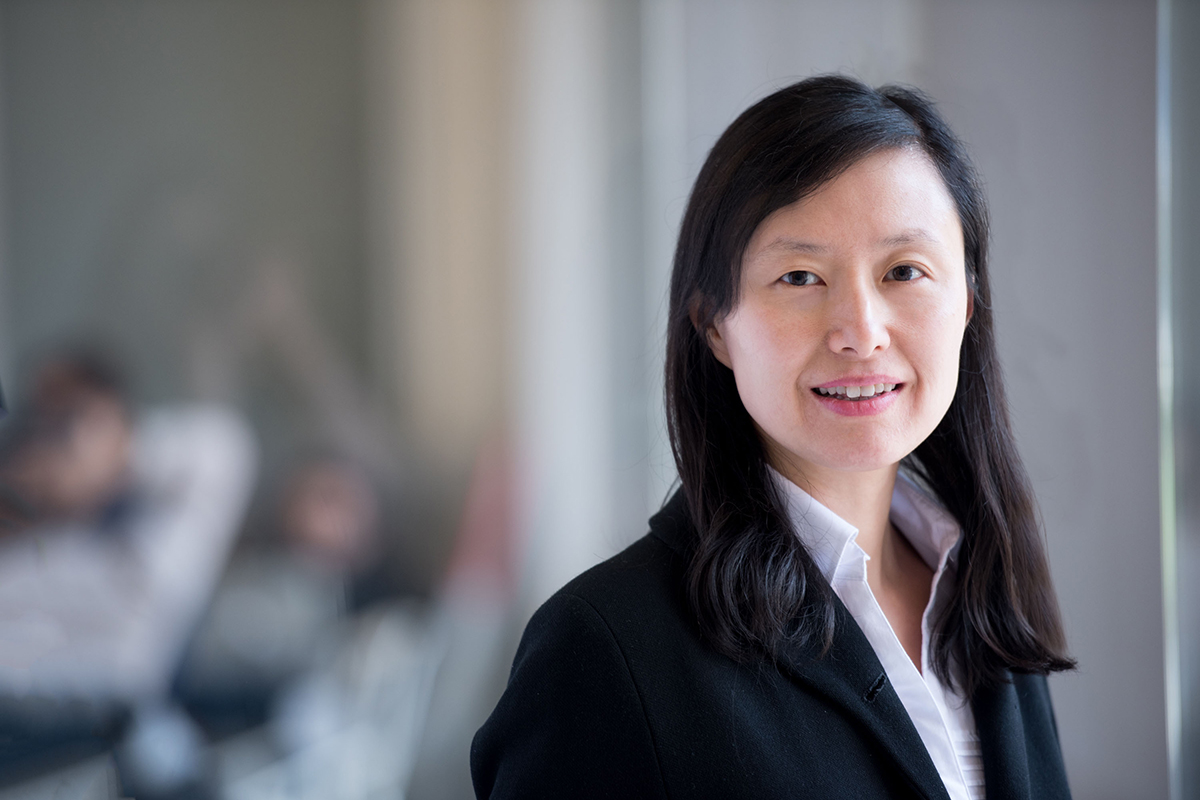
Dr. Xiaomin Liu is a Group Leader at the Max Planck Institute for Polymer Research's Department of Molecular Spectroscopy, specializing in optical super-resolution microscopy and laser technology. Her work focuses on developing advanced imaging techniques using nanomaterials and fluorescence dyes. PhD in Optical Engineering, Technical University of Denmark (2011) Postdoctoral Research, Technical University of Denmark (2011-2015) Postdoctoral Research, Max Planck Institute for Polymer Research (2015-2017) Her research explores fluorescent blinking mechanisms of nanomaterials and super-resolution imaging applications , leveraging laser systems and novel fluorescence dyes. Recent publications emphasize nanographene-based microscopy tools and room-temperature phosphorescence in advanced materials. Key trends in her work include: Development of broadband wavelength-tunable femtosecond fiber lasers Investigation of acid-induced fluorescence enhancement in nanographenes Engineering room-temperature phosphorescence via molecular charge-transfer effects Designing polarized emission materials through asymmetric center manipulation Her group collaborates with international researchers in laser technology and material science, supported by Danish FTP and NIH grants. She works with partners like Klaus Müllen, Mischa Bonn, and Andrey Turchinovich.
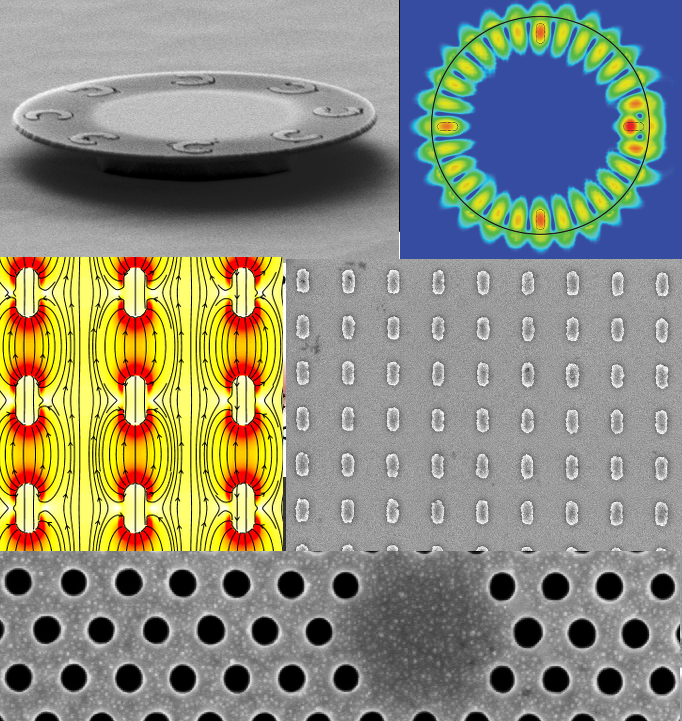
Prof. Dr. Cedrik Meier is a faculty member at the University of Paderborn , affiliated with the Faculty of Natural Sciences and serving as the head of the Department of Physics . He holds the academic rank of Professor and chairs the Audit Committee. Education: Diplom in Physik, Ruhr-Universität Bochum (1998) Dr. rer. nat. in Experimentalphysik, Ruhr-Universität Bochum (2001) Habilitation, Universität Duisburg-Essen (2007) His research focuses on Nanophotonics , Plasmonics , Metamaterials , and Nonlinear Optics . The work involves developing novel photonic devices using nanofabrication techniques and materials like zinc oxide (ZnO) and silicon metasurfaces . Recent publications highlight advancements in third harmonic generation , correlated photon sources , and nonlinear optical effects in nanostructured materials. Key projects include TRR 142 (Tailor-Made Nonlinear Photonics) and studies on quantum dot positioning and liquid crystal-tunable devices . Scientific Awards: Golden Chalk for teaching physics (2016) Junge Kolleg, NRW Academy of Sciences (2007) Gottschalk-Diederich Baedeker Prize (2007) NanoFutur Award (2006) DFG Postdoc Fellowship (2003) Evangelical Study Association Villigst Scholarship (1998) He has led research groups at multiple institutions and currently oversees the Nanophotonics & Nanomaterials working group. His teaching includes Experimental Physics D and Lab Projects .
Prof. Dr. Harald Ritz serves as Professor of Practical Computer Science, especially Business Informatics, at the Technical University of Central Hesse (THM) within the Department of Mathematics, Natural Sciences and Computer Science since 2003. He holds leadership roles as Chair of Examination Committees for B.Sc. and M.Sc. Business Information Systems and Spokesperson for the MNI department in the Business Informatics Working Group (AKWI). His educational background includes a Diplom in Business Informatics (Dipl.-Wirtsch.-Inform.) and doctorate (Dr. rer. pol.) from the Technical University of Darmstadt, following professional experience at SAP SI AG and a professorship at Heilbronn University of Applied Sciences. Ritz's research centers on AI-driven digital transformation for data-driven enterprises, with focus on the “Data to Decision” value chain encompassing Framing, Allocation, Analytics, and Preparation phases. His work integrates business intelligence, data warehousing, machine learning, and SAP ecosystems to address challenges in SME digitalization, operational IT management, and educational technology. Current projects emphasize AI applications in higher education, including intelligent tutoring systems and automated feedback mechanisms. Analysis of his 15 most recent publications reveals a consistent trajectory toward applied AI solutions in business contexts, particularly in intelligent chatbots for educational support, financial trading algorithms, and cloud-based data infrastructure. The research demonstrates increasing integration of no-code platforms, real-time analytics, and domain-specific AI applications across logistics, banking, and procurement sectors. No scientific awards were documented in the source materials. Professor Ritz actively supervises academic development through bachelor’s and master’s theses, doctoral research, and collaborative projects. Current initiatives include the “Winfy” AI chatbot (v4.0, 2025), AI-based feedback systems for educational content (Freiraum 2025 grant), the frits intelligent tutoring project with Prof. Kammer, and doctoral research on AI adoption in SMEs. His work bridges theoretical research with practical implementation in SAP environments and cloud platforms. He operates within THM’s MNI department infrastructure, collaborating through the Business Informatics Working Group (AKWI) and contributing to the Digital Classroom communication platform for online education.
Prof. Xiao Hu is an Associate Professor in the Department of Physics and Astronomy at Rowan University, with joint appointments in Biomedical and Translational Sciences and Biomedical Engineering. His interdisciplinary research bridges biophysics, polymer science, and biomedical applications, focusing on protein-based biomaterials derived from silks, elastins, and plant proteins. Post-Doctoral Associate, Tufts University Ph.D., Polymer and Biophysics, Tufts University M.S., Biomedical Engineering, Tufts University M.S., Physics, Tufts University B.S., Crystal and Material Physics, Nanjing University His work on biopolymer self-assembly explores silk-elastin alloys, tissue engineering scaffolds, and tunable drug delivery systems. Recent studies involve ultrasound-assisted fabrication and ionic liquid processing of nanofibers. Key article themes include biocomposite crystallinity (2025), 3D-printed protein materials (2025), and electrospun drug carriers (2024). Awards highlight his leadership in thermal analysis societies and innovation. Rising Innovator Award (Rowan, 2016) President, North American Thermal Analysis Society (2023) Springer Best Poster Awards (2008, 2010) Prof. Hu mentors students in biophysics and biomedical engineering, co-authoring studies on silk-cellulose composites, thermal conductivity, and smart biomaterials for medical devices. His lab utilizes advanced equipment like FTIR, DSC, and electrospinning systems.
Lili Qiu is a Professor in the Department of Computer Science at The University of Texas at Austin, where she has been a faculty member since January 2005. She is an active member of the Wireless Networking and Communications Group (WNCG) and has made significant contributions to the field of networking research. Dr. Qiu previously spent 2001-2004 as a researcher at Microsoft Research in Redmond, WA, before joining UT Austin. Dr. Qiu's research spans Internet and wireless networking with a current focus on wireless network management and content distribution in mobile networks. Her work extends into diverse applications including acoustic imaging, metasurface applications, healthcare sensing technologies, and AI systems. She has pioneered research in areas such as acoustic motion tracking, passive RFID sensing, and wireless network optimization. Her research demonstrates a consistent pattern of innovation that bridges theoretical networking concepts with practical real-world applications, particularly in mobile and wireless systems. Her extensive publication record shows a clear evolution from fundamental networking research to increasingly interdisciplinary work that combines wireless systems with healthcare applications, AI, and novel sensing technologies. Recent publications demonstrate growing integration of machine learning techniques with traditional networking problems, as well as expansion into healthcare applications like Parkinson's disease modeling and non-invasive glucose monitoring. ACM Fellow IEEE Fellow National Academy of Inventors (NAI) Fellow ACM Distinguished Scientist NSF CAREER award Google Faculty Research Award Best paper award at ACM MobiSys'18 Best paper award at IEEE ICNP'17 Dr. Qiu has supervised numerous students, including a PhD dissertation that won the SIGMOBILE best dissertation award in 2020. She has served in significant leadership roles including chair of ACM SIGMOBILE, General co-chair for ACM MobiCom 2025, and various conference chair positions for IEEE ICNP, ACM CoNEXT, and other major networking conferences. Her research has been supported by substantial grants from NSF, Google, and other organizations, enabling her to lead cross-disciplinary research teams. As a member of the Wireless Networking and Communications Group at UT Austin, Dr. Qiu leads research efforts that combine networking expertise with innovations in sensing technologies, metasurfaces, and AI systems. Her lab has produced numerous influential results in mobile networking, wireless sensing, and network management, with applications spanning healthcare, consumer electronics, and communication infrastructure.
Md. Zoheb Hassan serves as an Assistant Professor in the Department of Electrical Engineering and Computer Engineering at Laval University, where he leads cutting-edge research in wireless communications and spectrum management. His academic role includes graduate recruitment and active participation in the university's research ecosystem, particularly through the Establishment of the Next Generation of Professors program funded by FRQNT. Dr. Hassan's research centers on spectrum sharing and management, wireless communication systems, and communications network control systems. He pioneers the integration of digital twin technology and machine learning to solve critical challenges in next-generation networks, including interference management in 5G/6G aerial corridors, Internet of Vehicles, and satellite-terrestrial integration. His work emphasizes practical implementations such as proof-of-concept demonstrations for tactical networks and proactive resource allocation in dynamic environments. Analysis of his 2024-2025 publications reveals a dominant trend toward AI-driven wireless resource optimization, with 12 of 15 recent papers featuring digital twins for interference management, spectrum sharing, and energy efficiency. Key thematic clusters include vehicular communications (4 papers), underwater IoT networks (2 papers), and hardware-impairment resilient designs (3 papers), demonstrating his focus on bridging theoretical advances with real-world deployment challenges across diverse network topologies. Dr. Hassan has secured significant competitive funding for his research initiatives: Digital Twin-Enhanced Interference Management for Next-Generation Radio Access Networks in the FR3 Band (FRQNT, 2025-2027) Center for Radio Frequency and Communications Systems, Technologies and Applications (FRQNT, 2024-2030) Context-Aware Spectrum Sharing and Management for Next Generation Wireless Networks (NSERC, 2024-2029) Development of innovative technologies for modeling predictive systems in urban mobility (MITACS, 2022-2026) Springboard to Discovery supplement for Context-Aware Spectrum Sharing (NSERC, 2024-2025) He actively mentors doctoral candidates, currently supervising Mahima Karim (PhD in Electrical Engineering, expected 2025) and Mohammadamin Parhizgar (PhD in Electrical Engineering, expected 2024). His supervisory approach combines theoretical rigor with practical problem-solving, focusing on spectrum management algorithms and digital twin implementations for next-generation networks. While specific laboratory affiliations aren't detailed in the source material, his projects indicate strong alignment with Laval University's wireless research infrastructure and the Center for Radio Frequency and Communications Systems.
Ue-Li Pen is a Professor at the Canadian Institute for Theoretical Astrophysics (CITA), which is part of the Faculty of Arts & Science at the University of Toronto. His research focuses on theoretical astrophysics where basic physical effects can be isolated from astronomical complexities. His research interests include n-body and hydro simulations, origin of galaxy spin, dark energy studies through 21cm cosmology, baryon acoustic oscillations (BAO), absorber acceleration, and research on Fast Radio Bursts (FRBs) and pulsars related to gravitational waves, wave optics, and lensing. Current projects involve the non-linear dynamics of the cosmic neutrino background, 21cm intensity mapping, pulsar VLBI scintillometry, and the Canadian Hydrogen Intensity Mapping Experiment (CHIME). Analysis of recent publications shows Pen's work spans multiple cutting-edge areas in astrophysics, particularly focused on radio astronomy techniques, gravitational wave detection methods, black hole imaging, and cosmological measurements using 21cm radiation. His research often involves innovative applications of wave optics and interferometry to solve astrophysical problems. Professor Pen maintains an active research program with numerous recent publications in top astrophysics journals, demonstrating his continued leadership in the field of theoretical astrophysics and cosmology.