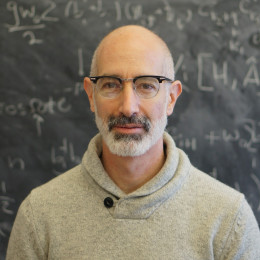
David R. Reichman is the Centennial Professor of Chemistry at Columbia University, affiliated with the Department of Chemistry within the School of Arts and Sciences. His research focuses on the chemistry, physics, and biology of disordered materials, including glass-forming systems, soft materials (gels, colloids, emulsions), and biological systems. Key themes include disorder, dynamical heterogeneity, and metastable configurations. His work spans computational methods such as Quantum Monte Carlo, time-dependent variational principles, and exciton theory. Notable contributions include studies on singlet fission mechanisms, halide perovskites, and optically pumped phonon dynamics in superconductors. Leads the Reichman Group, based at 520 Havemeyer Hall. Active in cross-disciplinary collaborations, as seen in publications across journals like Nature Communications and Physical Review B . Research emphasizes bridging microscopic quantum phenomena with macroscopic material behavior, particularly in energy-related materials and nanostructured systems.
Joshua Edel is a Professor of Biosensing & Analytical Sciences at Imperial College London's Department of Chemistry within the Faculty of Natural Sciences. He specializes in developing trace analyte analytical platforms, including bioanalytical sensors for clinical applications. His work focuses on single-molecule detection, nanopore sensors, and microfluidic systems. Edel has published over 180 research articles and secured prestigious grants like the ERC Starting Grant (2011) and ERC Consolidator Award (2017). His research spans nanobiotechnology, plasmonic sensors, and biosensor innovation. Education: PhD in developing single-molecule detection within microfluidic systems from Imperial College London (2003). Postdoctoral research at Cornell University (School of Applied and Engineering Physics) and a fellowship at Harvard University's Rowland Institute (single-molecule biophysics). Research Interests: Edel’s lab pioneers techniques such as high-throughput droplet microfluidics, optical/electrical single-molecule sensors, and plasmonic nanopore sensors. His work addresses challenges in diagnostics, nanoelectronics, and structural chemistry. Key areas include developing selective biosensors for clinical samples and advancing nanoscale probing technologies. Grants & Awards: ERC Starting Grant (2011): Rare event bioanalysis ERC Consolidator Award (2017): Selective single-molecule biosensors Funding from EPSRC, Wellcome Trust, and industrial partners Advising & Labs: Edel leads projects in Imperial’s Department of Chemistry and collaborates across disciplines. His lab develops cutting-edge tools like nanoscale tweezers for single-cell analysis and nanofluidic platforms for biomarker detection. He actively consults in biosensing technology.
Vikram Ravi is an Assistant Professor of Astronomy at the California Institute of Technology (Caltech), affiliated with the Division of Physics, Mathematics and Astronomy. He leads the astronomy department's research on relativistic astrophysical phenomena and instrumental development. His academic journey includes a B.S. from the Australian National University (2009) and a Ph.D. from the University of Melbourne (2014), followed by postdoctoral roles at Caltech and Harvard-Smithsonian Center for Astrophysics. His research focuses on neutron stars, black holes, fast radio bursts (FRBs), and tidal disruption events (TDEs). He pioneered the DSA-2000 radio telescope project, aiming to revolutionize transient astronomy. Key contributions include gravitational wave predictions from supermassive black hole binaries and FRB-based studies of galaxy halos and dark matter. Ravi's honors include the Charlene Heisler Prize and Stefano Braccini Prize for his Ph.D. work on pulsar-timing constraints on gravitational waves. He actively mentors students and postdocs in instrumentation, computational astrophysics, and observational campaigns. His groups at Caltech and Owens Valley Radio Observatory develop cutting-edge tools like the Deep Synoptic Array (DSA) telescopes, enabling breakthroughs in FRB localization, TDE surveys, and cosmic baryon mapping. Future projects include the DSA-2000's fast-time-domain surveys and dark matter searches.
Professor Boris Kuhlmey is a Professor at the School of Physics, University of Sydney, and a member of the Sydney Nano Institute. His research focuses on metamaterials, photonic crystals, and terahertz technology, with applications in imaging, waveguides, and energy transfer. He has authored the book Foundations of Photonic Crystal Fibres and over 100 peer-reviewed publications. Key projects include developing terahertz imaging techniques, exploring light sails for interstellar travel, and advancing metamaterial fabrication through fiber-drawing methods. His work bridges fundamental physics with practical applications, spanning photonics, nanotechnology, and aerospace engineering. Notable contributions include subwavelength imaging via virtual superlensing and 3D-printed terahertz couplers that improve signal quality. He leads grants on superconducting cavities for quantum coupling and nanostructured textiles for sustainable energy solutions. Professor Kuhlmey collaborates widely, with recent conference presentations at META Conferences and SPIE events. His research has been featured in Science & Vie , Universe Today , and New Scientist , highlighting breakthroughs in invisibility cloaks and stable lightsail propulsion systems.
Matthew Hobbs is a Lecturer in Semiconductor Materials and Devices at the University of Sheffield's School of Electrical and Electronic Engineering. He also serves as an Electrical and Electronic Engineering Y1 & 2 Tutor. His academic journey includes an MEng (2009) and PhD (2014) in Electronic Engineering from the University of Sheffield, followed by a Knowledge Transfer Partnership (KTP) role with AMETEK Land. Since 2016, he has contributed to research on single-pixel measurement instruments and non-contact thermometry within the Sensor Systems Research Group. His current research focuses on developing novel optical instrumentation, including luminescence metrology, hyperspectral imaging, and aerosol jet-printed electronics. He actively supervises PhD students in optical sensing and instrumentation. Education: MEng (Hons) in Electronic Engineering, University of Sheffield (2009) PhD in Electronic Engineering, University of Sheffield (2014) Research Interests: Hobbs' work centers on advanced measurement technologies such as non-contact temperature sensing, hyperspectral imaging, and luminescence-based techniques. He is pioneering innovations in printed electronics via Aerosol Jet Printing and advancing instrumentation for industrial and academic applications. His research bridges fundamental science and practical industrial challenges in sectors like foundation industries and environmental monitoring. Grants & Leadership: PI of Game Changers grant: "Single-Pixel Salt Concentration Mapping" (2023-2023) PI of TFI Network+ grant: "Accurate Emissivity Characterisation of Metals" (2022-2023) Teaching & Mentorship: Teaches undergraduate courses including EEE117 (Electrical Circuits), EEE123 (Introduction to Circuits), and EEE126 (General Skills). He balances research with teaching roles since 2021. Professional Activities: Member of the Institution of Engineering and Technology (IET). Collaborates with industry partners such as AMETEK Land and actively publishes in high-impact journals like Optics Express and Sensors .
Yumin Link is an Adjunct Associate Professor at Linköping University's Department of Biomedical and Clinical Sciences (BKV), affiliated with the Faculty of Medicine and Health Sciences. He is part of the Center for Social and Affective Neuroscience (CSAN) and the Division of Cell and Neurobiology (CNB). His research focuses on medical imaging techniques like Optical Coherence Tomography (OCT), neurological disorders, and clinical neuroscience. Key areas include retinal imaging in idiopathic intracranial hypertension, multiple sclerosis progression, and intermachine reproducibility in OCT measurements. Publications (2023–2025) highlight advancements in neuroimaging and diagnostic reliability. No explicit awards or grants are listed, though ongoing collaborations with clinical teams suggest active research participation. Yumin Link advises via two emails: yumin.link@liu.se (academic) and yumin.link@regionostergotland.se (clinical).
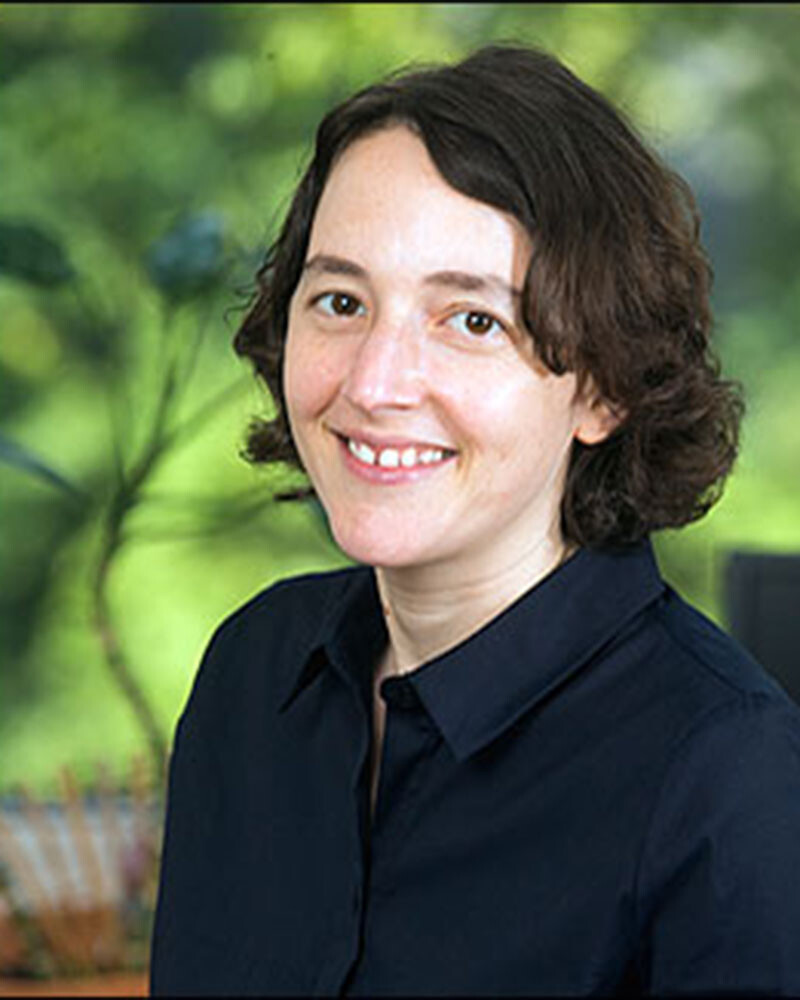
Sharon M Weiss is the Cornelius Vanderbilt Professor of Engineering and holds joint appointments in Electrical Engineering, Materials Science & Engineering, and Physics at Vanderbilt University's School of Engineering. She directs the Vanderbilt Institute of Nanoscale Science and Engineering. Her research focuses on light-matter interaction, silicon photonics, porous silicon biosensors, and nanotechnology. She earned a B.S., M.S., and Ph.D. in Optics from the University of Rochester. Her work spans advanced photonic crystal designs, ultra-sensitive biosensors, and radiation-tolerant optical components for aerospace applications. Recent projects include photonic metacrystals for high-Q cavities and porous silicon sensors for rapid diagnostics. She has pioneered integration of phase-change materials like VO₂ in silicon photonics for ultrafast optical switching. Publications emphasize subwavelength photonics, biosensing innovations, and space-qualified optoelectronics. Her lab develops hybrid waveguides, nanobeam cavities, and AI-enhanced sensing systems. Collaborations include NASA and industry partners for biomedical and defense applications.
Nathaniel Rosi is the Covestro Professor of Chemistry at the University of Pittsburgh's Dietrich School of Arts and Sciences, Department of Chemistry. His research focuses on designing and synthesizing new materials using chemical building blocks like metal clusters and biomolecules to create hierarchical structures with tailored properties for energy, medicine, and other applications. Research interests span inorganic and materials chemistry, metal-organic frameworks (MOFs), nanoparticle assembly, and sustainable energy materials. The Rosi Lab develops unifying design principles for organizing building blocks across multiple length scales, employing diverse synthetic methods and characterization techniques including NMR, TEM, X-ray diffraction, and sorption analysis. Scientific awards include: Chancellor's Distinguished Research Award (2014) Kavli Fellow (2012) ChemComm Emerging Investigator (2011) NSF CAREER Award (2010-2015) US Delegate for Transatlantic Frontiers of Chemistry Conference (2008) The Rosi Research Laboratory trains students in interdisciplinary approaches at the chemistry-biophysics interface and welcomes graduate students to explore its multi-disciplinary research environment.
Prof. Petra Rudolf is a Professor of Experimental Solid State Physics and Dean of Graduate Studies at the University of Groningen. She holds a PhD from the University of Namur (Belgium) and a MSc from the University of Rome "La Sapienza". Her research focuses on molecular motors/switches, 2D materials (graphene, transition metal dichalcogenides), organic thin films, and energy-related nanomaterials. She leads the Surfaces and Thin Films group at the Zernike Institute for Advanced Materials. Education: PhD in Physics (1995) from University of Namur MSc in Physics (1987) from University of Rome Research Interests: Design of functional surface architectures using molecular switches and motors Synthesis and characterization of 2D materials (graphene, MXenes) Development of nanomaterials for energy storage (lithium-sulfur batteries) and catalysis Electrochemical processes and surface functionalization techniques Recent Article Trends: Advances in organic solar cell efficiency via interlayer engineering Electrocatalytic strategies for sustainable chemical production Innovative 2D material synthesis methods (vapor phase, solvothermal) Self-healing materials and smart adhesives Awards: EU Descartes Prize (2007) for molecular machine research Member of Academia Europaea (2021) Fellowships: APS (2010), Institute of Physics (2001) Advising & Grants: Guided 35+ PhD students and 10 current advisees Leadership in European research networks and funding initiatives Labs/Teams: Surfaces and Thin Films Group at Zernike Institute Collaborations with Max Planck Institute, SOLARIS Synchrotron, and others
Andrea Walther is a Professor of Mathematical Optimization at the Humboldt University of Berlin, holding a position within the Faculty of Mathematics and Natural Sciences. She leads the Mathematical Optimization research group at the Institute of Mathematics, focusing on algorithmic differentiation, nonlinear optimization, and applied mathematics. Her academic journey includes a Diploma in Business Mathematics (1996, University of Bayreuth), a PhD (1999, TU Dresden), and habilitation (2008, TU Dresden). She has held roles such as Junior Professor at TU Dresden (2007–2008) and Professor at the University of Paderborn (2009–2019) before joining Humboldt in 2019 as a MATH+ Professor. Education : 1991–1996: Studies in Business Mathematics, University of Bayreuth 1996: Diploma in Business Mathematics, University of Bayreuth 1999: PhD in Mathematics, TU Dresden 2008: Habilitation, TU Dresden Her research interests center on optimization methods, particularly algorithmic differentiation (e.g., ADOL-C software), nonsmooth optimization, and applications in engineering and machine learning. She leads initiatives like the Cluster of Excellence MATH+ and contributes to projects such as the Transregio 154. Key Projects: Co-PI of DFG Project 'Mixed-integer non-smooth optimization for gas market problems' (2020–2022) Principal Investigator in MATH+ Projects (EF3-7, AA2-7) Co-developer of ADOL-C, a widely used tool for algorithmic differentiation Notable awards include being a SIAM Fellow. Her work bridges theoretical advancements and practical applications, with contributions to energy sector optimization, inverse problems, and computational frameworks for solving complex systems.
Eray S. Aydil is the Senior Vice Dean of the NYU Tandon School of Engineering and holds the Alstadt Lord Mark Professorship in Chemical and Biomolecular Engineering. He previously served as Executive Officer of the Department of Chemical Engineering and Materials Science at the University of Minnesota and held faculty roles at UC Santa Barbara. His research focuses on electronic/optoelectronic materials, plasma synthesis, and renewable energy technologies, particularly photovoltaics and solar cells. He earned his B.S. degrees in Chemical Engineering and Materials Science from UC Berkeley (1986) and his Ph.D. in Chemical Engineering from the University of Houston (1991). Affiliations: NYU Tandon School of Engineering, American Vacuum Society Fellow, Editor-in-Chief of Journal of Vacuum Science and Technology Education: UC Berkeley (B.S.), University of Houston (Ph.D.) Research interests include semiconductor synthesis for solar energy applications, plasma-assisted materials processing, and nanomaterials characterization. Key projects involve hybrid perovskite materials, pyrite solar cells, and plasma synthesis techniques. Recent work emphasizes lead-free perovskites, quantum cutting materials, and insulator-metal transition phenomena in nanocrystals. Over 200 publications highlight contributions to perovskite optoelectronics, nanocrystal networks, and photovoltaic materials. Awards include the Peter Mark Award and Plasma Prize from the American Vacuum Society. His lab explores energy-efficient materials, solar cell efficiency, and sustainable chemical processes.
Jan K. Rainey is a Professor in the Department of Biochemistry and Molecular Biology at Dalhousie University, with cross-appointments to the Department of Chemistry and School of Biomedical Engineering. He holds a B.Sc. (Biochemistry) from the University of Guelph, an M.Sc. and Ph.D. (Experimental Physical Chemistry) from the University of Toronto, and completed a postdoctoral fellowship in Protein NMR at the University of Alberta. Roles: Undergraduate Coordinator (2022–present), Member of the Protein Assembly Research Team, and BioActives CREATE Training Program. Research Focus: Structural biology of membrane and fibrous proteins, spider silk engineering, and ligand-receptor interactions (e.g., apelin/APJ system). Techniques: NMR spectroscopy (solution/solid-state), scanning probe microscopy, circular dichroism, fluorescence spectroscopy, and recombinant protein production. Current lab members include postdoctoral fellows, Ph.D. students, and undergraduate researchers. Key collaborations involve academic and industrial partners in biomaterials and biotechnology. Funding sources include NSERC, CIHR, and CFI.
Garrett McKay is an Assistant Professor in the Zachry Department of Civil and Environmental Engineering at Texas A&M University, holding the A.P. & Florence Wiley Career Development Professorship. His research focuses on aquatic chemistry, environmental redox reactions, and the characterization of dissolved organic matter (DOM). He leads the McKay Lab, which investigates DOM's role in contaminant remediation, photoreactivity, and environmental systems. His work bridges fundamental chemistry with engineering applications, such as PFAS treatment and wildfire-impacted watershed dynamics. Education: Ph.D., Civil & Environmental Engineering, University of Colorado Boulder (2017) M.S., Chemistry, California State University Long Beach (2013) B.A., Chemistry, California State University Long Beach (2011) Research Interests: His lab explores: Aquatic photochemistry and UV-advanced reduction processes for PFAS destruction Environmental fate of pyrogenic organic matter from wildfires Optical properties of DOM and brown carbon DOM reactivity with reactive species like hydrated electrons and singlet oxygen Scientific Contributions: Recent work includes developing optical surrogates for DOM characterization, evaluating pH-dependent photochemical processes, and advancing UV-ARP technologies for water treatment. His 2023 Super Reviewer Award highlights peer-review contributions. Advising & Grants: Current advisees include Kai Cheng (PhD), Benjamin Fennell, and Ahmad Beyhaqi. Active grants include NSF CAREER funding for chromophore behavior studies and collaborative work on pyrogenic organic matter. Labs & Teams: The McKay Lab collaborates with Texas A&M's College of Engineering and external institutions. Research outputs are tracked on Google Scholar and via Twitter @garrettjmckay.
Zoltán Harman is a Leading Scientist at the Max Planck Institute for Nuclear Physics (MPIK) in Heidelberg, Germany, and is affiliated with Heidelberg University. He conducts cutting-edge research in atomic physics, quantum electrodynamics, and precision measurements, particularly using highly charged ions and Penning trap techniques. He holds a habilitation in physics from Heidelberg University and regularly lectures there on advanced topics such as quantum electrodynamics and theoretical physics. Research Interests: Quantum Electrodynamics (QED) in strong fields Precision spectroscopy of highly charged ions g-factor measurements and tests of fundamental physics Development of atomic clocks using highly charged ions Determination of fundamental constants (e.g., electron mass, fine-structure constant) Searches for new physics beyond the Standard Model, including fifth forces Neutrino mass determination via Penning trap measurements His recent publications (2024–2025) focus on high-precision g-factor measurements in ions like tin and beryllium, two-loop QED calculations, King plot analyses for new boson searches, and neutrino mass studies. These works appear in top journals such as Nature , Physical Review Letters , and Science , reflecting his leadership in precision atomic physics. Scientific Awards and Grants: Postdoctoral scholarship from the Max Planck Society (2005–2007) EMMI Visiting Professor Scholarship (2012, 2013) Erasmus student scholarship (1999–2000) Primary investigator of the ISOQUANT Collaborative Research Centre (SFB1225) Teaching and Advising: Harman has been a regular lecturer at Heidelberg University since 2008, teaching courses in quantum electrodynamics, theoretical physics, and experimental physics. He co-organizes advanced lecture series and supervises student research projects, including poster sessions and talks. He is also a lecturer in the International Max Planck Research School on Quantum Dynamics. Research Group and Collaborations: Harman is a key member of the quantum dynamics group at MPIK, led by Prof. Christoph H. Keitel. His work involves close collaboration with experimental teams at MPIK, GSI, and Heidelberg University, combining theoretical and experimental efforts in precision physics. He is actively involved in major projects such as PENTATRAP and ALPHATRAP, which aim to push the limits of atomic and nuclear measurements.
Irina T. Sorokina is a Professor of Physics and the head of the Laser Physics Group at the Norwegian University of Science and Technology (NTNU). Her research focuses on ultrafast laser technology, nonlinear optics, and mid-infrared laser applications. She has pioneered advancements in solid-state lasers, femtosecond pulse generation, and mid-IR laser applications in sensing, materials processing, and quantum computing. Prof. Sorokina is a Fellow of the Optical Society of America (2006) and recipient of the IEE Snell Premium Award (2004). She co-founded ATLA Lasers AS, an NTNU spin-off company. Her research interests include femtosecond laser writing, mid-IR laser development, and applications in materials processing, spectroscopy, and quantum technologies. Recent work explores ultrafast laser modification of silicon and ZnS crystals, energy scaling of mid-IR oscillators, and dissipative soliton dynamics. Key contributions include advancements in chirped-pulse amplifiers, subsurface material processing, and frequency comb generation. Awards: Fellow of OSA (2006), IEE Snell Premium Award (2004) Lab/Group: Laser Physics Group at NTNU Spin-off: Co-founder of ATLA Lasers AS Publications emphasize mid-IR laser systems, ultrafast processing techniques, and interdisciplinary applications spanning from quantum sensors to industrial manufacturing.