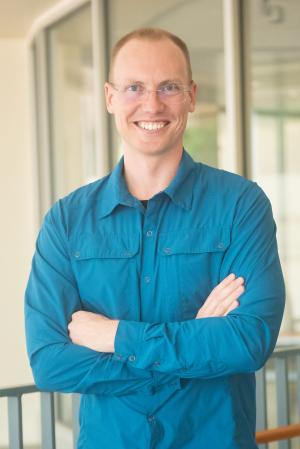
Debashis Chanda is a Professor at the University of Central Florida (UCF) with joint appointments in the NanoScience Technology Center (NSTC), Department of Physics, and the College of Optics and Photonics (CREOL). His research focuses on nanophotonics, plasmonics, and metamaterials, emphasizing high-throughput, low-cost fabrication techniques for optical nanostructures. Key achievements include developing energy-saving plasmonic paints and sensors for biomedical and environmental applications, recognized by the National Science Foundation and World Economic Forum. Chanda leads the Nano-Optics Group, mentoring over 15 graduate and undergraduate students in cutting-edge projects. His team explores light-matter interactions for applications in energy harvesting, optical sensors, and advanced displays. The group collaborates on innovations like angle-independent structural color coatings and tunable infrared detectors. Research Interests: Nanophotonics and plasmonics Metamaterials and structural coloration Infrared detection and sensing Bioinspired optoelectronics High-throughput nanofabrication Team & Students: Current advisees include Tianyi Guo and Mahdi Soudi. Notable alumni have advanced to roles at institutions like the University of Toronto and North Carolina State University, and industry leaders such as Intel and ASML. Labs & Facilities: The Nano-Optics Group operates in UCF’s NSTC and CREOL, leveraging state-of-the-art nanofabrication and characterization tools. Ongoing projects include smartphone-based sensors, adaptive camouflage systems, and sustainable plasmonic materials.
Dr. Steven J. Rehse is the Department Head and Professor in the Department of Physics at the University of Windsor, specializing in Experimental Biomedical Physics and AMO (Atomic, Molecular, Optical) Physics. His research focuses on laser-induced breakdown spectroscopy (LIBS) for rapid bacterial pathogen detection in clinical specimens such as blood, urine, and cerebrospinal fluid. He has led a prolific research group, mentoring over 20 graduate and undergraduate students, and has presented at international conferences including LIBS XIII, SciX, and the Canadian Association of Physicists (CAP) Congress. His work bridges physics, biomedicine, and chemistry, aiming to develop faster diagnostic tools for infectious diseases. Dr. Rehse holds a Ph.D. from Colorado State University and has held academic positions at the University of Western Ontario and Wayne State University. His awards include the Roger Thibert Teaching Excellence Award (2013) and multiple NSERC grants. His lab collaborates with medical professionals and industry, advancing LIBS applications in clinical settings. Recent projects include emission enhancement techniques using silver thin films and interdisciplinary outreach with pre-optometry students. Key achievements include developing LIBS protocols for urinary tract infections and bacterial meningitis diagnosis, with publications in Spectrochimica Acta, Applied Spectroscopy, and other journals. He advocates for undergraduate research through programs like the Outstanding Scholars initiative and has engaged the public via media appearances and science outreach events.
Hai-Lung Dai is Laura H. Carnell Professor of Chemistry at Temple University, pioneering nonlinear optical techniques for studying surfaces, nanoparticles, and biological membranes. His research develops second harmonic light scattering methods to quantify molecular transport across cell membranes, interactions of antimicrobials with pathogens, and electron dynamics in energy materials like porphyrin-TiO2 nanocomposites. Dai earned his PhD from UC Berkeley and conducted postdoctoral research at MIT. Honors include the Ellis Lippincott Award, Langmuir Lectureship, and knighthood from the Italian government. His work bridges fundamental spectroscopy with biomedical and energy applications.
Katherine (Kallie) Willets is a Professor in the Department of Chemistry at Temple University's College of Science and Technology. Her research investigates nanoscale heterogeneity in materials using plasmonic nanoparticles, spectroscopy, and microscopy techniques including super-resolution imaging, single-molecule fluorescence, and surface-enhanced Raman scattering (SERS). The Willets Lab studies how nanoscale variations impact optical, electronic, and chemical properties of materials. Her research interests focus on developing advanced microscopy techniques to probe interactions between light, nanomaterials, and molecules. Current projects examine plasmon-mediated processes, single-entity electrochemistry, and nanoscale chemical imaging. The lab combines optical spectroscopy with structural characterization methods like atomic force microscopy and electron microscopy. Dr. Willets received her B.A. in Chemistry from Dartmouth College (1999), Ph.D. from Stanford University (2005), and conducted postdoctoral research at Northwestern University (2005-2007). She has received numerous awards including the Department of Energy Early Career Award, Robert L. Smith Early Career Professorship, and Air Force Office of Scientific Research Young Investigator Award. She currently serves as Associate Editor for ACS Nano. Her educational outreach includes Buckets & Beakers (combining science with basketball), Adventures in Silver (high school chemistry workshops), and mentoring science fair projects. The lab maintains active collaborations and develops tools for nanoscale characterization.
Loredana Valenzano-Slough is an Associate Professor in the Department of Chemistry at Michigan Technological University. She earned her PhD from the University of Southampton (United Kingdom) in 2003 and her MSc from the University of Torino (Italy) in 2000. Prior to joining Michigan Tech as an Assistant Professor in 2012, she held positions as an Assistant Research Scientist at Michigan Tech (2010-2012), Postdoctoral Associate at the University of Torino (2005-2010), and Postdoctoral Fellow at the University of Leiden (2003-2005). Her educational background includes: PhD, University of Southampton, United Kingdom, 2003 MSc, University of Torino, Italy, 2000 Dr. Valenzano-Slough's research focuses on computational characterization of molecules and materials across diverse domains. Her work addresses fundamental questions about intermolecular interactions, molecular driving forces, and molecular reactivity at the electronic structure level. She investigates how thermodynamics and kinetics determine structural development of materials at the molecular level, with particular emphasis on understanding how materials' morphologies influence their physical-chemical properties. Her research spans energetic materials, nanoporous materials, cementing materials, active pharmaceutical ingredients, crystal growth, nucleation processes, surfaces, and the effects of defects and solvents on material properties. Her group actively explores questions about nucleation initiation, crystal growth mechanisms, and the possibility of tailoring crystalline morphologies. Analysis of her recent publications reveals a strong focus on metal-organic frameworks (MOFs) for gas storage and separation applications, computational studies of energetic materials like RDX, and investigations into the structural and mechanical properties of various crystalline materials. Her work often combines computational modeling with experimental validation, demonstrating expertise in quantum mechanical calculations and materials characterization. The research spans multiple disciplines including computational chemistry, materials science, and physical chemistry with applications in energy storage, sensing technologies, and pharmaceutical development. Dr. Valenzano-Slough has been actively involved in mentoring students, with several undergraduate and graduate students contributing to her research projects. Her group has produced work on topics ranging from fluorescent probes for chemical detection to computational studies of material properties under various conditions. She has established collaborations with researchers at UCLA and maintains an active research program supported by university resources. She has received funding support including a start-up package from Michigan Tech and the UCLA MSGC-NASA Pruett Scholarship. Dr. Valenzano-Slough has presented her research at numerous conferences including APS March Meetings, ACS Spring Meetings, and specialized workshops on shock compression of condensed matter. She serves as a reviewer for multiple prestigious journals including JACS, Journal of Physical Chemistry, and Dalton Transactions. Her research group maintains active collaborations, particularly with Dr. H. Liu at MTU and Dr. G. Sant at UCLA, focusing on computational chemistry applications to materials science problems. The group utilizes high-performance computing resources at Michigan Tech for their computational studies, with team members regularly working across campus in both ChemSci and Rekhi Hall.
ELEMÉR VASS is an Associate Professor at the Department of Organic Chemistry, Faculty of Science, Eötvös Loránd University (ELTE). He specializes in chiroptical spectroscopy, peptide and protein structure analysis, and metal complex characterization. His research employs vibrational circular dichroism (VCD), Raman optical activity (ROA), and UV-visible spectroscopy to investigate molecular structures and conformational properties. Professional Background: Born in 1965 in Târgu Mureș, Romania. Earned a Diploma in Chemical Engineering (1990) from Babeş-Bolyai University, Cluj-Napoca. Completed his Ph.D. in Chemistry at ELTE (1997, supervised by Dr. Ferenc Ruff). Served as a university assistant professor (1996–2001), then assistant professor (2001–2006), and has been an associate professor since 2006. Education: B.Sc./M.Sc., Babeş-Bolyai University (1985–1990) Ph.D., ELTE Doctoral School of Chemistry (1993–1996), TMB Scholar Research Focus: Investigates spatial structures of peptides/peptidomimetics using FTIR, CD, VCD, and ROA. Determines absolute configurations via VCD, studies transition metal complexes, and explores nucleophilic reactions of hypervalent sulfur compounds. Collaborates internationally with institutions in Lyon, Kyushu, Leuven, Bielefeld, and Warsaw. Teaching: Leads courses in Organic Spectroscopy (MSc Chemistry), Structural Analysis Instruments (MSc Chemistry), and Physical Organic Chemistry (PhD level). Manages laboratory practices in analytical chemistry and material structure testing. Recognition: Recipient of the 1997 Kisfaludy Lajos Foundation Award and the 2003 Bolyai Memorial (MTA). Has published 102+ peer-reviewed articles, with a focus on spectroscopic methods and structural biology. Grants & Collaborations: Holder of Bolyai scholarships (1999–2001, 2004–2005). Participated in DAAD-MÖB and MTA-PAS exchange programs. Research networks include universities in France, Japan, Belgium, and Poland. Labs/Teams: Active in the Department of Organic Chemistry’s spectroscopy research group, focusing on chiroptical methods and peptide chemistry.
Nikas Thomas is an External Instructor at the Department of Informatics (DI) of the National and Kapodistrian University of Athens (NKUA). His work spans multiple interdisciplinary areas including quantum cryptography, fiber optic sensing technologies, and seismic monitoring. Key roles include advancing secure communication protocols through quantum key distribution (QKD) and developing novel Li-Fi transceivers using perovskite photodiodes. He also pioneers applications of Distributed Acoustic Sensing (DAS) for urban earthquake monitoring in Athens, leveraging existing fiber-optic infrastructure for environmental and geophysical studies. His research bridges theoretical frameworks (e.g., phase transmission analysis) with practical implementations in optical communication systems and seismic detection. Research interests focus on: Secure optical communication systems leveraging quantum principles Fiber optic-based seismic and acoustic sensing Emerging Li-Fi technologies for high-speed wireless networks Phase-sensitive fiber optic analysis for geophysical applications Publications from 2022-2024 highlight trends in: Quantum security protocols for optical and radio-over-fiber systems Urban DAS applications for earthquake monitoring Microwave frequency interferometry for low-cost seismic sensors No scientific awards are explicitly listed in the provided materials. His work often involves collaborative projects with industry and academic partners, though specific grants are not detailed here. Current projects include optimizing DAS for real-time urban seismic networks and exploring novel modulation formats for secure optical transmission.
José Luis Chávez is a Professor in Civil and Environmental Engineering at Colorado State University. He specializes in irrigation engineering, water management, and remote sensing applications in agriculture. His academic career includes a B.S. from Universidade Federal da Paraiba (1992), an M.S. in Irrigation Engineering (Utah State University, 1999), and a Ph.D. in Biological and Agricultural Engineering (Utah State University, 2005). Dr. Chávez’s research focuses on optimizing irrigation practices through evapotranspiration (ET) modeling, remote sensing technologies, and precision irrigation strategies. He explores crop water use efficiency, soil moisture dynamics, and the integration of multispectral imaging for irrigation scheduling. His work bridges hydrology, agronomy, and engineering to address water scarcity challenges in agricultural systems. Key contributions include advancing SEBAL-A algorithms for ET estimation under advective conditions, developing crop coefficient models using remote sensing, and improving irrigation management techniques in semi-arid regions. He teaches courses on irrigation systems design, water management, and drainage engineering. His professional affiliations include the American Society of Civil Engineers and the U.S. Commission on Irrigation and Drainage. While no awards are explicitly mentioned, his extensive publications reflect significant contributions to agricultural water management and remote sensing science.
Hani Kbashi is a Researcher at Aston University's School of Computer Science and Digital Technologies, affiliated with the Aston Institute of Photonic Technologies (AiPT). His primary affiliations include the College of Engineering and Physical Sciences. His research focuses on advanced photonics, fiber lasers, and optical communications, with notable contributions to dual-comb lasers, rogue wave dynamics, and 5G-enabled photonic systems. Key research areas include polarization multiplexing, vector soliton phenomena, and high-stability laser systems for applications in lidar, spectroscopy, and wireless communication. His work frequently addresses challenges in multi-wavelength generation, phase stability, and nonlinear dynamics within fiber laser cavities. Collaborative efforts span academic and industrial partners, emphasizing translational research in photonic technologies. His publications (45+ outputs) reflect deep expertise in fiber laser design, optical sensor development, and next-generation communication systems. He holds an ORCID identifier: 0000-0002-6343-248X . Labs and initiatives include the Aston Institute of Photonic Technologies (AiPT), where he contributes to cutting-edge photonic device fabrication and testing. His research trends prioritize scalability, stability, and integration of photonic solutions into real-world systems.
Dr. Isaac Pence is an Assistant Professor at UT Southwestern Medical Center's Department of Biomedical Engineering, with secondary appointments in Internal Medicine and the Charles and Jane Pak Center for Mineral Metabolism. He also holds an Adjunct Assistant Professor role at UT Dallas' Bioengineering Department. His research focuses on developing optical tools for non-invasive disease characterization and therapeutic monitoring, integrating biophotonics, computational analysis, and clinical medicine. Dr. Pence's work includes advancements in Raman spectroscopy for drug distribution analysis, tissue engineering, and cryoneurolysis devices for pain management. He completed his PhD at Vanderbilt University and postdoctoral training at Imperial College London and Harvard Medical School. Research interests span label-free quantitative tissue mapping, translational biophotonics, and biomarker heterogeneity analysis. His lab develops clinical instruments such as portable Raman systems for in vivo imaging and theranostic platforms. Recent work addresses pelvic organ prolapse via ECM composition analysis and cryotherapy device innovation. Collaborations include UT Dallas and the Texas Instruments Biomedical Engineering and Sciences Building. Key projects include Raman-guided surgical tools, nanocarrier design, and extracellular vesicle biomarker detection. His contributions have led to funded grants and patents, though specific award names are not listed. The Pence lab actively trains graduate students and postdocs in biophotonics and biomedical engineering.
Dr. Zacharakis Giannis is a Research Professor and Research Director at the Institute of Electronic Structure and Laser (IESL) of the Foundation for Research and Technology (FORTH). He heads the Laboratory for Biophotonics and Molecular Imaging, focusing on developing advanced imaging technologies for biomedical and cultural heritage applications. He served as Vice President and President of the European Society for Molecular Imaging (ESMI) and holds leadership roles at FORTH. Education: BSc in Physics (1997), PhD in Biomedical Imaging (2002), both from the University of Crete. Postdoctoral Research Fellow at Harvard University (2003-2004). Research Interests: Biophotonics, optoacoustic imaging, biomedical optics, and non-invasive diagnostic tools. His work spans label-free imaging techniques, hybrid microscopy systems, and applications in healthcare, art conservation, and plant biology. Key Achievements: Over 60 peer-reviewed journal articles, 48 conference papers, 2 book chapters, 2 patents, and an h-index of 19 (Google Scholar). Awards include 3 first prizes at international conferences and 20+ invited talks globally. Labs & Groups: Leads the Biophotonics and Molecular Imaging Lab at FORTH-IESL, collaborating on projects like optical projection tomography, adaptive light-sheet microscopy, and optoacoustic technologies for cultural heritage diagnostics.
Dr. Keith Hudson is a Professor of Chemistry at the University of Arkansas at Little Rock (UALR), holding dual roles as Director of the Arkansas Space Grant Consortium and NASA/EPSCoR Programs since 1997. He has also served as Associate Vice Provost for Research (2013-2014), Director of the Graduate Institute of Technology (1999-2014), and Assistant Dean for Research and Graduate Programs in the College of Science and Engineering Technology (1997-1999). His research focuses on rocket and combustion science, spectroscopy, and instrumentation development, with particular emphasis on hybrid rocket propulsion, thermal decomposition analysis, and nanomaterial applications in biomedical contexts. Education: PhD in Analytical Chemistry (Baylor University), MS in Chemistry (Sam Houston State University), and BS in Chemistry with a Biology minor (East TX Baptist College). His work has led to over 60 peer-reviewed publications, with recent contributions in combustion diagnostics, nanomaterials in agriculture, and cancer therapy via thermotherapy. He has been recognized with the Frank G. Brewer Aerospace Excellence Award (2010, 2016, 2017), CAP Lifetime Achievement in Aerospace Education, and UALR Research Awards (1993, 1994). Dr. Hudson has mentored numerous students through NASA, DOE/EPSCoR, and Arkansas Space Grant programs, including advisees like Bob Shanks, Katherine Kirtley, and Diana Lindquist. His laboratories specialize in advanced spectroscopic techniques, combustion chamber diagnostics, and nanotechnology for biomedical and agricultural applications. Key research trends include hybrid rocket fuel additives (e.g., GAT), thermal stability studies of HTPB, and nanomaterial interactions with biological systems. His publications bridge analytical chemistry, aerospace engineering, and materials science, with interdisciplinary applications in energy and health sectors.
Dr Tom Robinson serves as a Lecturer in Chemical Engineering within the School of Engineering at the University of Edinburgh, specializing in the Bioengineering Research Institute. His interdisciplinary work bridges synthetic biology, membrane biophysics, and microfluidics to engineer biomimetic systems. His core research focuses on: Bottom-up Synthetic Biology : Constructing artificial eukaryotic cells with multi-compartment structures using droplet microfluidics and giant lipid vesicles (GUVs) to enable enzymatic cascades for biofuel production and drug delivery applications. Lipid Membrane Engineering : Developing model membrane systems (GUVs and nano-vesicles) to isolate and study membrane properties like permeability, fusion dynamics, and ligand interactions without cellular interference. Advanced Microfluidics : Designing novel microfluidic platforms for single-cell analysis (cancer cells, magnetotactic bacteria), high-throughput vesicle production, and precision manipulation of biomimetic structures. Analysis of Dr Robinson's 55+ publications reveals dominant trends in biomimetic membrane systems (42%), synthetic cell engineering (31%), and microfluidic device innovation (27%). His work increasingly integrates multi-omics approaches with physical manipulation techniques, particularly evident in recent studies on magnetotactic bacteria navigation and phase-separated synthetic cells. The research demonstrates strong translational potential in drug delivery and environmental microbiology. The Robinson Lab employs cutting-edge microscopy including FLIM, confocal, multiphoton, and high-speed imaging to characterize membrane dynamics and cellular interactions. Current projects focus on ESCRT-III protein-mediated vesicle remodeling, magnetic field effects on bacterial motion, and polymerizable emulsion systems for optical applications. The lab maintains active collaborations across bioengineering, microbiology, and materials science disciplines, with significant contributions to the MaxSynBio consortium for bottom-up cell synthesis.
Jon Heffernan is a Professor in Electrical Engineering at the University of Sheffield and Director of the EPSRC National Epitaxy Facility. He holds a PhD in Physics from Trinity College Dublin (1994) and a BSc in Physics from University College Cork. His career spans 17 years in industrial research at Sharp Corporation, where he led advancements in optical storage (CD/DVD/Blu-ray), LED technologies, and record-breaking solar cells. Currently, his research focuses on quantum science and technology, particularly semiconductor quantum dots for quantum communication and photonics manufacturing. He is Deputy Director of the Future Photonics Manufacturing Hub with the University of Southampton. Research Interests: Quantum dot epitaxy, molecular beam epitaxy (MBE), semiconductor nanostructures, nitride-based semiconductors, and photonic integration. His work bridges fundamental quantum science with applied photonics and optoelectronic device development. Advising & Collaborations: Supervises current PhD students including Godsland, Young, and Wang. His industrial experience and academic roles position him at the forefront of semiconductor innovation. Collaborations include the National Epitaxy Facility and the Future Photonics Hub, advancing quantum photonics and manufacturing. Labs & Teams: Leads the National Epitaxy Facility for advanced semiconductor growth and contributes to the Future Photonics Manufacturing Hub, driving photonics integration and mid-IR technologies.
Dr. Matt Sheldon is an Associate Professor in the Department of Chemistry at the University of California, Irvine. His research focuses on optical energy conversion in nanoscale materials, particularly plasmonic and inorganic systems. Key areas include nanophotonics, nanomaterials, and applications in solar energy and photonic technologies. He leads the Sheldon Group, which explores topics like plasmon dynamics, perovskite nanocrystals, and vibrational strong coupling. Sheldon has secured significant funding from organizations like the National Science Foundation (NSF) and the Air Force Office of Scientific Research (YIP Award). His lab has trained numerous graduate and undergraduate students, emphasizing interdisciplinary approaches to energy and materials science. Notable achievements include pioneering work on light-induced magnetism in plasmonic nanoparticles and innovative studies on optical cooling using perovskite nanocrystals. Education & Background While specific educational details are not listed, his academic trajectory aligns with a career in physical chemistry and nanotechnology, given his research focus and faculty position. His group collaborates with institutions like Texas A&M University and Foothold Labs, reflecting a network of academic and industrial partnerships. Research Interests Optical energy conversion mechanisms in plasmonic systems Thermally activated single-photon up-conversion in perovskites Plasmoelectric effect for power conversion Vibrational strong coupling's impact on chemical reactions Surface polaron states in nanomaterials Optical refrigeration with perovskite nanocrystals Funding & Awards Sheldon has been awarded grants from NSF (CHE-1359175, DMR-2004810, etc.), the Welch Foundation (A-1886), and the Gordon and Betty Moore Foundation (GBMF6882). His 2016 Young Investigator Program (YIP) Award highlights recognition of his early-career contributions to plasmonics and nanophotonics. Lab & Collaborations The Sheldon Group operates at the intersection of chemistry and physics, hosting graduate students, postdoctoral researchers, and undergraduates. Current members include Ph.D. candidates like Boqin Zhao and Ju Eun Yim. Alumni have transitioned to academic and industry roles, reflecting the group's emphasis on training future leaders in nanotechnology.