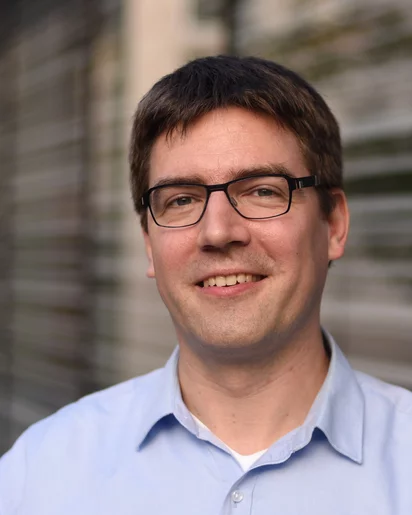
Vishal Choudhury is a Research Fellow at the Max Planck Institute for the Science of Light (MPL), focusing on advanced optical technologies and nonlinear phenomena in fiber lasers. His work contributes to the development of high-power lasers, supercontinuum generation, and optical feedback systems. He is affiliated with the MPL’s core research areas in nonlinear optics, quantum optics, and photonics technology. Choudhury’s research explores cutting-edge applications such as Fourier spectral shapers for laser wavelength control, computational ellipsometry for material characterization, and the mitigation of stimulated Brillouin scattering effects in fiber systems. His studies bridge fundamental optical physics with practical advancements in laser engineering and high-power light sources. His publications emphasize innovations in cascaded Raman lasers, broadband supercontinuum generation, and the optimization of fiber laser performance. Choudhury’s contributions highlight advancements in spectral shaping, polarization maintenance, and the integration of distributed feedback mechanisms to enhance laser stability and tunability.
Joel Villatoro is an Ikerbasque Research Professor at the Faculty of Engineering, University of the Basque Country (UPV/EHU), specializing in applied photonics and optical fiber sensor technology. He holds M.Sc. and Ph.D. degrees in Optics from the National Institute for Astrophysics, Optics, and Electronics (Mexico, 1995 and 1999). His research focuses on interferometric sensors, biomedical applications, and advanced optical fiber technologies, with notable contributions to multicore and photonic-crystal fiber sensors. He has held positions at institutions such as ICFO (Spain), Aston Institute (UK), and Case Western Reserve University (USA). Education: M.Sc. in Optics, National Institute for Astrophysics, Optics, and Electronics, Mexico (1995) Ph.D. in Optics, National Institute for Astrophysics, Optics, and Electronics, Mexico (1999) Research Interests: Interferometric sensors, real-world environmental monitoring, micro/nano-biosensors, and fiber-optic sensor integration into industrial systems. His work emphasizes practical applications in aerospace, healthcare, and environmental sectors. Key Contributions: Over 130 publications, 6 patents, and 2,500+ citations. His research bridges fundamental photonics with industrial applications, including sensor fabrication, multiparameter sensing, and additive manufacturing of embedded sensors. Labs/Teams: Leads the Applied Photonics Group at UPV/EHU, focusing on prototyping and real-world sensor deployment.
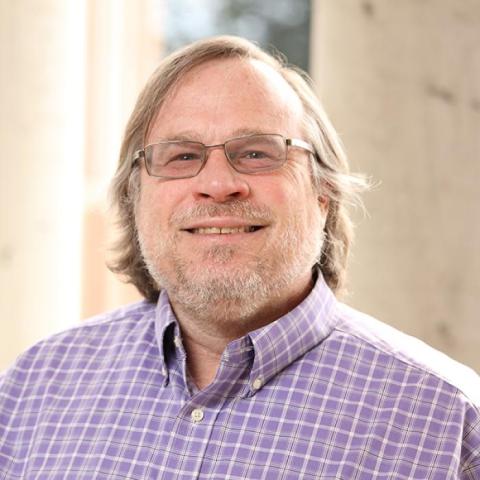
Kevin K. Lehmann is the William R. Kenan, Jr., Professor of Chemistry at the University of Virginia, within the Department of Chemistry in the College of Arts & Sciences. He is a leading researcher in molecular spectroscopy, with a focus on ultrasensitive detection methods such as cavity ring-down spectroscopy (CRDS) and double-resonance techniques. His educational background includes a B.S. from Cook College, Rutgers University (1977), a Ph.D. from Harvard University (1983), and a Junior Fellowship at the Harvard Society of Fellows. Lehmann's research is centered on advancing trace gas sensing using optical methods, particularly CRDS with high-reflectivity cavities and telecom-grade lasers. His group has pioneered Doppler-free two-photon CRDS and sub-Doppler double-resonance spectroscopy using frequency combs, enabling high-precision measurement of molecular transitions in gases like methane and nitrous oxide. These methods have applications in atmospheric science, planetary exploration (e.g., Mars missions), and combustion diagnostics. He also investigates meta-science questions around the reproducibility of spectroscopic data. The recent publications highlight a strong trend in high-resolution, quantum-limited spectroscopic techniques applied to small polyatomic molecules. There is a clear focus on enhancing selectivity and sensitivity through nonlinear optical effects, cavity enhancement, and advanced detection schemes. Applications span environmental monitoring, astrochemistry, and fundamental molecular physics. Fellow of the Optical Society, 2011 W.R. Kenan Professor of Chemistry, 2009 Earle K. Plyler Award in Molecular Spectroscopy, 2003 Thomas A. Edison Patent Award, 2002 Fellow of the American Physical Society, 1995 Lehmann has advised numerous graduate students and postdoctoral researchers, and his lab has been supported by grants from agencies involved in space exploration, environmental science, and fundamental physics. His work has led to commercial instrumentation through Tiger Optics, Inc. He maintains strong international collaborations, particularly with researchers in Sweden on methane spectroscopy. While specific grant details are not listed, the scope and impact of his research suggest sustained funding from NSF, NASA, and DOE. His laboratory focuses on optical cavity-based sensors and high-resolution spectroscopy setups, integrating frequency combs, narrow-linewidth lasers, and cryogenic pre-concentration systems for trace analysis. The team combines experimental innovation with theoretical modeling to interpret complex spectra and improve measurement fidelity.
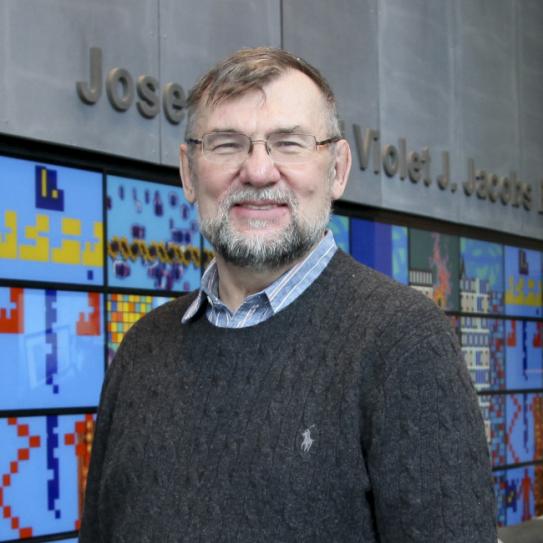
Prof. Helge Stein is a Professor in the Department of Chemistry at the Technical University of Munich (TUM), leading the Professorship for Digital Catalysis. He holds a doctorate in mechanical engineering from Ruhr University Bochum (summa cum laude) and conducted postdoctoral research at Caltech before joining TUM in 2023. His research focuses on accelerating materials discovery and optimization through digital tools like machine learning, robotics, and data management, with applications in catalysis and battery systems. Stein has pioneered the development of Materials Acceleration Platforms (MAPs) to streamline experimental and computational workflows globally. Education: Bachelor/Master in Physics, Georg August University of Göttingen (2008–2013) Doctorate in Mechanical Engineering, Ruhr University Bochum (2017, summa cum laude) Postdoc, California Institute of Technology (2017–2020) Tenure-track Professor, Karlsruhe Institute of Technology (2020–2023) Research Interests: Integration of robotics and AI in materials research High-throughput experimentation for battery and catalysis systems Data-driven approaches to nonlinear material-behavior analysis Development of decentralized Materials Acceleration Platforms (MAPs) Key Awards: ACS Engineering Au Rising Star (2023) Kit Innovation Award (2023) Masao Horiba Award (2021) Eickhoff Prize (2018) Teaching: Leads courses on high-throughput methods, data management in chemistry, and digital catalysis seminars. Collaborates with interdisciplinary teams across TUM's School of Natural Sciences and the Munich Institute of Robotics and Machine Intelligence. Labs/Teams: Directs research groups focused on automated electrochemistry, materials robotics, and AI-driven battery design, with partnerships spanning academia and industry for global MAP implementations.
Xifan Wu is a Professor of Physics at Temple University, specializing in computational methods and materials science. His research focuses on first-principles computational approaches, particularly exploring the locality of Wannier orbitals to address physical problems in solids and liquids. Key interests include superlattice design and applications of order-N exact exchange functionals like PBE0 and GW quasi-particle approximations. He has authored numerous high-impact publications in journals such as Physical Review Letters and Physical Review B , covering topics like ferroelectric superlattices, X-ray absorption spectroscopy, and the dielectric properties of electrolyte solutions. His work bridges quantum mechanical models with machine learning potentials, advancing large-scale simulations of complex materials. Education/Background: Not explicitly detailed in the provided text. Grants/Awards: No specific awards listed, but his research is supported by Temple University’s Center for the Computational Design of Functional Layered Materials (CCDM). Labs/Teams: Collaborates with teams focused on computational design and materials modeling, possibly through Temple’s physics department and affiliated research centers. His recent work explores molecular-scale insights into electrical double layers at oxide-electrolyte interfaces and the impact of ions on X-ray spectra, demonstrating expertise in linking theoretical models with experimental phenomena.
Valery Sheverev is an Industry Professor in the Department of Applied Physics at New York University's Tandon School of Engineering. He specializes in plasma physics, optics, and spectroscopy with applications spanning from environmental monitoring to pharmaceutical diagnostics. Education: PhD in Physics (Plasma Physics and Chemistry) from Saint-Petersburg State University, 1985 B.S./M.S. in Physics (Optics and Spectroscopy) from Saint-Petersburg State University, 1979 Research Focus: Dr. Sheverev's research encompasses several interconnected domains including optics and spectroscopy , particularly in the context of glow discharge plasma and its diverse applications. His work on micro-optical sensing has led to innovative sensor technologies, while his investigations into plasma aerodynamics bridge fundamental physics with practical aerospace applications. Additionally, his expertise in lighting technology and diagnostics of multiphase flows serves critical needs in pharmaceutical applications and environmental monitoring systems. Publications & Innovation: Over the past decade, Dr. Sheverev has published extensively in peer-reviewed journals, with his research appearing in prestigious venues such as Journal of Applied Physics , Physical Review E , and Analytical Chemistry . His work demonstrates a consistent focus on advancing understanding in plasma physics applications, particularly in atmospheric glow discharge phenomena, acoustic-plasma interactions, and novel diagnostic techniques. The temporal distribution of his publications (2002-2010) reveals sustained productivity in plasma spectroscopy, micro-optical sensors, and environmental gas analysis. Patents & Commercial Impact: Dr. Sheverev holds multiple US patents that translate his research into practical technologies: Gas Detection and Identification Apparatus (Patent No. 7,408,360, 2008) Micro-optical wall shear stress sensor (Patent No. 7,701,586, 2010) Shear stress measurement apparatus (Patent No. 7,770,463, 2010) Load cell system for measuring forces based on optical spectra shifts (Patent No. 8,276,463, 2011) Contact Information: Email: sheverev@nyu.edu Phone: 646.997.3576 Office: 2MTC, Room 1002, NYU Tandon School of Engineering
Prof. Dr. Nadine Buczek serves as Professor of Renewable Energies, Nanotechnology and Photonics at the Department of Applied Natural Sciences, Lübeck University of Applied Sciences (TH Lübeck), a position she has held since 2017. She leads the Energy Materials Laboratory and maintains active affiliations with the Climate and Environmental Protection Group, Materials for Storage and Renewable Energy Systems, and Photovoltaics Group. Her research centers on physical principles of renewable energy systems and photonics, with core expertise in solar technology, thermoelectrics, and nanoscale material engineering. She investigates spin wave phenomena in disordered magnetic materials and develops advanced fabrication techniques for silicon nanowires and superlattices using metal-assisted chemical etching, with applications in sustainable energy conversion and storage. Analysis of her 15 most recent publications (2012-2022) reveals consistent focus on condensed matter physics and nanomaterial engineering. Key trends include theoretical modeling of spin dynamics in alloys, structural characterization of etched semiconductor nanostructures, and optimization of nanofabrication processes for renewable energy applications. Her work bridges experimental nanotechnology with computational physics, primarily targeting semiconductor-based energy solutions. The Energy Materials Laboratory under her direction drives interdisciplinary research in photovoltaics and thermoelectric materials, collaborating closely with the Materials for Storage and Renewable Energy Systems group. Current projects emphasize scalable nanofabrication methods and fundamental studies of charge transport in nanostructured materials to advance next-generation renewable energy technologies.
Roland Ketzmerick is a Professor of Computational Physics at Technische Universität Dresden since 2002, with a Max Planck Fellow position at the Max Planck Institute for the Physics of Complex Systems (2010–2020). He was spokesperson for the DFG Forschergruppe FOR760 on Scattering Systems with Complex Dynamics (2010–2013). His research focuses on quantum chaos in mixed systems, power-law trapping in Hamiltonian systems, Floquet systems , Hamiltonian ratchets , mesoscopic physics , fractal spectra , and Bloch electrons in magnetic fields . His work bridges classical and quantum dynamics, exploring tunneling, wavefunction statistics, and nonequilibrium phenomena. His publications demonstrate a strong emphasis on chaotic resonance states , dynamical tunneling , multifractal analysis , and quantum transport in complex systems. Recent articles (2022–2025) address dielectric cavities, ultracold atom entanglement, and 4D Hamiltonian structures. Scientific Awards : Otto-Klung-Prize (1999)
Igor Di Marco is a Researcher at Uppsala University's Department of Physics and Astronomy, specializing in Materials Theory. He has maintained continuous research activity at Uppsala since 2009, initially as a postdoctoral fellow and subsequently as a researcher, with a temporary leave in 2017 to lead a group at the Asia-Pacific Center for Theoretical Physics in South Korea. Dr. Di Marco earned his PhD in condensed matter theory from Radboud University of Nijmegen in 2009. His academic trajectory has focused on computational approaches to understanding complex quantum materials, particularly those exhibiting strong electron correlations. His research centers on computational physics and condensed matter theory , with emphasis on developing methods to determine electronic and magnetic properties of strongly correlated materials . Dr. Di Marco is one of the principal developers of the all-electron DFT code RSPt (a Sweden-USA-France collaboration), which utilizes the full-potential linearized muffin-tin orbitals method. His expertise spans density-functional theory (DFT) , dynamical mean-field theory (DMFT) , and their integration (DFT+DMFT). Current research extends to X-ray absorption spectroscopy (XAS) and resonant inelastic X-ray scattering (RIXS) . Analysis of his recent publications reveals a consistent focus on electronic correlations in quantum materials, particularly in kagome metals, van der Waals magnets, and complex alloys. His work bridges theoretical method development with practical materials applications, frequently examining magnetic properties and electronic structure calculations across diverse material systems. Dr. Di Marco has made significant contributions to computational methodologies for strongly correlated electron systems, including the development of the DFT+DMFT framework within RSPt featuring full self-consistency over electron density and self-energy. His research projects have addressed magnetic properties of transition metals, excitation spectra of metal oxides, theoretical frameworks for lanthanides, and prediction of novel 2D materials.
Dr. Emanuele Marino is a Researcher in the Department of Physics and Chemistry at the University of Palermo , affiliated with the School of Basic and Applied Sciences . His work bridges quantum physics and nanotechnology, focusing on nanocrystal superparticles, photonic materials, and fluctuation-driven assembly processes. Current research areas include quantum dot lasing, Casimir effects, and 3D nanoparticle superlattices Teaches courses like Modern Physics Laboratory (2024, School of Basic and Applied Sciences) and Physics II (Polytechnic School) Recent publications highlight trends in: Tunable photonic properties via nanocrystal emulsion systems Quantum-excitonic coupling in heterostructures Critical Casimir forces for nanoparticle control Dynamic phase transformations in colloidal superlattices Microlaser fabrication and chirality engineering Based in the Emilio Segrè Physics and Chemistry Department , he conducts experimental and theoretical studies from nanoscale fabrication to quantum optical phenomena.
Dr. Callum Atkinson is a Senior Lecturer in Mechanical & Aerospace Engineering at Monash University, specializing in turbulent flow dynamics and experimental fluid mechanics. His research focuses on understanding and controlling turbulent shear flows in pipes, boundary layers, jets, and rocket engines, combining high-fidelity numerical simulations with advanced optical diagnostics like holographic PIV and tomographic techniques. He has developed novel methodologies for 3D velocity and density measurements, contributing to drag reduction studies, heat transfer analysis, and flow control in aerospace and mechanical systems. His work addresses UN Sustainable Development Goals related to energy efficiency and sustainable transport. Current roles include leading collaborative projects on adverse pressure gradient boundary layers and flow mixing, and he actively participates in peer review for journals like Journal of Fluid Mechanics and Physics of Fluids . He supervises PhD students in topics such as hybrid rocket engine optimization and turbulence modeling, leveraging Monash's engineering research infrastructure. Notable contributions include one of the world's largest adverse pressure gradient simulations and pioneering volumetric flow visualization techniques. His experimental toolkit includes laser diagnostics, tomographic PIV, and background-oriented schlieren systems. Recent work has explored superhydrophobic surface drag reduction, thermal jet behavior, and the dynamics of high-speed jet flows. He maintains a strong focus on bridging experimental and computational fluid dynamics to advance fundamental understanding and industrial applications.
Ewan Dolier is a Research Fellow in the Department of Physics at the University of Strathclyde, Faculty of Science. He is actively involved in cutting-edge research on laser-driven ion acceleration and plasma physics, working within the SCAPA (Scottish Centre for the Application of Plasma-based Accelerators) facility. His work bridges experimental physics and machine learning techniques to optimize and diagnose high-energy particle beams. His research interests include: Laser-Plasma Interactions Machine Learning for Physics Optimization Proton and Ion Beam Acceleration Synthetic Diagnostics using Neural Networks High Repetition Rate Laser Systems Relativistic Transparency Regime Physics The recent trend in his publications shows a strong focus on integrating artificial intelligence and deep learning models into the control and analysis of laser-driven particle acceleration experiments. His work spans experimental design, data-driven optimization, and advanced diagnostics using scintillating fiber spectrometers and synthetic models. His scientific contributions have been presented at major plasma physics conferences and published in high-impact journals such as Communications Physics and High Power Laser Science and Engineering . Notable projects include: External Experiment at the Gemini High-Power Laser Facility (Deep Learning for Ion Acceleration) Development of High Repetition-Rate Target Systems at SCAPA Doctoral Training Partnership research (2019–2024) He collaborates extensively with leading researchers such as Paul McKenna and Ross Gray, and contributes to multi-investigator datasets and simulations. Ewan Dolier completed his PhD in 2024 with a thesis on advancing laser-driven ion acceleration using machine learning and instability analysis.
Mingda Li is an Associate Professor in the Department of Nuclear Science and Engineering at the Massachusetts Institute of Technology (MIT), holding the Class of 1947 Career Development Professorship. His research spans quantum materials, nanoscale energy transport, and AI-driven materials discovery, utilizing neutron/X-ray scattering techniques and machine learning to address challenges in quantum computing, thermal management, and energy conversion. He leads the Quantum Measurement Group and teaches graduate courses including Quantum Theory of Materials Characterization. Education: Bachelor of Science in Engineering Physics, Tsinghua University, 2009 Doctor of Philosophy in Nuclear Science and Engineering, MIT, 2015 Postdoctoral Research, MIT Mechanical Engineering Department Research Interests: Dr. Li's quantum research develops theoretical frameworks for topological order and defect-engineered quantum materials, with applications in microelectronics and quantum computing. His energy transport studies investigate phonon/electron dynamics at interfaces under non-equilibrium conditions to design materials for thermal management in electronics. The AI program creates symmetry-aware generative models that integrate ab initio calculations with experimental data, enabling closed-loop materials discovery for quantum and energy technologies. Publication Trends: Analysis of 15 recent 2025 publications reveals dominant themes in quantum materials (topological semimetals, 2D magnets), AI-driven design (generative models, symmetry-equivariant networks), and advanced characterization (neutron/X-ray spectroscopy). Key innovations include defect engineering for thermal transport, machine learning for spectroscopic data interpretation, and quantum phenomenon discovery in complex materials, reflecting strong interdisciplinary integration. Scientific Awards: No scientific awards were mentioned in the provided text. Advising and Grants: Dr. Li mentors graduate students in the Quantum Measurement Group, guiding research in quantum materials characterization and AI applications. He has taught core courses including Applied Nuclear Physics and Machine Learning in Nuclear Science and Engineering. His research is supported by grants focused on quantum engineering and nuclear materials, with collaborations spanning national laboratories and industry partners for quantum computing and energy applications. Labs and Teams: The Quantum Measurement Group operates at the intersection of experimental physics and computational science, utilizing neutron scattering facilities (including Spallation Neutron Source) and ultrafast X-ray techniques. The team develops custom software for data analysis and collaborates with institutions like MIT.nano for materials synthesis, maintaining a pipeline from theoretical prediction to device-level validation for quantum and thermoelectric materials.
Dr. Cornelius Hempel is a Research Fellow at the Paul Scherrer Institute (PSI) in Switzerland, leading the Ion Trap Quantum Computation group at the PSI Quantum Computing Hub since April 2021. He previously served as a Principal Investigator at the University of Sydney's Quantum Control Laboratory and was promoted to Senior Research Fellow in 2020. His academic training includes physics studies at Martin Luther University and the University of Michigan, followed by a PhD at the University of Innsbruck under Prof. Rainer Blatt and Dr. Christian Roos. Key Affiliations: Paul Scherrer Institute (PSI) – Group Head, Ion Trap Quantum Computing University of Sydney – Senior Research Fellow, Quantum Control Laboratory Institut for Quantum Optics and Quantum Information (IQOQI) – Postdoctoral Researcher Research Focus: Hempel specializes in quantum computing using trapped ion systems , with emphasis on analog quantum simulation, error correction, and laser-based quantum control. His work bridges quantum information science and chemical dynamics , enabling quantum simulations of molecular processes. Publications Trends: Recent articles highlight advancements in trapped ion quantum computing, including 3D laser fabrication of ion traps, geometric phase interference studies, and software tools for error suppression. His work combines quantum simulation , quantum control , and quantum chemistry to enhance quantum hardware capabilities. Laboratory Leadership: Hempel leads the Ion Trap Quantum Computation group at the PSI Quantum Computing Hub , focusing on scalable quantum systems and practical implementations of quantum algorithms.
Christophe Bailly is the Director of the Laboratory of Fluid Mechanics and Acoustics (LMFA UMR5509) and a Professor at École Centrale de Lyon, France. His career spans academic roles at École Centrale Paris (1995-2006) and École Nationale Supérieure des Techniques Avancées (2001-2020), alongside membership in the Institut Universitaire de France since 2007. He specializes in turbulence, aeroacoustics, sound propagation, and high-resolution numerical methods. His research focuses on jet noise , ducted flow acoustics , and advanced diagnostic techniques like Interferometric Rayleigh Scattering. He has co-authored over 120 peer-reviewed articles and a textbook on turbulence with Geneviève Comte-Bellot. Notable scientific awards include the Yves Rocard Prize (1996), Alexandre Joannidès Prize (2001), Air & Space Academy Medal (2016), CEAS Aeroacoustics Award (2020), and the French Medal (2023). He serves as Associate Editor for the AIAA Journal and Advisory Editor for Flow, Turbulence and Combustion .