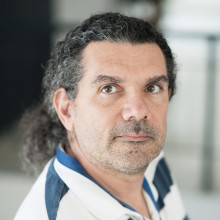
Georgios Keramidas is an Assistant Professor in Computer Architecture at the Department of Informatics, Aristotle University of Thessaloniki . He also holds an Adjunct Professor position at the Hellenic Open University and collaborates with institutions like the University of Peloponnese and University of Patras . Research Interests : Computer Architecture, Memory Systems, Multicore/GPU Design, Low-Power Techniques, Fault-Tolerant Systems His work focuses on cache optimization , energy-efficient computing , and security-aware memory design . Key contributions include DVFS frameworks , reuse-distance prediction , and non-deterministic cache mechanisms . Recent article trends highlight innovations in computation-in-memory , IoT platform components , and security/low-power co-design . Patents on image compression and GPU optimization reflect practical applications of his research. Academic Network : Collaborates with institutions including University of Patras , University of Manchester , and TU Dresden
Professor Kyriakos H. Zoiros is a faculty member at the Department of Electrical and Computer Engineering, School of Engineering, Democritus University of Thrace (DUTH). Specializing in optical communications, he teaches undergraduate courses in Optical Telecommunications, Communications Networks, RF Circuit Design, and Electromagnetic Compatibility, alongside postgraduate courses on Optical Networks. His research interests include Purely optical signal processing Optical amplification and logic devices Optical computing Microring resonators Microwave photonics Free space optical communications Optical sensors Recent publications demonstrate expertise in photonic crystal semiconductor optical amplifiers, microring resonator optimization, and all-optical logic gate performance for high-speed telecommunications. His work spans optical signal processing, microwave photonics, and computational photonics applications. Professor Zoiros has contributed to international research programs such as MASSIVE (free space optic communication between unmanned vehicles), RF-EIGEN-SDR (software-defined radio structures), and SIROCOO (radio frequency conversion techniques).
Loukas Hadellis is a Professor in the Department of Electrical Engineering and Computer Technology at the University of Patras. He holds a PhD from the same department (2002) and a Master of Engineering from Carleton University, Canada (1983). His research focuses on Industrial Communication, Smart Grid technologies, Sound Engineering, and Fiber Optic Communication. He advises on projects related to IoT, Energy Management, and Automation Systems. Research interests include fieldbuses, microcontrollers, industrial IoT, interoperability, distributed control, and smart grid DSM/ADR. He has contributed to advancements in audio electronics, optical communication systems, and context-aware control frameworks. His work integrates theoretical models with practical applications, such as optimizing energy costs in smart homes and developing demand response systems for smart grids. He maintains active collaborations in both academic and industrial sectors.
Stefanos Papadakis serves as a Research Staff Scientist at the Telecommunications and Networks Laboratory (TNL) of the Institute of Computer Science at Foundation for Research and Technology-Hellas (FORTH) and holds an Adjunct Lecturer position in the Department of Computer Science at the University of Crete. Since 2001, he has pioneered hardware and software prototyping at TNL-FORTH, currently leading the Software Defined Radio (SDR) group he established to drive vertical integration from physical layer design to application development. His educational foundation includes a Physics degree (2001) and M.Sc. (2004) and Ph.D. (2009) in Computer Science, all earned at the University of Crete. Teaching responsibilities encompass core courses CS-330: Introduction to Telecommunication Systems Theory and CS-435: Network Technology & Programming. Papadakis' research spans wireless innovation frontiers including software-defined/cognitive radios, spectrum sharing, heterogeneous networking, position location, radio propagation modeling, and emergency communications. His work emphasizes practical implementation, yielding functional prototypes across the entire communications stack. Notable contributions include GPU-accelerated SDR frameworks, robust spectrum virtualization techniques, and emergency response communication systems validated through international competitions. Analysis of his 15 most recent publications (2010-2016) reveals dominant themes in SDR optimization for IoT and critical communications, with significant focus on GPU parallelization, interference management in dense networks, and real-time spectrum sharing mechanisms. His experimental approach consistently bridges theoretical models with hardware validation, particularly in emergency response and heterogeneous network scenarios. Key recognitions include: Ericsson Award of Excellence in Telecommunications for position location research First place in PENED doctoral proposal competition Fourth place in IEEE DySPAN 2015 5G Spectrum Challenge Second place in Virginia Tech ShaRC 2016 with the 'Skynet' cognitive radio system Mentorship spans 16 undergraduate projects (11 completed), 8 M.Sc. students (3 completed theses), and 1 Ph.D. candidate. His research is sustained through major EU and national projects including REDComm (emergency communications), EU-MESH (metropolitan networks), RERUM (IoT security), and Heraklion smart city initiatives. The SDR group maintains critical infrastructure like the Heraklion metropolitan wireless network, FORTH campus network, and specialized mobile emergency nodes equipped with multi-radio SDR platforms, satellite transceivers, and high-performance computing resources.
Christina (Tanya) Politi is an Associate Professor at the Department of Electrical and Computer Engineering, University of Peloponnese. She specializes in optical networking, high-speed communications, and IoT/smart city technologies. With a PhD in Physics from the University of Essex, she has contributed to over 100 publications and collaborated with the NAM group at the University of Patras on 5G and digital infrastructure projects. Her work bridges optical systems, wireless technologies, and modern digital frameworks for smart urban environments. She is also an associated member of Patras Science Park. Education: B.Sc. in Physics, University of Athens (1998) M.Sc. in Physics of Laser Communications, University of Essex (2000) PhD in Optical Communications, University of Essex (2005) Research Focus: Optical packet switching and fiber-optic networks High-speed data center interconnections 5G/6G technologies and IoT applications Smart city infrastructure and digital twins Laser-based security and entropy generation Recent Research Trends: Her articles explore cutting-edge areas like quantum-dot spin-VCSELs for neuromorphic computing, laser-fabricated security systems, and metaverse-driven smart city frameworks. These reflect her dual focus on optical fundamentals and applied digital technologies. Collaborations and Labs: Active in the NAM group (University of Patras) for 5G experimentation and affiliated with Patras Science Park. Her work integrates theoretical research with industrial applications in telecommunications and smart infrastructure.
Professor Vasiliki Pavlidou holds a faculty position in the Department of Physics at the University of Crete. She is also Director of the Institute of Astrophysics at FORTH and Skinaka Observatory. Her career includes postdoctoral roles at the University of Chicago and Caltech, followed by visiting research at the Max-Planck Institute. She has led major initiatives like the RoboPol and PASIPHAE projects, focusing on blazar polarimetry and Galactic magnetic field mapping. Her research integrates high-energy astrophysics, cosmology, and particle physics probes through cosmic rays. Key achievements include securing an ERC Synergy Grant (2024) and receiving the L’Oréal-UNESCO Women in Science Prize (2010). She has pioneered studies on cosmic birefringence, milli-lensing, and turnaround radius cosmology. Education: BSc in Physics (Aristotle University of Thessaloniki, 1999); PhD in Physics (University of Illinois Urbana-Champaign, 2005) Positions: Deputy Director of Institute of Astrophysics-FORTH (2021–); Associate Editor of Astronomy & Astrophysics (2023–) Research Interests: Her work spans cosmic microwave background polarization studies via LiteBIRD, galactic magnetic field tomography, and ultra-high-energy cosmic ray deflection modeling. She investigates blazar variability mechanisms, dark matter/dark energy probes through galaxy clusters, and synergies between particle physics and astrophysical observations. Recent focus includes applying machine learning to cosmological structure analysis and developing novel polarimetric instrumentation. Impact: Over 70 peer-reviewed publications since 2005, including seminal works on CMB lensing forecasts, magnetic field reconstruction algorithms, and blazar polarimetric monitoring. Her ERC-funded MW-Atlas project aims to create a 3D galactic map. She also contributes to astronomy education through teacher training programs (ABATAC project). Grants: ERC Synergy Grant (2024), L’Oréal-UNESCO Prize (2010), Einstein Fellowship (2008–2011) Leadership: Directs two major facilities and oversees international collaborations like PASIPHAE (pan-European optical polarimetry survey)
Dr. Alexandros Kapsalis is a post-doc researcher at the Optical Communications Laboratory of the National and Kapodistrian University of Athens (NKUA), affiliated with the Department of Informatics and Telecommunications. He holds a PhD in Optical Communication Devices from the University of Athens (2010) alongside a B.S. (2002) and M.Sc. (2004) in Telecommunications. Research Interests: Photonic design, novel optical devices, silicon photonics, all-optical signal processing, semiconductor lasers, optomechanical systems, and system automation. Article Trends: Focuses on silicon/silicon germanium waveguides, quantum dot lasers, four-wave mixing, phase regeneration, and mid-infrared conversion. Keywords span Photonics , Telecommunications , and Nonlinear Optics . Service: Serves as a reviewer for IEEE and Elsevier journals, with 20+ publications in national and EU projects.
Dr. Nikolopoulos Georgios is a Principal Researcher at the Institute of Electronic Structure & Laser (IESL/FORTH) since 2014. He holds a PhD in Physics from the University of Crete (2001), an MSc in Microelectronics-Optoelectronics (University of Crete), and a Physics Diploma from the University of Patras (1996). His career includes roles as a Research Associate at TU Darmstadt (2003-2006) and a Max-Planck Research Fellow (1997-1999). His research focuses on quantum communication, quantum cryptography, and quantum optics, with contributions to topics such as quantum key distribution, boson sampling, and physical unclonable functions. He has participated in major projects like the SECOQC quantum cryptography initiative and the SFB CROSSING security framework as a Mercator Fellow (2019, 2022). Key research interests include quantum security protocols, cryptographic algorithms leveraging quantum phenomena, and the theoretical foundations of quantum information processing. His work bridges quantum theory and practical applications in secure communication systems. Notable awards include the Mercator Fellowship for contributions to cryptography-based security solutions. His publications span quantum authentication, state transfer in spin chains, and optical network design, reflecting his interdisciplinary approach to advancing quantum technologies.
Michael Danikas is a Professor at Democritus University of Thrace's Department of Electrical and Computer Engineering. He teaches undergraduate courses (High Voltages I/II) and postgraduate courses (Partial Discharges: Mechanisms and Detection, Insulating Materials). His research focuses on dielectric phenomena, including partial discharges, electrical breakdown, and nanocomposite materials. 1980 B.Sc. in Electrical and Electronic Engineering, University of Newcastle-upon-Tyne 1982 M.Sc. in Electrical and Electronic Engineering, University of Newcastle-upon-Tyne 1985 Ph.D. in Electrical and Electronic Engineering, Queen Mary College, University of London His research interests span partial discharges, insulating materials, and electrical dendrite simulations. Recent publications highlight trends in nanocomposites, transformer oil analysis, and machine learning applications for discharge detection. He leads the Electrical Power Systems Laboratory and investigates high voltage systems. Scientific awards: No personal awards explicitly mentioned. Michael Danikas has published extensively in journals like IEEE Transactions on Dielectrics and Electrical Insulation, focusing on dielectric properties and high voltage engineering challenges. He has supervised no explicit students in the provided text.
Dr. Rodoula Makri serves as a Senior Researcher at the Research University Institute of Communications and Computer Systems (RICC-NTUA) of the National Technical University of Athens, based at the Microwave and Fiber Optics Laboratory (MICOL) since 2000. Promoted to the highest research rank (Researcher A') in 2015, she concurrently holds a Lecturer position at the Military Academy of Evelpidon's Department of Mathematics and Engineering Sciences since 2008, teaching electronics and telecommunications. Her academic credentials include: Diploma in Electrical Engineering (1992, NTUA) PhD in Microwaves and Wireless Telecommunications (1999, NTUA) Master of Business Administration (2001, Athens University of Economics and Business/NTUA) Dr. Makri's research spans microwave engineering , millimeter-wave systems , and critical infrastructure security , with expertise in RF circuit design, antenna systems, and electromagnetic modeling. Recent work integrates AI-driven security frameworks and resilience assessment methodologies for telecommunications networks, reflecting strategic adaptation to emerging threats in 5G and critical infrastructure domains. Her dual technical-business background enables unique cross-disciplinary approaches to complex engineering challenges. Analysis of her 15 most recent publications reveals a decisive pivot from pure microwave engineering (evident in 2018's CMOS mixer design) toward security applications, with 9 of 15 papers (2019-2023) addressing drone detection, 5G vulnerabilities, and resilience frameworks like RESISTO. This evolution aligns with European Commission priorities, particularly Horizon 2020 security initiatives, while maintaining core microwave expertise for defense applications like K-band radar systems. Dr. Makri has secured substantial research funding through 30+ competitive projects, including: European Commission Programs : Horizon 2020, FP7 (serving as Principal Investigator and Technical Manager) Greek NSRF Projects : General Secretariat for Research and Technology initiatives Flagship Projects : RESISTO (telecom security architecture), TARGET Mobility (wireless systems), Rural Wings (satellite e-learning) Her work operates within NTUA's Microwave and Fiber Optics Laboratory (MICOL), featuring advanced RF measurement capabilities including anechoic chamber testing and field deployment systems. Current collaborations focus on EU-funded consortia developing integrated cyber-physical protection for critical infrastructure operators.
Christodoulopoulos Konstantinos is an Assistant Professor at the Department of Informatics and Telecommunications, National and Kapodistrian University of Athens. His research focuses on optical communications, networking, and machine learning applications in network optimization. He has contributed to advancements in resource allocation, quality of transmission (QoT), and cybersecurity through quantum key distribution (QKD). His work includes field demonstrations of encrypted networks, techno-economic studies in metro-core systems, and scalable industrial network solutions. Education details are not explicitly provided in the text, but his academic role suggests a Ph.D. in a related field. Key research interests span optical network design, SDN-enabled architectures, and hybrid optical-electrical data centers (e.g., NEPHELE projects). He has published extensively on topics like slotted optical datacenter networks, machine learning for QoT estimation, and marginless optical network operations. Notable contributions include experimental demonstrations of disaggregated white-box networks, real-time SDN control frameworks, and collaborative projects with institutions like the University of Patras. His work emphasizes practical implementations, such as industrial-grade PONs and fault localization in optical networks.
Constantinos Valagiannopoulos is an Assistant Professor at the Division of Electromagnetics, Electrooptics and Electronic Materials, School of Electrical and Computer Engineering, National Technical University of Athens (NTUA), Greece. Previously, he served as a faculty member at Nazarbayev University, Kazakhstan (2015–2023). His research focuses on metamaterials, photonics, quantum systems, and inverse design, leading the Metamaterials Modeling and Design Group. He holds a Dipl. Eng. (Hons.) in Electrical Engineering (2004) and a Ph.D. in Electromagnetic Theory (2009) from NTUA. Education: Dipl. Eng. (Hons.), Electrical Engineering, NTUA (2004) Ph.D., Electromagnetic Theory, NTUA (2009) Research Interests: Electromagnetic Theory Photonics Metamaterials Graphene Inverse Design Quantum Scattering and Engineering His work spans photonic device design, quantum systems, and metamaterial-based technologies. Recent publications highlight advancements in nonlinear twistronics, AI-driven inverse design, and ultra-selective optical filtering. He has authored/co-authored over 130 peer-reviewed papers and secured over $4M in research grants as PI/co-PI. Awards: 2015 JOPT Research Excellence Award 2008 Dimitri Chorafas Foundation Prize (Best Doctoral Thesis) 2020 NU Teaching Award Advising & Grants: Led projects in metamaterials, quantum systems, and plasmonics. Collaborated with institutions like Harvard, UT Austin, and University of Southampton. Active in securing national/international funding for interdisciplinary research. Labs/Teams: Metamaterials Modeling and Design Group at NTUA, with partnerships in quantum polaritronics and theoretical materials science.
T. Peter Rakitzis is a Professor of Atomic, Molecular, and Optical Physics at the University of Crete's Department of Physics and leads the Polarization Spectroscopy group at IESL-FORTH. His work focuses on developing cavity-based polarimeters and producing spin-polarized hydrogen isotopes for applications in magnetometry, polarized beams, and nuclear fusion. He has held academic ranks from Lecturer (2001) to Professor (2016). Education: B.A. in Physics and Chemistry (1992), Cornell University Ph.D. in Chemistry (major) and Physics (minor) (1997), Stanford University Research Interests: Spin-polarized atoms/molecules, cavity ringdown spectroscopy, angular momentum polarization, photodissociation dynamics, and parity non-conservation experiments. His group specializes in ultrahigh-density spin-polarized hydrogen production and chiral sensing technologies. Key Projects: PREFER collaboration for polarized fusion research Signal-reversing cavity polarimetry for chiral detection Laser-ion acceleration using polarized isotopes Labs/Teams: Polarization Spectroscopy group at IESL-FORTH, collaborating with international partners on fusion and chiral sensing initiatives.
Dr. Deligeorgis George is a Principal Researcher (Grade B) at the Institute of Electronic Structure and Computer Technology (IESL) of the Foundation for Research and Technology Hellas (FORTH) since 2015. He concurrently holds an Adjunct Professor position in the Physics Department of the University of Crete. His research expertise spans 2D materials, high-frequency electronics, and carbon nanotube-based devices. He earned his PhD in Physics from the University of Crete in 2008, followed by postdoctoral research at FORTH and LAAS-CNRS in France (2010–2014). His work focuses on semiconductor lasers, graphene applications, and polariton optoelectronics. He leads FORTH’s 2D materials activities and the High Frequency Measurement Facility, contributing to EU and national projects in photonics and RF device fabrication. Education: PhD in Physics (University of Crete, 2008); M.Sc. in Microelectronics/Optoelectronics (University of Crete, 2002); B.Sc. in Physics (University of Athens, 2000). Research interests include nano-electronics fabrication, microwave antennas, and nanophotonics. He has published over 60 peer-reviewed articles and co-founded Greece’s Graphene Center. His awards include IEEE membership and roles in international journals as a reviewer. His grants and projects involve EU-funded initiatives in metamaterials and RF phase shifters. He advises on nanotechnology commercialization via Micro & Nano, a tech company, and holds leadership roles in collaborative research groups.
Dr. Loukakos Panagiotis is a Researcher at the Institute of Electronic Structure and Systems (IESL) within the Foundation for Research and Technology - Hellas (FORTH). His research focuses on ultrafast time-resolved optical spectroscopy, investigating ultrafast electronic, lattice, and magnetic interactions in condensed-phase materials. He leads the FLASS laboratory, which specializes in femtosecond laser spectroscopy and advanced material characterization. Education : Bachelor’s in Physics, University of Crete, Greece (1996) Master’s in Physics, University of Crete (1998) PhD in Physics, University of Crete (2002) Research Interests : His work spans ultrafast dynamics in solid-state systems, electronic correlations in strongly correlated materials, nanocrystals, plasmonic materials, and energy-related applications like hydrogen production and electrocatalysis. He employs cutting-edge techniques such as temporal pulse shaping and coherent control of ultrafast processes. Lab & Instrumentation : The FLASS lab features a femtosecond laser system (25 fs, 785 nm) and advanced equipment for nanomaterial synthesis, including pulsed laser deposition and laser-induced forward transfer. These tools enable studies on metals, semiconductors, and nanoscale systems. Awards : Marie Curie Individual Fellowship (2002–2007) Grants & Projects : His projects include developing novel electrocatalysts for hydrogen evolution and optimizing nanomaterials for energy storage systems. Collaborations focus on lithium-ion batteries, supercapacitors, and clean energy technologies. Labs/Teams : He leads the FLASS laboratory, fostering interdisciplinary research in ultrafast phenomena and nanomaterial applications.