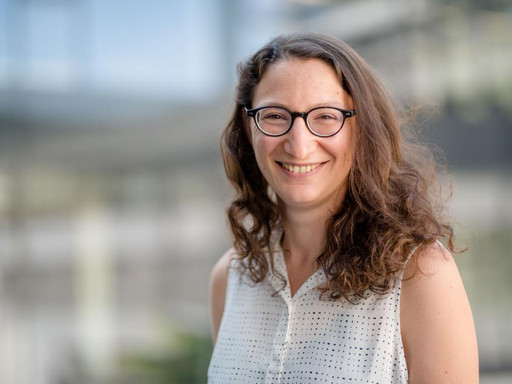
Kiyoto Takahata is an Associate Professor at the Faculty of Science and Engineering, Graduate School of Information, Production and Systems. His research focuses on silicon photonics, optical semiconductor devices, and high-speed optoelectronic integration. Primary research areas include silicon photonics, microwave photonics, and optical interconnection Specializes in electro-absorption modulator integrated distributed feedback lasers Developed membrane lasers and modulators on silicon platforms Recent publications highlight advancements in high-bandwidth photonic devices, with a focus on integrated optics for 100Gb/s+ data transmission. His work includes: Microring resonators for photonic computing MMI couplers for all-optical logic Membrane laser-modulator integration on Si Dispersion-tolerant modulation techniques He has contributed to: Flip-chip interconnection methods Low-voltage operation of optoelectronic devices Multi-lane photonic modules
Toms Salgals is an Associate Professor at Riga Technical University, with a focus on high-speed optical communication systems, integrated photonics, and emerging 6G technologies. His research spans optomechanics, nanophotonics, and radar technologies, leveraging advanced photonic components for next-generation networks. Current affiliation: Riga Technical University Research areas: High-speed fiber optics, optical frequency combs, metamaterials, 5G/6G, nanophotonics Email: Toms.Salgals@rtu.lv His recent publications emphasize silicon photonics modulators , analog fronthaul solutions , and optical amplification-free transmission systems . These works explore the integration of nanophotonics and machine learning for improving signal processing in high-baudrate environments. The 24 listed articles (2020–2025) reflect a strong trend toward short-reach optical interconnects , hybrid photonic architectures , and mid-IR free-space optics , particularly for 6G and beyond. He also investigates quantum cascade lasers, whispering gallery mode resonators, and novel data compression methods.
Brian Knorr is an Associate Professor of Physics at Fairleigh Dickinson University (FDU), affiliated with the Department of Chemistry, Biochemistry, and Physics within Becton College. He teaches courses in University Physics I & II, Modern Physics, Electronics, and conducts research on laser-induced crystallization of glasses and physics education.
Dr. Urs Graf is a researcher at the University of Cologne, where he leads the SubMillimeter and Terahertz Receiver Group . His work focuses on developing advanced astronomical instrumentation, particularly heterodyne receivers for submillimeter and terahertz observations. Key projects include CHAI (CCAT-prime Heterodyne Array Instrument), GREAT (German Receiver for Astronomy at Terahertz Frequencies) for SOFIA, and SMART (SubMillimeter Array Receiver for Two Frequencies). His research interests span terahertz astronomy, quantum cascade lasers, beam measurement techniques, Fourier gratings for LO multiplexing, and compact array receiver modules (CHARM). He specializes in bridging theoretical concepts with practical instrumentation for ground-based and airborne observatories. Dr. Graf maintains active collaborations with ETH Zurich (QCL development), MPIfR Bonn (SOFIA receivers), SOFIA operations, University of Chile (submillimeter receivers), and Cornell University (CCAT telescope). His 15 most recent publications demonstrate expertise in terahertz receiver design, spectrometer development, quantum cascade laser integration, and astronomical instrumentation. He leads a research team including Matthias Justen, Sayyid Mahdizadeh, Marc Mertens, Xiaodong Ren, Pablo Tapia, Henning Adams, Ayyaz Mahmood, and Bernhard Schmidt. The group focuses on advancing terahertz technology for astronomical applications.
Professor Clara Saraceno is a Research Professor at Ruhr University Bochum's Faculty of Electrical Engineering, where she leads the PULS research group. Her work focuses on cutting-edge laser technology with applications spanning from fundamental physics to practical implementations in terahertz science. Her research interests center on ultrafast laser physics and terahertz photonics, with particular expertise in high-power thin-disk laser systems, mid-IR sources, and terahertz generation techniques. Professor Saraceno's work bridges fundamental laser physics with practical applications, developing increasingly powerful laser systems capable of driving advanced terahertz sources. Professor Saraceno maintains an exceptionally productive research program, with numerous publications each year in top optics and photonics journals. Her recent work (2024-2025) shows particular strength in high-repetition-rate terahertz generation, nonlinear pulse compression techniques, and advancing the performance boundaries of mid-IR laser systems operating around 2 µm. She actively contributes to the scientific community through conference participation and leadership in her field, with regular presentations at major international venues including CLEO, IRMMW-THz, and Ultrafast Optics conferences. Professor Saraceno teaches courses in Ultrafast Laser Physics and Technology (winter semester), Mid-IR and Terahertz Photonics (summer semester), and the Laser Colloquium throughout the academic year, providing students with direct access to her expertise in advanced laser systems. Her research group appears well-funded and productive, with consistent publication output demonstrating technical innovation in laser development and terahertz applications, positioning her as a significant contributor to advancing high-power ultrafast laser technology.
Łukasz Gołuński is an Assistant Professor at the Department of Microelectronic Systems, Faculty of Electronics Telecommunications and Informatics, Gdańsk University of Technology. His research bridges two specialized domains: antenna design for modern communication systems and boron-doped diamond technology for electrochemical applications. His primary research focuses on advanced antenna design , particularly for 5G/6G applications, where he develops innovative 3D-printable metasurfaces and metastructures for beam-steering systems. Simultaneously, he investigates boron-doped diamond (BDD) technology for electrochemical sensors, studying growth processes, electrical properties, and applications in harsh environments. His work demonstrates strong interdisciplinary connections between materials science and microwave engineering. Analysis of his 23 publications reveals a clear research trajectory from fundamental material science (diamond film growth and characterization) toward applied antenna engineering. Recent work (2023-2024) emphasizes cost-efficient optimization methods using surrogate modeling and 3D printing technologies, addressing critical challenges in modern antenna design while considering manufacturing constraints. Dr. Gołuński successfully managed the ETIUDA-funded project 'Method of manufacturing microsensors and electrochemical electrodes through selective growth of polycrystalline diamond layers masked with silicon dioxide layers' in the Department of Metrology and Optoelectronics since September 2016. His scholarly output spans high-impact journals including IEEE Access, Scientific Reports, Sensors, and Diamond and Related Materials. He is actively involved in teaching with 26 documented teaching activities at Gdańsk University of Technology. His laboratory work centers on microelectronic systems, particularly antenna design and diamond-based electrochemical sensors, utilizing specialized infrastructure for diamond film growth, microwave characterization, and electromagnetic simulation.
Barbara Stawarz-Graczyk is an Assistant Professor at the Department of Metrology and Optoelectronics within the Faculty of Electronics Telecommunications and Informatics at Gdańsk University of Technology. Her research spans semiconductor device characterization, optical metrology, and biomedical applications. Her primary research interests focus on semiconductor noise analysis , particularly Random Telegraph Signal (RTS) noise in optoelectronic devices and silicon carbide components. She has developed specialized measurement systems for analyzing low-frequency noise in optocouplers (transoptors), Schottky diodes, and MESFET transistors. More recently, her work has expanded into diffraction phase microscopy applications for observing red blood cell fluctuations, demonstrating interdisciplinary movement into biomedical diagnostics. Analysis of her 29 publications from 2004-2018 reveals a strong technical trajectory from fundamental semiconductor noise characterization toward biomedical applications. Her early work (2004-2010) concentrated on RTS noise identification methods, optocoupler characterization, and measurement system development. From 2015 onward, she transitioned to applying similar measurement principles to biological systems, particularly using diffraction phase microscopy for hematology diagnostics. She has been involved in developing specialized measurement systems including: RTS noise identification systems for optocouplers Wide current range measurement systems for power diodes Specialized probes for optoelectronic noise measurement Phase object observation systems using diffraction microscopy Her research demonstrates consistent focus on precise measurement techniques with applications spanning semiconductor technology, metrology, and biomedical diagnostics, showing evolution from pure electronics toward interdisciplinary biomedical engineering applications.
Dr. Adam A. Filios serves as Professor and Chair of the Department of Electrical and Computer Engineering Technology at Farmingdale State College, a position he has held since joining the institution in August 2006. His prior industrial experience includes senior research roles at Corning's Photonics Research and Test Center in Somerset, NJ, and Nanodynamics Inc. in New York, where he specialized in optical fiber communications and nanoscale semiconductor systems. His academic credentials include: Ph.D. in Electrical Engineering, University of North Carolina at Charlotte (1999) M.S.E. in Electrical Engineering, University of North Carolina at Charlotte (1994) B.S. in Physics, University of Athens, Greece (1991) Dr. Filios's research program centers on nano-photonics and silicon-based optical systems, with significant contributions to quantum communications and photovoltaic technologies. His work bridges fundamental nanomaterial science with practical applications in high-speed optical networks and renewable energy conversion, leveraging expertise in semiconductor device physics developed through both academic and industrial research. His publication portfolio (40+ refereed works) shows consistent output in silicon photonics from 2010-2013, with increasing focus on quantum applications and photovoltaic integration. Key trends include the development of nanostructured silicon for optical communications (2010), characterization of nanocrystalline materials for integrated photonics (2011-2013), and thin-film solar cell technologies (2012), demonstrating a strategic evolution toward quantum-enabled photonic systems. As an educator, Dr. Filios teaches foundational courses spanning circuit analysis, semiconductor devices, and nanotechnology, directly incorporating his industrial R&D experience into practical laboratory components and design projects that prepare students for careers in photonics and semiconductor industries.
Gaëlle Lucas-Leclin is a Senior Lecturer at the Charles Fabry Laboratory within the Institut d'Optique Graduate School. She has been affiliated with the Institut d'Optique since 1998, following the completion of her PhD in physical sciences from Paris-Sud University. Her academic career spans over 25 years, during which she has established herself as a specialist in laser physics, particularly in coherent beam combining and semiconductor laser technologies. Professor Lucas-Leclin's research focuses on two primary areas: coherent combination of high-power laser diodes and optically pumped semiconductor lasers. Her work addresses fundamental challenges in achieving high-brightness laser sources through innovative beam combining techniques using volume Bragg gratings and Dammann gratings. Her research has significant applications in atomic clocks, environmental sensing through differential absorption lidar, and advanced optical imaging systems. The publication record spanning from 2000 to 2024 demonstrates consistent research productivity and evolving expertise in laser technology. Analysis of her 15 most recent publications reveals a strong focus on coherent beam combining techniques, semiconductor laser development, and applications in atomic physics and environmental monitoring. Her work shows a progression from fundamental laser physics to increasingly applied research, with recent publications emphasizing practical implementations for water vapor detection and real-time imaging applications. As an educator, Professor Lucas-Leclin contributes significantly to the engineering program at the Institute of Optics, teaching courses on semiconductor components, laser sources, and optical systems design. She also coordinates the ZupDeCo Tutoring Program and teaches in the Professional Master's Degree in Embedded Lighting Systems, demonstrating commitment to both fundamental research and practical applications of optical technologies. Within the Charles Fabry Laboratory, Professor Lucas-Leclin leads the Lasers group's research in her specialized areas, collaborating extensively with researchers across France and internationally. Her work exemplifies the strong connection between fundamental laser physics research and practical applications that characterizes the Institut d'Optique's approach to photonics research and education.
Irina Filippova, Ph.D., serves as a Coordinating Scientific Researcher at the Institute of Applied Physics in Chisinau, Moldova, within the Laboratory of Semiconductor Compound Physics “Sergiu Rădăuțan”. Her work focuses on advancing semiconductor research through institutional collaborations and national/international projects. Her research spans semiconductor physics, compound semiconductors, and solid-state materials science, with emphasis on photovoltaic and optoelectronic applications. The laboratory investigates material synthesis, device physics, and kinetic processes critical for next-generation electronic components, leveraging participation in EU-funded programs like H2020 and FP7 initiatives. Research Scope: Semiconductor compound characterization, nanomaterial engineering, and photonic device development Institutional Context: Active involvement in bilateral projects (ANCD 24.80013.5007.3TR) and EU collaborations (H2020-MSCA-RISE-778357) Technical Resources: Access to specialized facilities for electrophysical processing, quantum optics, and thermal-hydrodynamic analysis
Leonid Bruc serves as a Coordinating Scientific Researcher (academic rank: Lecturer) at the Institute of Applied Physics, State University of Moldova, where he is based in office 127 of the Materials for Photovoltaics and Photonics Laboratory in Chisinau, Moldova. His institutional contact includes phone +373 22 738054 and email leonid.bruc@ifa.md. Dr. Bruc's research centers on advanced materials development for photovoltaic energy conversion and photonic devices, operating at the intersection of materials science, semiconductor physics, and renewable energy technology. His work focuses on synthesizing and characterizing novel materials to enhance solar cell efficiency and optical component performance, addressing critical challenges in sustainable energy infrastructure and optoelectronic systems. The Materials for Photovoltaics and Photonics Laboratory forms part of the Institute of Applied Physics' scientific division structure, contributing to Moldova's national research efforts in semiconductor technologies. While specific grant details aren't provided, the institute participates in numerous international collaborations including EU Horizon 2020 projects and bilateral agreements with institutions across Europe and North America, suggesting potential involvement in cross-border research initiatives relevant to photovoltaic materials science.
Radu Dragomir is a Scientific Researcher at the National Institute of Materials Physics (NIMP) in Magurele, Romania, affiliated with the Laboratory of Theoretical Physics and Computational Modeling. His work bridges theoretical physics and computational modeling, focusing on quantum phenomena in nanoscale systems. His educational background includes: PhD in Theoretical Physics (2012–2016) from the University of Bucharest's Faculty of Physics, with a summa cum laude thesis on "Transport phenomena and exciton dynamics in optically active quantum dots" under Prof. Dr. Virgil Baran and Dr. Valeriu Moldoveanu. MSc in Computer Tomography (2009–2011) focusing on reconstruction algorithms. Undergraduate training at National Informatics College "Tudor Vianu" in mathematics and informatics. Dragomir's research centers on quantum transport , spin dynamics , and nanoelectromechanical systems , employing advanced methods like k.p theory and configuration interaction . His work reveals critical insights into spin-vibron coupling in single-molecule magnets, exciton dynamics in quantum dots, and quantum turnstile operations in NEMS. Key contributions include identifying Rabi oscillations as fingerprints of spin-vibron coupling and demonstrating how vibron-assisted transitions enable molecular spins to climb anisotropy barriers. Analysis of his 2014–2023 publications shows a consistent trajectory in quantum nanoscale physics, with increasing emphasis on hybrid quantum systems where mechanical, electronic, and spin degrees of freedom interact. His research has significant implications for quantum computing components and nanoscale sensor design. Scientific awards include: 2004: First mention (6th place) at National Physics Olympiad 2004: Qualification for IPHO training group 2004: 1st prize at National Physics Contest "Phi" 2004: 1st prize at Schwartz Physical Memorial Contest 2005: Mention (10th place) at National Physics Olympiad 2005: Qualification (5th place) for IPHO training group 2005: 2nd prize at Advertising Physics Contest No student advisement or grant information is documented in the provided materials. His current work within NIMP's Laboratory of Theoretical Physics and Computational Modeling involves collaborative projects on quantum transport simulations and spin dynamics modeling, often utilizing generalized master equation approaches for open quantum systems.
Dr. Anca STANCULESCU is a Scientific Researcher I at the Laboratory of Optical Processes in Nanostructured Materials, National Institute of Materials Physics (INFIM) in Romania. Her research focuses on the development and characterization of advanced organic and inorganic materials for optoelectronic applications, with expertise spanning thin film technology, crystal growth, and nanomaterials engineering. Her primary research interests include: Organic materials: multifunctional thin films, nanostructured composites, and heterostructures for photovoltaic cells, OLEDs, and transistors Inorganic materials: transparent conducting oxides, semiconductor compounds, and silicon technology Advanced characterization: AFM, SNOM, UV-Vis spectroscopy, FTIR, and electrical measurements Dr. STANCULESCU specializes in laser-based deposition techniques, particularly Matrix Assisted Pulsed Laser Evaporation (MAPLE), for fabricating novel organic-inorganic hybrid systems. Her work demonstrates how strategic integration of inorganic components within organic matrices enhances device performance in terms of electrical conductivity, optical properties, and mechanical flexibility. Analysis of her recent publications (2022-2025) reveals a strong emphasis on flexible optoelectronics, with particular focus on nanostructured electrodes, non-fullerene acceptors for photovoltaics, and the effects of substrate patterning on device performance. Her research consistently bridges fundamental materials science with practical applications in next-generation electronic devices. She currently leads two major research projects: Flexible and nanostructured Organic Field Effect Transistor for UV-VIS detection (2022-2024) Investigation of organic thin films after high-energy ion and neutron irradiation (2020) Dr. STANCULESCU has also contributed to five book chapters on organic semiconductors and optoelectronic materials, establishing herself as a recognized expert in the field. Her laboratory maintains strong expertise in the fabrication and characterization of nanostructured materials, with particular capabilities in laser processing and advanced optoelectronic device development.
Dr. George-Adrian LUNGU is a Scientific Researcher III at the National Institute of Materials Physics in Măgurele, Romania, where he works in the Surfaces and Interfaces Laboratory. Born on December 3, 1978 in Braşov, Romania, he has established a distinguished career in condensed matter physics and materials science with a focus on surface and interface phenomena. His educational background includes: B.Sc. in Physics from the University of Bucharest (2002) M.Sc. in Solid State Physics and Polymer Physics from the University of Bucharest (2004) Ph.D. in Physics from the University of Bucharest (2014) with thesis "Structural and magnetic properties of certain thin films" Dr. LUNGU's research expertise spans several critical areas of modern materials science: Ferromagnetic thin films for spintronic applications Ferroelectric thin films and their surface properties Advanced characterization using Extended X-ray Absorption Fine Structure (EXAFS) spectroscopy Chemical analysis through X-ray Photoelectron Spectroscopy (XPS) His multidisciplinary approach combines experimental techniques with theoretical understanding to investigate the structural, magnetic, and electronic properties of novel materials systems, with significant implications for applications in optoelectronics, spintronics, and energy technologies. With 47 published papers and an h-index of 12, Dr. LUNGU's recent work demonstrates a strong focus on the intersection of ferroelectricity, magnetism, and surface science. His publications reveal expertise in analyzing complex material systems, particularly in the areas of room-temperature ferromagnetism in semiconductor systems, CO 2 adsorption on ferroelectric surfaces, and electrical properties of novel thin film structures. Notable contributions include: Research on ferromagnetic thin films and their applications Studies on graphene-ferroelectric material interactions Investigations of magnetic properties in diluted magnetic semiconductors Development of advanced characterization techniques for surface analysis Dr. LUNGU has also contributed to collaborative efforts in large-scale scientific projects, including work with the Compact Muon Solenoid (CMS) Collaboration of the Large Hadron Collider (LHC) at CERN from January 2005 to May 2006, where he worked on the CMS Detector Tracker building.