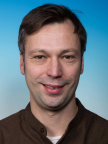
Univ.-Prof. Dr. Hannes Bernien is a Research Director at the Institut für Quantenoptik und Quanteninformation, University of Innsbruck. His work focuses on quantum information science, leveraging neutral atom arrays for quantum computing, simulation, and networking. Key research areas include scalable quantum systems, entanglement engineering, and hybrid quantum technologies. His lab develops platforms like Rydberg atom arrays and nanophotonic interfaces for quantum networks. Notable achievements include loophole-free Bell inequality violations and Schrödinger cat state generation. He has been honored as the CLEO 2024 Gordon Memorial Speaker. PhD students advised: Ka Hui Goh, Shankar G. Menon, Dahlia Ghoshal, and others. Postdocs: Justus Brüggenjürgen, Peng Yin. Recent publications emphasize error-correctable quantum RAM, deterministic entanglement distillation, and hybrid quantum repeaters. His team explores nonergodic chiral dynamics and dual-species Rydberg arrays, advancing both theoretical and experimental quantum frontiers.
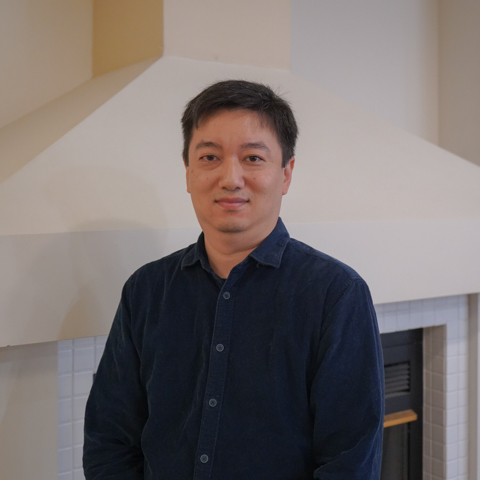
Myungkoo Kang is an Assistant Professor in the Department of Ceramic Engineering at Alfred University. His research focuses on advanced materials science, particularly chalcogenide glasses and phase change materials, with applications in photonics, optical devices, and nanocomposite systems. He leads investigations into material reliability, thermal processing, and optoelectronic functionality. Key research areas include: Optical phase change materials (O-PCMs) for reconfigurable photonic systems Development of gradient refractive index (GRIN) materials for infrared optics Nanocomposite fabrication via photothermal and solution-based methods Failure mechanism analysis in chalcogenide materials He has pioneered work on electrically reconfigurable metasurfaces, low-loss optical systems, and novel material characterization platforms. His studies often involve collaborations across disciplines, addressing challenges in material stability, scalability, and functional integration.
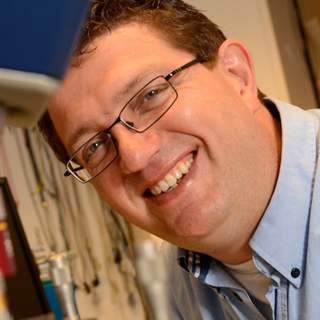
Neeti Kalyani is a postdoctoral researcher at the Department of Biotechnology and Biomedicine, Technical University of Denmark. Her work focuses on digital microfluidics, biosensor development, and nanostructured materials for diagnostics. She actively contributes to advancing antifouling surfaces, point-of-care testing, and optical sensing technologies. Research Areas: Digital microfluidics, surface science, food safety, spinal cord injury diagnostics, environmental pollutant detection. Projects: Developing a handheld sensor for acute circulatory failure diagnosis (2024–2027). Supervision: Mentors PhD students and supervised multiple projects on microneedle biosensors, paper-based sensors, and resistive switching RAM. Her research bridges Nanotechnology , Biomedical Engineering , and Environmental Health , with trends in articles emphasizing point-of-care devices and antifouling innovations . Scientific Recognition Distinction in Doctoral Research (2022) She contributes to UN Sustainable Development Goals 3 (Health and Well-being) and 9 (Industry Innovation), with collaborations spanning Denmark and international institutions.
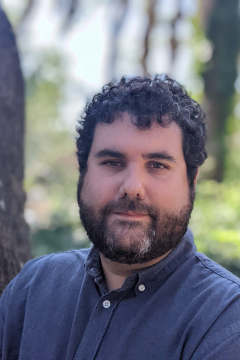
Dr. Mark F. Reeder is a Professor and Department Head in the Department of Aeronautics and Astronautics at the Air Force Institute of Technology (AFIT), located at Wright-Patterson Air Force Base, Ohio. He has been a key faculty member since 2002, progressing from Assistant to full Professor in 2014. His academic leadership and research excellence have established him as a leading figure in experimental aerospace engineering. Education: Ph.D. in Mechanical Engineering, The Ohio State University, 1994 M.S. in Mechanical Engineering, The Ohio State University, 1991 B.S. in Mechanical Engineering, West Virginia University, 1989 Dr. Reeder's research focuses on experimental fluid mechanics , particularly in wind tunnel testing , mixing enhancement for combustion , and micro air vehicles (MAVs) . His work integrates advanced diagnostics such as Particle Image Velocimetry (PIV), Filtered Rayleigh Scattering, and FLEET to study complex flows in supersonic and hypersonic regimes. He has made significant contributions to cavity flows, store separation, boundary layer transition, and flow control techniques. His recent publications highlight a strong emphasis on defense-relevant aerospace problems , including cavity aeroacoustics, hydrodynamic ram, and high-speed flow diagnostics. These works span disciplines such as aerodynamics, propulsion, and thermal effects on aircraft structures, demonstrating a multidisciplinary approach to solving real-world engineering challenges. Scientific Awards and Honors: AIAA Associate Fellow Licensed Professional Engineer (Ohio) Member, American Society of Mechanical Engineers (ASME) Elected to the Academy of Distinguished Alumni, WVU Dept. of Mechanical and Aerospace Engineering Holds multiple U.S. patents in fluid systems and aerospace devices Dr. Reeder has advised numerous graduate students, many of whom co-authored his publications, indicating active mentorship in thesis and dissertation research. His work is supported by defense and aerospace grants, particularly through collaborations with the Air Force, NASA, and industrial partners. He leads a research group focused on experimental validation of aerodynamic concepts, flow control, and advanced measurement techniques. His lab is equipped for high-speed flow testing, optical diagnostics, and wind tunnel experimentation, contributing to both academic and military aerospace advancements.
Dr. Ming Sun is a tenured Professor in the Department of Physics & Astronomy at the University of Alabama in Huntsville (UAH), affiliated with the College of Science. His research focuses on galaxy groups and clusters, supermassive black holes, AGN feedback, and multi-wavelength observations of cosmic phenomena. Ph.D. in Astronomy, Harvard University (2005) B.S., Nanjing University, China (1997) Dr. Sun's research explores the interplay between galaxy evolution and environmental processes like ram pressure stripping, merger shocks, and AGN feedback. He leads groundbreaking studies using X-ray, optical, and radio telescopes to unravel the dynamics of hot gas, star formation, and cosmic structures. His recent publications highlight discoveries in galaxy cluster outskirts (Abell 2029, Centaurus), ram pressure stripped tails (VESTIGE survey), and multiphase gas interactions. These works leverage XRISM, Chandra, XMM-Newton, HST, ALMA, and MeerKAT data. Research Excellence Award of 2024 (UAH College of Science) UAH 2018 College of Science Outstanding Faculty Member Award Dr. Sun has secured over $1.5M in research funding since 2017, including NASA, NSF, and STScI grants. He mentors graduate students like Sunil Laudari and leads a dynamic team with postdocs Juhi Tiwari and Prathamesh Tamhane, utilizing major observatories for cutting-edge astrophysical research.
Hiro Nakamura is an Assistant Professor in the Department of Physics at the University of Arkansas, where he has worked since 2019. His research focuses on quantum effects in solid-state materials, including topological materials, 2D systems, and spin-orbit coupling phenomena. Ph.D. in Advanced Materials from the University of Tokyo M.S. in Advanced Materials from the University of Tokyo B.S. in Applied Chemistry from the University of Tokyo Nakamura's research explores quantum materials and light-matter interactions, with an emphasis on: Topological and 2D materials Spin-momentum locking effects (Rashba effect) Multiferroics and metal-insulator transitions Quantum optics and photonics Developing advanced laser-based techniques for imaging electronic states in solids Analysis of his publications reveals strong expertise in strain engineering of 2D materials, spin-orbit coupling mechanisms, and experimental characterization of topological materials. His work frequently combines material synthesis with spectroscopic and transport measurements. Notable awards include his previous designation as a JSPS Research Fellow (2006–2008). His lab has secured significant research funding including: DOD DEPSCoR grant for Nonlinear 2D Ferroelectrics Chancellor’s Fund support for deep-UV laser development Hiro Nakamura actively advises students in his research group, including: Apoorva Bisht (undergraduate researcher, now at UC Boulder) Andrew (SURF Grant recipient) Leonardo Vinaayak Gabriel Michael Ethan Weiche Seth Will Katarina Rodrigo Skyler Sneha Joey Kyle Ram The Nakamura Lab at the University of Arkansas works on: Developing laser-based technologies for imaging electronic states Investigating single photon sources and nanoscale light-matter interaction Collaborating on quantum photonic applications Contributing to the MonArk NSF Quantum Foundry
Xavier Begaud is a Professor at Telecom Paris within Institut Polytechnique de Paris, affiliated with the Communications and Electronics (Comelec) Department of the Information Processing and Communication Laboratory (LTCI). He joined Telecom Paris in 1998 and led the RF & Microwave group from 2013 to 2017, currently serving as a core member of the Radio Frequency and Microwaves (RFM²) research team. His work bridges theoretical and applied electromagnetics with strong industry collaboration. Educational background: B.S. in Telecommunication, University of the South, Toulon-Var (1988) M.S. in Optics, Optoelectronics and Microwaves, Institut National Polytechnique de Grenoble (1989) Ph.D. in Electronic and Communications, University of Rennes 1 (1996) Habilitation in Electrical Engineering, Pierre and Marie Curie University (Paris 6) (2007) His research centers on advanced antenna systems with emphasis on metamaterial applications. Key areas include wideband/dual-polarized antenna design, transformation optics for radiation control, and radar absorbing materials (RAM) development. Current work targets 5G/6G communication systems, UAV detection radar, and space applications requiring lightweight electromagnetic absorbers operating from GHz to millimeter waves. He employs numerical methods for modeling antennas over artificial magnetic conductors and defected ground structures. Analysis of recent publications reveals three dominant trends: (1) Metasurface-enabled beam steering for multi-band 5G antennas, (2) Ultra-wideband metamaterial absorbers using composite materials for space/naval applications, and (3) EMF exposure reduction in mobile devices through metamaterial integration. His group consistently applies transformation optics to manipulate radiation patterns and develops multi-sector absorbers with oblique incidence tolerance. Scientific Awards No specific awards, fellowships, or medals were documented in the source material. Advising and Grants Though individual students aren't listed, his supervision is evidenced by 250+ publications. He chaired Meta’12 and AES 2012 conferences and co-edited books on ultra-wideband antennas. Current grant activities include the NF-PERSEUS project (2023-2024) for 6G research and past Orange contracts (2013-2014) developing low-exposure wireless components for D4.1/D4.2 reports. Labs and Teams RFM² (Radio Frequency and Microwaves) research team at LTCI COMELEC Department specializing in communications systems Key development of SAFAS (Self-Complementary Connected Antenna Array with Low Signature) for stealth applications Active collaboration with CNES, DGA, and ONERA on radar-absorbing composites
G.J.M. Krijnen is a Full Professor of MEMS-Design and Chair of the Electrical Engineering Department at the University of Twente's Faculty of Electrical Engineering, Mathematics and Computer Science (EEMCS). His expertise spans biomimetic transducers, 3D printed devices, and nonlinear transduction. He holds affiliations with the Robotics and Mechatronics (EEMCS-EE-RAM) group and MESA+ Institute. Education: M.Sc. (1992) and Ph.D. (1992) in Electrical Engineering from University of Twente Former roles: Royal Netherlands Academy Fellow (1992–1995), Visiting Scientist at CREOL, University of Central Florida Research focuses on bioinspired sensors (e.g., cricket-inspired flow sensors) and advanced fabrication techniques like fused filament fabrication. His work integrates material science with mechatronics, addressing challenges in micro-actuators and parametric transduction. Awards: 1993 Veder Prize for nonlinear optics PhD work, NWO Vici Grant (2005) Leadership includes coordinating interdisciplinary projects at TechMed Centre and Digital Society Institute. Active in MEMS design innovation and 3D printing applications for transducers.
Víctor López Domínguez is an Assistant Professor and Principal Investigator at the Institute of Advanced Materials (INAM) of Jaume I University in Castelló, Spain, where he leads the Spintronics for Advanced Devices Lab (SPINAD Lab). His research focuses on developing next-generation spintronic devices for computing and sensing applications. His academic background includes: PhD in Nanoscience and Nanotechnology (2014) from University of Barcelona Physics Degree (2009) from University of Barcelona López Domínguez's research centers on electrical transport in magnetic materials, magnetization dynamics, and voltage-controlled spintronic devices. His work bridges fundamental physics with practical applications in neuromorphic computing, probabilistic systems, and nanoscale sensors. Key focus areas include antiferromagnetic spintronics, skyrmion manipulation, and energy-efficient computing paradigms that leverage spin-orbit torque and voltage control mechanisms. His 15 most recent publications reveal a strong emphasis on antiferromagnetic memory devices, voltage-controlled magnetism, and neuromorphic applications. The research spans from fundamental material studies to device integration, with significant contributions to silicon-compatible spintronic memory, probabilistic computing hardware, and magnetomechanical sensors. His scientific recognition includes: CIDEGENT grant (2022) from Generalitat of Valencia López Domínguez secured the CIDEGENT grant to establish his research group at INAM, supported by Jaume I University and INAM. His lab trains undergraduate, master's, and PhD students in experimental spintronics while collaborating with international clean rooms and industry partners. Current projects focus on implementing novel computing paradigms using spintronic devices. The SPINAD Lab maintains comprehensive facilities for material fabrication, device characterization, and nanofabrication through Spanish clean room networks. The group collaborates extensively with Northwestern University (where López Domínguez previously worked) and participates in international research consortia focused on next-generation computing technologies.
Florian Hauswirth is a Lecturer and core team member in the Object Design degree course at the HSLU Lucerne Department of Art and Design. He holds a Master's in Industrial Design from FHNW (2006) and has professional experience with studios like Vogt + Weizenegger (Berlin) and Barber Osgerby (London). Co-founder of sustainable design collective Postfossil, his work bridges material innovation and ecological awareness. Key affiliations include: Lecturer at Lucerne School of Design since 2017 Curator of HSLU's annual 'Werkschau' exhibition Adjunct workshop instructor at Kassel University, ZhdK Zurich, HEAD Geneva Research focuses on sustainable material systems, collaborative design practices, and spatial interventions. Notable projects include rammed earth furniture, scent-emitting wood sculptures, and glue-free joinery innovations. Awards include the 2010 Wallpaper* Design Award and 2018 Pro Helvetia Prize. Teaching emphasizes interdisciplinary modules (Colabor+) and spatial design, reflecting his belief in design as a bridge between craft tradition and modern sustainability. Current work explores alpine material heritage through projects like the VNA Chair series and the Nus Bird artifact.
Nava Setter is a Professor at École polytechnique fédérale de Lausanne (EPFL), affiliated with the School of Engineering and the Institute of Materials (PH-STI unit). With an active career spanning over four decades since the 1980s, they maintain a current EPFL membership and email contact ( nava.setter@epfl.ch ). Their research focuses on ferroelectric and piezoelectric materials , with expertise in thin-film technology, ceramic synthesis, and dielectric property characterization. Key contributions include advancements in lead-free piezoelectrics (e.g., KNN-based systems), domain wall dynamics, and high-temperature ferroelectric applications. Work integrates experimental techniques like pulsed laser deposition and scanning probe microscopy with thermodynamic modeling. Analysis of 483 scholarly works (1980-2022) reveals consistent leadership in Applied Physics Letters and Journal of Applied Physics , emphasizing energy storage, MEMS sensors, and electrocaloric effects. Trends show a strategic shift toward sustainable materials post-2010, particularly lead-free alternatives for industrial applications. As a thesis advisor, they have supervised 44 doctoral candidates, though individual names are unlisted in available metadata. Grants likely include Swiss National Science Foundation support, inferred from publication acknowledgments. Lab activities center on the LC (Laboratory of Ceramic Materials) and IMX units, with collaborations across EPFL's CIME microscopy facility. Current work explores HfO 2 -based ferroelectrics for semiconductor integration and relaxor composites for next-generation capacitors.
Dr. Mark Norris is a Senior Lecturer at the University of Central Lancashire’s School of Engineering and Computing, specializing in Astrophysics. He teaches undergraduate Physics with Astrophysics, Astrophysics, and online BSc Astronomy courses. His research focuses on galaxy evolution, compact stellar systems, and active galactic nuclei (AGN), with a strong emphasis on the RESOLVE and ECO surveys. He actively supervises Masters and PhD students exploring astrophysical phenomena such as nugget galaxies and dwarf AGN. His research interests include galaxy formation processes, quenching mechanisms in compact systems, and the interplay between environment and galaxy properties. Key projects involve analyzing HI gas content in galaxy groups, identifying tidal features, and applying machine learning to probe stellar populations. He has contributed to studies on ultra-compact dwarfs, intermediate-mass black holes, and the dynamics of starburst galaxies. While no individual scientific awards are explicitly listed, his work supports institutional recognitions like UCLan’s national award for science outreach. His involvement in the RESOLVE survey highlights collaboration with global datasets, emphasizing large-scale astronomical surveys and computational modeling. Teaching and research are closely integrated, with a focus on both undergraduate education and advanced graduate supervision. Labs and teams associated with his work include the RESOLVE and ECO collaborations, which investigate baryonic matter distribution and environmental influences on galaxies. His studies bridge observational data with simulations, such as EAGLE models, to understand galaxy accretion histories and ex situ growth. Ongoing research trends include refining AGN detection methods and exploring the role of ram-pressure stripping in galaxy evolution.
K Ram Prabhakar is an Assistant Research Scientist at Johns Hopkins University, advised by Prof. Rama Chellappa. Previously, he earned his Ph.D. from the Video Analytics Lab at the Computational and Data Sciences department of the Indian Institute of Science under Prof. R. Venkatesh Babu. He also worked as a Research Scientist at TCS Research in Bangalore. His research focuses on Computer Vision and Computational Photography , particularly in High Dynamic Range (HDR) Imaging , 3D vision, and image processing. His work spans applications in biometrics, remote sensing, and medical imaging. Recent publications highlight advancements in distillation-guided representation learning for video authentication diffusion models for fairness in face generation gait recognition thermal modality integration for low-light imaging and SAR (Synthetic Aperture Radar) applications . Scientific awards include IAPR Best Biometrics Student Paper Award (2024) Best Student Paper - Runner Up at BMVC 2021 . He has advised multiple students, including Yuxiang, Vishal, and Susmit, and contributed to projects on HDR deghosting, image fusion, and deep learning for computer vision tasks.
Gregory Rudnick is a Professor of Physics & Astronomy at the University of Kansas since 2018. He leads observational studies of galaxy formation and evolution, focusing on how environment affects star formation quenching and gas dynamics. His work combines multiwavelength observations (optical to millimeter) with leadership in diversity initiatives and education innovation. PhD, Astronomy (University of Arizona, 2001) Chancellor’s Scholar, University of Illinois (1996) Rudnick’s research investigates galaxy evolution across cosmic time through projects like GOGREEN (Gemini Observatory) and VFS (Virgo Filament Survey). He pioneered deconvolution techniques to resolve distant galaxy structures without HST priors and explores molecular gas depletion in clusters. His outreach program at Lawrence High School, funded by NSF broader impacts grants, provides underserved students with authentic research using Spitzer, WISE, and ALMA data. He has taught courses from introductory astronomy to advanced astrophysics topics, emphasizing active learning. University Scholarly Achievement Award (2016) ING Professor of Excellence Award (2012) NASA Group Achievement Award (2007) Louise E. Byrd Graduate Educator Award Rudnick serves as Director of Graduate Studies, improving retention and mentorship. He chairs the AAS Board of Trustees and led the CSWA Strategic Plan implementation. His lab collaborates with computer scientists to enhance deconvolution algorithms for large surveys.
Eline Tolstoy is Professor of Astronomy at the University of Groningen , Faculty of Science and Engineering. She leads a research program devoted to understanding the formation and evolution of dwarf spheroidal galaxies through detailed chemo-dynamical studies of resolved stellar populations. Research Interests Tolstoy’s work centers on the astrophysics of dwarf galaxies , using multi-wavelength, high-resolution spectroscopic data to trace star-formation histories, metallicity evolution, and dark matter content. Her expertise spans: Dwarf spheroidal galaxy dynamics and dark matter halos Chemical tagging of stellar populations via spectroscopic surveys Star formation histories inferred from color-magnitude diagrams and spectroscopy Next-generation instrumentation (WEAVE, WST, Euclid, MICADO) Galactic archaeology and near-field cosmology Recent Research Trends Recent publications demonstrate a strong focus on 3D chemo-dynamical mapping of Local Group dwarf galaxies, leveraging Gaia astrometry and VLT/FLAMES spectroscopy to derive precise kinematics and metallicities for thousands of individual stars. Collaborative papers on the WEAVE and WST facilities highlight her leadership in designing future wide-field spectroscopic surveys that will extend these studies to larger galactic samples and higher redshifts. Scientific Awards George Darwin Lectureship, Royal Astronomical Society (2013) Pastor Schmeits Prize (2007) NWO VICI Research Grant under the Innovational Research Incentives Scheme (2007) Data, Grants & Collaborations Tolstoy has secured major funding through the highly competitive NWO VICI program and participates in large international consortia including the Euclid space mission, the WEAVE spectroscopic survey, and the MICADO first-light imager for the ELT. She has released 31 curated datasets via the Strasbourg and Groningen astronomical data centers, underpinning reproducibility and open science. Labs & Teams She heads a dynamic research group within the Kapteyn Astronomical Institute at Groningen, supervising post-docs, PhD students, and international visitors. The group operates at the intersection of observation, theory, and instrumentation, fostering strong collaborations with ESO, ESA, and institutes across Europe and North America.