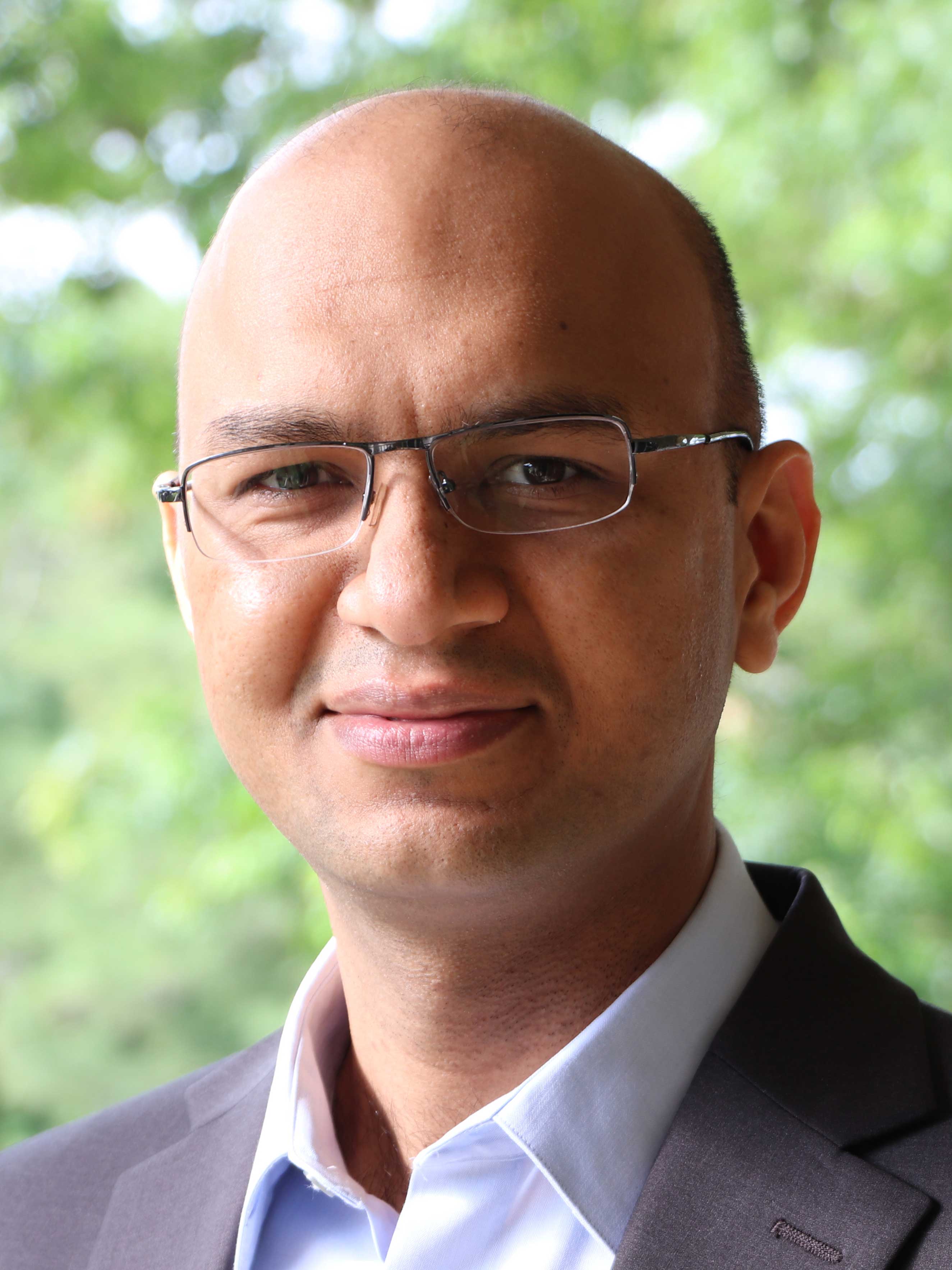
Sunil Mittal is an Assistant Professor in the Department of Electrical and Computer Engineering at Northeastern University, specializing in quantum and topological photonics. He joined Northeastern in 2021 and holds a PhD from the University of Maryland, College Park, alongside master’s degrees in Physics and Optoelectronics. His research focuses on quantum photonics, topological photonics, nonlinear photonics, and two-dimensional materials, with notable contributions to topological frequency combs and photonic quadrupole phases. Education: PhD in Electrical Engineering (University of Maryland, 2014), MS in Physics and Optoelectronics, and industry experience in optical telecommunications. Research highlights include pioneering work on topological sources of quantum light and non-Hermitian photonics systems. Recipient of 2024 and 2022 Stanford University citations (top 2% most-cited scientists) Lead co-PI on a $1.5M NSF DMREF grant (2024) for photonic materials development Recipient of Northeastern’s FY24 TIER 1 Interdisciplinary Research Seed Grant His Quantum Photonics Lab explores topological photonics applications in quantum computing and optical communication. Recent projects include using deep learning to accelerate photonic material design and studying excitonic Mott insulators in 2D heterostructures.
Dr. Youngchan Kim is a Lecturer in Quantum Biology at the University of Surrey , serving as Director of the Quantum Biology Doctoral Training Centre (QB-DTC). He is affiliated with multiple departments including the School of Biosciences, Advanced Technology Institute, and Quantum Sciences Group. PhD in Physics (2011), Korea Advanced Institute of Science and Technology MSc in Physics (2008), KAIST BSc in Physics (2006), Chung-Ang University Graduate Certificate in Learning and Teaching (2022), Advance HE His research focuses on quantum phenomena in biological systems at physiological temperatures, particularly using femtosecond optical spectroscopy and genetically engineered fluorescent proteins to explore evolutionary adaptations and develop quantum-bio-inspired technologies like room-temperature single-photon sources. The 15 most recent publications span quantum biology, biophotonics, and optical spectroscopy, with particular emphasis on quantum coherence in biological systems , terahertz birefringence , fluorescent protein dynamics , and biomedical imaging innovations . These works demonstrate his interdisciplinary approach bridging physics, biology, and medical applications. As QB-DTC Director, he leads transdisciplinary initiatives fostering collaboration between quantum physics and biosciences. His technical expertise includes time-correlated single-photon counting , common-path interferometry , and ultrafast fluorescence depolarization techniques.
Dr. Alexandre Mermillod-Blondin is a Principal Investigator heading a DFG-funded project on 'Micromachining with few-cycle pulses' at the Max Born Institute. His research focuses on fundamental laser-matter interactions and direct laser writing of 3D micro-optical systems in transparent materials. Key investigations include plasma formation mechanisms in dielectrics, relaxation dynamics, and applications in photonic device fabrication. His group utilizes phase-contrast microscopy and time-resolved techniques to characterize ultrafast processes.
Federico Belli is a Researcher at Heriot-Watt University's School of Engineering & Physical Sciences and the Institute of Photonics and Quantum Sciences. His work focuses on ultrafast optics, nonlinear photonics, and gas-filled fiber technologies. He has contributed to over 50 research outputs since 2015, with notable expertise in supercontinuum generation, optical solitons, and laser pulse dynamics in hollow-core fibers. His research interests include the development of broadband radiation sources, nonlinear frequency conversion in novel materials, and the application of gas-filled fibers for advanced laser systems. Collaborations span international teams in photonic crystal fiber design, ultrafast laser engineering, and quantum optics. Belli's recent work emphasizes high-power ultra-flat supercontinuum generation in molecular gas-filled fibers, optimizing spectral phase transfer in gas-filled capillaries, and exploring Raman-induced phenomena in hollow-core systems. His contributions bridge theoretical modeling with experimental validation, advancing applications in molecular spectroscopy and ultrafast laser technology. He co-created the 'Near-zero-index ultra-fast pulse characterization' dataset (2022), highlighting his role in advancing ultrafast pulse measurement techniques.
Konstantin Vodopyanov is a Professor and 21st Century Scholar Chair in Optics & Photonics at the University of Central Florida (UCF), affiliated with CREOL, the College of Optics and Photonics, and the Department of Electrical & Computer Engineering. He holds academic appointments in both Optics and Physics. His career includes roles as a Royal Society postdoctoral fellow at Imperial College London, industry leadership at Inrad, Inc., and technical guidance for multiple companies. He is a Fellow of APS, OSA, SPIE, and the UK Institute of Physics. Education: MS from Moscow Institute of Physics and Technology, PhD and DSc (Habilitation) from Lebedev Physical Institute (Moscow). Research focuses on mid-IR and terahertz photonics, frequency combs, nonlinear optics, and their applications in spectroscopy and biomedical diagnostics. His group develops ultra-broadband mid-IR combs, trace gas sensors, and nano-IR technologies. He has authored over 350 publications and chairs major conferences like CLEO. Research Interests: Nonlinear optics, mid-IR/THz generation, frequency combs, biomedical sensing, supercontinuum generation, and spectroscopic applications. Awards: 2023 CREOL Teaching Award, multiple fellowships in optics societies. Lab Team: Includes postdocs (Dmitrii Konnov), research scientists (Andrey Muraviev), graduate students (Woraprach Kusolthossakul), and undergraduates in CREOL labs. Publications emphasize dual-comb spectroscopy, electro-optic sampling, and novel mid-IR sources. His work bridges academia and industry, with innovations in laser systems and biomedical diagnostics. Current projects include real-time spectral analysis and high-resolution molecular sensing across 2–200 µm wavelengths.
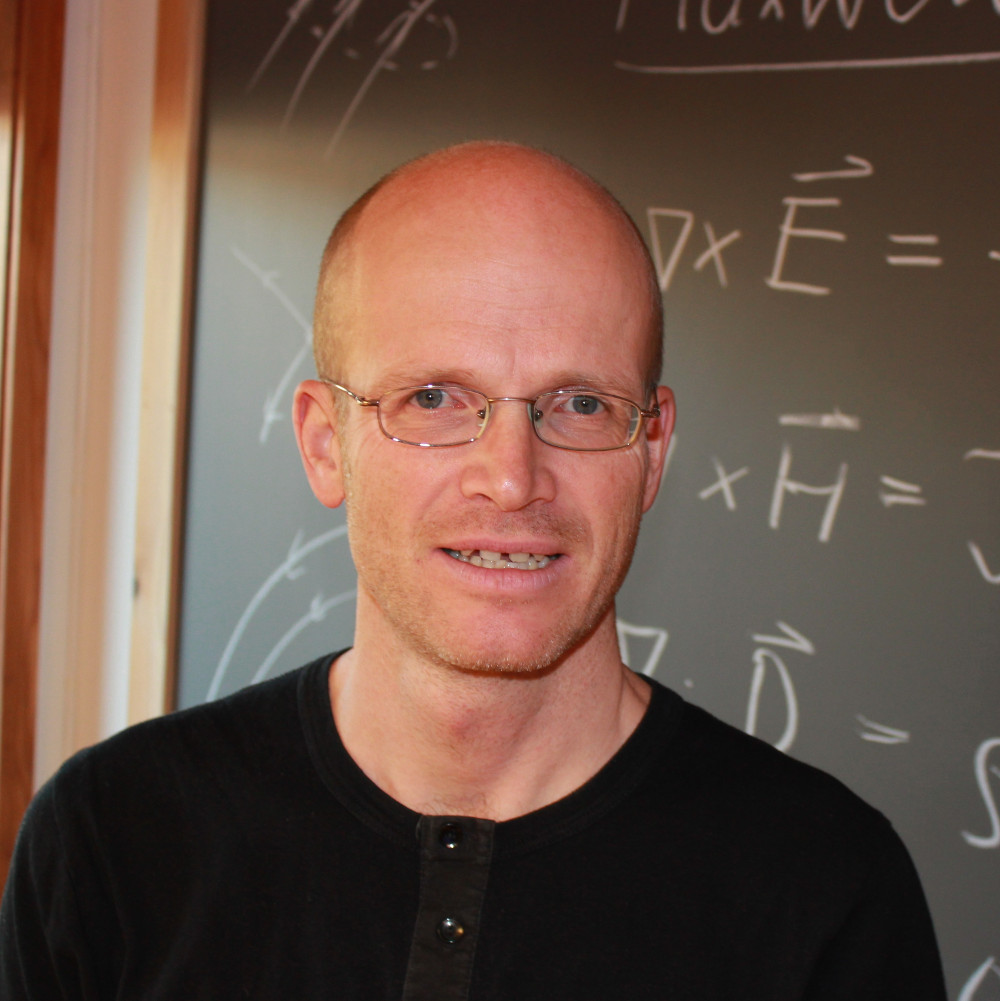
Johannes Skaar is a Professor at the Department of Physics, University of Oslo (UiO). He holds a 100% position there since 2017, previously at NTNU. His research focuses on quantum field theory, quantum optics, electromagnetics, metamaterials, photonics, and quantum information. He teaches advanced courses such as FYS4170 Relativistic Quantum Field Theory and FYS1005 Classical Mechanics. His work spans theoretical physics with notable contributions to single-photon states, metamaterial properties, and quantum cryptography security. Skaar’s research integrates foundational physics with applied technologies like metamaterials and quantum communication systems. His studies on Fresnel equations and magnetic permeability have advanced electromagnetic theory. He frequently publishes in top journals like Physical Review A and Physical Review Letters . Research groups: Theoretical Physics at UiO.
Markus Hennrich is a Professor at the Department of Physics, Stockholm University, where he leads the Trapped Ion Quantum Technologies Group. His research focuses on developing quantum technologies using trapped ions with particular expertise in Rydberg ion systems, quantum computation architectures, and quantum simulation platforms. Education includes: Habilitation in Experimental Physics from University of Innsbruck (2012) Dr. rer. nat. summa cum laude from TU Munich and Max Planck Institute of Quantum Optics (2004) Diploma in Physics from University of Stuttgart (1998) Research interests center on quantum manipulation of trapped ions with three primary focus areas: Developing scalable quantum processors using Rydberg ion interactions Engineering quantum simulations of condensed matter systems Precision control of light-matter interactions in cavity QED systems Recent publications demonstrate strong emphasis on overcoming technical challenges in trapped-ion quantum computing, particularly regarding micromotion control, Rydberg excitation stability, and multi-body interactions. Major scientific awards: ERC Synergy Grant for Open 2D Quantum Simulator (2024) ERC Starting Grant for Quantum Simulations with Trapped Rydberg Ions (2011) Marie-Curie Intra-European Fellowship (2005-2007) Leads multiple research initiatives including: EU-funded project on Rydberg ions for scalable quantum processors ERC Synergy project: Open 2D Quantum Simulator Wallenberg Center for Quantum Technology (national consortium) Directs the Trapped Ion Quantum Technologies Laboratory at Stockholm University, developing next-generation ion trap systems.
Vinod Kumarappan is a Professor in the Department of Physics at Kansas State University specializing in laser-induced molecular alignment/orientation for ultrafast molecular-frame studies. His group combines experimental gas-phase measurements with computational modeling of rotational dynamics. Education: Ph.D. Physics, Tata Institute of Fundamental Research, Mumbai (2002) M.S. Physics, Indian Institute of Technology Madras (1996) B.S. Physics, University of Calicut (1994) Research Focus: Atomic, Molecular and Optical Physics utilizing femtosecond lasers to restrict molecular orientations. His work enables orientation-specific measurements of strong-field ionization, fragmentation, and harmonic generation. Current projects include molecular-frame photoelectron spectroscopy and ultrafast electron diffraction. Publication Trends: Recent work (2017-2021) examines strong-field interactions in O2, CO2, and methanol using rotational wave packets, bridging experimental ultrafast physics with computational quantum dynamics simulations for asymmetric molecules. Grants & Advising: Funded by the U.S. Department of Energy. Advises PhD students including Tomthin Wangjam. Research Group: Operates experimental laser facilities and develops parallel computational codes (OpenMP) for 3D rotational dynamics of asymmetric tops.
Vishal Choudhury is a Research Fellow at the Max Planck Institute for the Science of Light (MPL), focusing on advanced optical technologies and nonlinear phenomena in fiber lasers. His work contributes to the development of high-power lasers, supercontinuum generation, and optical feedback systems. He is affiliated with the MPL’s core research areas in nonlinear optics, quantum optics, and photonics technology. Choudhury’s research explores cutting-edge applications such as Fourier spectral shapers for laser wavelength control, computational ellipsometry for material characterization, and the mitigation of stimulated Brillouin scattering effects in fiber systems. His studies bridge fundamental optical physics with practical advancements in laser engineering and high-power light sources. His publications emphasize innovations in cascaded Raman lasers, broadband supercontinuum generation, and the optimization of fiber laser performance. Choudhury’s contributions highlight advancements in spectral shaping, polarization maintenance, and the integration of distributed feedback mechanisms to enhance laser stability and tunability.
Prof. Irina T. Sorokina is a Professor of Physics at the Norwegian University of Science and Technology (NTNU), leading the Laser Physics Group. Her research focuses on ultrafast lasers, mid-IR photonics, and their applications in materials processing, quantum computing, and spectroscopy. She holds a prestigious Fellowship from the Optical Society of America (2006) and the IEEE Snell Premium Award (2004). Research Interests: Her work spans laser physics, nonlinear optics, and solid-state laser technologies. Key areas include femtosecond laser development, mid-IR frequency combs, and advanced material processing techniques using ultrafast pulses. Recent projects include subsurface silicon modification, all-fiber mid-IR laser systems, and applications in quantum networks. Publications: Her 15 most recent articles (2023–2025) emphasize mid-IR scaling, dissipative solitons, and novel laser architectures. These contributions highlight advancements in energy-efficient laser systems and their industrial applications. Awards: Fellow of the Optical Society of America (2006) IEEE Snell Premium Award (2004) Co-founder of NTNU spin-off ATLA Lasers AS Advising & Innovation: Supervises graduate students in laser physics and materials science. Her lab collaborates on spin-off ventures and advanced projects like subsurface silicon processing for photovoltaics and quantum sensors. Research also extends to energy-dense battery materials and supercontinuum generation in chalcogenide fibers. Labs/Teams: Heads the Laser Physics Group at NTNU, focusing on mid-IR ultrafast lasers and their interdisciplinary applications. Collaborates internationally on projects like double-frequency comb spectroscopy and femtosecond laser writing in ZnS crystals.
Dr. Sarah Wilson is a Reader at the York Law School, University of York. She holds a LLB from the University of Wales, an MA in History from the University of Wales, Swansea, and a PhD in legal responses to financial crime. Her research focuses on trusts law, charity law, financial crime, banking regulation, and the historical and socio-legal dimensions of financial systems. She has previously held academic positions at the Universities of Manchester, Leeds, and Keele. Her research explores topics such as mandatory rules in trust creation, fiduciary obligations, and the regulatory aftermath of the 2007-2008 financial crisis. Notable projects include investigations into socially useful banking, the historiography of financial crime, and interdisciplinary approaches to financial crime studies. She is also engaged in collaborative projects with institutions like Nottingham Trent University and the University of Newcastle. Dr. Wilson is an Editorial Board Member of the Lloyds Law Reports (Financial Crime), a Consultant Expert for the BBC’s 'Who Do You Think You Are?', and an external examiner at Liverpool John Moores University. Her teaching spans undergraduate and postgraduate modules in trusts law, financial crime, and legal history.
Prof. Valerio Pruneri is an ICREA Professor and Group Leader at the Institute of Photonic Sciences (ICFO), holding the Corning Inc. Chair in Optoelectronics. He leads a research group focused on quantum optics, nanophotonics, and biomedical imaging. His academic background includes a PhD in Laser Physics from the University of Southampton (UK). Research interests span quantum communication technologies, plasmonic sensors, and nanomaterials for optical applications. Recent advancements include work on quantum key distribution systems, graphene-based devices, and super-sensitive phase imaging techniques. Articles highlight innovations in quantum-enhanced imaging, integrated photonic circuits, and hyperbolic metamaterials. His team collaborates on EU projects like NANO-GLASS ITN and FLIGHT, with a strong emphasis on translational research. Over 50 students and researchers are advised, many funded by national and international grants (e.g., Agencia Estatal de Investigación, CELLEX Foundation). Key lab facilities include state-of-the-art cleanrooms and optical characterization tools.
O.J. Luiten is Full Professor in the Coherence and Quantum Technology group at Eindhoven University of Technology. His research focuses on fundamental quantum physics, materials science, nanotechnology, and life sciences, with emphasis on improving temporal resolution in electron microscopy and developing ultracold electron sources. He leads the Coherence and Quantum Technology group and is a core member of ICMS. His research interests center on quantum materials, ultrafast electron microscopy, and coherent light-electron interactions. Key areas include: Ultracold plasma applications for high-coherence electron sources Coherent manipulation of electron beams using laser light X-ray generation via electron beams His publications demonstrate a consistent focus on advancing charged particle beam technologies and light-matter interactions, with recent work emphasizing compact X-ray sources, ultrafast microscopy, and quantum electron manipulation. Scientific Awards: Smart*Light: Een tafelmodel synchrotron (2016) He leads multiple research projects including 'ICS-SAXS: Hard X-ray metrology' and 'Smart*Light 2.0', collaborating with institutions like ASML. Manages labs for ultrafast electron microscopy and quantum beam technology.
Dr. Stephen Warren-Smith is a Senior Research Fellow at the Future Industries Institute, University of South Australia (UniSA), where he conducts cutting-edge research in optical fiber technology and photonics. He is affiliated with the Laser Physics and Photonic Devices Laboratories within UniSA STEM (Science, Technology, Engineering and Mathematics), and serves as a Research Degree Supervisor for graduate students. Dr. Warren-Smith's primary research interests span optical fiber technology, photonics, and biosensors, with a particular focus on developing novel fiber optic sensing platforms for biomedical and environmental applications. His work encompasses microstructured optical fibers, fluorescence sensing, and the integration of machine learning techniques for enhanced sensor performance. He has made significant contributions to the fields of harmonic generation in optical fibers, NV center-based quantum sensing, and multimode fiber applications. Analysis of Dr. Warren-Smith's recent publications reveals a strong trend toward developing sophisticated fiber optic sensing platforms with diverse applications. His work demonstrates increasing integration of advanced materials (like diamond with NV centers) and computational methods (particularly deep learning) to overcome traditional limitations in optical sensing. The research spans fundamental physics of light-matter interactions in fibers to practical applications in medical diagnostics, environmental monitoring, and industrial process control. A notable pattern is the development of multi-parameter sensing capabilities within single fiber platforms, enabling simultaneous measurement of various physical and chemical properties. Dr. Warren-Smith has secured significant research funding including ARC Future Fellowships (FT200100154), ARC Discovery Projects (DP190102896), and support from the Australian National Fabrication Facility (Optofab Node) utilizing Commonwealth and South Australian State Government resources. His research has received substantial citation counts, with several papers cited multiple times in Web of Science and Scopus. Dr. Warren-Smith leads research activities within the Laser Physics and Photonic Devices Laboratories at UniSA STEM. His team specializes in the design, fabrication, and characterization of advanced optical fiber devices, with particular expertise in microstructured optical fibers, suspended core fibers, and integrated photonic sensing platforms. The laboratory maintains strong connections with the Australian National Fabrication Facility (Optofab Node) for advanced device fabrication capabilities and collaborates extensively with institutions including RMIT University, University of Melbourne, University of Adelaide, and international partners in China.
Sylvain G. Cloutier is a Professor in the Department of Electrical Engineering at École de technologie supérieure (ÉTS) in Montreal, Canada, where he holds the Canada Research Chair in Inkjet-Printed Materials and Flexible Hybrid Electronic Devices. He also serves as an Adjunct Assistant Professor in the Department of Electrical and Computer Engineering at the University of Delaware. His research focuses on developing novel nanomaterials and fabrication techniques for printed electronics applications. Cloutier earned his Ph.D. in Engineering from Brown University in 2006, followed by an M.S. in Physics and B.Eng. in Engineering Physics from Université Laval in 2003 and 2001, respectively. He previously held a faculty position at the University of Delaware before joining ÉTS in 2011. His research interests span nanotechnologies, nanomaterials, nanostructures, nanofabrication, optical micro-spectroscopy, and optoelectronic devices including light-emitting diodes and photovoltaic cells. He has pioneered work in inkjet-printed materials and flexible hybrid electronic devices, with applications in solar cells, light-emitting diodes, photodetectors, thermoelectric converters, and sensors. His research integrates photonic processing techniques with printed electronics to create next-generation optoelectronic devices. Analysis of his recent publications reveals a strong focus on printed electronics, particularly using perovskite materials for solar cells, photonic curing techniques for material processing, flexible sensors, and integration of machine learning for device optimization. His work bridges fundamental nanomaterials research with practical applications in renewable energy and sensing technologies. Scientific Awards: Outstanding Thesis Award from Brown University (2006) DARPA Young Faculty Award (2009) Cloutier has supervised over 25 graduate students across various projects related to printed electronics, nanomaterials, and optoelectronic devices. His research has been supported by numerous grants from organizations including NSERC, FRQNT, NSF, and DOE. He regularly serves as an examiner for major research funding agencies in Canada and the United States. He leads the Canada Research Chair in Inkjet-Printed Materials and Flexible Hybrid Electronic Devices, which focuses on developing low-cost hybrid optoelectronic nanomaterials that can be integrated into simple device architectures for various applications. His research team develops new fabrication and characterization tools for studying optoelectronic materials, with emphasis on controlled nano-fabrication, large-scale manufacturing at low cost, and contact-free 3D micro-spectroscopy techniques.