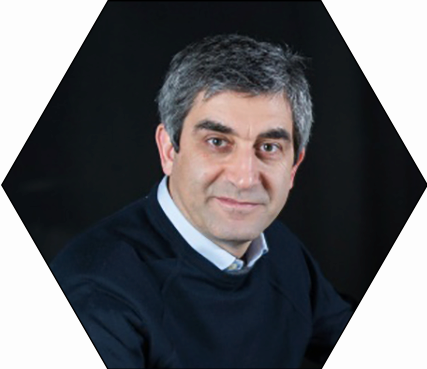
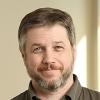
Andrea Cavalleri is a renowned physicist affiliated with both the University of Hamburg and the University of Oxford as a Professor of Physics. He serves as Founding Director of the Max Planck Institute for the Structure and Dynamics of Matter since 2013, having previously held leadership roles at the same institute and its predecessor departments. Laurea and PhD in Physics, University of Pavia (1994–1998) Postdoc, University of California, San Diego (1998–2001) Scientific staff, Lawrence Berkeley National Laboratory (2001–2005) His research focuses on ultrafast science, superconductivity, and nonlinear phononics. He pioneered femtosecond x-ray experiments to study atomic-structural dynamics in solids and demonstrated light-induced superconductivity in cuprates and fullerites. Current work involves X-ray Free Electron Lasers for photo-induced phase transitions. Selected publications highlight trends in ultrafast control of condensed matter phases, including superconducting plasma waves, Josephson solitons, and Dirac carrier dynamics in graphene. His work bridges experimental techniques with fundamental insights into quantum materials. Fellow of the American Physical Society (2011), Institute of Physics (2015), and AAAS (2016) Max Born Medal (2015), Dannie Heinemann Prize (2015), ERC Synergy Grant (2013) David Shirley Award (2004) and European Young Investigator Award (2004) Cavalleri's research has driven the development of tools for studying non-equilibrium phenomena in complex solids, enabling new directions in materials science and quantum physics. He has held named lectureships at institutions like Collège de France and Uppsala University.
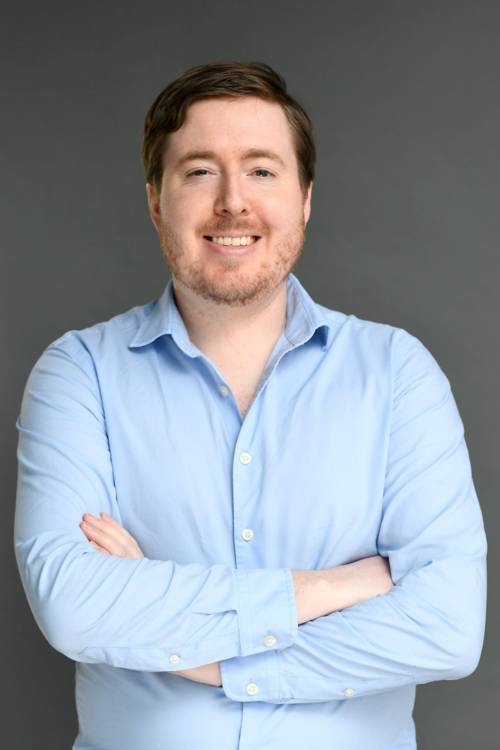
Jon Simon is the Joan Reinhart Professor and Professor of Applied Physics at Stanford University . He leads the Simon Lab , which explores the convergence of condensed matter physics , quantum optics , and quantum information science , focusing on creating synthetic materials from light and investigating topological and strongly correlated quantum systems. His research spans constructing photonic materials in quantum circuits, studying small quantum systems with strong correlations, and applying Hamiltonian engineering to realize exotic states of matter. The lab has achieved milestones like the first Mott insulator of photons and topologically insulating circuits . Collaborative projects with the Schuster Lab leverage superconducting quantum circuits for synthetic matter studies. Jon's students include Adam Shaw (PhD, now at Stony Brook) Lavanya Taneja (PhD, now at Atom Computing) Ruichao Ma (Postdoc, now faculty at Purdue) among others. The lab's recent publications focus on cavity arrays, hybrid quantum systems, and topological photonics. Research is supported by grants and affiliations with Stanford's Department of Applied Physics and interdisciplinary institutes.
Mark Foster is an Associate Professor in the Department of Electrical and Computer Engineering at Johns Hopkins University, with a primary appointment in the Whiting School of Engineering. He is also a Fellow of the Hopkins Extreme Materials Institute. His research focuses on developing ultrahigh-speed optical systems at the intersection of photonics and electronics, emphasizing photonic devices and information theory to advance imaging, sensing, and communications technologies. Applications include quantum-optical systems, ultrawide-bandwidth microwave photonics, and terahertz-rate imaging systems. Dr. Foster received his BS (2003), MS (2007), and PhD (2008) in Applied and Engineering Physics from Cornell University. Before joining Johns Hopkins in 2010, he served as a postdoctoral associate there. His work has been funded by the NSF, IARPA, DTRA, and NIH, resulting in over 200 publications and eight patents. He has held leadership roles, including chairing the IEEE Photonics Society’s Baltimore chapter (2011–2014). Research Highlights: World-leading imaging systems achieving terahertz frame rates Quantum-optical platforms and nonlinear photonic materials (e.g., NbTiOx) Secure authentication via physically unclonable functions (PUFs) Applications in fusion energy diagnostics and medical imaging His awards include the NSF CAREER Award (201?), DARPA Young Faculty Award, and ONR Young Investigator Award. Current projects explore machine learning-resistant PUFs, multi-modal imaging systems, and photonics for extreme environments.
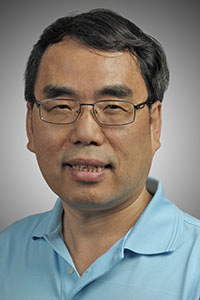
Qing Li is an Associate Professor in the Department of Electrical and Computer Engineering at Carnegie Mellon University (CMU), part of the College of Engineering. He holds a B.E. in Electronics Engineering from Tsinghua University (2006) and a Ph.D. in Electrical and Computer Engineering from Georgia Institute of Technology (2013). Prior to CMU, he worked as a postdoctoral researcher at the National Institute of Standards and Technology (NIST), where he developed quantum frequency conversion and microresonator-based optical systems. His research focuses on light-matter interactions in integrated photonics, emphasizing nonlinear optics and quantum information processing. He has pioneered silicon carbide and aluminum nitride platforms for chip-scale quantum technologies and optical metrology. Dr. Li has been recognized with prestigious awards including the Darpa Young Faculty Award (2019), OSA Paul F. Forman Team Engineering Excellence Award (2020), and Sigma Xi Best Ph.D. Thesis Award (Georgia Tech). His work bridges classical and quantum information systems, with applications in secure communication, atomic systems interrogation, and high-precision frequency synthesis. He actively contributes to the Pittsburgh Quantum Institute (PQI), advancing regional quantum engineering initiatives. His research group’s key projects include developing compact optical frequency synthesizers, soliton microcombs for communication grids, and entangled photon pair sources for quantum networks. Grants and collaborations support his exploration of novel photonic materials and devices, targeting advancements in both fundamental science and applied technologies.
Eugene Demler is a Full Professor at the Department of Physics, ETH Zurich. Previously, he held academic positions at Harvard University from 1998 to 2021, including Assistant Professor (2001-2004), Associate Professor (unspecified dates), and Full Professor (2005-2021). His work bridges theoretical condensed matter physics, atomic and molecular physics, quantum optics, and quantum simulations. Education: MSc in Physics, Moscow Institute of Physics and Technology (1993) Diploma work, Lebedev Physics Institute (1992-1993) PhD in Theoretical Physics, Stanford University (1998), supervised by S.C. Zhang Demler's research focuses on strongly correlated quantum systems, spintronics, quantum sensing, and photo-induced phase transitions. His recent publications explore topics such as quantum polarons, Josephson plasmons, magnon dynamics, and terahertz spectroscopy in superconductors. He has pioneered hybrid quantum-classical methods for electron-phonon systems and cavity-mediated quantum materials. His Google Scholar articles (2023-2025) span theoretical and experimental domains, with keywords including Quantum Physics , Condensed Matter Physics , and Quantum Optics . Subfields include Quantum Control , Superconductivity , Spin Waves , Quantum Sensing , Non-Equilibrium Dynamics , and Quantum Simulation . Scientific Awards: Hamburg Prize for Theoretical Physics (2021) Simons Investigator (2021) Moore Distinguished Scholar (2020) Hanna Visiting Scholar (2019) Highly Cited Researcher (2017-2020) Senior Fellow at ETH Zurich's Institute for Theoretical Studies (2015) Simons Fellowship (2015) Distinguished Scholar at Max Planck Institute of Quantum Optics (2015) Thomson Reuters Highly Cited Researcher (2014) Siemens Research Award (2006) Johannes Gutenberg Lecture Award (2006) NSF Career Award (2002) Sloan Fellowship (2002) Demler teaches courses such as Statistical Physics and Strongly Correlated Systems in Atomic and Condensed Matter Physics . His work integrates theoretical modeling with experimental collaborations, particularly in quantum optics and condensed matter systems.
Angela Kou is an Assistant Professor in the Department of Physics at the University of Illinois at Urbana-Champaign, specializing in the intersection of quantum information science and condensed matter physics. Her laboratory develops novel superconducting circuit elements and qubits, while also utilizing superconducting circuits to investigate topological materials with potential applications in quantum computing. She actively seeks postdoctoral researchers and graduate students to explore superconducting qubit engineering and quantum material sensing. Her research integrates quantum information , topological materials , and superconducting circuit design . Recent publications demonstrate expertise in fluxonium qubit control , quantum dot Josephson junctions , and parafermion zero modes in exotic heterostructures. She contributes to advancing cryogen-free dilution refrigerator technology for scanning probe microscopy applications. Current research trends focus on quantum coherence optimization , phase-slip qubit operation , and vibration mitigation in cryogenic systems. Her work receives support from the Air Force Office of Scientific Research, Army Research Office, IBM-Illinois Discovery Accelerator Institute, and the National Science Foundation. Collaborations span multiple institutions, with key partnerships at Stanford University and SLAC National Accelerator Laboratory. Her technical contributions include microwave impedance microscopy , scanning single-electron transistor measurements , and vibration analysis for quantum device stability.
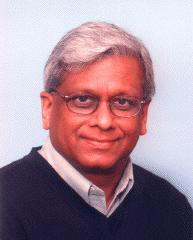
Govind P. Agrawal is a Professor of Optics and Physics at the University of Rochester. He holds concurrent positions as a Fellow of the IEEE and the Optical Society of America (OSA). His research focuses on theoretical optics, nonlinear optics, laser physics, and semiconductor lasers, with notable contributions to fiber optics and optical communications. Education: Agrawal earned his MS (1971) and PhD (1974) from the Indian Institute of Technology, New Delhi. He has held prior positions at École Polytechnique (Paris), City University of New York, and AT&T Bell Laboratories before joining the University of Rochester in 1989. Research Interests: Agrawal's work explores quantum electronics, soliton dynamics, Raman scattering, and temporal reflection phenomena. He has authored seminal books such as Nonlinear Fiber Optics and Semiconductor Lasers , and published over 300 journal articles. His recent studies emphasize spatiotemporal dispersion, multimode fiber optics, and integrated photonics systems. Editorial Roles: He served as Topical Editor for Journal of the Optical Society of America B (1993–1998) and currently contributes to editorial boards for optics journals and book series. Awards: Honored as a Fellow of the IEEE and OSA for his transformative contributions to optics and photonics. Key Contributions: Pioneered theories on graded-index fiber amplifiers, temporal reflection in nonlinear media, and soliton-based technologies. His research bridges fundamental optics with practical applications in telecommunications and photonics systems.
Özüm Asirim is a Researcher at the Technical University of Munich (TUM) under the Associate Professorship of Computational Photonics led by Prof. Christian Jirauschek. Her work focuses on computational photonics , quantum optics , and nonlinear optical phenomena , particularly in micro-resonators and semiconductor devices. Education: Ph.D. in Electrical Engineering from Middle East Technical University (Ankara, Turkey). Research spans optical parametric amplification , Fourier domain mode-locked lasers , self-phase modulation , and machine learning applications in photonics . Her studies include optimizing gain factors, enhancing harmonic generation, and modeling supercontinuum sources via carrier injection. Recent publications (2019–2023) highlight interdisciplinary approaches, merging photonics with computational finance and nonlinear dynamics . She contributes to EU Project QOMBS and teaches courses like Python for Engineering Data Analysis and Quantum Engineering and Machine Learning seminars. Collaborations include Prof. Christian Jirauschek (TUM), Prof. Mustafa Kuzuoğlu (Middle East Technical University), and teams in computational photonics and quantum optics. Her work impacts semiconductor physics , laser technology , and adaptive optical systems .
F. Levent Degertekin is a Regents' Entrepreneur and the George W. Woodruff Chair in Mechanical Systems and Professor at the George W. Woodruff School of Mechanical Engineering at Georgia Institute of Technology. His office is located in Love Building, room 311B, and his contact email is levent.degertekin@me.gatech.edu. Dr. Degertekin's academic journey includes a Ph.D. in Electrical Engineering from Stanford University (1997), an M.S. in Electrical Engineering from Bilkent University, Turkey (1991), and a B.S. in Electrical Engineering from Middle East Technical University, Turkey (1989). Dr. Degertekin's research focuses on micromachined ultrasonic devices and systems for medical applications, particularly in intravascular ultrasound imaging, therapeutic ultrasound, and acousto-optical sensors for MRI. His work spans from fundamental research on novel transduction methods to complete catheter-based imaging systems close to commercialization. He has made significant contributions to capacitive micromachined ultrasonic transducers (CMUTs), developing diffraction grating based optomechanical sensing methods now commercialized by Silicon Audio, novel atomic force microscopy imaging probes, and micromachined ultrasonic ejector structures for cell transfection commercialized by OpenCell Technologies. His research integrates acoustics, optics, and their combinations for various medical applications, utilizing conventional microfabrication (MEMS) and integrated circuit technologies. The Degertekin lab exposes students to applied physics, electrical, mechanical and biomedical engineering, biology, and biomimetic systems, providing them with thorough theoretical and experimental education in acoustics and optics while learning interdisciplinary research. Dr. Degertekin's work has received significant media attention, including coverage in IEEE Spectrum, Wired Magazine, The New York Times, and Fox Business News, highlighting innovations such as handheld ultrasound probes, MRI safety sensors, and minimally invasive cardiac imaging technologies. IEEE Fellow for 'Contributions to micromachined ultrasonic and optomechanical transducers and systems,' 2022 IEEE UFFC Society Inaugural Carl Hellmuth Hertz Ultrasonic Achievement Award, 2014 George W. Woodruff School Outstanding Achievement in Commercialization and Entrepreneurship Award, 2024 National Science Foundation CAREER Award, 2004-2009 Whitaker Foundation Biomedical Engineering Research Grant Award, 2001 66 US and 6 International Patents Dr. Degertekin has mentored numerous students who have gone on to make significant contributions in the field. Several of his students have received IEEE Ultrasonics Symposium Best Student Paper Awards, including Jeff McLean (2003), Sheng-Yu Peng (2006), Rasim O. Guldiken (2005 and 2007), and Toby Xu (2014). His research has been supported by various grants including the NSF CAREER Award and Whitaker Foundation grant. His work has led to multiple commercial ventures including Silicon Audio and OpenCell Technologies. The Degertekin Group at Georgia Tech focuses on transducers and systems for medical imaging and sensing, with current projects including capacitive parametric transducers, acousto-optic sensors for MRI, novel transducer methods for focused ultrasound in the brain, microsystems for intravascular and intracardiac ultrasound imaging, and CMUT-on-CMOS systems for IVUS imaging.
Jonas Bylander is a Professor at Chalmers University of Technology in the Department of Microtechnology and Nanoscience, specifically within the Quantum Technology division. He leads a research group focused on developing quantum computers using superconducting circuits.
Kevin P. O'Brien is an Associate Professor in the Department of Electrical Engineering and Computer Science (EECS) at the Massachusetts Institute of Technology (MIT), affiliated with the Research Laboratory of Electronics (RLE). He leads the Quantum Coherent Electronics (QCE) group, focusing on advancing superconducting quantum computing, microwave quantum optics, and quantum metamaterials. His research explores nonlinear and quantum-mechanical light-matter interactions using superconducting circuits, aiming to improve quantum technologies like qubits and amplifiers. Education: B.S. in Physics from Purdue University, Ph.D. in Physics from UC Berkeley, and postdoctoral research at UC Berkeley developing superconducting quantum processors. His group collaborates with MIT Lincoln Laboratory and institutions nationwide. Research Interests: Quantum computing hardware, superconducting circuits, parametric amplifiers, qubit measurement systems, and metamaterials for quantum applications. His work emphasizes scalable architecture design, noise reduction, and novel device concepts. Key projects include directional qubit readout resonators, Floquet-mode amplifiers, and quarton couplers for ultrafast readout. The group actively engages in training graduate students and postdocs, emphasizing open collaboration and problem-solving in quantum technologies. Advising & Grants: Supervises a dynamic team of graduate students and postdocs. Students like Bright Ye and Kaidong Peng have contributed to award-winning projects. The group receives support through fellowships (e.g., Jin Au Kong, NSF GRFP) and industry partnerships. Labs/Teams: Quantum Coherent Electronics Group at MIT, collaborating on quantum device fabrication, theoretical modeling, and experimental validation of quantum systems.
Zenghu Chang is a Distinguished Professor of Physics and Optics at the University of Central Florida, leading the Institute for the Frontier of Attosecond Science and Technology. He holds the UCF Trustee Chair and Pegasus Professor titles. His research focuses on ultrafast laser science, attosecond phenomena, and high-order harmonic generation. Chang earned his PhD from the Chinese Academy of Sciences and has held academic positions at the University of Michigan and Kansas State University. Education: BSc from Xi’an Jiaotong University (1982), PhD from Xi’an Institute of Optics and Precision Mechanics (1988). Postdoctoral research at the Rutherford Appleton Laboratory (1991-1993) and the University of Michigan (post-1996). Research Interests: Attosecond science, terawatt femtosecond lasers, ultrafast atomic physics, coherent XUV/X-ray sources, high-order harmonic generation, and advanced laser technology. His work includes pioneering contributions like the Double Optical Gating technique and generating the world-record 67-attosecond laser pulse. Awards: APS Fellow, Pegasus Professor (2016), Mercator Professorship (2007), and multiple national and international honors. His publications exceed 150 articles in top journals like Optics Letters and Nature Communications . Advising & Grants: Supervised numerous PhD students in optics and physics. Active in securing research grants for attosecond science and laser development. Collaborates internationally on projects involving ultrafast X-ray sources and advanced laser systems. Labs/Teams: Directs the Florida Attosecond Science and Technology group and leads the Institute for the Frontier of Attosecond Science and Technology, advancing cutting-edge laser and X-ray technologies.
Robert M. Weikle, II is a Professor in the Charles L. Brown Department of Electrical and Computer Engineering at the University of Virginia, with a courtesy appointment in the Department of Physics. He earned his B.S. from Rice University (1986), M.S. (1987), and Ph.D. (1992) in Electrical Engineering from Caltech, followed by postdoctoral work at Chalmers University of Technology (1992). His research focuses on millimeter-wave and terahertz electronics , applied electromagnetics, integrated antennas, low-noise sensors, and heterogeneous integration of compound semiconductors. His work bridges electronics and photonics for spectrum access, with applications in astronomy, spectroscopy, and metrology. He has published extensively on micromachined silicon substrates, superconducting materials, and emerging technologies. Scientific Awards: IEEE Microwave Prize (1993) David A. Harrison III Award (1999) University of Virginia All-University Outstanding Teaching Award (2000) Edlich-Henderson Innovator of the Year (2016) Fulbright Scholar (2001) As Chief Technology Officer and co-founder of Dominion Microprobes, Inc., he commercializes micromachined wafer probes for high-frequency metrology. His lab, located in E220 Thornton Hall and the Jesse W. Beams Physics Building, has produced 15+ recent publications on submillimeter-wave devices, THz probes, and calibration techniques.
Yongjie Yuan is a Researcher at the Technical University of Munich under the Associate Professorship of Computational Photonics within the TUM School of Computation, Information and Technology. His research focuses on quantum cascade devices, Josephson traveling-wave parametric amplifiers, and noise modeling in superconducting circuits. Institution: Technical University of Munich School: TUM School of Computation, Information and Technology Academic Rank: Researcher Email: yongjie.yuan@tum.de Yuan's work integrates quantum mechanics with computational photonics , emphasizing the modeling of superconducting circuits and microwave parametric amplifiers . He investigates dissipative-dispersive systems , flux-driven amplifiers , and nonlinear junction topologies to enhance quantum device performance. Recent publications highlight his contributions to quantum amplifier design , Josephson junction modeling , and noise dissipation analysis in microwave photonics. His research is associated with the EU Project QOMBS, focusing on quantum cascade devices and parametric amplification. Quantum Cascade Devices Josephson Traveling-Wave Parametric Amplifiers Quantum Noise Modeling Nonlinear Circuit Analysis Microwave Photonics Yuan actively participates in teaching and supervising activities, contributing to courses on computational photonics , quantum engineering , and partial differential equations for electrical engineering. He collaborates with researchers like Christian Jirauschek and Michael Haider on quantum device simulations.
Prof. Stefan Eisebitt is a Director at the Max-Born-Institut für Nichtlineare Optik und Kurzzeitspektroskopie and holds a Professorship in Experimental Physics at the Technische Universität Berlin. His research focuses on ultrafast magnetization dynamics, nanoscale structure analysis, and novel imaging techniques using coherent XUV/X-ray spectroscopy. He leads the Transient Electronic Structure and Nanoscience group and is involved in cutting-edge projects involving femtosecond laser-driven X-ray sources and spintronic materials. Education and Career: He obtained his Diplom (1992) and Ph.D. (1996) from Cologne University, followed by postdoctoral research at the University of British Columbia and Forschungszentrum Jülich. He became a Privatdozent at Humboldt-Universität Berlin (2005) and held professorships at TU Berlin (2008–2015) and Lund University (2012–2015) before his current role since 2015. He leads the Functional Nanomaterials joint research group between Helmholtz-Zentrum Berlin and TU Berlin. Research Interests: His work spans transient electronic structure, ultrafast optical manipulation of magnetization, nanoscale material characterization, and advanced coherent imaging methods. Key techniques include XUV/X-ray spectroscopy, laser-driven plasma sources, and femtosecond time-resolved studies. Professional Roles: He chairs the Physikalische Gesellschaft zu Berlin and the Elettra Scientific Advisory Council. He has held leadership roles in the European XFEL Scientific Advisory Committee and the Komitee für Forschung mit Synchrotronstrahlung (KFS). His lab develops state-of-the-art setups for ultrafast X-ray scattering and holography.