Dr. Rajesh Bera is a Research Fellow at ICFO's Functional Optoelectronic Nanomaterials group specializing in quantum-confined nanostructures. His research examines ultrafast carrier dynamics, excitonic properties, and optoelectronic applications of nanomaterials including quantum dots, nanoplatelets, and hybrid nanostructures. Current investigations focus on intraband transitions in doped nanocrystals, orientation-dependent excitonic behavior in 2D materials, and charge transfer mechanisms in heterostructure devices. Work bridges fundamental photophysics with applications in photodetection, sensing, and energy conversion. Recent publications demonstrate expertise in time-resolved spectroscopy of quantum materials, nanomaterial synthesis via colloidal chemistry, and rational design of optoelectronic devices. Continually develops novel characterization methods to probe ultrafast processes at nanoscale interfaces.
Ranjan Singh is a Professor at the Division of Physics, Nanyang Technological University (NTU) Singapore, specializing in terahertz photonics and metamaterials. He holds an elected fellowship from OPTICA (OSA) for pioneering work in ultrafast terahertz photonics, active metamaterials, and sensors. His research focuses on hybrid THz-electronic-photonic technologies for 6G communications, topological photonics, spintronics, quantum materials, and high-Tc superconductors. Education: B.Eng. in Telecommunications (Bangalore University, 2001); M.Tech in Photonics (Cochin University, 2004); Ph.D. in Photonics (Oklahoma State University, 2009). Postdoctoral research at Los Alamos National Laboratory (2009–2013). Research emphasizes on-chip THz topological photonics for next-gen communication systems, with notable achievements including a $7M grant for TERACOMM (on-chip THz topological photonics). His work integrates AI-driven beamforming, reconfigurable metasurfaces, and phase-change materials for adaptive THz systems. Key awards include the 2020 Web of Science 'Top 1% Highly Cited Researcher' distinction. His lab, TeraX Labs (founded 2013), develops cutting-edge technologies like THz brain-computer interfaces, quantum emitters, and spintronic sensors. Over $12M in competitive grants has fueled innovations in THz integrated circuits, tunable optical coatings, and ultra-sensitive biosensors. Advancing 6G/XG wireless, Singh's team designs topological beamformers, intelligent reflecting surfaces (IRS), and terahertz metamaterials for multi-link systems. His work bridges theoretical physics and applied engineering, with a focus on energy-efficient, reconfigurable photonic systems.
Farhad Rachidi-Haeri is a Titular Professor and Head of the Electromagnetic Compatibility (EMC) Group at EPFL. His expertise spans EMC research, lightning electromagnetics, time reversal techniques, and fault location in power systems. He has led the EMC Group since the 1980s, with funding from the Swiss National Science Foundation, European Union, and private sector collaborations. His work involves international partnerships with institutions like the University of Toronto and KTH. Education: PhD in Electrical Engineering from EPFL (1991), M.S. from EPFL (1986). Roles: President of Swiss National Committee of URSI (2012–2020), Editor-in-Chief of IEEE Transactions on EMC (2013–2015), and member of the Academy of Sciences of Bologna Institute (2019). Research Focus: Lightning interaction with infrastructure, electromagnetic field modeling, time reversal applications for fault detection, and high-frequency transient analysis. His work bridges theoretical physics and engineering, addressing challenges in power systems, lightning protection, and aerospace. Awards: IEEE EMC Technical Achievement Award (2005), Berger Award (2016), and Distinguished Honorary Professor at Tsinghua University (2024). Over 400 peer-reviewed papers and 500 conference contributions reflect his prolific research output. Labs/Teams: Leads the EMC Laboratory at EPFL, focusing on experimental and numerical studies of electromagnetic phenomena. Collaborates with global networks on projects like Laser Lightning Control and structural lightning protection for wind turbines.
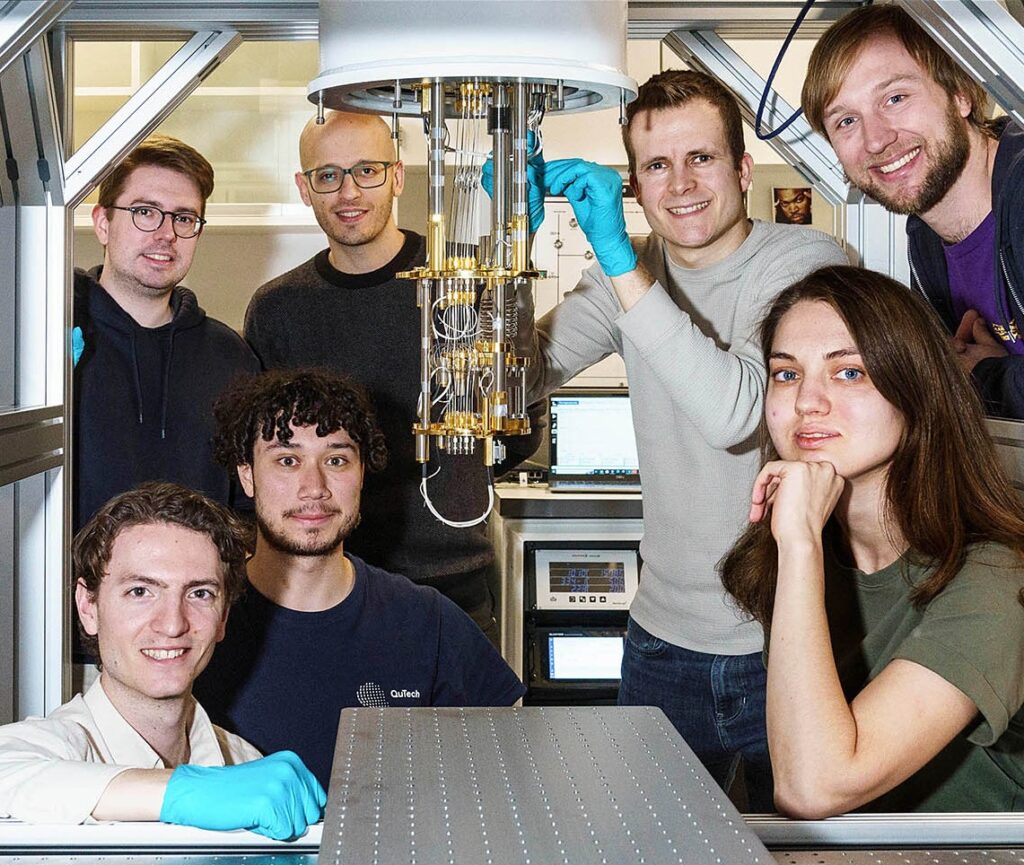
Carlos Errando Herranz serves as an Assistant Professor in the Quantum and Computer Engineering Division at Delft University of Technology's Faculty of Electrical Engineering, Mathematics and Computer Science (EEMCS) and as a Principal Investigator at QuTech. His research focuses on developing scalable quantum photonic integrated circuits using semiconductor fabrication processes compatible with existing infrastructure for quantum internet applications. He received Bachelor's and Master's degrees from Universitat Politècnica de València (2013) and a PhD in Micro and Nanosystems from KTH Royal Institute of Technology (2018), followed by postdoctoral positions at KTH and MIT as a Marie Curie fellow. His lab investigates quantum photonics, integrated photonics, and color centers with emphasis on diamond tin-vacancy systems and silicon-based quantum emitters. Recent publications demonstrate strong expertise in tuning quantum emitters via strain engineering, heterogeneous integration of spin-photon interfaces, and MEMS-enabled reconfigurable photonics. Key advancements include cavity-enhanced quantum memories, superconducting detector integration, and spectral control of solid-state emitters for quantum networks. Dr. Herranz advises seven graduate students including PhD candidates Vicky Dominguez Tubio, Arjan Mejas, Matteo Pirro, Christian Primavera, Jan Riegelmeyer, and Elena Volkova, along with Master student Bram Zijlstra. His team comprises postdocs Lin Jin and Pat Laferriere, and interns Elsa Herranz Valiente and Ernest Staffetti Cruañas. The Errando Herranz Lab operates within QuTech's Quantum Internet Division at Delft University, maintaining specialized facilities for nanofabrication and optical characterization of quantum photonic devices. Current research directions include developing CMOS-compatible quantum memories operating at telecom wavelengths and scalable architectures for quantum repeaters.
Aydin Babakhani is a Professor in the Department of Electrical and Computer Engineering at the University of California, Los Angeles (UCLA), affiliated with the College of Life Sciences. He directs the Integrated Sensors Laboratory (ISL), which focuses on the design and implementation of integrated sensors and systems. His research spans high-speed wireless communication, terahertz technology, medical implants, radar systems, and industrial monitoring solutions. Research Interests: Prof. Babakhani's work integrates silicon-based technologies with applications across multiple domains. Key areas include: Silicon mm-Wave/THz transceivers and on-chip antennas for communication and sensing Wirelessly powered medical implants for biopotential monitoring and neural stimulation THz radar systems for micrometer-resolution imaging and vibration detection Energy harvesting solutions for batteryless sensors in industrial and biomedical applications CMOS-based optoelectronic systems and photonic computing accelerators His recent publications (2021-2025) demonstrate a strong emphasis on terahertz systems, wireless power transfer, and miniaturized medical electronics. Over 80% of his latest articles involve silicon-integrated solutions for biomedical implants or THz sensing, with emerging focus on AI-accelerated photonic computing and multi-Gbps wireless links.
Kristofer Pister is a Professor in the Department of Electrical Engineering and Computer Sciences at the University of California, Berkeley. He co-directs the Berkeley Sensor and Actuator Center (BSAC) and the Ubiquitous Swarm Lab. His career spans groundbreaking innovations in Micro/Nano Electro Mechanical Systems (MEMS), Control Systems, and Low-Power Circuits, with a focus on Smart Dust and synthetic insects. Education: Ph.D. and M.S. in EECS from UC Berkeley (1992, 1989); B.A. in Applied Physics from UC San Diego (1986). His research areas include MEMS , Control Systems , Robotics , and Integrated Circuits , with recent work on self-powered micro-sensors, crystal-free radios, and interplanetary swarm networks. Key awards include the ISA Albert F. Sperry Founder Award (2009) , Alexander Schwarzkopf Prize (2006) , and the NSF CAREER Award (1996) . He has authored numerous influential publications in wireless sensor networks and microrobotics. His lab, Ubiquitous Swarm Lab , explores distributed robotics and swarm intelligence. Pister emphasizes open collaboration in research, ethical conduct in academia, and efficient resource utilization for graduate students.
Ralph H. Colby serves as Professor of Materials Science and Engineering and Chemical Engineering at Pennsylvania State University's College of Earth and Mineral Sciences, holding the Corning Faculty Fellowship. His research focuses on molecular-level dynamics in complex fluids, particularly polymers, ionomers, and liquid crystalline systems. With over 130 publications and authorship of the textbook Polymer Physics (2003), he directs an active research program examining structure-property relationships in soft matter. B.S. in Materials Science and Engineering, Cornell University (1979) M.S. in Chemical Engineering, Northwestern University (1983) Ph.D. in Chemical Engineering, Northwestern University (1985) Professor Colby's research spans polymer physics, rheology, and materials for energy applications. His group employs mechanical rheology, dielectric spectroscopy, and scattering techniques to investigate ion transport in single-ion conductors for batteries, dynamics of glass-forming liquids, and self-assembly in polyelectrolyte systems. Current work emphasizes structure-property relationships in ionomers, liquid crystalline polymers, and branched architectures. Analysis of recent publications reveals consistent focus on ionomer membranes for energy applications, processing-structure relationships in advanced polymers, and fundamental dynamics of complex fluids. Key trends include increasing integration of computational modeling with experimental characterization, expansion into sustainable materials processing, and growing emphasis on applications in battery technology and biomedical materials. Penn State Faculty Scholar Medal for Outstanding Achievement (2022) Bingham Medal, Society of Rheology (2012) American Chemical Society Fellowship Corning Faculty Fellowship in Materials Science and Engineering Professor Colby leads multiple federally funded projects including NSF's 'Fundamental Studies of Flow-Induced Polymer Crystallization' and DOE's 'Conduction mechanisms and structure of ionomeric single-ion conductors'. His group maintains strong industry partnerships with Corning Incorporated and participates in interdisciplinary initiatives like the Penn State Intercollege Graduate Degree Program in Materials Science and Engineering. Current research includes collaborations on breast cancer adherence interventions in Rwanda and conjugated polymer development for flexible electronics. The Colby Research Group operates specialized facilities for rheological characterization, dielectric spectroscopy, and X-ray scattering at Penn State's Materials Research Institute. The team maintains active collaborations with national laboratories and international research groups, focusing on translating fundamental polymer physics discoveries into practical applications for energy storage and advanced manufacturing.
John Baillieul is Distinguished Professor at Boston University with joint appointments in Mechanical Engineering, Systems Engineering and Electrical & Computer Engineering. He directs experimental laboratories for real-time control of lightweight robotic systems and applies nonlinear control theory to complex multi-body, networked, and bio-inspired systems. Education: Ph.D., Harvard University Research Interests: Baillieul’s work spans robotics, nonlinear control, and networked systems. Early contributions resolved motion-planning for kinematically redundant manipulators; current themes include neuromimetic learning, vision-based navigation, and resilience of infrastructure networks such as power grids. His group couples rigorous geometric control with real-time hardware to create lightweight, high-performance robots and to uncover fundamental information limits in feedback systems. Recent Publication Trends (2021-2025): Over the past five years his output has concentrated on three synergistic directions: (i) neuromimetic and Koopman-based data-driven methods for estimating and controlling nonlinear systems, (ii) vision-based guidance and sparse optical-flow primitives for agile autonomous flight, and (iii) network-theoretic decomposition and information-rate studies for resilient operation of power grids and collective dynamics. Honors & Awards: IEEE Fellow 2025 Roger W. Brockett Control Systems Award Former Editor-in-Chief, IEEE Transactions on Automatic Control Affiliations & Service: He is a member of Boston University’s Center for Information and Systems Engineering (CISE), has served as Editor-in-Chief of IEEE Transactions on Automatic Control, and remains active in editorial and organizational roles across the IEEE control systems community.
Dr. Yunjie Yang is an Associate Professor at the University of Edinburgh's School of Engineering, with affiliations at the Edinburgh Futures Institute (EFI), the Edinburgh Generative AI Laboratory (GAIL), and the Edinburgh Centre for Robotics. He previously held the Chancellor's Fellow in Data Driven Innovation (2018-2023) and Bayes Innovation Fellow (2023-2024) positions. His research focuses on AI-powered sensing and imaging, machine learning, and soft sensors & electronics for robotics. Yang received his PhD in Engineering Electronics from the University of Edinburgh, MSc in Control Science & Engineering from Tsinghua University, and BEng in Measurement & Control Engineering from Anhui University. After his PhD, he worked as a Postdoctoral Research Associate in Chemical Species Tomography before securing his lectureship. His research interests center on developing intelligent sensing systems that replicate human perception capabilities for robotics and intelligent systems. He pioneers flexible sensing and imaging technologies across various scales through innovative multi-modal sensors, soft electronics, and their modeling using machine learning approaches. His work aims to enable autonomous physical artificial intelligence by bridging the gap between robotic systems and human-like perception. Analysis of his recent publications reveals a strong focus on soft robotics perception, particularly through electrical impedance tomography (EIT) and transformer-based architectures. His research spans medical imaging applications, digital twin modeling for industrial processes, and machine learning approaches for sensor data interpretation. The trend shows increasing integration of physics-informed deep learning with traditional tomographic techniques to achieve higher accuracy and efficiency. European Research Council (ERC) Starting Grant (2024) IEEE J. Barry Oakes Advancement Award (2024) IEEE I&M Society Graduate Fellowship Award (2015) Multiple Best Paper Awards Senior Member of IEEE Fellow of the International Society for Industrial Process Tomography Fellow of the Higher Education Academy ESI highly cited papers Dr. Yang serves as Associate Editor for IEEE Transactions on Instrumentation and Measurement and holds editorial positions with Scientific Reports and IEEE Sensors Journal. His research has been licensed to overseas research institutes and industry partners and received wide media coverage including BBC, EFE, USA Today, and STV. He has secured significant grant funding including the prestigious ERC Starting Grant. He leads the Edinburgh SMART Lab (Sensing/imaging + Machine Learning + Robotics), which aims to replicate human perception capabilities for robotics and advance flexible sensing technologies through innovative multi-modal sensors and machine learning approaches. The lab focuses on enabling autonomous physical artificial intelligence with applications spanning medical diagnostics, industrial monitoring, and advanced robotics systems.
Jean-Claude Besse is a Lecturer in the Department of Physics at ETH Zürich, specializing in superconducting circuits and quantum optics. His research focuses on quantum computing, microwave photonics, and artificial atoms. Research Interests: Besse works on the fabrication of superconducting circuits, modular quantum computing processors, and microwave quantum optics using artificial atoms. His work includes single-photon detection, parity measurements, entanglement stabilization, and quantum networking. He has developed technologies like high-fidelity multiplexed readout and tunable ZZ gates. Key Contributions: Besse led breakthroughs in non-destructive single-photon detection, deterministic remote entanglement, and loophole-free Bell inequality violations. His research enables error-corrected quantum communication protocols and scalable microwave quantum systems. Publications Trends: Recent articles emphasize modular quantum architectures, entanglement stabilization, and microwave photon engineering. Topics include cluster state generation, defect mode mitigation, and reinforcement learning for quantum feedback systems. Labs & Teams: Affiliated with the Laboratorium für Festkörperphysik at ETH Zürich, Besse contributes to advancing superconducting quantum technologies and microwave quantum optics.
Paul Prucnal is a Professor of Electrical and Computer Engineering at Princeton University, affiliated with the Princeton Materials Institute (PMI). He leads the Lightwave Communications Research Lab, focusing on ultrafast optical techniques for communication networks and neuromorphic photonics. His research spans optical security, CDMA networks, nonlinear signal processing, and photonic neurons. Education: Ph.D., Columbia University (1979) M.Phil., Columbia University (1978) M.S., Electrical Engineering, Columbia University (1976) A.B., Bowdoin College, summa cum laude (1974) Research Interests: Optical Network Security (eavesdropping/jamming countermeasures) Optical CDMA for broadband networks Silicon photonic neuromorphic computing RF interference cancellation in wireless systems Photonic spiking neurons mimicking biological organisms Awards: National Academy of Inventors Fellow (2017) 10+ teaching awards including Princeton's President's Award (2015) OSA/IEEE Fellowships (1992, 1997) Labs/Teams: Leads the Lightwave Communications Lab, collaborating with government/industry partners. Lab alumni like Prof. Bhavin Shastri have achieved international recognition. Grants/Publications: Over 350 journal papers, 22 U.S. patents. Authored/co-authored Neuromorphic Photonics (2017) and edited Optical Code Division Multiple Access (2019). Current projects include photonic tensor processors and real-time RF signal processing.
Jason Ritt is an Associate Professor of Brain Science (Research) and Scientific Director of Quantitative Neuroscience at the Robert J. and Nancy D. Carney Institute for Brain Science, Brown University. He holds affiliations with the Data Science Institute and collaborates across disciplines on quantitative research methods. Education : B.S., M.A., and Ph.D. in Neuroscience from Boston University (1997–2003). Research : Focuses on neural processing during active sensing and neuroengineering for neurostimulation. Combines electrophysiology, optogenetics, and theoretical approaches in rodent models. Develops closed-loop systems for studying sensory neural prosthetics and brain-machine interfaces. Key areas include synaptic diversity, neurocontrol algorithms, and sensory restoration. Teaching : Instructs NEUR 2100 NeuroPracticum, integrating hands-on neuroscience research training.
Dr. Abdullah Bal is a researcher at Georgia State University's College of Arts & Sciences, Department of Computer Science, with over 25 years of academic experience. He holds a Ph.D. in Electrical Engineering from Yildiz Technical University (2002) and has taught graduate and undergraduate courses in algorithms, machine learning, and optical pattern recognition. B.Sc., Electronics and Communication Engineering, Istanbul Technical University (1993) M.Sc., Electrical Engineering, Yildiz Technical University (1997) Ph.D., Electrical Engineering, Yildiz Technical University (2002) His research focuses on data science, machine learning, and hyperspectral imaging applications in fields ranging from forensic analysis to historical structure preservation. He has led projects funded by the U.S. Army Research Office and the Scientific and Technological Research Council of Turkey, including real-time target detection systems and digital imaging for historical structures. Recent publications demonstrate his expertise in kernel-based transforms, ensemble learning, and hyperspectral data analysis. His work spans food safety inspection, infrared target tracking, and biometric verification systems. Faculty Outstanding Research Publication Award (2006) Turkish Air Force Academy Science Competition Winner (2009) Best Paper Award at ICFCT (2016) Previously, he chaired YTU's Informatics Department (2009-2016) and participated in academic governance through the Electrical and Electronics College Executive Committee (2012-2015). You can contact him at abal@gsu.edu in room 739, 25 Park Place.
R. Edwin García is a Professor at the School of Materials Engineering at Purdue University, where he has been faculty since 2005. He holds appointments in the Materials Engineering department within Purdue's College of Engineering, specifically in the School of Materials Engineering located in the Neil Armstrong Hall of Engineering at Purdue's West Lafayette campus. His educational background includes: B.S. in Physics from the National University of Mexico (1996) M.S. in Materials Science and Engineering from Massachusetts Institute of Technology (2000) Ph.D. in Materials Science and Engineering with a minor in Applied Mathematics from Massachusetts Institute of Technology (2003) Professor García's research focuses on the design of materials and devices through the development of a fundamental understanding of the solid state physics of individual phases, their short and long range interactions, and associated microstructural properties and time evolution. His current research emphasizes establishing relationships between material properties and resultant performance and degradation in electrochemical systems. He integrates computational approaches ranging from kinetic Monte Carlo, phase field and level set methods, to finite elements, finite volumes, and symbolic computing. His work particularly addresses microstructure design, crystallographic texture, and grain boundary science and engineering to control the topology of underlying phases and establish practical relations between processing, microstructure, and material properties. His recent publications demonstrate a strong focus on lithium-ion battery technology, ferroelectric materials, and computational modeling of material behaviors. The research trends show increasing integration of machine learning with traditional computational methods, exploration of novel sintering techniques like flash sintering, and deeper investigation into the fundamental mechanisms of material degradation in energy storage systems. His work spans multiple length scales from atomistic to continuum modeling, reflecting a comprehensive approach to materials design and analysis. Professor García teaches several courses including MSE 230 (Structure and Properties of Materials), MSE 350 (Thermodynamics of Materials), MSE 597G (Modeling and Simulation of Materials), MSE 597I (Introduction to Computational Materials), and MSE 597N (Physical Properties of Crystals). He mentors graduate students in areas related to computational materials science, battery technology, and microstructural evolution. His research group, the Laboratory of Computational Microstructures, focuses on developing home-grown analytical theories and algorithms to resolve relevant time and length scales in materials systems. The group's work has significant implications for portable power sources, including rechargeable batteries and fuel cells, as well as for ferroelectric ceramic applications.
T. S. Eugene Ng is a Professor of Computer Science and Electrical & Computer Engineering at Rice University. He holds appointments in both departments and chairs the CS Grad Committee. His research focuses on network architectures, optical networking, and machine learning applications in distributed systems. Education: B.S. in Computer Engineering (with distinction and magna cum laude), University of Washington M.S. and Ph.D. in Computer Science, Carnegie Mellon University Research Interests: Developing robust network infrastructure, optical circuit-switched systems, congestion control, and efficient machine learning frameworks. Current projects include BOLD (Big data and Optical Lightpaths Driven) networking, telemetry systems like Söze, and gradient compression techniques for distributed training. Awards: IEEE Fellow (2023) Alfred P. Sloan Research Fellow (2009) National Science Foundation CAREER Award (2005) IBM Faculty Award (2009) Kavli Fellow Professional Activities: Chair of the 2018 ACM SIGCOMM Distinguished Dissertation Award Committee, Associate Editor for IEEE Transactions on Big Data, and organizer of multiple networking conferences/workshops. Active in program committees for SIGCOMM, NSDI, and CoNEXT. Teaching: Courses include Introduction to Computer Networks, Advanced Computer Networks, and seminars in distributed computing and network systems.