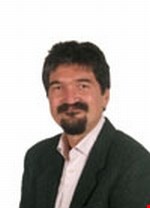
Colin Milburn holds the Gary Snyder Chair in Science and the Humanities at UC Davis, with appointments in Cinema and Digital Media, English, and Science and Technology Studies. He directs the UC Davis ModLab. His interdisciplinary scholarship examines relations between literature, science, and technology, with focus areas including science fiction, history of biology and physics, nanotechnology, video games, and digital humanities. Recent publications explore speculative technologies, citizen science games, and quantum technology's societal implications. As an expert on gaming culture, he has advised on game design and cost management for players. His work combines critical theory with media studies to analyze how games and speculative fiction shape scientific imagination.
Denina Simmons is an Associate Professor and Canada Research Chair (Tier II) at Ontario Tech University's Faculty of Science, affiliated with the Applied Biosciences (Graduate) and Biology (Undergraduate) departments. Her research focuses on Aquatic Toxicology , particularly using proteomics and metabolomics to non-lethally monitor aquatic wildlife health. She holds a PhD in Environmental and Life Sciences from Trent University (2009), an MSc in Watershed Ecosystems (Trent University, 2005), and a BSc in Applied Chemical and Biological Sciences (Ryerson University, 2000). Her work bridges bioinformatics and ecotoxicology , addressing human impacts on aquatic ecosystems through omics technologies. Recent projects include studying pharmaceutical bioaccumulation in fish, pesticide effects on bats, and lithium's physiological disruption in trout. She has delivered over 20 invited lectures since 2013, including at the University of Toronto and Environment Canada. Key awards include NSERC Post-doctoral and Doctoral Fellowships. Her research has produced over 30 peer-reviewed articles, emphasizing interdisciplinary approaches to environmental health challenges. She teaches BIOL 4020: Introduction to Environmental Toxicology and BIOL 4030: Advanced Topics in Environmental Toxicology .
Prof. Beat Ruhstaller is a Professor at the ZHAW School of Engineering, leading research in Organic Electronics and Photovoltaics. He specializes in perovskite solar cells, OLEDs, and optoelectronic device simulation. His work focuses on improving device efficiency through charge transport analysis, photon recycling, and material characterization. He heads multiple projects including 'Organic Electronics and Photovoltaics Projects', 'Perovskite-on-Silicon Tandem Photovoltaics', and 'Advanced Materials for Opto-Electronic-Ionic Devices'. Research Interests: Organic Electronics, Photovoltaic Technologies, Perovskite Materials, Device Simulation, Charge Transport Phenomena, and Optoelectronic Devices. His interdisciplinary approach combines experimental and computational methods to tackle challenges in energy-efficient optoelectronics. Key Projects: Tandem solar cell design, perovskite stability, and OLED degradation mechanisms. Over 90 peer-reviewed articles and book chapters, including contributions to Nature Communications , Advanced Materials , and Physical Review Applied . Active in international conferences like EU PVSEC and SID.
Dr. Xiaofeng Qian is an Assistant Professor of Physics at Stevens Institute of Technology’s Charles V. Schaefer, Jr. School of Engineering and Science. He leads the Quantum Inspired Coherence Optics Research Lab, focusing on quantum-classical connections in optical systems, including wave-particle duality, entanglement, and coherence. His work bridges theoretical and experimental research, with notable contributions to quantum-inspired classical optics and coherence theory. Dr. Qian earned his Ph.D. in Quantum Optics from the University of Rochester (2014) and held roles as a Research Associate and Visiting Scientist there before joining Stevens in 2019. His research has been recognized by prestigious awards, including Physics World’s Top 10 Breakthroughs of 2021 and its 10 most popular physics stories of 2023. Research Interests: Dr. Qian’s work explores foundational quantum phenomena using classical optics analogs. Key areas include: Quantum-classical connections in cavity QED and magnonics Entanglement and coherence quantification Super-resolution imaging enhanced by entanglement Quantum duality and its experimental emulation Professional Contributions: He serves on academic committees at Stevens and is a Photonics Topical Editor for IEEE. Notable advising includes mentoring students like Erin, Pawan, and Guogan Zhao. His lab has published in journals like Physical Review Research , Optica , and Advances in Optics and Photonics . Labs/Teams: The Quantum Inspired Coherence Optics Lab focuses on experimental and theoretical advancements at the quantum-classical interface, emphasizing practical applications in quantum information and optics.
Mark Bo Jensen is an Assistant Professor (Tenure track) at the Department of Engineering Technology and Didactics, Energy Technology and Computer Science at the Technical University of Denmark (DTU). His work bridges engineering and cognitive sciences through the emerging field of Perception Engineering. His research focuses on Extended Reality (XR) and Virtual Reality (VR) technologies to model and understand human perception and cognition. With over 10 years of expertise in real-time computer graphics, he develops immersive systems for applications in data visualization, medical testing, and geometric morphometrics. His recent publications highlight a strong trend in leveraging VR for precise human interaction tasks, such as anatomical landmark annotation and visual field testing, as well as advancing rendering techniques using diffusion models and mesh optimization. This reflects a multidisciplinary approach combining computer science, perception, and real-world applications. He has contributed to multiple research projects, including AL-EYE: The Visual Aid and Virtual Reality-Based Visualization of Geometric Data, where he served both as a PhD student and a project participant. These projects emphasize VR-based tools for data understanding and visualization. Assistant Professor (Tenure track), DTU PhD in Virtual Reality-Based Visualization of Geometric Data, completed June 2023 Project participant in AL-EYE: The Visual Aid (2025) While no formal advisees are listed, his role as a faculty member suggests future student supervision. He has collaborated extensively with researchers such as Jeppe R. Frisvad, Jakob Andreas Bærentzen, and Vedrana A. Dahl.
Jeremy P. Bos is an Assistant Professor in the Department of Electrical and Computer Engineering at Michigan Technological University. He serves as a Faculty Advisor for the Robotic Systems Enterprise and is affiliated with professional societies including SPIE (since 2011), OSA (since 2003), and IEEE. His work bridges engineering and optical sciences, with a focus on imaging through turbulent environments. PhD, Electrical Engineering (2012), Michigan Technological University MS, Electrical Engineering (2003), Villanova University BS, Electrical Engineering (2000), Michigan Technological University Dr. Bos’s research spans atmospheric optics , statistical optics , and quantum optics , with applications in image and signal processing , autonomous vehicles , and industrial automation . His work addresses challenges in imaging through atmospheric turbulence, including speckle noise mitigation, phase compensation, and adaptive optics. He also investigates machine intelligence for optimizing reconstruction algorithms. Recent publications highlight trends in non-Kolmogorov turbulence modeling , multiframe blind deconvolution (MFBD) , and hybrid adaptive optics systems . His studies focus on long horizontal-path imaging, anisoplanatic conditions, and performance metrics for turbulence correction. Scientific recognition includes: NRC Research Associateship Program Award CLEO 2012 Maiman Student Paper sEMI-Finalist Dr. Bos previously led the Paulding Lights Activity and contributed to SPIE student leadership committees. His expertise extends to electromagnetic compatibility (EMC) and RF system design , informed by industrial roles at General Motors, Johnson Controls, and Lockheed Martin.
Nathan Wittenberg is an Associate Professor in the Department of Chemistry at Lehigh University , where he has been since 2016. His research focuses on bioanalytical chemistry and biomembrane interactions , particularly lipid bilayer dynamics and protein-lipid interactions crucial to nervous system function. Education: B.S. in Chemistry (University of Minnesota), Ph.D. in Chemistry (Pennsylvania State University) His work investigates: Modulation of protein-lipid interactions by membrane structure/composition Lipid oxidation effects on membrane properties and immune interactions Antibiotic resistance mechanisms in bacterial outer membrane vesicles Microfluidic and nanofabrication approaches for membrane analysis Recent publications highlight trends in biomembrane engineering , oxidized lipid dynamics , and extracellular vesicle characterization . Current students include Dane Santa (NSF Graduate Research Fellow) and Aarshi Singh . Awards include: NSF Graduate Research Fellowship (for student Dane Santa) Lab facilities span multiple Mudd Building locations (657, 589) with equipment for optical microscopy , mass spectrometry , and nanocontact printing . Collaborations bridge biochemistry , medical research , and engineering disciplines.
Sergio Valenzuela is an ICREA Research Professor and leader of the Physics and Engineering of Nanodevices Group at ICN2 since July 2008. His work focuses on nanoscale materials for spintronics , quantum computation , and quantum metrology , with a particular emphasis on 2D materials and their heterostructures. He earned a PhD in Physics (2001) from Universidad de Buenos Aires , followed by postdoctoral positions at Harvard University and MIT . His research has pioneered methods like non-local devices for spin Hall effect studies and thermopiles for magnon drag isolation. Article trends include advancements in spin-charge interconversion , terahertz spin-light coupling , and topological insulator heterostructures , reflecting his expertise in 2D materials, spintronics, and quantum transport. Scientific recognition : Giambiagi Prize (2001) IUPAP Young Scientist Prize in Magnetism (2009) ERC Consolidator Grant (2012) He has authored over 70 high-impact publications in journals like Nature , Science , and Physical Review Letters , and holds four patents and five book chapters.
Christophe Bailly is the Director of the Laboratory of Fluid Mechanics and Acoustics (LMFA UMR5509) and a Professor at École Centrale de Lyon, France. His career spans academic roles at École Centrale Paris (1995-2006) and École Nationale Supérieure des Techniques Avancées (2001-2020), alongside membership in the Institut Universitaire de France since 2007. He specializes in turbulence, aeroacoustics, sound propagation, and high-resolution numerical methods. His research focuses on jet noise , ducted flow acoustics , and advanced diagnostic techniques like Interferometric Rayleigh Scattering. He has co-authored over 120 peer-reviewed articles and a textbook on turbulence with Geneviève Comte-Bellot. Notable scientific awards include the Yves Rocard Prize (1996), Alexandre Joannidès Prize (2001), Air & Space Academy Medal (2016), CEAS Aeroacoustics Award (2020), and the French Medal (2023). He serves as Associate Editor for the AIAA Journal and Advisory Editor for Flow, Turbulence and Combustion .
Prof. Sebastian Kaiser is a full professor at the University of Duisburg-Essen's Institute for Combustion and Gas Dynamics, where he leads research on reactive fluid dynamics since 2011. His academic background includes a Bachelor's from Dartmouth College, Diplomingenieur from RWTH Aachen, and PhD from Yale University, followed by postdoctoral work at Sandia National Laboratories. Research Focus: Kaiser specializes in optical diagnostics for reactive systems with emphases on: High-speed imaging of combustion processes Nanoparticle synthesis via spray-flame techniques Tribology and fluid-structure interactions Engine diagnostics using laser-based methods His work bridges experimental techniques and simulation development for energy and propulsion systems. Publication Trends: Recent articles (2023-2025) demonstrate consistent focus on advanced optical diagnostics applied to combustion systems, nanoparticle synthesis, and engine research. Key methodologies include laser-induced fluorescence, high-speed imaging, and machine learning for fluid dynamics analysis. Awards & Honors: Harding-Bliss Prize for Engineering Excellence (Yale, 2005) SAE Excellence in Oral Presentation Award (2008) NRW Returning Scientists Grant (2010) Professional Affiliations: Member of Society of Automotive Engineers (SAE) and The Combustion Institute, with extensive experimental facilities for reactive flow characterization.
David Go is the Vice President and Associate Provost for Academic Strategy at the University of Notre Dame, where he also holds the Viola D. Hank Professorship in Aerospace and Mechanical Engineering. He oversees implementation of the University Strategic Framework and manages faculty appointment processes, with administrative oversight of institutes including the Lucy Institute for Data and Society and the Fitzgerald Institute for Real Estate. His research focuses on plasma science, heat transfer, fluid dynamics, and chemical analysis, with significant contributions to plasma-electrochemistry and sustainable chemical synthesis. Education: B.S. (2001) and M.S. (2004) from University of Notre Dame, Ph.D. (2008) from Purdue University His work explores plasma-liquid interfaces, solvated electron dynamics, and plasma-assisted catalysis, particularly for light hydrocarbon conversion. Recent publications highlight advancements in non-aqueous plasma electrolysis, machine learning-enhanced plasma sintering, and interfacial transport phenomena. Awards include the Air Force Young Investigator Award, NSF CAREER award, and multiple honors for teaching and innovation. Current research trends integrate plasma physics with chemical engineering and materials science, focusing on sustainable energy solutions and microscale manufacturing. Scientific recognitions include: Fellow of the American Society of Mechanical Engineers Senior Member of IEEE IEEE Early Achievement Award First-Source Bank Commercialization Award Go has supervised graduate studies and received patents for technologies in plasma-assisted synthesis and microfluidic diagnostics. His leadership roles involve committees addressing academic governance, risk management, and foreign influence in research.
W Robert J Funnell serves as Associate Professor at McGill University with dual appointments in the Department of Biomedical Engineering and Department of Otolaryngology – Head and Neck Surgery. His research addresses critical clinical challenges in hearing loss through integrated experimental and computational methodologies, focusing on translational applications for infant diagnostics and surgical interventions. His expertise spans middle-ear mechanics, three-dimensional modeling of biological structures, and development of interactive medical education tools. Core methodologies include finite-element analysis, laser Doppler vibrometry, and haptic-enabled virtual reality systems. Current priorities involve improving newborn hearing screening accuracy, designing middle-ear repair techniques, and creating 3D anatomical models for surgical training – particularly in endoscopy simulation using force feedback technology. Analysis of his 2015-2024 publications reveals persistent innovation in finite-element modeling of auditory systems, with increasing emphasis on newborn ear mechanics and optical coherence tomography applications. His work bridges biomedical engineering, otolaryngology, and medical education, demonstrating consistent progression from fundamental biomechanics toward clinical implementation – notably in Quebec's newborn hearing screening programs and endoscopic sinus surgery training models.
Professor Christopher Howe is a Professor of Plant and Microbial Biochemistry at the Department of Biochemistry, University of Cambridge . He has been a Fellow of the College since 1983 and currently serves as its President . He directs studies in Preclinical Medicine , teaching Biochemistry to first-year medical students. Research Interests : Photosynthesis biochemistry and evolution Biotechnological applications of photosynthetic organisms (e.g., algae for electricity production) Plasmodium's photosynthetic ancestry and remnant chloroplast Evolutionary analysis of non-biological systems like manuscripts Coral bleaching and dinoflagellate-coral symbiosis Article Trends : Focus on cyanobacteria, dinoflagellates, and Plasmodium Biophotovoltaic systems and sustainable energy Phylogenetic methods in biological and cultural evolution Scientific Awards : Fellow of the American Academy of Microbiology (2017) Advising and Collaborations : Supervises graduate students in the Howe Group Collaborates with academic and commercial partners (Anaero Technology, LEITAT, Spireat) Labs & Teams : Leads the Howe Group at the Department of Biochemistry Co-leads the BEST Project for biophotovoltaic systems Works with 3D organotypic cultures and biophotoelectrochemistry
Professor George Ghinea is a distinguished academic in the Department of Computer Science at Brunel University London's College of Engineering, Design and Physical Sciences. With over 350 publications and 33 successfully supervised PhD students, he leads cutting-edge research at the intersection of computer science, media studies, and psychology. His educational background includes a PhD from the University of Reading (1999) where he pioneered the Quality of Perception (QoP) metric - a precursor to today's widely adopted Quality of Experience (QoE) concept. He holds multiple degrees with distinction from the University of the Witwatersrand in South Africa, including BSc, BSc (Hons), and MSc in Computer Science. Professor Ghinea's research focuses on perceptual multimedia quality and human-centered e-systems, with particular emphasis on mulsemedia (multiple sensorial media) - his own conceptual framework extending multimedia to engage non-traditional senses. His work spans eye-tracking applications, telemedicine, multi-modal interaction, and ubiquitous computing. Current research explores mulsemedia integration in autonomous vehicles, security-enhanced systems, and accessibility solutions. His publications reveal strong trends in multisensory computing (42% of recent works), telemedicine applications (28%), accessibility research (18%), and network optimization (12%). The work consistently bridges theoretical frameworks with practical implementations, often incorporating physiological data and user perception metrics. Distinguished Visiting Fellow of the Royal Academy of Engineering (2018) SPARC DUO-India 2020 Fellowship Programme recipient Principal Investigator for multiple EU Horizon 2020 projects Research featured in major media including BBC, Forbes, and Daily Telegraph Professor Ghinea has secured substantial research funding through projects like the EU H2020 NEWTON initiative, Royal Academy of Engineering partnerships, and multiple Newton Fund collaborations. His supervision portfolio includes 33 PhD completions with diverse research spanning security behavior in Ghana, physiological QoE in VR, smart city adoption in Oman, and sustainable digital transformation in Qatar. He leads the IMUSY research group focusing on mulsemedia systems and human perception. His laboratory work centers on the IMUSY research group where they develop mulsemedia applications integrating thermal, wind, and olfactory devices for enhanced user experiences. Current team projects include mulsemedia in autonomous vehicles (MulsEAV), physiological data for QoE assessment, and smart city adoption studies.
Leonardo Ricci is an Associate Professor at the Department of Physics, University of Trento , with a 28-year teaching career spanning 56 courses (31 in English) and extensive roles in the Interdepartmental Center for Mind/Brain Sciences - CIMEC (30% affiliation). His research bridges nonlinear dynamics , information theory , and neuroscience , focusing on chaos detection in time series and entropy analysis. Academic Career : From 1994 post-doc at Max-Planck-Institut to 2022 promotion to Associate Professor Teaching : Courses in Experimental Physics, Advanced Electronics, and Statistical Methods across Physics and Computer Science programs Ricci leads the NSE Lab (Nonlinear Systems and Electronics) , developing hardware/software systems for experimental research. His 2022 Entropy cover story on permutation entropy highlights his impact in information theory. Scientific Contributions : 20 patents (visibility measurement devices), collaborations with international researchers on complex systems Editorial Roles : Associate Editor for Chaos, Solitons & Fractals and Frontiers in Network Physiology