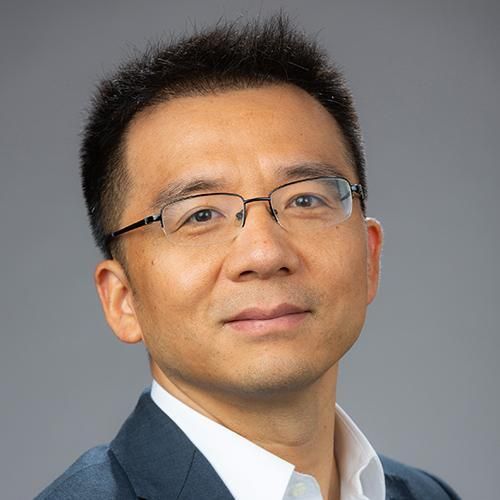
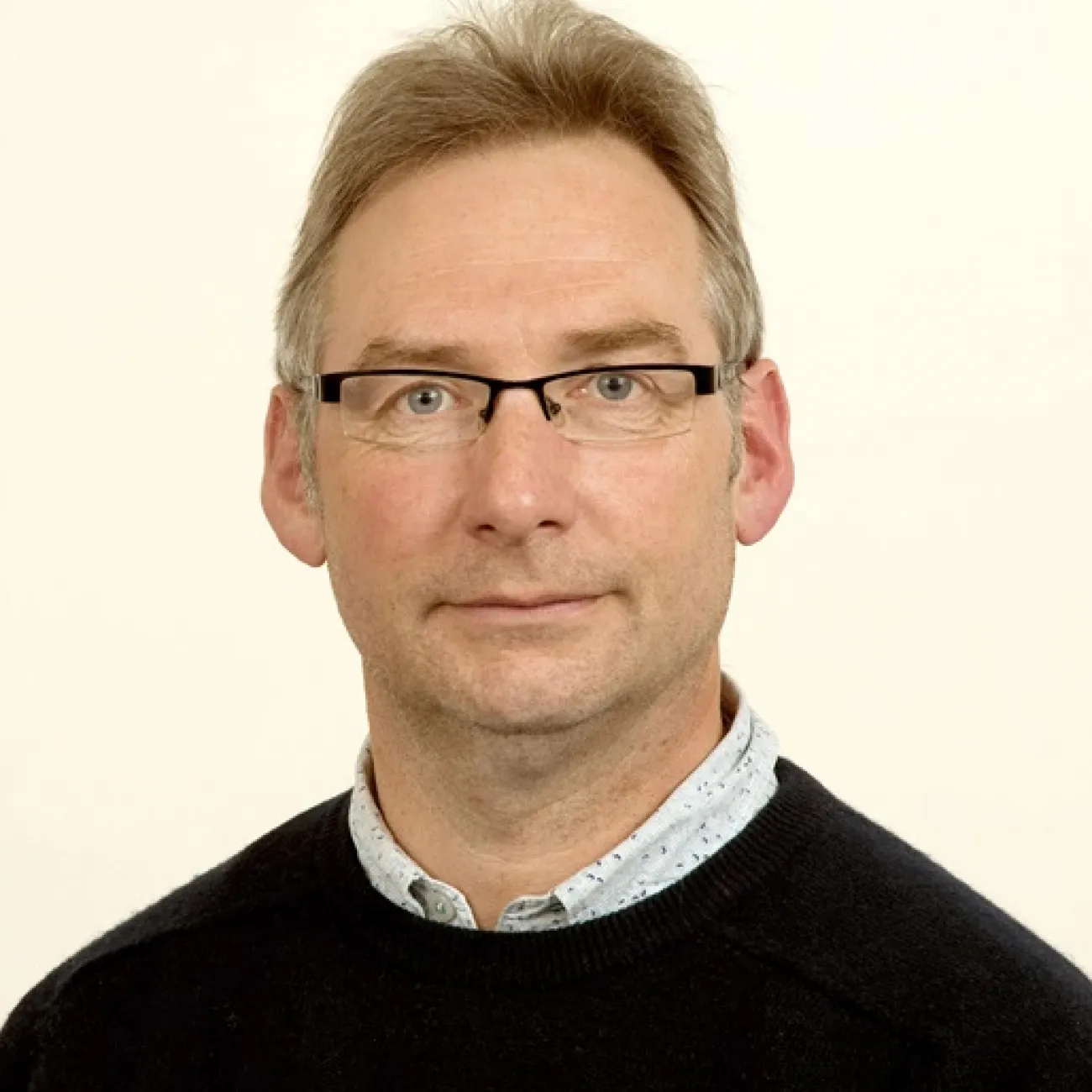
Anna Martinelli is an Associate Professor at Chalmers University of Technology, affiliated with the Department of Chemistry and Chemical Engineering's Applied Chemistry division. She holds a Master's in Physics and a PhD in Materials Science from Chalmers, focusing on ion-conducting polymer materials. Her research group explores ionic liquids' physico-chemical properties for applications in green energy conversion systems, such as fuel cells. Key techniques include Raman spectroscopy, NMR, and SAXS. She leads projects funded by grants from the Hasselbald Foundation, SSF, and VR. Education: MSc in Physics (Italy/Sweden), PhD in Materials Science (Chalmers). Postdoctoral research at University of Rome La Sapienza and INP-Grenoble. Current projects include structural battery electrolytes and sustainable energy materials. Research interests: Ionic liquid mixtures, nanoconfined systems, and advanced materials for energy storage. Supervised students include Sanna Björkegren and Rose Fassihi on emulsion membrane projects. Active in developing in situ fuel cell characterization methods.
Dr. Axel Lubk is a Group Leader at the Institute for Solid State Research (IFW Dresden) , specializing in advanced electron microscopy techniques for materials science. His research spans four key areas: (1) TEM method development (high-resolution imaging, tomography, holography, and in-situ techniques), (2) charge particle optics and scattering theory , (3) magnetic nanotextures (domain walls, skyrmions), and (4) plasmonics (mode hybridization in heterogeneous structures and semiconductor heterostructures). Dr. Lubk’s work focuses on three-dimensional magnetic texture analysis using electron holography and tomography, particularly in systems like skyrmion tubes , FeGe , and Cr2O3 thin films . He has pioneered techniques for vector-field electron tomography and phase retrieval under varying boundary conditions, advancing nanoscale magnetic imaging. His recent studies include plasmonic properties in AgAu nanosphere chains , thermoelectric multilayer systems , and topological insulators like NiRh2Sb and TaTMTe4 . Dr. Lubk has published extensively in high-impact journals such as Nature Communications and Advanced Materials , with a focus on TEM instrumentation and quantitative analysis . He frequently presents at international conferences like the International Microscopy Congress and European School of Magnetism , emphasizing applications in spintronics , quantum materials , and nanostructured systems . His contributions to holographic vector-field electron tomography and machine learning for spectrum-image data have set new standards in electron microscopy.
Tony Jun Huang is the William Bevan Distinguished Professor of Mechanical Engineering and Materials Science at Duke University, with additional professorships in Electrical and Computer Engineering and Biomedical Engineering. His research focuses on acoustofluidics, optofluidics, and micro/nano systems for biomedical diagnostics and therapeutics. Ph.D. in Mechanical and Aerospace Engineering (UCLA, 2005) Huang's research has revolutionized biomedical microsystems through acoustofluidic technologies, enabling contactless particle manipulation, exosome isolation, and advanced diagnostic platforms. His work has been cited over 36,000 times (h-index: 102) with 30 issued/pending patents. Recent publications highlight his innovations in acoustic tweezers, extracellular vesicle analysis, topological acoustofluidics, and AI-assisted biomimetic imaging. His lab develops technologies for single-cell analysis, non-invasive diagnostics, and programmable material systems. 2023 Highly Cited Researcher (Web of Science) 2020 Fellow of the National Academy of Inventors (NAI) 2019 Van C. Mow Medal (ASME) 2017 Analytical Chemistry Young Innovator Award (ACS) 2010 NIH Director's New Innovator Award Huang has taught courses including ME 535: Biomedical Microsystems and mentored numerous graduate students through his Duke Acoustofluidics Lab. His lab's technologies are applied in cancer biomarker detection, Alzheimer's diagnostics, and wound healing hydrogels.
Romain Bordes is a Researcher in Applied Chemistry at Chalmers University of Technology, specializing in colloid and interface science with applications spanning sustainable materials development, art conservation science, and environmental remediation technologies. His work bridges fundamental chemical research with practical applications addressing contemporary challenges in cultural heritage preservation and green chemistry. Dr. Bordes' research interests focus on several interconnected domains: Development and application of amino acid-based surfactants and green chemistry solutions for sustainable applications Nanocellulose and biomaterials for art conservation, packaging, and textile applications Surface chemistry and interfacial phenomena in complex colloidal systems Novel separation techniques for environmental remediation, particularly heavy metal removal Sustainable materials development for cultural heritage preservation Analysis of Dr. Bordes' extensive publication record reveals a consistent trajectory toward increasingly sophisticated applications of colloid science. His recent work demonstrates a growing integration of advanced characterization techniques like acoustic levitation with traditional colloid chemistry approaches, enabling non-contact analysis of delicate materials. A significant portion of his research addresses practical challenges in art conservation, with particular emphasis on developing sustainable alternatives to traditional conservation methods. His work on beeswax nanoemulsions and nanocellulose-based consolidants represents innovative approaches to longstanding challenges in cultural heritage preservation. Dr. Bordes has secured substantial research funding from multiple prestigious sources including VINNOVA, the European Commission (EC), the Swedish Research Council (VR), and the Swedish Foundation for Strategic Research (SSF). His collaborative projects demonstrate strong interdisciplinary connections across chemistry, materials science, conservation science, and environmental engineering. The GREENART project (2022-2025) and NANORESTART project (2015-2018) particularly highlight his leadership in applying advanced materials science to cultural heritage challenges. His research group appears to focus on developing sustainable chemical solutions that address real-world problems at the intersection of environmental science, cultural preservation, and materials innovation, with particular emphasis on replacing hazardous chemicals with bio-based alternatives in conservation practices and industrial applications.
Tieyuan Zhu is an Associate Professor in the Department of Geosciences at Pennsylvania State University, where he leads the Environmental Geophysics Group (EGG). His work focuses on advancing geophysical data resolution through seismic and ground-penetrating radar (GPR) methods to address environmental and energy challenges such as geohazards and CO2 sequestration. Research interests include: Near-surface and critical zone seismology Fiber optics seismology Wave physics (seismic, GPR) CO2 sequestration and geothermal exploration Permafrost degradation monitoring Martian subsurface water detection Recent publications emphasize distributed acoustic sensing (DAS), full-waveform inversion, and machine learning applications for subsurface imaging. His projects span urban geohazard monitoring, Arctic permafrost studies, and planetary geophysics. Scientific awards include the Karcher Award (2018) from the Society of Exploration Geophysicists. Collaborative efforts with institutions like NASA, NSF, and CMU highlight his impact on environmental hazard studies and carbon capture research.
Dante Fratta is a Professor in the Department of Civil & Environmental Engineering at the University of Wisconsin-Madison, where he has been actively involved in research and teaching since 2000. His work focuses on geotechnical engineering, environmental monitoring, and fiber optic sensing technologies. Education: PhD (1999) – Georgia Institute of Technology M.A.Sc. (1995) – University of Waterloo Diploma (1993) – Universidad Nacional de Córdoba Research Interests: Geomaterial process evaluation using elastic and electromagnetic waves, fundamental physical behavior of soils and rocks, geophysical assessment of near-surface environments, and distributed fiber optic sensing methods. Recent Publication Trends: He has pioneered applications of Distributed Acoustic Sensing (DAS) and fiber optic technologies for geotechnical, environmental, and energy infrastructure monitoring, including wind turbines, geothermal systems, and mining operations. Scientific Awards: Benjamin Smith Reynolds Award for Excellence in Teaching (2012) Chi Epsilon Excellence in Teaching Award (2008) Best Paper Award, GeoCongress Sensing Methods and Devices Track (2006) Distinguished Alum, Universidad Nacional de Córdoba (2013) Multiple keynote and invited speaking engagements Teaching: Fratta teaches graduate and undergraduate courses in geotechnical engineering, including Foundations, Applied Geophysics, and Pre-Dissertator Research, with active involvement in Spring 2025 classes.
Corinne Dejous is a Professor at the University of Bordeaux, affiliated with IMS Bordeaux (Institut des Matériaux et Systèmes Microélectroniques de Bordeaux) within the College of Engineering. She leads research in the WAVES group, specifically in the DEVICES, MATERIALS, ZEROPOWER team, focusing on advanced sensor technologies. Her work bridges microelectronics, nanotechnology, and environmental monitoring applications. Her primary research interests include acoustic wave sensors, particularly Love wave devices, microwave sensors, biosensors, microfluidics, and energy harvesting for wireless sensor networks. Dr. Dejous has pioneered developments in multiparameter sensing for complex liquids, heavy metal detection, humidity monitoring, and flexible sensor platforms. Her research demonstrates a strong emphasis on practical applications for environmental monitoring, healthcare, and Internet of Things (IoT) technologies. Analysis of her recent publications reveals a consistent focus on advancing sensor sensitivity and reliability through novel materials (including nanomaterials and polymers), innovative modeling approaches (FEM and equivalent circuit models), and hybrid sensing platforms that combine acoustic, optical, and electrical measurement techniques. Her work increasingly addresses sustainability concerns, with research on green laboratory practices and reduced environmental impact of sensor technologies. Dr. Dejous maintains active collaborations with researchers across multiple institutions and has contributed significantly to both fundamental sensor science and practical implementations. Her work spans from theoretical modeling to device fabrication and real-world testing, including field deployments such as in the Amazon River for water quality monitoring.
Pasquale Scarlino is a Tenure Track Assistant Professor in the Institute of Physics at École Polytechnique Fédérale de Lausanne (EPFL), where he founded and leads the Hybrid Quantum Circuits (HQC) Laboratory. He holds a dual appointment with the School of Basic Sciences (SB) and the Physics Section (SB-SPH), conducting research at the intersection of semiconductor and superconducting quantum technologies. His laboratory develops hybrid quantum hardware for advanced quantum information processing. His educational background includes a Master's degree in Physics from the University of Salento (Italy, 2011), where he was a student of Scuola Superiore ISUFI, followed by a Ph.D. from TU Delft (2016) in the Spin Qubits group of Prof. L.M.K. Vandersypen at the Kavli Institute of Nanoscience-Qutech. His doctoral work focused on Si/SiGe spin qubits in collaboration with the M. Eriksson Group at Wisconsin University. Scarlino's research centers on experimental quantum physics using hybrid superconductor/semiconductor devices with electrostatically defined quantum dots coupled to high-impedance microwave resonators. He investigates light-matter interactions in unconventional regimes, quantum transport in low-dimensional systems, and spin/charge qubit implementations. His work aims to merge semiconductor and superconducting platforms to expand quantum information capabilities, with applications in quantum computing, quantum optics, and analog quantum simulation. Early career achievements include establishing the first coherent interface between superconducting and semiconducting quantum systems using high-impedance resonators. His publication record shows strong focus on microwave photon-mediated interactions between quantum systems, with recent work exploring quantum acoustics, topological band engineering, and criticality-enhanced sensing. The articles demonstrate increasing specialization in hybrid quantum hardware, with a shift toward germanium-based systems and advanced resonator designs in the latest publications. Scarlino has advised eleven Ph.D. students at EPFL and teaches courses including General Physics (Electromagnetism), Solid State Systems for Quantum Information, and Introduction to Quantum Science and Technology. His teaching emphasizes experimental quantum hardware approaches and critical assessment of quantum computing platforms. The Hybrid Quantum Circuits Laboratory operates within EPFL's Institute of Physics, utilizing state-of-the-art nanofabrication facilities and cryogenic measurement setups. The team collaborates extensively with leading quantum research groups worldwide, maintaining strong ties with previous institutions including ETH Zurich, TU Delft, and Microsoft Station Q Copenhagen.
Prof. Sylvia Pont is a Professor of Perceptual Intelligence at Delft University of Technology, leading the Perceptual Intelligence lab and section. Her work focuses on multisensory design, lighting science, and ecological optics, emphasizing cross-disciplinary approaches to real-world perception challenges. She coordinates the Master’s course Lighting Design and teaches in human-centered design and multisensory systems. As an Associate Editor for the Journal of Vision , her research bridges art, science, and design, with notable contributions to lighting design methods and material perception. Research Themes: Multisensory experiences, light-material interactions, perceptual intelligence, and healthcare environments. Media & Outreach: Featured in ILI Magazine , Radio Omroep Delft , and public lectures like the Van Leeuwenhoek Lecture on light perception. Professional Roles: Board member of Stichting Dutch Daylight (2022–2026), promoting daylight research and applications. Her publications span lighting science, AI ethics, and healthcare acoustics, reflecting a commitment to interdisciplinary innovation. Recent work includes studies on ICU soundscapes, algorithmic fairness, and the perceptual impact of light color changes.
Professor Justin Dix is a Professor in Marine Geology & Geophysics at the University of Southampton, specializing in marine geotechnics, submarine systems, and offshore energy infrastructure. He leads research on marine cable thermal modeling, benthic biodiversity assessment, and submerged archaeological landscapes. His work integrates geophysical data analysis with engineering solutions for marine renewable energy and cultural heritage preservation. He holds affiliations with the Centre for Maritime Archaeology and Southampton Marine and Maritime Institute. His research projects include BEcoWIND (biodiversity assessment for offshore wind energy), eSWEETS3 (subsea cable systems), and ACROSS (Australasian colonization studies). He has secured funding from EPSRC, English Heritage, and the European Union. PhD supervision focuses on archaeology and engineering topics. Key collaborations involve interdisciplinary teams from geology, engineering, and marine robotics. Developed novel methods for submarine cable ampacity modeling and autonomous geotechnical surveying. His research bridges geoscience and engineering, addressing challenges in marine infrastructure sustainability and submerged cultural heritage management. Active in both academic publications and industry partnerships, he contributes to advancing marine technology and environmental stewardship.
Christophe Bailly is the Director of the Laboratory of Fluid Mechanics and Acoustics (LMFA UMR5509) and a Professor at École Centrale de Lyon, France. His career spans academic roles at École Centrale Paris (1995-2006) and École Nationale Supérieure des Techniques Avancées (2001-2020), alongside membership in the Institut Universitaire de France since 2007. He specializes in turbulence, aeroacoustics, sound propagation, and high-resolution numerical methods. His research focuses on jet noise , ducted flow acoustics , and advanced diagnostic techniques like Interferometric Rayleigh Scattering. He has co-authored over 120 peer-reviewed articles and a textbook on turbulence with Geneviève Comte-Bellot. Notable scientific awards include the Yves Rocard Prize (1996), Alexandre Joannidès Prize (2001), Air & Space Academy Medal (2016), CEAS Aeroacoustics Award (2020), and the French Medal (2023). He serves as Associate Editor for the AIAA Journal and Advisory Editor for Flow, Turbulence and Combustion .
W Robert J Funnell serves as Associate Professor at McGill University with dual appointments in the Department of Biomedical Engineering and Department of Otolaryngology – Head and Neck Surgery. His research addresses critical clinical challenges in hearing loss through integrated experimental and computational methodologies, focusing on translational applications for infant diagnostics and surgical interventions. His expertise spans middle-ear mechanics, three-dimensional modeling of biological structures, and development of interactive medical education tools. Core methodologies include finite-element analysis, laser Doppler vibrometry, and haptic-enabled virtual reality systems. Current priorities involve improving newborn hearing screening accuracy, designing middle-ear repair techniques, and creating 3D anatomical models for surgical training – particularly in endoscopy simulation using force feedback technology. Analysis of his 2015-2024 publications reveals persistent innovation in finite-element modeling of auditory systems, with increasing emphasis on newborn ear mechanics and optical coherence tomography applications. His work bridges biomedical engineering, otolaryngology, and medical education, demonstrating consistent progression from fundamental biomechanics toward clinical implementation – notably in Quebec's newborn hearing screening programs and endoscopic sinus surgery training models.
Dr. Sonja Isabel Veith is a Scientific Staff member at the Institute for Special Education, Faculty of Philosophy, Leibniz University Hannover. Her work focuses on research and teaching in the fields of scientific and technical education, with a strong emphasis on phenomenography and inclusive didactics. Phenomenographic Research Science Education Physics & Computer Science Teaching Biomedical Optics Artificial Intelligence Applications Educational Background: M.Sc. in Physics (minor: Meteorology), Leibniz University Hannover B.Sc. in Physics (minor: Computer Science), Leibniz University Hannover Fellow of the International Max Planck Research School on Gravitational Wave Astronomy Dr. Veith's research explores children's perceptions of physics concepts like sound, interdisciplinary science education, and racism-critical teaching methods. She has developed innovative didactic approaches for visualizing sound and integrating computational thinking in elementary education. Her publications show a consistent focus on: Phenomenographic analysis of science concepts Physics education in elementary schools Interdisciplinary teaching methods AI applications in sensor data analysis Historical and societal contexts in science Inclusive didactic frameworks Scientific Honors: Fellow of the International Max Planck Research School on Gravitational Wave Astronomy Dr. Veith has collaborated extensively across disciplines, working with institutions such as the Albert Einstein Institute and Laser Zentrum Hannover. Her career spans multiple domains including physics, computer science, biomedical optics, and educational theory.
Miroslaw Bober is Professor of Video Processing at the University of Surrey, where he joined in 2011. He leads the Visual Media Analysis team within the Centre for Vision, Speech and Signal Processing (CVSSP) in the School of Computer Science and Electronic Engineering. His extensive industry experience includes 15 years as General Manager of the Mitsubishi Electric R&D Centre Europe and Head of Research for its Visual & Sensing Division. BSc and MSc in Electrical Engineering from AGH University of Science and Technology, Krakow, Poland (1990) MSc in Machine Intelligence with distinction from Surrey University (1991) PhD in Computer Vision from Surrey University (1995) Professor Bober's research focuses on novel techniques in signal processing, computer vision and machine learning with applications in industry, healthcare, big-data and security. His expertise particularly lies in image and video analysis and retrieval, including visual search, object recognition, and analysis of motion, shape and texture. His algorithms for shape analysis, image/video fingerprinting, and visual search are considered world-leading and have been selected for ISO International standards within MPEG, with applications used by organizations like the Metropolitan Police. His recent publication trends show a strong focus on hybrid network architectures, scene graph generation, medical imaging applications, and augmented reality publishing systems. His work spans both theoretical advancements in computer vision and practical implementations addressing real-world challenges in media, healthcare, and security domains. The research demonstrates a consistent pattern of bridging academic innovation with industrial applications, particularly in visual search technology and media analysis. Presidential Award for strengthening the TV business in Japan via innovative 'Visual Navigation' content access technology (2010) Mitsubishi Best Invention Award for Image Signature Technology (2008) Professor Bober serves as Programme Director for the MSc in Multimedia Signal Processing and Communications and holds various teaching and mentoring roles. He has secured over 30 research and industrial grants totaling more than £16M, including the BRIDGET FP-7 project (5.28 M€) as coordinator and PI, and the CODAM project (£1.05 M) as PI. His work with the BBC, Huawei, and other industry partners demonstrates strong industry-academia collaboration. As chair of MPEG technical work on Compact Descriptors for Visual Search (CDVS) and Compact Descriptors for Video Analysis (CDVA), Professor Bober leads international standardization efforts. His Visual Media Analysis team develops cutting-edge visual search and media analysis algorithms with applications across broadcast, security, and healthcare domains.
Konstantinos Gryllias is a Professor in the Department of Mechanical Engineering at KU Leuven's Faculty of Engineering Sciences. He leads research in the Mechatronic System Dynamics (LMSD) unit at the Arenberg campus. His academic affiliations extend across multiple KU Leuven institutes including Leuven.AI, Leuven.AM (Additive Manufacturing), and the Gravitation Institute. He serves on important governance bodies as a member of the Faculty Council of Engineering Sciences, Faculty Doctoral Committee of Engineering Sciences, and Departmental Council of Mechanical Engineering. Dr. Gryllias specializes in signal processing, fault detection and diagnosis of rotating machinery, condition monitoring, and machine learning applications in structural health monitoring. His research spans linear and nonlinear vibrations, anomaly detection, rotordynamics, and pattern recognition. His work bridges theoretical signal processing with practical engineering applications in wind turbines, marine propulsion systems, and industrial machinery. His recent publications demonstrate strong focus on deep learning approaches for wind turbine anomaly detection, bearing diagnostics, stern bearing lubrication optimization, and structural health monitoring using advanced signal processing techniques. The research shows increasing integration of explainable AI methods with traditional vibration analysis. Dr. Gryllias teaches advanced courses including Monitoring & Prognostics, Structural Dynamics, Smart Sensing Technologies, and Applied AI perspectives. His teaching portfolio reflects the interdisciplinary nature of his research, connecting mechanical engineering fundamentals with cutting-edge AI methodologies. He currently leads multiple research projects through 2025-2029, primarily as Promotor, focusing on fault detection in gears using fiber optic sensors, multi-sensor monitoring of drivelines, physics-inspired machine learning for condition monitoring, and digital twin applications for wind turbine efficiency improvement.