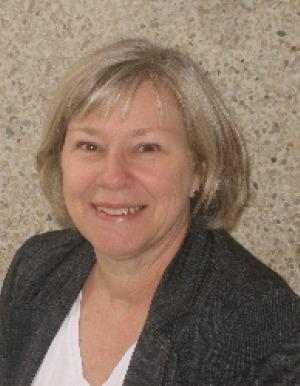
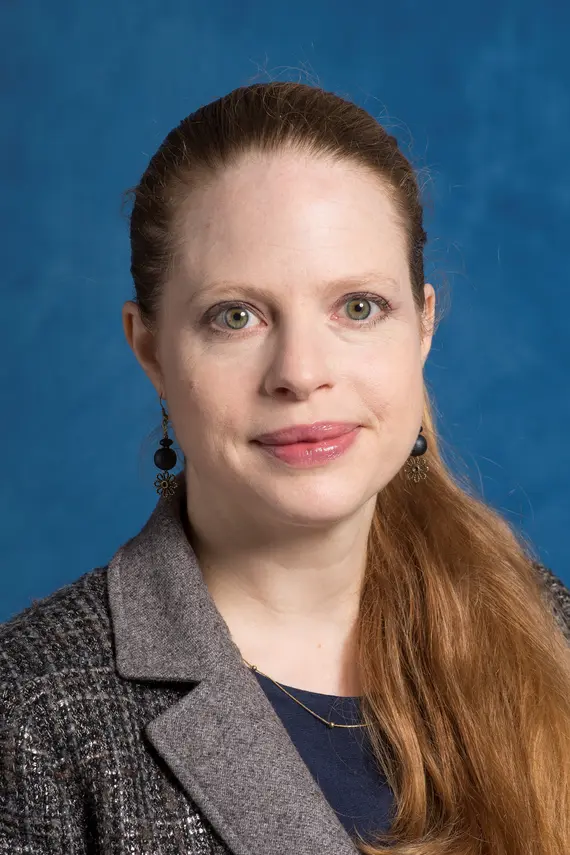
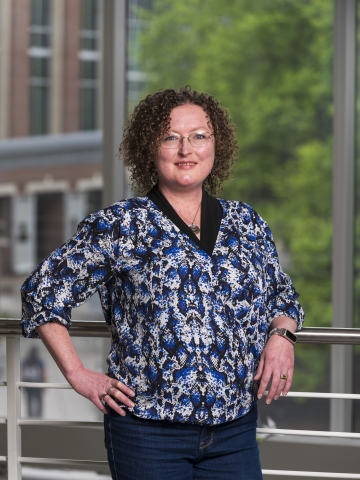
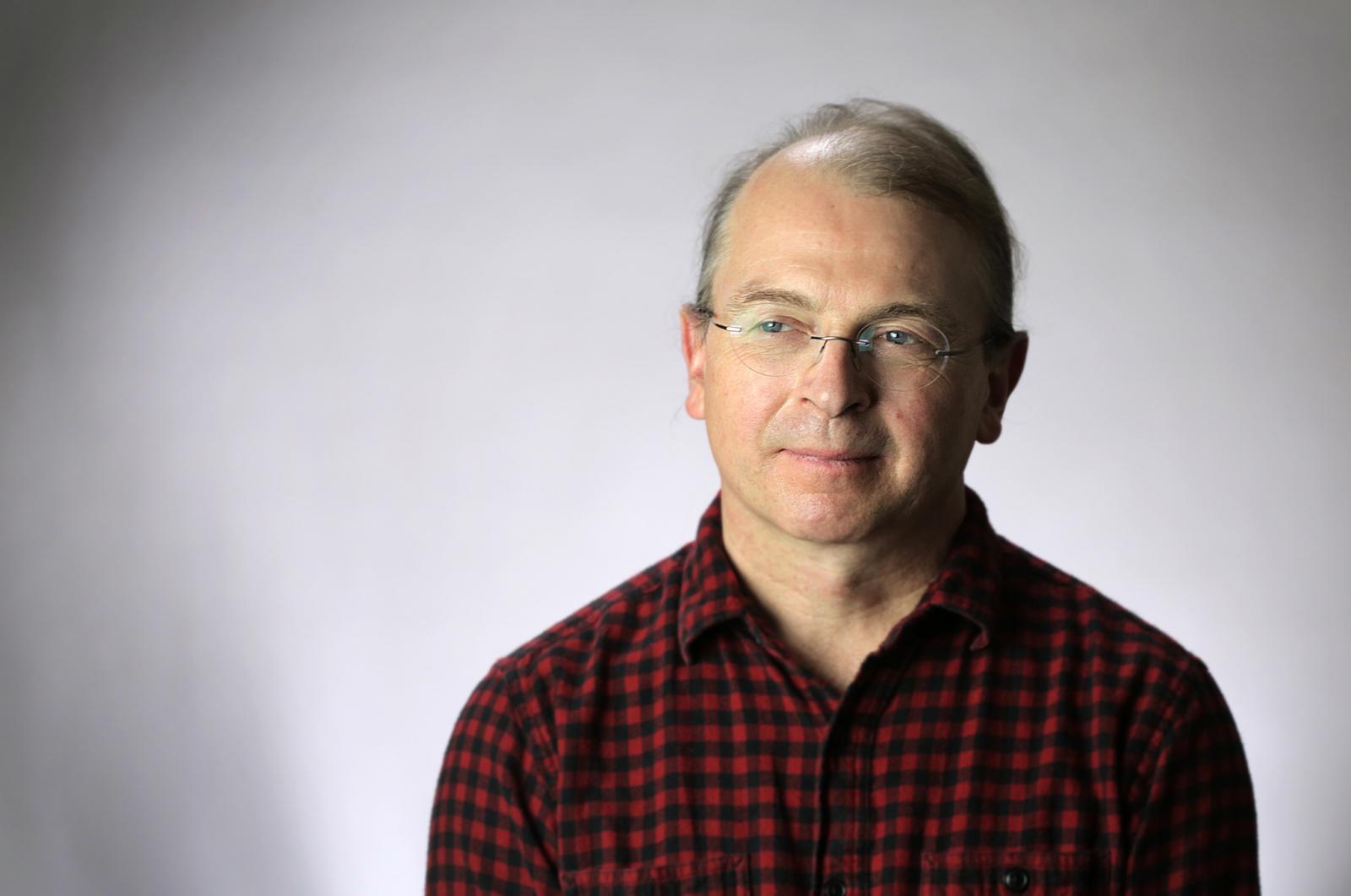
Marilyn J Smith is the David S. Lewis Professor and Director of the Vertical Lift Research Center of Excellence (VLRCOE) at the Georgia Institute of Technology's Daniel Guggenheim School of Aerospace Engineering. She leads a seven-university consortium conducting vertical lift research for the U.S. Army, Navy, and NASA, and has secured over $200 million in collaborative research funding. Computational Nonlinear Computational Aeroelasticity Lab Director NASA FUN3D development team contributor Aerospace Systems Design Lab (ASDL) affiliate Her research spans unsteady aerodynamics, computational aeroelasticity, and sustainable energy applications across rotary-wing, fixed-wing, and launch vehicles. She serves on the Vertical Lift Consortium (VLC) Board of Directors and Vertical Flight Society (VFS) Board, while acting as VFS Deputy Technical Director for Aeromechanics and leading international NATO AVT panels on UAV aerodynamics. Recent publications focus on galaxy cluster cosmology, ship-helicopter dynamic interface modeling, and Type Ia supernova analysis. She has won prestigious awards including the AIAA Aerodynamics Award and multiple American Helicopter Society honors for research, mentoring, and service. 2022 AIAA Aerodynamics Award 2015 Best Paper Awards at AHS Forum 2014 & 2012 AHS Agusta-Westland International Fellowships Her laboratory work integrates high-performance computing with aerospace design and develops advanced turbulence models through partnerships with Georgia Tech Research Institute (GTRI). She contributes to public science communication with appearances on National Geographic, PBS, NPR, and local media.
Dr Nga Wun (Doris) Li is a Senior Lecturer at the University of Technology Sydney (UTS) within the Faculty of Design, Architecture and Building, Department of Fashion and Textiles. She leads research in seamless knitting technology, smart textiles, and sustainable fashion innovation. PhD in Fashion & Textile Design (HK PolyU, 2021) BA (Hons) in Fashion & Textiles (HK PolyU, 2012) Certifications in Wholegarment Machine (Shima Seiki, Japan) and Higher Education Pedagogy (UTS) Her research focuses on functional garments, knitting technology, and bio-informed textile design. Key projects include smart socks for DVT prevention , one-size sports bras , and buoyant swimwear for children . She combines knitting with machine learning and 3D printing for material innovation. Recent publications highlight her work on compression textiles (2025), wearable glucose sensors (2025), and knitted metasurfaces for acoustic comfort (2024). She has secured AU$52,000+ in grants across 5 funded projects. Fashion Design Award (Jeanswest, China) Outstanding Presentation & Research Paper Awards (2024) Dr Li supervises PhD and MPhil students in smart textiles and sustainable design while coordinating machine knitting courses. She collaborates with AiDLab (Hong Kong) and Powerhouse Museum (Australia).
James King is an Associate Professor in the Department of Geography at the University of Montreal, specializing in geomorphology and aeolian processes. His research focuses on wind erosion, mineral dust dynamics, and their impacts on climate and ecosystems, particularly in high-latitude regions like the Yukon and Namibia. He holds a BSc in Earth surface sciences from the University of Guelph and a PhD in Physical Geography from an unmentioned institution, with postdoctoral training in climatology. Key research areas include dust emission climatology, glacial retreat impacts, and aerosol-climate interactions. Over 20 ongoing and completed projects, including dust dynamics in proglacial valleys and high-latitude dust sources, are funded by CRSNG, FCI, and international collaborations. King supervises graduate students on topics like dust deposition effects on ecosystems and remote sensing applications. His work integrates field measurements, remote sensing, and climate modeling to advance understanding of dust processes in arid and semi-arid environments. He collaborates with global teams, such as the Hominin Dispersals Research Group, and contributes to initiatives like the Changing Atmospheric Chemistry, Transport, and Emissions (ACTE) project.
Oliver S. Cossairt is an Adjunct Associate Professor at Northwestern University's departments of Computer Science and Electrical and Computer Engineering. He leads the Computational Photography Lab , focusing on computational imaging, optics, and display technologies. His work bridges computer vision, graphics, and optical engineering to design novel imaging systems with applications in medical, astronomical, and scientific domains. Education: Ph.D. Computer Science, Columbia University (2011) M.S. Media Arts and Sciences, MIT Media Lab (2003) B.S. Physics, Evergreen State College (2003) Research Interests: Cossairt develops imaging systems that combine optical innovations with computational methods to enhance performance and functionality. Key areas include computational displays, depth sensing, and high-precision 3D imaging. His work emphasizes practical applications like medical imaging, holography, and non-line-of-sight sensing. Awards: NSF CAREER Award (2015–2020) Best Paper Award at ICCP 2011 NSF Graduate Research Fellowship (2008–2011) Teaching & Funding: Taught courses on computational photography and computer vision. Secured grants from NSF, NIH, and industry partners (e.g., Samsung, Omron) for projects like Coherent Computational Imaging and Snapshot 3D Holographic Microscope . Labs & Teams: Directs the Computational Photography Lab, collaborating with institutions like Argonne National Labs and museums for projects in cultural heritage imaging.
Yuankai (Kenny) Tao is an Associate Professor of Biomedical Engineering at Vanderbilt University's School of Engineering and an SPIE Faculty Fellow. He directs the Graduate Studies program in Biomedical Engineering and leads research in optical imaging systems for clinical diagnostics and therapeutic monitoring in ophthalmology, gastroenterology, and oncology. His lab develops technologies like intraoperative OCT and SECTR, focusing on noninvasive subcellular visualization and biomarker monitoring. Collaborations span engineering, basic sciences, and medicine to translate innovations into clinical tools. Education: Ph.D., Biomedical Engineering, Duke University M.S., Biomedical Engineering, Duke University B.S.E., Biomedical Engineering and Electrical Engineering, Duke University Research Interests: Biomedical optics, optical coherence tomography (OCT), image-guided surgery, therapeutic monitoring, big data analytics, and high-throughput imaging for drug discovery. His work bridges engineering and medicine, emphasizing real-time feedback systems and interdisciplinary innovation. Grants & Labs: Director of the Vanderbilt Institute for Surgery and Engineering (VISE)-affiliated lab, focusing on surgical imaging and translational research. Projects include automated instrument tracking, SECTR systems, and AI-driven imaging analysis. Collaborations involve clinicians and researchers across disciplines.
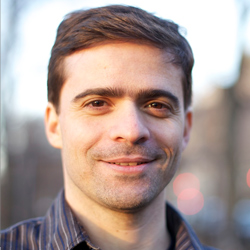
Tamás Budavári is an Associate Professor in the Department of Applied Mathematics and Statistics at Johns Hopkins University (JHU), with joint appointments in Physics and Astronomy and a secondary appointment in Computer Science. He is affiliated with the Whiting School of Engineering and the Institute for Data-Intensive Engineering and Science (IDIES). His research focuses on computational and statistical methods for big data in astronomy and interdisciplinary applications such as urban blight analysis. Education: PhD in Astrophysics (2001), Eötvös Loránd University, Budapest Master’s in Theoretical Physics (1997), Eötvös Loránd University Research Interests: Budavári develops algorithms for handling large astronomical datasets, including Bayesian inference, streaming algorithms, and GPU-accelerated processing. His work includes SkyQuery (an online astronomy data tool), photometric redshift estimation, and cross-matching catalogs. He also applies computational methods to urban planning, such as optimizing strategies to address vacant housing in Baltimore City. Publications & Tools: Budavári’s recent work spans topics like deep learning for astronomical image restoration, combinatorial optimization for urban policy, and probabilistic catalog matching. His tools, such as CUDAHM and NWAY, enable scalable analysis of multi-epoch survey data and N-way catalog cross-identification. Awards & Grants: Recipient of the Gordon and Betty Moore Fellowship and SAMSI Research Fellowship Funded by NSF, STScI, NIH, and others Leadership & Outreach: He serves on the Steering Committee of the 21st Centuries Cities Initiative and is a founding editor of the Journal of Astronomy and Computing. His interdisciplinary work bridges astrophysics, data science, and urban systems.
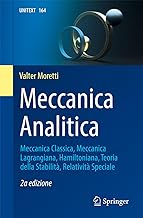
Valter Moretti is a Full Professor in the Department of Mathematics at the University of Trento. His academic career spans roles from Research Fellow to Full Professor, focusing on Mathematical Physics and Quantum Field Theory (QFT) in curved spacetime. He earned an MSc in Physics from Genova University and a PhD in Theoretical Physics from Trento University. Research Interests : Algebraic QFT, General Relativity, Quantum Mechanics, Operator Algebras, and Spectral Theory. His work bridges mathematical rigor with physical applications, particularly in quantum localization, entanglement, and curved spacetime phenomena. Publications : Authored 15+ recent papers on topics like quantum particle localization, entanglement certification, and QFT on curved backgrounds. Collaborated on a 2022 patent for generating entangled photon states. Awards : Holds a patent for a quantum-certified random number generator (2022). Supervision : Advised 8 PhD students, including N. Pinamonti, L. Franceschini, and C. van de Ven. Coordinated national and international research projects (e.g., H2020-MSCA-COFUND-2015). Labs & Collaborations : Affiliated with INFN, TIFPA-INFN, and Q@TN (Quantum@Trento). Organized conferences like Quantum Physics and Geometry (2014) and Quantum Machine Learning (2023). Teaching : Lectures on Analytical Mechanics, Quantum Relativistic Theories, and Special Relativity. Authored textbooks on Spectral Theory and Quantum Mechanics.
Ares J. Rosakis is the Theodore von Kármán Professor of Aeronautics and Mechanical Engineering at the California Institute of Technology (Caltech), where he served as Chair of the Division of Engineering and Applied Science from 2009-2015 and previously as Director of the Graduate Aerospace Laboratories (GALCIT). He has held numerous prestigious visiting professorships including at Nanyang Technological University, Northwestern University, Columbia University, Oxford University, and École Normale Supérieure in Paris. Rosakis earned his B.A. and M.A. in Engineering Science from Oxford University in 1978, followed by his Sc.M. (1980) and Ph.D. (1982) in Engineering (Solid Mechanics) from Brown University. He joined Caltech as an Assistant Professor in 1982, was promoted to Associate Professor in 1988, and to full Professor in 1993. In 2004, he was named the Theodore von Kármán Professor, one of Caltech's most distinguished named chairs. Rosakis is globally recognized as the foremost expert in dynamic failure mechanics of solid materials. His pioneering contributions span the dynamic failure of metals, composites, and interfaces. He invented Coherent Gradient Sensing (CGS) interferometry, a novel optical method sensitive to gradients of optical path differences that has been widely adopted in fracture mechanics and thin film stress measurements. His research encompasses dynamic shear-dominated rupture of heterogeneous materials, rupture mechanics of crustal earthquakes (where he experimentally discovered 'intersonic' or 'supershear' ruptures), and reliability of thin films and in-situ wafer level metrology. His work bridges engineering science, materials mechanics, and geophysics with remarkable interdisciplinary impact. His recent publications demonstrate a strong focus on earthquake mechanics and laboratory simulations of seismic events, particularly supershear earthquake ruptures. The research connects fundamental fracture mechanics with real-world geophysical phenomena, revealing how laboratory-scale experiments can illuminate the physics of large-scale earthquakes. His work has established critical links between theoretical models, experimental observations, and geological field evidence. Rosakis has received numerous prestigious awards including: 2024 Foreign Member of the Royal Society, UK 2023 Honorary PhD from National Technical University of Athens 2023 Honorary Degree of Doctor of Engineering from University of Illinois 2021 Zdeněk P. Bažant Medal for Failure and Damage Prevention 2018 Timoshenko Medal from ASME 2016 Elected to the National Academy of Sciences 2011 Elected to the National Academy of Engineering Throughout his distinguished career at Caltech, Rosakis has mentored numerous graduate students and postdoctoral researchers, many of whom have become leaders in their fields. His research has been continuously supported by major grants from the National Science Foundation, Department of Energy, and other federal agencies, focusing on dynamic fracture, earthquake mechanics, and advanced optical measurement techniques. He has served on numerous editorial boards and advisory committees for major scientific organizations. At Caltech, Rosakis leads research in the Graduate Aerospace Laboratories (GALCIT), where he has established world-class experimental facilities for studying dynamic fracture and earthquake mechanics. His laboratory features high-speed imaging systems capable of millions of frames per second, infrared diagnostics for temperature field measurements, and specialized equipment for simulating earthquake ruptures at laboratory scale. His research group combines experimental, theoretical, and computational approaches to address fundamental questions in solid mechanics and their applications to geophysics and materials engineering.
Prof. Dr. Mona Hess is a Full Professor and Chairholder of the Chair of Digital Heritage Technologies at Otto-Friedrich-Universität Bamberg , Germany. She directs the M.Sc. Digital Technologies in Heritage Conservation program and serves as Vice-Speaker at the Centre for Heritage Conservation Studies and Technologies (KDWT) . Her work bridges digital documentation, 3D imaging, and heritage conservation, with a focus on cultural landscapes, historic timber, and artifact preservation. Education : Dipl.-Ing. in Architecture (TUM), M.A. in Heritage Conservation (University of Bamberg), Ph.D. in 3D Imaging Metrology for Cultural Heritage (University College London, 2015) Her research spans 3D laser scanning, photogrammetry, SLAM-based recording , and digital twin environments , particularly for structural monitoring, museum artifacts, and historic gardens. She leads projects like VirScan3D (virtual laser scanner simulator) and 3DPetrie (UCL Petrie Museum 3D models) and collaborates on international initiatives such as the British Museum War Canoe digital repatriation. Recent publications emphasize automated defect analysis in timber, multi-modal imaging for ceiling art, and linked open data in heritage. She has contributed to CIPA ICOMOS as an expert member and will chair their Education and Dissemination Commission (2024). Scientific Awards : Fellow of the UK Higher Education Academy (2016), Associate Fellow of the Higher Education Academy (2014) She teaches courses in Digital Object Recording , 3D Spatial Data Modeling , and Science Communication , and organizes international summer schools on heritage monitoring. Her lab, the Chair of Digital Heritage Technologies , collaborates with institutions in Italy, Spain, and the UK, focusing on interdisciplinary innovation in heritage conservation.
Amanda Stockton is an Associate Professor at the School of Chemistry and Biochemistry, Georgia Institute of Technology. Her research focuses on the development of analytical instruments for planetary exploration and the study of terrestrial analog environments to understand conditions suitable for life emergence. She leads the Stockton Lab, which specializes in microfluidics, biosignature detection, and astrobiological applications. Education: B.S. in Chemistry and Aerospace Engineering, Massachusetts Institute of Technology (2004) M.A. in Chemistry, Brown University (2006) Ph.D. in Chemistry, University of California Berkeley (2010) Stockton’s work bridges planetary science and analytical chemistry, targeting extraterrestrial life detection through technologies like the FELDSPAR and IMPOA projects. Her research explores sea spray aerosols, icy moon penetrators, and microfluidic systems for environmental and medical diagnostics. Research Highlights: Instrument development for Europa and Enceladus missions Microfluidic tools for origin-of-life experiments Terrestrial applications in environmental monitoring and point-of-care diagnostics Collaborative studies in Icelandic and Antarctic analog environments The Stockton Lab’s publications reveal expertise in biosignature preservation, Raman spectroscopy, and planetary habitability, with a focus on Mars and ocean worlds. Her team has pioneered low-cost microfluidic platforms like GLUE and modular CE-LIF systems.
Seth Lloyd is a Professor in the Department of Mechanical Engineering at the Massachusetts Institute of Technology (MIT), with adjunct appointments at the Santa Fe Institute since 1988 and as a Fellow at the Institute for Scientific Interchange since 2000. His research spans quantum information science, quantum control theory, and complex systems analysis. His educational background includes: B.A. from Harvard University (1982) M. from the University of Cambridge (1984) Ph.D. from Rockefeller University (1988) Lloyd's work focuses on quantum computation, quantum communications, and quantum limits to control and sensing. He has pioneered research in quantum algorithms, quantum metrology, and applications of quantum information to complex biological and physical systems. His research bridges theoretical physics, computer science, and engineering, with over 200 publications and two patents in quantum information processing. Analysis of his recent publications reveals dominant trends in quantum machine learning, quantum metrology, and quantum communication protocols, with increasing interdisciplinary applications in quantum biology and quantum gravity. His work consistently explores fundamental limits of quantum information processing. His scientific awards include: Lindbergh Fellow (1994) Finmeccanica Professorship (1996) Edgerton Prize (2001) Fellow of the American Physical Society (2007) Quantum Communication, Measurement, and Computation Prize (2012) Lloyd serves on the editorial board of Quantum Information Processing and holds significant MIT service roles including Course 2 Undergraduate Committee coordinator and membership on the Institute Foreign Scholarships Committee. He teaches advanced courses in quantum information, dynamics, and computational methods, shaping the next generation of quantum scientists and engineers. As a member of the American Physical Society, he maintains active research collaborations across quantum information science, with ongoing work in quantum algorithms and quantum-enhanced sensing technologies.
Professor Hak-Kim Chan of the Sydney Pharmacy School at the University of Sydney is a world-renowned expert in respiratory drug delivery, particularly pulmonary aerosols and inhalation therapies. With over 480 publications and 17,580+ Google Scholar citations, he has pioneered advancements in powder formulation , in silico modeling , and clinical applications of inhalation technologies. His work includes the development of FDA-approved diagnostics like Aridol™ (inhaled mannitol for asthma) and Bronchitol™ (for cystic fibrosis), and groundbreaking research on inhaled bacteriophage therapy to combat antibiotic-resistant respiratory infections. Education: BPharm (University Medal, 1983), PhD (1988), DSc (2009) from University of Sydney Professional Experience: Postdoc at University of Minnesota (1988–89), Scientist at Genentech Inc. (1992–95) Leadership: Executive Editor of Advanced Drug Delivery Reviews , Fellow of AAPS and RACI His research spans in vitro production methods, computational modeling of inhaler design, and in vivo imaging of aerosol deposition. Current projects focus on nanomedicine , phage therapy , and combating superbugs via inhalation routes. He has secured significant recognition for his work, including NHMRC case studies highlighting public health impacts. Professor Chan has supervised numerous researchers, including PhD student Grace YAU studying pulmonary probiotic delivery . His team's 10 patents (7 as first inventor) reflect practical innovations in dry powder inhalers , antimicrobial formulations , and drug stabilization technologies.
K. Rajibul Islam is an Associate Professor at the University of Waterloo, affiliated with the Institute for Quantum Computing (IQC) and the Department of Physics and Astronomy. He holds a joint appointment with the Perimeter Institute for Theoretical Physics and co-founded Open Quantum Design and Lightflow Optics Inc. His research focuses on quantum information processing, quantum simulation, and trapped ion systems, with applications in quantum computing and entanglement studies. Education: Ph.D. in Physics (2012, University of Maryland), M.Sc. in Physics (2007, Tata Institute of Fundamental Research), B.Sc. in Physics (2005, Jadavpur University). Postdoctoral research at Harvard University (2012–2015) and MIT (2015–2016). Research Interests : Quantum simulation of spin models, quantum computing with trapped ions, entanglement measurement, frustrated spin systems, and quantum materials. His lab, QITI (Quantum Information with Trapped Ions), develops scalable quantum simulators and open-access quantum computers like 'QuantumIon.' Awards : Fellow of the American Physical Society (2024), VAIBHAV Fellowship (2024), Excellence in Teaching Award (2024), Early Researcher Award (2019), and Distinguished PhD Dissertation Award (2012–13). Teaching : Courses include PHYS 701 (Graduate Quantum Physics), PHYS 234 (Quantum Physics I), PHYS 393 (Physical Optics), and PHYS 256 (Geometrical and Physical Optics). He emphasizes outreach via initiatives like Bigyan.org.in , a Bengali-language science platform. Lab and Collaborations : Active in developing trapped-ion quantum hardware, including ion trap designs, optical addressing systems, and holographic control methods. Collaborates on quantum algorithms, machine learning for quantum systems, and experimental quantum thermodynamics.
James R. Fienup is the Robert E. Hopkins Professor of Optics at the University of Rochester's Institute of Optics, with additional appointments as Distinguished Scientist at the Laboratory for Laser Energetics, Professor at the Center for Visual Science, Professor of Electrical and Computer Engineering, and Affiliated Faculty at the Goergen Institute for Data Science and Artificial Intelligence. His office is located at Wilmot 410, 275 Hutchison Rd., Rochester, NY. Education PhD in Applied Physics from Stanford University (1975) MS in Applied Physics from Stanford University (1972) BA in Physics & Mathematics (magna cum laude) from Holy Cross College (1970) Research Focus Professor Fienup's research specializes in imaging science , with emphasis on phase retrieval algorithms, unconventional imaging techniques, and wavefront sensing. His work spans computational methods for image reconstruction, sparse-aperture systems, and synthetic-aperture imaging. Recent innovations include applying machine learning to wavefront control and developing advanced digital holography techniques for 3D imaging through atmospheric turbulence. Publication Trends His recent articles (2018-2024) demonstrate a strong focus on computational imaging techniques, particularly phase retrieval algorithms applied to optical metrology and wavefront correction. Key themes include multi-plane digital holography, coronagraphic wavefront control for astronomical applications, machine learning-enhanced sensing, and novel approaches for segmented-aperture systems. His work consistently bridges theoretical optics with practical instrumentation challenges. Awards and Honors Lifetime Achievement Award, Hajim School of Engineering (2019) Emmett N. Leith Medal, Optical Society of America (2013) National Academy of Engineering Member (2012) Distinguished Visiting Scientist, JPL (2009) Fellow of OSA and SPIE International Prize in Optics (1983) Rudolf Kingslake Medal (1979) NSF Graduate Fellow (1970-1972) Professional Activities Professor Fienup has served as Editor-in-Chief of the Journal of the Optical Society of America A (1998-2003) and held editorial roles at Applied Optics and Optics Letters . He consults for NASA (James Webb Space Telescope, Hubble), national laboratories, and aerospace companies, and holds five patents in optical systems design.
Susanna Thon is an Associate Professor in the Department of Electrical and Computer Engineering at Johns Hopkins University (JHU), affiliated with the Whiting School of Engineering. She serves as Associate Director of the Ralph O’Connor Sustainable Energy Institute (ROSEI) and a member of the Data Science and AI Institute. Her research focuses on nanomaterials engineering for optoelectronic devices, emphasizing solar energy conversion and sensing. Notable areas include plasmonic-photocatalytic systems using aluminum nanoparticles and nanostructured materials like colloidal quantum dots for next-generation devices. Thon holds a BSc from MIT (2005) and MSc/PhD in Physics from UC Santa Barbara (2008/2010). She joined JHU in 2013 after postdoctoral work at the University of Toronto. Her work is funded by agencies such as the NSF, U.S. Army, and Maryland Energy Innovation Institute. She has published over 50 peer-reviewed papers and received JHU’s Catalyst and Discovery awards. Key research projects include developing plasmonic systems to enhance light absorption in titanium dioxide and creating scalable fabrication techniques for optoelectronic materials. Thon’s team also advances quantum dot solar cells and novel characterization methods for energy materials. She actively participates in professional societies, including the Optical Society of America and IEEE. Her grants and collaborations aim to train the next generation in sustainable energy research, with recent initiatives funded through NSF and Space@Hopkins seed grants. Thon’s lab integrates nanophotonics, materials science, and machine learning to address global energy challenges.