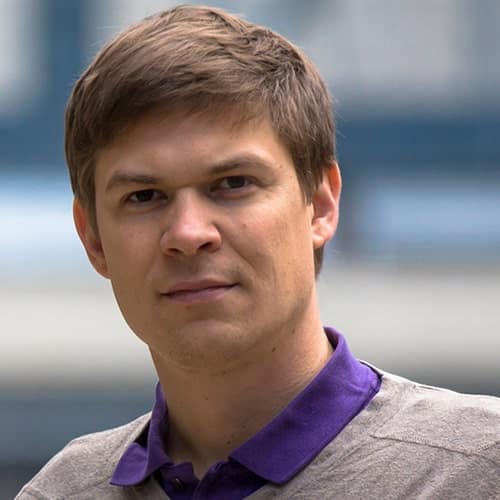
Chung Hang Cheung is a Research Fellow at the Department of Computer Science , University of Copenhagen , specializing in machine learning and its interdisciplinary applications. His work bridges theoretical foundations with practical implementations across domains such as natural language processing , quantum computing , and medical data analysis . The Machine Learning section at DIKU, where Chung is affiliated, focuses on both theoretical and applied research, including collaborations with the SCIENCE AI Centre and the TreeSense initiative for global tree resource monitoring. His research contributions span explainability in AI, fairness in recommender systems, and quantum-inspired models. Recent publications highlight his expertise in quantum computing integration with neural networks, sustainable AI practices, and emotion recognition in conversational models. Chung is also engaged in projects like federated learning for personalized medicine and multimodal biodiversity analysis using airborne laser scanning data. Affiliations include the TreeSense center, which leverages remote sensing and deep learning for ecological monitoring.
Casper Dorph-Jensen serves as a Lecturer in the Department of Computer Science at the University of Copenhagen, where he is an active member of the Machine Learning section. His academic work bridges theoretical machine learning foundations with practical applications across diverse domains, contributing to both research and educational initiatives within Denmark's premier computing institution. His research spans multiple critical frontiers in artificial intelligence. Key interests include: Natural Language Processing with emphasis on emotion-aware dialogue systems and cross-cultural adaptation frameworks Sustainable AI development addressing environmental impacts of large models Quantum machine learning applications for biomolecular simulations Medical image analysis techniques for clinical diagnostics Fairness-aware information retrieval systems and recommender algorithms Analysis of his 2024-2025 publications reveals strong interdisciplinary trends combining machine learning with quantum physics, healthcare informatics, and sustainability science. Notable patterns include the application of large language models to clinical contexts (particularly nursing values evaluation), energy efficiency concerns in AI infrastructure, and novel quantum-classical hybrid approaches for scientific computing. His work frequently addresses real-world implementation challenges in noisy environments and resource-constrained settings. No scientific awards were documented in available sources. Information regarding student supervision or specific research grants remains unavailable in current public records, though his Machine Learning section affiliation suggests participation in broader departmental initiatives like the SCIENCE AI Centre and TreeSense remote sensing project. He operates within the Department of Computer Science's Machine Learning section, which maintains dedicated high-performance computing resources and participates in the university-wide SCIENCE AI Centre. This section focuses on both theoretical ML foundations and applications in medical imaging, biological data modeling, and sustainability-focused computing, with recent projects including quantum computing initiatives and environmental monitoring systems.
Hu Guo serves as a Lecturer in the Machine Learning section at the Department of Computer Science (DIKU), Faculty of Science, University of Copenhagen. Located at Universitetsparken 1, Copenhagen Ø, Hu Guo contributes to the department's research activities which span from theoretical foundations of machine learning to practical applications in diverse domains including medical data analysis, remote sensing, sustainability, and biological data modeling. The department participates in the SCIENCE AI Centre at the University of Copenhagen and maintains powerful compute resources for research. The research interests of Hu Guo encompass a broad spectrum of machine learning applications. Their work bridges theoretical machine learning with practical implementations across multiple disciplines. Notably, their research spans quantum computing applications in biomolecular simulations, natural language processing for emotion recognition and cross-cultural applications, medical AI for patient analysis and diagnostics, sustainable AI development with environmental considerations, and recommender systems with fairness evaluations. This interdisciplinary approach demonstrates strong connections between computer science theory and real-world problem solving in healthcare, environmental science, and cultural applications. Analysis of Hu Guo's recent publications reveals a strong focus on interdisciplinary applications of machine learning. Their work shows particular strength in quantum computing applications, medical AI, and sustainable computing practices. The publications demonstrate a pattern of addressing both theoretical challenges and practical implementations, with significant contributions to explainable AI, cross-cultural applications of language models, and energy-efficient computing solutions. The research consistently connects machine learning theory with real-world applications across healthcare, environmental science, and computational physics domains. Hu Guo actively contributes to the Machine Learning section's research activities, which include participation in the SCIENCE AI Centre and utilization of the department's powerful compute cluster. Their research aligns with the section's focus on both theoretical foundations and practical applications of machine learning across diverse domains including information retrieval, medical data analysis, remote sensing, sustainability, and biological data modeling. The work contributes to initiatives like TreeSense - Centre for Remote Sensing and Deep Learning of Global Tree Resources.
Thore Husfeldt is a Visiting Professor at the Department of Computer Science , University of Copenhagen , specializing in Machine Learning , Quantum Computing , and related disciplines. He is affiliated with the SCIENCE AI Centre , focusing on theoretical and applied aspects of AI, including ethical considerations, medical informatics, and algorithm design. His research spans interdisciplinary domains, integrating Quantum Computing with Computational Biology and Medical Informatics . Recent work explores Environmentally Sustainable AI , Neural Network Architecture , and Cross-Cultural Adaptation . His contributions address challenges in AI Ethics , Healthcare Applications , and Quantum Simulation . The department’s Machine Learning Section and SCIENCE AI Centre provide resources such as a powerful compute cluster and modern labs. His role involves advancing AI research through collaborative projects and leveraging computational tools for societal and scientific impact.
Mikolaj Tymon Mazurczyk is a Research Fellow at the Department of Computer Science, University of Copenhagen. His research intersects with machine learning and computer science, focusing on areas such as natural language processing, medical image analysis, and biological data modeling. The Machine Learning Section at DIKU explores both theoretical and applied aspects, including information retrieval, medical data analysis, remote sensing, and sustainability. They participate in the SCIENCE AI Centre and collaborate with various research groups. Dr. Mazurczyk's recent publications highlight advancements in optical neural networks, sustainable AI, and quantum computing applications. His work also addresses fairness in recommender systems and interpretability in large language models, as well as clinical informatics and biomedical data analysis.
Rasmus Mikelsons serves as a Lecturer at the Department of Computer Science , University of Copenhagen . His email contact is rami@di.ku.dk . He is affiliated with the Machine Learning section and participates in the SCIENCE AI Centre, focusing on both theoretical and applied machine learning research. Research Interests Machine Learning Natural Language Processing Medical Data Analysis Remote Sensing Sustainability Computational Biology The Machine Learning section conducts research ranging from theoretical foundations to applications in domains such as information retrieval, medical imaging, and biological data modeling. Recent publications highlight trends in quantum machine learning, sustainable AI, and multimodal applications. Labs and Teams He is part of the Machine Learning section at the Department of Computer Science, which has access to a dedicated compute cluster and participates in initiatives like TreeSense, a center for remote sensing and deep learning of global tree resources.
Jonatan Ruiz-Molsgaard is an Instructor at the Department of Computer Science , University of Copenhagen. His research spans interdisciplinary applications of machine learning in quantum computing , medical data analysis , and environmentally sustainable AI . Research trends include: Quantum-inspired algorithms for biomolecular modeling Interpretability techniques for large language models Fairness frameworks in recommender systems Neural network applications in healthcare and climate science
Kristine Højgaard Allin serves as an Associate Professor and Physician at the Center for Molecular Prediction of Inflammatory Bowel Disease , with affiliation to Aalborg University . Her work focuses on pharmacoepidemiology of Inflammatory Bowel Disease (IBD) , leveraging Danish nationwide register-based data for methodological development and long-term outcome studies of pharmacological/surgical therapies. Board member of the European Crohn's and Colitis Organization (ECCO) Epidemiological Committee Vice Chair of the Danish Society for Pharmacoepidemiology Lead Principal Investigator for the Novo Nordisk Foundation-funded OPTICS project on microplastics in Crohn's disease Collaboration with Professor Jes Vollertsen (Aalborg University) on synthetic particles and intestinal inflammation Her research combines interdisciplinary approaches to analyze environmental risk factors (including rural living , antibiotic exposure , and microplastics ) in IBD onset and progression. The 132 publications demonstrate expertise in cohort analysis , C-reactive protein , and hazard ratio calculations. The OPTICS project (2024-2027) investigates synthetic particles' role in Crohn's disease inflammation, reflecting her commitment to environmental health research. She actively promotes data integration through workshops combining Danish biobanks and national registries. Her scientific impact includes: 1 quality-of-life impact with 19 X user posts and 9 Mendeley readers 17 media appearances discussing rural exposure risks and IBD
Stefano Paesani is an Associate Professor at the University of Copenhagen, affiliated with the Niels Bohr Institute (Department of Quantum Optics) within the Faculty of Science. His research focuses on quantum photonics, quantum computing, and integrated photonic systems. He explores scalable quantum architectures leveraging quantum emitters and graph states, with a particular emphasis on error correction, photonic nonlinearity, and high-dimensional entanglement. His work includes developing fusion-based photonic computing schemes, optimizing loss-tolerant architectures, and advancing programmable silicon-nitride integrated circuits for quantum information processing. Recent contributions address deterministic photon source interfacing, reconfigurable nonlinear circuits, and high-speed lithium niobate processors. His research also intersects quantum machine learning and Hamiltonian learning, utilizing quantum systems to model complex physical phenomena. Stefano collaborates with interdisciplinary teams across the University of Copenhagen’s Quantum Hub, contributing to initiatives in quantum communication, quantum simulation, and quantum sensing. His experimental setups often involve solid-state quantum emitters and advanced photonic platforms, aiming to bridge theoretical models with practical quantum technologies.
Anders Kristensen is a Professor and Head of Sections at the Department of Health Technology , Technical University of Denmark (DTU). His work focuses on opto-fluidics, nano-fluidics, and nano-imprint lithography, with applications in biomedical sensing and optical metasurfaces. He leads research groups and has supervised 16 PhD and 30 M.Sc. students. His affiliations include DTU Nanotech in Lyngby, Denmark, and he holds awards like the OSA Fellowship and the Innovation Radar Prize 2018. Education: M.Sc. and Ph.D. in Physics from the University of Copenhagen, with additional training in university didactics and leadership at DTU. Research Interests: Opto-fluidic systems, nano-imprint lithography, Raman spectroscopy, and microfluidic devices for biomedical applications. Recent work includes high-throughput Raman spectroscopy and AI-driven blood typing. Awards: Fellow of the Optical Society of America (2018), Innovation Radar Prize (2018). Grants & Leadership: Principal Investigator on 12 national/EU programs, coordinator of projects like POLYNANO and CellOMatic. Active in academic leadership roles, including membership in the Danish Physical Society and conference organization. Labs/Teams: Optofluidic systems, optical metasurface fabrication, and nanotechnology-driven sensing platforms.
Yasser Rezaeiyan is a Senior Researcher at the Department of Electrical and Computer Engineering (Electronics and Photonics group) at Aarhus University. His research focuses on neuromorphic computing, spintronics-based systems, and biomedical circuit design. He specializes in developing energy-efficient and high-performance analog/mixed-signal integrated circuits for applications in healthcare, environmental monitoring, and smart infrastructure. Key technical contributions include neuromorphic hardware leveraging spintronics and vortex oscillators, low-power sensor systems for leakage detection in district heating networks, and ultrasonically powered biomedical implants. His work bridges device physics, circuit design, and system-level integration to address challenges in next-generation computing and IoT. Publications highlight interdisciplinary innovations such as reservoir computing for seizure detection, STT-RAM-based in-memory computing architectures, and high-bandwidth operational amplifiers. His research has been published in top-tier journals like IEEE Transactions on Magnetics and IEEE Transactions on Biomedical Circuits and Systems. Rezaeiyan holds a strong record in analog circuit design, with expertise in chopper stabilizers, bio-impedance measurement systems, and energy harvesting solutions. His lab focuses on translating fundamental physics into practical systems with real-world impact.
Torben Johansen is an Assistant Professor in the Department of Economics VIP at the University of Southern Denmark. His research focuses on machine learning applications in historical data analysis, econometrics, and causal inference. He actively collaborates on projects combining machine learning with socioeconomic data, such as improving census transcriptions and analyzing breastfeeding impacts on educational outcomes. Johansen teaches courses in statistics and historical economics applications, supervises master’s students in economics and medicine, and engages in academic activities through conferences and peer reviews. His work bridges computer science and social sciences, with notable contributions to occupational standardization and policy optimization. He has contributed datasets to platforms like Harvard Dataverse and engages in public discourse on child health policies. Education: Implied PhD in Economics or related field (not explicitly stated) Research Interests: Machine Learning in socioeconomic contexts, causal inference, historical data digitization, and health economics. His methodologies include neural networks, transfer learning, and optimization algorithms applied to real-world policy problems. Recent research trends emphasize interdisciplinary approaches, blending econometric models with machine learning to address challenges in healthcare, labor markets, and historical record analysis. Key contributions include improving transcription accuracy in historical censuses and evaluating long-term effects of early childhood health interventions. Awards: None explicitly mentioned Advising involves supervision of master’s students in economics and medicine. His teaching portfolio includes applied statistics and historical perspectives on economics. Grants and funding details are not detailed in the provided text. Labs/Teams: Active member of the HEDG (Historical Economics & Development Group) and collaborates with researchers in computer science and public health.
Galadrielle Humblot-Renaux is a Research Fellow at Aalborg University's Technical Faculty of IT and Design, affiliated with the Department of Architecture, Design and Media Technology and the Section for Media Technology in Aalborg, Denmark. Her work focuses on AI-driven solutions for computer vision, robotics, and uncertainty quantification in machine learning systems. Key Research Areas Out-of-Distribution Detection and Robustness Testing 3D Semantic Segmentation and Point Cloud Processing Uncertainty Quantification in Renewable Energy Systems Human-Robot Interaction and Speaker Identification Marine Ecology Image Analysis via Multi-Annotator Datasets Scientific Contributions She has created two influential datasets: JAMBO (2024) for underwater benthic habitat classification and Why Talk to People When You Can Talk to Robots? (2021) for far-field speaker identification challenges. Her publications across 2018-2025 demonstrate interdisciplinary expertise bridging AI theory with practical applications in robotics, automotive systems, and ecological monitoring.
Thomas Pock is a Professor of Computer Science at Graz University of Technology, holding the AIT Stiftungsprofessur for Mobile Computer Vision. He is affiliated with the Institute for Computer Graphics and Vision (ICG) within the Faculty of Computer Science and serves as a principal scientist at the Austrian Institute of Technology (AIT), Center for Vision, Automation & Control. He leads the Vision, Learning and Optimization (VLO) research group, which focuses on mathematical modeling and optimization in computer vision. His research interests lie at the intersection of computer vision, image processing, and mathematical optimization. Specifically, he develops mathematical models for computer vision and efficient convex and non-smooth optimization algorithms , particularly for mobile scenarios. His recent work increasingly integrates variational methods with deep learning, especially in solving inverse problems in imaging such as medical reconstruction and deblurring. The trends in his recent publications show a strong emphasis on deep learning for inverse problems , variational networks , and learned optimization . His group explores how to combine classical mathematical models with data-driven deep learning approaches to achieve stable, interpretable, and high-performance solutions in image reconstruction and processing. His scientific achievements have been recognized with several prestigious awards: START Prize, Austrian Science Fund (FWF), 2013 German Pattern Recognition Award, DAGM, 2013 ERC Starting Grant, European Research Council, 2014 Thomas Pock actively mentors students and leads a research group of 10 PhD students and 2 postdocs. He has secured significant research grants, including the ERC Starting Grant, which supports his foundational work. He is also engaged in scientific communication, giving invited talks at international venues such as SIAM and co-organizing the IMAGINE One World seminar series to foster global collaboration in imaging and inverse problems. He leads the Vision, Learning and Optimization (VLO) group at the Institute for Computer Graphics and Vision. The group develops mathematical models and efficient algorithms for computer vision and image processing, with a focus on mobile applications. The team includes multiple PhD students and postdoctoral researchers and has produced notable software and publications in top venues.
Dan Milea serves as an Adjunct Professor in the Department of Clinical Medicine at the University of Copenhagen, specializing in Ophthalmology. He maintains a dual affiliation with SingHealth in Singapore, where he can be reached at dan.milea@singhealth.com.sg. His primary research address is at Blegdamsvej 3, 2200 København N, Denmark, indicating strong institutional ties to the University of Copenhagen campus. Dr. Milea's research program centers on the intersection of ophthalmology and artificial intelligence, with particular emphasis on neuro-ophthalmic disorders. His work spans optic nerve pathologies, medical imaging analysis, visual prosthetics, and diagnostic technology assessment. He has pioneered AI applications for detecting conditions like optic atrophy, central retinal artery occlusion, and pediatric papilledema through analysis of standard fundus photographs and optical coherence tomography. His publication record shows a clear trajectory toward developing clinically applicable AI diagnostic tools, with 73 research outputs documented. The BONSAI (Brain and Optic Nerve Study with Artificial Intelligence) Group represents his primary research vehicle, producing systems that can discriminate between arteritic and nonarteritic optic neuropathies and identify papilledema in pediatric patients using conventional imaging techniques. Dr. Milea's research impact is evident through widespread academic engagement - his work has been discussed across multiple X (Twitter) platforms, shared on Facebook, covered by news outlets, referenced on Bluesky, and read by researchers on Mendeley. This multi-platform visibility demonstrates significant influence within both specialized ophthalmology communities and broader medical AI research circles.