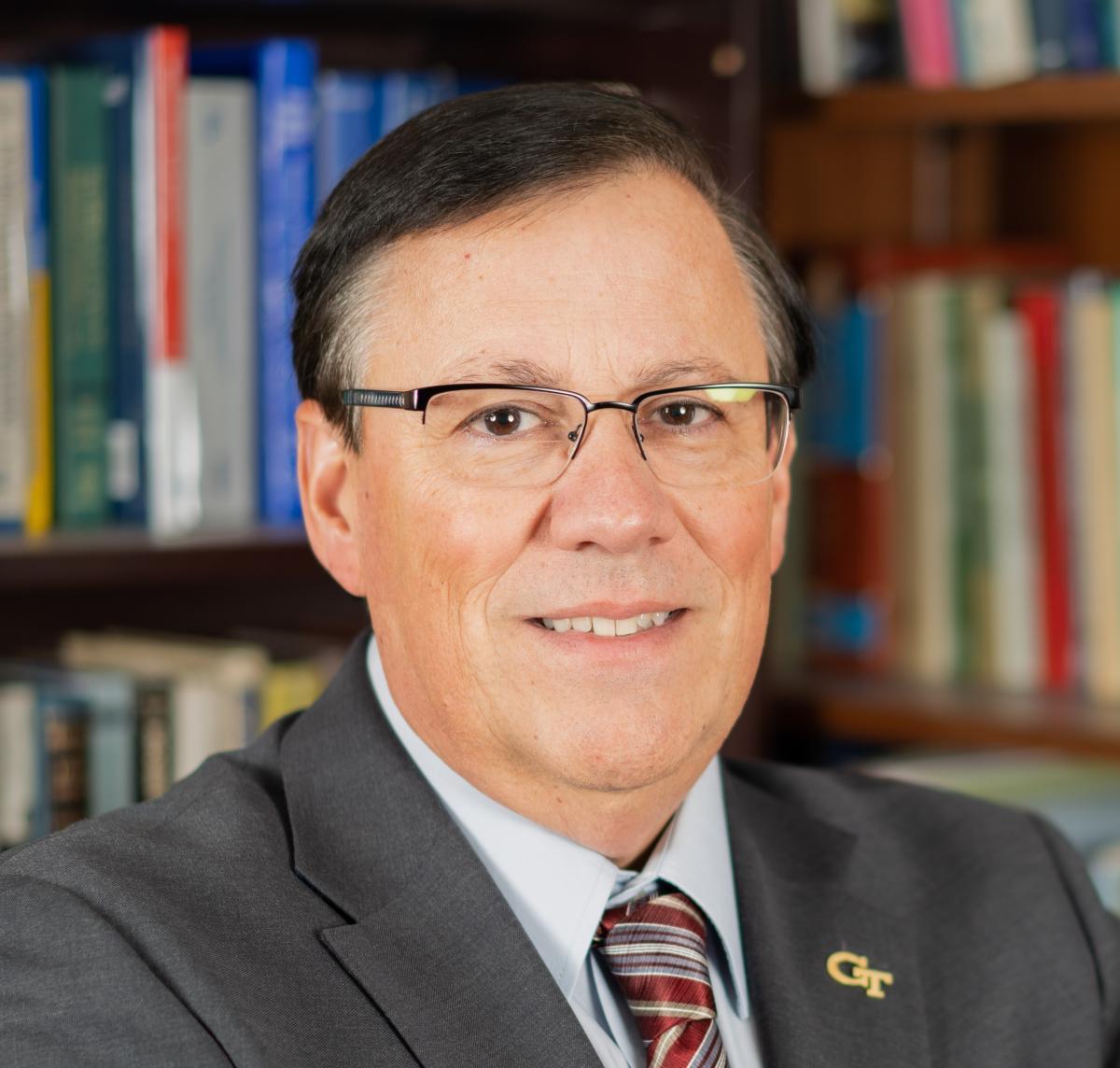
Marilyn J Smith is the David S. Lewis Professor and Director of the Vertical Lift Research Center of Excellence (VLRCOE) at the Georgia Institute of Technology's Daniel Guggenheim School of Aerospace Engineering. She leads a seven-university consortium conducting vertical lift research for the U.S. Army, Navy, and NASA, and has secured over $200 million in collaborative research funding. Computational Nonlinear Computational Aeroelasticity Lab Director NASA FUN3D development team contributor Aerospace Systems Design Lab (ASDL) affiliate Her research spans unsteady aerodynamics, computational aeroelasticity, and sustainable energy applications across rotary-wing, fixed-wing, and launch vehicles. She serves on the Vertical Lift Consortium (VLC) Board of Directors and Vertical Flight Society (VFS) Board, while acting as VFS Deputy Technical Director for Aeromechanics and leading international NATO AVT panels on UAV aerodynamics. Recent publications focus on galaxy cluster cosmology, ship-helicopter dynamic interface modeling, and Type Ia supernova analysis. She has won prestigious awards including the AIAA Aerodynamics Award and multiple American Helicopter Society honors for research, mentoring, and service. 2022 AIAA Aerodynamics Award 2015 Best Paper Awards at AHS Forum 2014 & 2012 AHS Agusta-Westland International Fellowships Her laboratory work integrates high-performance computing with aerospace design and develops advanced turbulence models through partnerships with Georgia Tech Research Institute (GTRI). She contributes to public science communication with appearances on National Geographic, PBS, NPR, and local media.
Professor Gary Gibbons is a distinguished academic at the University of Cambridge, holding the position of Professor of Theoretical Physics within the Department of Applied Mathematics and Theoretical Physics (DAMTP), part of the Faculty of Mathematics. His research focuses on general relativity, quantum gravity, cosmology, and black hole physics. He is a core member of the Relativity and Gravitation Group, known for contributions to gravitational wave theory, black hole thermodynamics, and geometric methods in physics. His work intersects with areas such as the memory effect of gravitational waves, Carroll symmetry, and the mathematical structure of spacetime. Prof. Gibbons collaborates internationally, publishing extensively in top journals like Physical Review D and Classical and Quantum Gravity . His research also extends to applied mathematics, including studies on abrasion processes and shape evolution in geosciences. He maintains an active role in theoretical physics, advising graduate students and contributing to the academic community through lectures and seminars.
Prof. Dr. Stefan Luther is a Max Planck Research Group leader (W2, tenured since 2013) at the Max Planck Institute for Dynamics and Self-Organization, Göttingen, and an Honorarprofessor at the Faculty of Physics, University of Göttingen. He holds adjunct roles as Adjunct Associate Professor at Cornell University (2009–2012) and Northeastern University (2016–2018), and serves as DZHK-Professor at the Institute of Pharmacology and Toxicology, University Medical Center Göttingen. His research focuses on nonlinear spatiotemporal dynamics in excitable biological media, particularly cardiac arrhythmias. He pioneered 4D imaging of heart function and developed algorithms for optogenetic and electrical control of arrhythmias. Translational efforts span basic research to preclinical and clinical studies. Education includes a Diplom in Physics (1997) and PhD (2000) from Georg-August-University, Göttingen. Postdoctoral training followed at the University of Twente (2001–2004) and Cornell University’s LASSP (2004–2006). His lab, the Biomedical Physics group, explores electromechanical coupling in cardiac systems and develops novel therapeutic approaches. Collaborations include work on computational modeling, uncertainty quantification in dynamical systems, and fluid dynamics of multiphase flows.
Professor David Taubman is a distinguished academic serving as Professor and Deputy Head of School (Research) at the School of Electrical Engineering and Telecommunications (EE&T) at the University of New South Wales (UNSW) in Sydney, Australia. He is also co-director of Kakadu Software Pty. Ltd. and its affiliates Kakadu R&D and Kakadu GPU. With a career spanning over three decades, Professor Taubman has made significant contributions to the field of image and video compression, most notably as the author of the EBCOT coding algorithm adopted in the JPEG2000 international standard. Professor Taubman earned his B.Sc. in Mathematics and Computer Science (1986) and B.E. (Medal) in Electrical Engineering (1988) from the University of Sydney, followed by an M.Sc. (1992) and Ph.D. (1994) in Electrical Engineering from the University of California at Berkeley. His professional journey includes engineering work at the Electricity Commission of N.S.W. (1988-1990), research positions at Hewlett-Packard Laboratories in Palo Alto (1994-1998), and an academic career at UNSW where he progressed from Senior Lecturer (1998-2003) to Associate Professor (2004-2009) and finally to Professor (2009-present). He has held various leadership roles including Head of the EE&T Telecommunications Research Group (2003-2014), Head of the EE&T Signal Processing Research Group (2014-present), Director of Research for the School of EE&T (2011-2016), and Deputy Head of School (Research) since 2017. Professor Taubman's research interests center on image and video compression, with particular expertise in JPEG2000 standards and implementations. His work spans signal processing, wavelet transforms, scalable video coding, motion modeling, and multimedia systems. He has pioneered numerous compression algorithms and frameworks, including the EBCOT coding algorithm that became central to the JPEG2000 standard. His recent research focuses on efficient motion modeling with cuboidal partitioning, learned lifting-based transform structures, and high-throughput implementations of JPEG2000 for video applications. His work bridges theoretical foundations with practical implementations, as evidenced by the commercially successful Kakadu Software tools that have garnered around 500 commercial licensees. Analysis of Professor Taubman's recent publications reveals a consistent focus on advancing compression technologies with particular emphasis on scalability, efficiency, and adaptability. His work spans traditional image compression (JPEG2000 extensions), video coding (cuboid-based partitioning for UHD/360-degree video), and emerging applications (nanopore sequencing data compression). A notable trend is the integration of machine learning techniques with traditional compression frameworks, as seen in his work on learned lifting-based transform structures. His research maintains strong connections to real-world applications across diverse domains including medical imaging, astronomical data processing, and genomic sequencing. IEEE Fellow Engineers Australia Fellow (by invitation) Professor Taubman has served as Associate Editor for the IEEE Transactions on Image Processing for two four-year appointments (2003-2005 and 2010-2013). He has been actively involved in numerous research grants focused on image and video compression technologies, particularly those related to the JPEG2000 standard and its extensions. His work has received significant industry support, reflected in his consultancy with various U.S., Japanese, and Australian corporations. He has also contributed to international standards development as a member of Standards Australia Technical Committee MS-065 (mirroring ISO TC42 on Digital Photography) and as a constitutional member of Standards Australia Technical Committee IT-029 (Coded Representation of Picture, Audio and Multimedia/Hypermedia Information). Professor Taubman co-directs Kakadu Software Pty. Ltd. and its research affiliates Kakadu R&D and Kakadu GPU, which have developed the commercially successful Kakadu Software tools for JPEG2000. His research group at UNSW focuses on advanced image and video compression techniques, with particular expertise in wavelet-based methods, scalable coding, and motion modeling. The group maintains strong industry connections and has contributed significantly to the development and standardization of image compression technologies worldwide.
Guang Lin is the Associate Dean for Research and Innovation in the College of Science and a Full Professor in the School of Mechanical Engineering and Department of Mathematics at Purdue University. He leads the Data Science Consulting Services and has dual appointments in Statistics and Earth, Atmospheric, and Planetary Sciences. His research focuses on AI, machine learning, uncertainty quantification, and computational science, with applications in fluid mechanics, materials science, and healthcare. Lin holds a Ph.D. from Brown University (2007) and has received numerous awards, including the NSF CAREER Award and Purdue’s University Faculty Scholar distinction. He has authored over 250 publications and secured grants totaling millions, including DOE and NIH funding. His interdisciplinary work bridges academia and industry, emphasizing AI-driven solutions for complex systems. Education: Ph.D. Applied Mathematics (Brown, 2007), M.S. Applied Mathematics (Brown, 2004), M.S. Mechanics (Peking University, 2000), B.S. Mechanics (Zhejiang University, 1997). Research Grants: Includes DOE-funded projects on machine learning for plasma-wall interactions and NSF grants for multiscale modeling. Service: Editorships in SIAM MMS, ASME Journal, and leadership in Purdue’s AI initiatives. Teaching: Courses on Uncertainty Quantification, Fluid Mechanics, and Data Science.
Sir Fraser Stoddart (1942-2024) was the Board of Trustees Professor of Chemistry and Director of the Center for the Chemistry of Integrated Systems at Northwestern University. A pioneer in supramolecular chemistry, he pioneered mechanical bonds and molecular machines, co-winning the 2016 Nobel Prize in Chemistry. Education: B.S. and Ph.D. from University of Edinburgh (1964/1966), followed by honorary doctorates from multiple institutions globally. Research focused on molecular recognition, self-assembly, and mechanically interlocked molecules, leading to innovations in molecular switches, rotaxanes, and nano-electronic devices. His work enabled molecular lifts, muscles, and advanced computer chip technologies. Major awards include the Nobel Prize, Royal Medal, Davy Medal, and knighthood from Queen Elizabeth II. He established a laboratory at Hong Kong University and led Northwestern's chemistry department to international prominence. Known for mentorship, he inspired generations of researchers through his energy and vision. His legacy includes over 1,400 publications and foundational contributions to nanotechnology and molecular engineering.
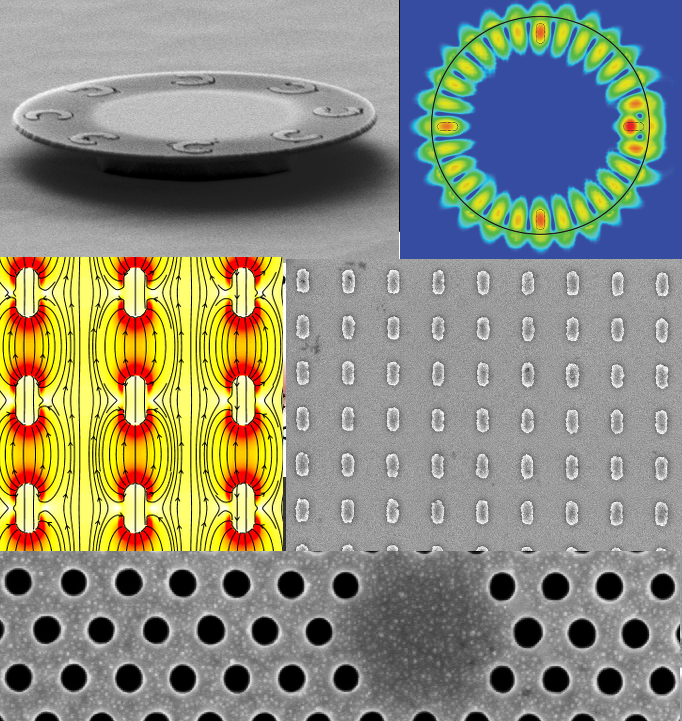
Prof. Dr. Cedrik Meier is a faculty member at the University of Paderborn , affiliated with the Faculty of Natural Sciences and serving as the head of the Department of Physics . He holds the academic rank of Professor and chairs the Audit Committee. Education: Diplom in Physik, Ruhr-Universität Bochum (1998) Dr. rer. nat. in Experimentalphysik, Ruhr-Universität Bochum (2001) Habilitation, Universität Duisburg-Essen (2007) His research focuses on Nanophotonics , Plasmonics , Metamaterials , and Nonlinear Optics . The work involves developing novel photonic devices using nanofabrication techniques and materials like zinc oxide (ZnO) and silicon metasurfaces . Recent publications highlight advancements in third harmonic generation , correlated photon sources , and nonlinear optical effects in nanostructured materials. Key projects include TRR 142 (Tailor-Made Nonlinear Photonics) and studies on quantum dot positioning and liquid crystal-tunable devices . Scientific Awards: Golden Chalk for teaching physics (2016) Junge Kolleg, NRW Academy of Sciences (2007) Gottschalk-Diederich Baedeker Prize (2007) NanoFutur Award (2006) DFG Postdoc Fellowship (2003) Evangelical Study Association Villigst Scholarship (1998) He has led research groups at multiple institutions and currently oversees the Nanophotonics & Nanomaterials working group. His teaching includes Experimental Physics D and Lab Projects .
Prof. Dr. Nadine Buczek serves as Professor of Renewable Energies, Nanotechnology and Photonics at the Department of Applied Natural Sciences, Lübeck University of Applied Sciences (TH Lübeck), a position she has held since 2017. She leads the Energy Materials Laboratory and maintains active affiliations with the Climate and Environmental Protection Group, Materials for Storage and Renewable Energy Systems, and Photovoltaics Group. Her research centers on physical principles of renewable energy systems and photonics, with core expertise in solar technology, thermoelectrics, and nanoscale material engineering. She investigates spin wave phenomena in disordered magnetic materials and develops advanced fabrication techniques for silicon nanowires and superlattices using metal-assisted chemical etching, with applications in sustainable energy conversion and storage. Analysis of her 15 most recent publications (2012-2022) reveals consistent focus on condensed matter physics and nanomaterial engineering. Key trends include theoretical modeling of spin dynamics in alloys, structural characterization of etched semiconductor nanostructures, and optimization of nanofabrication processes for renewable energy applications. Her work bridges experimental nanotechnology with computational physics, primarily targeting semiconductor-based energy solutions. The Energy Materials Laboratory under her direction drives interdisciplinary research in photovoltaics and thermoelectric materials, collaborating closely with the Materials for Storage and Renewable Energy Systems group. Current projects emphasize scalable nanofabrication methods and fundamental studies of charge transport in nanostructured materials to advance next-generation renewable energy technologies.
Glenn Boreman is a Professor and Chair of the Department of Physics and Optical Science at the University of North Carolina at Charlotte (UNC Charlotte). He also serves as Director of the Center for Optoelectronics & Optical Communications. His academic journey includes a BS in Optics from the University of Rochester and a PhD in Optics from the University of Arizona. Previously, he spent over 27 years at the University of Central Florida, supervising 25 PhD students to completion. His research focuses on infrared antennas, metamaterials, frequency-selective surfaces, and nano-scale optical phenomena. Notable contributions include pioneering work on antenna-coupled infrared sensors and the design of advanced optical systems. He has authored/co-authored over 190 journal articles and four textbooks, including Infrared Detectors and Systems and Modulation Transfer Function in Optical & Electro-Optical Systems . Prof. Boreman holds prestigious fellowships from SPIE, IEEE, the Optical Society of America, and the Military Sensing Symposium. His awards include the 'Best Paper' honor at the 2001 AIAA/BMDO meeting. His lab, the Infrared Systems Lab, actively explores nanofabrication, high-resolution lithography, and advanced sensor technologies. Current doctoral students include Matthew Potter and Frances Bodrucki, both researching infrared devices and metamaterials. He directs interdisciplinary projects involving collaborators from materials science, electrical engineering, and astrophysics.
Professor Michalis Zervas serves as Professor of Optical Communications at the University of Southampton's Optoelectronics Research Centre (ORC), leading pioneering research in photonics and laser technologies. His work integrates advanced optical systems with artificial intelligence to solve complex challenges in telecommunications, manufacturing, and medical diagnostics through major collaborations with industry and international research bodies. His primary research spans Optical Communications, Photonics, and Fibre Lasers, with specialized focus on deep learning applications for laser control optimization, coherent beam combination, and optical fibre sensor development. Current investigations include high-power photonics systems for industrial manufacturing and novel laser-based biomedical diagnostic platforms that bridge physics with healthcare innovation. Recent publications (2025) reveal a decisive trend toward AI-photonic integration, where deep learning algorithms enhance precision in laser-material interactions across diverse applications—from microbead cleaning and paint analysis to psoriasis treatment simulation and diatom imaging. This interdisciplinary approach demonstrates consistent methodological innovation in merging computational intelligence with fundamental laser physics. Supervises 6 PhD students including Rosemary Catriona Clark and Fedor Chernikov in ORC's photonics programs Secures major funding from EPSRC (Smart Fibre-Optic High Power Photonics, Hearing Light) and US Air Force Office of Scientific Research Leads collaborative projects with Professor Sir David Payne and Professor Johan Nilsson across national manufacturing hubs As co-leader of the Smart Lasers and Special Fibres research group within the Advanced Laser Laboratory, Zervas drives experimental photonics innovation through state-of-the-art fibre laser systems and optical resonator technologies. His team maintains strategic partnerships with global industry leaders in photonics manufacturing and medical device development.
Igor Bargatin is an Assistant Professor of Mechanical Engineering and Applied Mechanics at the University of Pennsylvania's School of Engineering and Applied Science. His research focuses on micro- and nanoelectromechanical systems (MEMS/NEMS) for energy conversion, optics, and smart materials. He develops innovative devices such as thermionic energy converters and photophoretic flyers, leveraging interdisciplinary approaches across mechanical engineering, materials science, and applied physics. Research Interests: Photophoretic propulsion and near-space flight systems Ultralight robust materials (e.g., nanocardboard) Thermionic energy conversion and surface engineering MEMS/NEMS fabrication and microscale devices Key Contributions: Developed lightweight photophoretic flyers capable of carrying payloads in the mesosphere Pioneered tunable work function surfaces for high-efficiency thermionic converters Advanced mechanical metamaterials with unprecedented strength-to-weight ratios Awards & Grants: NSF CAREER Award (2019) for thermal transport research in metamaterials Labs & Affiliations: Center for Environmental Building & Design (collaborator) University of Pennsylvania Nanofabrication Facility
Dimitri Mavris is a Professor at the School of Aerospace Engineering , Georgia Institute of Technology, holding distinguished titles including Boeing Chair in Advanced Aerospace Systems Analysis and S.P. Langley Distinguished Professor . He directs the Aerospace Systems Design Laboratory (ASDL) and serves as Executive Director of the Professional Master’s in Applied Systems Engineering (PMASE) . Education B.S., Aerospace Engineering, Georgia Institute of Technology (1984) M.S., Aerospace Engineering, Georgia Institute of Technology (1985) Ph.D., Aerospace Engineering, Georgia Institute of Technology (1988) Dr. Mavris specializes in advanced design methods , aircraft preliminary design , and non-deterministic design theory , focusing on multi-disciplinary optimization and system of systems architecting . His work spans propulsion systems, space exploration, and sustainable aviation technologies. Recent research trends include machine learning for aerospace safety , hybrid-electric propulsion analysis , and digital twin applications in energy systems. His lab produces 100+ annual publications, reflecting leadership in MBSE , UAS certification , and lunar operations modeling . Scientific Awards Class of 1934 Distinguished Professor Award (2024) NSF CAREER Award (1997) Fellow of AIAA (2009-present) NASA Blue Marble Award (2017) SGA Faculty of the Year (2012-2013) As an advisor to Georgia Tech's AIAA student chapter, Dr. Mavris mentors 1,484 alumni (300 Ph.D., 1,184 M.S.) and leads industry partnerships with FAA , Airbus , and Siemens . His labs include the Vertical Lift Research Center and Strategic Energy Institute , with global initiatives like the ICAS presidency (2023-2024).
Tara Drake is an Assistant Professor in the Department of Physics and Astronomy at the University of New Mexico (UNM). She leads the Drake Lab, focusing on nonlinear optics in microscopic photonic structures, particularly Kerr microresonators and frequency combs. Her research explores applications in compact optical clocks, integrated quantum systems, and thermal stability optimization of soliton states. Prof. Drake holds a PhD from the University of Colorado, Boulder (JILA), and has received prestigious awards including the NSF CAREER Award and AFOSR Young Investigator Award. Her teaching includes undergraduate courses in Introduction to Photonics (PHYS 302) and Contemporary Physics Lab (PHYS 493L). She advises graduate students such as Gabriel Colación, Lala Rukh, and Brandon Stone, as well as undergraduates like Emilio Perez de Juan. Recent collaborations include projects with Prof. Jean-Claude Diels (NSF-funded magnetometry) and Nexus Photonics (DARPA GRYPHON program). Key achievements include NSF EPSCoR funding for quantum photonic technologies, an NSF MRI award for electron beam lithography equipment, and a focus on scalable quantum systems. Her lab participates in UNM’s QU-REACH summer program for quantum research.
Dr James A. Grant-Jacob is a Senior Research Fellow at the Optoelectronics Research Centre (ORC) , University of Southampton. His work spans high harmonic generation, phase retrieval, laser fabrication, and artificial intelligence applications in photonics. PhD (2011): Table-Top XUV Nanoscope , University of Southampton MSc in Physics: Strings and branes in exotic space-times His research integrates deep learning with laser-based processes for applications in medical imaging, environmental monitoring, and manufacturing . Recent projects include Lasers that Learn and PhototheRapy Enabled Via Artificially-Intelligent Lasers (PREVAIL) . Key article trends include AI-driven laser optimization (2025: 8/10 papers), biomedical applications (psoriasis treatment, pollen sensing), and low-cost optical systems (Raspberry Pi-based imaging). Collaborations with NVIDIA, Dyson, and Southampton General Hospital highlight his translational focus. Students mentored include: Fedor Chernikov (PhD ORC) Yuchen Liu (PhD ORC) Grants from NVIDIA and projects like Beam-shaping for laser-based manufacturing underscore his innovation in smart lasers . Active in the Smart Lasers and Special Fibres research group, he continues advancing interdisciplinary laser technologies.
Dr. Shilpi Gupta is an Associate Professor in the Department of Electrical Engineering at the Indian Institute of Technology Kanpur (IITK). She holds a PhD from the University of Maryland College Park, where her thesis focused on room-temperature light-matter interactions using quantum dots and photonic crystal cavities under Dr. Edo Waks. She completed her B.Tech in Engineering Physics at IIT Delhi. Her research specializes in Nano-photonics , with core interests spanning photonics, plasmonics, quantum optics, and nanotechnology. She investigates light-matter interactions at nanoscales, quantum dot behaviors, and photonic crystal applications. Her recent publications emphasize quantum optics and nanophotonic systems, particularly exploring quantum dot lasers, emission enhancement, and nanofabrication techniques for photonic devices. These works reflect her focus on advancing optical technologies through nanomaterials and cavity-based systems. No awards, grants, or student advising details are mentioned in the source material. Laboratory affiliations are not specified.