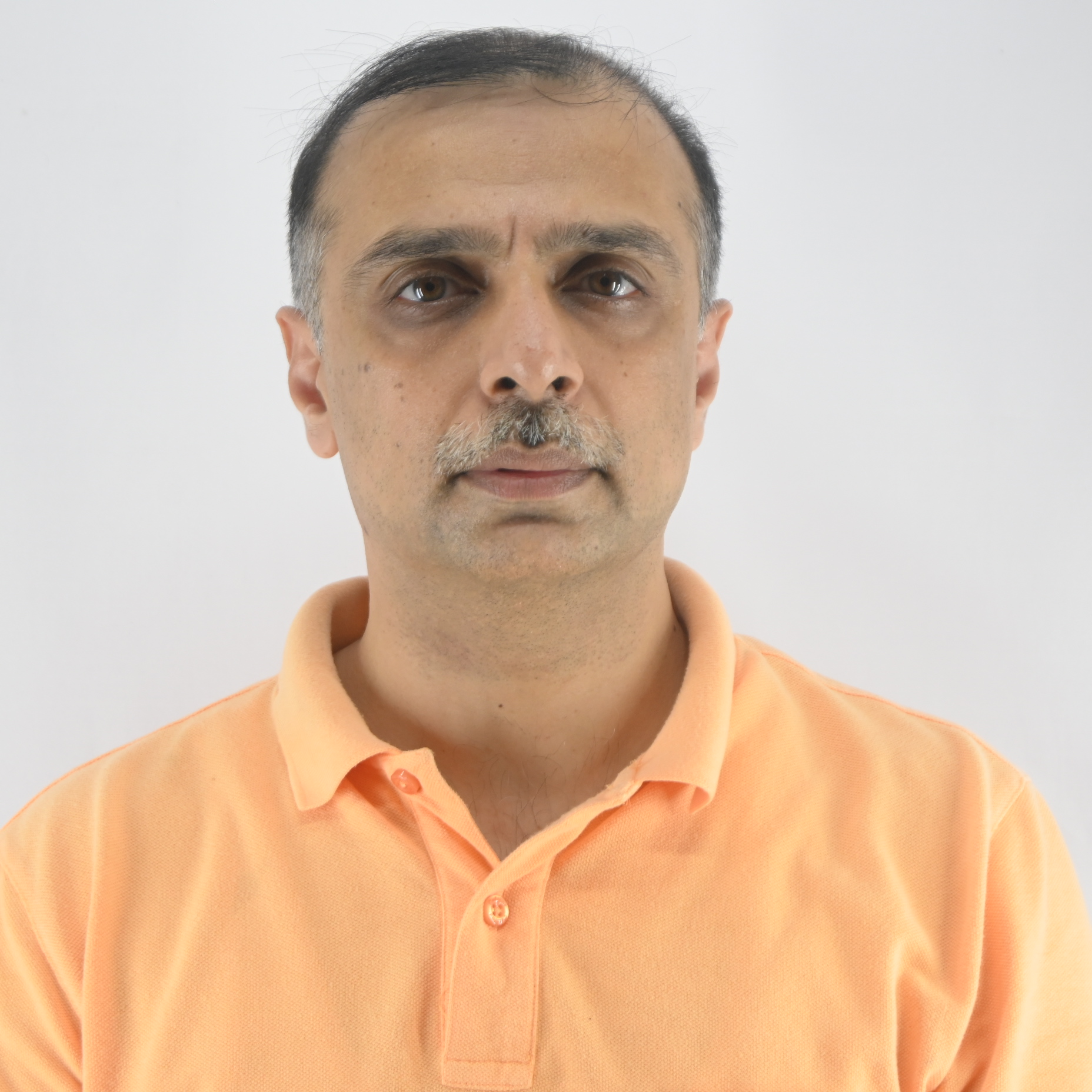
Jia Deng is a Professor of Computer Science at Princeton University and directs the Princeton Vision & Learning Lab. His research focuses on computer vision, machine learning, and robotics, with an emphasis on advancing 3D vision and synthetic data generation. Ph.D., Princeton University, 2012 B.Eng., Tsinghua University, Computer Science His work spans optical flow, depth estimation, and visual reasoning, leveraging procedural scene generation and robust neural architectures. Recent publications highlight advancements in multi-layer depth estimation, stereo matching, and simulation environments for embodied AI. Alfred P. Sloan Research Fellowship, 2018 NSF CAREER Award, 2020 ONR Young Investigator Award, 2020 Multiple Best Paper Awards (ECCV, ICCV, 3DV) Deng leads the Princeton Vision & Learning Lab, which develops foundational tools for computer vision and machine learning. His mentorship extends to advising students and collaborating on interdisciplinary projects.
Sheng Shen is a Professor in the Mechanical Engineering Department at Carnegie Mellon University (CMU) , with courtesy appointments in the Departments of Electrical and Computer Engineering and Materials Science and Engineering . He earned his Ph.D. in Mechanical Engineering (Minor in Electrical Engineering) from Massachusetts Institute of Technology (MIT) , and his B.S. and M.S. from Huazhong University of Science and Technology in China. Prior to joining CMU in 2011, he conducted postdoctoral research at UC-Berkeley . Education: Ph.D., Mechanical Engineering, MIT (2010) B.S. & M.S., Power Engineering & Engineering Thermophysics, Huazhong University of Science and Technology (2000 & 2003) Research interests include nanophotonics , nanoscale energy transport and conversion , nanofabrication , and advanced manufacturing , with applications in thermal management , light sources and devices , thermal emission control , solar energy conversion , infrared sensing , and multifunctional materials . His work leverages interdisciplinary expertise in thermal and optical measurements , material synthesis , device fabrication , and theoretical modeling . Recent publications highlight advancements in infrared radiation control , thermal interface materials , metasurface engineering , and graphene-based nanosystems . His scientific awards include: NSF CAREER Award DARPA Director's Fellowship DARPA Young Faculty Award Elsevier/JQSRT Raymond Viskanta Award CMU Dean's Early Career Fellowship Philomathia Foundation Research Fellowship Hewlett-Packard Best Paper Award Best Paper Award, Julius Springer Forum Advising spans Ph.D. and postdoctoral researchers in nanoscale energy systems, with alumni contributing to solar energy conversion , infrared sensing , and flexible electronics . His lab receives funding from ARL, DARPA, DOE, DTRA, NASA, NSF, and ONR , and recently secured a DURIP award for instrumentation.
Professor Justin Chalker is the Matthew Flinders Professor and Research Leader at Flinders University 's College of Science and Engineering, affiliated with the Flinders Institute for NanoScale Science and Technology. He works at the intersection of organic chemistry, chemical biology, and materials science , focusing on sustainable chemistry solutions for environmental and technological challenges. Education: B.S. in Chemistry and B.A. in History/Philosophy of Science (University of Pittsburgh, 2006); D.Phil. in Chemistry (University of Oxford, supervised by Benjamin Davis) Career: Assistant Professor at University of Tulsa (2012-2015); Lecturer (2015) and Senior Lecturer (2017-present) at Flinders University His lab develops chemical tools for biological system interrogation and novel materials like sulfur-based polymers for mercury remediation, recyclable composites, and zinc-ion battery cathodes. Current projects include inverse vulcanization, waste valorization, and environmental applications of sustainable chemistry. His research aligns with UN Sustainable Development Goals for environmental protection and resource efficiency, particularly in material science (vulcanization, composite materials, polysulfides) and chemical biology (cysteine modification, protein chemistry). Key scientific recognitions: 2016 Tall Poppy Award, 2017 Dream Chemistry Award Finalist, Eureka Prize Finalist (2018), SA STEM Educator of the Year (2018), AMP Tomorrow Maker Award (2018) Prospective students can contact Dr. Chalker directly for Ph.D. and Honours opportunities. The lab website ( www.chalkerlab.com ) provides details on their research in sulfur chemistry, recyclable polymers, and chemical sustainability .
Romain Lopez is an Assistant Professor of Computer Science and Biology at New York University, with a joint appointment in the Courant Institute of Mathematical Sciences and the Department of Biology. He will be joining NYU in September 2025, bringing expertise at the intersection of machine learning and computational biology. Prior to joining NYU, he was a Postdoctoral Fellow at Genentech and Stanford Medicine from 2021 to 2025, working with Jonathan Pritchard and Aviv Regev. Dr. Lopez received his educational training at prestigious institutions: PhD in Computer Science (2021) from the University of California, Berkeley, advised by Mike Jordan and Nir Yosef M.S. in Applied Mathematics (2016) from École polytechnique, Palaiseau, France Dr. Lopez's research focuses on developing machine learning methods to understand biological systems at the cellular level. His work bridges computational techniques with biological applications, particularly in single-cell and spatial omics analysis. He pioneered probabilistic approaches for single-cell analysis with scVI and co-developed scvi-tools, now widely adopted tools in the field. His research spans deep generative models, causal inference, perturbation modeling, and representation learning for biological data. His publication record demonstrates a consistent trajectory of innovation in computational biology, with recent work focusing on spatial biology, disentangled representations of cellular perturbations, and causal modeling of cellular responses. He has made significant contributions to the field of single-cell analysis, developing methods that help scientists interpret complex cellular data and predict how cells respond to various perturbations. Dr. Lopez has received numerous honors and awards for his research: Best Paper Award from the ICML Workshop on AI for Science (2024) Best Paper Award Honorable Mention from the AAAI Conference on Artificial Intelligence (2021) Best Student Poster Award from the ICML Workshop on Computational Biology (2019) UC Berkeley EECS Departmental Graduate Fellowship (2016) Carnot Foundation Fellowship (2016) Monahan Foundation Fellowship (2016) French National Defence Medal, Bronze Echelon (2014) At NYU, Dr. Lopez will lead the Biological Machine Learning group, which develops probabilistic machine learning methods to uncover biological mechanisms governing cellular behavior and disease. His lab focuses on creating tools that transform complex cellular data into biological insights, with applications in understanding cancer, immune responses, and fundamental cellular processes. His work has significant implications for precision medicine and drug discovery.
Olga Sorkine-Hornung is a Professor of Computer Science at ETH Zurich and head of the Institute of Visual Computing. She leads the Interactive Geometry Lab, focusing on theoretical and practical advancements in digital content creation, geometry processing, and shape modeling. Current position: ETH Zurich, Department of Computer Science Previous roles: Courant Institute (NYU), Technical University of Berlin Education: BSc and PhD from Tel Aviv University, postdoc at TU Berlin Her research spans shape representation, digital fabrication, computer animation, and fundamental geometry processing. Key contributions include Laplacian surface editing, as-rigid-as-possible deformation, and generalized winding numbers. She works on applications in VR, AR, and autonomous systems. Awards include Test of Time Awards (2024), ACM Fellow (2020), ERC Consolidator Grant (2020), and EUROGRAPHICS Young Researcher Award (2008). She has supervised numerous students and co-developed software libraries like libigl and Instant Meshes . Co-chair roles for SIGGRAPH, Eurographics, and Pacific Graphics Editorial board member for ACM Transactions on Graphics and other journals Keynote speaker at VMV, CVPR, and SIAM conferences Her work bridges mathematical rigor with practical implementation, advancing computer graphics and geometry processing through intuitive algorithms that maintain surface detail while enabling efficient computation.
Gianluca Iaccarino is a Professor of Mechanical Engineering at Stanford University and the Robert Bosch Chairholder. He serves as Director of the PSAAP Center and leads large-scale computational research initiatives in uncertainty quantification, exascale computing, and multiphysics simulations. His academic journey includes a PhD in Mechanical Engineering from Politecnico di Bari (2005), postdoctoral work at Stanford's Center for Turbulence Research, and progression from Research Engineer to full Professor. Education : PhD (Politecnico di Bari), MS/BS in Aeronautical Engineering (University of Naples) Research : Computational engineering, turbulence modeling, uncertainty quantification, biomedical fluid dynamics, and exascale-ready algorithms Publications : 15+ recent articles focus on turbulence modeling, data-driven simulations, and uncertainty quantification across diverse applications in aerospace, biomedical, and energy systems Awards : PECASE (2010), APS Fellow (2019), multiple best paper awards (AIAA, ASME), Terman Fellow (2007) Students : Advises doctoral and master's students in mechanical engineering and computational methods Leadership : Director of PSAAP Center (2014-present), Chair of Mechanical Engineering Department (2024-present)
Lourdes Agapito is a Professor of 3D Vision at the Department of Computer Science, University College London (UCL), within the Faculty of Engineering Sciences. She leads research in Non-Rigid Structure from Motion (NR-SFM) and 3D reconstruction from monocular video sequences. Her work addresses dynamic scenes, deformable objects, and articulated structures, with applications in robotics and computer vision. She holds an ERC Starting Grant (2008–2014) and led the EU Horizon 2020-funded Second Hands project (2014–2019), collaborating with institutions like EPFL and KIT to develop robots with 3D visual perception for maintenance tasks. Her research group focuses on dense optical flow estimation, video registration, and deformable tracking. Agapito’s research interests include monocular 3D reconstruction, non-rigid motion analysis, and neural approaches to 3D modeling. She has supervised multiple PhD students and postdocs, including notable researchers such as Ravi Garg and Marco Paladini (Sullivan Prize recipient). Her contributions to conferences include roles as Program Chair for CVPR 2016 and CVPR 2017, and she has authored influential papers on topics like Video-Popup (ECCV 2014) and Modal Space (CVPR 2017). Current projects involve advancing neural parametric models and real-time 3D reconstruction techniques. Awards include the ERC Starting Grant and recognition for her team’s work in non-rigid reconstruction. She actively mentors students and collaborates on grants, with recent openings for postdocs and PhD candidates in 3D vision and robotics.
David A. Smith is an Associate Professor at the Khoury College of Computer Sciences, Northeastern University. His research focuses on Natural Language Processing (NLP) and computational linguistics, with applications in machine translation, information retrieval, digital humanities, and social sciences. He is a founding member of the NULab for Texts, Maps, and Networks, a research center focused on digital humanities and computational social sciences. Smith's work has been funded by grants from the Mellon Foundation, NEH, and IMLS, supporting projects such as the Viral Texts initiative analyzing 19th-century newspaper networks and the Oceanic Exchanges project tracking transnational information flows. He has contributed to advancements in OCR for historical texts, text reuse detection, and computational analysis of classical languages. He has advised numerous PhD students, including Shijia Liu, Si Wu, and Ryan Muther, and teaches courses like Natural Language Processing and Information Retrieval. His research has been featured in outlets like Wired and the Economist .
Simon Birrer is an Assistant Professor in Physics and Astronomy at Stony Brook University, specializing in cosmology and gravitational lensing. He holds a PhD from ETH Zurich (2016) and previously served as Kavli Fellow at Stanford University. Birrer leads research probing dark matter and dark energy using gravitational lensing phenomena. His group develops computational tools for analyzing strong gravitational lensing data to study cosmic expansion and dark matter distribution. Research areas include time-delay cosmography, Hubble constant measurements, and machine learning applications in astrophysics. Recent publications focus on multi-messenger gravitational lensing (2025), LSST survey applications (2025), and AI-powered lens modeling pipelines (2025). His work consistently addresses fundamental cosmological tensions like the Hubble constant discrepancy. Awards: Kavli Postdoctoral Fellowship (2019-2022) Kugelpyramide Lifetime Achievement Award Experimental Innovation Award (ETH Zurich) Research Group: Leads the SBU Strong Lensing group with 9+ graduate students and postdocs. The group participates in major collaborations including LSST Strong Lensing Science Collaboration (co-chair), LSST Dark Energy Science Collaboration, and TDCOSMO.
Ajit Rajwade is a Professor at the Department of Computer Science and Engineering , Indian Institute of Technology Bombay. His research spans Artificial Intelligence , Compressed Sensing , and Medical Imaging , with affiliations to the Centre for Machine Intelligence and Data Science and the Koita Centre for Digital Health . Education : PhD in Computer and Information Science and Engineering, University of Florida (2010) MSc in Computer Science, McGill University (2004) BTech in Computer Engineering, University of Pune (2002) His research interests focus on intelligent data acquisition, particularly in neural network analysis , graph signal processing , and medical imaging . He develops compressed sensing algorithms for inverse problems like tomography and MRI reconstruction , alongside applying group testing to pandemic response. Scientific awards include the Prof. S. P. Sukhatme Award (2024) and Departmental Teaching Excellence (2019). His publications demonstrate expertise in image restoration , noise modeling , and epidemiological algorithms . He has advised PhD students like Sabyasachi Ghosh and Jerin Geo James , with a focus on computationally efficient methods in medical imaging and machine learning .
Deva Ramanan is a Professor at the Robotics Institute of Carnegie Melllon University, where he leads research in computer vision and machine learning. His work focuses on modeling human visual perception, leveraging large-scale visual data, and developing systems for 3D understanding, neural rendering, and autonomous systems. He advises a large group of PhD students and has mentored numerous postdoctoral researchers now in leading roles across industry and academia. His research interests include computer vision, machine learning, human perception modeling, 3D scene understanding, neural rendering, autonomous driving, video understanding, and multimodal foundation models. These areas reflect his focus on both foundational models and their application to real-world problems in robotics and AI. The recent publications highlight a strong trend toward multimodal and 3D-aware models, with increasing use of diffusion models, neural fields, and large vision-language systems. Key themes include scene flow, 3D reconstruction from monocular video, autonomous driving perception, and robust evaluation of vision-language models. There is a clear emphasis on both methodological innovation and practical deployment in dynamic environments. Marr Prize, Honorable Mention (ICCV 2021) Best Paper, Honorable Mention (ECCV 2020) Best Paper Finalist (WACV 2024) Best Paper Award (WACV 2016) Best Industrial Paper, Honorable Mention (BMVC 2017) Marr Prize winner (ICCV 2009) Deva Ramanan has advised numerous PhD and master’s students, many of whom are now at top institutions and companies including Apple, Meta, Google, Nvidia, OpenAI, and Princeton. He has received substantial funding from IARPA, DARPA, NSF, Intel, Google, and Facebook for projects in video analytics, dispersed computing, visual cloud systems, and multi-task recognition. His group has developed influential datasets and benchmarks used widely in the community. He leads a vibrant research lab focused on advancing computer vision through deep learning and multimodal integration. His team works on core challenges in perception, including 3D reconstruction, motion modeling, object detection, and scene understanding, with applications in robotics and autonomous systems.
Sebastian Scherer is an Associate Research Professor at the Robotics Institute (RI), Carnegie Mellon University (CMU), where he leads cutting-edge research in autonomous aerial systems and robotics. His work focuses on enabling unmanned rotorcraft to operate safely and efficiently in cluttered, low-altitude, and extreme environments. Education: Ph.D. in Robotics, Carnegie Mellon University (2010) MS in Robotics, Carnegie Mellon University (2007) BS in Computer Science (Minor in Robotics), Carnegie Mellon University (2004) His research interests span robotics, artificial intelligence, autonomous navigation, obstacle avoidance, SLAM, visual-inertial odometry, energy infrastructure, and public policy . He has made seminal contributions to UAV autonomy, including the first obstacle avoidance for micro aerial vehicles in natural environments (2008) and the first automatic landing zone detection and landing on a full-size helicopter (2010). His recent publications (2023–2025) demonstrate a strong focus on resilient autonomy, multi-robot exploration, foundation models for robotics, and large-scale dataset development. His team has released key datasets like TartanGround , BETTY , and SubT-MRS , and simulation tools like Pegasus Simulator , indicating a systems-level approach to advancing real-world autonomy. The research trends emphasize self-supervised learning, robust perception, risk-aware planning, and multi-modal fusion for off-road and urban environments. Scientific Awards: Popular Science Best of What's New 2010 Award AIAA@Infotech Best Paper Runner-up Award (2010) Siebel Scholar Dr. Scherer has advised numerous students and leads a vibrant research group focused on high-impact robotics applications. He has secured significant grants related to UAV autonomy, energy infrastructure, and urban air mobility. His lab develops experimental infrastructure such as AIrTonomy for testing next-generation autonomous aerial vehicles. He is actively involved in advancing SLAM and localization in extreme environments, notably through participation in the DARPA Subterranean Challenge. His team develops large-scale datasets and benchmarking frameworks to push the boundaries of robustness and generalization in mobile robotics.
Haibin Ling is the SUNY Empire Innovation Professor in the Department of Computer Science at Stony Brook University, part of the College of Engineering and Applied Sciences. His research focuses on computer vision, medical image analysis, augmented reality, and AI applications in science. He holds a Ph.D. from the University of Maryland (2006) and prior degrees from Peking University. Previously, he worked at Temple University (2008–2019) and held roles at Siemens Corporate Research, UCLA, and Microsoft Research Asia. Professor Ling's work spans biomedical imaging, AI for science, and human-computer interaction. He leads the CV Lab and collaborates with the AI Institute at Stony Brook. Awards include the NSF CAREER Award (2014), Best Student Paper (ACM UIST 2003), and IEEE Fellow (2020). He serves on editorial boards for IEEE Trans. PAMI, Pattern Recognition, and CVIU, and chairs major conferences like CVPR. His research group includes over 50 students and alumni, with active projects in tracking benchmarks (LaSOT), Leafsnap, and medical imaging tools. Notable publications address OCTA flow estimation, backdoor attacks on vision models, and topology-guided medical learning. Collaborations involve institutions like Temple University and Stony Brook's Department of Applied Mathematics and Statistics.
Changxi Zheng is an Associate Professor in the Department of Computer Science at Columbia University's School of Engineering and Applied Science (SEAS). He directs Columbia's Computer Graphics Group (C2G2) within the Columbia Vision and Graphics Center (CVGC). After receiving his PhD from Cornell University, he joined the faculty of Computer Science Department at Columbia, where he has established himself as a leading researcher in computer graphics and scientific computing. Dr. Zheng's research spans multiple areas of applied computer science with a particular focus on computer graphics and scientific computing. His work centers around developing numerical models for simulating physical phenomena involving complex motions such as fluids, bubbles, and thin rods, along with their resulting acoustic waves. Leveraging computational insights from these models, he devises methods for improving tangible object creation, enabling novel human-computer interactions, and developing software tools for acoustic and photonic devices. His research has attracted significant public interest and media coverage, including projects like FontCode, AirCode, and Computational Metallophone Design. His recent publications reveal a strong interdisciplinary approach, bridging computer graphics, physics simulation, machine learning, and hardware design. His work demonstrates consistent innovation in computational methods for simulating physical phenomena and applying these techniques to practical problems in 3D printing, acoustic modeling, and interactive systems. The breadth of his research spans from fundamental physics-based simulations to practical applications in industry. Columbia SEAS Dean's Fellow (for advised students) NSF Graduate Research Fellow (for Ruilin Xu) Snap Research Fellow (for Rundi Wu) CKGSB Fellow (for Yun Fei) Adobe Research Fellow (for Gabriel Cirio) Marie Sklodowska-Curie Individual Fellow (for Rundi Wu) Best Paper Award at ACM International Conference on Multimedia (ACMMM), 2019 Dr. Zheng actively mentors a diverse group of students, including current PhD candidates and postdoctoral researchers. His research group has received support from various sources that enable their innovative work in computational graphics and physics-based simulation. He has supervised numerous successful students who have gone on to positions at leading technology companies including Adobe, Tencent, Facebook, and academic institutions. As director of Columbia's Computer Graphics Group (C2G2) within the Columbia Vision and Graphics Center (CVGC), Dr. Zheng leads a vibrant research team focused on advancing the state of the art in computer graphics, physics-based simulation, and their applications. The group maintains strong collaborations with industry partners and academic institutions worldwide, fostering an environment of innovation and practical application of theoretical concepts.
Professor Hanumant Singh leads the Electrical and Computer Engineering department at Northeastern University, with a joint appointment in Mechanical and Industrial Engineering , and serves as Program Director for the Master of Science in Robotics. He earned his Ph.D. from MIT/WHOI Joint Program in 1995 and has conducted over 60 expeditions globally, focusing on marine geology, polar studies, and coral reef ecology. His research emphasizes field robotics , including SLAM, underwater manipulation, and imaging in extreme environments. He developed the Seabed AUV and Jetyak ASV , widely used in scientific research. His labs include the Field Robotics Lab and the Institute for Experiential Robotics . Research Interests: Machine Learning for Fisheries SLAM with dynamic objects Underwater imaging and manipulation Autonomous surface and aerial systems Polar and marine robotics Awards: ICRA Best Student Paper Award, IEEE Oceanic Engineering Society Distinguished Faculty Award (2025), Lifetime Achievement Award (2022), and IEEE Fellow status. His work has been featured in Nature Geoscience , Polar Biology , and media outlets like WGBH. Students & Collaborations: Advises students like Srinidhi Pattala (MS Robotics) and Dennis Giaya (PhD Computer Engineering). Collaborates with institutions on projects such as Antarctic sea ice thickness estimation and deep-sea submersible missions.